Liability concerns prompt cities to limit sledding

By Scott McFetridge, AP

DES MOINES, Iowa — As anyone who has grown up around snow knows, part of the fun of sledding is the risk of soaring off a jump or careening around a tree.

But faced with the potential bill from sledding injuries, some cities have opted to close hills rather than risk large liability claims.

No one tracks how many cities have banned or limited sledding, but the list grows every year. One of the latest is in Dubuque, Iowa, where the City Council is moving ahead with a plan to ban sledding in all but two of its 50 parks.

“We have all kinds of parks that have hills on them,” said Marie Ware, Dubuque’s leisure services manager. “We can’t manage the risk at all of those places.”

A study by Columbus, Ohio-based Center for Injury Research and Policy at Nationwide Children’s Hospital found that between 1997 and 2007, more than 20,000 children each year were treated at emergency rooms for sledding-related injuries.

In meetings leading up to the ban, Dubuque council members lamented the move but said it was the only responsible choice given liability concerns and demands from the city’s insurance carrier. They pointed to judgments in sledding lawsuits in the past decade, such as a $2 million judgment against Omaha, Neb., after a 5-year-old girl was paralyzed when she hit a tree and a $2.75 million payment when a man in Sioux City, Iowa, slid into a sign and injured his spinal cord.

Some cities have opted for less drastic measures in the last several years rather than an all-out ban, including Des Moines, Iowa; Montville, N.J.; Lincoln, Neb.; and Columbia City, Ind. By banning sledding on certain slopes or posting signs warning people to sled at their own risk, cities lessen their liability if someone is seriously hurt, but they’re still more vulnerable to lawsuits than if they had adopted an outright ban.

And then there’s the small central Illinois city of Paxton, where park district officials removed the sledding hill in 2013.

It was more of a dirt mound, created years ago to cover a pile of concrete, metal and other junk, recreation director Neal McKenry said, but given how flat the area is, the 20-foot rise often was crowded with sledders. There was concern someone would slam into trees that had grown on the mound.
“Obviously, many people used this area to sled in the winter, but the park district never promoted it as a sled hill,” McKenry said. “It was simply a built-up mound of dirt that people happened to sled on.” The area is now being used as a dog park.

In Omaha, the city banned sledding at a popular hill as a test one winter after losing a lawsuit, but decided to allow it again after most people ignored the restriction.

“It wasn’t practical,” assistant city attorney Tom Mumgaard said. “People wouldn’t abide by the ban.”

Instead, the city has posted signs warning of sledding risks and workers at the site of the failed ban put pads around posts and hay bales around trees. Mumgaard said courts in Nebraska have decided cities must protect people, even if they make poor choices.

Most people realize that cities must restrict potentially dangerous activities to protect people and guard against costly lawsuits, said Kenneth Bond, a New York lawyer who represents local governments. In the past, people might have embraced a Wild West philosophy of individuals being solely responsible for their actions, but now they expect government to prevent dangers whenever possible.

“It’s a great idea on the frontier, but we don’t live on the frontier anymore,” Bond said.

That doesn’t sit well with Natasha Koss, 40, who frequently sleds with her 5-year-old daughter Elsa in Marquette, Mich.

Koss sometimes requires Elsa to wear a helmet. When they try a particular hill for the first time, her husband does a few runs solo as a precaution. She said she’d report any safety issues to city authorities but couldn’t imagine filing suit over a sledding mishap.

“I would most certainly take personal responsibility,” she said. “You need to have a mindset to make the best decisions for your own safety.”

However, Steve King, who runs a website that promotes sledding, said he understands why cities impose restrictions. He notes that most sledders don’t wear helmets and it’s near impossible to steer away from trees, rocks or signs.

“We live in a lawsuit-happy society and cities are just being protective by banning sledding in areas that pose a risk for injury or death,” King said.



Mom was right — bundle up to ward off a cold

By Sonja Elmquist, Bloomberg

Yale University researchers are on your mom’s side when it comes to fighting a cold: put on a sweater.

The immune system doesn’t combat cold viruses as well at lower temperatures, according to an early study in mice published today in the Proceedings of the National Academy of Sciences.

Doctors have understood for decades that temperature affects the way cold viruses reproduce. Akiko Iwasaki, a Yale professor of immunobiology who led today’s study, now has research, as well as motherly intuition, to bolster the case for staying warm that she makes to her kids.

Read the whole story


Panoramic views of Desolation via snowshoes

Sue, AJ, Cody, Rosemary and Donna make their way to Granite Lake. Photos/Kathryn Reed

Sue, AJ, Cody, Rosemary and Donna make their way to Granite Lake. Photos/Kathryn Reed

By Kathryn Reed

EMERALD BAY STATE PARK – Maggie’s cleavage took our breath away.

That’s what we called the saddle of Maggie’s Peak because, well, these two peaks in Desolation Wilderness are named for a woman who was well endowed. And that strip of land in between the peaks has some outstanding views.

Desolation Wilderness appears to go on forever. So expansive it seems a bit foreboding – even though we were immersed in it for nearly the entire snowshoe.

No wonder Eagle Lake is chilly in the summer – it’s frozen right now.

On this particular day Emerald Bay could have been renamed Sapphire Bay because of the rich, deep blue hue that spilled forth.

Snowshoeing to Granite Lake was pretty; making the final push to the saddle of Maggie’s Peak was spectacular. Granite Lake was our original destination last Saturday.

Getting there was more of a vertical ascent than a leisurely switchback. I could tell I had been fighting off a cold because I needed to stop more than usual. But this was not a trek to set speed records, so Donna, Rosemary and Sue – and dogs AJ and Cody – were fine with a few extra stops.

The path is well worn with plenty of snowshoers having been there before us. It’s single track. At times all we can hear is the crunching of the snow beneath the claws strapped to our boots.

Large boulders near the lake and protruding from the ice provided a lunch spot. Plenty of tracks across the frozen mass proved the ice was thick. Not a cloud could be seen. It was one of those idyllic Tahoe blue skies. One of Maggie’s Peaks rises from the far end of the lake.

Donna and Sue peruse the map, figuring out the cleavage isn’t that much farther, so we carry on.

The trailhead is at 6,890 feet. Granite Lake is at 7,700 feet and the saddle is at 8,330 feet. It’s about 1½ miles to the lake and another eight-tenths of a mile to the saddle.

While there had been wonderful views along the way, the best were definitely at the saddle.

—–

Getting there:

From South Lake Tahoe go north on Highway 89. Park at the Bayview Campground on the left. This is before you reach the parking lot for Vikingsholm. Walk through the campground. There will be a sign going left for Cascade Falls, to the right for Desolation Wilderness. Go right.

ngg_shortcode_0_placeholder (Click on photos to enlarge.)


Odds of stroke rise sharply for young people

By Anita Creamer, Sacramento Bee

At the barbershop on Florin Road where he works, Chris Matsumoto was trimming a customer’s hair one day in 2006. He’d taken time off work a couple of weeks earlier after having dizzy spells. Suddenly, the severe dizziness returned.

“I got dizzy again, so dizzy,” he said. “And then I passed out with a client in my chair.”

As it turned out, he’d suffered an ischemic stroke: A clot had blocked blood flow to his brain, cutting off the flow of oxygen and damaging the tissue. He was left unable to speak. The months after that passed in a blur for him, from his diagnosis and hospitalization through his early therapy to relearn how to talk and read.

He was 26 years old.

“This has been an eye-opening experience for me,” said barber Chris Matsumoto of the stroke he suffered in his 20s. “Everything is still coming back slowly. It took a lot of work.”

From 1994 through 2007, CDC research shows, the rate of ischemic stroke jumped by 47 percent for men ages 35 to 44 and 36 percent for women in the same age group. For men in their early 20s, the number of stroke-related hospitalizations rose by more than 50 percent during that period.

Read the whole story


Garbage bears staying awake during winter

By Jeff DeLong, Reno Gazette-Journal

That Christmas visitor to Troy Brown’s place wasn’t Santa, it was a bear.

And that bear captured by wildlife officials in South Reno, like another in the same spot six days before, was demonstrating behavior noted by wildlife experts for more than a decade now – at a time of year when the animals are usually lying down for a winter’s nap, many remain awake and on the prowl in search of food.

For the black bears of western Nevada, hibernation has become optional.

“You can keep bears up during the winter if you feed them,” said Jon Beckmann, a biologist and bear expert with the Wildlife Conservation Society.

And feeding them we are, primarily with garbage.

That same human-provided food source that has led to mounting conflict between people and bears across the Reno-Tahoe area is not only making bears bigger, it’s also altering fundamental aspects of their behavior.

Read the whole story


Family turns snowboarding death into opportunity to save lives at Sierra-at-Tahoe

By Susan Wood

TWIN BRIDGES – Kristin Jacobson remembers almost dying like it was yesterday.

The Benicia attorney, an advanced skier, had waited a while for a powder day in 2012. She finally got her wish on St. Patrick’s Day at Sierra-at-Tahoe where she volunteers. She and husband Eric were negotiating the black diamond Upper Dynamite run off Grandview chairlift when he suddenly stopped on a boulder. Just as he turned to warn her of a depression in front of them, she had skied by him. Next thing she knew, the snow gave way underneath her.

“I thought I was just swept up in an avalanche,” she said.

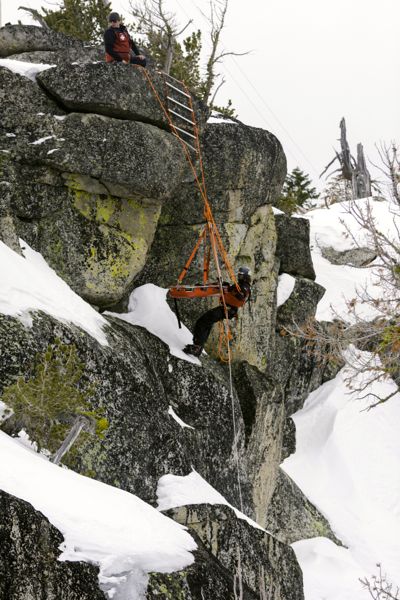
Sierra-at Tahoe patrollers practice high angle rescues. Photo/Merick Rickman

Sierra-at Tahoe patrollers practice high angle rescues. Photo/Merick Rickman

At a mere 5-foot, 4-inches, the snow enveloped her. She was conscious and knew not to struggle in order to conserve energy – especially since the snow was particularly wet and encased her like concrete.

Since the temperatures had been high, the water had been flowing in the creek below. She tried to make an air pocket, but attempts were futile in the eventual 10-foot tomb.

“I believed I was upside down,” she said.

Jacobson could feel snow embedded in her nose and ears. She was uncomfortable, frustrated and knew she was running out of oxygen.

“I blacked out. I thought that was it. I was going to die,” she told Lake Tahoe News.

Meanwhile, her husband had been working feverishly to get help. He tried to dig her out without being encased himself. She was buried so solidly, he pulled her glove off when trying to dig her out.

Luckily, a ski patroller and paramedic were on the lift and caught word of the incident.

After the longest 45 minutes of her life, the patrol team had dug her out using ropes and harnesses anchored to trees in order to keep the snow relatively stable. Jacobson was purple from being hypothermic and very close to being gone.

“Even the ER doctors were baffled,” she said.

Jacobson attributes her survival to the equipment the team used that day.

Kristin Jacobson knows she is lucky to be alive. Photo/Susan Wood

Kristin Jacobson won’t let the near-death experience keep her off the slopes. Photo/Susan Wood

“I don’t know how they would have done it. I’m just incredibly grateful,” she said of the 10-minute rescue dig once patrollers arrived.

Sierra-at-Tahoe gained one victory and later others as a result of losing a tragic one. The equipment used to save Jacobson was bought with a fund established by the family of 22-year-old Philip Walker, a snowboarder who died in a tree well the year before Jacobson’s near miss.

“This was a really sad event that happened, but we’re happy we got good equipment to train for future rescues,” said Hugh Ham, Sierra’s assistant ski patrol director.

With about $1,100 left in reserve, the Philip Walker Rescue Fund has secured about $6,000 in clear goggles to help find lost riders in the evenings, ropes for both low- and high-angle rescues, headlamps, radio batteries and deep immersion snow signs. The hope is signs that read, “Stay clear of tree wells” and “Always ride with a buddy” would permeate the minds of those who want to venture into the trees.

That’s the message the father of the young snowboarder, who one day wanted to work at Sierra-at-Tahoe, wants to get across.

“There’s nothing we can do to bring (Philip) back. If anything, continuing on for him and saving someone else and possibly preventing this from happening again – that’s why we do this,” Steve Walker told Lake Tahoe News from his San Jose home.

“Tree wells are dangerous, even for an intermediate skier or snowboarder like Philip,” Walker said.

The family started the fund with $5,000 in seed money, notifying relatives from across the nation to donate in lieu of flowers at the boarder’s funeral service a week after his death on March 26, 2011.

The young Walker was skiing with his brother, Ben, and a friend when he went into the trees alone. Ben called his father at 5pm to tell him he couldn’t find Philip.

“That was gut-wrenching,” Walker said.

The ski resort was forced to call off the search that night because of a fierce storm and resumed it the next day. Walker, his wife and other family members waited out the news in General Manager John Rice’s office.

“I knew something was up when two sheriff’s deputies walked in the room. Unfortunately, I can’t get that image out of my mind,” Walker said while choking back tears.

He described the event as a sense of despair, helplessness and sobering.

“A friend asked me how long it took me to get over,” Walker said.

You don’t.

“I told him it’s like jumping into an icy lake. It takes your breath away, then slowly you get used to it. But you don’t want to,” he said.

The whole family went into grief therapy. Starting this fund is all a part of the bereavement process for them. The family’s goal of the fund isn’t necessarily monetary. It’s to ensure the equipment “makes a difference and to help others,” Walker insisted.

Beyond Jacobson’s story, there have been others who have benefited by a highly skilled and geared Sierra-at-Tahoe.

Rice shared in a letter to Walker the story of a skier who had fallen through a snow bridge between two large rocks and was stuck in a hole of 25 feet off the Huckleberry Canyon area. The patroller who responded requested the harness and pulley system purchased through the rescue fund.

“He was fortunate to have been skiing with a friend who knew where to locate him, but more so that our crew had the right gear to get him out,” Rice wrote. “Thank you to all of your friends and family who honored your son through the cause.”

—–

Notes:

To donate, send checks to the Sierra-at-Tahoe Education Foundation, c/o The Walker Rescue Fund; 1111 Sierra-at-Tahoe Road, Twin Bridges, CA 95735.


Despite menu changes, fast food still unhealthy

By Karen Kaplan, Los Angeles Times

Fast food has gotten a little better for you over the last 18 years — except in cases where it’s gotten worse.

Among 27 menu items subjected to scrutiny by Tufts University researchers, eight of the offerings contained fewer calories in 2013 than in 1996 and nine contained more. In addition, five of the 18 items tested for sodium content had less of it at the end of the 18-year period and seven had more.

The researchers looked up nutritional information for all of the cheeseburgers, French fries, grilled chicken sandwiches and nondiet sodas sold between 1996 and 2013 at three leading fast-food chains. The restaurants weren’t mentioned by name, but one of them was “the top restaurant on the basis of sales” — a designation that describes McDonald’s. The other two chains had “similar menu items,” a “national presence” and were “in the top 10 for total U.S. sales revenue” — attributes that describe Burger King and Wendy’s. (The researchers, from Tufts’ Jean Mayer USDA Human Nutrition Research Center on Aging and the Friedman School of Nutrition Science and Policy, declined to confirm or deny these identities.)

In general, the calorie content of similar items varied from chain to chain, the researchers found. For instance, an order of small fries at one of the chains packed 110 more calories than an order of small fries at one of the other chains. (The one exception to this trend was large-sized orders of fries.)

Read the whole story


Calif. drought: Early months of 2015 critical

By Miguel Llanos, NBC News

Drought? What drought?

Californians could be forgiven for asking that question after two big storms in December brought record rain to the north and mountain snow to Southern California that dusted palm trees in some lower-elevation towns. The start of a new year, however, has the state back in a dry stretch, and experts wonder what’s in store for the critical few weeks ahead.

“We must necessarily plan for the worst but hope for the best,” said Jeanine Jones, deputy drought manager with the California Department of Water Resources. “We are only now entering the normally wettest part of our winter season, and what happens — or doesn’t — in the next six weeks or so will tell us a lot about the likely outcome of the water year.”

But the start to 2015 does not look promising for the Golden State. On New Year’s Eve, the Los Angeles branch of the National Weather Service summarized the outlook on its Facebook page. “Rain for California to bring in the New Year?” it asked. Showing a map modeling precipitation over the next week, its answer was blunt: “Not very likely.”

And with California’s rainy season being defined by a short winter window, what happens in January and February will be critical.

Read the whole story


Discovering wild mushrooms in the woods

Wild mushrooms come in a variety of sizes and colors. Photos/Kathryn Reed

Wild mushrooms come in a variety of sizes and colors. Photos/Kathryn Reed

By Kathryn Reed

SALT POINT STATE PARK — Red, yellow, orange, brown, white, green. Tiny and huge. Slimy and delicate. Spongy and bulbous. Edible and non.

These were clearly not your grocery store variety of mushrooms. And, yet, we kept picking them. What we didn’t do was eat them.

Sue and I were on our first mushroom foray in October. While I have hunted for mushrooms in Lake Tahoe, that was always for personal consumption. This was more for education.

Mushrooms often blend in with the environment.

Mushrooms often blend in with the environment.

The Sonoma County Mycological Association (SOMA) led us into the woods of Salt Point State Park, which is one of two California state parks to allow people to forage for wild mushrooms. The limit is 31 pounds per person.

Nearly 300 varieties of fungi grow in this coastal park, with many of them OK to eat.

“It’s more of a quest than anything else,” Jim Wheeler, board member of the mycological association, said. “We are not hunting because the mushrooms don’t move.”

But they do hide.

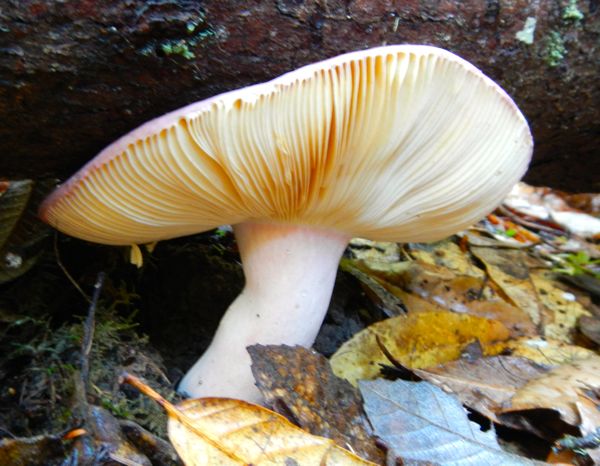
Wild mushroom on Sonoma coast.

Wild mushroom on Sonoma coast.

Some are tucked under foliage, others grow under downed trees, while a few are able to camouflage themselves. Then others are out in the open, bright and ready to be plucked like a wildflower.

Many of the nearly 40 people on the foray were first-timers. It was like we were on a treasure hunt as we whispered to one another. Fog seeped through the dense redwoods, adding a sense of mystery to our outing.

SOMA has forays September-May, with a three-day camp in January. And the mushrooms in the Bay Area, well, they are multiplying in ways that haven’t been seen the last three years. This is all because the December rains are just what the fungi love.

All mycological groups are serious about their mushrooms. But most are also inclusive, eager to share their knowledge and bring more people into the inner circle.

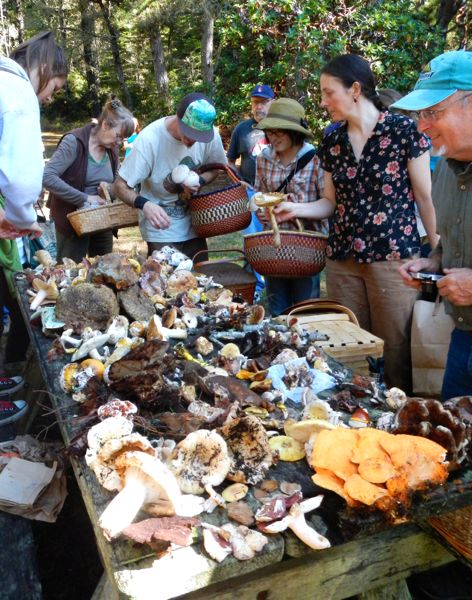
Sorting through the haul.

Sorting through the haul.

People are separating their finds with wax paper. Some photograph the specimens and take notes in journals. Baskets and canvas bags are slowly filling up with mushrooms of all shapes, sizes and colors.

Experienced shroomers know the scientific names and which are edible. They seem to find them faster as well.

On this particular day we spread out a haul that more than filled a picnic table. Porcini, slippery Jacks, golden chanterelles, coral, spy are just a few of the varieties.


People won’t stop texting and walking

By AJ Vicens, Mother Jones

Last year, it was reported that a small city in China had created a texting-only lane for pedestrians. The story went viral before it was somewhat debunked—turns out the lane is in a theme park, and it’s just 100 feet long—but there’s a reason it got eyeballs: everybody’s worried about “texting while walking,” and no one knows what to do about it.

According to a 2012 Pew study, most grownups have bumped into stuff while looking at their phones, or been bumped by someone else on their phone. A Stony Brook University study in 2012 found that texting walkers were 61 percent more likely to veer off course than undistracted ones, a finding backed up by other researchers.

Greatest “hits” compilations abound on YouTube. One woman tumbled into a mall fountain, another off a pier. A man nearly collided with a roaming bear. While pride suffered most in those cases, more than 1,500 pedestrians landed in emergency rooms due to a cell-phone related distracted walking injury in 2010—a nearly 500 percent jump since 2005—according to a recent study from Ohio State University.

Jack Nasar, professor of urban planning at Ohio State University and one of the study’s co-authors, said the real number of injuries could be much, much higher. “Not every pedestrian who gets injured while using a cell phone goes to an emergency room,” he told Mother Jones. Some lack health insurance or (erroneously) decide their injuries aren’t serious. Others will deny a phone had anything to do with their injury. “People who die from cell-phone distraction also don’t show up in the emergency room numbers,” says Nasar.

Of course, pedestrians aren’t the only ones with their noses in their phones. According to a 2013 University of Nebraska Medical Center study, the rate of pedestrians getting hit by distracted drivers grew by about 45 percent between 2005 and 2010. The good news is that 44 states, Washington D.C., and Puerto Rico have banned texting and driving for all drivers, but the bad news is that texting and walking is potentially more dangerous and has proved harder to ban.

Read the whole story