South Lake Tahoe — a 50-year work in progress
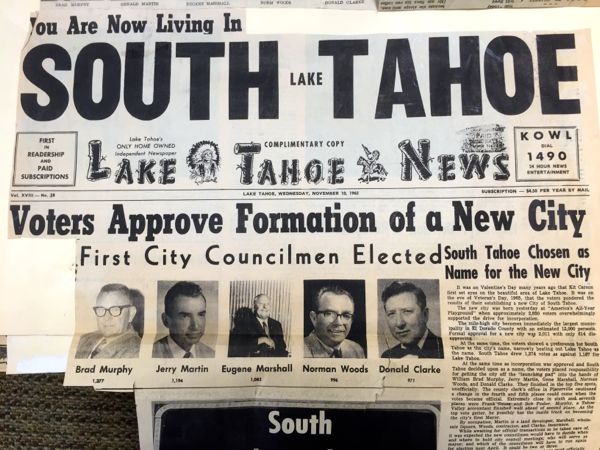
South Lake Tahoe voters in November 1965 agreed   form an incorporated city.

South Lake Tahoe voters in November 1965 agreed to form an incorporated city.

slt 50th logoPublisher’s note: This is one in a series of stories Lake Tahoe News will be running leading up to the 50th anniversary of South Lake Tahoe on Nov. 30.

By Kathryn Reed

“The people of Lake Tahoe’s South Shore formally have taken steps to control and preserve the natural beauty of this area. The overwhelming vote for incorporation proves the people do care what happens to the lake. We now have local government control and do not have to rely on those from other areas to take care of our needs.”

– Wink Ames

Ames was one of the founding fathers of South Lake Tahoe and went on to serve on the City Council. The quote above was his official statement to the media after the votes were counted.

From dirt roads to a major federal highway. From just a few year-round residents, to thousands. From ranching to gaming’s housing hub to a recreation mecca. South Lake Tahoe has gone through a multitude of changes through the years.

Before the vote to incorporate took place in November 1965, the area was divided more into neighborhoods that still exist – Al Tahoe, Bijou, Bijou Park, Stateline, Tahoe Valley and Tallac Village.

There were 12,000 people who called South Lake Tahoe home in 1965. The vote to incorporate was 2,011-614. Voter turnout was 65 percent. With approval, South Lake Tahoe became the 398th city in California.

Norm Woos is the longest  serving member on the City Council. Photo/South Lake Tahoe

Norm Woods is the longest serving member on the City Council. Photo/South Lake Tahoe

The first council consisted of Brad Murphy who was the top vote getter at 1,377; Jerry Martin (1,194); Eugene Marshall (1,082); Norm Woods (996); and Donald Clarke (971).

What has changed through the years is not the number of votes, but the voter turnout. With the city having a population of about 21,500 people, a total of 9,414 votes were cast for City Council in November 2014 when voters could vote for three candidates. Wendy David received the most at 1,727.

Woods is the longest serving member at 21 years – 1965-70 and 1976-92. By the time current members Hal Cole and Tom Davis finish their terms, each will have served 20 years. Cole from 1994-2006 and 2008-16; and Davis from 1992-2004 and 2010-2018.

From 1965-68, all mayors served a six-month term. Today they serve a one-year stint.

Echo Motel on Highway 50 and Ski Run Boulevard comes down June, 26, 1989, for the first phase of redevelopment. Photo/South Lake Tahoe

Echo Motel on Highway 50 and Ski Run Boulevard comes down June 26, 1989, for the first phase of redevelopment. Photo/South Lake Tahoe

Pictures of everyone ever elected to the council are on a wall in the room where the five electeds meet, with the dates served posted as well.

Originally the council met in the basement of what was the Tahoe Savings & Loan Building. It is now El Dorado County offices on Takela Drive.

City offices have moved throughout the years, including being in what is now the senior center. Today they are at Lake Tahoe Airport and on Tata Lane.

Fire, police and snow removal were the three tenants upon which incorporation were sold to the public.

In 1966, the city took over Lake Valley Fire Protection District stations that were in the city limits.

The first police chief, Ray Lauritzen, was hired in April 1967. He then started hiring officers.

Plow drivers were adept enough by the end of 1966 to clear all city streets within 12 hours.

Not everyone was happy with the city being its own entity and no longer under complete control of El Dorado County. A move for disincorporation was put on the ballot in 1968 and was defeated.

John Williams served as the first city manager until 1969.

In 1966, Pioneer Trail was open year-round from Meyers to near the state line.

The base of the gondola was put in by American Ski Company. Photo/Heavenly Mountain Resort

The base of the gondola was put in by American Ski Company. Photo/Heavenly Mountain Resort

Planners in the early 1970s expected the city to one day have a population of more than 50,000 people. This was at a time when there was talk of Pioneer Trail being more like a freeway. Even Caltrans was going to build a bigger highway and had the right-of-way to do so.

When the Greenway Bike Path, which may start construction this summer, is completed, much of it will be along that former Caltrans right-of-way that goes from Meyers to almost the Nevada border.

Entertainment and recreation have long been integral to South Lake Tahoe’s economy and tourist draw. The Stateline casinos in some form have existed since the 1940s. With the opening of Lake Tahoe Hard Rock this week, there is another reason for people to visit.

While technically there isn’t a ski resort in the city limits, the 1960 Winter Olympics at Squaw Valley put all of Lake Tahoe on the map as a winter wonderland.

Heavenly Mountain Resort’s gondola opened for the 2000-01 season. It made it so skiers near the bulk of the hotel rooms could be whisked to the mountaintop without having to drive to one of the base lodges. Two years later Vail Resorts would own the gondola and ski resort. The village, anchored by two Marriott properties, continues to be the hub of tourist activity in South Lake Tahoe.

While the city has made considerable improvements through years, some things never change. The first talk of doing something with signs was in 1967. Regulations about billboards, neon, motif, color, type and style have been made ever since then. Even last year the council was still talking about what to do about sandwich boards. And signs are likely to continue as a topic when it comes to design standards in the Tahoe Valley Area Plan.

—–

Notes:

  • The city is planning open houses at various city building throughout June and July.

  • A time capsule unveiling and citywide treasure hunt will take place in September.

  • Homecoming and community parade is set for October.

  • The 50th anniversary dinner and gala at Lake Tahoe Resort Hotel is Nov. 7.


Lack of snow signals year 4 of Calif. drought

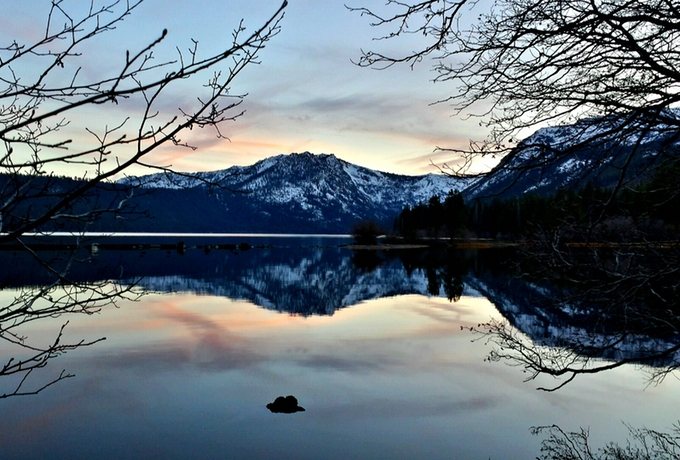
Lack of snow doesn't mean lack of beauty at Fallen Leaf Lake. Photo/Toogee Sielsch

Lack of snow doesn’t mean lack of beauty at Fallen Leaf Lake. Photo/Toogee Sielsch

By Kathryn Reed

The state didn’t need to take a snow survey to prove that it’s dry and moisture has been scarce.

“Unfortunately, today’s manual snow survey makes it likely that California’s drought will run through a fourth consecutive year. DWR managers said heavy precipitation and cooler temperatures in the next three months would be required for the snowpack to build and give Californians hope for beginning to recover from drought this year,” Department of Water Resources officials said in a press release.

What the numbers from today’s reading do is quantify how horrible things are. In the field adjacent to the road leading to Sierra-at-Tahoe, 7.1 inches of snow was found. It has a water content of 2.3 inches. This is 12 percent of average. Just a month ago it was at 33 percent of normal. Statewide the average is 25 percent of average, when it was 50 percent in December.

These measurements at Phillips Station near Echo Summit are taken at an elevation of 6,873 feet.

Six hundred feet lower, at lake level, people are raking, picking up pine cones and wondering if winter is only for those who live on the East Coast. Those in the Bay Area and elsewhere in the state are wondering the same thing as they watch blossoms appear sooner than usual and begin to water lawns that are used to being fed by Mother Nature.

January is normally California’s wettest month. 2015 is likely to go into the record books as the driest in history.

Locally, the Lake Tahoe Basin’s economy is what suffers the most when it doesn’t snow. Even though many ski resorts can make snow, it’s not enough to cover the entire mountain. Fewer skiers mean less hotel rooms booked, restaurants aren’t as full and locals don’t have jobs.

Elsewhere in California it means reservoirs aren’t as full. Snowpack supplies about one-third of the state’s water for municipalities and farmers.

State Climatologist Michael Anderson said to have a chance at ending the drought, California would have to record precipitation that is at least 150 percent of normal by the end of the water year on Sept. 30, or 75 inches. As of Jan. 29, 23.1 inches have been recorded at the stations.


Elusive Sierra Nevada red fox spotted in Yosemite

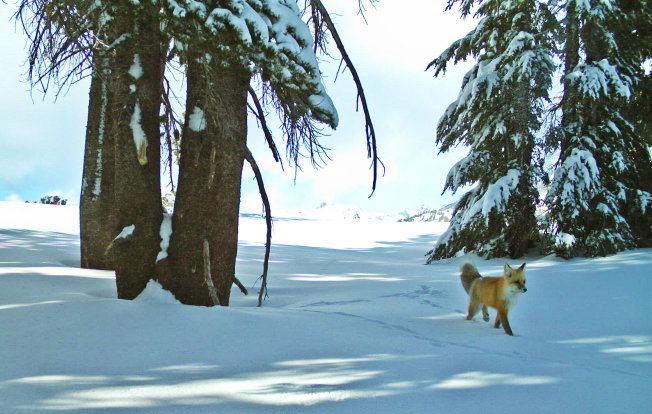
The rare fox saunters through Yosemite National Park. Photo/NPS

The rare fox saunters through Yosemite National Park. Photo/NPS

By Sarah Larimer, Washington Post

A Sierra Nevada red fox was recently spotted in Yosemite National Park for the first time in almost 100 years.

“We are thrilled to hear about the sighting of the Sierra Nevada red fox, one of the most rare and elusive animals in the Sierra Nevada,” Yosemite National Park superintendent Don Neubacher said in a news release. “National parks like Yosemite provide habitat for all wildlife and it is encouraging to see that the red fox was sighted in the park.”

Motion-sensitive cameras captured pictures of the animal roaming in the northern portion of Yosemite on Dec. 13 and Jan. 4, according to the National Park Service. Crews have set up “hair snare stations” in the area as well and hope to be able to perform genetic analysis that will help them learn more about the fox population.

Sierra Nevada red foxes (Vulpes vulpes necator) are smaller than other members of the fox population, and have darker fur. NPS officials estimate that there are fewer than 50 Sierra Nevada red foxes in North America, making it “one of the rarest mammals” on the continent.

Read the whole story


Hard Rock launches new era at Lake Tahoe

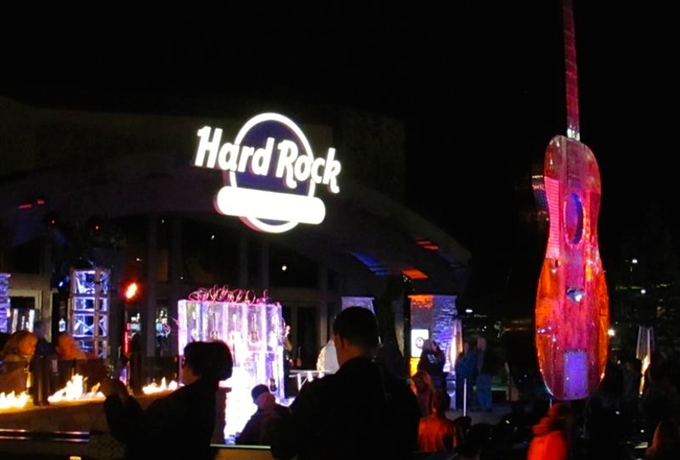
Lake Tahoe Hard Rock could become a destination unto itself on the South Shore. Photos/Denise Haerr

Lake Tahoe Hard Rock could become a destination unto itself on the South Shore. Photos/Denise Haerr

By Kathryn Reed

STATELINE – To be successful in the ranching and casino industries takes some of the same qualities. It’s about successfully herding your product (cattle or people). It’s about providing an experience that is above the rest – indulging in a prime cut of beef, being at a place you want to keep returning to.

Jon and David Park are embarking on a journey to be both rancher and casino purveyor. And in some ways their divergent enterprises are crossing paths.

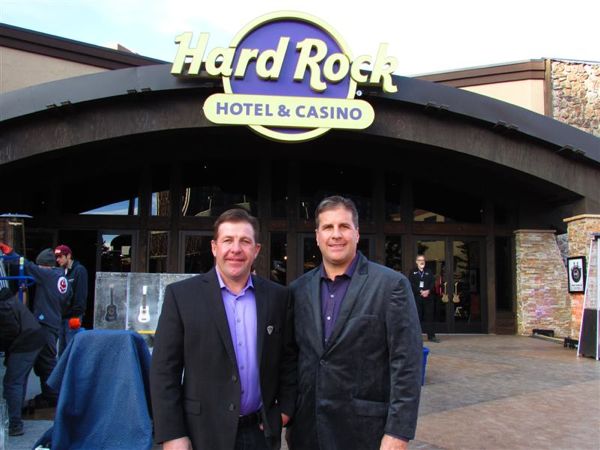
Brothers David and Jon Park spent $60 million revamping what was dilapidated casino.

Brothers David and Jon Park spent $60 million revamping what was a dilapidated casino.

On Wednesday the brothers were beaming as the doors flew open on their $60 million investment of what is now Lake Tahoe Hard Rock. The 539-room hotel casino was essentially stripped to the studs and reinvented into a totally different experience from what was the Horizon.

In many ways the Hard Rock is returning to its roots. The vintage Stateline property opened in 1965 as Del Webb’s Sahara Tahoe. Elvis played at the Sahara 106 times. His suite is being renovated, but is not ready to be rented.

“We are modernizing it without taking the Elvis out of it,” Don Marrandino, who is running the property, said.

Elvis used to be regular when this was the Sahara.

Elvis used to be a regular when this was the Sahara.

In the lobby is the original poster from one of Elvis’ shows in the 1970s in Lake Tahoe. The cocktail performance cost $20 and included two drinks.

That showroom he played in is likely to be reinvented. Most recently it was where the movie theaters were. Marrandino wouldn’t even hint at who might be the first to perform at the new venue.

“We have to build it first,” he told Lake Tahoe News.

When that will take place remains to be seen. Old components of the former showroom still exist below the floor of the movie theaters.

Mojo Green christens the Vinyl on Jan. 28.

Mojo Green christens Vinyl on Jan. 28.

Siobhan Fajayan, director of marketing, told Lake Tahoe News it’s possible the larger music venue will resemble the Joint in Las Vegas.

For now, though, Vinyl – the old Cabaret – will suffice as the music venue. It holds a few hundred people if they all stand. The stage looks temporary or at least portable.

Music is everywhere – even in the elevators. Lyrics from Led Zeppelin’s “Stairway to Heaven” are on the back railing.

Even the door handles throughout the property are guitars.

Memorabilia curator Warwick Stone watches as Michael Jackson's glove is installed on opening day.

Memorabilia curator Warwick Stone watches as Michael Jackson’s glove is installed.

Memorabilia is a huge part of what this property and all Hard Rocks are all about. Michael Jackson’s glove in the lobby of the hotel was not finalized until 4:20pm – just a few hours before the doors opened to the public.

Warwick Stone is tasked with managing the $7 million rotating collection. From his studio in Las Vegas he puts together the various exhibits.

He used to be a tailor in the rock ‘n’ roll industry. The leather jacket he designed for Freddie Mercury of Queen in 1982 is one item he would love to have back to be able to display at one of the Hard Rock properties.

The attention to detail is evident throughout the hotel-casino; down to the woman installing Jackson’s glove who was using tape to remove any lingering lint. Menus are not stuck in sticky plastic. Some napkins were imprinted with lips; under them it says “Jenny 867-5309”. Every name tag lists that employee’s favorite band.

Another venue not yet open is the convention center space. The two large ballrooms are expected to be online in early February.

Every room has been renovated.

Every room has been renovated.

Rooms are in coral-rust, grey tones. They are modern, but tasteful. Bathrooms are small, but that’s what the norm was 50 years ago when the goal was to get people out of their rooms and onto the casino floor.

Half bottles of wine from Madrona Vineyards of Camino are in the rooms. Those needing a larger bottle can find them downstairs in the steakhouse.

The entire dining experience is designed to transform what the South Shore is used to.

Lots of seafood at the Oyster Bar.

Seafood at the Oyster Bar is available 24 hours a day.

Chairs in each venue are comfortable, with the cushy ones outside Fire Break the most enticing. Here people can enjoy a variety of seating – inside and out – that looks out onto the casino corridor and up to the mountains.

Ten of the 20 beers that will be on tap at this restaurant are ready to be consumed. This restaurant is open for breakfast, lunch and dinner.

The Oyster Bar is open around the clock and serves crawfish harvested from Lake Tahoe. Using locally sourced food is a goal of Executive Chef Jonathan Snyder, who is a 1991 graduate of South Tahoe High School.

Park Prime is the high-end restaurant at the casino. It’s definitely quieter than the raucous casino floor. The emphasis is not on musical memorabilia, but instead on fine dining.

While the beef isn’t Parks’, one day it might be.

“The long-term goal is to do that,” Jon Park told Lake Tahoe News of his desire for his beef to be served at the restaurant. There are a few hoops to jump through to make that a reality.

Ranching has been part of the Park family’s way of life in the Carson Valley since the late 1880s. For some, it still is – including the brothers.

People don’t often associate ranching and Lake Tahoe. But remnants of that segment of the basin’s past are still visible in some places. And in some ways it is prominent inside Park Prime.

Breaking in the table gams on opening night.

Breaking in the table games on opening night.

Artwork on the walls is of images of the Parks’ ranch in the Carson Valley. Old burlap sacks line another wall.

But this massive makeover looked like it almost might not happen. Final touches were still being made Jan. 28 – opening day.

“It was the hardest finish of my life,” Joe Stewart with SMC Contracting told Lake Tahoe News. “We went out the back door as they opened the front door.”

He had about five months to turn a 50-year-old hotel into something that looked brand new. Stewart was tasked with bringing everything up to code and then adding high-end finishes. The footprint is the same, but most of the property was stripped to the core.

The hotel-casino has 500 employees.

The hotel-casino has 500 employees.

“The only thing we didn’t find was Jimmy Hoffa,” Steward joked.

But construction is not done. The big concert venue, two more restaurants and the pool area are slated for the next phases.

The main goal, though, is to provide a quality product with incredible service.

Service – that was one of the mantras preached by everyone who spoke to the media before the property was opened to the public. It was working on Day 1 as every employee was smiling, asking if they could help and how you were doing.


Love of antibiotics is destroying their power

By Danielle Paquette, Washington Post

When our throats burn, we’re conditioned to reach for antibiotics. When our noses run, we hound doctors for antibiotics. When we’re too groggy to drive to the doctor, we search our medicine cabinets for leftover antibiotics.

Four out of five Americans are prescribed the drugs every year, according to the Centers for Disease Control and Prevention. Up to half of the estimated 258 million prescriptions are unnecessary, the agency reports.

“We need a total culture change,” said Jesse Goodman, director of Georgetown University’s Center on Medical Product Access, Safety and Stewardship and a former FDA chief scientist. “Patient and doctor must understand these drugs are precious resources. The more we use them, and the more unwisely, the more resistance.”

President Obama announced a plan this week to nearly double the amount of federal funding dedicated to fighting antibiotic-resistant bacteria, a national health threat the CDC says annually causes an estimated 2 million illnesses and 23,000 deaths. The president will ask Congress for $1.2 billion as part of his annual budget request. Funds would be used to hasten the development of antibiotics and diagnostic tools, heighten surveillance for “superbugs” and curb the spread of antibiotic-resistant microbes in medical settings.

Read the whole story


Tahoe basin taken out of Martis Valley West project

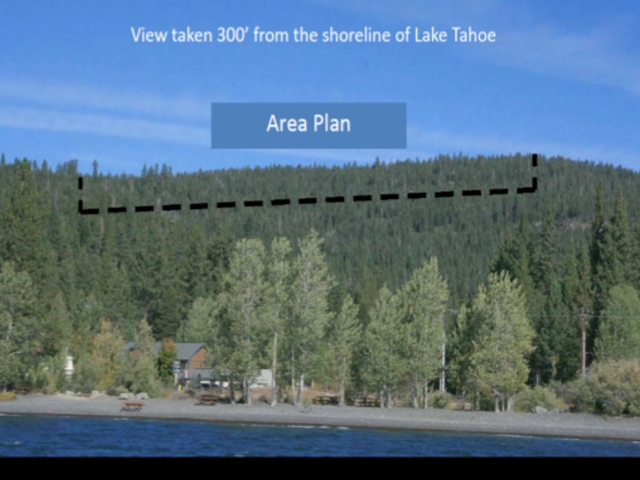
This ridgeline located in Carnelian Bay is what East West wanted to develop. 

This ridgeline located in Carnelian Bay is what Mountainside Partners wanted to develop.

By Kara Fox, Moonshine Ink

The Lake Tahoe Basin will no longer be included in the Martis Valley West Project, which originally called for 112 residential units on land inside the basin. The developer asked Placer County on Tuesday to exclude 138 acres of Tahoe basin land, while maintaining the transfer of development rights in Martis Valley, after environmental groups urged them to not develop within the basin.

“A part of the Martis Valley West Parcel Project initially contemplated having a Tahoe basin residential development component. Certain parties have made it clear that conservation in the Martis Valley is not their priority,” wrote Project Manager Kurt Krieg to Placer County. “The Tahoe Basin-centric focus ultimately jeopardizes the successful completion of the conservation legacy, upon which stakeholders have been working collaboratively for a decade.”

The developer, Mountainside Partners (formerly East West Partners), also asked that the county suspend the application to the Tahoe Regional Planning Agency for approval of any new development within an Area Plan in the Tahoe basin, which means any future development on the Tahoe basin land would have to be approved separate from the Martis Valley West Project. Mountain Area Preservation, Sierra Watch, the League to Save Lake Tahoe, and Placer County Supervisors Jennifer Montgomery and Jack Duran had been urging the developer to exclude the basin from its proposal.

“Because the Basin land will be separated from the rest of the project, approvals will not require Tahoe Regional Planning Agency action,” Montgomery said in a statement. “Additionally, the applicant will work with the agency to more accurately define the boundary line for the Tahoe basin. If necessary, a boundary line adjustment will be done to ensure the project is a separate legal parcel from any land within the Tahoe basin.”

Read the whole story


LTUSD asked to be on national TV show

By Kathryn Reed

Lake Tahoe Unified School District is about to be on the national stage.

The school board on Tuesday night voted to enter into an agreement with Fox Business Network to be part of a segment of “In View”, which is hosted by Larry King.

LTUSD was chosen because of the infrastructure improvements made in the last several years, the programs being offered and how the K-12 district is an economic driver in the community.

The show’s purpose is to highlight what is working in education, how districts are being innovative, using technology at all levels and providing students options.

LTUSD has all of those components. And all levels will be highlighted in the show – not just South Tahoe High, where the bulk of the makeover took place.

Besides being on national television, the district will be left with professional footage that it may use in other venues as a marketing component.

“We have control over the content, which is critical for us because we want to put out a consistent message,” Assistant Superintendent Ivone Larson told the board Jan. 27.

The show, which will air in the fall, is 30 minutes and includes other districts in the country. However, the crew is expected to shoot 10 hours of footage this spring. Lake Tahoe Unified School District will have rights to all of that film.

The board and staff see this as a way to market the district, especially the nearly $100 million in facilities improvements in the last handful of years.

Enrollment is increasing, which is attributed to improved schools.

Ginger Nicolay-Davis, a school board member and real estate agent, said clients often want to see the high school in addition to houses.

Because there are no commercials and a third party does the filming, the districts must pay to be part of the project. LTUSD’s costs are $27,900.

The goal is to get sponsors to pay for it. Already lined up is LPA, the architects behind all of the new buildings. Money will also come from the regional occupation program.

Superintendent Jim Tarwater said he will be asking others like SMC, the contractor for all the new facilities; South Tahoe Association of Realtors, since the schools, especially South Tahoe High, are a draw for people moving to South Lake Tahoe; and Barton Health with the link to the sports medicine program at STHS.

“If we get six new students, it covers the cost,” Larson told Lake Tahoe News. That means more families in the area and the ability to help stabilize the economy, she added.

In other action:

• CFO Deb Yates went over Gov. Jerry Brown’s budget that was released Jan. 9. She told the board there is more good in it than bad for LTUSD, but that the May revise will be the true test.

• Students and staff at South Tahoe Middle School spoke about the culture change at the school, various assemblies and how people are treating each other with more respect.


Gaming lobby enters debate on Obama AG pick

By Amber Phillips, Las Vegas Sun

Seeking a federal crackdown on illegal gambling, the gaming industry’s leading Capitol Hill lobby is wading into the debate over President Obama’s pick to be America’s top law enforcement officer.

The American Gaming Association has made it a high priority to protect the growing gaming industry against illegal gambling in 2015, and its leaders see the attorney general debate as one of the earliest and best vehicles to do that.

Obama nominated New York federal prosecutor Loretta Lynch to replace longtime Attorney General Eric Holder, who is stepping down. The Senate Judiciary Committee will start hearings for Lynch’s confirmation on Wednesday, and her prospects for confirmation aren’t clear in a Republican-controlled Senate.

Read the whole story


Study: Legal pot fastest-growing U.S. industry

By Matt Ferner, Huffington Post

Legal marijuana is the fastest-growing industry in the United States and if the trend toward legalization spreads to all 50 states, marijuana could become larger than the organic food industry, according to a report obtained by the Huffington Post.

Researchers from the ArcView Group, a cannabis industry investment and research firm based in Oakland, found that the U.S. market for legal cannabis grew 74 percent in 2014 to $2.7 billion, up from $1.5 billion in 2013.

The group surveyed hundreds of medical and recreational marijuana retailers in states where sales are legal, as well as ancillary business operators and independent cultivators of the plant, over the course of seven months during 2013 and 2014. ArcView also compiled data from state agencies, nonprofit organizations and private companies in the marijuana industry for a more complete look at the marketplace.

“In the last year, the rise of the cannabis industry went from an interesting cocktail conversation to being taken seriously as the fastest growing industry in America,” Troy Dayton, CEO of The ArcView Group and publisher of the third edition of the State of Legal Marijuana Markets, said in the executive summary of the report. “At this point, it’s hard to imagine that any serious businessperson who is paying attention hasn’t spent some time thinking about the possibilities in this market.”

Read the whole story


Tahoe harpist on Grammy-nominated album

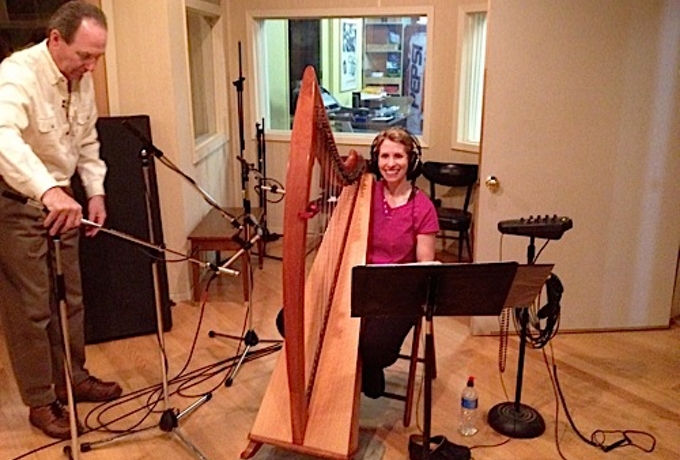
Michael Eardley and Anne Roos often collaborate. Photo/Provided

Michael Eardley and Anne Roos often collaborate. Photo/Provided

By Kathryn Reed

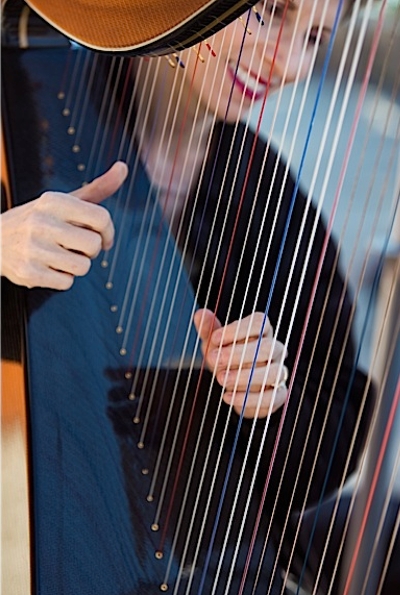
Listen closely. Hear that harp? It’s the delicate hands of Anne Roos making sweet sounds on those fine strings.

While this South Lake Tahoe resident has been playing the harp for more than 30 years, this is the first year she has been invited to the Grammy’s. Roos contributed to one track of an album that is up for Best New Age Album.

“I’m very pleased with this album and really happy to be part of the project,” Roos told Lake Tahoe News. “The music this gentleman put together is so lush, so full.”

Ricky Kej is the composer and keyboardist, while Wouter Kellerman is the flutist. “Winds of Samsara” is the album, with track No. 8 “Eyes of Wonder” where Roos comes in.

She is considered a sideman for her role. She was paid for her work, but does not receive royalties.

While Roos is rightfully excited about the honor, she is staying grounded. Even if the album wins, she will not take home a trophy, but instead will receive a certificate. She calls her seats at the Feb. 8 event in the peanut gallery, far from television cameras. And she doesn’t expect to be rubbing elbows on the red carpet with better-known musicians. In fact, she’s not sure if she will be on the red carpet.

Anne Roos often plays at venues on the South Shore. Photo/Jarvis Photography

Anne Roos often plays at venues on the South Shore. Photo/Jarvis Photography

New age and other less popular categories receive their awards earlier in the day. But she will be watching the main event from inside the Staple Center in Los Angeles.

“What I’m really looking at is this as a grand networking opportunity,” Roos said, adding, “And maybe to have the door open for other opportunities.”

There is no one person in particular she is looking to meet.

Roos didn’t know Kej before this encounter, but had heard of him through his work in Bollywood. Kej, who lives in India, was looking for a harpist and sent Roos a message via Facebook. Thus began their working relationship.

While it’s not unusual for musicians to record a track separately, Roos won’t do so from her home. She wants her music to have a higher quality so she goes to Tanglewood Productions in Reno where engineer Michael Eardley helps lay down the track.

The bulk of the time when Roos tells someone they are going to have to pay for studio time, that is the last she hears from them. Kej didn’t wince. It obviously paid off.