Nevada treasurer rewrites state budget

By Laura Myers, Las Vegas Review-Journal

Putting together a budget for the state of Nevada isn’t so easy after all.

State Treasurer Dan Schwartz, who proposed to the Legislature a spending plan to rival fellow Republican Gov. Brian Sandoval’s budget, said he’s rewriting it because Nevada can’t raise $540 million as he’d like from a proposed $5-per-passenger airport fee. That’s because those fees are controlled by the federal government and prohibited by states.

“It doesn’t work,” said Schwartz, a conservative who’s working with state Controller Ron Knecht on his budget plan.

Schwartz was scheduled to present his proposed alternative budget to the Senate Finance Committee today.

Read the whole story


Roof reimbursement program not adding up

By Kathryn Reed

Nancy Gaynor has been waiting nine months for a check to arrive from Lake Valley Fire Protection District. This is three months longer than what was promised to be the absolute deadline. And the latest word is that it could be a couple more months, maybe longer.

The South Lake Tahoe woman is one of the 366 homeowners participating in the shake roof rebate program.

The grant through FEMA allowed homeowners in Lake Valley, South Lake Tahoe and Meeks Bay fire districts to be reimbursed 70 percent, up to $7,500, to get rid of their fire hazard roof for something more fire resistant like a composite roof.

Applications were taken two years ago, with 2014 being the first building season and 2015 being the final year of the grant.

The problem is that of the 231 roofs that were completed last year, 108 of those residents are still waiting to be paid.

“We are getting smaller chunks of money than we anticipated. We are pretty caught up right now. It’s not overwhelming right now like it has been,” Terri Tucker, coordinator for the program, told Lake Tahoe News.

But still, nearly half of the people who got roofs last year have not been reimbursed.

Tucker called people “impatient”.

Lake Valley’s board members, though, see there is a problem and at their last meeting agreed to front $200,000 to speed up the process, according to spokeswoman Leona Allen.

“It’s not a program that is living up to its promises. It sounds like a really good deal, so a lot of us bought into it,” Gaynor told Lake Tahoe News.

The homeowner must qualify for the program, use one of the nearly 30 roofers who were certified by Lake Valley, pay the roofer and then submit paperwork to be reimbursed.

Gaynor took out a loan to cover the cost of her nearly $9,000 roof. The expectation was that it would be paid off in three months, with the bulk coming from the reimbursement check.

While she is grateful to have the new roof, had she known there would be any question about a prompt reimbursement, she likely would have figured out a different way to front the money than to be paying interest on a loan.

“What is disheartening is that you are told one thing and nothing happens,” Gaynor said.

Lake Valley officials say it’s not their fault the money isn’t flowing.

“They will get their money. It is guaranteed. It’s a very cumbersome process,” Allen told Lake Tahoe News. “We recognize it is a slower process than we imagined. The money is coming from FEMA, they send it through Cal-EMA.”

But neither Allen nor Tucker could explain the hold up other than to say it’s government and then pointed to how long it took people to get paid by FEMA after Hurricane Katrina.

The point of the grant was to get as many people as possible to have a more fire safe roof, which in turn protects neighborhoods. People in the program also had to have their defensible space done. From that standpoint, as well as keeping roofers busy for two seasons – making it an economic boon, the fire folks say the grant has been successful.


Managing forests to prevent catastrophe

By Katie Campbell and Courtney Flatt, KCTS-TV

WINTHROP, Wash. — Snow blankets the landscape in north central Washington. What you can’t see is the scorched earth left from last summer’s Carlton Complex fire.

Even through the snow, Susan Prichard, a fire ecologist for the University of Washington, can see the damage. She can also see signs of recovery in the bitterbrush and aspen trees.

Susan Prichard, a fire ecologist for the University of Washington, looks for signs of recovery in the aspen trees.

“Aspen, and cottonwood and willow species are all very fire adapted and disturbance adapted in that they’re sprouters,” Prichard said. “We’ve already seen, even in the fall following the Carlton Complex fire, just amazing sprouting by the aspen in particular.”

Although these aspen trees are resprouting, the fire this summer damaged other areas far more severely.

The Carlton Complex fire burned more than a quarter million acres — most of it in less than two days, as 30 mile-per-hour winds pushed hot smoke and embers through Okanogan County. Fire swept across shrublands and blazed through forests.

Prichard said it could take half a century or more for this area to recover. But she said there are ways to slow future wildfires.

“We know fire is going to re-occur. These are fire dependent ecosystems,” she said. “It’s not a question about if fire is going to return, but how it’s going to return and how much it’s going to burn and how much it’s going to allow to survive.”

Prichard said the best way to help forests in the long run is through thinning and controlled burns.

The question is: How much acreage needs to be treated to make a difference?

Thinning forests reduces the amount of fuel, like small trees, fires have to burn. This could help prevent explosive wildfires.

Reese Lolley, the Eastern Washington forest program director for The Nature Conservancy, said the emphasis on fire suppression in the last century helped create the conditions that have lead to more extreme fires.

Lolley said some fires actually need to burn. Smaller wildfires reduce fire fuel and ultimately create habitat and help regenerate trees.


Gun control advocates see Nev. as a source of hope

By Amber Phillips, Las Vegas Sun

WASHINGTON — As a gun-loving state where Republicans have launched a wave of pro-firearm proposals since taking control of the Legislature in 2014, Nevada might seem like anything but a source of hope for supporters of tougher gun laws.

But gun control advocates say they’re optimistic that Nevada could provide a turning point in the national gun-control debate, thanks to a 2016 ballot initiative that would expand background checks to all gun sales in the state. Advocates in Washington, D.C., are planning to aggressively organize in Nevada to help it pass, fueled by the belief that if change can come to this state, it can happen anywhere.

So far, Nevada is the only state with a background-check question on its ballot next year. Current Nevada law doesn’t require FBI background checks for unlicensed firearm dealers at gun shows and private sales. Republican Gov. Brian Sandoval vetoed a Democratic bill to expand background checks in 2013, saying it restricted Nevadans’ rights.

Read the whole story


LTUSD selects newcomer as board member

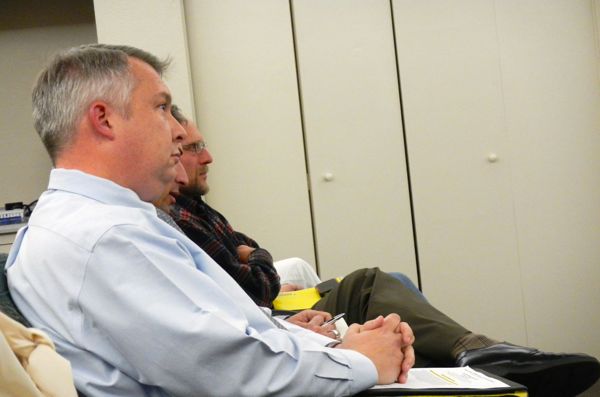
Adam Jones will be sworn in to the Lake Tahoe Unified School District board in March. Photo/Kathryn Reed

Adam Jones will be sworn in to the Lake Tahoe Unified School District board in March. Photo/Kathryn Reed

By Kathryn Reed

Lake Tahoe Unified School District board members went with experience over longevity in the community when it came to appointing a fifth board member.

Adam Jones, 43, will fill the seat vacated by Sue Novasel. He will be sworn in at the next meeting, March 10. Novasel resigned last month after being elected to the El Dorado County Board of Supervisors. This term ends Dec. 2, 2016.

“He is likely to bring in ideas from the outside and not be too insular,” board member Mike Doyle said of Jones during the Feb. 10 deliberations.

Jones and his wife have owned a vacation home here for a number of years. Last summer they became full-time residents with their children, who are in third and fifth grade.

He told Lake Tahoe News the schools were a factor in deciding to relocate here. He likes the programs and facilities at South Tahoe High School, and that per pupil spending is higher in LTUSD compared to the South Bay district they came from.

Jones told the board that LTUSD uses technology better than the district he came from in Santa Clara.

While this is the first political board Jones has been on, his experience on a school board started in high school when he was the student rep to a board.

What he brings to LTUSD is experience in other avenues. He has a bachelor’s in public policy from Stanford University and a master’s in education.

In the Bay Area Jones has been the president and finance director of the Don Callejon School Community Organization, which would be the equivalent to the local education foundation. He also was a member and chairman of the school site council.

The way he talked about education during the interview process proved he understands the system, even if he doesn’t know the nuances of the local schools.

For the past 21 years, Jones has worked for SimulTrans in Mountain View. He is still the chief operating officer for the translation firm. He returns to the Bay Area about every other week, but otherwise works remotely.

Five people were vying for the seat – Jones, John Drum, Kyle Martinez, Madelyn Rios and Jennifer Peterson. Now that LTUSD board seats are broken up into districts, the person had to reside in the area that represents Meyers.

The five were interviewed in open session, asked the same 10 questions without the other candidates in the room, and then the four-seated members deliberated with everyone hearing the discussion.

In the initial round of picking their two finalists, all current members – Barbara Bannar, Larry Green, Mike Doyle and Ginger Nicolay-Davis – all had Jones on their list. Two voted for Rios and two for Drum.

In further discussions it was clear Jones and Drum were the top choices. But ultimately Jones won out because of what board members said would be his ability to jump onto the board without much of a learning curve.


The shame of America’s family detention camps

By Wil S. Hylton, New York Times

Christina Brown pulled into the refugee camp after an eight-hour drive across the desert. It was late July of last year, and Brown was a 30-year-old immigration lawyer. She had spent a few years after college working on political campaigns, but her law degree was barely a year old, and she had only two clients in her private practice in Denver. When other lawyers told her that the federal government was opening a massive detention center for immigrants in southeastern New Mexico, where hundreds of women and children would be housed in metal trailers surrounded by barbed wire, Brown decided to volunteer legal services to the detainees. She wasn’t sure exactly what rights they might have, but she wanted to make sure they got them. She packed enough clothes to last a week, stopped by Target to pick up coloring books and toys and started driving south.

As she pulled into the dusty town of Artesia, she realized that she still had no idea what to expect. The new detention center was just north of town, behind a guard station in a sprawling complex with restricted access. Two other volunteers had been in town for about a week and had permission from federal officials to access the compound the following day.

Brown spent the night at a motel, then drove to the detention camp in the morning. She stood in the wind-swept parking lot with the other lawyers, overlooking the barren plains of the eastern plateau. After a few minutes, a transport van emerged from the facility to pick them up. It swung to a stop in the parking lot, and the attorneys filed on. They sat on the cold metal benches and stared through the caged windows as the bus rolled back into the compound and across the bleak brown landscape. It came to a stop by a small trailer, and the lawyers shuffled out.

As they opened the door to the trailer, Brown felt a blast of cold air. The front room was empty except for two small desks arranged near the center. A door in the back opened to reveal dozens of young women and children huddled together. Many were gaunt and malnourished, with dark circles under their eyes. “The kids were really sick,” Brown told me later. “A lot of the moms were holding them in their arms, even the older kids — holding them like babies, and they’re screaming and crying, and some of them are lying there listlessly.”

Brown took a seat at a desk, and a guard brought a woman to meet her. Brown asked the woman in Spanish how she ended up in detention. The woman explained that she had to escape from her home in El Salvador when gangs targeted her family. “Her husband had just been murdered, and she and her kids found his body,” Brown recalls. “After he was murdered, the gang started coming after her and threatening to kill her.” Brown agreed to help the woman apply for political asylum in the United States, explaining that it might be possible to pay a small bond and then live with friends or relatives while she waited for an asylum hearing. When the woman returned to the back room, Brown met with another, who was fleeing gangs in Guatemala. Then she met another young woman, who fled violence in Honduras. “They were all just breaking down,” Brown said. “They were telling us that they were afraid to go home. They were crying, saying they were scared for themselves and their children. It was a constant refrain: ‘I’ll die if I go back.’ ”

As Brown emerged from the trailer that evening, she already knew it would be difficult to leave at the end of the week. The women she met were just a fraction of those inside the camp, and the government was making plans to open a second facility of nearly the same size in Karnes County, Tex., near San Antonio. “I remember thinking to myself that this was an impossible situation,” she said. “I was overwhelmed and sad and angry. I think the anger is what kept me going.”

Over the past six years, President Obama has tried to make children the centerpiece of his efforts to put a gentler face on U.S. immigration policy. Even as his administration has deported a record number of unauthorized immigrants, surpassing two million deportations last year, it has pushed for greater leniency toward undocumented children. After trying and failing to pass the Dream Act legislation, which would offer a path to permanent residency for immigrants who arrived before the age of 16, the president announced an executive action in 2012 to block their deportation. Last November, Obama added an executive order to extend those protections to their parents. “We’re going to keep focusing enforcement resources on actual threats to our security,” he said in a speech on Nov. 20. “Felons, not families. Criminals, not children. Gang members, not a mom who’s working hard to provide for her kids.” But the president’s new policies apply only to immigrants who have been in the United States for more than five years; they do nothing to address the emerging crisis on the border today.

Since the economic collapse of 2008, the number of undocumented immigrants coming from Mexico has plunged, while a surge of violence in Central America has brought a wave of migrants from Honduras, El Salvador and Guatemala. According to recent statistics from the Department of Homeland Security, the number of refugees fleeing Central America has doubled in the past year alone — with more than 61,000 “family units” crossing the U.S. border, as well as 51,000 unaccompanied children. For the first time, more people are coming to the United States from those countries than from Mexico, and they are coming not just for opportunity but for survival.

Read the whole story


Mountains’ well being affects water downstream

By Gene Beley, Central Valley Business Times

California’s already over-subscribed water supply could be in even worse shape in the years ahead because of devastating Sierra Nevada wildfires, some of which have been started by arson, say experts in mountain watersheds and their forests.

The California Delta, heart of the state’s massive, multi-billion dollar water system, cannot survive without the mountain watersheds, warns John Kingsbury, executive director of the Mountain Counties Water Resources Association of Placerville. And the mountain forests are being burned by larger and larger wildfires.

Water in the Cascades and Sierra Nevada mountains flows into the Central Valley and provides water for more than two-thirds of the state plus two million acres of farmland.

Read the whole story


Tahoe trees are more than scenery on a hike

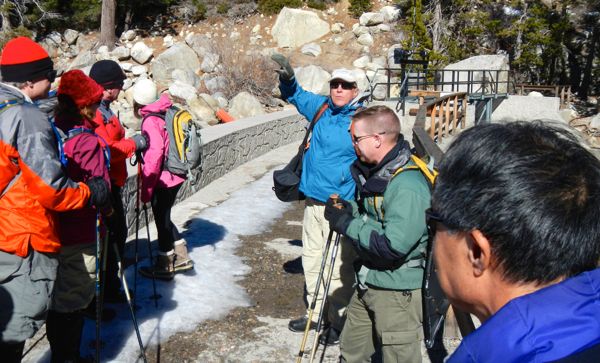
TRTA leader Jim Mrazek, in blue, pauses on the dam at Echo Lake to talk about the area. Photos/Kathryn Reed

TRTA leader Jim Mrazek, in blue, pauses on the dam at Echo Lake to talk about the area. Photos/Kathryn Reed

By Kathryn Reed

ECHO SUMMIT – It was a bit like a scavenger hunt, with everyone looking for pine cones, insects and animal tracks.

Pine cones were in abundance, especially because the snow was lacking. Insects were hiding, which is a good thing because that’s what they should be doing in winter. The tracks were limited to squirrels, but this, too, could have had something to do with the scarcity of snow.

Four leaders (one in training) with the Tahoe Rim Trail Association led a group of 13 on a trek to Echo Lake on Jan. 31.

It was supposed to be a snowshoe, but Mother Nature did not cooperate. Instead, many put Yaktrax on their hiking boots to combat the icy portions of the trail.

It was part hike, part educational experience, part environmental stewardship.

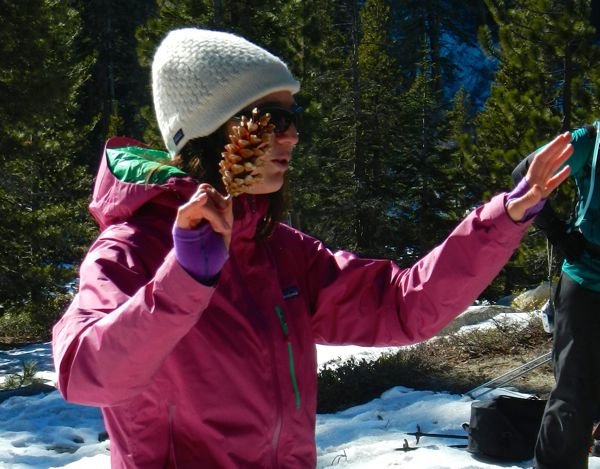
Maria Mircheva with the Sugar Pine Foundation explains the different pine cones.

Maria Mircheva with the Sugar Pine Foundation explains the different pine cones.

“When you walk in the forest it just looks like trees, but there is so much than trees,” Maria Mircheva, executive director of the Sugar Pine Foundation, says. “Sometimes when you look at a tree you can see its life story.”

Big gaps between branches can signal a big water year because of the growth spurt. Sometimes when there are no branches on one side it could mean another tree had been standing next to it and prevented the limbs from growing.

On this excursion there are Western white pine, red fir, Jeffery pine (the most popular tree in Lake Tahoe), lodgepole and white bark.

Blister rust is decimating the white pines and could one day wipe out this species of trees.

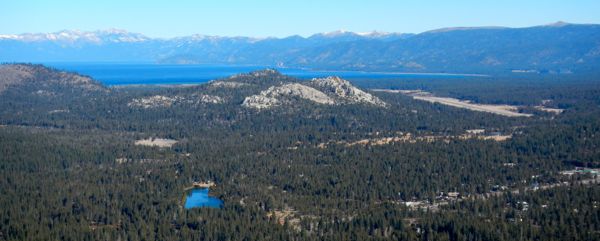
Views along the ridgeline look out to Lake Tahoe.

Views along the ridgeline look out to Lake Tahoe.

The group comes across a huge fir that has been uprooted. Mircheva shares how different diseases are taking hold of pines and firs. This tree was probably weakened by disease and came down in the Dec. 11 storm.

The foundation focuses its efforts on saving the sugar pine. This is done through education as well as plantings. Each year volunteers climb the tall trees, harvest the cones so the seeds may be extracted and then seedlings are planted in the forest. To date, about 10,000 have been planted since 2008. But the survival rate is only 20 to 25 percent.

Mircheva explains how the pitch coming out of trees is their healing mechanism. The difference between pitch and sap is sap is harvested and turned into syrup – and it comes from a different type of tree.

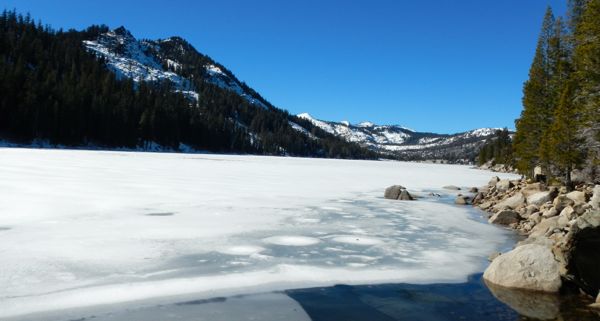
Lower Echo Lake is partially frozen.

Lower Echo Lake is partially frozen.

Pointing to the moss on the trees, Mircheva says it doesn’t go to the ground because snow should be covering the lower part of the trees. With that not happening this winter, it’s possible the moss will start growing on the lower portion.

The TRTA leaders – Jim Mrazek, Sue Henson, Renee Gorevin and Alan Catron – impart information about poles – safety and stability issues; about the need to make loud noise when a bear is on the trail; how this area of the Tahoe Rim Trail intersects with the Pacific Crest Trail and the role of trail angels.

This particular three-mile hike was free and open to the general public. Other excursions the TRTA does are open only to members. For information about future treks, go online.


Whooping cough vaccine fails for many

By Phillip Reese, Sacramento Bee

As debate simmers nationwide about whether parents should be forced to vaccinate their children, Elk Grove residents have made their choice: Only 80 of the suburb’s 4,500 kindergartners opted out of vaccinations last year, state data show.

Despite those precautions, whooping cough ripped through Elk Grove’s classrooms and cul-de-sacs in 2014. Infection rates within the large Sacramento suburb were three to five times higher than rates elsewhere in the county, local health records show.

The paradox – high infection rates amid high immunization rates – underscores a disturbing truth about the current whooping cough vaccine: It is wearing off after just a few years, and many Californians who thought they were protected instead are catching the disease.

“Children who were vaccinated did not receive the protection desired,” said Kate McAuley, program coordinator of communicable disease and immunization at the Sacramento County Public Health Department. “We had many high-school-aged children who had pertussis. They had received vaccines. The vaccine is lasting two to three years.”

Read the whole story


No matter the wedding size — get married in Tahoe

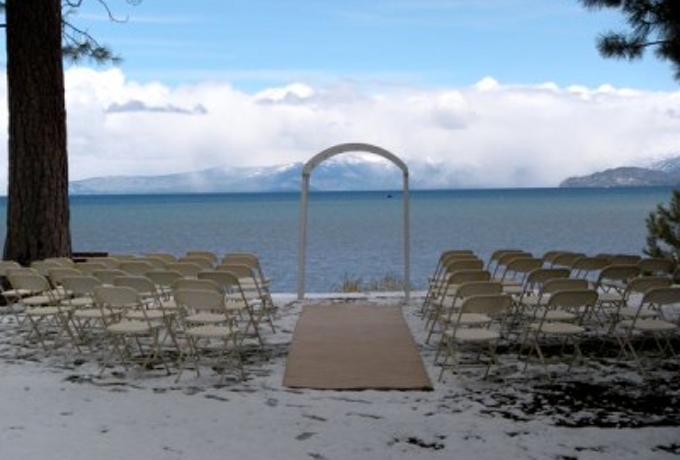
Tahoe weddings often come with a view. Photo/LTN file

Tahoe weddings often come with a view. Photo/LTN file

By John Spinola

So you want to get married? And you want to get married in Lake Tahoe. Aaand you’re on a budget.

Well, let me just mention that in 15 years of me being a wedding officiant in Lake Tahoe I have never come across a couple that said, “We aren’t on a budget and can spend any amount of money you can come up with.” So, if you are like 99.9999 percent of the couples out there, you have a budget.

Let me start with my first piece of advice if you are on a budget – elope. Really, elope. If it is just the two of you, you will have fewer obligations to meet both monetarily and time-wise. You won’t have to purchase food for people, you don’t need a big venue and all the amenities that go with it. You won’t have to purchase bouquets or boutonnieres for your bridal party, hair and makeup for one is less than hair and make up for a group, you don’t have to offer lodging and you won’t have friends increasing your spending with all of their suggestions.

If it is just the two of you, you can hire a minister, get a marriage license and I would highly recommend a photographer so you have pictures to share with people after you get back. Eloping offers more locations in the area. If you have group, you will need parking, bathrooms, seating. bridal room, etc. If it is just the two of you, there are some very nice ceremony locations here. I call them ceremony locations because they really aren’t “wedding” locations. In other words, they don’t work well with a group of people.

Eloping also has the advantage of increasing your free time. You don’t have to cater to all the production stuff that shows up with groups – rehearsal dinner, ladies’ events, guys’ events, picking up people at the airport, meeting people after they arrive, etc.

Eloping allows your vision to stay true to what you want. When you involve your friends and family you will inevitably hear – you should do, you have to do, you could do, you can’t do, the book says, this is tradition, I did do, I didn’t do. Guests add drama, time, as well as costs.

And, yes, my wife and I eloped.

If you are like most people, you want to have guests. That is fine and I am all for it, but just remember what I have said above.

Lake Tahoe and guests

Consider a morning ceremony (11am, noon). Morning ceremonies tend to flow into a lunch reception rather than a dinner reception. Lunch is less money than dinner and people drink less at lunch than dinner. A morning time also allows any guests that live close to drive home after the reception. Earlier time slots might also be discounted because most couples want an afternoon time.

Consider a day other than Saturday. Saturday is the busiest day for weddings. Most vendors and venues offer discounts for non-Saturday weddings. Also, lodging is less during the week. Rates for lodging go up over the weekend.

Consider a smaller guest count (50 people venues/receptions cost less than 100 people venues/receptions). Also, fewer people means less drama.

Things not to cut from your budget

Get a cake locally. I have never seen it go well when someone travels with a cake. I have seen people’s car breakdown or lose air conditioning. Melting cakes are very sad. I have seen friends run late with the cake. I have seen people show up with a cake and not have any flatware or dinnerware to serve it. Also, most venues do not have a place for you to store your cake, so you have to provide your own refrigeration. Really, get a cake locally.

Hire a professional photographer. There is a saying among wedding vendors: “Friends don’t let friends shoot their weddings.” A professional knows you are on a timeline. They know the shots that are important and know how to get them. A professional is not emotionally attached to you or your event. They are emotional and passionate about their work and the final product they provide. I have seen friendships end because of poor quality wedding photos. I have seen friends/family get tipsy and forget that they are the “photographer” for the event. You want your friends and family to be guests and not vendors.

Have your flowers done by a florist or flower shop. You need refrigeration for flowers that is completely separate refrigeration from food. Food gases will wilt/kill flowers. You also need time to put them together and supplies to put them together.

When are you going to put yourself together if you are putting flowers together? You as a bride (or groom) must stay focused on being the bride/groom. You cannot be the coordinator, flower person, baker, decorator. You can be involved in the choices and process, but you need to remember to be the bride/groom first. I have seen people become more of a host rather than the people that the event is about.

Some good advice

If you are flying here, ship your dress. About four to six weeks before your event pack up your dress and ship it to the local dry cleaners. They will unpack and prep your dress for when you arrive. Send it certified so you know it has arrived. This will eliminate one more thing for you to keep track of and will also eliminate the possibility of the airline losing or damaging your dress right before your wedding.

Please, please – secure you ceremony time and venue before you plan your reception time and venue. I cannot tell you how many times I have had brides call and say “I need X” time because I already have my reception planned. Start with your ceremony time.

Rent tux locally. Go to a Selix dealer in your area. Pick out a style and get measured. Tell them you are getting married in Lake Tahoe. We have a Selix dealer here. If you rent a tux from the Tahoe dealer, you only have to rent it for a day. If you rent a tux from your area, you have to rent it for the length of your trip and you have to travel with it.

Arrive the day prior. Wake up where you are getting married. I have never seen it go well when people want to drive up the day of their wedding. Consider traffic. What if there is an accident. Car troubles? If you get a late start, you cannot make that time up on the road. What if your flight is late or luggage and rental car don’t go as planned? Where will you get ready for your event after you arrive. Most hotels have a check in time between 3-4pm. If your event is scheduled for 5 (or even earlier), that doesn’t give you any time (or place) to get ready. Again you really want to wake up where you are getting married.

Parents and money

All I have to say is that, “If they pay, they get a say.” If possible, have your guests ship presents to your residence after the event. It will save them the hassle of traveling with a gift and you the hassle of having to bring it home.

If you are planning an event on the South Lake Tahoe, be sure to stay in South Lake Tahoe. I have seen people make lodging arrangements in North Shore and then pick a venue in South Shore that they like. You don’t want to add 45 minutes to an hour in the car on your wedding day. This also applies to a North Shore event. Stay in North Shore if your venue/event is in North Shore.

If you can visit the area before hand, please do. This will give you the opportunity to meet vendors and see the locations in person (and what surrounds the locations). Please remember that it looks very different in winter than summer and also schedule your visit during the week. Most vendors will not have a chance to offer consultations on Saturday because they are busy doing weddings. Monday-Thursday work best for visits.

Look for small print on the websites. There is a lot of it. Some places don’t include a license, some have the minister’s fee separate from the package. Some hide a Saturday surcharge in the small print. Ask for a total price. Ask who is the minister? Who is the photographer? And ask to see samples of their work or if you can meet them or talk with them ahead of time. Use the 800 number to talk with people. It is a personal service/experience, so be sure to interact a bit with the people that will be handling your event. They should make you feel comfortable. They should also answer your questions and listen to what you have to say. There should be some kind of “click” between you.

Ultimately, do what you as a couple want to do. It is your wedding. Don’t let friends or family pressure you into a large event if you don’t want one. I have seen family members and friends pressure couples into events that they really didn’t want. Again, people add drama and costs.

In closing

I hope the above doesn’t discourage you from having a destination wedding. I just want to make you aware of the things you will encounter with planning a wedding whether here in Tahoe or where you live. I have helped many couples in the 15 years that I was doing this and 99 percent of them have been very happy with my services. (If you are in customer service you know you cannot please everyone.)

The Rev. John Spinola has been a wedding officiant for more than 15 years – which includes more than 3,000 weddings, from two to 200 guests – from formal gatherings to rock climbing.