Drought could mean a bad West Nile year

By Phillip Reese, Sacramento Bee

Abbey Murphy never felt the mosquito bite that eventually swelled her brain and left her unable to walk for weeks.

“I had uncontrollable vomiting, severe migraines,” said Murphy, a sophomore at UC Berkeley. “I couldn’t get up to get breakfast.”

Murphy eventually recovered from her West Nile virus infection, though it took months. She was one of roughly 800 Californians infected last year during the worst West Nile outbreak in a decade, new state figures show.

Experts say the ongoing drought was largely to blame and predict another bad year in 2015.

Read the whole story


Drought brings early start to wildfire season

By Kate Schimel, High Country News

When Jim Stimson first spotted a fire burning 20 miles northwest of Bishop, California, on Feb. 6, he didn’t think much of it. Stimson, a 40-year resident of the area and a local photographer, was leading a workshop in the hills outside of town. He couldn’t remember the last time a fire in February did much damage.

But it didn’t take long for him to realize this wasn’t a typical February fire.

The Round Fire, as it was named, burned 7,000 acres and 40 homes before local firefighters, aided by a rainstorm, brought it under control.

For local residents, it drove home a message Westerners may finally have to get used to: Fire season isn’t just confined to the months of July and August anymore, or even May through September. Over the last four decades, the season across the West has gotten two and a half months longer. Last year, rare January fires swept across southern California. And just last week, the Round Fire wasn’t the only abnormally early burn to hit the West. A spate of wildfires broke out in northern Utah Feb. 8 and 9, burning a few hundred acres.

Read the whole story


Mental health a growing concern on South Shore

By Kathryn Reed

Mental health issues are a problem for educators, law enforcement, medical professionals and others. The illness tends to permeate nearly every facet of the population and not always in ways that are obvious.

When Barton Health conducted its Community Health Needs Assessment in 2012 mental health was one of the three priorities that needed to be addressed. Access to care and substance abuse rounded out the top concerns. (Barton is in the process of doing its second needs assessment.)

“Mental Health is multi-faceted, so there is not a quick or simple answer. Ideally having options for prevention, maintenance and acute crisis during different developmental phases would help support people when they need that support,” Kindle Craig, executive director of Barton Health Foundation, told Lake Tahoe News.

Mental health can be difficult to treat because of limited funding and facilities, especially in an area like Lake Tahoe because it is nowhere near a metropolitan area that has more resources.

“The adult populations experiencing the greatest barriers to mental health care in El Dorado County, and particularly in South Lake Tahoe, include low-income populations, the Hispanic community, ex-offenders, homeless and co-morbid mental health and substance addicted adults. According to the patient panel of the county Mental Health Division, dual-diagnosis patients (mental illness and substance abuse) comprise approximately 80 percent of the population served, and the county has reported an increase in the number of youth with this dual diagnosis,” the mental health assessment concluded.

Law enforcement is often interacting with people who are mentally unstable. It’s an issue South Lake Tahoe Police Chief Brian Uhler regularly brings up. He did so again at Saturday’s strategic planning workshop – saying more resources are needed and attention paid to mental illness in the community.

“A February 2012 report to the California Department of Health Care Services indicated that approximately 5 percent of the El Dorado County population needed mental health services based upon the serious mental illness definition. Within households below 200 percent of the federal poverty level, this rate increased to approximately 9 percent. When a broader definition of mental health needs is utilized, the percent of population that had a need for mental health services increased to approximately 12 percent of the population, and within households below 200 percent FPL, the need increased to approximately 20 percent. This indicates that over 21,000 county residents may need mental health services, many of whom are likely not seeking treatment,” the mental health assessment states.

According to the National Institute of Mental Illness, mental disorders affect tens of millions of people each year, with only about half of those affected receiving treatment.

In September 2013 a group came together for the inaugural mental health forum on the South Shore. The next gathering is March 5.

“The goals of the mental health forum are to continue to raise awareness, identify gaps in service/access, and build a community care flow map allowing all parties – caregivers, providers, schools, and first responders – to understand the appropriate pathways for patient access with regard to patient age and insurance coverage,” Craig said.

She said the first forum provided greater understanding by those who participated of the mental health system, the deficiencies and why they exist.

“A specific positive outcome was developing a way to work across state lines to be able to transport certain patients to appropriate facilities in Nevada, as well as California, depending on the need,” Craig said of the 2013 gathering.

Barton, law enforcement, paramedics, El Dorado County, Lake Tahoe Unified School District and nonprofits were part of the first forum.

Invited to this year’s gathering are: Barton Health, LTUSD, Douglas County School District, Family Resource Center, city and county officials, El Dorado County Mental Health, South Lake Tahoe Police Department, South Lake Tahoe Fire Department, Drug Free Coalition, Lake Tahoe Collaborative, Live Violence Free, Child Protective Services, and others.

Next week’s all-day forum is designed to create achievable goals.

“South Lake Tahoe is in need of a more collaborative, effective approach to addressing mental health. Working cooperatively with the social services agencies and community members is essential to understanding the issues, identifying gaps, and solving problems,” Craig said. “As a healthcare provider, Barton offers an array of medical services including child psychiatry, bereavement counseling, and tele-psychiatry. Patients come to Barton through a variety of access points in need of assistance related to mental health. If it is not a medical need, Barton works with the appropriate agency to refer patients to the best location to receive appropriate services like counseling.”


Life sentence for man who killed SLT teen

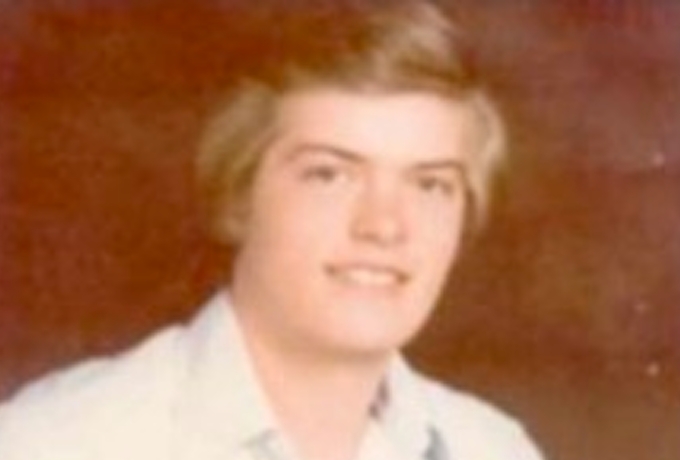
Richard Swanson was killed in 1980 in South Lake Tahoe. Photo/Provided

Richard Swanson was killed in 1980 in South Lake Tahoe. Photo/Provided

Andrew Sanford on Monday was sentenced to life in prison without the possibility of parole for the first-degree murder of a South Lake Tahoe teenager.

Richard Swanson, 16, was killed in 1980 while working at was a Shell Station at the Y. He had been beaten, wrapped in duct tape and left to die in a back room.

El Dorado County Superior Court Judge James Wagoner on Feb. 23 denied Sanford’s request for a new trial and handed down the sentence.

Sanford, 53, was found guilty in April 2014.

Sanford, who was 19 at the time of the murder, had a small criminal record that included auto theft, and breaking and entering.

“As in this case, every family who has lost a loved one to violent crime finds that moment and their loss frozen in time. Nothing can bring their son Richard back, but it is my hope that Richard’s parents and family members may find some peace knowing that the person responsible for their son’s death has finally been held responsible for his actions,” District Attorney Vern Pierson said in a statement.

— Lake Tahoe News staff report


Fitness trackers may help doctors with diagnosis

By Anick Jesdanun, Associated Press

That phone app keeping track of your exercise and meals might keep you out of the hospital one day.

Why give your doctors permission to incorporate data from fitness trackers and health apps into electronic patient records? Well, they might spot signs of an ailment sooner and suggest behavioral changes or medication before you land in the emergency room. They also might be able to monitor how you’re healing from surgery or whether you’re following a treatment regimen.

“Right now we only see our patients for about a 15-minute visit in the office, and it’s a very constricted view,” said Lauren Koniaris, a specialist in pulmonary critical care at Hackensack University Medical Center in New Jersey. “This really globalizes the view of their health status, so that we’re really in contact with them on a much more daily if not hour-to-hour basis. It’s almost like a virtual house call.”

At Hackensack, a handful of patients at risk for heart failure are asked to use a fitness tracker to count steps walked and flights climbed. They are also asked to record what they eat — by photographing the product’s bar code, for instance — using a phone app that has a database containing nutrition information on thousands of food items. Using Apple’s new HealthKit technology, data from the various trackers and apps gets automatically transferred to the Epic MyChart app on the iPhone. From there, the information goes to the hospital’s records system, which also comes from Epic.

Hackensack wants to expand to more patients and start tracking blood pressure and amount of sleep, too. But the hospital first needs to ensure that teams are in place to review the glut of data coming in. More broadly, there’s also a question of whether these trackers and app really improve patient care, and consumer privacy and security issues to address. The University of California, San Francisco, is studying which gadgets are reliable and whether that reliability extends to patients with extreme conditions. Then they have to figure out which data are really meaningful — not just noise.

Many doctors and hospitals see potential. The Mayo Clinic in Rochester, Minnesota, uses Fitbit trackers to monitor hip-replacement patients for a month after surgery. Health workers get data on daily steps and can tell when patients have trouble walking — a hundred or more miles away. The Ochsner Health System in New Orleans is turning to wireless scales and blood-pressure devices to help reduce readmissions for chronic diseases such as heart failure. Noticing a small weight gain, for instance, might reveal fluid buildup resulting from the heart failing to pump normally. Not only can doctors intervene sooner, they can use the data to show how exercise can help lower blood pressure.

“If we’re going to succeed in improving health, we have to get patients more engaged in their care,” said Richard Milani, a cardiologist at Ochsner.

Heart-attack patients have long been asked to weigh themselves, while those with diabetes have had to check glucose levels. Smartphone technology makes all that easier and gets measurements to doctors more regularly and reliably. There’s no forgetting to record a number or transposing digits.

With Apple’s HealthKit tools, disparate gadgets and records systems can work together more easily. Think of HealthKit as a common language, eliminating the need for translators. Beyond sleep and exercise data coming from fitness trackers, doctors can eventually incorporate devices that measure glucose, blood pressure, respiratory rates and blood-oxygen levels. The devices communicate with the iPhone wirelessly or through the headphone or charging port. Google, Samsung and Microsoft have similar ambitions that will expand monitoring to users of Android and Windows phones, though they aren’t as far along. For now, developers must write separate code for each Android or Windows app to integrate.

Gary Wilhelm, 51, who works at Hackensack on payroll and finance technology, joined the hospital’s app test after he suffered a heart attack in October. He appeared animated during a check-up this month as he showed Sarah Timmapuri, his cardiologist, various charts on flights climbed and cholesterol intake. There were a few bad days that Wilhelm blamed on the Super Bowl. Timmapuri instructed Wilhelm to monitor his pulse on his new Fitbit Surge. If it gets to about 155 beats per minute, he’s to end his workout.

“Even if I did not do a single thing with the information, just the patient knowing that I’m reviewing it will already have a positive effect,” Timmapuri said.

Mayo patient Randy Smothers, 62, of Chisago City, Minn., agrees. He said he was in pain after getting his right hip replaced and would have stayed on his couch without the knowledge that someone was checking on him.

“This pedometer they gave me made me walk every day and move on and get going,” he said.

Apps and trackers could ultimately reduce patient visits, though there’s a risk patients would practice self-care.

“It may be an aid or a tool to help me deliver better care, but it is just a tool,” said Robert Wergin, president of the American Academy of Family Physicians. “It shouldn’t substitute for a face-to-face visit.”


Hotel component of Chateau in design phase

This is an original rendering of what the hotel and pool at the Chateau were to look like.

This is an original rendering of what the hotel and pool at the Chateau were to look like.

By Kathryn Reed

A 32-room four-star caliber hotel is being designed in what will be the next phase of the Chateau project in South Lake Tahoe.

Accompanying it will be a swimming pool, spa, nearly 19,000-square-feet of retail and open space. The pool will be designed to accommodate what will eventually be two hotels. This first one is permitted for 115 units, while the larger one is for 365 rooms. The bulk of the commercial will be completed in the next phase.

No price is being put on what the next phase will cost, though it is in the tens of millions of dollars range. The opening date could be winter 2017.

Design plans have been submitted to the city. Lew Feldman, attorney for the project owners, says construction could start this fall.

“It really is a testament to where the community is headed,” City Manager Nancy Kerry told Lake Tahoe News. She added that it is especially significant so soon after the initial retail phase of the Chateau opened.

This adds to the 10-year goal, with this being year two, of having $1 billion of private and public money invested on the South Shore. To date $300 million has been spent on upgrading the built environment.

Tahoe Stateline Ventures, the company formed to develop the 11-plus-acre site near the state line, is incrementally building out what was to be a convention center, two hotels and a retail complex. That was the plan that was permitted by the Tahoe Regional Planning Agency in 2008, but which got derailed because the original developer filed for bankruptcy. With the dissolution of redevelopment and the city’s not having a role in the project anymore, the likelihood of a convention center’s ever coming to fruition is slim to none.

What that aspect of the project might become remains to be seen.

Still, Owens Financial, the parent company of Tahoe Stateline Ventures, is continuing to believe in South Lake Tahoe. The completion of the next phase could mean the project would be in a better position to attract investors to complete the plans.

The first hotel project will be 32 rooms of what could become a 115-room hotel. It will be a hotel-condo project, with full ownership and the possibility of rooms being put into a rental pool.

Feldman told Lake Tahoe News it is too soon to know if the lodging property will have a well-known flagship or be independent.

This next phase will be adjacent to the Chateau retail that exists on Highway 50. The electric bike rental shop will be demolished. The retail will be on the first floor and the hotel-condo complex on the second and third levels. Rooms will be one-, two- and three-bedroom.

The streetscape along Highway 50 will be completed. For people not wanting to use Stateline or Friday avenues to access the property, a route via Cedar Avenue will be created. This will give guests better pedestrian access to Lakeside Beach, and those staying elsewhere greater access to the retail center.


Vitamins are making America less healthy

By Lindsay Abrams, Salon

A, C, D, E, K and the eight Bs: There’s a lot that can go wrong when we don’t get sufficient amounts of these 13 chemicals in our diets. Things like pellagra, caused by a B3 deficiency and characterized by delusions, diarrhea and “scaly skin sores,” or beriberi, which occurs in the dearth of B1 and can affect either the nervous or cardiovascular system, depending on which type you’ve got.

But in North America, vitamin deficiencies are a rarity.

The nutrition-related health problems we do have to worry about are a lot different: obesity comes to mind, as does diabetes and hypertension.

Incredibly enough, argues science writer Catherine Price, it’s the fact that we’ve solved the former that’s contributing to the latter: food companies add synthetic vitamins to otherwise unhealthy fare, preventing us from developing scurvy but also, at the same time, from following truly nutritious diets.

“We use vitamins as insurance policies against whatever else we might (or might not) be eating,” Price writes in “Vitamania: Our Obsessive Quest for Nutritional Perfection,” “as if by atoning for our other nutritional sins, vitamins can save us from ourselves.”

Read the whole story


2015 could be year of the gun in Nev. Legislature

By Sean Whaley, Las Vegas Review-Journal

CARSON CITY — A flurry of firearm and Second Amendment related bills introduced in the Legislature have already generated plenty of controversy even though none of the major proposals have even had hearings yet.

First there was a dust-up between Senate Democrats and Republicans over a GOP gun measure that includes domestic violence provisions that Democrats said fell short of what is needed.

Firearms are making some noise in the Nevada Legislature this session.

This could be the year of the gun, as Republicans, who are in the majority in the Legislature for the first time in decades, see a chance to enact Second Amendment measures supported by many of their constituents.

Assembly Judiciary Chairman Ira Hansen, R-Sparks, said the large number of bills is in part a reflection of concerns that there is a strong movement to curtail gun rights nationally.

At least nine bills directly relating to firearms have either been introduced or are being drafted.

Read the whole story


S. Tahoe officials strategize about the future

By Kathryn Reed

Recreation is going to be the economic driver for South Lake Tahoe. One way to do this is to stop letting county and state lines be a roadblock. Another is to invest in facilities so they become moneymakers that could provide dollars for other city needs.

But more opportunities besides or in addition to being a recreation mecca are possible based on the ideas that were elicited Feb. 21.

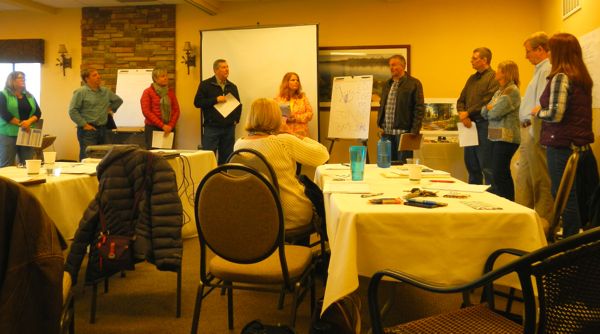
Councilmembers, department heads and other key staff spent 3½ hours Saturday talking about what the city could be. Barely touched on was how to turn the ideas into reality, but that will be flushed out at another meeting as well as when the midyear budget review is presented in April.

“Until we know who we are, we won’t know why we are doing it,” City Manager Nancy Kerry said. “There is no shared agreement of who we are.”

But she added, “One South Shore is starting to take hold.” This is the philosophy of realizing what happens throughout the South Shore impacts everyone and that working together instead of against each other is better for everyone.

And while the city is accountable to the residents within its boundaries, the decisions it makes have impacts beyond its borders.

Ted Gaebler, author of “Reinventing Government” and a retired city manager who spent 50 years in local government, facilitated the meeting at Lakeland Village. He asked them all to express their vision for the city – regardless of money, current policy, how long it would take to achieve or the realistic ability to achieve the goal.

The purpose was to stimulate these city leaders and to get them thinking beyond the norms, beyond what is expected and beyond the ordinary.

South Lake Tahoe city staff explain to the council the projects that are in the works. Photo/LTN

South Lake Tahoe city staff explain to the council the projects that are in the works. Photo/LTN

Here are some of the ideas:

• Erase the state line. Or go even further and create an entity whereby the Lake Tahoe Basin governs itself – almost like it is a state unto itself, or have the area be one bi-state county.

• Turn the casinos into condos.

• Have Caltrans turn Highway 50 over to  the city so it becomes a city street, which would give the city more opportunities.

• Redevelop Barton Ranch – possibly convert it into a farm for locally sourced food.

• Light rail on Highway 50.

• Tear down dilapidated hotels in town and build quality affordable housing.

• Build a quality recreation center.

• Create an events center for concerts.

• Public art.

• More special events.

• Focus on quality of life.

• Ensure the community is engaged in order to make changes.

• A safe community – in terms of lighted walkways, low crime, and fire safe.

• Build a children’s or discovery museum.

• Better transportation.

• Better connectivity with the trail system.

• Tear down one-third of the hotels. (“We need families here instead of tourists.”)

• Purchase private beaches and turn them into public beaches.

• Remove private residences from the shoreline and create more public access via commercial enterprises like lakeside dining.

• Get rid of Campground by the Lake and make it city offices.

• Revise commercial floor area so it is only needed for one level; this would create more development opportunities.

• Turn the airport into a heliport and then have special events there.

• Take over South Tahoe Public Utility District; this would reduce redundancies and allow for improvements to be made faster.

• Collaborate with private entities and public agencies.

Gaebler reminded the City Council that their responsibility is to the steer the boat, not to actually be doing the rowing.

“We can’t do any of the stuff we would like to do without new revenue,” Councilman Austin Sass said.

He wanted his colleagues to embrace getting a tax hike of some kind on the ballot in November 2016. But they collectively said “slow down” so there would be time to evaluate what exactly any new income would be spent on. Then there will be the discussion about how the money would be raised.

The electeds do seem to agree money should be spent on recreation – but that is a broad topic. The idea, though, is to improve recreation – which will bring money to city coffers – and use revenue from those recreation endeavors to fund road improvements and other needs within the city.


States seek alternatives for highway, bridge funding

By David A. Lieb, Associated Press

JEFFERSON CITY, Mo. — Touted as one of the first interstate highways, a 200-mile span of Interstate 70 between suburban St. Louis and Kansas City stands as a prime example of the challenges facing the nation’s roads.

Built in the 1950s and ’60s with a 20-year-life expectancy, the four-lane highway is crumbling beneath its surface and clogged with traffic as it carries more than 30,000 vehicles a day on many of its rural stretches, requiring more frequent repaving. The cost to rebuild and widen it is estimated at $2 billion to $4 billion — as much as five times the projected yearly construction and maintenance budget of Missouri’s transportation department.

And there is no easy way to pay for it. The state fuel tax hasn’t risen in about 20 years, and voters defeated a 1-cent sales tax for transportation. Gov. Jay Nixon has since floated the idea of hiking the gasoline tax and reviving a previously failed plan to turn I-70’s reconstruction over to a private entity that could charge tolls estimated at up to $30 per car.

As legislatures convene across the country, lawmakers and governors are confronting similar realities in their own states: how to address an aging network of roads, highways and bridges during an era in which federal money for such projects has remained stagnant or declined.

Figures compiled by the Associated Press show the total amount of money available to states from the Federal Highway Trust Fund has declined 3.5 percent during the five-year period ending in 2013, the latest year for which numbers were available. During that span, the amount of inflation-adjusted federal highway money dropped in all states but Alaska and New York.

In response, states have tried to devise ways to fill the gap. Governors and lawmakers in several states are proposing new taxes, tolls and fees to repair a road system whose historical reliance on fuel taxes no longer is providing enough money to cover its costs.

“You’re seeing states all across the country that are looking to do something, because they realize you can’t count on the federal government,” said Missouri state Rep. Dave Hinson, a Republican who supports the idea of raising the state sales tax for road improvements.

Roads, highways and their bridges form the basic framework of everyday life in America. They provide the crucial underpinning of daily commutes, the trucking industry’s transfer of food, computers and other goods from seaports to suburban strip malls, and summertime trips to beach towns and mountain getaways. They also are generally an afterthought until they no longer are up to the task.

Governors, lawmakers, local elected officials and engineers across the country say that is where the country has arrived, with a decades-old highway infrastructure that is not receiving enough money to match its needs.

About 20 percent of the nation’s 900,000 miles of interstates and major roads are in need of resurfacing or reconstruction, according to federal data analyzed by the American Road & Transportation Builders Association. A quarter of its 600,000 bridges are in such poor condition that they are rated as structurally deficient or are considered to be functionally obsolete because they have narrow lanes or other features not designed for today’s traffic.

The funding shortfall has led to rougher roads requiring more frequent, short-term repairs and jammed commuter routes that simply have more vehicles than the roads were designed to carry.

On Missouri’s I-70, the surface remains relatively smooth, but its weakening foundation means the state must pay to repave it more frequently. Whenever a lane closes, traffic backs up for miles.

On one fairly typical recent afternoon, the congestion forced Tom Crawford to drive his Dodge Durango about 10 miles under the speed limit. Behind him, two trucks with oversized loads were backing up traffic. In front of him was another long line of blinking red tail lights.

“We’ve got trucks and cars that are just bumper to bumper — people hitting their brakes,” Crawford, president and chief executive of the Missouri Trucking Association, said in a cellphone interview from the highway.

The increased congestion on I-70 often makes trips longer for truckers, he said, potentially raising their costs.

Calls for greater funding have been getting louder in state and local governments. This year, transportation funding increases could be on the agenda in as many as one-third of state legislatures. That comes after roughly one-fourth of the states increased transportation taxes or fees during the past two years.

The state proposals stand in stark contrast to the inaction in Congress, where a temporary funding patch is scheduled to expire in May and lawmakers have been at odds over a long-term highway plan. A federal fuel tax increase appears unlikely.

Earlier this month, President Obama proposed a six-year, $478 billion program to pay for highway, transit and infrastructure upgrades, with funding roughly split between the current fuel taxes and a tax on the foreign profits of U.S. corporations. How much of that plan survives Congress, where majority Republicans seek to limit government spending and reduce taxes, will not be determined for months.

Obama’s 2009 stimulus act provided a brief spike in transportation funding. But the annual amount available to states from the Federal Highway Trust Fund has hovered around $40 billion since 2007 while the needs have continued to mount.

Even though total state and federal road funding exceeded the general rate of inflation over the past decade, the pace has tapered off in recent years as the amount coming from the federal government declined. The American Association of State Highway and Transportation Officials estimates that annual road and bridge spending by all levels of government is falling $32 billion short of what is needed.

The flat federal funding is having an impact because states rely on federal dollars for an average of about half their capital expenses for roads and bridges, according to the American Road & Transportation Builders Association. The rest is covered with state money, which comes predominantly from fuel taxes.

Gasoline tax revenue has grown little since 2007 — and actually declined on an inflation-adjusted basis, according to some analysts — as vehicles have become more fuel-efficient and people cut back on driving.

“The method that we use to fund transportation — the primary method, the motor fuels tax — is a model that doesn’t work anymore,” said David Ellis, the top infrastructure investment analyst at the Texas A&M Transportation Institute.

To compensate, lawmakers in Maryland, Massachusetts, New Hampshire, Pennsylvania and Wyoming passed gasoline tax increases during the past two years. But about half the states have not raised their gasoline taxes in at least a decade, and the federal gas tax has remained at 18.4 cents a gallon since 1993.

Although some members of Congress have expressed a willingness to consider an increase, House and Senate Republican leaders have said there aren’t enough votes to pass a gas tax hike. Many states are now considering alternative ways of paying for roads.

Virginia recently scrapped its per-gallon gasoline tax in favor of a new tax on the wholesale price of gas and a higher tax on other retail sales. The state also has turned to public-private partnerships to build projects.

Among them are new express lanes that opened in December on Interstate 95 in northern Virginia, a $925 million project financed partly by private investors who have a long-term contract to collect tolls.

Lawmakers in Minnesota, Utah and Missouri also are expected to consider proposals this year that could levy a sales tax on fuel, allowing the states to reap more money when the price of gasoline rises. And Michigan voters will decide in May on a 1 percent general sales tax for transportation.

In his inaugural address last month, California Gov. Jerry Brown cited $59 billion of needed maintenance on roads and bridges in the nation’s most populous state. He said the state was falling “further and further behind” but did not offer specifics on how to address the deficit.

Most state are simply looking to maintain their current highway system rather than add to it, said Jim Tyman, director of policy and management at the American Association of State Highway and Transportation Officials.

“A lot of those facilities are in need of really massive rehab, almost reconstruction from the ground up,” he said.