2014 handgun sales set a Calif. record

By Phillip Reese, Sacramento Bee

Dealers sold more than 510,000 handguns in California during 2014, more than double the number sold four years prior, according to new figures from the state Department of Justice.

Handgun sales in 2014 set a new California record, far outpacing the prior high of 433,000 handguns sold in 1993, near the time violent crime peaked in the state.

Read the whole story


Average U.S. hotel prices increased 5% in 2014

By Hospitality Net

Americans paid an average of $137 per night for hotel accommodations in the U.S. during 2014 – an increase of 5 percent compared to 2013.

The findings from the biannual Hotels.com Hotel Price Index support a positive outlook on the U.S. travel industry, as price increases were felt across most of the 50 most popular domestic destinations.

“While U.S. hotel prices exceeded the global increase of 3 percent, travelers were not deterred from exploring top destinations and up-and-coming alike,” said Neha Parikh, vice president and general manager, Hotels.com North America. “Growing consumer confidence and lower gas prices contributed to a number of U.S. destinations reporting record visitor numbers in 2014.”

While the U.S. experienced a rise in hotel prices nationally, more than half of the top 50 domestic destinations remained under the national average price paid of $137. Four top destinations remained under the $100 mark, including 29th ranked Reno, which was the most affordable Top 50 destination in 2014 as the average price remained at $83 per night.

Read the whole story


Fake snow may save Calif. ski industry

By Evelyn Spence, BloombergBusiness

Most skiers at Heavenly in Lake Tahoe never even notice the snowmaking pump house, which is just a shed next to the day lodge at the base of the mountain. You can’t hear the hum of the pumps and motors until you’re inside. The whole operation is designed to be unobtrusive: A day on the hill should be exhilarating, free of any reminder that the resort company is engaged in an all-out battle with the weather.

That little pump house is, in fact, Heavenly’s weather center, where every day a crew of 38 decides exactly how much snow it can manufacture and when and where to do it. There are maps on the wall and three white boards that help them plan out the day. Four computers constantly monitor the temperature, humidity, air pressure, and water flow of Heavenly’s 66 fully automated fan guns.

“I usually have four or five weather websites up at the same time. It’s the major part of my job,” says Barrett Burghard, senior manager of snow surfaces for Heavenly. “We will make snow 24-7, if it’s cold enough.”

Next to one of the computers sits a book the color of sunset: “The Teaching of Buddha”. Burghard has legitimate need for stress management. For the second year in a row, snowfall has been abysmal. Statewide, the snowpack was 25 percent of the historical average—“dismally meager,” according to the California Department of Water Resources. January was the driest on record. By mid-February, almost every hill in Tahoe had received less than 50 percent of its average snowfall.

Less snow means fewer skiers, and that means decreasing revenue for the state’s $1.3 billion ski industry. As of last season, skier visits — the industry’s metric of days skied per person — were down 28 percent from the 2010-11 season. Smaller resorts at lower elevations couldn’t survive: Badger Pass, which is in Yosemite National Park, and Dodge Ridge, which is just outside it, opened in December, then closed a month later. China Peak followed in mid-February.

“This has been what I’m now calling the ‘cruelest’ winter I’ve ever seen,” China Peak Chief Executive Officer Tim Cohee wrote in an open letter on Facebook. “We have not only dealt with no snow, but also with incredibly marginal snowmaking conditions. … In nearly four decades I have never worked for a resort that closed mid winter; now I have.”

Heavenly is in a different position. It’s owned by Vail Resorts, a $3.1 billion, Colorado-based resort company that has equipped Heavenly with some of the most sophisticated and expensive snowmaking equipment in the U.S. The snowmaking staff manages more than 200 air water guns, boom guns, and Super PoleCat fan guns that blow piles of crystals — sometimes a thousand hours a season — for a grooming team of 20 to transform into skiable trails. With 30,000 feet of pipes and hoses, the system can cover 73 percent of the resort’s 4,800 acres. In ideal conditions, snowmakers can fabricate winter at the rate of a foot of snow over 43 acres in just 12 hours. Even so, last year Vail reported a 28 percent drop in skier visits at its California resorts, and the company warned investors that its financial results would be worse than anticipated.

Read the whole story


Calif. bill would protect civilians recording police

By Patrick McGreevy, Los Angeles Times

From the LAPD beating of Rodney King 24 years ago to last year’s death of Eric Garner after a scuffle with New York police officers, bystanders who recorded the incidents on video have allowed the public to see at least some of what happened.

One California state senator wants to protect citizens who properly record the actions of officers in public from arrest or interference by the police. State Sen. Ricardo Lara, D-Bell Gardens, has introduced legislation that would clarify that a civilian who makes an audio or video recording of a police officer, while the officer is in a public place, is not violating the law.

Read the whole story


El Nino too little, too late to help drought

By Associated Press

A long anticipated El Nino has finally arrived. But for drought-struck California, it’s too little, too late, meteorologists say.

The National Weather Service on Thursday proclaimed the phenomenon is now in place. It’s a warming of a certain patch of the central Pacific that changes weather patterns worldwide, associated with flooding in some places, droughts elsewhere, a generally warmer globe, and fewer Atlantic hurricanes. El Ninos are usually so important that economists even track them because of how they affect commodities.

But this is a weak, weird and late version of El Nino, so don’t expect too many places to feel its effects, said Mike Halpert, deputy director of the weather service’s Climate Prediction Center. He said there may be a slight decrease in the number of Atlantic hurricanes this summer, but he also points out that 1992’s devastating Hurricane Andrew occurred during an El Nino summer, so coastal residents shouldn’t let their guard down.

Ever since March 2014, the weather service has been saying an El Nino was just around the corner. But it didn’t quite show up until now. Meteorologists said the key patch of the Pacific was warming but they didn’t see the second technical part of its definition — certain changes in the atmosphere. Halpert said he didn’t know why this El Nino didn’t form as forecast, saying “something just didn’t click this year.”

“What we’ve learned from this event is that our definition is very confusing and we need to work on it,” Halpert said.

Last year, some experts were hoping that El Nino would help the southwestern droughts because moderate-to-strong events bring more winter rain and snow to California — even flooding and mudslides during 1998’s strong El Nino. But this El Nino arrives at the end of California’s rainy season and is quite weak, Halpert said.

“This is not the answer for California,” Halpert said.

The U.S. Southeast may see some above average rainfall, which is typical for an El Nino, Halpert said.

This is the first El Nino since spring of 2010.

Allan Clarke, a physical oceanography professor at Florida State University, said as far he’s concerned, El Nino has been around awhile and the weather service didn’t acknowledge it. But he agrees that this doesn’t look like a strong one.

That fits with the pattern the last 10 years, when El Nino’s flip side, a cooling of the central Pacific called La Nina, has been more common. From 2005 to 2014, there have been twice as many months with a La Nina than with El Nino, weather records show. More than half of the time, the world has been in neither.


No honeymoon period for LTBMU chief

By Kathryn Reed

Lake Tahoe is no ordinary forest. And Jeff Marsolais wouldn’t have it any other way.

The 40-year-old is now at the helm of the Lake Tahoe Basin Management Unit. As forest supervisor he is responsible for managing the 191,000 acres that surround the lake itself. This encompasses about 80 percent of the land in the basin.

This is small by national forest standards. However, with its encompassing two states, being in the heart of one of the most regulated areas of the country, and the economic-environmental tug-of-war being a constant struggle, he has his work cut out for him. Plus, with the powers that be – at least on the South Shore – on the recreation bandwagon, that will impact the forest system.
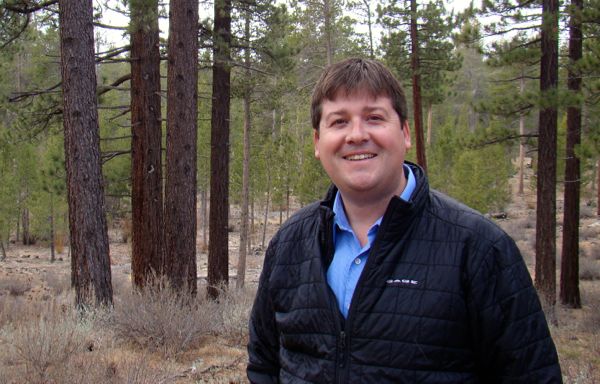
Jeff Marsolais, Lake Tahoe Basin Management Unit forest supervisor, is eager to tackle the issues ahead. Photo/Provided

Jeff Marsolais, Lake Tahoe Basin Management Unit forest supervisor, is eager to tackle the issues ahead. Photo/Provided

Recreation, according to Marsolais, is one of the key issues facing LTBMU.

“It impacts resources and infrastructure as a whole,” he told Lake Tahoe News. “It is one of the most densely used national forests in the nation.”

With 5.7 million visits a year, LTBMU is already overused.

“What does sustainable recreation mean? We need to have that dialogue,” Marsolais said.

Public lands can hold only so many people. Parking then becomes an issue at recreation sites.

“We need to look at ways to protect sensitive resources and provide access,” Marsolais said.

He said staff is working on a conceptual recreation plan for the South Shore.

Having been the assistant forest supervisor since 2011, Marsolais is intimately familiar with the issues concerning the area. He has worked on seven forests since the mid-1990s. Before that he was employed by the Bureau of Land Management. Had he not been chosen to replace Nancy Gibson, who retired in January, Marsolais said he was planning to stay in Tahoe – he’s that committed. (The permanent deputy director for LTBMU has not been named.)

Marsolais spent nine months last year on assignment with another forest, which he said has allowed him to bring a fresh perspective to local issues.

Immediate things Marsolais wants to cross off his to-do list include getting Heavenly Mountain Resort’s Epic Discovery project going, finalizing the Forest Plan, and inserting himself into collaborative discussions about the basin whether they are about fire, cap and trade, or how to fund projects going forward now that the Southern Nevada Public Lands Management Act money is gone.

Collaboration, he said, is critical to get things done. Marsolais was not here for the 2007 Angora Fire when collaboration seemed to be a foreign word to most of the powers that be. That devastating fire that reduced 254 houses to ash eventually brought people together to work on issues for the greater good instead of being obstructionists. That collaboration is getting stronger and something that Marsolais embraces.

Marsolais is also excited to have the science community in the basin.

“We have to listen to the science community even if it doesn’t support the beliefs we have in all cases,” Marsolais said.

He praised the local Forest Service staff for their knowledge – some of whom are the best in their respective fields.

Paying attention to sensitive species and forest health are at the top of his list of concerns.

“We need big strategies to protect the resources,” Marsolais said.

But it’s not all about work for Marsolais. He is not happy to just be sitting behind his desk at headquarters in South Lake Tahoe. He is an avid fisherman. Fly and ocean fishing are his passion. He refused to disclose where he specifically likes to go.

“I go back to the Inyo forest where I came from. There are secret haunts I like to visit,” Marsolais said. The trout he lands is the reason he goes back there year after year.

With his family he likes to go camping and hiking. Downhill and cross country skiing are other activities he enjoys, though doing so has been limited lately because of the conditions. At home, it’s gardening that Marsolais enjoys. But he admits he wishes he had his grandmother’s green thumb because she could grow anything.

For now he is tasked with ensuring the public lands are fertile for everyone — people, animals and flora.

“At the end of the day it is the responsibility of the forest supervisor to look broadly at the issues and concerns to determine where to be personally engaged in the decisions that can make a key difference,” Marsolais said.


Study: Quagga mussels could thrive in Tahoe

By Jeff DeLong, Reno Gazette-Journal

Quagga mussels could survive and reproduce in Lake Tahoe’s waters, particularly in places where a different aquatic invader is already present and where algae is flourishing in shallow waters, a new study suggests.

Research conducted by scientists from University of Nevada, Reno and the Desert Research Institute confirms earlier work that indicates adult quagga mussels can live in Tahoe’s water and that successful reproduction can occur and juvenile mussels survive to repeat the cycle as adults.

Experts had hoped low calcium levels in the landmark alpine lake might help protect Tahoe from major infestations of the type in Southern Nevada’s Lake Mead and other water bodies around the country. It appears that’s not the case.

Read the whole story


Cyclists pumped about Bijou Bike Park

By Kathryn Reed

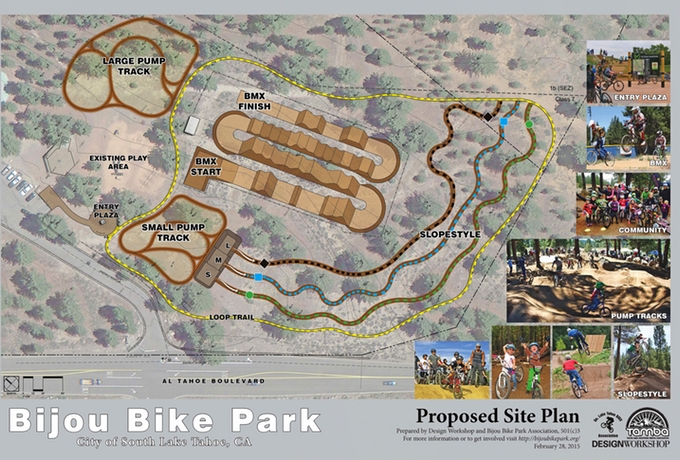
Cycling enthusiasts aren’t waiting for South Lake Tahoe officials to figure out how and when to put in a bike park at Bijou Community Park. The mound of dirt sitting there is already a feature of sorts. But that’s not exactly why it’s there.

The 400-cubic-yards of dirt came from the Harrison Avenue project. It will be moved – possibly this summer – to another location in the park to construct what will be a 5-acre bike park with two pump tracks and a BMX track in the center.

Bike parks attract all ages and ability levels. For those new to the sport or not quite ready for some of the gnarly trails the banks and features at the park are a way to speed up the learning process. They are also where cyclists might end their day after riding the trails.

These types of parks are growing in popularity and help lure tourists to an area. Mountain bikers, like other athletes, are willing to spend good money on their sport.

Outdoor Foundation did a study in 2010 that all cyclists annually contribute $133 billion to the U.S. economy. Of that, $46.9 billion is spent on expenses related to cycling trips.

Bijou Bike Park may be built this year. Rendering/Provided

Bijou Bike Park may be built this year. Rendering/Design Workshop

It is possible South Lake Tahoe will have such a park by the end of the summer.

The bike park has been talked about since 2011. The nonprofit Bijou Bike Park Association was formed to be the main force behind the project. The group has come up with a design, more than half of the needed money to build it, a professional builder and a ton of enthusiasm.

Twenty-two people spoke at the March 3 City Council meeting – all in favor of the park. About that many also wrote letters of support.

However, a couple hiccups have arisen that are preventing the park from being a done deal.

Originally, BBPA and the city were going to enter a lease agreement. Because of the cost of liability insurance and needing to acquire coverage per Tahoe Regional Planning Agency rules, it is now going to be a city run bike park with BBPA providing assistance with construction and maintenance.

TRPA claims the city is putting in 32,000 square feet of new coverage – even though it’s dirt. Coverage regulations are something the bi-state regulatory agency came up with as a way to deal with erosion issues. The city could borrow from its bank of coverage or come up with the more than $60,000 for the mitigation fee – which is paid to TRPA. Staff is leaning toward the latter so the banked coverage could be used for a commercial project such as renovating the recreation center.

It’s also possible the coverage the school district is using for the current BMX track could be transferred to the city.

Taking out a permit will trigger the immediate requirement to bring the restrooms up to the Americans with Disability Act specifications. While this was on the city’s to-do list, it wasn’t slated for this construction season. That cost is estimated at $25,000.

At Tuesday’s meeting the city was told in addition to the $100,000 already pledged to the bike park, another $86,241 is needed in cash and about $35,000 in in-kind services that would include staff time for planning and moving the dirt. The total project is estimated to be $511,000.

Some trees will need to be removed. Irrigation will be put in to dampen the course so dust is not an issue. An electrical conduit will be established so in the future lights could be installed. Bleachers are possible down the road. (The disc golf area will not be affected.)

BBPA has been talking with Lake Tahoe Community College to possibly use its parking lots when events are staged at the park.

The BMX track pays LTUSD 20 percent of gross revenues, so some sort of contract would be devised between that group and the city. Last year the BMX group hosted an event that brought 300 competitors to the area. This year a different event is expected to draw 500 to 600 riders.

Lake Tahoe Unified School District wants to use its land where the current BMX track is for a ball field at South Tahoe Middle School so that facility needs to move. The new BMX track would be 900 feet; 100 feet longer than the current one.

Still to be worked out are the legal issues regarding volunteers working on city property and liability issues for the city if someone is hurt. Garrett Villanueva, trails specialist with the U.S. Forest Service, explained to the council how the feds have an arrangement so volunteers are covered under their workers’ comp insurance.

Councilmembers Austin Sass and Tom Davis (who was absent because of an illness) make up the city’s recreation implementation subcommittee. They will meet next week with BBPA and city recreation commission members to iron out some details, while the city attorney works on legal ramifications.

—–

Notes:

• Bijou Bike Park Association has a website with information, a way for people to make donations and to get involved.


$10 mil. donation to create Barton wellness, orthopedic center in South Lake Tahoe

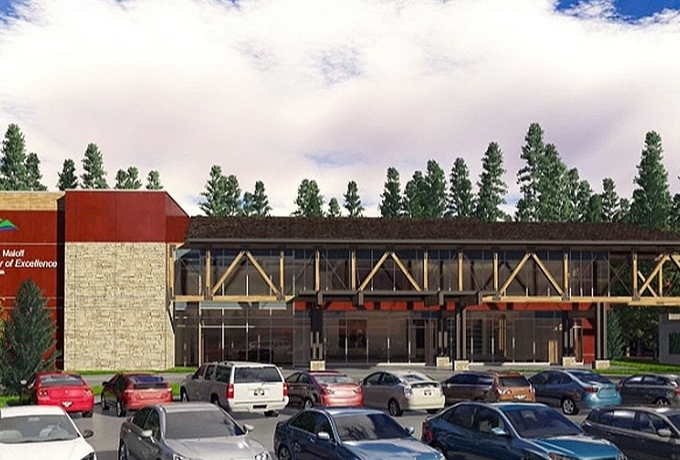
The Maloff medical facility could open in 2017.  Rendering/Provided

The Maloff medical facility could open in 2017. Rendering/Provided

If people didn’t know the Maloff name, they will now.

The second significant building in South Lake Tahoe is going to have their name on it. Next up is the Robert Maloff Center of Excellence.

The Barton Foundation was given $10 million to build a health and sports performance center just behind Barton Memorial Hospital near the emergency room. Talks have been under way since last summer to bring this donation to fruition.

This is part of Barton Health’s overall master plan that will delve into what the healthcare organization wants to be in the future. In the last several years it has bought various medical practices and has started to have the bulk of its facilities be near the hospital. This also will tie into what the city is doing with the Tahoe Valley Area Plan. In that plan is a separate medical niche.

The other significant donation by Lisa Maloff came last fall when she gave Lake Tahoe Community College nearly $6 million to build the university center that will bear the Maloff name.

Maloff’s late husband, Bob, co-owned and operated Lake Tahoe Inn and Timber Cove Lodge in South Lake Tahoe. Plus, he had other significant real estate dealings. He died in 2011 at the age of 90.

Lisa Maloff, who still resides in South Lake Tahoe, was a founding member of the Barton Hospital Auxiliary. Promoting wellness, activity, and fitness in the community have long been goals of the Maloffs. Building this center will carry those beliefs further.

The donation will fund what is likely to be a two-story 25,000-square-foot orthopedic, sports performance and wellness center. Medical experts will have state-of-the-art equipment to use on patients in a coordinated, team-based approach to medical care in one location. It will also offer physical therapy, sports medicine and sports performance, and diagnosis-specific fitness and nutrition programs.

It is expected to break ground this summer and open in 2017.

A bit of irony is that South Lake Tahoe could have had a similar facility 25 years ago, but Barton said no to orthopedist Richard Steadman when he wanted to create a state-of-the-art orthopedic facility in South Lake Tahoe. He ended up doing so in 1990 in Vail, and now it is a world-renowned clinic.

— Lake Tahoe News staff report


The biggest little city goes farm-to-fork in style

By Jackie Burrell, Bay Area News Group

There’s something distinctly different about Reno these days.

Oh, the neon arch still proclaims this the biggest little city in the world, and you’ll still find weary gamblers plying the slots. But the city is suddenly alive with new distilleries and craft breweries, grain-to-glass bars, farm-to-fork restaurants and a buzzy arts scene.

And the newest downtown lodging is an eco-friendly, nonsmoking, nongambling boutique hotel. Instead of a casino, the Whitney Peak Hotel has a gigantic bouldering gym, and its edifice holds the world’s tallest climbing wall — so intrepid guests can gaze down at the “Biggest Little City” arch next door from 164 feet. We got dizzy just looking up.

In fact, that dazed, delighted feeling lasted all weekend as we suddenly realized — Reno has farms? And a buzzy arts scene? And a glitzy hotel sans slots and smokes? And that’s not all?

How awesome is it to arrive in a place you thought you knew and discover you were delightfully wrong? We ponder the question as we stroll the galleries of the Nevada Museum of Art, just a few blocks from the Truckee River, which bisects the city. Built in 2003, the museum’s striking four-story building is a huge black mass with cantilevered edges and curves wrapped in crimped, charcoal-hued zinc, its lines echoing Nevada’s Black Rock formation. Inside, the exhibits are eclectic, fascinating and thought-provoking. We gaze at paintings and works from the museum’s permanent collections and check out a watershed sculpture exhibit, an amazingly bizarre taxidermied art exhibit and rooms filled with watercolors and sketches of coral reef destruction in the South Pacific.

Read the whole story