Study: Wildfires release more greenhouse gases than thought

By Jenna Iacurci, Nature World News

It turns out that California wildfires release more greenhouse gases than previously thought, according to new research.

According to the study, from 2001-10, annual carbon losses from forests and wildlands in California represented as much as 5-7 percent of state carbon emissions.

Interestingly, the state’s Global Warming Solutions Act, or AB 32, says that by the year 2020 California has to reduce its greenhouse gas emissions to 1990 levels. But these findings, published in the journal Forest Ecology and Management, suggest that goal may be easier said than done.

Read the whole story


Drought impacting El Dorado County vintners

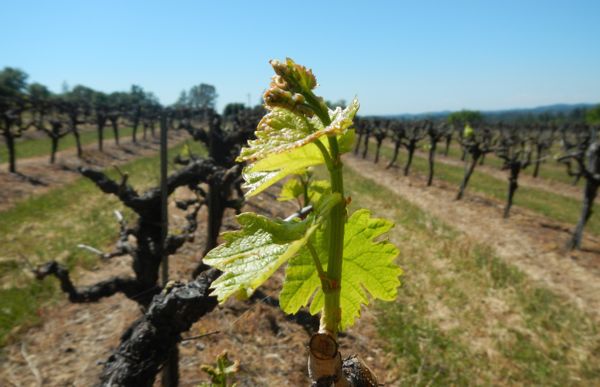
An early bud break will mean an early harvest in El Dorado County. Photos/Kathryn Reed

An early bud break will mean an early harvest in El Dorado County. Photos/Kathryn Reed

By Kathryn Reed

FAIR PLAY – Wells in El Dorado County’s wine country continue to drop because the minuscule snowmelt from the Sierra is unable to recharge the aquifer.

Vineyards relying on surface or ditch water are in tougher shape because of the severe cutback in allocations. However, even those on wells are wondering what will become of their vines if the drought, which is now in its fourth year, extends beyond this season.

There is no Plan B for most of them. It’s not like there is an unlimited supply to tap.

“If the wells dry up, what do you do?” Jonathan Pack, winemaker for Gwinllan Estate, asked. He doesn’t have the answer.

His vines have received 75 to 80 percent of water they normally would in mid-April. He has heard of years when water was trucked in for irrigation.

The good thing about grapes is they don’t need a ton of water to survive. Still, the lack of rain in the region is changing how vineyard managers do business. They are at the mercy of Mother Nature, and as she changes, they must change.

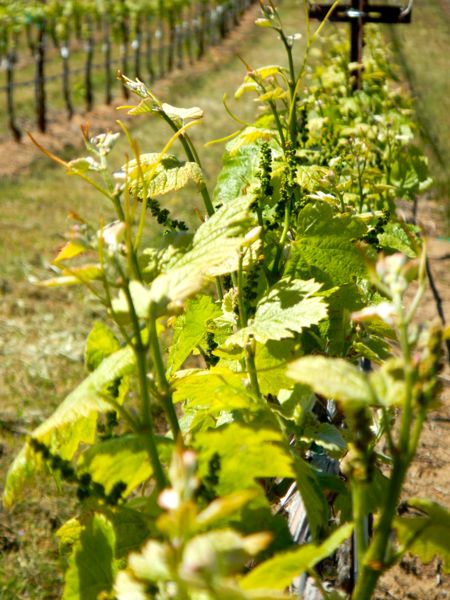
Growth on vines is two months early in some instances.

Growth on vines is two months early in some instances.

“I’m less worried about the drought and more about the time of the year for harvest. I look at the vineyard and I’ve never had leaves on vines this time of year,” Elliot Graham of Busby Cellars told Lake Tahoe News.

Chardonnay vines started to bud in February. Usually it’s April when they do. This could mean harvest will be in July – not August or September.

While dry farming has been around for years, this method still requires Mother Nature to provide moisture – something she has not done in any great measure lately. This style means there is no supplemental water added.

Single Leaf Winery went to this style five years ago when its well stopped producing water. Their Zinfandel has been dry farmed for 54 years.

Zinfandel – California’s oldest varietal – is extremely hearty. This is a good thing since El Dorado County boasts some of the best Zins in the state.

Shadow Ranch had planned to plant an acre of Zin just outside the tasting room two years ago. The drought changed those plans because it takes so much water at the get-go.

Many vintners are relieved their acreage is planted with Rhone varietals  — like Syrah, Viogner and Grenache – that do well in this granite, rocky soil. This soil doesn’t retain water. Those using drip irrigation are able to get the water deeper to the roots.

Shadow Ranch staked out an area for Zin across the pond, but the drought has delayed those plans.

Shadow Ranch staked out an area for Zin across the pond, but drought delayed those plans.

MV Vineyard is the smallest winery in Fair Play, producing 1,200 cases. Their 600-foot-deep wells have water at 300 feet, so they aren’t worried about this year. It’s future years that Kristi Mayhew, tasting room manager, said could be problematic.

Fire is her other concern. The July 2014 Sand Fire, which destroyed 20 homes, came close to their property and would have wiped out the vineyard had the winds changed. Last week a smaller fire erupted in the same area.

Stress – as in lack of water – is normally good for wine grapes. The flavor profile is enhanced, though the yield is less.

“We are getting some serious extraction. It’s pretty amazing what we are getting out of the grapes,” Scott Miller with Single Leaf Winery told Lake Tahoe News.

So, while the tonnage of grapes is likely to decline during this time of drought, the quality is destined to increase. Winemakers have always manipulated a certain amount of stress on the vines by cutting back the water so sugar content would increase, which in turn produces more robust flavors. Mother Nature is now doing that in a more extreme manner.

However, it’s not just irrigation water that is needed.

“There is a certain amount of water required in the winemaking process. The only thing to clean oak barrels is hot water,” Stephanie Simunovich with Skinner Winery told Lake Tahoe News.

A sign in the tasting room says, “Save H20 drink Rose.”

According to the Nature Conservancy, it takes 31 gallons of water to make one glass of wine.


School districts, parents at odds over breakfast in class

By Christine Armario, AP

The number of breakfasts served in the nation’s schools has doubled in the last two decades, a surge driven largely by a change in how districts deliver the food.

Instead of providing low-income students free or reduced-price meals in the cafeteria, they’re increasingly serving all children in the classroom. Food policy advocates say the change increases equity, however, it’s fueled a backlash from parents and teachers. They contend that it takes up class time that should be devoted to learning and wastes food by serving it to kids who don’t want or need it.

Lilian Ramos, a mother of two elementary school children in a working-class Los Angeles neighborhood, said she takes offense at the district’s assumption that she hasn’t fed her children: She serves them a traditional Mexican breakfast each day.

“They say if kids don’t eat they won’t learn,” Ramos said. “The truth is that many of our kids come to school already having eaten. They come here to study.”

The Los Angeles Unified School District, the nation’s second-largest with about 650,000 K-12 students, has been aggressively expanding its program, and by the end of the school year, will be serving breakfast in class at nearly every school. That growth mirrors an increase nationwide. Since 1994, the number of breakfasts served has climbed from about 1 billion annually to 2.3 billion, according to the U.S. Department of Agriculture.

Across the country, 51 percent of children are considered low-income, up from 32 percent in 1989, according to the Southern Education Foundation. In a number of school districts, the vast majority of those children qualify for a free or reduced-price meal. In Los Angeles and Detroit, about 80 percent are eligible.

Proponents believe shifting breakfast from the cafeteria to the classroom is the most effective way to make sure all children are ready to learn. Students who come to school hungry, they argue, are likely to have a harder time paying attention.

There’s also a financial incentive for districts to expand breakfast. The federal government reimburses schools for each meal served. At LA Unified, the number of participating children has grown from 29 percent to 81 percent in three years, generating an additional $16 million, according to Laura Benavidez, the district’s deputy director of food services.

At Stanley Mosk Elementary, regarded as having a model breakfast program, teachers help distribute the meal, check off which students are eating and show a video to incorporate a nutrition lesson, all in 10 minutes. On a recent morning, students were given apples, cereal and a small, packaged breakfast sandwich. At the end of breakfast, there was a large cooler filled with uneaten breakfast sandwiches.

“I think it’s a good way for students to eat here because sometimes at home they’re in such a rush,” said Fatima Nassar, 10. “Sometimes I see students throw it away.”

In Los Angeles, parents from wealthier schools organized against it, winning a concession permitting 32 schools with less than 20 percent of children who fall below the poverty threshold to opt out.

Parents at UCLA Community School, where Ramos’ children attend, also organized. They said the initiative took away instructional time from low-income and English-learner students, a group that scores persistently lower in reading and math. They also worried about unsanitary classrooms. The district temporarily delayed implementation but plans to soon start breakfast in the classroom at the school.

LA Unified board member Monica Garcia, who sponsored the breakfast resolution, acknowledged a one-size breakfast solution probably doesn’t fit all.

“Does it help the majority of kids? I think it does,” Garcia said. “Do we still need to figure out what to do when people want to opt out? Probably.”

About a decade ago, school and food policy advocates began drawing attention to the low participation in the nation’s school breakfast program. Some districts didn’t offer it, while others provided it before class, forcing students to arrive early.

“Breakfast in the classroom evolved as a smart response,” said Jim Weill, president of the nonprofit Food Research and Action Center.

A 2013-14 survey by Weill’s organization found 52 of 62 districts nationwide offered free meals to everyone, regardless of income, at some or all schools. Fifty had breakfast in classrooms.

Not everyone has embraced it. In New York City, former Mayor Michael Bloomberg opposed serving breakfast in class over concerns that children would eat twice. Current Mayor Bill de Blasio has expressed support, but it has only been implemented in 301 schools of about 1,600 districtwide.

At the UCLA Community School, parents plan to continue fighting the decision.

“We want them to serve it in the cafeteria,” Raquel Martinez, a mother of three, said. “That’s what the cafeteria is for.”


Lack of pediatric care forces families to leave Nev.

By Siobhan McAndrew, Reno Gazette-Journal

Nate Christy’s medical journey started in Reno with a routine appendectomy on Jan. 13.

What has followed for Nate, 9, were six more surgeries, having to be revived seven times when his heart stopped and three blood transfusions.

And now recovery involves a road out of town.

Nate and many other children in Nevada leave the state in search of better care, specialists, second opinions and established medical communities with teams of doctors that collaborate.

Some leave for things that are considered a given in cities the sizes of Reno and Las Vegas, including to see dermatologists, rehabilitation and treatment for adolescent arthritis. Some leave looking for second opinions and answers.

“Children in our state are at a high risk because there aren’t enough pediatricians and specialists,” said Barbara Atkinson, planning dean of the University of Nevada, Las Vegas Medical School.

Creating a better Nevada system of public medical education is the top priority of the Nevada Board of Regents, the governing body over the state’s public colleges.

Read the whole story


School-grown food a hit with kids

Students learn about the growth cycle of strawberries. Photos/Kathryn Reed

Students learn about the growth cycle of strawberries. Photos/Kathryn Reed

By Kathryn Reed

Lunches aren’t ordinary at Sierra House Elementary School. Sometimes produce grown in the domes is on the plates.

That’s third-grader Breck Nealis’ favorite part about the two growing domes – being able to eat some of the food at lunch. She was part of the group that planted the peppers.

Before the school year ends the plan is to have pizza for the students made with spices like basil and oregano that are growing in the domes.

Kale is thriving in the dome.

Kale is thriving in the dome.

For those who don’t attend the school, samples of the produce were available last week. There was sprouted baby broccoli with garlic goat cheese on a cucumber disc, kale with artichoke and Parmesan on a cracker, and olive tapenade wrapped in dome grown green leaf lettuce.

The greens are thriving. The freshness of the produce is nothing like the kids are used to having from the grocery store.

Much of the produce starts as seeds.

Much of the produce starts as seeds.

Last week Breck and her big sister, MacKenzie, were giving their mom a tour of the domes that sit adjacent to the South Lake Tahoe school. The public had a chance to meander through the domes that were the brainchild of parents.

Strawberries and tomatoes are growing in hanging planters. A kumquat tree has fruit ready to harvest. Lettuce, kale, Swiss chard, bell peppers, Anaheim peppers, sweet peas, carrots, radishes, beans and herbs are just some of the items being grown.

Everything was planted by students.

Sun filters in to the dome to help tomatoes grow.

Sun filters in to the dome to help tomatoes grow.

A reflective paneling has been attached to part of the ceiling to attract the sun. Below it is a large almost hot- tub like basin of water. This is the natural heating mechanism so the dome won’t freeze.

The domes have been a bigger success than most people anticipated. And it’s not stopping at the domes. South Tahoe High School students in woodshop are making garden beds. They will be the dividers between the domes and playground.

Principal Ryan Galles told Lake Tahoe News this whole side of the school is likely to have some sort of contraption dealing with growing food. (This area used to be where snow was pushed.)

Soroptimist International South Lake Tahoe and community funds paid for the domes.

Soroptimist International South Lake Tahoe and community funds paid for the domes.

“The kids are so proud and excited,” he said.

First-grade teacher Kristi Wilson is the dome manager. She is spearheading the curriculum for each grade level. In the lobby there are student projects about the life cycle of a plant and how dirt made their lunch.


The right dose of exercise for a longer life

By Gretchen Reynolds, New York Times

Exercise has had a Goldilocks problem, with experts debating just how much exercise is too little, too much or just the right amount to improve health and longevity. Two new, impressively large-scale studies provide some clarity, suggesting that the ideal dose of exercise for a long life is a bit more than many of us currently believe we should get, but less than many of us might expect. The studies also found that prolonged or intense exercise is unlikely to be harmful and could add years to people’s lives.

No one doubts, of course, that any amount of exercise is better than none. Like medicine, exercise is known to reduce risks for many diseases and premature death.

But unlike medicine, exercise does not come with dosing instructions. The current broad guidelines from governmental and health organizations call for 150 minutes of moderate exercise per week to build and maintain health and fitness.

Read the whole story


California’s biggest water users are secret

By Katharine Mieszkowski and Lance Williams, Reveal

In the midst of a historic drought, Californians have no way of knowing who’s guzzling the most water.

That’s not an accident. It’s by design, thanks to an obscure 1997 measure that weakened one of the state’s chief open government laws, the California Public Records Act.

For the source of this legislation, look no further than Silicon Valley, where the city of Palo Alto decided it needed to do more to protect the privacy of the tech elite.

“Palo Alto, even then, was home to a number of very high-profile tech-­related residents,” said Ariel Calonne, who was the city attorney at the time. “We had fairly extensive databases that covered a lot of sensitive information for a lot of noteworthy people, and that became a concern for our utility managers.”

In the name of privacy and security, the city of Palo Alto backed legislation sponsored by Byron Sher, the local state senator. (Sher is now on the Tahoe Regional Planning Agency Governing Board.) It allowed utilities to keep secret their customers’ “utility usage data” – that is, how much water and power they were using.

Other supporters included the California Municipal Utilities Association and the League of California Cities.

At the time, the Public Records Act required agencies that operated utilities to make customers’ bills public upon request. During a 1991 drought, the press exposed California water wasters by relying on data from water utilities. The Los Angeles Times found that the top 100 water users in San Diego gulped down 3,000 gallons or more a day, while the average household used 349 gallons.

Atop the list of the biggest users: The San Diego Union­-Tribune’s publisher, Helen Copley, who pumped an average of 10,203 gallons a day on her 9.5-acre La Jolla estate, which was tended by 10 full-time gardeners. Dozens of those top water users complained that publicizing their water use would expose them to security concerns or ridicule, the L.A. Times reported.

In lobbying to change the law, proponents of the Sher measure noted that utility bills include ratepayers’ home addresses. They argued that it was dangerous to make that information public, citing the 1989 shooting of actress Rebecca Schaeffer, who was killed by a stalker who got her address from Department of Motor Vehicles records. The Legislature restricted access after that.

State agencies routinely redact personal information in releasing public records to address security concerns. But proponents of the measure also argued that because private utilities like PG&E did not have to release utility usage data, public ones shouldn’t have to either.

Once it was introduced, there was no stopping the measure, recalled Tom Newton, executive director of the California Newspaper Publishers Association.

The publishers and other open­ records advocates “made a political assessment that we couldn’t kill it,” said Newton, who was the organization’s general counsel at the time. Instead, he said, they worked to amend the measure to maintain open access to the bills of public officials who set utility rates.

“We did our best” to temper the law’s effects, he said. A spokeswoman for the League of California Cities says it has no position on the law today.

During California’s current drought, the law has been used to shield the water bills of big users like golf courses from public scrutiny.

Last year, the nonprofit First Amendment Coalition sued to get water usage data for major business customers of the Coachella Valley Water District in the Palm Springs area, where golf courses are prodigious water users. Peter Scheer, the coalition’s executive director, argued that the 1997 law was intended to protect the privacy only of people, not corporations.

Earlier this month, a judge ruled that corporate water bills also should remain secret, saying that while businesses don’t have the same privacy rights as people, the law nevertheless applies to all customers.

Under present law, there are a few exceptions that allow for some limited public scrutiny of water bills. Last year, The Center for Investigative Reporting used the public-official exemption to reveal the water use of officials who weren’t living up to their own calls for conservation. Many water agencies redacted the home addresses of the officials but provided copies of their bills.

The law also allows the agencies to disclose customers’ water use if they have violated “utility usage policies.” As water agencies restrict use in response to Gov. Jerry Brown’s recently announced mandatory water cuts, scofflaws could find themselves in the public eye.

But only if the agencies feel like sharing that information.


Nevada embraces its paranormal tourist treasures

By Anne Knowles

MINDEN –“We’re sitting in a haunted building.”

That’s how Janet Jones began her talk on paranormal tourism Thursday at Rural Roundup, the Nevada Division of Tourism’s annual conference.

“There’s an older man and woman and I suspect they’re the original owners,”Jones said, referring to the Brick House near the Carson Valley Inn where the breakout session was conducted. “She’s warm and welcoming, but he wants to know why there’s all these people here. But they’re fine. They’re just curious.”

Jones, a ghost tour operator who says she is also a psychic, was speaking to a crowded, overflow room of attendees, some anxious to learn how to turn local legends into live heads in beds, but most just eager to hear more tales of eerie apparitions.

Maybe Jones should have known she’d need a bigger room.

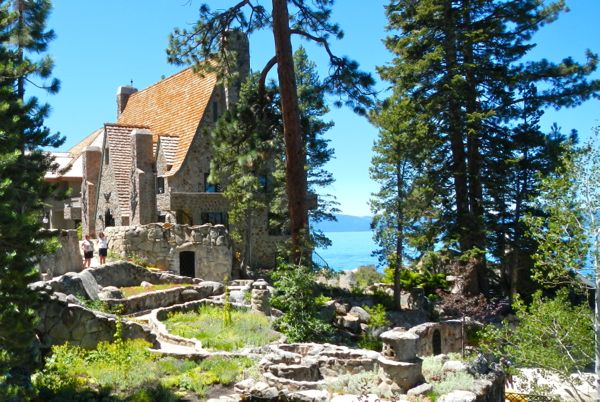
The Thunderbird Lodge in Incline is said to be haunted. Photo/LTN file

The Thunderbird Lodge in Incline is said to be haunted. Photo/LTN file

Jones, who worked with the Carson City Visitors Bureau for 18 years, conducts public tours and private events in local haunts, including dinners at the Mackay Mansion and overnights at St. Mary’s Art Center, both in Virginia City.

“We do an elegant dinner with Champagne. We dress in costume, eat at the original dining room table, on china. We use candles, no electric lights,”said Jones, talking about the one-time home of silver mining magnate John Williams Mackay. “Everyone brings a camera and when the ghosts come in the room, I let them know so they can take pictures.”

Jones rents out St. Mary’s for the night and hosts potluck dinners and sleepovers.

“Every room has a ghost,”she said.

But it can be less hospitable than the mansion, and sometimes more thrilling.

“I’ve been chased out of there three times,”said Jones.

The building once housed a hospital run by nuns, some of who allegedly hang around still.

“There’s Sister Regina,”she said. “I always say something to make her mad.”

Jones also hosts local ghost walks through the Stewart Indian School compound in Carson City, a boarding school where Native American children throughout the West were forced to live. The school operated for nearly a century, from 1890 to 1980.

“It is probably one of the most haunted places in Carson City and can be scary,”she said.

Jones often sees shadow people —a human figure appearing as a shadow —at the school and the spirits of children in a field long-rumored to be an unmarked cemetery.

“They bulldozed it and there’s no sagebrush, no place for the children to hide,”said Jones. “It broke my heart.”

Jones backed up her stories with a slideshow of photographs showing mysterious figures in places she tours, including Mackay Mansion and Stewart Indian School, as well as places she’s visited, such as Gettysburg, Pa., the Civil War site overrun with history and phantoms, where Jones photographed what she said is a shadow soldier.

“It’s like Disneyland to me,”said Jones.

Nevada is filled with places possessed by the dead, claims Jones —from the Mizpah Hotel in Tonopah to the Cal Neva Lodge and Casino straddling Nevada and California at the North Shore, and Thunderbird Lodge in Incline Village.

In fact, Jones said there’s a business opportunity for a smart tour operator to run a Nevada-wide ghost tour, shuttling guests from one haunted hotel or site to the next across the state.

Jones told her listeners April 16 that the audience for ghost tours is all ages and broad, covering those who want a light, somewhat humorous tour like the Carson City Ghost Walk operated by actress Mary Bennett, who runs Reno’s Bruka Theater, to people who want more of an “experience.”

And every municipality, she promised, has some supernatural attraction it can capitalize on to pull in visitors.

“Every town has a ghost,”she said. “There are haunted places in every, single city.”


Baking saved North Shore man during Holocaust

By John M. Glionna, Los Angeles Times

Of all the guilty culinary pleasures that Ernie Feld whips up at his tiny pastry shop in the forest, one is particularly bittersweet: the popular poppy-seed strudels.

That’s the delicacy Feld made for the Nazi SS officers who held him captive as their personal baker during the final years of World War II, a time when Feld literally cooked for his life, using empty champagne bottles to spread his dough because rolling pins were in short supply.

At 90, he still runs Ernie’s International Pastries on the North Shore of Lake Tahoe, artfully preparing the treats he has made for seven decades — his signature strudels, Austrian Sacher torte and lemon Napoleons.

He’s a wartime survivor who has kept his sweet, grandfatherly sense of humor, whether he’s serving up one-liners to customers or recalling his painful past. While Feld was held at a makeshift German-run airport in Budapest, three dozen of his family members — including his beloved mother, Sara — went to the gas chambers at Auschwitz.

Read the whole story


2015 could become hottest year on record

By News 10

We are only four months into 2015 and the path to another “hottest year on record” is laid before us.

So far, 2015 has been the hottest start to a year on record for the planet. Many people on the East Coast would disagree with that statement, and they have good reason to be skeptical. The East Coast has been experiencing colder-than-average temperatures, and many locations had either their coldest winter on record or close to it.

The stark fact is the West Coast was just as extreme in the opposite direction and most of the globe was much warmer than average. Folks on the East Coast have a point, but not the point.

Read the whole story