Tahoe City-based guide recounts Nepal quake

By James Joiner, Daily Beast

High in the Himalayas, Everest climbers can only hope for the best after Saturday’s devastating earthquake.

As the numbers of injured and killed — currently 5,900 and 3,218, respectively—rise in the wake of yesterday’s earthquake in Nepal and aftershocks continue to rock the countryside, the first groups of evacuees from nearby Mount Everest’s base camp have begun to straggle in to the ravaged capital of Kathmandu. Massive avalanches, unleashed by the quake, destroyed the north side camp, killing 19 people, including Google executive, American Dan Fredinburg.

Pentagon Spokesman Col. Steve Warren said nearly 70 personnel, “including a USAID Disaster Assistance Response Team (DART), the Fairfax County Urban Search and Rescue team and several journalists along with 45 square tons of cargo,” took off this morning from Dover Air Force Base bound for Nepal, and are expected to arrive on Monday.

While in no way overshadowing the country-wide devastation wrought by yesterday’s quake, the extent of which is still unfolding, there is, on Everest, a chilling sense of déjà vu. This latest disaster comes almost a year to the day after the 2014 Everest avalanche that claimed the lives of 16 Nepalese guides, calling into question the overall safety and cultural integrity of scaling the legendary mountain, often perceived by the public as the pinnacle high alpine achievement.

We spoke with six-time Everest summiteer and founder of Tahoe City-based Alpenglow Expeditions Adrain Ballanger, who is staged at the northern base camp, just miles away from the avalanches and chaos, about what this horrific disaster could mean for the future of climbing on Everest. Given his limited cell and radio connectivity, Ballanger may not be aware of the scope of the damages in the rest of Nepal.

Read the whole story


Lack of snow redefines rock skiing

By Veronica Rocha, Los Angeles Times

A group of filmmakers poked gentle fun at California skiers who were recently photographed skiing on an anemic patch of snow on the state’s drought-ridden mountains, by promoting a new sport: rock skiing.

In the film from Happy United and Groove Guild, a skier and a snowboarder donning winter gear are seen climbing a steep, rocky mountain, then leaping off. The pair ski down the sharp rock edges, landing in gravel instead of snow.

Jumping off boulders, the snowboarder and skier appear to navigate every turn and twist with considerable skill despite the lack of snow.

Read the whole story


Nev. Legislature may fund cloud seeding

By Jeff DeLong, Reno Gazette-Journal

As a late-season snowstorm swept toward the Sierra Friday, scientists prepared to do their thing. In this case, that meant activating mountaintop generators that spray chemicals into storm clouds, encouraging formation of ice crystals that fall as precious snow.

“It looks pretty good. We are pretty confident we will get the opportunity,” Frank McDonough, an atmospheric scientist with Reno’s Desert Research Institute, said of the approaching storm’s potential..

And for the first time in six years, Nevada’s cloud-seeding program could get a little help from the Legislature, which is considering a bill to help fund a financially struggling effort. Local leaders, meanwhile, want to explore the potential of seeding Sierra storms in different ways, including through the use of manned aircraft and drones.

Even last winter, by the far the driest in a string of four dry ones, cloud-seeding paid off, DRI scientists recently reported to the Western Regional Water Commission. The commission is again being asked to contribute $100,000 toward cloud-seeding operations next winter.

Read the whole story


S. Tahoe’s aging snow removal fleet a concern

By Kathryn Reed

Dismal snow years are good and bad for South Lake Tahoe’s Public Works Department.

The good means the aging fleet doesn’t have to be used much.

The bad is that the state reimburses the city in part for its snow removal expenses, which means fewer dollars will be in the coffer for next winter. That’s bad if even a normal snowfall accumulates.

Ron Corbett, fleet manager for the city, told the City Council last week, “We have a lot of equipment that is in dire straits. This is the oldest fleet I’ve ever seen.” He’s been around fleets for 35 years.

A $20 a year parcel tax passed in 1989 is what the city relies on for buying equipment. (None of it goes toward operations.) In that time 15 snow graders-plows, one snowblower-loader combo and two snowblowers have been purchased. The three newest pieces were bought in 2007 and will be paid off next year.

There is no money in the kitty for new equipment until the current debt is paid.

The city received $227,753 from the parcel tax last year. A snowblower costs $750,000. Maintenance of the fleet is costing $800,000 a year.

“This $20 is not even close to (what is needed) to replace our equipment,” Corbett said.

Voters were asked in 2005 to up the $20 fee, but they said no.

The City Council in September 2013 voted to go back to the ballot box in 2014 to double the fee. That never came to fruition.

“I don’t think it had a good chance of passing,” Councilman Tom Davis told Lake Tahoe News. “Is it needed? Absolutely. Maybe it needs to be packaged with road repair and repaving.”

He said the council’s change of mind came about because other entities – Lake Valley Fire, the library and community college – were coming forward with tax initiatives and that the thinking was voters would not be happy to keep having their wallets tapped.

Davis also said it’s hard for the public to see the need for equipment replacement when the snowfall has been lackluster for the last few winters.

But what worries Corbett is he’s not sure if the vehicles are taxed in a heavy winter, if they will be able to hold up to the demand.

The $18 million fleet would cost $30 million to replace today. Corbett urged the council to put aside money for fleet replacement. No such action was taken at the April 21 meeting.


Plenty of blame for California’s drought

By Richard Goode

My grandfather used to tell the story of traveling from Bakersfield to San Francisco by boat as a boy in about 1910. First up the Tulare Lake, then up the San Joaquin River and through the Delta. In those days, water in California’s San Joaquin Valley must have seemed inexhaustible.

Then, the lakes were drained and the rivers dammed; the valley floor was plowed and cities grew. Water was used at an ever-increasing rate. More and more wells were drilled and reservoirs built. There would be dry years and wet years. The water table dropped and wells went dry.

Last year, however, wells started going dry at an alarming rate. Residents in some areas have been without water for several months. The waiting list for a drilling rig to extend wells was up to a year. Today, up and down the San Joaquin Valley, signs along the freeway lament the water crisis. Everyone is ready to place blame, especially on the favorite whipping boys: Los Angeles and agriculture. But the truth is everyone is to blame and there are no easy solutions. California just doesn’t have enough water to meet the demand. Hydrologists have been warning us since the 1970s that this was coming.

To understand the water crisis, you have to understand the structure of California and the San Joaquin Valley. The San Joaquin Valley is a broad basin that is bounded on the west by the Coast Range, which is mostly comprised of marine sediments, and on the east by the granitic Sierra Nevada. This basin is filled with layers of sediments that have washed down from the mountains over millions of years. These sediments are saturated with water and vary in thickness from about 2,500 feet in the north to about 9,000 feet in the south.

In the south, where there was no outlet for the runoff, the vast Tulare Lake was formed. In years when water was in abundance, water overflowed the divide and into the San Joaquin River, which in turned flowed into the Sacramento-San Joaquin River Delta and then through the San Francisco Bay into the Pacific Ocean.

Before irrigation began in earnest in the 1930s as affordable pumps became available, much of the valley’s farming relied on the winter rains for the crops, winter wheat, and other grains. The ability to pump water from the aquifer beneath the valley is a major reason the valley became one of the world’s richest agriculture producing regions. Immense water projects allow California to store and transport surface water from the north, which generally receives more rain, to the dryer south. But even in wet years there is rarely enough surface water to meet the need. Groundwater is pumped to supply the difference between surface water availability and the demand for water.

California has been operating at a water deficit since at least the 1950s. Hydrologists estimate that on average 800,000 acre-feet per year are pumped from the aquifer annually. Last year alone, closer to 2 million acre-feet of water were pumped.

This tremendous withdrawal of groundwater has lowered the water table. As the water table drops, shallow wells that are normally sufficient to provide water go dry. The well must be drilled to a deeper level to provide access to the lowered water table.

The aquifer is usually recharged by runoff from the Sierra Nevada and, to a lesser extent, the Coast Range on the west. As the river water flowed into the valley, it soaked into the soil at the base of the mountains and made its way into the aquifer. The damming of the rivers, while providing water storage, has removed this major source of recharge. As water is removed from the ground and not recharged, the clay layers in the ground begin to compact. This causes subsidence of the surface. A few miles southwest of Mendota, the ground has subsided by more than 30 feet since the 1920s. Last summer’s pumping has accelerated the change, producing a subsidence rate of half an inch a month. Nearly all of this subsidence is permanent, thus reducing the capacity of the aquifer (and, ironically, making flooding worse in wet years).

With reduced snowpacks in the mountains during the winter, surface water is reduced and there is less water to share. This drying out is not just the present condition of the San Joaquin Valley; is the future of the American Southwest.

We have a bad habit of declaring a drought over when we receive several wet years in a row. But the damage of this drought is not reversible. Until we can recharge the groundwater at a rate equal to the withdrawal, California will be in a drought, no matter how much rain it receives. We may have already waited too long.

Richard Goode is a professor of geology at Porterville College and has lived in the San Joaquin Valley most of his life. His great-grandfather settled in the Ducor area in 1880. He wrote this for Zocalo Public Square.


Troubling interdependency of water and power

By Felicity Barringer, New York Times

In Modesto, utility records chart an 18 percent rise in farmers’ energy use in 2014 compared with 2013. No evidence shows exactly why this happened, but California’s drought, now in its fourth year, sent many farmers to their wells to pump from hidden aquifers water that normally would be found at ground level.

Such measures are a timely illustration of the way water needs power — not just to move it, but to clean it and even, with desalination, to create it from brine. A large desalination plant being built to provide 7 percent of San Diego’s water will require about 38 megawatts of power, enough for more than 28,000 homes. And it is no coincidence that primary owners of the 2,250-megawatt, coal-fired Navajo generating station near Page, Ariz., are water managers; they need the power to move water.

The converse is also true: Water is required for power — for hydropower; for extracting oil, natural gas and coal; and, most of all, for cooling power plants. A report from the Congressional Research Service projects that 85 percent of the growth in domestic water consumption from 2005 to 2030 will come from the power sector.

Read the whole story


Women cyclists to roll into Tahoe in a big way

Alison Tetrick is eager to participate in next weekend's races based in South Lake Tahoe. Photo/Sam Wiebe

Alison Tetrick is eager to participate in next month’s races based in South Lake Tahoe. Photo/Sam Wiebe

By Susan Wood

Move over boys.

Title IX aside, pro cyclist Alison Tetrick knows in order for women’s sports to receive the recognition the big boys get in their respective events, the girls need all the help they can get – sometimes from a few angels on the shoulders.

And so it goes with the Amgen Tour of California Women’s Race, which will have two legs starting and ending at Heavenly Mountain Resort on May 8-9. Fourteen teams representing 84 of the top professional women cyclists are expected to roar from the California Base Lodge parking lot each day. The first stage goes around the lake and is 74.5 miles, the second goes into Meyers and is 49.7 miles. This is the largest women’s race ever in the United States.

An army of volunteers and spectators will be on hand.The receptiveness from the town and in particular Heavenly as a host is something Tetrick told Lake Tahoe News she immensely appreciates.

“That’s huge that they place such a high value on supporting women’s cycling. It’s exciting that Tahoe utilizes this race as well. It creates more fans and inspires other women riders as well. And Tahoe is all about recreation,” Tetrick, 30, said while on tour. “It’s nice to see the steady growth (in interest).”

Tetrick is an advisor to the Women’s Cycling Association. The pro cyclist of five years grew up in Redding, played tennis in college in Abilene, Texas, and became serious about cycling while living in Petaluma – where the rolling Wine Country hills beckon.

She’s inspired by her 84-year-old grandfather who still rides to this day in Evergreen, Colo.

“He’s a tough guy. I try to ride with him whenever I see him,” she said.

She has a message for young girls wanting to become something in the recreation world.

“Find what you’re most passionate about. Then, get out and active and meet your goals – whatever they are. And, be bold. You’ll be ahead of the game,” she said, adding, “Education is important” to getting the support they need.

That’s precisely why Heavenly wanted to take part, said John Wagnon, director of marketing of Vail Resorts’ three Tahoe properties. The longtime marketer, who served on the California Tourism Commission and now is on Nevada’s, understands the importance of promoting women’s sports and being the business to provide the kick-start in giving them a leg up where many companies have been noticeably absent in a man’s world.

“We want to support women’s pro sports. They struggle to get visitors and don’t get the level of sponsorships (the men do), but (women’s sports) are growing in popularity,” he said.

Granted, the sport is more commonplace and supported in Europe. But the prospect of growth in the United States through visibility is what the competitors and sponsors are seeking.

Wagnon recalled how South Shore executives reached out to the Amgen organizers many years ago. When the men’s race was scheduled through town in 2011, it got snowed out. Fingers are crossed that’s not a problem this year.

“After that, we remained in contact with the folks at Amgen and worked to continue efforts to get the race back. We were very interested,” Wagnon said, speaking on behalf of Heavenly and through conversations with Lake Tahoe Visitors Authority Executive Director Carol Chaplin.

“Seeing the athletes in our community builds the enthusiasm for hosting the event as well as the sport,” Chaplin said in a statement. She also mentioned this year’s signature sunny weather as “good for training” opposed to snow and rain hampering the event.

This time, the women are on center stage.

Motorists are advised to allow for extra time in getting around the South Shore on that Friday and Saturday. Riders will start from Heavenly at 11am Friday and finish about 2:15pm. The next day, they’ll begin the ride at 10:30am and end at approximately 12:30pm. A festival opens both days’ event at 10am.

“This is going to be awesome,” said Mike Frye, who runs LTVA events.

Frye noted he’s beyond excited about this event because of its importance to the women like Tetrick who have fought and clawed for recognition despite multiple wins.

Tetrick rides for Optum Pro Cycling presented by Kelly Benefit Strategies and an ambassador for Amgen’s Breakaway from Cancer. Tetrick has represented the United States at the Pan American Games and around the world racing for the national team.

Tertrick received a bronze medal at the World Championships in the Team Time Trial for Astana BePink in 2014, and placed second at Chrono des Nations in 2012, 2013, and 2014. She won the overall at the Merco Cycling Classic and the Valley of the Sun Stage Race and won stages at the Sea Otter Cycling Classic, Nature Valley Grand Prix, Mt. Hood Cycling Classic and most recently at the Tour Femenino de San Luis in Argentina.

Not only does she spend countless hours training and racing, Tetrick is in graduate school for neuropsychology. She believes it is important to raise awareness of resources available for those affected by cancer and thinks teamwork is a necessity.

—–

Notes:

  • There are two sites where people may stream the event live. Here is the first and the second.
  • May 8, 11am start at Heavenly’s Cal Lodge.
  • May 9, 10:30am start at Heavenly’s Cal Lodge.
  • For more info, go online.


Bill calls for inventory of Nev. water rights

By Sandra Chereb, Las Vegas Review-Journal

CARSON CITY — With drought gripping Nevada and much of the West, the state’s top water official and a state senator said it’s time to inventory how much water there is and who owns what by tidying up the books on water rights that pre-date state law.

“Clearly if we’re going to establish a water inventory … we have to understand what water is available, what is permitted,” state Sen. Pete Goicoechea, R-Eureka, told members of the Assembly Government Affairs Committee during a hearing Wednesday.

At issue are so-called “vested” rights initiated by putting water to beneficial use before state law was enacted setting regulations for surface water use in 1905, artesian groundwater in 1913 and percolating groundwater in 1939.

Read the whole story


Study: The Big One could trigger series of large quakes

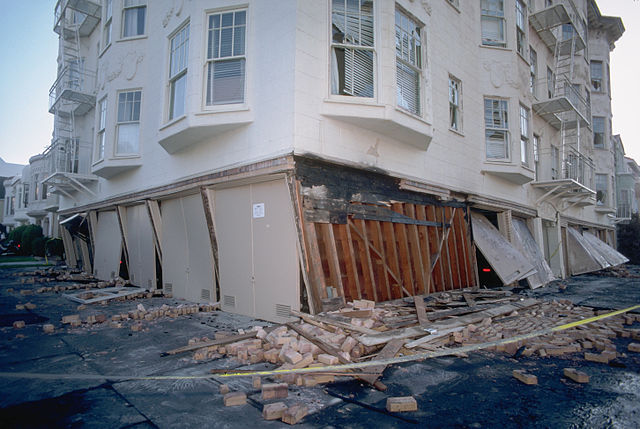
"LomaPrieta-Marina" by J.K. Nakata, United States Geological Survey - http://pubs.usgs.gov/dds/dds-29/web_pages/sf.html, http://pubs.usgs.gov/dds/dds-29/tif/img0007.tif. Licensed under Public Domain via Wikimedia Commons - http://commons.wikimedia.org/wiki/File:LomaPrieta-Marina.jpeg#/media/File:LomaPrieta-Marina.jpeg

The San Francisco Marin District after the 1989 Loma Prieta earthquake. Photo/J.K. Nakata, U.S. Geological Survey

By Rong-Gong Lin II, Los Angeles Times

Research released Wednesday suggests the shaking from “the Big One,” the long-predicted major earthquake on the San Andreas fault, could trigger additional large temblors on nearby faults, intensifying the overall seismic impact.

The study suggests that such a quake “could presage a flurry of ‘other Big Ones’ on other faults,” said USC earth sciences Professor James Dolan, “as stresses related to the original San Andreas fault earthquake are redistributed on other faults throughout Southern California.”

The study, presented by Dolan at a meeting of the Seismological Society of America in Pasadena, focuses on whether earthquakes are generated in “super cycles.” A super cycle refers to when a large number of quakes rupture on a single fault system in a relatively short period of time in seismic terms, over a matter of decades or a few centuries.

Read the whole story


Stranded Truckee River trout relocated

By Sage Sauerbrey, Moonshine Ink 

“Fish on!”

A fisherman yells out as Mike Wier, outreach coordinator for California Trout, hooks into a behemoth rainbow trout in a pool just above the Fanny Bridge in Tahoe City.

This 31-inch monster is one of roughly 40 trout that have become stranded in a short section of the Truckee River since Lake Tahoe dropped below its natural rim in August 2014. Community concern grew through the winter as the dissolved oxygen in the 75-foot stretch of water started to drop and the pool neared unlivable levels for the trapped trout.

“The habitat here is just becoming unsuitable for fish to live in, so either they die or we move them,” Trout Unlimited California field director David Lass said.

A collaborative effort between Trout Unlimited, the California Department of Fish and Wildlife (CDFW), and California Trout brought 20 volunteers to Fanny Bridge the morning of April 21. The mission was to relocate the stranded trout to the cleaner waters of Lake Tahoe, but it also offered a once in a lifetime opportunity to fish for the prized trout.

Read the whole story