100+ weigh in on Meyers Area Plan

By Jessie Marchesseau

MEYERS – More than 100 people packed into the auditorium of the Lake Tahoe Environmental Science Magnet School on Wednesday evening for the Meyers Area Plan open house.

Large tables encircled the room offering seven workstations for attendees to visit. Each station represented a key topic related to the plan: design and implementation, transportation, land use, Meyers Advisory Council, recreation, California Tahoe Conservancy asset land, and conservation. The stations were staffed by personnel involved in plan development and offered presentation boards with insight into the particular topic in addition to copies of the original 1993 Meyers Area Plan alongside the most recent draft of the new Meyers Area Plan. Some stations showed colored maps, photos or sediment samples, all with staff to explain, answer questions and accept feedback.

This open house format was a change from previous meetings regarding the plan. It allowed for more direct interaction and conversation between residents and planners.

The Meyers Area Plan meeting May 6 brought out more than 100 people. Photo/Jessie Marchesseau

The Meyers Area Plan meeting May 6 brought out more than 100 people. Photo/Jessie Marchesseau

Dave Defanti, assistant director of El Dorado County community development agency, greeted people as they came in, answered questions and encouraged attendees to pick up and fill out comment sheets. He said they chose this type of format because they wanted more interaction with community members and to encourage one-on-one conversation.

Residents’ feelings on the meeting format were mixed. Jan Roman-Gonzales was disappointed there were no opening remarks from the El Dorado County Board of Supervisors Chairman Brian Veerkamp or a breakout session with opportunities for public questions and comments as was advertised on the county’s website and the postcard she received in the mail. She believed the open house format did not give her and other community members a chance to have their voices heard. (Veerkamp is supposed to be Meyers’ point person on the board because District 5 Supervisor Sue Novasel has conflict based on her property she owns.)

Joseph Restaino, on the other hand, liked the one-on-one interaction. He told Lake Tahoe News it was a good way for him to really learn about the plan and to get excited about what’s happening in Meyers.

At the open house, public input was encouraged in ways other than just speaking aloud. Poster-sized flip boards offered a place for attendees to write down suggestions and comments such as “community garden,” “flashing red light at Apache,” and “leave Park City in Utah.” At another station, people were given stickers to place on a board with various transportation goals and design options to indicate which items were the most important to them. By the end of the night, the winners of the most stickers were buffered or protected bikeways, separated bike paths, economic viability, and pedestrian safety. The items with the fewest stickers were bicycle signals and in-roadway signs.

Brandy McMahon, acting long-range planning manager for the Tahoe Regional Planning Agency, was staffing the design and implementation station. She said she answered a lot of questions on everything from bike paths to the bug station, but the overall feeling she had for the night’s open house was positive, a change from the tension she felt at previous meetings.

Defanti, McMahon, and Brendan Ferry, principal planner for El Dorado County, all said input from the May 6 open house will be considered for changes to the Meyers Area Plan when the Board of Supervisors meets again next month and in the future. According to Defanti, it could be at least nine months before anything is voted on, so there is still plenty of time for residents to offer their comments either on paper, or online.

Ferry said that while people can’t agree on every little thing, their goal is to please everyone as a whole. “I think the community in general is excited about getting the plan done and implementing something cool in Meyers.”

Safety, connectivity in S. Tahoe may improve

By Kathryn Reed

South Lake Tahoe is going after a $2.1 million grant that would make Al Tahoe Boulevard less nightmarish for those on foot or a bike as well as improve the intersection of Highway 50.

Jim Marino, assistant public works director, called this the second most important intersection in the city after the Y. This is because of everything that is going on in such a small area. South Tahoe Middle School, Lake Tahoe Unified School District offices, Lake Tahoe Community College, ball fields, law enforcement, adult and juvenile detention facilities, community park and a shopping center are all located within blocks of each other. They are connected by a five-lane road and state highway.

With all of the driveways and lack of sidewalks, it is not an ideal place to be unless in a vehicle.

The grant would change that because it would provide the necessary funding to make upgrades.

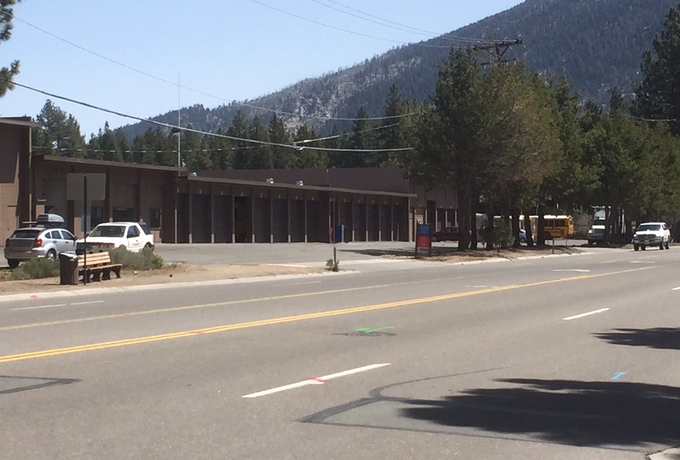
The LTUSD bus will not be relocated, but the center ingress/egress may be removed. Photo/LTN

The LTUSD bus barn will not be relocated, but the center ingress/egress may be removed. Photo/LTN

Steve Morales, facilities director with LTUSD, said one of the driveways to the bus barn would be eliminated. The district would also look at how people access the middle school.

A class 1 bike trail would be built from the highway to Johnson Boulevard as well as class 2 along the road.

The California Tahoe Conservancy is also applying for a $2 million Active Transportation Program  grant.

Officials believe because the projects would link together, this is a strategy that should show those who control the purse strings that there is a collaborative approach to the local process. CTC wants the money for the Greenway bike path.

The city is the lead on the other grant, with other partners part of the process. This area was identified last year as a significant gap in the connectivity piece.

How everything will look remains to be seen. The city is in the conceptual design phase now.

Six people spoke at the May 5 City Council meeting in support of the city going after the grant. Another nine letters of support were submitted.

Even without the grant there will be new sidewalks coming. This is the result of Southwest Gas working in the area and coming to an agreement with the city to make the improvements while the utility relocates its lines.

  In other action:

·      Connolly Beach will be a topic at the May 19 meeting.

·      Most of the master fee schedule was approved. Recreation fees will be brought back at the end of the year and ice arena fees in three months.

·      The council approved refinancing bonds.

·      CTC staff gave a presentation about how $1.5 million is spent each year treating parcels so they are fire safe and hazards are removed.


Californians’ barely cutting water use

By Fenit Nirappil, AP

SACRAMENTO — Californians conserved little water in March and local officials were not aggressive in cracking down on waste, state regulators reported Tuesday as they considered tough measures to force savings amid a continuing drought.

The State Water Resources Control Board received the update as it considers sweeping mandatory emergency regulations to protect water supplies in the parched state.

Brown has argued that the voluntary targets in place since early 2014 were insufficient and that Californians needed a jolt to take conservation seriously.

A survey of local water departments released at the start of the two-day meeting shows water use fell less than 4 percent in March compared with the same month in 2013. Overall savings have been only about 9 percent since last summer, even though Brown set a voluntary 20 percent target.

The water board on Tuesday began considering new regulations to step it up. The rules would bar cities from using drinking-quality water on street median grass and encourage homeowners to let lawns go brown to meet local mandatory water reduction targets.

Those conservation targets are among the most contentious provisions of the proposed rules. The board plans to order each city to cut water use by as much as 36 percent compared to 2013, the year before the governor declared a drought emergency, and has rejected calls to create easier targets for communities in drier areas or for cities that have been conserving since before the drought.

Some local water departments call the proposal unrealistic and unfair. They say achieving steep cuts could cause declining property values, restrictions on filling pools and washing cars and higher water bills.

An economic analysis of the water board’s proposal commissioned by the board estimated that private water utilities and local water departments would lose a total of about $1 billion in revenue through lost water sales if they meet the board’s targets. They will eventually charge higher rates to make up the revenue, the report said.

The board sees lush lawns and verdant landscapes as first on the chopping block to meet conservation targets, but some are fighting their depiction as villains in the drought.

Keith Harbeck, of the California Pool and Spa Association, told the board Tuesday that it is destructive to turn industries into symbols of water waste, including almond growers, water bottlers and golf courses.

“Finger-pointing has been particularly painful because folks pick whatever is symbolic,” said Felicia Marcus, chairwoman of the board. “It’s a collective issue that we must all rise to.”

Board officials said they expect to start seeing water savings as soon as June and are willing to add restrictions and penalties for agencies that lag.

Brown said last week he would push for legislation authorizing fines of up to $10,000 for extreme water wasters. Another tool, tiered pricing in which the price rises as water use goes up, is in question after a court struck down water rates designed to encourage conservation in San Juan Capistrano in Orange County.


Travel can buy happiness more than things can

By Deb Hopewell, Outside

Buying something we want but don’t necessarily need brings an undeniable rush. Our overflowing closets, attics, and garages testify to the powerful allure of new toys and gadgets. But what do you think would bring more happiness in the long run: that new curved-screen HDTV or an African safari?

According to studies over the past 10 years that still keep popping up in the headlines, it’s human nature to equate happiness with tangible stuff. After all, why spend your hard-earned money on a two-week trip to Bhutan when that designer living room set you bought instead will be around for years, reminding you day after day of its fabulousness?

Because all those awesome objects will never make you a happy person. The human mind has a perverse knack for ceasing to appreciate things it’s constantly exposed to—even pricey things like electronics, clothing, furniture, wedding rings, you name it. On the other hand, even the anticipation of an experience, whether it’s going to a concert, fishing with friends, or planning a bucket-list trip, contributes to the overall happiness associated with the actual event. Even years later, being able to casually mention that you once went skydiving in Spain wears much better than name-dropping your car or television in a conversation. Bottom line: While a trip lasts only a set amount of days, its effect on your happiness lasts a lifetime. It’s a case of the cliché actually being true.

Read the whole story


Tahoe Keys Marina preps channel for dredging

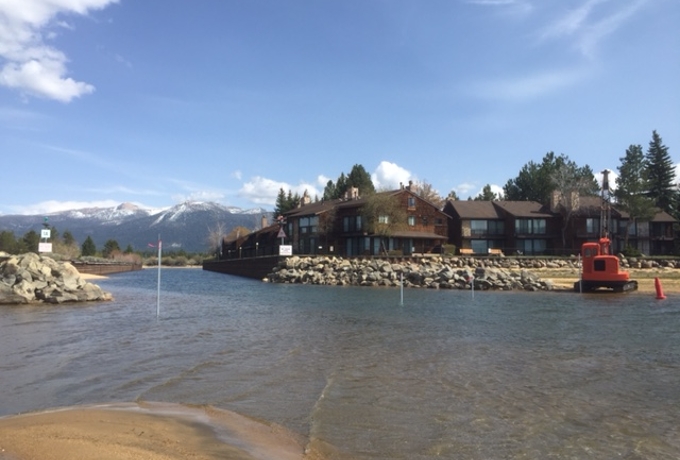
Metal poles outlining the channel leading to the Tahoe Keys Marina were put in May 5. Photo/Kathryn Reed

Metal poles outlining the channel leading to the Tahoe Keys Marina were put in May 5. Photo/Kathryn Reed

By Kathryn Reed

After months of bickering, the channel leading to the Tahoe Keys Marina is about to be dredged.

Poles are in outlining where the dredging will take place. The boat that was to put in the silt screen had a hole in it, so that was delayed a day until Wednesday.

The marina received a permit earlier this year from Lahontan Regional Water Quality Control Board to dredge. The hold up has been the fighting between marina owners, Tahoe Keys Property Owners Association and the Tahoe Keys Beach and Harbor Association.

An agreement from 1991 is the root of the troubles – that and distrust between the parties. The document says the marina is to pay for one-half of the dredging and the other two groups are to equally split the other half. The marina wanted the money up front, the other groups wanted to pay upon completion.

Bid documents to do the work were not provided, so the associations did not want to blindly put up money. Plus, they didn’t want to pay for something in advance in case it didn’t really happen. The marina did not want to finance the project.

The original cost was estimated to be $2.2 million, but those close to the project said that price has been reduced by about one-third.

Work will not be done by Memorial Day, which is often the start of the boating season at Lake Tahoe. There are about 600 docks on this side. While the dredging occurs there will be no boat access in or out of the marina. Boaters could launch elsewhere and tie up at a friend’s dock on the homeowners’ side.

No one from the marina returned multiple calls.

“The parties are actively pursing resolution and it appears the dredging project will be completed as everyone wants,” Bob Henderson, legal counsel for the marina, told Lake Tahoe News.

The Beach and Harbor Association has a recording saying they are trying to get things worked out, but apparently are unaware the prep work for dredging started May 5.

Kirk Wooldridge, general manager of TKPOA, said there had been a “stalemate over all aspects of the project.” He did not know the marina was starting to work on its channel.

The TKPOA channel is currently being dredged, with all work expected to be done May 21. It will be open to two-way boat traffic May 22 – the Friday of Memorial Day weekend, Wooldridge said.

Wooldridge explained that the sand that was dug up was placed on the beach per state agency requirements. He told Lake Tahoe News the discoloration was temporary and that the dredged material is already starting to blend in with the rest of the beach.

Without the marina returning calls, it is not known where its dredged material will go. In the past it has been sucked out and put into a holding area near the Beach and Harbor Association’s parking lot on Venice Drive.

It also isn’t known how long this channel will be off limits. Original estimates were two months, but now boaters tell Lake Tahoe News it should open in June if there are no obstacles.

Another bone of contention between the marina and TKPOA is that homeowners are supposed to be able to launch for free if the boat is registered to the person whose name is on the property deed. Now the marina is saying it will cost $90 for homeowners to launch.


Cutthroats successfully reproducing in Truckee River

Federal agencies are trying to restore the Lahontan cutthroat trout to regional waters. Photo/USFWS

Federal agencies are trying to restore the Lahontan cutthroat trout to regional waters. Photo/USFWS

By Jeff DeLong, Reno Gazette-Journal

Lahontan cutthroat trout are successfully reproducing in the lower Truckee River in what experts are calling a major milestone in efforts to restore the threatened fish.

A year after cutthroats spawned up the lower Truckee from Pyramid Lake for the first time in nearly 80 years, the U.S. Fish and Wildlife Service has documented about 1,000 newly hatched baby cutthroats swimming in the river after a second spawn this spring. They suspect as many as 45,000 may have hatched in recent weeks.

“We were able to document successful reproduction,” said Lisa Heki, complex manager for the Lahontan National Fish Hatchery. “This is a wild reproductive event. The fish are doing it on their own once again.”

Read the whole story


Audit: Nev. Medicaid overpayments exceed $1 mil.

By Sean Whaley, Las Vegas Review-Journal

CARSON CITY — An audit of the state Medicaid program released Monday identified more than $1 million in overpayments and improper billings.

Legislative Counsel auditors identified $780,000 in overpayments for behavioral health claims, and $285,000 in overpayments and improper billings for dental claims. The audit of the Division of Health Care Financing and Policy, which administers the Medicaid program, was reviewed by the Legislative Commission’s Audit Subcommittee.

Examples of overbilling included a dentist who submitted 4,177 claims, or 48 percent of all claims statewide, for “emergency treatment of dental pain — minor procedure” in fiscal years 2012 and 2013.

Read the whole story


Nevada warned about threat of wildfires

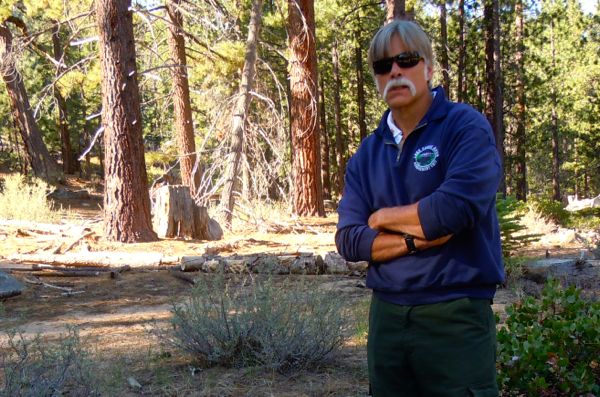
Kit Bailey is the fire guru for U.S. Forest Service in the Lake Tahoe Basin. Photo/LTN file

Kit Bailey is the fire guru for U.S. Forest Service in the Lake Tahoe Basin. Photo/LTN file

By Ray Hagar, Reno Gazette-Journal

The ongoing drought, warmer-than-usual weather conditions and the fuel for fire those conditions produce could lead to a “perfect storm” this summer where multiple states in the West could be having large, simultaneous fires, state and federal fire officials told Gov. Brian Sandoval Monday.

“The system is going to be heavily taxed this year,” said Kit Bailey of the Lake Tahoe Basin Management Unit. “We have preparedness levels of one through five and I’m a little concerned that we may get to an unprecedented level, a level six, and that is kind of a worst-case scenario.

“We have been preparing for and have had dialogue on what is going to look like when Southern California, Northern California, Nevada, Oregon and Washington all have simultaneous large fire events,” Bailey said.

Despite the seriousness of the situation, Sandoval left the 2015 Governor’s Wildlife Fire Briefing knowing that the various state and federal agencies are prepared for the worst.

Read the whole story


Will Sandoval run for Senate?

By Kyle Roerink, Las Vegas Sun

As a handsome, popular, moderate politician of Latino heritage, Republican Gov. Brian Sandoval often is the subject of political speculation.

Even before his overwhelming re-election win, people were guessing about his ambitions to run for U.S. Senate.

Then Sen. Harry Reid announced his retirement, making a potential Senate run even more attractive to Sandoval.

For now, only Sandoval knows what his next move will be. He refuses to answer questions about his political aspirations, and his inner circle insists he is focused on the job Nevadans elected him to do.

But with Sandoval’s history of exiting office early to win a more powerful seat, pundits speculate he could make a 2016 power play for Reid’s seat.

Read the whole story


Regional trail advocates tout collaboration

By Kathryn Reed

RENO – Being on Outside magazine’s top 10 list when it comes to trails. It’s a goal trail advocates in the region are striving for.

More than 50 people – trail builders, land owners, nonprofits, government agencies, volunteers, contractors, sporting good store managers, users and others – attended an all-day summit last week at Bartley Ranch Regional Park to flush out how to be better at what they do. What they are doing is building trails and making a network that connects. This was the second annual Eastern Sierra/Tahoe Trails Summit.

“We want a regional trails plan from Markleeville to Plumas County. We want to have common trail standards,” Cheryl Surface, with Washoe County Regional Parks and Open Space, said.

Learning from one another, networking and finding common ground were some of the goals that were accomplished.

It was acknowledged that while trails can be an economic driver in terms of bringing in tourists, increasing property values and cutting down on health care expenses, those controlling the purse strings and issuing the permits are not always buying into those things.

While trails may bring money, they cost big bucks to build and maintain. That is why partnerships were stressed.

Garrett Villanueva, trail planning expert with the Lake Tahoe Basin Management Unit, and Clay Grubb, trail builder with the Tahoe Rim Trail Association, talked about their unique relationship.

“You need to establish relevancy with the agency,” Villanueva said. It’s not enough to identify a problem or have an idea. Have a solution or way to implement the idea is a must.

Grubb said, “If you can take on the maintenance, all of a sudden you are relevant.”

Every trail that gets built then must be maintained. That means someone’s budget has a new ongoing expense. The windstorms this last winter had crews contending with blow downs almost every place where trees grow. While volunteers can do some of the work, it is the landowner – usually a government agency – that at a minimum for legal reasons must oversee the work gets done.

More than one speaker talked of the need to find someone in the agency to be a champion for the cause. And once that person is identified, don’t go over their head, be appreciative and be patient. Government can work at glacial speed because there is a process.

Persistence is key, as is understanding the agency has constraints that may not be obvious.

So often a trail crosses land that has multiple owners who don’t all have the same interests, time schedule or rules that must be followed.

“We as an agency get all the responsibility, but none of the credit,” Villanueva said. The nonprofit trail group usually is touted as the one that made everything come together.

Villanueva pointed out the lack of trail etiquette in the Lake Tahoe and surrounding area, especially compared to Colorado and Utah.

“We need to start behaving better. It’s about sharing the trail. We are all out there for the same reasons,” he said.

Grubb said as a trail builder it’s important to think of all the users and not just a group’s special interest. This means paying attention to site lines and passing points.

Michael Ward, a consultant with the Eastern Sierra Recreation Collaborative, spoke about how his group won over the Forest Service after receiving a chilly reception. The Inyo National Forest was working on its Forest Plan and Ward’s group only wanted to address recreation.

“Shared values” was the thrust of Ward’s group. It brought people together. He said having people participate in activities to bring their beliefs to the forefront instead of just talking at them or having advocates write comments helped spur collaboration and build consensus.

Dan Morris with the Carson Ranger District of the USFS said the problem he has is the demand for trails outweighs the opportunities. What allowed his office to build 50 miles of trails in the last five years are partnerships with groups.

Funding is his biggest challenge. Today there is no money for new trails.

“We have to get creative,” Morris said. This means the nonprofits are likely the ones to come up with the funding and the Forest Service provides the guidance.