Major changes coming to Calif. electricity rates

By Sammy Roth, Desert Sun

How much you pay for electricity could soon depend on when you use it — and Coachella Valley residents could see their summer bills go up substantially.

Electric prices may fluctuate based on peak use. Photo/Peter Craine

California electric prices may fluctuate based on peak use. Photo/Peter Craine

The California Public Utilities Commission could soon ask Southern California Edison and other utility companies to start designing “time-of-use” residential electricity rates, to take effect in 2019. The rates would make electricity more expensive when demand is high, and less expensive when demand is low.

Some ratepayer advocates and environmental groups support time-varying rates, which they say would help reduce dependence on climate-altering fossil fuels. But at least one consumer watchdog group is worried the rates would have unintended consequences. For instance, the new rates could make electricity much more expensive during the summer, hitting desert residents hard during the many months of air conditioning season.

Read the whole story


Big strike against Olympic Valley incorporation

By Kathryn Reed

The ability to make Olympic Valley the next incorporated city in California was dealt a set back this week.

The draft of the comprehensive fiscal analysis (CFA) says, “… the town’s potential general fund and road fund expenditures materially exceed revenues in each year of our forecast and incorporation does not appear to be feasible at this time.”

Placer County’s Local Area Formation Commission is tasked with determining if it is fiscally prudent for an area to become incorporated. Without a yes from LAFCo, it’s near impossible to proceed.

“These are proposed numbers, but I don’t agree with them,” Fred Ilfed with Incorporate Olympic Valley told Lake Tahoe News. He doesn’t believe LAFCo should have released any findings until the revenue neutrality negotiations are finished. Those talks aren’t supposed to start until June.

The whole issue of incorporation started a few years ago when Squaw Valley ski resort proposed developing the 26-acre base resort for more lodging and other amenities that were designed to make the area more of a year-round destination.

Many residents in this small enclave are resistant to the proposed changes. They like the quiet, rural setting. Now they want more of a say over what happens to their piece of the Sierra. Today their representation is the Placer County Board of Supervisors that occasionally meets in the greater Lake Tahoe area. Many feel disenfranchised with that board being based in Auburn and not tied to the greater Lake Tahoe area. This led the group to start the process of incorporating as a city.

One of the criteria to accomplish this is to demonstrate that doing so would not adversely financially affect the county. According to the draft CFA, that is not going to happen in this case.

“The independent study confirms the prevailing wisdom, that creating a town of 500 people, based on one revenue source and dependent on tourism and weather conditions, doesn’t make sense. There aren’t enough pencils and erasers in the world to make the numbers work,” Andy Wirth, president and CEO of Squaw Valley Ski Holdings, said in a statement. “Furthermore, any attempts by Incorporate Olympic Valley to grab and capture transient occupancy tax from other parts of the North Lake Tahoe area, amounts to a taking that will only have negative and adverse effects for everyone who lives here, works here or visits here.”

It is Wirth and his bosses who want to do the developing.

Pro incorporation advocates don’t believe the draft report is the final nail in their coffin. There is a public hearing next month to further gather information, plus the fiscal analysis is not completely done.


S. Tahoe families struggle to find stable housing

By Nicole Zaborsky

Homelessness has many faces. Some are old, some are young. It affects all races, religions and sexes. It can be triggered by a poor economy, inconsistent work, a medical catastrophe, and death of a family member. In Lake Tahoe Unified School District there are 246 homeless students.

I recently sat down with one of those students to understand a day in the life of a homeless student.

For five months, Keira (not her real name) has been living in a one-room motel with four other family members and pets. The cost of a motel is $35 a night or $1,065 a month.

“We move weekly. Our homelessness is a result of inconsistent employment. In December of last year, we were living in a three-bedroom house. We had a kitchen, we each had a bed, and we had a proper place to do our homework,” she said.

Homeless takes on many forms in Lake Tahoe. Photo/Albert Bridge

Homelessness is a serious issue in South Lake Tahoe. Photo/Albert Bridge

While they are appreciative they have a roof over their heads, there is a desire to better their living situation.  At most motels, there is only a hot plate and no refrigerator, which can lead to families eating less healthy and more expensive meals. Many families eat prepared foods because of the lack of kitchen appliances, meal preparation space. And for Keira’s family, because they are moving each week.

“It’s overwhelming. Our family’s situation is like being in a hole and there is no movement. It’s hard to get up in the morning, and it’s hard to get to school, but I don’t give up. When I come to school, I leave my baggage at the door and focus on the progress in myself,” she said.

To cope with her five months of homelessness, Keira says, “I distract myself. I hang out with friends and we go on hikes. I try not to dwell on my situation. My pets help me cope.”

She can easily feel stuck, and overwhelmed that the family situation is not progressing.

“I focus on myself and my education to ensure I graduate from high school in June. I will be the first in my family to graduate,” Keira said.

LTUSD counselors and staff work with the homeless youth and their families. They assist families to connect to community resources such as food, apartment searches and job leads. Wait lists for Section 8 housing, credit and reference checks, and saving the money for the deposit are barriers to homeless families obtaining long-term housing.

Keira shares, “We have faced renter abuse. Our family has been given verbal promises that a house will be rented to us in exchange for cleaning it. Then the landlord never returns our calls.”

Keira has a job. Her income assists the family pay for food, rent and basic needs. Her story is one that many of our community members face.

There is a Warm Room Committee that has been meeting to develop multi-pronged options for families facing homelessness or unstable housing. The next Warm Room Facilities Advisory Group meeting is June 5, 10:30am at Live Violence Free. Volunteers are welcome to assist with tasks and actions.

Additionally, the St. Joseph Community Land Trust has begun to accept donations to assist LTUSD families transition from motel to long-term rental housing. Call 530.541.8930 for more information. Checks may be mailed to St. Joseph Community Land Trust, 1041 Lyons Ave., South Lake Tahoe, CA 96150. Mark the check “Motel to Housing Fund”.

Nicole Zaborsky is coordinator for the Lake Tahoe Collaborative and member of the Warm Room Committee.


Handful weigh in on Echo Summit bridge plans

By Jessie Marchesseau

MEYERS – Seven miles west of South Lake Tahoe on Highway 50, the Echo Summit bridge is cracking, rusting and flaking apart. Caltrans has been working on a replacement/rehabilitation plan for the bridge since 2012.

A community open house at the California Conservation Corps office in Meyers on Thursday was designed to present the current project alternatives and take public comment.

Dozens of chairs sat empty during the presentation as only about a half dozen people were in attendance, including El Dorado County Supervisor Sue Novasel. Novasel said it was decided after Caltrans did a similar presentation on the project in South Lake Tahoe back in February that one should be conducted in Meyers since the community will be directly affected by any work on the highway. (The media was sent a press release about the May 21 event one day earlier.)

Caltans plans to replace this Echo Summit bridge in 2019. Photo/Provided

Caltans plans to replace this Echo Summit bridge in 2019. Photo/Provided

Project manager Clark Peri discussed the need for the project, showing photographs of the deteriorating bridge with its rusting steel supports and spalling concrete. Built in 1939, the bridge is in what engineers consider advanced stages of deterioration, though is not in danger of actually collapsing anytime soon.

Caltrans has come up with six alternatives for the bridge project. The alternatives vary in scope, duration and type of road closure:

Alternative 1A

  • Replace with 26-foot wide bridge
  • Total 120-150 days in one construction season
  • 60-90 days under full closure and 10-30 days under one-way traffic control

Alternative 1B

  • Replace with 26-foot wide bridge
  • Total 100-130 days in two construction seasons
  • 20-50 days under full closure and 50-70 days under one-way traffic control

Alternative 2A

  • Replace with 30.75-foot wide bridge
  • Total 200-230 days in two construction seasons
  • Under one-way traffic control (8-hour work shifts)

Alternative 2B

  • Replace with 30.75 foot wide bridge
  • Total 160-190 days in two construction seasons
  • Under one-way traffic control (10-hour work shifts)

Alternative 3

  • Rehabilitate existing bridge
  • Total 150-180 days in two construction seasons
  • 20-50 days under full closure and 90-120 days under one-way traffic control

Alternative 4

  • Do nothing.

If the road were closed completely, vehicles would be detoured to highways 88 and 89 during that time. This is what happened when the highway was fully closed during the wall project in 2011, but it was only for a couple of weeks.

Novasel recalled the mudslide on Highway 50 in the 1990s when the road was closed for so long that businesses in Meyers were going out of business.

“We’ve seen how devastating it can be when it’s closed,” she said.

This is why she wants to start the conversation about this project early, get plenty of public input and plan well in advance. Right now the project is still in the environmental document and project report phase. Construction is not slated to begin until 2019.

During the comment portion of the meeting, attendees expressed a number of concerns. One resident who commutes to Sacramento for work was told commuter passes during road closures may be possible, though not guaranteed. When NDOT had Kingsbury Grade closed summer passes were issued on a limited basis.

Peri assured one attendee that his suggestion to build an alternate road through Echo Pass instead of detouring cars to Highway 88 would be discussed.

Another community member expressed his concerns about the area surrounding the highway not being geologically sound; he requested it be thoroughly studied before millions of dollars are invested into a bridge that would be completely demolished in the event of an earthquake. Again, Peri assured those in attendance there would be a thorough geological study completed, fault lines looked at and the findings taken into account before any project designs are decided upon. This is standard for all such projects, he said.

Caltrans expects to have the environmental studies completed by this fall and anticipates another public meeting at that time. The highway officials hope to have a draft of the environmental impact report ready for public feedback by January of next year.

“The team takes all the comments they’ve collected along the way, along with their own studies, into consideration before they make the final decision,” Steve Nelson, public information officer for Caltrans, said.

To submit a comment on the project, email Suzanne Melim at Suzanne.melim@dot.ca.gov.


Memorial Day trips signal busy vacation season

By Anna-Louise Jackson, BloombergBusiness

Memorial Day could kick off a busy summer for travel, as low gasoline prices and an improving job market are fueling vacation-planning.

About 37.2 million Americans will travel 50 miles or more from home during this holiday weekend, the most in 10 years, according to AAA. This 4.7 percent projected increase from 2014 includes trips by car, air, cruise, train and bus in the May 21-25 period.

Memorial Day provides “a good indication of what’s ahead” because the holiday marks the unofficial start of the peak vacation season, said Julie Hall, a spokeswoman for the largest U.S. motoring association. This “very positive forecast” should continue throughout the rest of the summer, she said.

Such optimism is echoed by hotel chain La Quinta Holdings Inc., which sees “very strong demand” for lodging during the Memorial Day weekend, CEOWayne Goldberg said on an April 29 conference call. If so, that would defy recent measures of consumer confidence that suggest Americans are growing more pessimistic about the economy. The University of Michigan preliminary index of sentiment dropped in May by the most in two years. At the same time, households still held relatively upbeat views on incomes.

Read the whole story


Aquatic invasive species a constant struggle

By Kathryn Reed

MEYERS – What’s living and growing in Lake Tahoe wasn’t always here. Some of the non-native or aquatic invasive species were intentionally introduced to the waters and others were surreptitiously brought here.

No matter their course of arrival, the AIS as they are better known, are altering the ecosystem. The Eurasian milfoil that is so prevalent in the Tahoe Keys is a breeding ground for warm water fish like big mouth bass. Neither of these two organisms is native to Tahoe.

At the fifth annual AIS Forum at Lake Tahoe Golf Course on May 21 various people spoke about what is being done to deal with some of the AIS that are here and how to keep out ones that aren’t. The major AIS already calling the lake home are curly leaf pondweed, Eurasian milfoil, warm water fish, Asian clams and bullfrogs. The three AIS that could be most devastating to the lake are New Zealand mud snails, Quagga mussels and zebra mussels.

Mats at Emerald Bay suffocated invasive clams. Photo/LTN file

Mats at the mouth of Emerald Bay suffocated invasive clams. Photo/LTN file

A multi-year project that ended six months ago with the removal of the mats from Emerald Bay showed a 80 percent mortality rate for the Asian clams. While it was deemed a successful project, it was also called expensive.

This fall a different mechanism will be used to help eradicate the clams from a spot at Emerald Bay. Aqua Treasures has been hired to use a Zamboni-like machine that will remove the shells as they are separated from the substrate.

The Tahoe Keys Property Owners Association expects to have the draft Integrated Weed Management Plan done in September, with associated environmental documents completed in February 2017 and implementation of the plan beginning in mid-2017.

The Tahoe Keys is blamed for the spread of milfoil to other parts of the lake. Photo/LTN file

The Tahoe Keys is blamed for the spread of milfoil to other parts of the lake. Photo/LTN file

Milfoil is choking more than 80 percent of the lagoons in this South Lake Tahoe enclave. Harvesters have been the traditional method for pulling up the weed, but it is costly and ineffective. In 2014, 18,600-cubic-yards of milfoil were removed from Keys. In 2007, 4,400-cubic-yards were taken out. Herbicides and bottom barriers are being considered as alternative methods.

Scientists at UNR and the Desert Research Institute did tests on Quagga mussels from Lake Mead with water from Lake Tahoe. Eighty percent of the adults and 80 percent of their offspring could live in those waters. Various tests were done with different amounts of calcium in the water. These mussels need calcium to survive and Tahoe has pockets that could provide habitat.

Clam shells at Lakeview Commons in South Lake Tahoe. Photo/LTN file

Clam shells at Lakeview Commons in South Lake Tahoe. Photo/LTN file

Quagga and zebra mussels multiply quickly, encrust watercraft and infrastructure, and compete for food with native fish. They are spread from one body of water to another attached to nearly anything that has been in an infested water body, or via standing water from an infested water body entrapped in boat engines, bilges, live-wells and buckets. That is why the boat inspection programs at Tahoe and other nearby water bodies were established.

“Our state’s natural resources are facing unprecedented threats today,” California Department of Fish and Wildlife Director Charlton Bonham said in a statement. “Preventing the spread of Quagga and zebra mussels, as well as other invasive species, is something everyone can take an active role in, thereby helping to protect the fish, wildlife and the habitats on which they depend.”

Quagga mussels were first detected in the Colorado River system in January 2007 and were later found in San Diego and Riverside counties. They are known to be in 29 waters in California, all in Southern California. Zebra mussels were discovered in San Justo Reservoir in San Benito County in January 2008.


Lake Tahoe trying to inflate cycling economy

By Kathryn Reed

Riding a bike isn’t just about getting from Point A to Point B. For some it’s more than getting exercise and seeing pretty scenery. Cycling is a big business.

The Outdoor Industry Association’s 2012 report found that cyclists spend $81 billion annually. The bulk of that figure – $70 billion-plus is on trips, the rest is on gear.

Cyclists tend to spend an average of $75 a day when they travel compared to other tourists who shell out $60, they span the age spectrum, they usually stay at least three nights, and it could be individuals, friends or families traveling together.

Lake Tahoe would like to better capitalize on the growing number of cyclists. Photo/Carolyn E. Wright/Copyright

Lake Tahoe would like to better capitalize on the growing number of cyclists. Photo Copyright 2015 Carolyn E. Wright

A panel of four spoke May 20 at Lake Tahoe Community College about the South Shore cycling scene – its evolution and what more needs to be done.

Gary Bell, who owns Sierra Ski and Cycle Works and founded TAMBA, said when he moved to South Lake Tahoe in the late 1970s mountain biking didn’t exist here. Now people from outside the area come to his shop asking about specific trails they’ve heard about. The Flume Trail and Mr. Toad’s are the most popular.

He notices it’s not just twentysomething year olds either. All ages – including families – are on their bikes.

The May issue of Bike magazine did a 10-page spread on Tahoe, which Bell is quoted in.

Day trips are huge for cyclists – no matter their tire width. This is something that was pointed out that Tahoe should capitalize on.
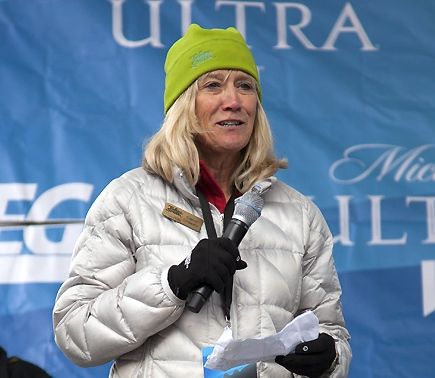
    “As a premier biking destination we don’t have good signage." -- Carol Chaplin, LTVA executive director Photo/Carolyn E. Wright/Copyright

“As a premier biking destination we don’t have good signage.” — Carol Chaplin, LTVA executive director
Photo Copyright 2015 Carolyn E. Wrightt

The fact that one-quarter of the people who volunteer at TAMBA trail days proves those outside the area care enough about Tahoe mountain biking to give back.

Carol Chaplin, who heads the Lake Tahoe Visitors Authority, has the job of promoting the region for all levels of cyclists – including the pros. A large amount of credit for bringing the women’s Amgen Tour of California to Tahoe can be given to Chaplin.

“We were in it for the PR part of it,” Chaplin said. She won’t reveal a dollar amount regarding how the town benefitted. She said it cost more than $200,000 to be the host venue for two days.

Curtis Fong, who organizes the June and September rides around the lake, said combined his events have brought in $150 million to the community. This is from participants and their friends staying and eating in town as well as spending money on other things.

But it’s also up to businesses to take the initiative when events like this occur. When the men’s Tour of California almost happened here in 2011 Sprouts had a welcoming sign and the restaurant was hopping with the riders.

In terms of an overall welcome for cyclists, Jason Collin – Lake Tahoe South Shore Chamber of Commerce board member – said promoting an environmentally friendly and healthy lifestyle does this.

Chaplin said in partnership with the chamber businesses have been told it would be advantageous to have bike racks, a place for cyclists to hose or wipe down their bikes – especially for mountain bikes, and laundry capabilities.

In the end, the speakers agreed there is room for improvement if Lake Tahoe is going to be among the elite destinations for all cyclists.

“As a premier biking destination we don’t have good signage,” Chaplin said.

This, though, is a difficult endeavor on any of the state highways because Caltrans and NDOT make the rules. There are groups like the bike committee that is part of Measure S/R and the Lake Tahoe Bicycle Coalition that are working on wayfinding on paths and side streets.

It was also acknowledged that a survey should be conducted to gather more input about who is cycling here. It was pointed out that various agencies from the Tahoe Rim Trail Association to the U.S. Forest Service to Tahoe Regional Planning Agency do various surveys but the data has not been coalesced nor is it readily available to the public.

Chaplin said a detailed user survey is something the LTVA could do, though it costs money. The LTVA marketing committee will be discussing the 2015-16 budget at its May 26 meeting. Chaplin said important information to find out is the gaps the area has when it comes to cycling so those can be addressed.




Nevada No. 2 in U.S. for foreclosure activity in April

By Jennifer Robison, Las Vegas Review-Journal

Nevada continued to chip away at its home foreclosures in April.

Nevada has been a leader in foreclosures for years. Photo/Brendel

Nevada has been a leader in foreclosures for years. Photo/Brendel

A Wednesday report from California research firm RealtyTrac found that foreclosure activity across the state was up 39 percent year over year in the month, extending to one in every 555 homes. That was good enough for No. 2 in the nation for default-related activity.

Florida ranked No. 1, with one in every 425 homes in some stage of foreclosure. Maryland, New Jersey and Tennessee rounded out the top five.

Read the whole story


Entertainment venue being created in SLT

Magicians like Danny Cole  will have a permanent venue to perform in starting this fall in South Lake Tahoe. Photo/Provided

Magicians like Danny Cole will have a permanent venue to perform in starting this fall in South Lake Tahoe. Photo/Provided

By Kathryn Reed

A long undeveloped commercial space is about to become South Lake Tahoe’s first indoor entertainment venue.

The third floor of the movie theater at Heavenly Village was once going to be a residential unit. By November it is slated to be a 110-seat events center with a separate high-end bar-lounge area.

Gary Casteel, whose Trans Sierra Investments owns the site, and Paul Reder of PR Entertainment, plan to spend more than $1 million converting the vacant area into a state-of-the-art live entertainment destination. This will be in the dome area of the movie theater building.

This week the City Council agreed to sell 5,100-square-feet of commercial floor area to Trans Sierra for $100,000. Next up is the permitting process. The goal is for it to be open in the fall.

“We need more entertainment in the village. This rounds out what we do,” Casteel told Lake Tahoe News.

The hub of the South Shore, which opened more than a decade ago, is completely full. Casteel credits the vibrancy of the village to having the right mix of tenants.

“My thought is you could get over the shoulder season if do events and give people a reason to come up here." -- Paul Reder, president PR Entertainment

“My thought is you could get over the shoulder season if you do events and give people a reason to come up here.”
— Paul Reder, president PR Entertainment

Casteel and Reder’s history dates to their days at Caesars Tahoe. Both believe this partnership will be successful, profitable and beneficial for the city as well as the overall region. They’ve been working on the project for about 18 months.

Reder has produced more than 3,000 shows on the South Shore in the last 26 years. One of the most successful genres has been magic. He started producing those in 2003. Seven years later he and co-producer Tony Clark won the Merlin Award for Producer of the Year. In the world of magic this is like winning an Academy Award.

When the Horizon closed last year no other casino wanted that type of entertainment even though night after night the magic shows would sell out.

“The magic show concept resonated so well with the community because there was nothing else to do with the family. There are only so many times you can see a movie,” Reder told Lake Tahoe News. He said Illusion Fusion sold more than 30,000 tickets a year and that on TripAdvisor it was the No. 1 attraction in Lake Tahoe.

The Heavenly Village venue will host two shows a night, six nights a week. The early show will be family oriented, while the later show will be for those 21 and older. Both will be magic-based. Clark will be the producer and magical consultant.

Reder said his experience is that there is a demand for family entertainment. There is also a demand for year-round entertainment.

“My thought is you could get over the shoulder season if you do events and give people a reason to come up here,” Reder said.

He also anticipates having speakers give talks at the theater, renting the space to community groups, using it for meeting space during the day, and potentially having music acts who want to perform in an intimate setting.

Reder is working now on getting the shows lined up.

The lounge area will include two fireplaces and overstuffed couches with a living room feel. Areas can be sectioned off for privacy. Small plate, tapa-style food offerings will be available. It will be a place to hang even when not seeing a show.

A separate entrance will be created on the third level of the parking garage so people will be able to walk into the venue from there. Not everyone will be driving since there are about 5,000 hotel rooms within walking distance. The main entrance will be near the movie theater.

The goal is to use locals as much as possible in the next few months – including the architect, designer and construction team.

The only thing left to be known is what the name of the venue will be. Trademark issues are being worked out so that is still forthcoming.


Book, movie spur record numbers on PCT

By Sam Stanton, Sacramento Bee

Last September, Andrew Tavalero was within days of completing his six-month hike of the 2,650-mile Pacific Crest Trail when he stopped in a remote Washington town.

Tavalero, 22, struck up a conversation with some other hikers, who told him his Siskiyou County hometown of Weed had been hit with a devastating wildfire. A phone call to his mother confirmed that the blaze had destroyed his family home.

“I remember standing on the side of this road thinking, ‘I could hitchhike home now; I could get a bus ticket,’ ” Tavalero said. “I sat there for 10 minutes and thought, ‘I’ve come this far and I’m going to quit 50 miles from the Canadian border?’

“There’s no way I’m going to quit. You get that kind of attitude, that I’m going to crawl to the finish line if I have to.”

Tavalero made it, and is listed on the Pacific Crest Trail Association’s “2,600-miler list” as one of 3,430 people who have successfully completed the trek between the Mexican and Canadian borders along the Sierra Nevada and Cascade mountain ranges, most of it through wilderness areas.

In recent weeks, as many as 1,500 other people began the arduous journey to add their names to that list.

Most will drop out or postpone finishing until another year.

But hundreds likely will finish. The number of people trekking the PCT has grown steadily for years as the Internet and, more recently, the book and film “Wild,” about author Cheryl Strayed’s experience on the trail, have stoked interest.

Read the whole story