Couples lose thousands on Tahoe wedding deposits

By Sage Sauerbrey, Moonshine Ink 

At least 10 couples lost their wedding deposits this March when the man who had claimed to own and reside on the property they booked was evicted following a five-year legal battle. The couples will follow through with their weddings under the new owners of the property, but are not hopeful about getting their deposits back.

Christian Steele, a former physician, author of “Mastering the Power of Life”, an ascension teacher, and a Tahoe City resident, had been misrepresenting his ownership of Bear Paw Lodge for five years, profiting from weddings on a property he has not owned since 2010.

According to a deed of sale in the name of Bank of America, Steele lost the Tahoe City lodge in a 2010 foreclosure after defaulting on a $4 million loan, but Steele said he continued to live on the property until 2015. When four to five years of serial bankruptcy filings finally culminated in his eviction by the Placer County Sheriff’s Office on March 17, Steele contacted the couples to inform them he could not honor their reservations. The deposits have not been returned as of April 23, and total somewhere in the range of $20,000 to around $60,000, judging from Steele’s estimate of $2,000 to $6,000 per deposit.

Read the whole story


Presidential hopefuls may want to bet on casino industry

By J.D. Morris, Las Vegas Sun

Nevada is an important state for 2016 presidential candidates, and the casino lobby is trying to make sure its industry is considered important too.

Geoff Freeman, president of the American Gaming Association, recently sent a letter to candidates arguing that because Nevada is a key battleground state, presidential hopefuls need to recognize the contributions of the state’s most dominant industry if they want to succeed here.

Freeman urged the presidential candidates to consult with people who understand gaming and to make appearances at gaming facilities.

Read the whole story


S. Lake Tahoe wants out of ambulance business

By Kathryn Reed

South Lake Tahoe Fire Department is on its way to returning to its primary focus — dealing with all things related to fire.

The City Council on Tuesday voted unanimously to make this happen. Lake Valley Fire is poised to be the provider of all ambulance services in El Dorado County on the South Shore.

The Cal-Tahoe Joint Powers Authority has been wrestling for some time with how to make the financials balance. One of the problems is the city and Lake Valley – the entities making up the JPA – entered a contract with the county to provide three ambulances and get reimbursed for the cost of two. The other issue is how inter facility transfers (IFTs) affect service and the bottom line.

The JPA is paid a flat fee for the IFTs. Depending on how far of a drive it is – could be the Bay Area – it’s a losing proposition. It also means a depleted work force at the local stations. There were 640 IFTs in 2014, with 2015 on target to be higher than that.

“Our resource will be here all the time and not off the hill,” SLT Fire Chief Jeff Meston told Lake Tahoe News of the change. “We will have stability here.”

His biggest desire is to have his charges focus on fires.

In 2000, before the city had ambulances, 12 people worked any given fire shift to handle the 2,000 annual calls. In 2001, the first year of city provided ambulance service, the on duty staff was at 14 for 2,200 calls. Today the staff is at 10, with 3,200 annual calls.

What will change is that a paramedic will be added to the engines at Stations 1 and 3, meaning three people will be on each rig. That unit is likely to be the first to arrive, with a Lake Valley staffed ambulance to follow. Lake Valley would staff two ambulances at Station 2 in the city.

The contract with the county necessitates a certain response time. Lake Valley Fire Chief Gareth Harris at the July 7 meeting said his people would meet the criteria of the contract. People are not expected to notice a change in the level of service.

The cost savings for Lake Valley comes from hiring emergency medical technicians for the ambulances instead of each one having two paramedics.

Between the two agencies there are 17 fire employees per shift. Employing EMTs will bring that number to 19.

Ultimately the El Dorado County Board of Supervisors will vote on the proposal. The JPA board will discuss the matter July 13. If all goes through, the city’s representation on the board goes from two positions to one, with Lake Valley retaining two.

In other council action:

·      City Attorney Tom Watson’s rolling three-year contract was extended for another year. Changes to his compensation package are being worked on.

·      The Tahoe Prosperity Center will give another presentation on July 21 in an attempt to get the council to pony up $10,000. The majority of the council wants to see the nonprofit’s budget and have a better understanding of how the money would be spent.

·      Direction was given to start work on forming a recreation joint powers authority with Lake Tahoe Community College and Lake Tahoe Unified School District.


Study: Nature may be vital for mental health

By Peter Dockrill, Science Alert

Getting away from it all in the great outdoors has been a proven panacea for generations of city-dwellers, but a new study has quantified how access to nature could be a vital component in our overall mental health.

With more and more of us living in urban areas, researchers from Stanford University wanted to investigate why urbanisation is associated with greater incidences of mental illness. In a controlled experiment, they looked at whether exposure to nature could influence depression levels and specifically ‘rumination’: repetitive thoughts focused on negative aspects of the self.

The researchers took two groups of participants and led them on 90-minute walks through two very different kinds of environments. One group walked across a grassland area populated with oak trees and shrubs, while the other group walked along the side of a heavily trafficked four-lane highway.

Read the whole story


Drought changing how agencies do business

By Coral Davenport, New York Times

FOLSOM — Drew Lessard stood on top of Folsom Dam and gazed at the Sierra Nevada, which in late spring usually gushes enough melting snow into the reservoir to provide water for a million people. But the mountains were bare, and the snowpack to date remains the lowest on measured record.

“If there’s no snowpack, there’s no water,” said Mr. Lessard, a regional manager for the Bureau of Reclamation, the federal agency that built and operates a vast network of 476 dams, 348 reservoirs and 8,116 miles of aqueducts across the Western United States.

For nearly a century, that network has captured water as it flows down from the region’s snowcapped mountains and moves to the farms, cities and suburbs that were built in the desert. But as the snow disappears, experts say the Bureau of Reclamation — created in 1902 by President Theodore Roosevelt to wrest control of water in the arid West — must completely rebuild a 20th-century infrastructure so that it can efficiently conserve and distribute water in a 21st-century warming world.

For most of the 1900s, the bureau’s system — which grew into the largest wholesale water utility in the country — worked. But the West of the 21st century is not the West of Roosevelt. There are now millions more people who want water, but there is far less of it. The science of climate change shows that in the future, there will be less still.

Read the whole story


Alpine County trails lead to dry lakebeds

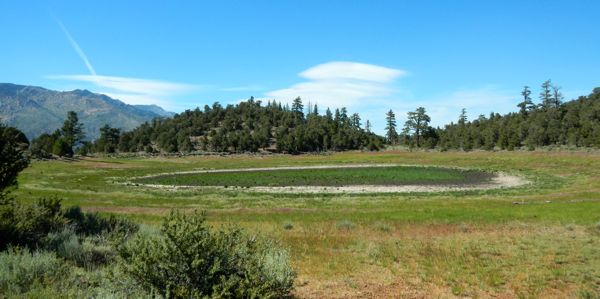
Views along the Curtz Lake interpretive trail in Alpine County. Photos/Kathryn Reed

Views along the Curtz Lake interpretive trail in Alpine County. Photos/Kathryn Reed

By Kathryn Reed

MARKLEEVILLE – Bring water because despite the destination being to a couple lakes there is no water to be found.

Dust bowls. That’s what Curtz and Summit lakes are. Lake is a bit of a misnomer. A ring outlines both. A muddy patch, at least two weeks ago, was at the center of them.

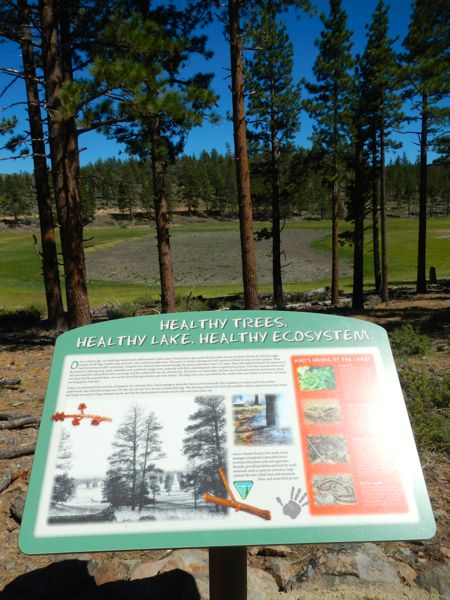
Multiple signs explain things about the land, wildlife and history of the area. One explains how it is not unusual by mid-summer for the lakebed to be dry. This year it was dry before the calendar even said summer.

Summit Lake without any water.

Summit Lake without any water.

The nonprofit Alpine Trails Association recently completed the 1.1-mile interpretive loop around Curtz Lake.

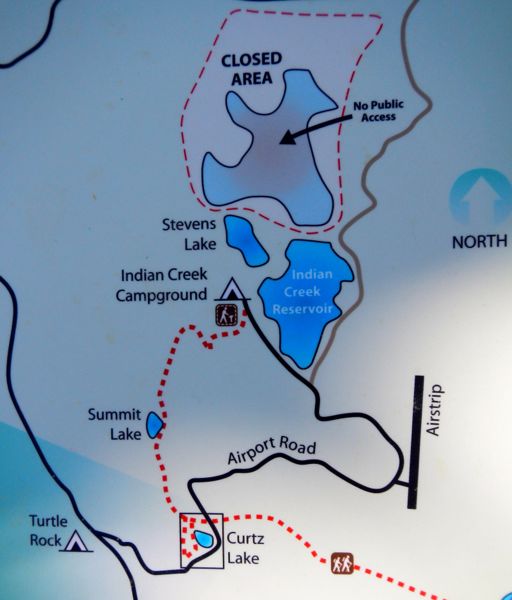
These trails are in the Indian Creek Recreation Area. Indian Creek Reservoir does have water.

Rural and remote define Alpine County. The trails underline this. What’s nice is that the trails are so close to Lake Tahoe, but provide such a different experience.

Pinyon pines dot the landscape, along with Jeffrey and ponderosa.

An interpretive sign above a dry Curtz Lake.

An interpretive sign above a dry Curtz Lake.

More volcanic rock than granite is prevalent. Signs say volcanic eruptions 10 million years ago created the rock mounds. Other rocks are strewn about as though it might have once been a lava field.

The views are varied – from the lakebeds to distant Sierra peaks with splotches of snow to mounds of rock to grassy areas.

Both lakes are easy hikes. Even in the middle of the day in late June the temperature wasn’t that bad. The interpretive route is a mix of shade and sun, with the trek to Summit Lake much more exposed.

—-

alpine-mapGetting there:

From South Lake Tahoe, go west on Highway 50. Turn left on Highway 89 in Meyers. Turn left onto Highway 88 at Picketts Junction. Turn right onto Highway 89 toward Markleeville. Turn left onto Airport Road. (If you pass Turtle Rock Park, turn around.) The trailhead is the first left. There is no sign.


Report: 33% of Nevadans live in distressed communities

By Sandra Chereb, Las Vegas Review-Journal

CARSON CITY — On paper and with high-profile projects rising from the Nevada desert, the state’s economic recovery is in full swing. The jobless rate is down and companies are moving to the region, all good news for a state hit hard by the Great Recession.

But a new analysis being released today shows many communities in the Silver State are still struggling and have a long way to go in the cycle of economic rebirth.

Economic Innovation Group, a Washington bipartisan policy group, found that 33 percent of Nevada’s population lives in economically distressed communities, the highest percentage in the nation.

Georgia, South Carolina and Mississippi followed, each with 25 percent of their populations living in economically distressed communities. At the other end of the spectrum were states like Wyoming, North Dakota, Vermont, Iowa and Idaho, with distressed populations of 1 percent or less.

Read the whole story


Report: Airbnb not hurting hotel revenues

By Alison Griswold, Slate
 
In mid-June, Amanda Hite, president and chief operating officer of Smith Travel Research, delivered some exciting news at an annual hospitality conference in New York: U.S. hotels were killing it. For the 12 months ending in April, hoteliers had hit all-time highs in occupancy, average daily room rates, and the money made off each room. Over the next two years, more growth was expected. This marked a stunning return from the recession, which left the lodging industry battered as businesses and households alike slashed travel budgets.

“We continue to experience some of the best fundamentals that we’ve had,” Hite said.

Hotels aren’t the only players in hospitality enjoying a banner year. Late last month Airbnb, the popular alternative lodging site and poster child for the “sharing economy,” closed a $1.5 billion funding round at a towering $25.5 billion valuation. One of the biggest privates rounds ever, the new money vaulted Airbnb into the upper echelons of the ultra-elite club ofbillion-dollar startups. Only two other venture-backed private companies — Uber and Chinese electronics-maker Xiaomi — have valuations that are greater.

Airbnb, which helps people rent out their homes and spare rooms for short stays, is expected to top $900 million in revenue this year. By 2020, that figure is projected to increase more than tenfold to $10 billion. Airbnb’s listings and annual guests have soared as well, roughly tripling from 2013 to 2014.

That astounding growth is just the latest sign that Airbnb is making good on its promise to “challenge the status quo,” as co-founder and CEO Brian Chesky once put it. Here and now, Airbnb isn’t profitable, forecasting an operating loss of about $150 million for 2015. But at $25.2 billion, Airbnb’s valuation has already surpassed the market cap of major hotel chains like Marriott ($20.6 billion), Starwood ($14.1 billion), and Wyndham ($10 billion), and it’s close to eclipsing that of Hilton ($27.4 billion) as well. While Chesky has at times balked at the term disruption, numbers like those can’t be denied. Airbnb is disrupting hotels. Which is why it’s so surprising that midway through 2015, somehow, both Airbnb and hotels are thriving.

Read the whole story


SLT, LTCC, LTUSD working to build ball fields

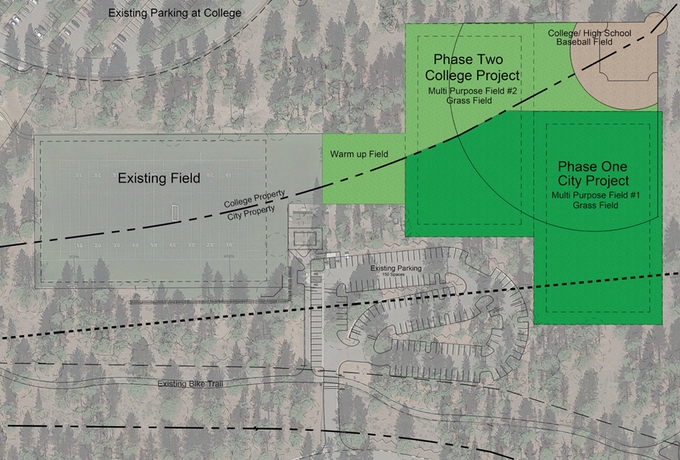
The proposed fields are in green and brown. The existing community field is to the left in grey. Rendering/Design Workshop

The proposed fields are in green and brown. The existing community field is to the left in grey. Rendering/Design Workshop

By Kathryn Reed

By the end of 2016, there could be two new ball fields in South Lake Tahoe – and not a dime of additional taxpayer money is needed to build them.

Designs are such that the fields could be used for football, soccer or baseball – just not all at the same time.

When Measure S was passed in 2000 it said four community ball fields would be built. Only one ever was. In large part this had to do with the recreation measure not generating enough money and the ice rink costing more than originally planned. When it was revised to be Measure R, it said three ball fields.

The Measure S field is next to Lake Tahoe Community College, with the property being  owned by the college and city. The new fields would go to the right of that field if looking at the area from the community ball field parking lot.

The project is a joint endeavor between the city, college and Lake Tahoe Unified School District. To do so the three are creating a recreation joint powers authority. This proposal is on the July 7 City Council agenda. The college board should vote on it in August. The school district time line and funding source are unknown because Superintendent Jim Tarwater did not return a phone call.

Once the respective boards approve the JPA, permits will be sought with the goal of construction starting in May. The exact work plan will be devised to have the least impact on the current field users.

The city on Tuesday could allocate $1.2 million to the fields project. This money is from excess budgeted hotel taxes. Through April, the transient occupancy tax is up 19 percent. For the fiscal year, an excess of $2 million is expected to be collected.

“All of our community surveys say collect taxes from tourists and spend it on things that are valuable to residents. We are delivering on that without asking for new taxes,” City Manager Nancy Kerry told Lake Tahoe News.

The partnership will in effect deliver what Measure S/R intended to do. It will also help resolve scheduling problems.

The new fields are expected to be grass. One reason for grass is to not have to contend with Tahoe Regional Planning Agency coverage stipulations.

Kerry also said artificial turf is expensive, there are potential negative health side effects, and that it’s hard to keep clean.

“The college believes this is a way to bring multiple agencies and funding to facilitate the recreational fields that were promised years ago under Measures R and S. The college realizes that our soccer program has strained the use on the community field, and by collaborating, the community, LTUSD, and the college are all getting more recreational space,” LTCC President Kindred Murillo told Lake Tahoe News. “Our next steps will be to bring easement documents to the board for dedication of the 5.62 acres to the new joint powers authority, draft an agreement for a new joint powers authority that includes appropriate language so the college can invest bond funding in the community field as we promised in Measure F. This is anticipated to start in early August.”

Measure F, which was approved by voters last fall, includes funds for recreation facilities. A caveat is that money cannot be spent on facilities the college does not own. The college has $1.1 million for the fields, some of which will be spent on new artificial turf at the current field. There is $300,000 in Measure S/R money that is also dedicated for turf replacement.

Besides the turf, bleachers are also expected to be built. Murillo said artificial turf is less expensive to maintain and that it is safer for soccer conference play.

Other field improvements are also in the works.

“We are still looking at investing bond funds on the field at South Tahoe Middle School. Under the stipulations of bond funding we must have irrevocable rights to use the field for the length of the bond funded improvements,” Murillo said. “The rationale is that it will expand use of the field for the community, LTUSD, and our soccer program. We are working on a shared facilities agreement between LTUSD and LTCC which will leverage the taxpayers dollars by not duplicating facilities.”

After Tuesday’s meeting, the city and unified district will then work on a plan that is likely to come before the council in August. This has to do with amending the agreement between the entities so the school district is paying for the lights and water for its fields. Currently, the city is doing so.

“The end result will be more efficient management and operation of these fields,” Kerry said.

A side note, this will be last year SnowGlobe, the three-day outdoor concert, will be at the current field even though this is only the second year of the three-year contract. It’s possible the festival could be on the new grass fields. That type of hardscape is more conducive to such activities. The city is also considering 30 acres near the airport for outdoor events.

Rules being written to keep bears from trash

By Kathryn Reed

New regulations are designed to keep bears and other critters out of commercial and multifamily residential trash bins on the South Shore.

The Waste Management Joint Powers Authority last week voted that the lids, which can be plastic, must be shut at dusk or when the business closes. They may be opened no earlier than dawn, unless it’s trash day, then the time is 5:30am.

The current ordinance does not say the lids must be closed or what hours to do so.

“We’ve had issues where lids are open all night and that’s more attractive to bears,” JoAnn Conner, South Lake Tahoe’s rep on the JPA, told Lake Tahoe News.

Plastic lids will be allowed until a bear breaks through it. At that time South Tahoe Refuse will issue the customer an estimate to get it replaced with a metal lid.

The JPA is comprised of the city, El Dorado County and Douglas County – but just in the basin. Sue Novasel (EDC supervisor) and Nancy McDermid (DC commissioner) are the other two members of the JPA.

Residential customers will not have to get a bear resistant container until there has been an issue with trash being strewn all over. On the second offense where animals have been in the trash that customer will have to pay a fine and get a container or bear box. The screw top trash cans would be permissible until those prove not to work.

A difference among the jurisdictions is whether to require bear boxes when a new residence is built or a remodel takes place. El Dorado County requires the box under those circumstances. The city doesn’t. Douglas County, which does not have mandatory trash pick up like its neighbors, also does not mandate the boxes because of new or significant construction.

Conner’s belief is that mandating boxes in those instances is a punishment to people who have done nothing wrong.

It will be up to the individual jurisdictions to decide if construction triggers the need for a bear box.

The JPA is expected to vote on the final ordinance in September. The individual jurisdictions are likely to give direction or vote on the ordinance before then.