Barton takes steps to improve area’s health

By Lake Tahoe News staff

Mental health, substance abuse and access to healthcare services are the main concerns of people on the South Shore, according to Barton Health’s 2015 Community Health Needs Assessment.

Other issues to be addressed include: Alzheimer’s disease, cancer, heart disease and stroke, infant health, injury and violence, nutrition and weight, oral health, and tobacco use.

The Affordable Care Act mandates these studies be done every three years, with this being the second one for Barton. The information was collected from community members, health professionals, and national Census data.

Assessment highlights:

·      Substance abuse ranked as the No. 1 major problem.

·      The ratio of primary care doctors to patients in the region is less than the California or U.S. proportion. In the past year, 20 percent of patients had difficulty finding a physician and 25 percent struggled to schedule a physician visit. More than 25 percent of survey responders reported not having a specific source for ongoing care.

·      Responders indicated mental health as a major problem. Nearly 30 percent of responders showed signs of chronic depression for more than two years and only half have been diagnosed with depression.

·      Suicide rates are above the state and national average.

·      Seventeen percent reported experiencing emotional abuse in the past or present.

·      Deaths from liver disease and drug use increased from the 2012 assessment and remain above California and national levels. One third of responders reported being excessive drinkers and 7 percent admitted to drinking and driving within the past month. Five percent had sought help for an alcohol or drug problem.

·      The majority of survey responders met physical activity guidelines, and 41 percent of adults and 72 percent of children identified as a healthy weight. Fewer adults and children were overweight or obese compared to California, Nevada, or national levels.

·      Violent crime and homicide rates were both low.

·      Teen pregnancy rates were half the national average.

Lake Tahoe News asked Leanne Wagoner, Barton community relations manager, a few questions about the assessment:

LTN: What steps did Barton take three years ago to deal with top needs in the assessment?

Wagoner: Barton Health staff has worked with numerous community partners, including the Community Health Advisory Committee and Lake Tahoe Collaborative, to create and implement more than 20 action items to address the top health concerns in the community.

Between 2012 and 2014, Barton Health awarded $25,000 each year in community health grants to organizations with projects that addressed the top three health priorities: mental health, substance abuse and access to healthcare. In 2015, Barton Health doubled the amount and will award $50,000.

Barton Health has provided volunteers and financial support for community-based initiatives, including the Drug Store Project, Every 15 Minutes, Sober Grad Nights, and educational classes such as Mental Health First Aid. To assist community members with finding the appropriate community resources, Barton Health now annually creates a “Health and Wellness Directory,” a free community resource guide comprised of local health and wellness resources. In addition, the top health issues are woven into free wellness lectures conducted by Barton physicians and clinicians, articles in submissions to local media and every Health & Life magazine, and a poster and advertisement series.

Barton Health continues to expand services for mental health. Staff has contracted with a second psychiatrist at Barton Psychiatry and hired a full time clinical social worker at Barton Community Health Center. The demand for counseling services and social service guidance is high and Barton is currently in the process of hiring an additional social worker. Because services are often restricted to a county or state, Barton Health collaborated with mental health agencies to create a process for Legal 2000, the ability to transfer mental health patients across state lines, which increases Barton’s ability to place patients in need of in-patient psychiatric care from five to nine facilities, improving access and expediting appropriate care. Barton Health hosted two well-attended mental health forums with partners and agencies in the fall of 2013 and spring of 2015, and formed a Mental Health Cooperative to address mental health issues. From the 2015 forum, a six-month action plan was developed identifying the following priorities: development of transitional housing, expand the health resource guide, implement coping skills programs for fifth-graders, attain local representation for NAMI, and launch a Mental Health Awareness campaign in May. All have been completed or are on target for completion this year.

Barton Health has implemented programs and protocols to address substance abuse. Physicians have received training in chronic pain management and an integrated pain management task force continues to help the program evolve. A Barton Health staff member chaired the Drug Free Coalition for a year and now leads the Reducing Access workgroup. In the fall, Barton Hospital’s Emergency Department will start implementing an Alcohol Brief Intervention Program to assess trauma patients for alcohol abuse and provide counseling services.

To improve access to health care, Barton expanded the Community Health Center by 3,000 square feet.  Barton added new specialties and telemedicine services for underserved community members, including those uninsured, underinsured, and Medi-Cal patients. With implementation of the Affordable Care Act, more than a dozen certified employees helped community members enroll in a health plan.  They hosted eight enrollment events, created a website link and telephone line to answer questions, and provided private appointments.

New services were also added. Additional service lines include Urology, Sleep Medicine, and Robotic Surgery. Barton expanded telemedicine services and created new partnerships with Tahoe Forest Cancer Center as well as a free Cancer Wellness Program. Transitions in Care was started to help patients being discharged from the hospital with chronic conditions, such as congestive heart failure, manage their conditions successfully at home to reduce the risk of readmission. Launched in spring 2015, Barton now offers a price estimator tool for certain procedures allowing patients to understand and plan for medical expenses, including a cost reduction program for MRI services.

LTN: With the data similar to what it was three years ago, it would seem like whatever was implemented didn’t really work. Can you speak to that?

Wagoner: Significant progress has been made. In 2012, access to care referred to the number of uninsured in our community. In less than three years, the uninsured population has reduced from 26.2 percent to 14.7 percent.  Barton Health’s certified enrollment counselors helped nearly 600 South Lake Tahoe residents navigate the insurance market and get the coverage they need. The 2015 Assessment shows new access to care hurdles that reflect demands from newly insured residents, which will be addressed in the 2015-2018 Action Plan.

With other results, we are seeing progress, but know it takes time and resources to see change. Mental health issues can be life long and difficult to diagnose and treat. Within the mental health category, Barton Health has expanded the telemedicine psychiatry services and has hired an additional psychiatrist and licensed social worker at the Community Health Center. This spring, Barton developed a Mental Health Cooperative with other agencies to implement a mental health action plan and has received a rural health grant to implement preventative and action measures to address mental health issues. The South Lake Tahoe community has also seen an investment from the school district with the allocation of increased counseling resources at the middle and high school.

To help address substance abuse, Barton plays an active role in the South Tahoe Drug Free Coalition which has had a number of successes including the new Brief Intervention program at the high school. A permanent drug take-back bin is now located at the police department and this school year a Friday Night Live program will launch at the high school. Barton’s integrated pain management group will continue to work on protocols to responsibly address acute and chronic pain patients throughout our health system. The California Healthy Kids Survey is a survey administered by LTUSD illustrating perceptions and usage around substance abuse in addition to other behavioral health measures. Improvement occurred in certain categories such as: there was a decrease in frequency of alcohol use among three age categories for kids in the 2014-15 school year as compared to 2011-12; across all grade levels more teenagers now perceive marijuana use as harmful.

Mental health, substance abuse, and access to healthcare are almost always listed as “Areas of Opportunity” among other Community Health Assessments and fairly frequently end up as priorities for both rural and urban communities alike. Mental health and substance abuse cannot be solved by one entity and require time and collaboration between social service agencies and the individuals as well as community support.

LTN: Is Barton required by law to create a three-year action plan, or is this something you are doing on your own? How will the outcomes be measured?

Wagoner: Barton Health has gone above and beyond the Affordable Care Act requirement that nonprofit hospitals conduct a Community Health Needs Assessment and Action Plan. Barton Health has maintained Community Health as a strategic plan priority for the organization and has hired a community outreach liaison to oversee the Action Plan and strengthen community partnerships. Barton Health has donated funds for community projects that address community health needs and successfully acquired additional partnerships and funding sources to support the action plan.

Outcomes can be measured by community data such as the California Healthy Kids Survey, county public health data, results from the Community Health Needs Assessment, and law enforcement reports. Hospital data provides valuable insight into our patients and their care.  Barton has expanded services and hired new clinicians and primary care providers. The community resource guide is widely distributed and has expanded to include mental health services. Find Barton’s community investments highlighted in the Community Benefit Report.

—–

Notes:

·      The 2015 Community Health Needs Assessment results and summary are online.


Gas prices may drop to less than $2.50/gal.

By Gary Richards, San Jose Mercury News

Gas prices may soon begin falling to levels not seen since the Great Recession in 2008 to under $2.50 a gallon in California and — gasp! — to below two bucks nationwide.

That would be a pleasant shock on the West Coast, coming just two weeks after rising nearly 75 cents overnight in Southern California to $4.30 a gallon.

If refineries continue producing at full capacity, the switch over to winter-blend gas in the fall/winter months, which is cheaper to produce and lower in demand prices may drop.

Read the whole story


Future of Caesars Entertainment remains murky

By J.D. Morris, Las Vegas Sun

More than six months after a major division of Caesars Entertainment Corp. filed for bankruptcy, it’s still unclear exactly how the company will emerge on the other side.

Caesars wants a Chicago bankruptcy court to approve a restructuring plan that could shed around $10 billion in debt from the division, but lawsuits from some of the company’s creditors continue to complicate things. One recent court decision in particular threatens to create big problems for the entire casino company.

If Caesars’ plan is successful, the division that filed for bankruptcy will be reorganized under a real estate investment trust setup that will split it into two parts: one that owns casinos and another that manages them. That setup would have Caesars follow in the footsteps of other casino companies — including Penn National Gaming, the company buying the Tropicana — that have made similar moves toward real estate investment trusts.


Harrah’s Reno, Harrah’s Lake Tahoe, Harveys Lake Tahoe, Caesars Atlantic City and Bally’s Atlantic City were among the properties included in the bankruptcy filing in January.

Read the whole story


Magic of Vikingsholm comes alive through stories from woman who lived there

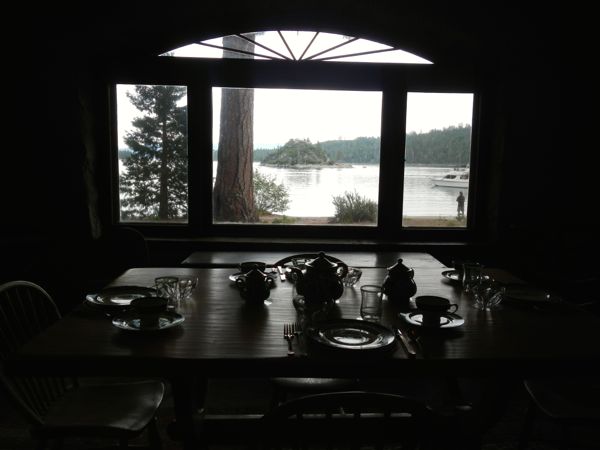
Coffee and tea were served throughout the day in the morning room. This room is not on the regular tour. Photos/Kathryn Reed

Beverages were served throughout the day in the morning room; a room not on the regular tour. Photos/Kathryn Reed

By Kathryn Reed   

EMERALD BAY STATE PARK – An iconic gem of Lake Tahoe describes Vikingsholm as well as Helen Smith.

Smith spent her first 14 summers staying at what is now a castle within the California State Parks system. At the time, it was the private summer residence of Lora Knight. Smith’s mother was a friend of Knight’s so that’s how they had the opportunity to summer at Lake Tahoe.

Smith, upon hearing the State Parks in 1953 bought the more than 200-acre parcel that included all the land in Emerald Bay up to the highway, made her way back to Lake Tahoe to see what the estate looked like.

She was taken aback a bit that no one knew much about the property. By this time furniture had been removed from some of the rooms. State Parks thinking at the time of acquisition was to tear down the buildings and return the land to its natural state or make it a campground.

Activists got involved and saved what is now a treasured jewel.

Helen Smith's goal is ensure Vikingsholm's history keeps being told and that there will be money for its upkeep

Helen Smith’s goal is to ensure Vikingsholm’s history keeps being told and that there will be money for its upkeep.

“This is considered one of the top cultural resources in the State Park system behind Hearst Castle,” Heidi Doyle, executive director of the Sierra State Parks Foundation, said.

(This wasn’t the only time the furniture was removed. In 2007, during the Angora Fire the house was evacuated.)

Smith, who is now in her 80s, was not comfortable letting the rich history of Vikingsholm disappear so she started the docent program. She gave tours for 42 years, retiring in 2009. But it wasn’t an easy job to get because the thinking at the time was that this kind of work wasn’t meant for women.

This is the fourth summer she has been a part of special fundraising events where guests get to see some of the rooms that are normally off limits as well as have the opportunity to ask Smith questions.

The intimate evening includes wine and light snacks. The emphasis is getting a chance to relive part of this history as well as contribute to the restoration of the site via the price of admission. Sodding the roof so it’s like it was in Mrs. Knight’s era is the current fundraising project.

The electrical system is next. Mrs. Knight had electricity and running water at Vikingsholm when it was built in the late1920s.

“I would like to see an endowment so the house is kept up,” Smith told Lake Tahoe News. “With a building as old as this, there are problems. It’s continuous upkeep.”

Besides seeing the library, Mrs. Knight’s top floor and a room off the kitchen, stories not heard on the regular tour are told, like how some people came to Vikingsholm in the winter of 1951-52 for Thanksgiving but weren’t able to leave until Easter because it was an epic snow year.

While stories abound about Mrs. Knight and her guests being rowed to Fannette Island for tea, the truth, Smith said, is this seldom occurred. This is largely because it was not an easy endeavor to take all the cooking devices to the island, plus most of the guests were older and the island is rocky.

This was the era when guests were expected to dress for all three meals. This meant dresses for the women and and coat and ties for the men.

At what is now the boat-in campground was Emerald Bay Resort. Smith said Frank Lloyd Wright visited the area before Mrs. Knight.

“He was interested in building a bridge from the resort to the island,” Smith said.

Smith stays in the caretakers quarters when she is town. The rest of the year she is in Palo Alto. She and her late husband lived on the Peninsula for years. Smith obtained her doctorate in teaching from Stanford. The special tours are her way of continuing to teach about a bygone era as well as an opportunity to help preserve a slice of Tahoe’s history.

—–

Notes:

·      The next event at Vikingsholm with Helen Smith is Aug. 27 at 5pm.

·      Cost is $60.

·      Tickets are available online. A limited number are available.


Nev. expects to get NASA drone contract

By Daniel Rothberg, Las Vegas Sun

NASA could soon be testing drones in Nevada airspace.

As one of six designated drone test sites, the State of Nevada is in the process of securing a contract to host the agency while it researches unmanned aerial vehicles. Tom Wilczek, who works with the aerospace and defense industries in the Governor’s Office of Economic Development, expects to have an agreement within two months.

The contract would give NASA the freedom to use the Nevada test site for UAV-related projects, such as developing an air traffic management system for drones. NASA is also expected to conduct a demo flight in Nevada as part of its testing for unmanned aircraft. The state has not determined where the testing would take place, but the there are several locations throughout the state with good conditions for operating unmanned vehicles. They include Creech Air Force Base, Nellis Air Force Base, Fallon Municipal Airport, Reno-Stead Airport, Boulder City Airport and the Nevada National Security Site/Desert Rock Airport.

Read the whole story


Calif. missed a year’s worth of rain since ’12

By Avaneesh Pandey, International Business Times

California — currently facing one of the worst droughts on record — has accumulated a rainfall “deficit” of about 20 inches since 2012, according to a new NASA study. In other words, the difference between actual rainfall in the state and the rainfall expected on average is now equivalent to a whole year’s worth of precipitation.

Although California has typically seen wide annual fluctuations in rainfall, the wet years balanced out the dry ones during non-drought periods. However, the latest precipitation data gathered by NASA shows that California accumulated a deficit of almost 13 inches between 2012 and 2014, and another 7 inches during the 2014-2015 wet season.

According to the study, this lack of rains can be attributed to the absence of “atmospheric rivers” — narrow, water vapor-rich jets that travel through the atmosphere, typically from west to east — over the eastern Pacific Ocean.

Read the whole story


Lush terrain along route to Emigrant Lake

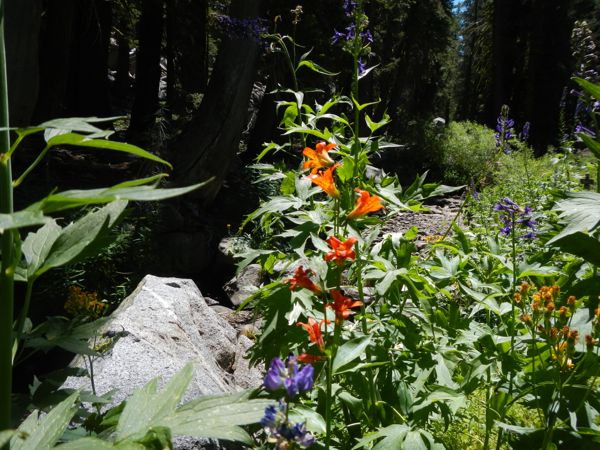
Wildflowers are still in bloom near Emigrant Lake. Photos/Kathryn Reed

Wildflowers are still in bloom near Emigrant Lake. Photos/Kathryn Reed

By Kathryn Reed

KIRKWOOD – Sitting at Emigrant Lake looking up at the granite cliffs that form part of the Kirkwood Mountain Resort boundary it’s easy to understand why the words steep and rugged are synonymous with this ski area.

And this isn’t the super gnarly area of the Wood.

Fortunately, hiking to Emigrant Lake was tame compared to the surroundings.

One of the biggest surprises was discovering how pretty Caples Lake is. I had only seen it from the road and years ago I was on it for an ice fishing story. Several fisherpeople were on the dam, along the shoreline and in boats trying to catch dinner. Crawdads are what they said they were mostly reeling in.

Fishing and boating are popular activities on Caples Lake.

Fishing and boating are popular activities on Caples Lake.

The trail parallels the lake for a ways before it heads into the Mokelumne Wilderness Area.

Then this body of water appears again. It’s a beautiful arm of Caples that isn’t visible from the highway. Water marks on the boulders show the lake is down about 18 inches. The lake is a storage facility for El Dorado Irrigation District for water consumption as well as a hydroelectric plant.

Soon after the lake is behind us the trail begins to climb. It isn’t long before the steep grade levels out to a gradual climb. The hike has an elevation gain of 915 feet.

A variety of flowers are in bloom along the water and in a meadow on the trail.

A variety of flowers are in bloom along Emigrant Creek and in a meadow that the trail wanders through.

Wildflowers – at least last weekend – were still very much in bloom, but clearly beyond their peak. Much of the trail is lush with green foliage.

It seems like with every step there is something for the eyes to feast upon – including a waterfall.

Much of the trail is shaded, which in the middle of a hot summer day was ideal.

Emigrant Creek comes and goes regularly along the trail, making this an ideal hike for dogs with all the lapable water.

Emigrant Lake is popular with backpackers.

Emigrant Lake is an 8-mile round trip hike from the Caples Lake dam.

An old marker points toward the Historic Emigrant Trail. This would have taken us close to Thimble Peak (9,805 feet), Covered Wagon Peak (9,565), Melissa Coray Peak (9,763) as well as to the chairlifts. We chose to go to the lake.

There is also a sign for a trail that leads to Kirkwood Meadow.

Most of the people we see on this Sunday are headed out with backpacks. It’s a popular destination for backpackers. Large, flat boulders near the lake make it an ideal lunch spot for day hikers.

Because the lake sits in a basin, it was a bit windy and cool. But as we got back on the trail to head out it wasn’t long before we shed the layer we had put on at the lake.

—–

Getting there:

From South Lake Tahoe, go west on Highway 50. Turn left onto Highway 89 in Meyers. At Pickett’s Junction, go right onto Highway 88 toward Kirkwood. Park at the first turnoff on the left after crossing the dam at Caples Lake. The trailhead is to the right of the dam and is well marked.


California’s pension hole now monstrous

By Teri Sforza, Orange County Register

Within the span of only 11 years, the hole at the bottom of California’s state and local pension funds increased a staggering 3,046 percent.

The monstrous growth of the gap between what public agencies have promised workers upon retirement and what they actually have – from $6.3 billion in 2003 to $198.2 billion in 2013, according to figures gathered by the state controller’s office – matters to all Californians, reformers argue.

If it’s not filled up with meatier investment earnings and heftier contributions from public workers and employers, that hole will continue to expand, and taxpayers must fill it directly.

Why? Because in California, the promises made to public workers on Day One of their employment can never, ever be broken – at least, not outside of federal bankruptcy court. And even in court, officials from Vallejo and Stockton and San Bernardino did not request permission to modify these burdens, fearing they’d have trouble attracting and retaining workers if the city next door offered something better.

Read the whole story


2015 fire season approaching record level

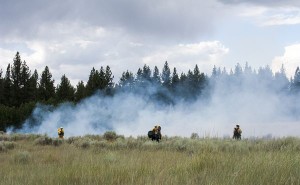
Grassy areas in the West are dry and quick to burn with this being year four of the drought. Photo/Carolyn E. Wright/Copyright

Grassy areas in the West are quick to burn with this being year four of the drought. Photo Copyright 2015 Carolyn E. Wright

By Gloria Dickie, High Country News

USA Today earlier this week reported that U.S. wildfires were approaching “record levels.” The article pointed at the more than 5.5 million acres burned so far this season — second only to the summer in 2011, when just more than 6 million acres had burned by the end of July.

Certainly, the 2015 fire season started off with a bang. As of Thursday, 21 large fires — meaning more than 100 acres — were burning in Western states. But when it comes to wildfire, the tide turns quickly, and this season may not set any all-time records.

This year’s fire season has been an odd one. The usually fire-prone Southwest has burned less than the Pacific Northwest, California and Alaska. More than 85 percent of acreage burned has been in Alaska. Meanwhile Colorado, which has broken a number of its own fire records over the past few years, has remained relatively fire-free.

Read the whole story


Turf buyback expands into major yard overhaul

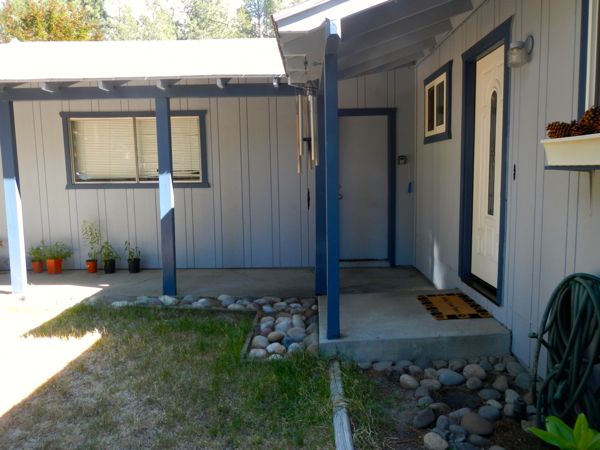
Gutters will go in on the facing roof line, with the rocks for erosion to be repurposed, and the area near the door being redesigned. All of this is outside the scope of the turf buyback. Photos/LTN

Gutters will go in on the facing roof line, with the rocks for erosion to be repurposed, and the area near the door being redesigned. All of this is outside the scope of the turf buyback program. Photos/LTN

Publisher’s note: This is one in a random series of stories about what it’s like to go through the South Tahoe Public Utility District turf buyback program.

By Kathryn Reed

House projects are never as simple as one would like them to be. They often mushroom into something larger than originally anticipated. Even removing sod has had this outcome.

I thought pulling out the grass, creating a path to where I split wood and planting foliage would be no big deal. Wrong. Related side projects are taking unexpected time and unbudgeted money.

South Tahoe Public Utility District reimburses for turf removal, not all the other projects. Obviously that makes sense, it’s just something to consider before embarking on such an endeavor. Tying all the pieces together isn’t always as straightforward as one imagines at the get-go. At some point, though, the cash flow spigot runs dry and priorities have to be determined.

My TRPA-designed drip line doesn’t do a great job on erosion control. And it’s just not pretty. Well, it is better than the dead grass. Still, though, it won’t work with the new landscape design. Plus, I’m going to repurpose those rocks as part of a dry riverbed to catch the excess water from the rain barrel.

Gutters will replace the drip line. I’ve learned not many businesses install gutters in South Lake Tahoe.

Winter’s Electric does through a subsidiary company. They want me to install a fascia board before the gutters are installed. They don’t do that type of work. Luckily, my friend and neighbor Bob does all sorts of stuff like this. The purpose is that it will be a surface for the gutter to attach to. Considering a ton of runoff comes from this section of the roof the reinforcement is necessary.

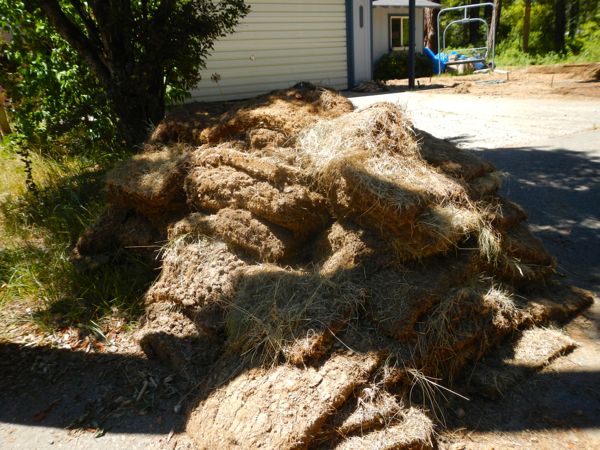
This is sod from 3.5 rows. South Tahoe Refuse will pick it up if it's bagged or in cans.

This is the pile of sod from the 3.5 rows removed by the homeowner. South Tahoe Refuse will pick it up if it’s bagged or in cans — but not like this.

The river bed is “required” because the rain barrel is likely to fill up fast and I’ll need a place to direct the water in a logical manner – meaning away from the house and so it doesn’t flood the newly designed yard. Plus, this will filter it a bit.

Rain barrels come in all types of material, sizes and design. Unfortunately, I came up short on my shopping trip this week to Home Depot. They only have them online. I still need to order them. (I’m buying two. The other will go on the downspout from the back gutter.) I’m leaning toward one that allows plants to grow on the top.

What to plant is almost as overwhelming as to what the design should look like. I’ve gone on the South Shore garden tour (which this year was hosted by the master gardeners) numerous times. What a fabulous way to get ideas about what to do in your own garden – ideas about plants, colors, design, mulch and other things to add to the yard.

It does seem like the people who open their yards to these tours spend a ton of hours each week working on them. I don’t have that kind of time nor the desire to find it. That in itself is something to consider.

Many people have yard art or other things that make the space inviting. I’ve decided to move my chairlift swing so it faces the California Tahoe Conservancy lot instead of the driveway-street. That is my biggest non-foliage item – at least for now.

My friend Mike came over to talk about turning a couple rounds of wood into a bench. He pointed out the need to pay attention to the length so they are about the same and not wanting them to be tilted. Kim wisely suggested using snowboards or skis as the bench part. Mike has the tools to drill them into the wood and cut the skis if necessary.

I envision this going near the wood cutting area so I can rest. Plus, it ties into the ski lift theme of sorts.

I’ve removed the wood along the edge of the yard. I don’t want any barriers like that again. The rocks and wood stepping stones near the front door have also been moved. This is more area to contend with that has nothing to do with the turf buyback.

I also want to make some changes to the backyard that will necessitate removing some plants-bushes. I’d like to transplant them to the front. This will spur me to get on that project soon so it’s not an ugly mess. At least it’s behind a fence in case I don’t get to it soon.