Brown: Groundwater management not aggressive enough

By David Siers, Sacramento Bee

Gov. Jerry Brown said in an interview aired Sunday that California is not aggressive enough policing use of the state’s groundwater, promising stepped-up oversight in future years.

Brown’s remarks on NBC’s “Meet the Press” followed the release of a study tying climate change to the worsening effects of California’s drought.

Asked he if was “about to police agriculture more,” the Democratic governor said, “Well, I think that’s good advice, but of course I don’t rule by decree. I work through the Legislature. California now has groundwater management for the first time in its entire history, so we are much more aggressive. But as that scientist suggested, we’re not aggressive enough. And we will be stepping it up year by year.”

Read the whole story


Political differences could peak at Tahoe summit

By Michael Doyle, McClatchy Washington Bureau

The lawmakers convening Monday for a major Lake Tahoe conference confront a Capitol Hill conflict over how best to protect the much-beloved mountain region.

They differ over money, environmental laws, timber harvesting and more. For years, the unresolved differences have sunk efforts to renew the Lake Tahoe Restoration Act, first passed in 2000. Some hope this summit can help members of Congress finally start paddling in the same direction.

“I think the prospects are good,” Rep. John Garamendi, D-Walnut Grove, said Friday.

Competing sides will certainly be present at the 19th annual Lake Tahoe Summit at the Round Hill Pines Beach Resort. Governors, senators and congressmen from California and Nevada will attend, along with about 500 others, paying homage to the 191-square mile lake.

The federal legislators share some common ground, underscored by identical language in House and Senate bills that praise Tahoe as “one of the largest, deepest, and clearest fresh-water lakes in the world.” The two bills share a name: the Lake Tahoe Restoration Act of 2015.

Both bills are also cast as a follow-up to the original Lake Tahoe Restoration Act, which expired in 2010. That measure authorized $300 million in federal funds, which supported hundreds of specific Tahoe-related projects.

But in ways large and small, the bipartisan Senate version introduced July 9 and the House version introduced several weeks later by Rep. Tom McClintock, R-Garden Valley, veer dramatically.

The Senate bill covers more territory, costs more money and is in its ambitions closer to the original Lake Tahoe Restoration Act. It authorizes spending $415 million over 10 years on various Tahoe-related projects.

The House bill is more tightly focused on forest fuel reduction and invasive species, and it’s designed to pass muster with congressional conservatives. Added up, it authorizes only about one-fifth the amount of money provided by the Senate bill.

“For the last eight years, Tahoe legislation has been introduced in the Senate and has not moved off the Senate floor,” McClintock said when he offered his package. “We have carefully crafted this bill to fit within the budget parameters set by Congress.”

McClintock’s chairmanship of the House Federal Lands Subcommittee gives him particular sway over Tahoe legislation, the topic of a July 14 hearing. Michael Brown, chief of the North Lake Tahoe Fire Protection District, testified that McClintock’s proposal would “significantly help” forest fire prevention efforts.

Meanwhile, Leslie Weldon, deputy chief of the Forest Service, cautioned that “we have concerns with a number of provisions.”

The House bill, for instance, would exempt forest fuel reduction projects from National Environmental Policy Act requirements. It would also subject forest management protests within the 150,000-acre Lake Tahoe Basin Management Unit to mandatory arbitration, which could not be blocked by a judge’s restraining order or preliminary injunction.

“What we’re hoping is that, as we work through the process, the two bills will become more closely aligned,” Julie Regan, external affairs chief for the Tahoe Regional Planning Agency, said Friday.

Garamendi opposes some of the House provisions, which track broader conservative policies concerning public lands, but nonetheless sees the glass as half-full.

“The fact that McClintock is prepared to engage is significant,” Garamendi said. “His bill may be less than optimal, but it’s nonetheless on the right track.”

Still, in a sign of conflict to come, McClintock at the July 14 hearing criticized the “excessive costs” of bills that focus on improving Lake Tahoe’s clarity.

The Senate bill, meanwhile, has at least some wind in its sails by virtue of its strong support by Senate Minority Leader Harry Reid of Nevada, whose retirement next year could make the Lake Tahoe legislation his final legacy. If both House and Senate pass their bills, differences would have to be worked out in a conference that would test everyone’s willpower, flexibility and deal-making prowess.


Designers turn Tahoe into lasting impression

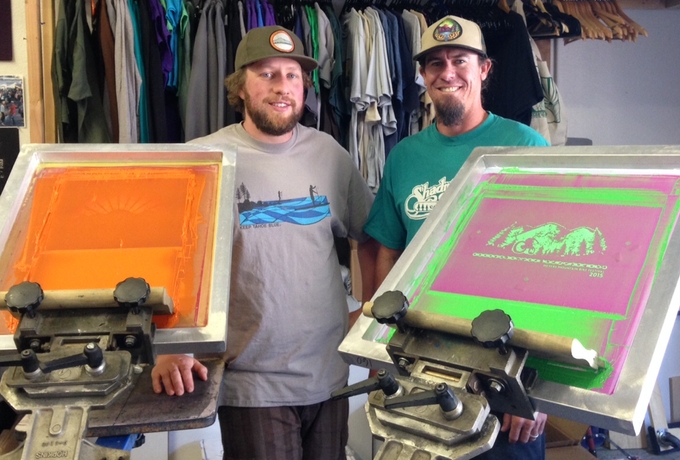
Marley Reel and Mike Miller in front of their screen printer. Photos/Terra Breedan

Marley Reel and Mike Miller with their screen printer. Photos/Terra Breedan

By Terra Breeden

MEYERS – A spider-like machine sits in the middle of the garage with its arms jutting into the small space.

“Careful that thing is hot,” says Marley Reel, co-owner of Rise Designs.

The sizzling screen printer dominates the room. Reel squeezes past the machine and tries to avoid tripping over the pair of boisterous dogs bounding about his feet.

“Yep. This is where the magic happens,” Reel’s partner, Mike Miller, says proudly.

This is the office-store-studio of Rise Designs.

Rise Designs' creations are inspired by nature.

Rise Designs’ creations are inspired by nature.

Located in Meyers, Rise Designs is a graphic design and clothing company that was founded by Miller and Reel in 2007. Specializing in hats, T-shirts, and sweat shirts as well as logo and event poster designs, Rise has become increasingly successful in Lake Tahoe as its bold prints and strong design work has gained recognition around the lake.

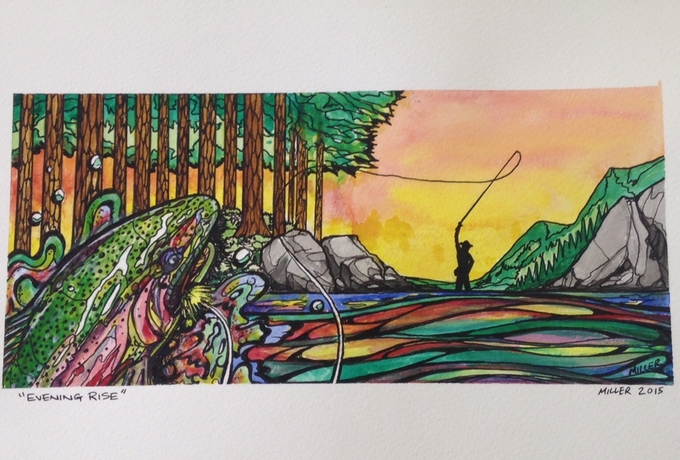
“All of these designs are hand painted,” Miller said as he gestured at the canvases and trucker hats stacked around the garage.

Dripping with bright colors, paintings of mountains, rivers, snowboarders and mountain bikers line the walls. The vibrant artwork depicts scenes from Lake Tahoe. All of the outdoor activities and natural beauty of Lake Tahoe is portrayed on the paintings.

“Our stuff stems from nature, that’s our thing,” Reel said. “We are Tahoe guys and we like nature, it’s all about being outside and enjoying the outdoors.”

Almost all of the designs are motivated by the landscape of Lake Tahoe.

“We get out. We hike, we bike, we snowboard, and that brings us to the outdoors which is where we get our inspiration for our artwork,” Miller said.

Before founding Rise Designs, Reel was a graphic design student from Vermont and Miller hailed from Southern California, graduating from Arizona State University with a degree in industrial design. The two met at Sierra-at-Tahoe where they worked in the season pass office.

“Meeting up with Marley was key for us to develop our business and sustain ourselves in town,” Miller said. “We couldn’t really work at a resort for the rest of our lives, but we love it here.”

Reel said, “So, I approached Mike and was like, hey we should do some artwork together.”

The rest was proverbial history as the two founded the company Rise Designs. They started the business with a couple of sweat shirts printed with their designs by a local screen printing company. Right afterward, the company that printed the shirts went out of business and put their screen printer up for sale.

A water color by Mike Miller.

A water color by Mike Miller.

“Marley and I were like, hey this is an opportunity – we are going to buy this screen printing setup,” Miller said.

It wasn’t an easy task starting a business from scratch. Neither Miller nor Reel had ever run a business before and they had to learn how to do everything one step at a time.

“There is no off-button,” Reel said. “You are always working on it and thinking about it. It’s just the two of us. If we aren’t doing it, nothing is happening. We have to keep moving forward.”

But all of the hard work is paying off. Since 2007, Rise Designs has become a successful clothing company that specializes in outdoor adventure clothing and graphic design.

Rise Designs clothing is carried in many stores throughout Lake Tahoe including Gaialicious, Sports LTD, Tahoe Rock and Ride, and the visitors centers in Incline Village and Tahoe City. They also do graphic design work for local companies. They have designed beer labels for Cold Water Brewery, hats for the Humane Society, and worked with the League to Save Lake Tahoe.

“When we first started we used to extend or arms to businesses for projects,” Reel said. “But these days, companies call us because they know our design work.”

Although Rise Designs now has hundreds of clients and participates in events all around the lake, the two still maintain their creative roots.

“We are both artists,” Miller said. “I have been asked ‘what do you want to do with your life’ and I want to be drawing, I want to sustain my lifestyle, and I want to be a Tahoe resident. I want to live the life that I choose.”

The next step toward fulfilling that goal is for Rise Designs is to move to a bigger workspace, the garage is too crowded for their growing business. Reel and Miller want to keep the company based in Meyers.

“Meyers is a big part of what we do and where we came from,” Reel said. “It’s a great community here.”

Reel and Miller also have tons of ideas for new Rise Designs products.

“We really love doing hats,” Miller said. “There are so many different designs we can do and they are so much fun.”

But they don’t want to confine themselves to one type of clothing.

“Our goal is to put our designs on all types of products,” Miller said. “And who knows what that might be in the future, it might even be watches or socks.”

The only thing certain is that Reel and Miller have a strong partnership and a love for their art; it’s what has been the driving force behind Rise Designs since the beginning.

“You have to have passion in what you do,” Reel said. “If you do it because you love it, not for money or other reasons, your passion will take you there.”


$5K could be made available to all Nev. students

By Trevon Milliard, Reno Gazette-Journal

Jennifer Evans has three children and they have all attended private school since her oldest started kindergarten nine years ago.

She changed that last week, putting her children in Gardnerville public schools.

The single mother and full-time nurse couldn’t afford to pass up the state’s offer, which is being extended to every Nevada parent: Pull your child from public school after at least 100 school days of enrollment and the state will pay you $5,000 a year per student.

Read the whole story


Study sees dying wildlife, bigger fires if drought lasts

By Ellen Knickmeyer, AP

The carcasses of salmon, trout and more than a dozen other newly extinct native species lie in dry streambeds around California.

Exhausted firefighters in the Sierra Nevada battle some of the biggest wildfires they’ve ever seen. And in Central Valley farm towns, more and more parents hear the squeal of empty pipes when they turn on water taps to cook dinner.

A report by the Public Policy Institute of California nonprofit think-tank paints that distressing picture of California for the next two years if the state’s driest four years on record stretches further into the future.

Written by water and watershed experts working at the policy center, at UC Davis, and elsewhere, the report urges California to do more now to deal with what researchers project to be the biggest drought crises of 2016 and 2017 — crashing wildlife populations, raging wildfires and more and more poor rural communities running out of water entirely.

A separate study published Thursday in the journal of the American Geophysical Union warns that climate change is making drought the new normal in California.

By the 2060s, climate models show California in a condition of semi-permanent drought, broken only by short, hard rains, researchers said.

Already, higher temperatures from climate change have made the current drought at least 15 percent worse, they said.

So far, of all the sectors dealing with the current drought, California cities are doing relatively well thanks to the lessons of past droughts, researchers said in the analysis by the Public Policy Institute of California.

Meanwhile, farms have been able to turn to pumping well water to make up for having half as much surface water for irrigation as normal.

With California wildlife, by contrast, “we’re really looking at widespread crisis” if the drought continues, Ellen Hanak, director of the think-tank’s water policy center, said in an interview Wednesday.

California’s fresh-water habitats and forests, along with their wildlife, have experienced the most severe impacts of the drought so far, the study concluded.

Lack of water means 18 species of native California fish, including most native salmon and steelhead trout, face an immediate threat of going extinct in the wild, the report said.

Greatly reduced water deliveries to bird refuges and rice fields — the flooding of which provides crucial habitat — means there is dangerously little room and food for the 5 million migratory birds that fly through the Central Valley each year and a high risk of deadly disease for the birds, the study said.

For California’s environment, officials should be thinking more strategically about how best to use what water is left for wildlife, and preparing “conservation hatcheries” to safeguard native fish species that are on the verge of extinction in the wild, it said.

Hanak also called wildfires a tremendous risk as overgrown forests dry in the drought. Fire and forest agencies already are working to reduce the overgrowth that contributes to making those fires bigger and harder to control, researchers said.

After the environment, rural communities have been hardest-hit by the drought, the study said. As of last month, more than 2,000 domestic wells were reported to have gone dry, mostly in the Central Valley and Sierra Nevada. More than 100 small public-water systems around the state have been cited as needing emergency water supplies.

State and federal efforts to help those communities have been increasing but remain stop-gap, the study concluded. It urges the state to do more to track areas in need of help and come up with longer-term water supplies to replace wells that have likely gone dry for good.

The study advises against counting on El Nino, a sporadic weather pattern that can bring strong storms, to break the drought. State water officials similarly have tried to temper public hopes for a wet El Nino year.
El Nino is historically associated with wetter winters in California only half the time, and climate change makes that even more uncertain, the state Department of Water Resources has said.


Santiago seeks back pay from El Dorado County

By Kathryn Reed

Former El Dorado County Supervisor Norma Santiago believes the county owes her back wages.

She is the second supervisor to demand more money since leaving office. The other was Ron Briggs. 

Norma Santiago

Norma Santiago

“I’m not commenting on that,” Santiago told Lake Tahoe News before she abruptly hung up the phone.

Santiago was on the board for nine years, coming off in January after being termed out. She never made a formal request in all that time to have her $76,875 salary increased.

In the email she wrote to then acting CAO Pamela Knorr and County Counsel Robyn Drivon, Santiago said, “Before leaving office, I requested that my wages be evaluated against certain resolutions adopted by the BOS to make a determination if I was owed back wages. I never formally put this in writing and given all the craziness that was happening, I didn’t do much follow up except an occasional inquiry.”

Santiago is of the belief she is owed cost of living adjustments and money for not taking time off as a manager.

The county has rejected Santiago and Brigg’s claims.

Paula Frantz, senior deputy county counsel, responded to Santiago by writing, “ … none of the claims has merit.”

The state Constitution stipulates that the only way boards of supervisors may increase their pay is through an ordinance. This gives the electorate almost two months to potentially overturn that decision. It is irrelevant how many resolutions the local body passes regarding salaries, the Constitution trumps them all.

Santiago did not put a dollar amount in the request stating what she believes she is owed. Briggs believes he is owed more than $90,000.

The next step, if either chooses to do so, is to file a lawsuit against the county.


USFS drains Seneca Pond before restoring area

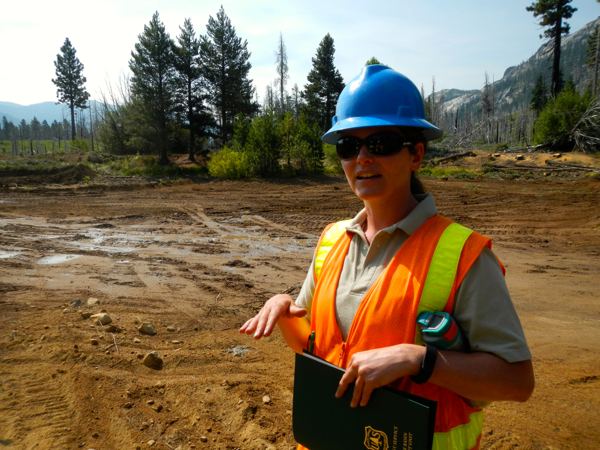
U.S. Forest Service crews are in the process of restoring Seneca Pond. Photos/Kathryn Reed

U.S. Forest Service crews are in the process of restoring the area where Seneca Pond was. Photos/Kathryn Reed

By Kathryn Reed

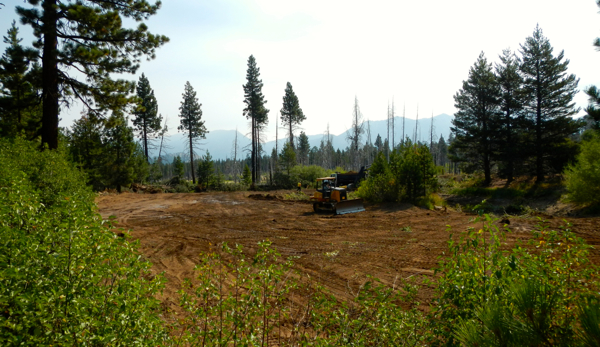
Seneca Pond is no more. The 51-year-old manmade lake has been drained, and excavators are moving dirt and vegetation with the goal of the site being restored this fall.

Today it is a mudflat. In a couple years U.S. Forest Service officials hope it will be hard to tell they had heavy equipment in there.

The pond was about a half acre, but by the time the work is done 2 acres of stream environmental zone will have been restored in the forest off North Upper Truckee Road in El Dorado County.

At the deepest point it was about 4 feet. For the last two weeks the water was siphoned off into the forest. By the end of next week the excavation should be completed, with restoration work continuing through the fall.

Seneca Pond has long been a favorite spot for area residents. User created trails – many of which will be removed in this process – are intertwined, providing a mountain biking and hiking mecca mostly used by locals.

The pond is most famous for being the ignition point of the 2007 Angora Fire. It was an illegal campground that had not been fully extinguished that led to 254 houses being destroyed. No marker will commemorate that tragedy, but the boulder near where it started still exists.

It was after the fire that a set of protocols was developed for the area. The forest supervisor at the time signed off on the decision in 2010. Getting rid of the pond and working on Angora Creek are the last projects to be completed, and they will be finished this fall.

The pond was built in 1964 and enlarged a year later. This was when the land was privately owned. A hippie commune was out there, including teepees. It was in the early 1970s that the Forest Service became the landlord.

We are trying to make it an equally pleasing experience, just different,”
“We are trying to make it an equally pleasing experience, just different.” — Stephanie Heller, USFS Seneca Pond project manager

Stephanie Heller, project manager for the USFS, said the main reason to remove the pond is that as a manmade entity it isn’t natural.

“It’s typically not something we have in the forest to manage,” Heller said as she walked along side what would have been the shore of the pond.

In the early 1990s the Forest Service took measures to keep the pond full of water year-round. Clay was added as a liner and a conveyance system from the uphill spring was created.

Post-Angora the water table rose significantly because there were no longer the trees to absorb the moisture. This led to the conveyance system breaching, which caused issues.

The hillside above this area with the charred trees is a stark reminder of the 2007 fire. There is also lush undergrowth that proves the area is wet even during the fourth year of a drought.

This pond was also home to the American bullfrog, an invasive species that will eat nearly anything that comes into its path. This in turn has hurt the native Western toad and Pacific tree frog populations.

Heller said amphibians are in such a state of decline that her agency is doing what it can to protect their habitat. As crews continue to work through the fall to return the Seneca Pond area into a setting more like what it would have been like pre-human interference, the goal is the contours and undulations will create pockets of water in normal and wet years where amphibians could thrive.

The little island that was in the pond is staying, though it will be thinned. It will be a landmark of sorts.

Heller said neighbors have an emotional connection to the pond and have voiced their displeasure with the change.

“We are trying to make it an equally pleasing experience, just different,” Heller told Lake Tahoe News.


Report: Calif. energy-efficiency programs not enough

By Ivan Penn, Los Angeles Times

California’s efforts to reduce electricity consumption over the last four decades saved $90 billion on utility bills, created hundreds of thousands of jobs and avoided construction of 41 power plants, according to a report released Thursday.

And it’s not enough, the Natural Resources Defense Council said.

Report author Lara Ettenson attributed the state’s progress to building code changes and more efficient appliances. Going forward, she said, California must focus on the “challenging area” of reworking existing buildings to cut energy use.

Read the whole story


Lake Tahoe Hard Rock on shaky ground

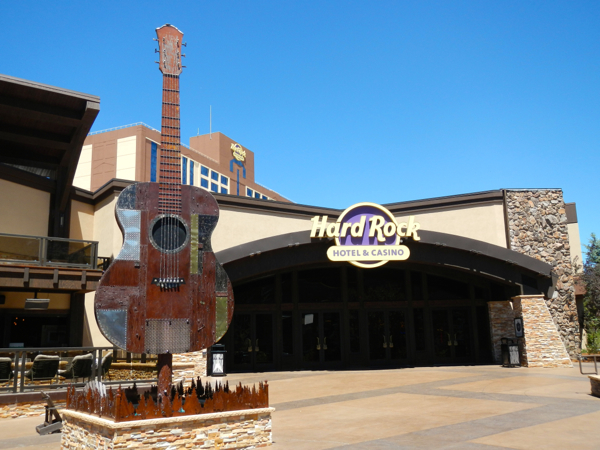
Lake Tahoe Hard Rock has had a rough beginning. Photo/Kathryn Reed

Lake Tahoe Hard Rock has had a rough beginning. Photo/Kathryn Reed

By Kathryn Reed

Current and former employees of Lake Tahoe Hard Rock believe the hotel-casino is destined for failure because of the management company running the place.

“It is very disappointing to see the history and potential of this property being squandered by bullies, liars and thieves with no long term commitment to or concern for our beautiful Lake Tahoe Basin. Employees who speak up or challenge the behaviors and tactics of this group are being picked off one by one and replaced with Las Vegas imports that will keep their mouths shut,” an ex-worker told Lake Tahoe News.

Brothers Jon and David Park, who own the Stateline property, hired Las Vegas based Warner Hospitality to run the hotel-casino. Warner does the same for the Hard Rock in Las Vegas, though the company didn’t open that property, and in Sioux City, Iowa, as well as other hotel-casino entities. The Las Vegas Hard Rock that Warner manages has been losing money for years. According to Mergers & Acquisitions, Bref HR, which owns that Hard Rock, has struggled the last three years with substantial losses – $103 million for the last fiscal year, $105.5 million in 2014 and about $116 million in 2013.

Jody Lake, Warner’s chief operating officer, is the person who employees said makes most of the decisions regarding the Stateline property. He is out of town and deferred comment to Chris Fiumara, vice president and general manager of the Lake Tahoe property. Fiumara is married to Brooke Fiumara, vice president of marketing for Warner. Some employees believe having a local GM married to an executive working for the management firm is compounding the problem.

Questions to Fiumara were limited and only done by email.

Lake Tahoe News spoke to about a dozen workers – some of whom are still working at the Hard Rock, some who quit and others who were fired. All spoke off the record for fear of not retaining their job or not being able to get a new one. Some were with the Hard Rock before it opened, others since nearly day one and others were hired more recently. (The property opened Jan. 28 after a $60 million makeover of what was the Horizon.) All had a similar story to tell of corners being cut, staff shortages, a tyrannical-like approach to dealing with employees, and guests being unhappy. (Hard Rock has a 2-star rating on Yelp and 2½ on TripAdvisor).

Morale is an issue for employees throughout the property. Photo/Kathryn Reed

Morale is an issue for employees throughout the property. Photo/Kathryn Reed

Staffing issues

There are about 500 people working for the Hard Rock. Employees say a property this size – 539 rooms, three restaurants and gaming – should have closer to 700 workers. (Housekeeping is contracted out.)

Turnover of the front desk staff is at 180 percent and about 150 percent with upper management. Overall turnover is closer to 45 percent. It had been forecasted to be 15 to 18 percent.

“The current turnover at the Hard Rock Hotel & Casino Lake Tahoe is not out of the ordinary, particularly with an opening. People come and go and that’s just part of the normal course of business,” Fiumara, the general manager, told Lake Tahoe News. “Our team members are our biggest asset and we believe our team members are engaged, friendly and provide the guest experience the Hard Rock brand is famous for.”

To operate room service efficiently there should be a supervisor and 16 employees. Four is the maximum the hotel has operated with. The restaurants should have had 56 employees; they had 39.

At one point there was a hiring freeze.

There are eight directors on site who work for the Hard Rock, with two of those slots currently vacant.

About a dozen key people left earlier this month. It came to light that Warner had placed a blind ad for many of their positions and then denied doing so when confronted. Some left on their own, others were shown the door.

Performance reviews were never done. Many were told their position was eliminated and then something similar to it was posted.

Some got a severance, others didn’t. No compete contracts were issued after hiring, with stipulations of not going to work for a competitor within a 100-mile radius. This means having to move if they want to stay in the gaming industry. Some of these workers are longtime locals, some moved here for the job. Many have families.

“Word is out and word travels fast so now people don’t want to go there to spend money. Applications have dried up because no one wants to work there because they have heard working conditions are horrible,” an ex-employee said.

Reviews of the various restaurants are inconsistent. Photo/Kathryn Reed

Reviews of the various restaurants are inconsistent. Photo/Kathryn Reed

Questioning the operations

Workers said Warner doesn’t understand the Tahoe market, the guests or the workers.

“They wanted to run it lean and mean and it doesn’t work,” one person said.

Money or the lack of it was the reason employees were given for the staffing shortages and non-existent training.

“The budgets and forecasts Warner came up with were totally unrealistic. That’s why there were so many cutbacks. People were doing three and four jobs,” someone said.

Each worker mentioned the long hours – 18 on many days, no days off – and being reprimanded if two days off in a row were taken.

“It was very challenging due to the Warner group. At times there was hostility in regards to how they treated team members on how to get things done. There was a lack of leadership and very much a lack of communication,” one man said.

Warner has someone who oversees each division. These people are based in Vegas, coming to Tahoe randomly. This has been a challenge for local workers when it comes to getting the powers that be to understand the issues. It has also created problems because one person comes to town, makes a decision, and then that decision is overruled when someone else shows up.

The lack of a cohesive voice, direction and any type of real leadership is exposing major fissures in the operation.

Policy and procedure protocols didn’t exist at the opening. There was no framework for each department. All of this has been developed haphazardly since the opening. It was chaotic from the get-go, with workers not being trained ahead of time.

Employees didn’t understand the rush to open. LTN was on site opening night, having witnessed displays still being put together and the place not ready for the public just hours before the doors opened.

“The original opening date was set for December and was pushed back to the Jan. 28 opening date. We felt it was important to open during the winter season; we opened to positive feedback both on the property and guest service,” Fiumara said.

For many workers, things have not improved in the last seven months.

Pool parties were to set the Hard Rock apart from other Stateline casinos; those plans went down the drain. Photo/Kathryn Reed

Pool parties were to set the Hard Rock apart from other Stateline casinos; those plans went down the drain. Photo/Kathryn Reed

Issues at the property

“This group has cut corners in every area, ignoring building codes, health regulations, the health and safety of its customers and employees,” one person said of Warner Hospitality.

In the back tower, where there are 220 rooms, non-permitted electrical work was reportedly done. This, several employees said, was to deal with the lights above the vanity.

“The Warner group signed off on the vanities and didn’t wire them properly,” according to a worker.

The heating and air conditioning systems are so old that not all rooms allow guests to control the temperature. Ice machines don’t exist in the Heavenly Tower even though there are signs saying they are available. This is a complaint noted by reviewers online.

Asbestos removal was occurring after the property opened.

The old phone system was not replaced. This has resulted in issues in rooms with guests unable to communicate with staff. While wireless Internet was put in, there are spots on the property that are black holes.

The pool has been closed for the season by Nevada officials because of a leak that some employees said was a known problem last summer.

JoAnn Kittrell with the Department of Conservation and Natural Resources said new leaks keep being discovered.

“They are trying to determine what their course of action will be, whether they need a total new pipe or is it time to redesign, reengineer, replace the pool,” Kittrell told Lake Tahoe News.

Today it’s empty, as is the hot tub. Cabanas sit along the side. But the much hyped pool parties aren’t able to go off as planned. These types of parties are infamous in Las Vegas.

“I don’t think they understand Tahoe. They are trying to force Tahoe to be Vegas,” a former employee said.

Douglas County sheriff’s deputies showed up at the property during July’s celebrity golf tournament because of the parties the Hard Rock was having out front.

“Go-go dancers were hired. They were involved in three-way kisses on the patio; there were lap dances on the patio. They were taking tips like strippers,” an employee said. He said restaurant patrons were appalled and that deputies shut down the party.

Someone else said, “People come to Tahoe for many reasons. The main reason is the outdoor recreation part of it. Everything else we offer like restaurants and gaming is secondary. Gaming is more like an amenity to this destination, whereas with Vegas, why people go is gaming. They are not putting equal focus on other amenities that are just as important. You can’t base your budget solely on a gaming framework.”

David and Jon Park, owners of the Lake Tahoe  Hard Rock, on opening day -- Jan. 28. Photo/Denise Haerr

David and Jon Park, owners of the Lake Tahoe Hard Rock, on opening day — Jan. 28. Photo/Denise Haerr

The Park brothers

Those who know the Park brothers had only good things to say about them, and many feel sorry for the two.

“I can’t stress enough how much the Parks really do care. They are great people. Warner is destroying the company and milking the Parks for everything they can,” a worker said.

Neither of the brothers returned multiple phone calls.

Reports are the contract between the Parks and Warner is for seven years. The details of it are not public so it is not known what type of performance measures Warner must meet or what it would take for the Parks to get out of the contract if they so desired.

Those who know the Parks say the brothers are trying to get out of the contract.

The Parks already have at least one legal issue to deal with – payment to the contractor. Mediation this month did not resolve the dispute.

Warner managed the construction project.

“The Parks are upstanding citizens who were dealt a bad hand. They don’t know the hospitality business,” a woman said. “They put their hands and faith with people who sold them a vision and who are certainly not coming through on that vision.”


July was Earth’s hottest month on record

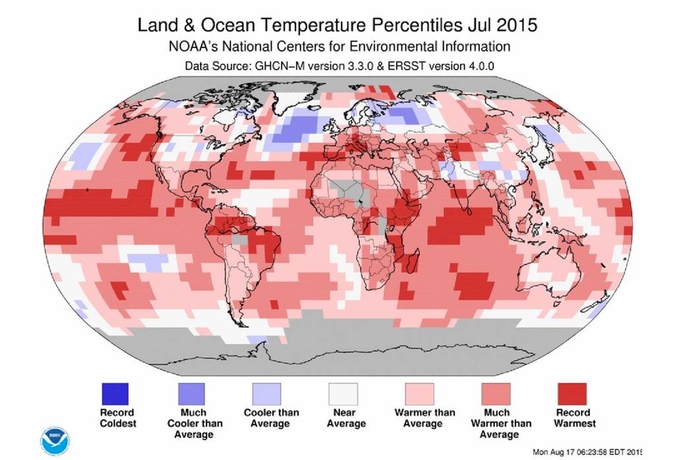
Source: NOAA

                                                                                                                                                                                                                                    Source: NOAA

By Seth Borenstein, AP

Federal officials say July was Earth’s hottest month on record, smashing old marks.

July’s average temperature was 61.86 degrees Fahrenheit, beating the previous global mark set in 1998 and 2010 by about one-seventh of a degree. That’s a large margin for weather records.

Records go back to 1880, but nine of the 10 hottest months on record have happened since 2005.

The first seven months of 2015 are the hottest January-to-July span on record.

National Oceanic and Atmospheric Administration climate scientist Jake Crouch says it is quite likely that 2015 will end up the hottest year on record, beating last year.

Crouch says this reaffirms that the Earth is warming, with a boost this year from an El Nino warming of the Pacific Ocean.