NV Energy bills about to be less expensive

By Kyle Roerink, Las Vegas Sun

NV Energy will rebate $110.8 million to customers on their power bills in October, according to the company’s Public Utility Commission filings.

Residential customers could see $2 to $3 knocked off their bills, while large customers like hotels and casinos could receive credits of up to $113,000.

The rebate is the result of NV Energy paying less than projected for fuel.

Read the whole story


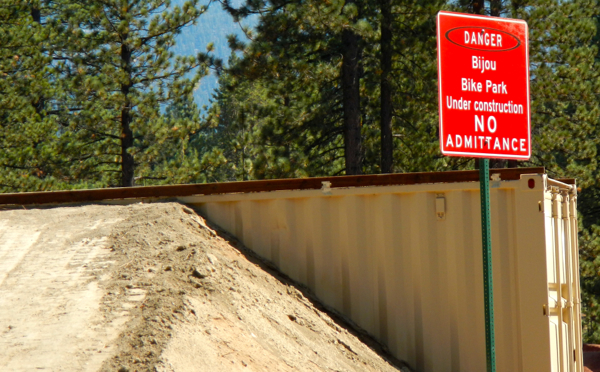
SLT bike park to be dedicated for Wendell


Tom Wendell

Tom Wendell

By Kathryn Reed

Tom Wendell left an indelible mark when it came to cycling on the South Shore.

To honor this man who died two years ago at the age of 62 the city of South Lake Tahoe is dedicating the Bijou Bike Park in his name. A sign will be unveiled when the park opens Sept. 19. The top will say the park is dedicated to Wendell, followed by a tribute written by his brother, Ted.

In the middle will be a list of people who helped bring the park to fruition, with the donor list next to it.

Wendell promoted recreation when no one was listening. He was relentless with his passion and desire to get the powers that be to understand this area was an outdoor playground that needed to be promoted, developed – in the sense of trails, appreciated and maintained.

Sidebar: The following activities are planned: ·       10am        Parade starts at the Y ·       11:30am   Parade ends at Bijou Community Park ·       12:30pm   Ribbon cutting for bike park ·       1pm          Bijou bike course open to public ·       1:30pm     Bike rodeo for kids ·       2-3pm       Jump Jam on slopestyle line with world-class athletes ·       3:30pm     BMX race starts ·       All day      4th annual Deep Blue Derby Tournament hosted by the Sierra Regional Roller Derby.

The following activities are planned for Sept. 19:                 10am Parade starts at the Y; 11:30am Parade ends at Bijou Community Park; 12:30pm Ribbon cutting for bike park; 1pm Bijou bike course open to public; 1:30pm Bike rodeo for kids; 2-3pm Jump Jam on slopestyle line with world-class athletes; 3:30pm BMX race starts; All day 4th annual Deep Blue Derby Tournament hosted by the Sierra Regional Roller Derby.

“We know this would have been important to him. He talked about more bike parks all the time,” City Manager Nancy Kerry told Lake Tahoe News. “When you have people who are true advocates for a cause, they champion it. They make sure city officials are listening. Tom did that for biking.”

After Wendell died in August 2013 there was much talk by people of wanting to name something for him. The park dedication is the city’s way of recognizing Wendell’s contributions through the years to the cycling community.

In 2001 he helped form Tahoe Region Advocates for Cycling with Bob Kingman, Karen Fink, Pete Fink, Jeff Miner and Gary Bell. That was the predecessor to the Lake Tahoe Bicycle Coalition, of which Wendell was part.

Wendell was seldom seen in his car – even in the winter. His hybrid bike was like an extension of him. The trails around Cold Creek and Powerline were his regular stomping grounds when he was mountain biking.

Wendell has many people who are carrying his torch for him now. Ben Fish spent hours to make the bike park a reality. Then there is Ty Polastri, Curtis Fong, Pete Fink and Gary Bell – just to name a few – who walked alongside Wendell in his endeavors and today do more than their share to make road and mountain biking a reason to live at and visit Lake Tahoe.


Changing landscape of Tahoe’s environmental movement

By Kara Fox, Moonshine Ink 

After decades of development lawsuits throughout the Tahoe basin and Truckee, change has quietly been happening over the last few years as conservation groups and developers come together on projects. While environmental leaders say litigation can be necessary to protect the environment, they believe working with the developers is a better strategy to advance their cause.

Since 2012, when new executive directors took the helm of both the League to Save Lake Tahoe and Mountain Area Preservation — two local environmental groups historically known for litigation — the environmental movement shifted. The new leaders have ushered in a more collaborative form of environmentalism. In this new model, litigation is used as a last resort and meetings with developers are commonplace to come to a consensus on development projects. In addition to advocacy, the groups are also focusing on community education, outreach, and awareness, which they say was needed to change the community’s perception of the organizations.

“The environmental movement has changed,” said MAP Executive Director Alexis Ollar. “It seemed like we were the ‘no, no, no’ group. You can’t say no to everything. Change is inevitable.”

Jesse Patterson, deputy director for the League, agreed.

“It is [about] trying to be pragmatic about environmental problems at Lake Tahoe,” Patterson said. “You have to grow with the times; we want to remain effective.”

Read the whole story


Drought, wildfires among Western issues facing Congress

By Bill Theobald, Statesman Journal

WASHINGTON — From drought to wildfires, Congress faces numerous issues of special importance to Westerners when it returns today.

The cost of fighting the fires has already exceeded what had been budgeted for fire suppression this year, Agriculture Secretary Tom Vilsack said. That means the Forest Service and the Interior Department will have to shift funds intended for other uses to pay for fighting fires. This “fire borrowing” siphons money targeted for clearing undergrowth and other steps to prevent fires or reduce their severity.

For several years, legislation has been proposed to change the method for paying to fight wildfires to avoid fire borrowing. There are two competing proposals in the Senate this year.

In its fourth year, drought’s footprint continues to expand in the West, according to the National Drought Mitigation Center. The most serious level — exceptional drought — covers most of central California and western Nevada. That area is ringed by the next most serious level — extreme drought — which extends throughout much of Oregon and Washington and into western Montana and northern Idaho.

Read the whole story


Problem Tahoe bears run in the family

By Scott Sonner, AP

RENO — Are some bears just born to be bad? Or do they learn from other bears that raid garbage cans, break into cars and homes and eventually have to be killed because they’ve lost their fear of humans?

Scientists have researched this classic debate over “nature” and “nurture” among black bears for decades, from Yosemite National Park in the Sierra to central Florida and the Adirondacks in upstate New York.

Now, a notorious 19-year-old female bear at Lake Tahoe with a rap sheet a mile long has become a poster child of sorts for the kind of generational cycle that experts say her young will be hard pressed to break as long as humans continue to leave garbage in their reach.

Last week, Nevada wildlife officials were forced to euthanize a young problem bear at the lake — the third offspring killed from the same litter born to the mama bear known by her tag number, Green 108.

“She’s just kind of a chronic, nuisance-type bear,” said Carl Lackey, a wildlife biologist for the Nevada Department of Wildlife. “She’s always been getting into trash, always been in the same area. We’ve captured several litters of hers. We’ve captured her several times.”
Lackey co-authored a 2008 study published in the Journal of Mammalogy about the role of genetics in bear conflict behavior.

“We sort of concluded that genetics alone could not explain a nuisance behavior in black bears,” Lackey said about the research led by S.W. Breck and C.L. Williams at the USDA’s National Wildlife Research Center in Fort Collins, Colorado.

A study led by National Park Service researchers first suggested in 1989 that problems with Yellowstone’s grizzly bears were a function of behavior passed from mother to offspring and successive generations, but it didn’t determine whether it was learned or inherited.

Another 2008 study by Rachel Mazur and Victoria Seher, researchers at Yosemite’s Division of Resources Management, documented bears “actively tutoring” their cubs to find food in human environments. They concluded that food-conditioned foraging is a skill passed from older bears to the young.

“We have observed sows pushing cubs into buildings and vehicles to retrieve food rewards,” they wrote.

Lackey said several bears that have been caught at Tahoe multiple times and released back into the wild “won’t go into a trap anymore.”

“They send their cubs into the trap or cubs into homes to get food,” he said.

Nevada Department of Wildlife spokesman Chris Healy witnessed something similar last summer at a trap set in Reno.

“Cubs showed up curious about the trap, and the sow we caught a year before would sit there and growl at the cubs to scare them away,” Healy said.

“We’re dealing with really smart animals that become habituated to food,” he said. “If you want to solve the problem, you have to change the way you deal with garbage.”

National parks across the West long have utilized bear-proof trash containers. Several communities in the Canadian Rockies started requiring bear-proof garbage cans as early as 1999. A few U.S. towns have made them mandatory, including parts of Boulder, Colorado, last year. But others — including Lake Tahoe — have rejected attempts because of costs and opposition to government regulation.

Mazur and Seher examined in 2008 whether the bears simply were adapting to their environment, or whether “previously adaptive behavior” became counter-productive, putting the animals in the way of harm by increasing contact with humans. While the garbage provides high-energy food, those bears were 5.6 times more likely than cubs of wild sows to be hit by cars, hunted or killed for safety reasons, they found.

In the end, the bears fall into an ecological trap, they wrote.

In 2004, Green 108 was first captured in Tahoe, tagged and released. Since then, she’s been trapped four times, most recently in July 2012.

“We don’t euthanize bears just for getting in trash when that’s all they’re doing,” Lackey said. “But that conflict behavior escalates from tipping over trash cans to breaking into homes, and that’s when we have to euthanize them.”

So is society ultimately to blame for problem bears like Green 108 and her cubs? Lackey thinks so.

“If we could have waved a magic wand and bear-proofed Tahoe years ago, you wouldn’t see the number of bears getting into these conflict situations,” he said.

Healy said Tahoe never had a serious bear problem until the early 1990s when food sources dwindled in the mountains during extended drought.

“That drought drove bears out of the back country, and a lot of them never left,” he said.


California’s share of Indian gambling money dwindles

By Jim Miller, Sacramento Bee

Former Gov. Arnold Schwarzenegger, beginning with the recall campaign and on through his two terms in office, repeatedly linked the state’s tribal casino business to state finances.

“We want to have the Indian gaming tribes pay their fair share to the state,” Schwarzenegger said during a 2004 news conference, “and it looks like we are on that road.”

Today, tribal money is moving in a different direction. A key court decision, a switch in governors and changing casino economics mean that tribal payments to the state’s general fund – which totaled $241 million last year – are beginning to shift elsewhere.

Gov. Jerry Brown and the United Auburn Indian Community, which runs one of the country’s most profitable casinos, last month announced an overhaul of the tribe’s 2004 agreement with the state. It reduces by nearly two-thirds what the tribe pays into the general fund and directs much of the money to local projects and poor tribes. Lawmakers ratified the agreement last week without a dissenting vote.

Read the whole story


Study: More risk when slots seem humanlike

By Bobby Azarian, Slate

A study published in the Journal of Experimental Psychology: Applied has found that giving casino slot machines humanlike properties can increase one’s willingness to interact with them, thereby promoting riskier gambling behavior.

Apparently something with the appearance of a mind is more welcoming than a lifeless machine.

This finding might be good news not just for the gambling industry, but also for scientists interested in designing more engaging machine systems—like assistive robots for the elderly.

However, it also highlights a cognitive vulnerability that could easily be exploited by those who are intent on manipulating humans for financial gain.

Read the whole story


Businessman redefines ‘heart of Meyers’

A heart shaped gathering spot has been created in Meyers. Photo/John Dayberry

A heart shaped gathering spot has been created in Meyers. Photo/John Dayberry

By Kathryn Reed

MEYERS – The heart of Meyers has a new meaning.

Carl Fair, who built Meyers Station in 1992, this summer completed a landscaping project at his commercial enclave that is designed to bring in people who aren’t just in cars.

“People on bikes are coming out,” Fair told Lake Tahoe News. “It’s what we set out to accomplish – to make Meyers bikeable and walkable.”

Fair participated in South Tahoe Public Utility District’s turf buyback program, which afforded him the opportunity to get creative with his landscaping. He removed 1,800-square-feet of sod, most of which fronted the property on Highway 50. This was land that used 400 gallons of water every timed cycle.

But he didn’t want something ordinary to replace the grass. With the creativity of John Dayberry, the landscape design became a heart. It’s not immediately noticeable at first. Walking out of Verde restaurant people are at the bottom of the heart. The part near the sidewalk is the top of the heart.

Taking a closer look it’s obvious this is a heart. While granite may seem like a cold border, it is so Tahoe. The soft gray of the natural rock is actually inviting, and blends in well with the natural landscape.

The granite walls are not quite all the same size. This was deliberately designed to help deflect the road noise. Plants are growing from the tops – giving it a warm, outdoorsy feel.

Tables are scattered about on the gravel, making it an ideal place to gather to enjoy food or drink from one of the restaurants. A fire pit is in the center.

Fair’s goal is for this to be a gathering spot for Meyers – thus the heart of Meyers in a different dimension.

The first party at the new digs was in mid-August when the conservation landscape tour ended at Meyers Station. Fair had electricity put in so bands can set up a stage just off to the side with amplified music.


Sandoval makes last-ditch appeal to BLM over sage grouse

By Michelle Rindels, AP

Nevada Gov. Brian Sandoval made a last-ditch appeal to the federal Bureau of Land Management to accept Nevada’s recommendations for protecting the greater sage grouse.

Sandoval sent an eight-page letter Friday to BLM Director Neil Kornze, urging him to reconsider Nevada’s strategies for preserving the bird’s habitat. The BLM rejected some of Nevada’s suggestions earlier this summer, saying federal and state plans were in conflict and opting to pursue the federal strategy.

The governor said it would be “inappropriate” for the BLM to proceed with the federal plan and scrap a state strategy that “provides for increased conservation for greater sage grouse, complies with federal law and policies, and is supported by a vast majority of Nevadans.”

Sandoval made detailed arguments that the state plan is more solidly based in science and would better protect the bird. It would also avoid the wholesale closure of certain public lands to development.

The U.S. Fish and Wildlife Service faces must decide by Sept. 30 about listing the chicken-sized bird as an endangered species in Nevada and in rangeland from California to the Dakotas. The BLM and Nevada hope to come up with a workable plan together that will help conserve the bird’s habitat and will eliminate the need for an endangered species listing, which would involve layers of additional restrictions on land.

The decision carries big implications for oil and gas drilling, livestock grazing and a host of other uses of federal lands throughout the region.

The BLM is expected to publicly respond to Sandoval’s appeal in coming weeks.

Sandoval met with President Obama last week in Las Vegas to make Nevada’s case for keeping the sage grouse off the endangered species list.


Drought hits Nevada agriculture hard

By Jeff DeLong, Reno Gazette-Journal

With practiced labor, Tom Moura spills life across the land.

Moura opens wooden gates to flood irrigation water across his still-healthy alfalfa crops. He knows he’s fortunate. During this fourth year of drought, many of Moura’s neighbors in the Lovelock area — arguably the bulls-eye for drought in Nevada — have no water for crops at all.

“They haven’t cut at all. They haven’t even got their machinery out of the shed,” said Moura, 69 and a third-generation farmer and cattle rancher.

“I’ve never seen it like this before. This is extreme,” Moura said. “This drought is probably more far-reaching than any other drought I have ever seen or I have ever been told of.”

Across Nevada, agriculture struggles. Weeds take hold on fallowed fields. Ranchers sell off cattle their land can no longer support. Crop insurance that has carried growers through the drought thus far is drying up, no longer available for many should the drought continue even longer.

Read the whole story