Nevada’s middle man — Gov. Sandoval

By Jon Ralston, Politico

As Republicans look on in dismay at the chaos of the party’s presidential race and a Congress that can’t seem to get anything done, their focus keeps turning to Nevada Governor Brian Sandoval. Reelected in a landslide last year, he has earned a reputation as a chief executive who somehow manages to get things done. Jon Ralston, a Politico magazine econtributing editor and longtime Nevada political reporter, talked with Sandoval about why he’s staying focused—for now—on fixing his state.

JR: Is there a place for a guy like Brian Sandoval in the Republican Party who says, “You know what, I think at times you have to raise taxes, you have to expand Medicaid even though you don’t necessarily agree with the overarching Obamacare”?

BS: Absolutely—it’s about solutions. I stepped in here—the highest unemployment in the country, second highest in the country uninsured, $2 billion budget deficit, an ineffective economic development structure, a failing infrastructure, all of that. People want someone who’s going to find solutions and make tough decisions, and do what’s in the best interest of the state. I don’t see why there wouldn’t be a place for somebody who wants to do that.

Read the whole story


Calif. lawmakers want special session to tackle drought

By Juliet Williams, AP

SACRAMENTO — A bipartisan group of 47 state Assembly members delivered a letter to Gov. Jerry Brown on Friday asking him to declare a special session to tackle problems related to California’s ongoing drought.

In the letter provided to The Associated Press, they say a special session is needed to address the unprecedented water crisis, which could worsen as California faces the prospect of an El Nino weather pattern that could bring severe flooding.

“We have seen from widespread reports that as much as half of the $687 million set aside to help drought-stricken communities remains unspent in state accounts – and will remain there until 2016,” says the letter. “In addition, we are seeing the same slow and lethargic project pace with the funds raised as a result of last year’s Proposition 1 ballot measure.”

The AP reported in June that more than $320 million that was supposed to be rushed to drought-stricken California communities was sitting unspent in government bank accounts, more than a year after lawmakers voted to use the money to provide water, protect wells from contamination and upgrade outdated water systems.

A special session addressing the drought should also include “thoughtful and careful review of environmental policies that — even if well-meaning — may be doing more harm than good,” the letter says.

Assemblyman Devon Mathis, a Republican who represents some of the hardest hit areas of the state, spearheaded the effort.

“It just makes me sad. This is one of the worst public health epidemics that we have, this is up and down the state, and we have to do something about it,” he said in an interview before taking the letter into the governor’s office. “We talk about all these problems about water and we don’t really have a solid plan.”

He said while lawmakers have been talking about the drought for much of the regular session scheduled to wrap up late Friday, little has been accomplished.

A spokesman for Brown, Gareth Lacy, said the administration has taken hundreds of coordinated actions to address the drought, and a sound process is in place to ensure assistance is distributed properly.

“To date, hundreds of millions have been committed to emergency drought relief, disaster assistance, water conservation and infrastructure projects across California – with much more on the way,” Lacy said in an email. “This investment and response is the product of Republicans and Democrats setting aside politics and working together, without any need for a special session.”

He cited new rebate programs to replace old appliances and tear out water-guzzling lawns, and groundwater legislation to preserve vulnerable basins.

Democratic Assemblyman Luis Alejo, of Watsonville, said in a statement that the Legislature must ensure disadvantaged communities that rely on wells have access to safe drinking water.

“Additionally, as forecasters predict strong El Nino storms to hit California this winter, we must ensure our communities have flood controls in place and healthy rivers that can act as safeguards to the storms,” he said.

Republican Sen. Andy Vidak, of Hanford, also added to the call for a special session.

Brown called special sessions this year to address a $59 billion transportation infrastructure backlog over the next decade and figure out a new funding mechanism for Medi-Cal, the state’s health insurance program for the poor, but lawmakers were set to wrap up Friday without proposals to address either.


LTUSD-SLT restructuring fields agreement

Soon South Lake Tahoe vehicles will not be seen at Lake Tahoe Unified School District owned fields. Photo/LTN

Soon South Lake Tahoe vehicles will not be seen at Lake Tahoe Unified School District owned fields. Photo/LTN

By Kathryn Reed

Players won’t notice anything different, but those who schedule and pay for the use of fields and tennis courts in South Lake Tahoe are likely to encounter fewer headaches going forward.

This is because this month city and Lake Tahoe Unified School District electeds are expected to ratify agreements that put LTUSD in control of these public entities. This means setting the fees, maintaining the facilities, paying for water-sewer-electric, and all of the scheduling. The latter has been under the district’s purview for a couple years.

The big change is oversight will be handled by one agency. The school board heard a presentation about this on Sept. 8 (no member of the public spoke), but won’t take action until Sept. 22. The agreement is on the Sept. 15 City Council agenda.

In putting together the recreation master plan it was evident a streamlined approach was needed to eliminate confusion for the public. This included a one-stop shop for booking facilities, and a clearer understanding of what the costs are. The agreement speaks to those issues.

LTUSD Superintendent Jim Tarwater is looking to keep the same fees for locals and charge more for out-of-town groups. Tarwater said the current prices are comparable to other facilities, though they are a little on the low side.

“Tournaments are what I’m looking at. Once we have established people they’ll keep coming up,”  Tarwater told Lake Tahoe News.

The change means the city will no longer be maintaining property it doesn’t own, nor will it be paying utility bills at the various sites. The city for a number of years had been doing so at some of the school district sites.

“For some reason over the years as lights would be installed they just got left in the city’s name. The city is transferring utilities to the property owner,” City Manager Nancy Kerry told Lake Tahoe News.

In this first year of the agreement the city will pay the district a $100,000 stipend to offset its new expenses.

The two agencies will evaluate that subsidy on an annual basis.

“They will hire a reservation clerk, grounds superintendent and tournament coordinator. The city wants to help offset that because it helps support community recreation,” Kerry said.

Tarwater said the scheduling piece would change by hiring someone to work 20 hours a week, with flex hours to handle crunch time in the spring and early summer. More grounds crews will be hired, too.

Attracting tournaments could offset expenses as well as increase revenue. South Tahoe High School hosted three football camps this summer. Breakfast, lunch and dinner were served to the players, which netted the district a few thousand dollars.

“We are looking at a more full service approach and outreach,” Tarwater said.

Tarwater would also like to put a pot of money aside to fix the tennis courts at South Tahoe Middle School, as well as get more groups to use the high school courts. (He said the football players put tents on STHS courts this summer because they got scared when they saw a bear.)

The recreation center and ice rink are not part of the agreement. However, the ball field at Lake Tahoe Community College and the fields that will be built adjacent to the artificial turf one will come under a separate agreement among the three entities. Later this fall LTUSD, SLT and LTCC electeds are expected to create a joint powers agreement to handle the fields there.

—–

       Notes:

·      South Lake Tahoe City Council meeting is Sept. 15 at 9am at Lake Tahoe Airport.

·      Lake Tahoe Unified School District meeting is Sept. 22 at 6pm at the district office on Al Tahoe Boulevard.


Poll: Drought is no reason to ease environmental protections

By Bettina Boxall, Los Angeles Times

After four parched years, most California voters seem to be taking the drought in stride, saying it has had little to no effect on their daily lives. They oppose sacrificing environmental protections to expand water supplies and generally approve of how Gov. Jerry Brown has handled the crisis, according to a new statewide USC Dornsife/Los Angeles Times poll.

While a majority of respondents opposed easing environmental restrictions, voters strongly favored other approaches to boosting supplies, such as water recycling, capturing storm runoff and increasing groundwater storage.

The poll results suggest that California has proved remarkably resilient during one of the worst droughts on record — one that prompted Brown to impose the state’s first-ever mandatory restrictions on urban water use.

Read the whole story


Calif. lawmakers reach deal on medical pot

By Christopher Cadelago and Alexei Koseff, Sacramento Bee

California lawmakers said late Thursday that they have reached a deal on legislation to regulate and license medical marijuana.

The regulatory framework to corral the billion-dollar medical cannabis industry will be contained in three bills that have received the blessings of the two chambers and Gov. Jerry Brown, said Assemblyman Rob Bonta, D-Oakland, one of the authors of the measures.

Bonta said his measure, which along with the others will be released today, would require state and local licenses for medical marijuana businesses. It would create a new Bureau of Medical Marijuana Regulation to oversee the licensing and regulatory effort and involve the California Department of Food and Agriculture and the Department of Public Health.


Read the whole story


Barton’s new CEO to focus on prevention over ‘sick care’, along with challenges of ACA

By Kathryn Reed

One of the biggest differences between the incoming CEO at Barton Health and the outgoing leader is actual medical experience.

Clint Purvance, who takes over the top job Nov. 1, is a doctor by training. John Williams, who will depart after the first of the year, is a businessman. Williams, 70, has had the job since November 2006.

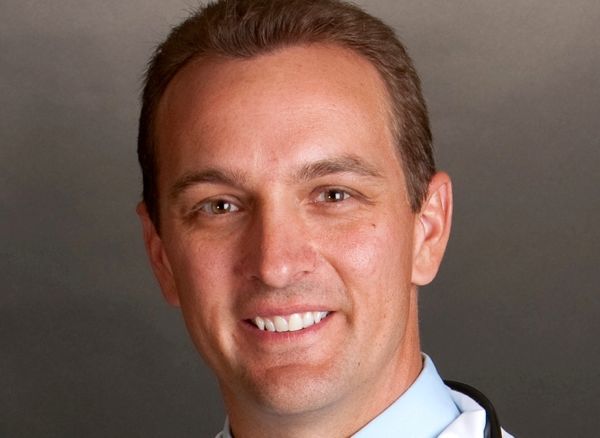
Clint Purvance

Clint Purvance

“As a CEO with a physician background, I understand the importance of the doctor-patient relationship and the value of being a partner in my patient’s journey to better health,” Purvance told Lake Tahoe News. “I will continue to focus on the doctor-patient relationship with the goal that all our providers not only offer high-quality medical care but thoughtful and compassionate care as well. I envision my role to lead our outstanding team of staff and physicians in partnership with the community to improve our population’s overall health and wellness.”

Purvance, 45, has spent his entire career at Barton, having started in 1999. He attended the University of Nevada School of Medicine in Reno and completed his emergency medicine residency training at University of Michigan. For the past eight years he has been chief medical officer for Barton Health.

“The chief executive officer’s primary role is to provide thoughtful oversight and guidance for the entire organization. As the chief medical officer, I focused on the delivery and quality of patient care. This ranged from expanding medical services to meet our community’s needs to improving quality and safety standards,” Purvance said. “In my new role as the CEO, I will have the greater responsibility of considering and interacting with all facets of the organization. I will work closely with the board, staff, and physicians as we strive to deliver safe, high quality care to our patients. I will also work in partnership with the community to improve overall health and wellness.”

His goal is to put a greater emphasis on wellness and injury prevention in order to improve the health of the community as a whole.

“The Affordable Care Act continues to bring changes to our health care system and other systems across the nation. In particular, we are seeing increases in regulatory demands and reductions in reimbursements, which continue to be reduced each year, and still need to provide high quality and compassionate care,” Purvance said. “The desire to decrease costs, provide timely and appropriate care, and give a high quality experience for our patients is a balancing act. Our nation’s ‘sick care’ model where we treat patients at the time of illness or injury is fading as we shift our focus to wellness and prevention and making sure our patients receive the appropriate level of expertise with the appropriate level of care they need. This new model continues to evolve, which can be challenging and unpredictable.”

He was instrumental in getting the hospital to be a level three trauma center. He said the designation has allowed for expanded emergency care locally, which was lacking in such a remote location.

Purvance will be in charge of 900 full- and part-time employees, as well as being tasked with working closely with approximately 160 medical and allied providers.

The patient count at the hospital has been declining through the years. In 2005, the count was 86, in 2006 it was 60 and now it is 20. Officials said at times it reaches 40 patients per day. Net revenues for Barton Health are about $150 million.

Barton Health would not release Purvance’s salary and benefits package. Barton’s 2013 tax return, the last available, shows him making $391,481 a year and Williams earning $465,121. Those figures do not include benefits.

The goal is to fill the chief medical officer position by the end of the year. Purvance said he would be looking for someone with a “background in clinical excellence and a passion for providing exceptional care to our diverse patient population.”

Purvance will be responsible for both jobs starting Nov. 1. Williams is staying on board a few months to help with the transition.

The Barton board conducted a nationwide search for the CEO job. The recruiting team included staff, physicians and board members. Six people were interviewed. Purvance and another finalist met with a broader panel of staff, physicians and the board of directors.


Calif. tests present sobering picture of student achievement

By Howard Blume, Los Angeles Times

Echoing a nationwide downward trend, most California students are falling short of state learning targets and are not on track to succeed in college, according to the results of new, more rigorous standardized tests released Wednesday.

Across California, 44 percent of students achieved targets for their grade in English, while 34 percent did so in math.


Questions based on the new Common Core standards, which have been adopted in 42 states, are more difficult than those on California’s previous test. And students for the first time took the exam on computers.

Read the whole story


Insurance rates soar in high fire-risk areas

By Samantha Masunaga, Los Angeles Times

Soaring insurance rates may accomplish what the Telegraph Fire failed to do: drive the Stoffan family from their home of 10 years.

The Stoffans’ Northern California house survived the 2008 blaze, which destroyed 30 homes and 100 other structures as it charred 53 square miles west of Yosemite National Park.

But the family’s annual insurance costs doubled this year to $5,100 even though it planted a 50-foot lawn buffer around the house and installed fire-resistant landscaping.


The Stoffans are among the California homeowners living near wild lands who have seen their rates increase sharply because insurance companies are increasingly wary of high fire-risk areas. Factors fueling insurer’s fears include the drought and some huge recent blazes, such as the 2013 Rim fire that burned more than 250,000 acres in and around Yosemite.

Affected residents across the state complain of fire insurance rates leaping 30 percent or more.

Read the whole story


USFS-CTC want to swap Lake Tahoe parcels

By Kathryn Reed

A significant land swap between the U.S. Forest Service and California Tahoe Conservancy will take an act of Congress to come to fruition. The two agencies are banking on the passage of the Lake Tahoe Restoration Act (LTRA) to make it a reality.

The overriding goal of the exchange is to create better management opportunities by having contiguous parcels be owned by the same entity. It also has the Forest Service getting out of the urban lot business.

  The proposal includes: ·      CTC to USFS – 92 parcels; 2,007 acres ·      USFS to CTC – 2,029 parcels; 1,918 acres ·      California State Parks to USFS – 1 parcel; 184 acres ·      USFS to California State Parks – 1 parcel; 274 acres

The proposal includes:
·      CTC to USFS – 92 parcels; 2,007 acres
·      USFS to CTC – 2,029 parcels; 1,918 acres
·      California State Parks to USFS – 1 parcel; 184 acres
·      USFS to California State Parks – 1 parcel; 274 acres

There are two bills circulating in Congress that would reauthorize the LTRA. Sen. Dean Heller, R-Nev., introduced a bill that the CTC and USFS provided technical assistance to. The land exchange language regarding retiring coverage and other development rights has been vetted by the Tahoe Regional Planning Agency legal counsel. It would follow the Burton-Santini Act by not allowing the USFS transferred properties to be built on. The bill also says the CTC would not sell the parcels nor would any of the commodities, like coverage, be able to be sold. All assets associated with the parcel would be retired.

“Our proposal is to retire all development rights,” Patrick Wright, CTC executive director, told Lake Tahoe News. “The House bill is a little looser.”

The bill Rep. Tom McClintock, R-Granite Bay, is pushing does not have all the same constraints as the Senate bill, nor is it the preferred bill by the agencies.

“Both bills contain provisions that would prevent us from selling parcels,” Chris Mertens, associated environmental planner with CTC, told Lake Tahoe News.

                  Senate Bill 1724, section 9:

·         Land exchanges shall “not result in any significant changes in the uses of the land”;

·         Prohibits the recognition or transfer of development rights associated with conveyed parcels under TRPA’s “transferable development rights” system. (In other words, the development rights of conveyed parcels would be permanently retired.);

·         If any conveyed parcel is used in a manner inconsistent with its original use, the parcel will revert to the USFS.

House Bill 3382, section 9:

·         Conveyance “shall not result in any substantial reduction in public access or reduction in availability of existing and traditional public recreation uses.”

On Sept. 9 the two agencies hosted an open house for people to give input about the proposed land swap. A similar gathering will occur tonight in Tahoe City.

The information that is gathered this week will be analyzed and passed up through the USFS ranks and to congressional offices.

Jeff Marsolais, supervisor for the Lake Tahoe Basin Management Unit, said the comments will help direct the agencies to which lots might be traded, and when and how to do so. A phased approach has been recommended, but officials don’t want the process to be dragged out. After all, talk of this land swap has been going on for years.

The bills don’t require all the parcels to be transferred, but it allows for them to be.

The Forest Service will also have to go through an environmental review process, though to what magnitude has not been determined. If things go forward, any deed restrictions on individual properties will have to be identified as well as any other constraints.

For the CTC to transfer its properties all that is needed is board approval.

Essentially what will happen is the transfer will be called a donation of land from one agency to the other to expedite the process.

If the LTRA again fails to be reauthorized, it’s possible to have a separate bill authored to deal just with the property transfer or to tie it to another lands bill. Because state’s rights are involved, it is believed the president is not able to issue an executive order to make this happen without congressional approval.

—–

Notes:

·       The Tahoe City open house is Sept. 10 from 5-7pm at the Tahoe City Public Utility District’s Lakeview Room, 221 Fairview Drive.



Tahoe earthquake ‘domino effect’ studied

By Jeff DeLong, Reno Gazette-Journal

With the frightening potential of a massive earthquake and tsunami striking the Pacific Northwest under increasing discussion, scientists are also focusing attention on possible connections between that area and dangerous faults at Lake Tahoe.

Graham Kent, a South Tahoe High grad, is in charge of UNR's seismic lab. Photo/LTN file

Graham Kent, a South Tahoe High grad, is in charge of UNR’s seismic lab. Photo/LTN file

There, like along the coastlines of Washington, Oregon and Northern California, a big quake could someday trigger a deadly tsunami, with some preliminary research suggesting seismic connections between the areas.

“If everything in this region is synchronized, all of a sudden there could be a domino effect” after a big quake in the northwest, said Graham Kent, director of the Nevada Seismological Laboratory at UNR.

“We know these things have a long arm,” Kent said.

Read the whole story