Good and bad to playing sports as a kid
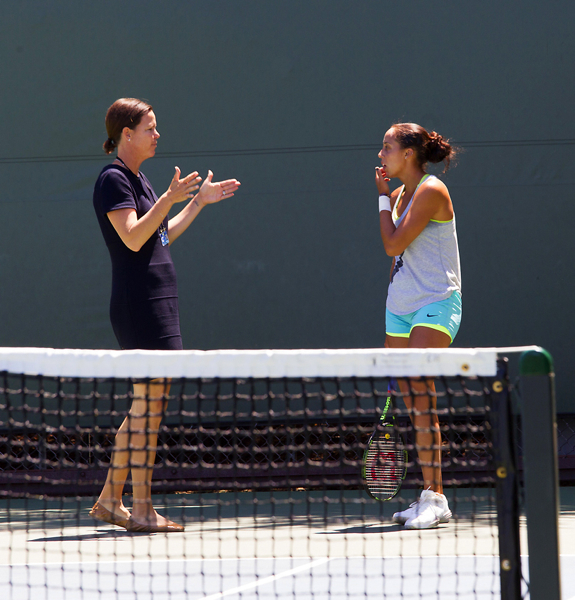
A coach who knows what they are doing is critical to an athlete's physical wellbeing. With Lindsay Davenport having been a professional tennis player, she is able impart her experience on Madison Keys. Photo/Carolyn E. Wright/Copyright

A coach who knows what she is doing is critical to an athlete’s physical wellbeing. Lindsay Davenport having been a professional tennis player is able to use her experience to coach Madison Keys. Photo Copyright 2015 Carolyn E. Wright

By Kathryn Reed

Steelers linebacker James Harrison made headlines this summer when he made his sons give back trophies they earned for participation in sports and not for actually winning something.

“Getting a trophy saying you are an all-star when you came in last place is counterproductive,” Walter Morris, Lake Tahoe Community College sports psychologist instructor, told Lake Tahoe News. “It is counter productive for kids’ motivations. It contributes to a sense of entitlement.”

He added this could lead to believing because you do the homework or show up for an interview that a good grade and job are automatic.

There are more natural rewards that come with sports at an early age that go beyond being physically fit.

“Between 6 and 12 is when they start motor learning. That period of time carries over for the rest of their lives. Sports promotes balance, body awareness, and flexibility,” Alan Barichievich, physical therapist and director of Barton Rehabilitation and Sports Medicine, told Lake Tahoe News.

Sports can teach kids about their body, how to care for it, self-esteem, eye-hand coordination and other benefits.

A growing trend, though, is parents are starting their kids in organized sports at an earlier age. More are specializing in a sport. The era of a three-sport high school athlete is gone.
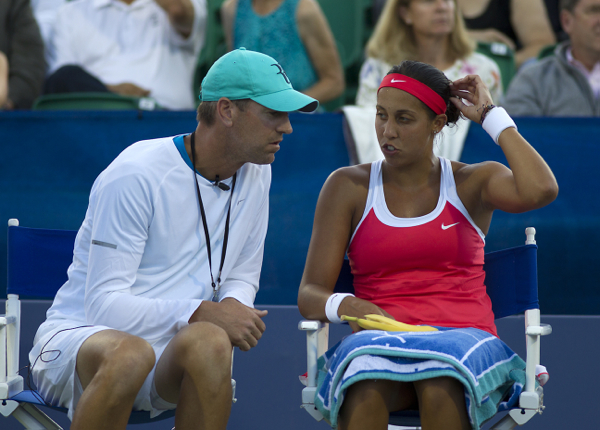
 

While the pros, like Madison Keys, get coaching regularly, Barton Health is helping local coaches learn more than the sport. Photo/Carolyn E. Wright/Copyright

While pros like Madison Keys get coaching regularly, Barton Health is helping local coaches learn more than the sport. Photo Copyright 2015 Carolyn E. Wright

This leads to young muscles getting overtaxed. Overuse of muscles can lead to injuries, especially in young bodies that are still developing. However, those who play multiple sports are using various muscles in different capacities.

The other thing that limiting oneself to a single sport can do is lead to burnout, which in turn can translate to a sedentary life as one ages.

“I played softball in college at Notre Dame and I played five sports in high school. I’m a huge advocate to try to keep that going,” Caroline Barichievich, a physical therapy supervisor with Barton Health, told Lake Tahoe News. She said she feels resistance from the mainstream to have kids not specialize in a sport at an early age.

Plus, with traveling teams there often isn’t an off-season or the opportunity to play another sport.

“There is no sport I would tell a kid not to do if they want to do it, but there needs to be good coaching, and understanding of the inherent risk of potentially getting injured,” Alan Barichievich said.

Through the years the Barichievichs’ clients keep getting younger.

“We are seeing young people more than we used to. In our generation most didn’t start sports until 8, now they start at 4,” Caroline Barichievich said. “The competition is now elevated because you are playing for a greater number of years. With competition you are going to have more injuries.”

Their bodies are being asked to do more than they were designed to do, according to the health professionals.

A bit of an irony is that once injured the athlete – young or old – has to slowdown. Oftentimes therapy will include doing a sport they hadn’t done – like cycling or swimming. Looking at form is part of PT so ideally the injury doesn’t recur.

An injury can also give a kid a break.

With so few people going on to play in college, let alone at the professional level, the drive by parents to have a child excel in one sport confounds many.

It’s not just sports that cause concussions. Falling from the monkey bars can have the same result. What is different today from a generation ago is the awareness of concussions and the potential lifelong impact.

Local coaches are invited to the sports physicals Barton does so they can see and understand the movement analysis. If there are poor mechanics, this might be a precursor to a torn ACL. Prevention is just as critical, if not more so, than rehabilitation.

Like sports psychologists, the physical therapists see sports as a positive beyond the physical.

“Sports teach life lessons, how to adapt, how to accept failure, how to accept success. That is just going to bode well for any type of life experience or career,” Caroline Barichievich said.
Employers: More overtime could have downsides

By Yuki Noguchi, KQED-TV

The Labor Department is considering changing rules that define who qualifies for overtime pay and who does not, and businesses say it would have far-reaching consequences that may not be good for workers.

Currently, the rules say you have to make less than $23,660 a year to be eligible for overtime, but the Labor Department’s proposal would more than double that required salary level to $50,440. That would mean an estimated 6 million more people would be eligible for overtime pay.

Worker advocates say the current rules open up millions of workers to abuse. Many earn relatively low salaries but are asked to work many extra hours without pay because they’re exempt from overtime rules, says Vicki Shabo, vice president of the National Partnership for Women and Families. She says some research shows women, who would make up about 3.2 million of those workers, would especially benefit.

Read the whole story


‘Crossing’ to bridge retail with outdoor fun

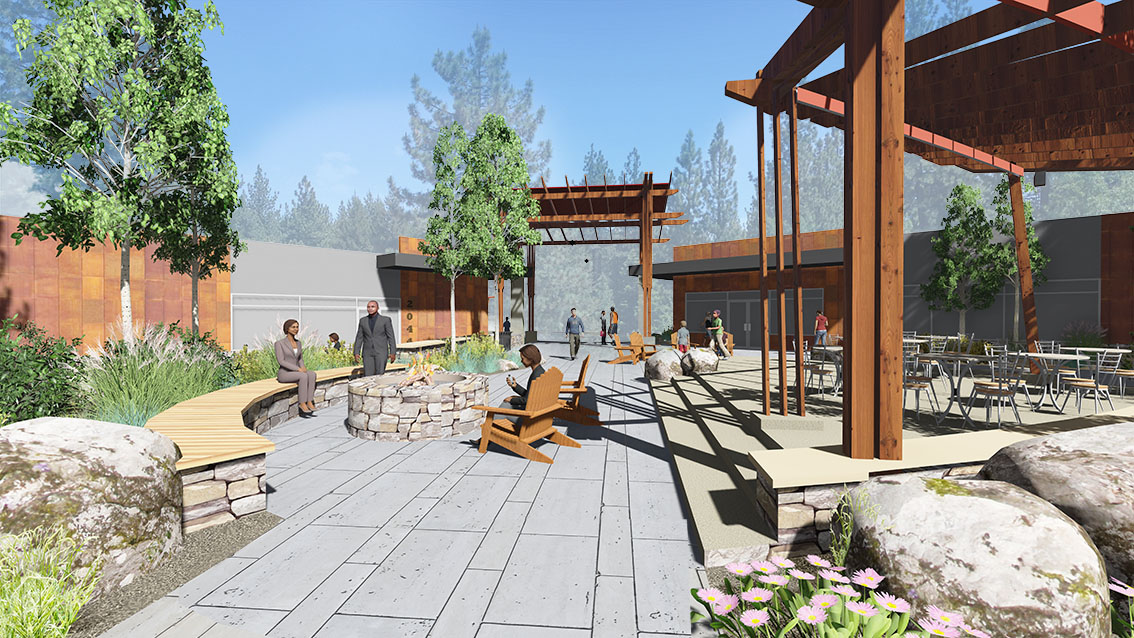
The Crossing at Tahoe Valley is designed to be a destination at the Y in South Lake Tahoe.

The Crossing at Tahoe Valley is designed to be a destination at the Y in South Lake Tahoe.

By Kathryn Reed

By this time next year the outdated Factory Stores at the Y in South Lake Tahoe is expected to have been converted into the modern Crossing at Tahoe Valley.

Sutter Capital Group based in Sacramento in January expected to infuse $1 million into the parcel at the corner of highways 50 and 89. Now the project is a multi-million dollar undertaking, though an exact dollar figure is not being disclosed.

“We need to reposition the center for a more active lifestyle,” Burke Fathy, general manager of the ownership group, told Lake Tahoe News.

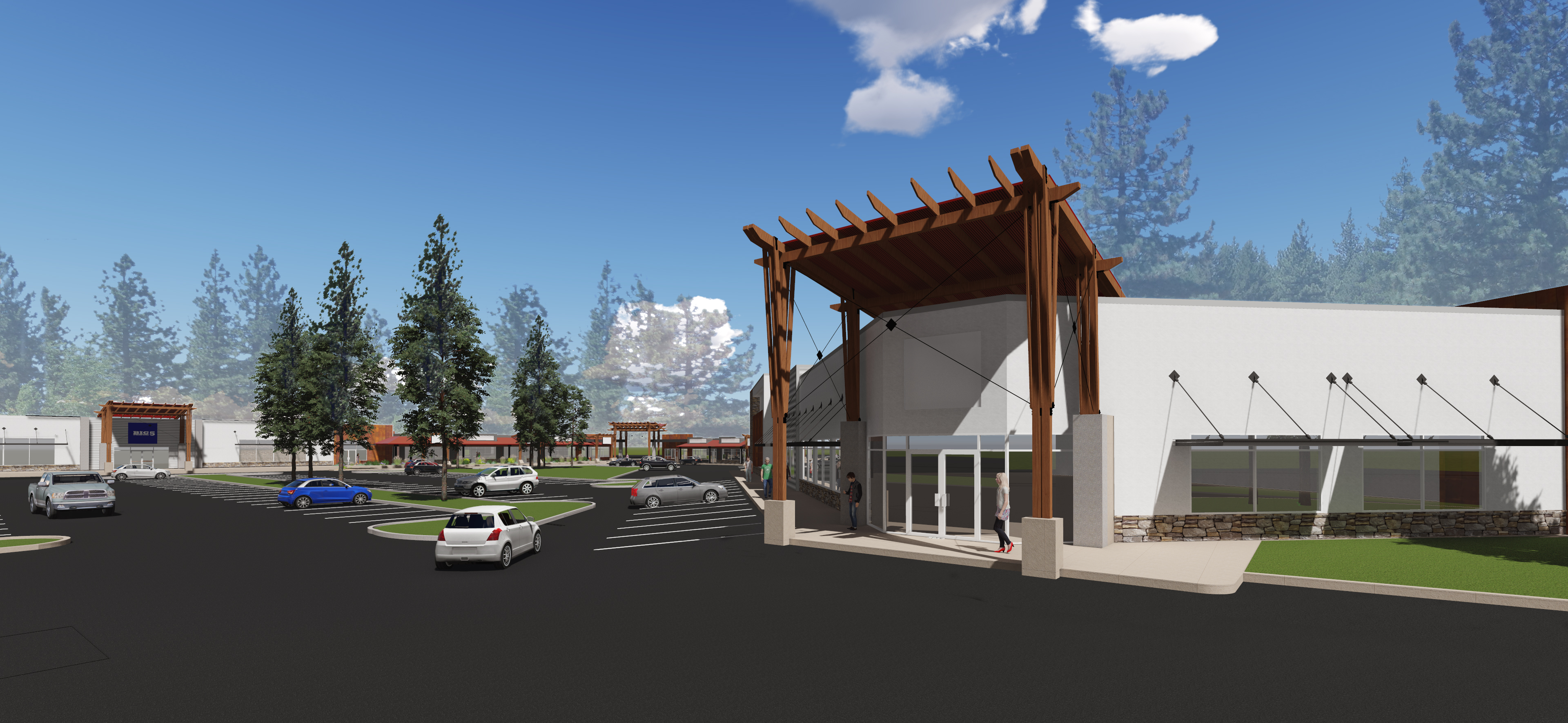
It will still be a retail center – with the option for current tenants to stay – with the addition of two restaurants and a 10,000-square-foot storefront that will be built to suit whoever moves in. The latter will be at the end of the building where Mikasa was, opposite where Big 5 is.

This additional commercial floor area and coverage will come from taking out about 4,000 square feet where the two wings meet.

This is a proposed new building that will be built to the tenants specifications.

This is a proposed new building that will be built to the tenant’s specifications.

The goal is to get a mix of tenants. With less than half the center now rented, there is plenty of room for other businesses.

A Sacramento general contractor has been hired. Fathy said local subcontractors would be part of the mix. The permitting process will take place this fall-winter, with ground anticipated to be broken starting in May.

The area being opened up is designed to welcome people who are on the path behind the center, be it on foot or bike. A gathering spot will be developed with seating and fire pits that will be shared by the eateries. Fathy has met with some local establishments, but no decision has been made as to what dining entities will move in.

This area will also tie into the greenway the city is creating through the Tahoe Valley Area Plan that was adopted earlier this year.

(It was at the city’s urging the owners incorporate Tahoe Valley into the center’s name, while “crossing” came from the intersection of the two highways.)

At the Sept. 17 California Tahoe Conservancy board meeting there was talk of connecting 3.5 acres belonging to the state to this project. The land sits between Tahoe Valley Pharmacy and the Factory Stores.

CTC has been talking to the city, and the city to Sutter Capital Group.

“We are confident we can come up with a design that combines open space with other amenities,” CTC Executive Director Patrick Wright told his board. “It is more preferable than vacant land.”

Fathy at first said he would not comment on the CTC parcel, then added, “It is not happening at this time. We are just concerned with what we’ve got.”

The entire façade will be overhauled so it is eye-catching, Fathy said. This will be done by using wood, Corten (rusted steel) and stone. The flow of the center will be improved.

“It will be a significant rebirth of the center,” he said. “We want it to be a community entity.”


Opinion: The eternal birthday present

ssss

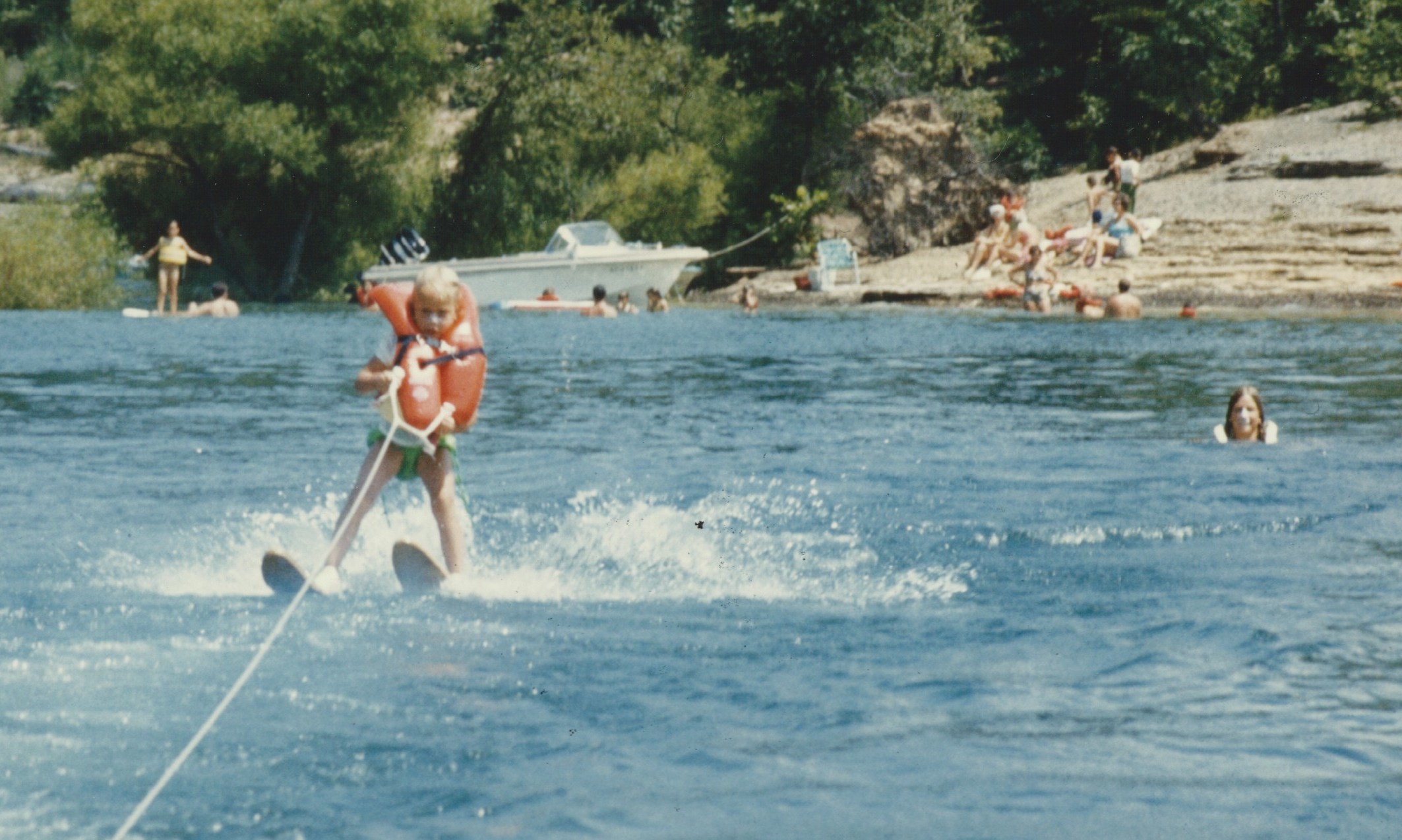
Water skiing became a summer ritual at age 6.

By Kathryn Reed

My parents gave me a gift at an early age that I continue to enjoy today – the love of sport.

I don’t know if they knew they were doing that at the time, but I thank them for it. They are why I ski (we learned together – they were 40, I was 10), they are why I play tennis (mom enrolled me in a community program at about 10), they are why I love the water (I was called a fish as a kid), and they are why I embrace the outdoors (so many family camping trips).

My earliest memories of sports center around the water – swimming and skiing. At 4 I was a fairly proficient swimmer. I went on to compete in AAU swimming, making it to Far West Championships on a relay team. At 6 I was on water skis. Not long thereafter I asked if I could try a slalom ski. Mom said not until I was good at going over the wake on both sides. I demonstrated that that day. Mom acquiesced. I learned to beach start like she did. However, I never was able to drop back into the water without getting my hair wet as she would do.

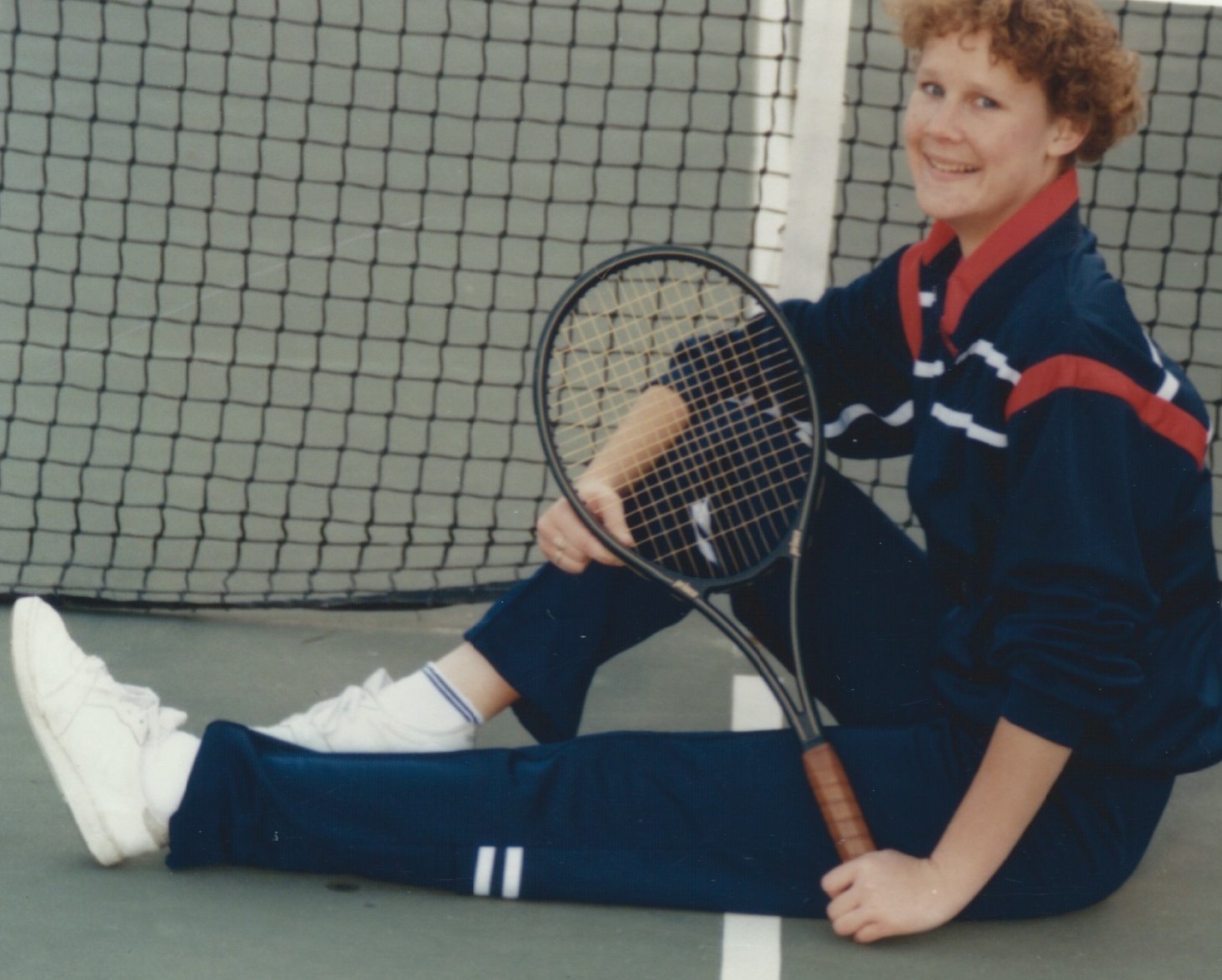
One year of tennis at San Francisco State University.

One year of tennis at San Francisco State University.

I have such wonderful memories of ski trips to Lake Tahoe while growing up in the Bay Area. There were three families who annually stayed at a house in Squaw Valley – right on the slopes. (No wonder I think vacation home rentals are normal.) And so many weekends were also spent at Northstar – pre-village and overdevelopment.

Then there was tennis. Mrs. Lackey toughened me up. She taught us to aim for our opponent and if we felt sick, vomit off the court, and then keep playing. I’m not saying those are the best things to learn, but they’ve stuck with me. It might be why a year or two ago I continued playing in a USTA match despite a groin pull – quitting didn’t cross my mind even though losing was inevitable. It might be why in college when I tweaked my Achilles’ I was OK with the trainer taping it and still playing. All the injury did was get me out of running up the hill every practice. Not playing wasn’t an option I ever considered.

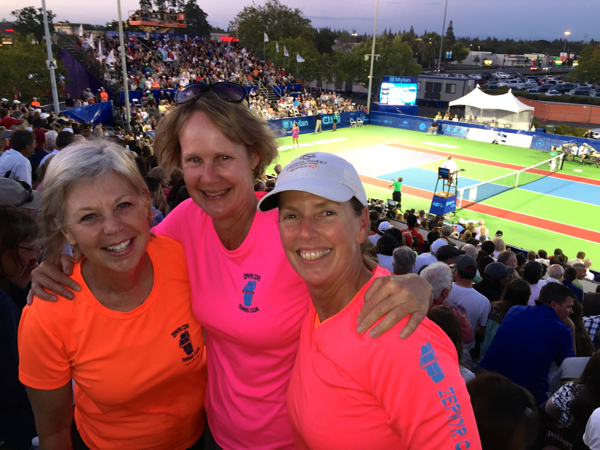
Carolyn Wright, Kae Reed, Donna Rockwood at World Team Tennis in Citrus Heights on July 23, 2015

Carolyn Wright, Kae Reed, Donna Rockwood at World Team Tennis in Citrus Heights in July.

Mom had me playing in junior leagues, which led to four years of high school varsity tennis and a year in college. I’ve played competitively on and off as an adult; currently I’m on two USTA (United States Tennis Association) teams out of Zephyr Cove Tennis Club.

As a kid, these experiences were about family, friends, being outdoors, and just playing. It’s the same today — having fun with friends on the court, the slopes and trails.

Who knows if I would have embraced these activities if it weren’t for my parents.

Early rounds of matches often allows spectators to see the eventual winner -- as was the case watching Angelique Kerber at the Bank of the West tournament at Stanford in August. Photo/Carolyn E. Wright/Copyright

Angelique Kerber, eventual winner of the Bank of the West tournament at Stanford in August, lunges for a forehand. This is a tournament the reporter first went to years ago with her parents. Photo/Carolyn E. Wright/Copyright

Today, as I mark the half century milestone, I can’t thank my parents enough for introducing me to so many sports – some of which I continue to participate in, some that I was never going to excel at (gymnastics), and others that I tend to spectate more than play (baseball). All of them, though, hold a special memory.

And I thank them for taking me to see professional sports – mostly tennis, a little baseball and football, the 1984 Olympics in Los Angeles; as well as watching them on TV.

All of it fueled my desire to be an athlete and a sports fan.

What a present – the lifelong gift of sport.


Survey: STR customers differ on how to recycle

By Kathryn Reed

South Tahoe Refuse customers are divided when it comes to whether they would like to stick with the blue bag recycling program or have a garbage can dedicated to such goods.

The garbage company that services the South Shore of Lake Tahoe on both sides of the state line asked customer to answer a 14-question survey to get their take on a variety of issues.

“What I glean from this is the blue bags are being utilized,” Nancy McDermid said. She is Douglas County’s representative to the Waste Management JPA. (South Lake Tahoe and El Dorado County are the other members of the JPA.)

Jeanne Lear with STR at this week’s JPA meeting at Lake Tahoe Airport went over the 116 survey responses. The average customer who responded has been a STR customer for 19 years, with the longest being 52 years. Forty-seven percent were from South Lake Tahoe, 31 percent from El Dorado County and 22 percent from Douglas County.

Seventy-percent use the blue bag.

When it came to wanting to keep that bag or go to a tote, the results were 40 percent for each. The other 20 percent is not sure. The majority – 65 percent – is not willing to pay another dollar for a dedicated recycling can.

Just more than one-quarter of the respondents are using some type of bear proof device.

Fifty percent believe there is no problem in their neighborhood with animals getting in garbage, while 43 percent say there is an issue. Lear said it’s possible people don’t know about problems because STR or Clean Tahoe employees have cleaned up the mess before they would have had an opportunity to see it.

The majority (79 percent) believes when there is a customer who lets an animal get into the trash a metal animal resistant container should be mandatory.

STR was surprised to learn about two-thirds of the survey takers don’t use the recycling buyback center. Lear said this in part has to do with Nevada residents not being able to use it in full because the bottle bill exists in California and not the Silver State.

The JPA will be able to use the information going forward if it wants to make changes to the recycling program or animal containers.

      In other action:

·      The JPA board is still deciding if a loan program will be created so customers could buy bear boxes without putting out the cash all at once. Details will be brought forward at the next meeting, which is anticipated to be in January.


USFS prevents scientist from talking about study

By Amy Quinton, Capital Public Radio

The U.S. Forest Service Pacific Southwest Research Station won’t let forest ecologist Malcolm North talk about the study he authored in the journal Science.

The agency even unsuccesfully requested that Science editors hold the article or remove North’s name and affiliation from the peer-reviewed study.

The paper “Reform Forest Fire Management” says suppressing every fire in overgrown forests is not only expensive but dangerous and ill-advised.

Strong words perhaps, but UC Berkeley Fire Scientist Scott Stephens, who co-authored the paper, says they are not controversial.

“I read the paper many times,” says Stephens. “I just didn’t see something jump, like this would be something that would really cause great problems.”

Read the whole story


Proposed campground unpopular with residents

By Kathryn Reed

KINGS BEACH – Is it a campground or is it a resort? Is it enhancing or hurting existing recreation? Is it a precursor for future development on the ridge? Is it precedent setting? Will it add to already heavy traffic on the North Shore?

These are just a few of the many questions the Tahoe Regional Planning Agency Governing Board will have to answer as the proposed Brockway Campground makes its way through the planning, permitting and approval process.

On Wednesday the proponents, Mountainside Partners (formerly East West Partners), spelled out plans to turn an undeveloped parcel off Fibreboard Freeway into a 550-site campground that would include tent camping, RVs and ecoshelters.

More than 200 people turned out for the nearly 2½-hour presentation. All of the 27 individuals who spoke were against the project.

The Sept. 23 unveiling gave the Governing Board an opportunity to learn about the controversial project without an action required. The application was submitted in July. An environmental impact report and environmental impact statement will be required.

Proponents were a bit contradictory in describing the terrain – at first saying how it is a disturbed site because of all the logging that has gone on there in the past (the land is owned by Sierra Pacific Industries), but then invoking how going forward it will be treated like a national park, with a bit of reverence.

Angela Lin with Square One said light from the campground would not be visible from North Shore towns. Many in attendance did not agree with that conclusion.

Attorney Lew Feldman touted the recreation benefits. The audience said a massive campground would negatively impact the current hiking and mountain biking by putting development in the middle of the forest.

In addition to the camping, there will be a swimming pool, lodge for dining and other structures.

Traffic concerns were repeated by many. Fibreboard Freeway, which is a misnomer because it is really a pothole filled U.S. Forest Service road, is off Highway 267 near Northstar. People wonder what the campground would do to already congested roads, as well as what the air quality impacts would be.

When TRPA votes on the project five of the California representatives will have to say yes for it to pass.

Detractors are already lining up.

“This is really blurring the definition between a campground and a resort,” Hal Cole, who represents South Lake Tahoe on the TRPA board, said. “This is not where I want a campground. This is hard to swallow on a lot of levels.” (He is a contractor by trade.)

Clem Shute, California governor appointee to the board, is weary of the former proposal of 112 residences for this site being “suspended” instead of “abandoned.” He called it suspicious and that it was like a threat to have it still lurking out there.

Shute and others pointed out how the Regional Plan says development should occur near urban areas or town centers, and that campgrounds per plan area statements should be near infrastructure. This proposal does not conform to those existing criteria.


Poor students lose ground with Common Core

By Diana Lambert and Phillip Reese, Sacramento Bee

Despite longtime efforts to reduce the achievement gap between rich and poor students in California, the divide grew much wider under the state’s new testing system, according to a Sacramento Bee review of state data released this month. About 21 percent of economically disadvantaged students in California met state math standards under the new Smarter Balanced Assessment System, compared with 53 percent of all other students.

That means the percentage of wealthier students meeting state standards is about 2.5 times higher than the percentage of economically disadvantaged students. By comparison, under the previous testing system used in 2012, the percentage of students scoring “proficient” was about 1.5 times higher for wealthier students than for poor students.

The new statewide exam is based on Common Core standards, a national set of guidelines intended to promote critical thinking, analytical writing and problem-solving skills. Students often must combine several skills to correctly answer questions, and memorization is less valuable. Students, regardless of income level, fared worse than under the previous testing system, but low-income schools suffered the steepest performance declines.

Read the whole story


Science: Controlled burns help prevent larger fires

A controlled burn on Spooner Summit in 2014. Photo/Carolyn E. Wright/Copyright

A controlled burn on Spooner Summit in 2014. Photo/Carolyn E. Wright/Copyright

By Francie Diep, Pacific Standard

In the right forests, one important way to prevent large fires is to let small ones burn. That’s the conclusion of recent research into wildfires, which has found that small, controlled fires remove dry brush that would serve as fuel to mega-fires if allowed to build up.

In addition, moderate fires can nourish the soil and germinate the seeds of plants evolved to work with wildfire. (Lodgepole pinecones = real-life dragon eggs.)

If you’re from California, or live in another region that’s prone to wildfires, you may already know this. Researchers and forest managers know it too. A quick search finds a number of official documents that talk about the importance of removing brush, setting off controlled “prescribed fires,” and letting small wildfires burn far away from buildings. This is a major departure from the common practice of the recent past, when nobody cleared brush and firefighters put out all forest fires. researchers now acknowledge such habits set the stage for the large, out-of-control fires of today.

Read the whole story


CalSTAR — A fall from 14 hands high

By Lisa Jarvis

It was a beautiful day for horseback riding in March. The sky was a sharp blue, and a light breeze swept over the meadow grass, cooling Sharon Gonzalez and her riding partner, Petra Van De Hey, while they rode. The two were out riding a groomed trail, surveying a section of their employer’s 1,300–acre private ranch outside of Mt. Aukum in El Dorado County. Every so often, they stopped to take pictures of the breathtaking scenery around the property for the owners who were out of town.

Sharon had chosen to ride Bosco that day — a Tennessee Walker/Peruvian Paso of 27 years. “He is the oldest and gentlest of horses, which is why he’s my riding buddy,” says Sharon. “It was a day like any other.”

Bosco and Sharon Photo/Sharon Gonzalez

Bosco and Sharon Gonzalez
Photo/Sharon Gonzalez

Then, everything changed.

Twenty minutes into their ride, on a straight and level section of trail, something happened. Sharon cannot remember exactly what that “something” was, as her memory of the event eludes her to this day. However, she does remember awaking to find her face in the dirt. “At the time, I wasn’t in any pain, but I couldn’t move. I didn’t know where I was or what was going on. And then I lost consciousness again.”

Petra, who had been riding ahead of Sharon at the time, had just turned to say something over her shoulder and saw Bosco in mid-fall. The horse had been in good health and spirits that morning, and was not prone to misbehavior or accidents; but something had caused him to stumble hard, knocking Sharon to the ground in the fall.  The force of the blow crushed her ankle, fractured her ribs, and caused her helmet to crack open and separate from its lining.

Kneeling beside her, Petra tried to determine the extent of Sharon’s injuries, and soon realized that emergency services would be needed. The main ranch house was at least a mile away, and as in many remote regions, cellphone reception was unreliable for those in the area. The decision that Petra made next was both brave and terrifying. She would have to leave Sharon alone to find help.

“It’s one of the few things I remember after the fall,” states Sharon. “Petra very calmly said to stay still … she was going to get help.”

Miraculously, Bosco seemed uninjured by the fall, but Petra worried that he may accidentally injure Sharon further if left alone, so she got him up and tied him to her own horse for the ride back.

“I tried ponying him [i.e. lead a horse while riding another], but he was slowing us down. When we were far enough away, I threw Bosco’s reins over his saddle horn and continued without him, knowing he would either go find grass or go back to the barn,” she added. Luckily, Petra had received wilderness/rescue training during her career, and she knew her decision to quickly locate help would ensure the best possible outcome for Sharon.

After riding back to the ranch, Petra sought the help of fellow co-worker, Stephanie—a retired ER nurse—who traveled back to look after Sharon while Petra called 911 and made her way out to the main road to direct first responders. By the time fellow caretakers Troy and Mandy McCabe arrived on site, paramedics were already caring for Sharon, and CalSTAR pilot—Harry Holt—was just landing the air ambulance in an adjacent field.

After nine minutes surrounded by emergency services, Sharon was stabilized for transport and loaded into the helicopter by EMS crews and CalSTAR flight nurses (Jeff Wallen and Heather Summerby). Nineteen minutes later, the CalStar team landed at Sutter Roseville Medical Center. Sharon remembers very little of the friends and first responders who had arrived to help her. In fact, other than the brief memories of being carried on a stretcher and flight nurse Jeff Wallen speaking to her before takeoff, Sharon remembers nothing of her preparation on the ground or her short flight.

She spent the next five days in the Neuro ICU at Sutter Roseville Medical Center, receiving treatment for her traumatic brain injury (TBI) and other injuries caused by the blunt force trauma.

“Never having been in a hospital before, I had nothing to compare it to,” she says, “but I can tell you that the care I received at Sutter Roseville was completely beyond anything I expected. They treated me like a precious princess when I awoke. It was wonderful.”

In a humorous turn, Sharon’s physician was also named Bosco. “When you’re in the hospital for a traumatic brain injury and your doctor shares the name of the horse that threw you, it can lead to some fairly amusing interactions between patient and hospital staff,” relays Sharon.  “A horse is a horse, of course. Of course?”

“It’s still remarkable to me that I was only there for a week. After returning home, my emotions fluctuated greatly. Now, I’m feeling more like myself, although my sense of taste and smell is still a bit off. I understand that condition may improve with time.”

She credits her expedited recovery to the quick, multi-agency response of EMS crews, the CalSTAR flight crew, and her care at Sutter Roseville Medical Center. “At some point, I would love to reunite and thank everyone who cared for me. They are my life-savers.”

Has the accident affected her love of riding? “Absolutely not,” says Sharon, “although I will most likely never ride Bosco again because the reason for his fall could not be identified. He was vet-checked shortly after the accident, and other than biting his tongue, he suffered no injuries. To this day, we have no idea what caused his fall. It was simply a fluke.”

We can all learn a valuable lesson or two from an experience like this. “I want to encourage your readers to take every precaution when riding, even if they are experienced,” instructs Sharon. That includes the following:

·       Never ride remotely alone. If you don’t have that option, tell friends or family where you are headed as well as the time they should expect you back.

·       Take along safety/survival gear and a means of communication, if available.

·       Most important, wear a helmet.

“One or all of these things may help save your life. Two saved mine.”

Lisa Jarvis works for CalSTAR.