Skiers, resorts cast hopeful eye toward El Niño

By Hugo Martin, Los Angeles Times
 
Forecasts of an approaching El Niño winter have ski resort operators dreaming of the kind of snowy peaks that were a common sight in California before a four-year drought dried up the state’s $3-billion ski industry.

But optimistic talk of powder-covered slopes may not be enough to persuade skiers to buy expensive resort passes, especially after being disappointed by limited runs and broad swaths of exposed dirt the last several seasons.

So this year resorts are trying something new: offering incentives if this year’s predicted El Niño turns out to be a dud. They range from simple discounts to guarantees that give pass holders credit toward skiing next winter.

Some annual passes even can be used at affiliated resorts where snow is more consistent, including one Colorado-based operator that has expanded amid industry consolidation to extend its Lake Tahoe passes to resorts it owns in other states.

Read the whole story


Bid to repeal Calif. school vaccination law falters

By Sharon Bernstein, Reuters

A plan to ask voters to repeal a new California law tightening vaccination requirements for school-age children may falter due to a shortfall in signatures needed to put the referendum on the ballot.

The effort is part of a backlash against a bill signed into law this summer by Democratic Gov. Jerry Brown that requires pupils to be vaccinated against childhood diseases unless they have a medical reason to refuse. It was passed after a measles outbreak among unvaccinated people at Disneyland last year.

That law, which goes into effect next year, makes California the third state to eliminate religious and other personal exemptions to vaccinations. It generated strong opposition from some parents, many who feared a now-debunked link between childhood vaccinations and autism and others who feared intrusion on the religious exemption.

Supporters of the referendum had until Monday to turn in 365,880 valid signatures from registered voters in California in order for the measure to appear on the November 2016 ballot.


SLT’s iconic Cork & More to be no more

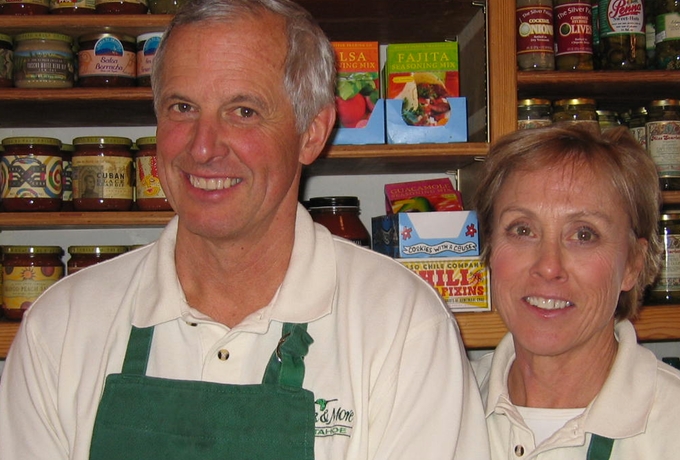
Jim and Kim Warlow are closing the Cork & More in South Lake Tahoe on Oct. 31. Photo/Provided

Jim and Kim Warlow are closing the Cork & More in South Lake Tahoe on Oct. 31. Photo/Provided

By Kathryn Reed

For decades it has been the go-to store on the South Shore for a great bottle wine, unique presents, holiday items, gift baskets and specialty foods.

At the end of the month the doors to the Cork & More will close for the last time. Owners Kim and Jim Warlow are retiring after nearly 40 years. While the South Lake Tahoe shop has been on the market since February, no buyer has come forward. That doesn’t mean there isn’t time, but the clock is ticking.

Kim Warlow echoed the sentiment of many when she said, “It will be a really sad loss for the community if someone doesn’t come in and carry it on in some form.”

The couple has had a knack for creating a store that told the story of the season. The temporary items balanced the backbone of the store – wine, cheese and specialty condiments. Staying one step ahead of what could be found elsewhere was a goal of the Warlows, which made the Cork & More the place to find something beyond the ordinary.

Customer service is also what sets the store apart from others.

“Everything that we do is the best. We don’t compromise on anything. We taste everything that comes in the store,” Kim Warlow said.

Jim Warlow’s background is in wines, having been a sommelier at the now closed Christiana Inn, which was where Himmel Haus in South Tahoe is now. California wines dominated the shelves to begin with, now it’s like a trip around the world.

“We started with wines, a little bit of coffee and a tiny bit of cheese. We just kept adding on to our store to meet demands of the community,” Warlow told Lake Tahoe News. “I spend a lot of time in Europe. That’s where the gift and cheese influences come from.”

They started Cork & More on Nov. 1, 1976, on Ski Run Boulevard where Blue Angel Café is – just not in the same building. It was 1984 when they moved to the current location on Al Tahoe Boulevard.

They had a second store in Tahoe City from 1980 to 1992. When that store closed the catering business started.

Warlow is still on the fence whether she will continue making wedding cakes.

It’s the customers and 10 full-time employees they will miss the most. After all, one or both of the Warlows has been in the shop usually five days a week.

Retiring means more time to ski, more time to spend with their family, including both of their moms, and time to travel. It also means the first Christmas in years to be with family.

“I’m really proud of what we have done … what we brought to the community,” Kim Warlow said.


Customers can expect to pay more for water

By Associated Press

With all the questions surrounding the nation’s water supplies and systems, one thing seems certain: Customers will be paying more to keep their taps flowing.

Rates have been shooting up nationwide in drought-stricken states and in cities trying to upgrade their aging infrastructure. Experts say the trend is sure to accelerate as the cost of water, treatment and delivery comes into line with how essential water is to our daily lives.

The price for tap water still amounts to about a half-cent per gallon. Elected leaders have long fought to maintain cheap rates, but those prices don’t cover the full expense of finding and treating new water sources or upgrading old pumps and pipes.

“The fact of the matter is, water rates are going to have to increase to reflect the cost of having this system that delivers it to every faucet in your house,” said Greg DiLoreto, past president of the American Society of Civil Engineers.

The Government Accountability Office said in a report last year that current rates were not enough to pay for the total cost of supplying water, let alone making needed upgrades.

“The fact of the matter is, water rates are going to have to increase to reflect the cost of having this system that delivers it to every faucet in your house.”

A year ago, the average monthly household water bill was just over $34 based on an average usage of 7,480 gallons, according to a survey conducted by the American Water Works Association. That’s up more than 40 percent since 2008, or $10 per month.

“Compare that to your cellphone bill or cable television bill or power bill or gas bill,” DiLoreto said.

Rates have been rising across the country:

• Baltimore this summer saw the last of three annual rate increases that pushed bills up by about 40 percent so the city could upgrade its sewer and water systems. The city has begun shutting off service to users with long-overdue bills, which total an estimated $40 million.

• New Orleans residents will pay an average of $115 a month for water and sewer in 2020 after eight years of rate increases that will more than double their bills to reconstruct the city’s water-delivery network, which was already aging when Hurricane Katrina flooded the city. As word of the rate increase spreads, more people are asking for assistance through a municipal program that helps pay their water bills. The number of applicants has increased from about 80 per month five years ago to 250 per month this year.

• In Northern California, water rates are scheduled to double in the neighboring towns of Woodland and Davis. The towns decided to build a pipeline to draw drinking water from the Sacramento River because minerals, salts, nitrates and other contaminants have degraded the groundwater.

Water managers say it was clear the cities needed another drinking source.

Davis resident John Munn said he worries that larger water bills on top of the need for money to improve the city’s sewer system and repair its roads will make it tough to live there on a middle-class income.

“When you add them all up, I think it’s going to hit people pretty hard,” he said.

Many cities in drought-stricken California, including San Diego and San Francisco, also are looking at raising water rates The reason is a bit of an odd twist: Residents are conserving more water because of the governor’s statewide conservation mandate, and that means less revenue is coming into the water districts.

So far, rate increases don’t seem to be generating widespread outrage — or even much notice — in the communities that have enacted them.

Bill Stowe, general manager of Des Moines Water Works in Iowa, said he was surprised by the lack of pushback when the utility raised its rates by 7 percent this year. What concerns him is the impact on low-income residents.

“We’ve got some customers that when you talk about a 10 percent rate increase, that’s maybe a decision about whether they can keep their cat or whether they turn up their air conditioning the way it should be turned up,” he said. “Those are tough decisions.”


Hwy. 89 project eliminates recreation parking

By Benjamin Spillman, Reno Gazette-Journal

Skiers, boarders and snowshoers are hopeful a looming El Nino could give the Sierra Nevada its biggest winter snowpack in years.​

But on the West Shore they’re also fretting about how they’re going to access all that powder once it lands on popular backcountry peaks in and around places such as Desolation Wilderness.

That’s because a Highway 89 improvement project aimed at reducing sediment runoff into the lake gobbled up an untold number of unpaved, roadside parking spots.

The project by Caltrans included landscaping touches that narrowed areas along the road that in previous years served as parking for skiers and others who use the backcountry for winter sports.

“What is happening is some of the pullouts people use to park for backcountry skiing are being eliminated,” said Bob Rowen, chairman of the Snowlands Network, which advocates on behalf human powered, winter recreation. “It is the same as if somebody’s favorite beach were closed or somebody’s favorite hiking trail.”

Read the whole story


Public: Transit on South Shore failing riders

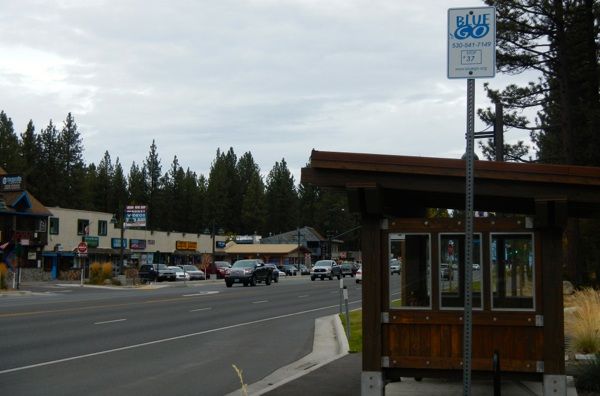
Some BlueGo stops have shelters, but none uses the words "bus stop".  Photos/LTN

Some BlueGo stops have shelters, but none uses the words “bus stop”. Photos/LTN

By Kathryn Reed

Public transportation on the South Shore is a nightmare that is not serving those who need it most.

That was the message delivered by nearly two dozen people on Sept. 30 to Tahoe Regional Planning Agency and Tahoe Transportation District personnel. The purpose of the meeting was to gather information about unmet transit needs.

When asked what happens after Wednesday’s meeting, Judy Weber, TRPA associate transportation planner, said a report would be written. Then it would be decided what short- and long-range items, if any, could be tackled. Short range was defined as up to five years.

Basically, the workshop was convened to mark off an obligation of the bi-state agency’s transportation protocols.

El Dorado County Supervisor Sue Novasel joined the meeting an hour after it started and just before it ended. She is on the TTD board, but said she didn’t know about the meeting until someone at the Soroptimist gathering that day asked her about it.

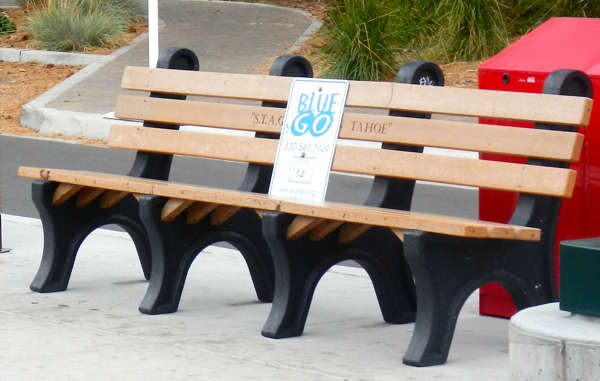
Bus riders are supposed to know this bench with a BlueGo sign is a stop.

Bus riders are supposed to know this bench with a BlueGo sign is a stop.

Some in the room, especially those associated with the Kelly Ridge housing complex, said they might not be around in five years if that’s how long it takes for change to happen.

An obstacle to getting anything done is money.

Weber said the BlueGo bus system on the South Shore is now almost exclusively funded by the federal government via pass-throughs to California and Nevada. Douglas County puts in money. Vail Resorts pays TTD to provide free bus service to Heavenly Mountain Resort on certain routes – mainly the ones servicing lodging properties. There was a time when South Lake Tahoe, El Dorado County, the casinos and Ridge Tahoe supported the bus system.

The Kelly Ridge residents and administration wonder why the bus stop that used to be outside the South Lake Tahoe senior-disabled housing complex was eliminated.

Lake Tahoe Community College students and faculty asked why a bus services the South Lake Tahoe institution every other hour instead of more often.

The on-demand service is unreliable, many said. They added that it is expensive.

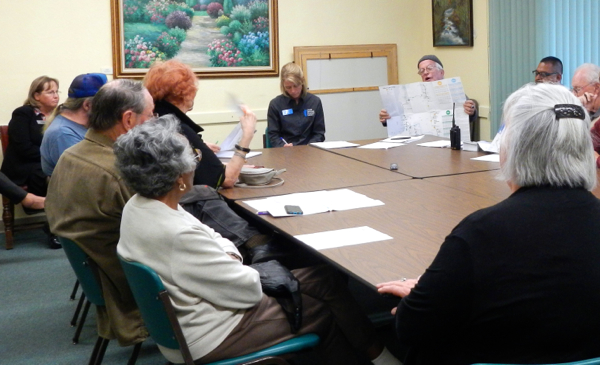
Garry Bowen, top right, asks why maps can't be created for the bus shelters so people know where each line goes.

Garry Bowen, top right, asks why maps can’t be created for the bus shelters so people know where each line goes.

Others expressed concerns about inconsistent schedules.

It was pointed out that tourists could get from Stateline to the Y, but that the trolley then only goes a short way past Emerald Bay. Plus, the time to transfer is extremely short. There is no opportunity to access the beaches in Nevada via public transit.

Some wanted to know why something like the East Shore Express in Incline Village isn’t used on the South Shore to provide access to beaches.

Several asked about creating a transfer program.

Meyers doesn’t even have public transit anymore. Getting to Reno is not easy. Bus service is not available 24 hours even though this is a 24-hour community. Additional buses are not added during peak hours or days.

Tapping into Lake Tahoe Unified’s well-oiled bus system was broached.

Others wanted to know why some bus shelters are covered and other are not, as well as why some have seats and some don’t.

Bus stops don’t have their name on them. Routes are not listed at the stops. Schedules aren’t at the stops and not all buses have them on board. The signs just say BlueGo – not even bus. For those who don’t know what a BlueGo is, it makes it even more difficult. Then there is the fact that more buses are coming online that don’t say BlueGo; they say Tahoe Transportation District.

The result of a bus system that does not meet riders’ needs is that it is pushing people into vehicles – which goes against TRPA’s air and water quality thresholds.


ZCES losing the man who personified Cubby

Zephyr Cove students give Cubby a farewell hug on Sept. 30. Photos/Kathryn Reed

Zephyr Cove Elementary School students give Cubby a farewell hug on Sept. 30. Photos/Kathryn Reed

By Kathryn Reed

ZEPHYR COVE – Cubby is going into hibernation indefinitely.

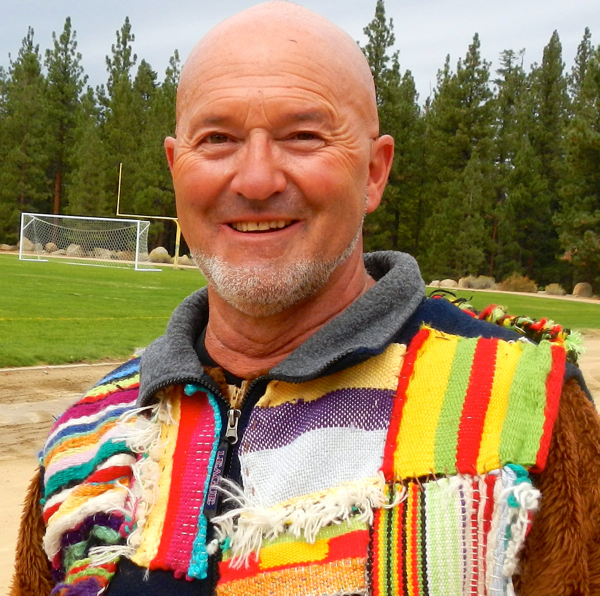
The man who has been Zephyr Cove Elementary School’s mascot for the last 16 years is turning in his bear suit uniform.

Pedro Kinner never expected to have this “job” for so long. Nor is it one he every applied for. It all started when his daughter attended the school and Kinner noticed no one was out there to greet the students. There were all these cars either dropping off kids or whizzing by to get to Whittell High School.

“It just makes you feel good,” Kinner told Lake Tahoe News of the volunteer job.

Being self-employed allowed him to adjust his schedule to make the school a priority.

Kinner remembers one time running after a kid who was chasing his dad’s car because he had left his lunch in it. Then the principal at the time started chasing Kinner. It was a kid, a bear and a principal running toward Highway 50 in what looked like a comedy show.

Cubby has endured being pelted with water balloons. Then there was the green pinecone incident that ended with a broken class window. He attended so many special events – it wasn’t just an early morning job.

Pedro Kinner has been ZCES's mascot for 16 years.

Pedro Kinner has been ZCES’s mascot for 16 years.

The mascot uniform was at the school before Kinner began his daily ritual. However, it is the same one from Day 1. It gets dry cleaned regularly. The head has been repaired, with glue being a dominant tool to keep it looking OK.

Two years ago he and some of the students created a vest of sorts. Kinner started a weaving group at the school, which is how the vest came about.

Cubby is such a fixture at the school that at his farewell sendoff on Wednesday it was hard to know if the adults were sadder or the kids to know he will no longer be out there each morning. Many said it wouldn’t be the same without him.

(Kinner has family obligations that prevent him from continuing on as Cubby. The school may look for someone else to take on the persona of Cubby.)

On Sept. 30 big and little kids filled the bleachers at Whittell to say goodbye to Kinner, aka Cubby. Most only know him as Cubby and few have ever seen his face.

Still, they all know his voice. He’ll be at the grocery store and kids will run up to hug him when they hear him. Parents are wary, he said, wondering who this strange man is hugging their kid. Then he explains who his alter ego is.

Those hugs may still happen, there just won’t be any Cubby hugs to start the school day.


Water year ends with parched conditions

By Matt Stevens, Los Angeles Times

The year of the brown lawn and shortened showers concludes today, with water officials citing bleak statistics and expressing hope that the next few months will bring the heavy rains California so desperately needs.

“Water year” 2015 was hot, dry and fiery, compounding the misery brought on by a fourth year of drought.

Water watchers keep track of precipitation and storage using Oct. 1 as a starting point. That day is considered the beginning of the wet season and the “water year.”

It was exactly halfway through the 2015 cycle — on April 1 — that Californians were schooled on just how dire the circumstance had become.

On that day, Gov. Jerry Brown stood in a barren field — one normally covered by several feet of snow — to announce historic water conservation restrictions. The Sierra snowpack’s water content measured just 5 percent of normal, obliterating the previous record low of 25 percent.

Read the whole story


S. Lake Tahoe does without traditional city hall

Publisher’s note: This is one in a series of stories Lake Tahoe News will be running leading up to the 50th anniversary of South Lake Tahoe on Nov. 30.

slt 50th logoBy Kathryn Reed     

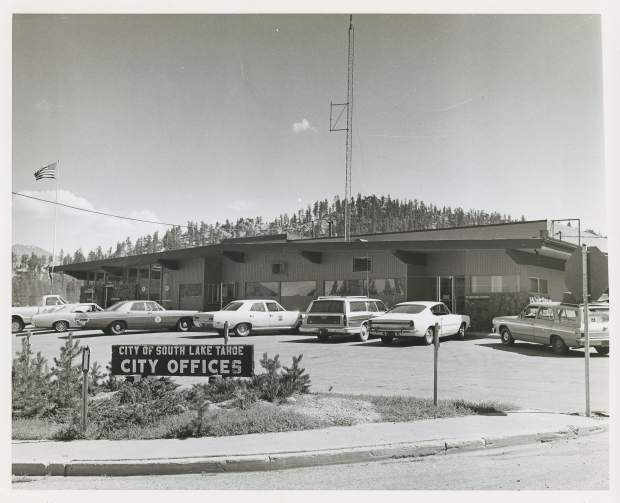
South Lake Tahoe was supposed to have a designated city hall that would be in the middle of town, not one shared with aeronautical services.

Politics is the easiest answer for why it didn’t happen. Plenty of finger pointing has gone on in the last 40 years to prove that no one person is at fault for the building never coming to fruition. But there is still a family who will forever be wronged. They gave the land for a city hall and instead cops and criminals occupy it.

The city is not letting the past stop it from moving forward. There are plans afoot to turn the lobby of Lake Tahoe Airport into a welcome center. This is where the bulk of the city’s business is conducted. In the last couple years a “city hall” sign was erected.
City Council meeting locations 1965 -- Tahoe Savings and Loan basement, Highway 50/Takela (now county offices) 1970 – 11044 Fremont St. (old police department near the bowling alley) 1970 – 1275 Meadow Crest, South Tahoe PUD building 1700 D St., (city offices were here; now where buses are stored) 1975 – 2155 South Ave., Alpine Professional Building (old TRPA office) 1021 Al Tahoe Blvd., Lake Tahoe Unified School District office 3064 Lake Tahoe Blvd., art building (now senior center) 1984 – 1900 Lake Tahoe Blvd. (old phone company offices) 2006-present – 1901 Airport Road Source: South Lake Tahoe

City Council meeting locations:
1965 — Tahoe Savings and Loan basement, Highway 50/Takela (now county offices)
1970 – 11044 Fremont St. (old police department near the bowling alley)
1970 – 1275 Meadow Crest, South Tahoe PUD building
1700 D St., (city offices were here; now where buses are stored)
1975 – 2155 South Ave., Alpine Professional Building (old TRPA office)
1021 Al Tahoe Blvd., Lake Tahoe Unified School District office
3064 Lake Tahoe Blvd., art building (now senior center)
1984 – 1900 Lake Tahoe Blvd. (old phone company offices)
2006-present – 1901 Airport Road
                                                                                    Source/Photo: South Lake Tahoe

As far as city officials – elected and staff – are concerned, the airport is city hall. With the city deciding commercial air service is not viable nor will it be pursued, the FAA is fine with South Lake Tahoe using the structure as a city hall and not an airport terminal.

Could there ever be something more? Possibly.

“If we were to ever have a city hall in this community, I think what might provide a good return on the investment for the community is a civic center, not just a ‘city’ hall. A building where Tahoe Regional Planning Agency, city, Tahoe Transportation District, and El Dorado Count would all have staff in the same building, primarily for permitting and licensing, the most common government requests,” City Manager Nancy Kerry told Lake Tahoe News. “For the community members, to be able to go into one building, one location and have joint meetings, get all the information in one visit, greater coordination of information, permit processing and conducting government business would be a huge benefit and good return on the investment.”

Something like that, though, would cost millions of dollars. And to be determined is if taxpayers would want it even if the money were available.

The early days

Incorporation was the focus when the city started, not where business would be conducted.

“That subject simply didn’t rise to the level of importance to make it on someone’s agenda,” Laurel Ames said of a city hall. Ames was one of the leaders in getting South Lake Tahoe incorporated in November 1965. “The one big idea that emerged in the first years after incorporation was the need for a convention center. The idea was from John Williams, the first city manager. That history is short. It was proposed for the county campground and I think there was a bond issue, then the people voted it down.”

Del Laine, who served on the council from 1976-80 and 1984-88, remembers a time when the electeds met in what are now the county offices in the government complex where the sheriff’s and public health offices are. The council seats were at the same level as the public – unlike today. It was the 1970s, when the Tahoe Regional Planning Agency was just getting off the ground, and a man leapt across the table in anger.

Today, there is always a police officer – often the chief – at each council meeting.

“When the first five (Brad Murphy, Gerald Martin, Eugene Marshall, Norman Woods and Don Clarke) met, it was over dinner and anyone could attend. They would discuss council business over dinner before the formal meeting,” Laine told Lake Tahoe News.

City archives are incomplete when it comes to listing all the places the council met as well as where city employees worked.

Marjorie Springmeyer at the dedication of her family's land that was to become a city hall. Photo/South Lake Tahoe

Marjorie Springmeyer at the dedication of her family’s land that was to become a city hall. Photo/South Lake Tahoe

A designated city hall

Marjorie Springmeyer and her brothers, Bill and Knox Johnson, wanted to honor their parents, who were early pioneers in the area. They owned large swaths of land; with the three still having title to hundreds of acres. They decided to give South Lake Tahoe land on Johnson Boulevard (named after their family) for a city hall.

The deed signed June 25, 1967, states, “On or before June 30, 1972, Grantee will construct or will cause to be constructed on the herein-above described real property, one or more office buildings which shall contain office space for the use and occupancy of various basic municipal government departments, services and offices, including by way of example and without limitation, grantee’s building, Planning, and Recreation Departments and City Manager ….”

Instead, a courthouse, police station and sheriff’s office were built on that land.

It didn’t matter that the agreement said if the city failed to comply with the deal, that the title would revert back to the Johnson siblings or their heirs.

“I’ll never get over that deal … how they screwed up our land with the courthouse,” Springmeyer told this reporter years ago.

The courthouse got built because of a 1972 agreement between South Lake Tahoe and El Dorado County in which the two entities agreed to build city and county offices on the Johnson land. The county gave the city $1 for the rights to the land.

Springmeyer filed a lawsuit to prevent El Dorado County from taking over what had been her family’s land. She lost the initial lawsuit as well as the appeal. The judge ruled the administrative uses on the land were consistent with the wording of the agreement.

It didn’t matter that Bill Johnson was on the Board of Supervisors from 1969-80.

The county agreed to “convey to city an easement for the construction by the City of public offices (sic) building ….” In a preceding paragraph the buildings to be located on the acreage included “County offices, County courts, City Council chambers, City offices, County Sheriff’s facilities, City Police facilities and other County and City facilities …”

On March 21, 1983, Knox Johnson wrote a letter to the Board of Supervisors saying “there has been perjury committed in the courts” and his family “made a civic contribution”. The letter went on to say,  “If it’s only worth $1, then I should have it.”

No one has ever been able say why exactly a city hall never got built. Today there is no space at the government center to do so.

Through the years other locations considered for a city hall include Bijou Community Park and the 56 acres where Campground by the Lake sits.

South Lake Tahoe's city hall is Lake Tahoe Airport. Photo/LTN

South Lake Tahoe’s city hall is Lake Tahoe Airport. Photo/LTN

Going forward

In March, when the council was devising goals for the next 18 months, overhauling the airport lobby to turn it into a showcase of sorts was discussed. Right now it’s hard to know one is walking into a city building. There was also talk of expanding the area to include a welcome center for visitors because coming in on Highway 50 from the west is the main route tourists reach South Lake Tahoe.

The engineering staff is working on a conceptual design and associated costs. Details will come back to the council later this year or early 2016, with the goal of starting the remodel in summer 2016.

The logic to staying at the airport is that the city owns the building. Plus, for 50 years it has survived without a building with the sole purpose of being a city hall so building one now doesn’t seem economically logical or feasible.

Not all cities have a distinct, ornate building along the lines of San Francisco’s city hall.

“A city hall can’t just be a pretty building; it must provide meaningful return on investment to the community. It should improve how the local government functions, provide new, improved and enhanced services and be a building that encourages civic engagement, promotes community pride of town ownership, provides opportunity for civic, community and cultural events – both art and culture – and opportunities for strengthening partnerships between government and the public,” Kerry said.

She is more concerned with providing quality services than the building from which those services are provided.

Even so, the city is on a quest to improve the infrastructure is has and not start from scratch. This means money will be spent at the airport to make sure it functions efficiently for the indefinite future.

“The building is our current city hall and will remain an important asset to the community for many years as so noted in the Airport Master Plan. The airport serves not only air travelers, but also serves community members conducting business with the city,” Kerry said.

Election gambling may return in 2016

By Joshua Brustein, BloombergBusiness

The website Intrade gained almost mythical status in certain circles during the 2012 presidential election by letting users bet on how the elections would turn out. Gamblers thought it was fun, and economists marveled at how well the prediction market produced accurate forecasts.

Intrade users traded contracts that paid out if a certain event happened in the future. If a $10 “Obama wins Ohio” contract was trading for $6, that meant the market gave him a 60 percent chance of taking the state. Intrade’s users guessed right on 49 of 50 states.

But Intrade’s biggest success was followed almost immediately by a lawsuit from the U.S. Commodity Futures Trading Commission, which forced the company to close its doors in March 2013.

Two competing projects—Truthcoin and Augur—are now fighting to be the next Intrade by the time the 2016 election is in full swing. And if they work as promised, they will be much harder to shut down.

Read the whole story