Calif. pushes to make landfills food-free

By Jeremy B. White, Sacramento Bee

Heather Maloney thinks of herself as an environmentalist but, as a working mother, doesn’t have the time to create a backyard compost heap. The little bucket for food waste that Napa’s recycling authority sent her offers a more convenient way to keep her leftovers from lining a landfill.

“You’re already scraping plates and rinsing them off to put in the dishwasher, so it’s a pretty easy system,” Maloney said, standing in her kitchen. “It’s definitely cut down on our trash.”

Barbara Barstad is less enthusiastic. She gave up after being repulsed by the bugs and odor, two of the top three reasons Napa residents offered for declining to participate (the third came from people accustomed to putting food scraps in the garbage disposal).

“It just made a big mess,” said Barstad, 76.

Those reactions can be expected to echo across California. Napa County, and a few select jurisdictions such as San Francisco, are incubating a policy that will take hold statewide in the next decade.

In a little-heralded move with potentially sweeping implications, the California Air Resources Board last month announced a push to halt disposal of nearly all organic waste by 2025. The shift would likely require building new processing facilities, prod cities and counties to develop ways to collect it, and add an extra trash-sorting step before Californians drag bins to the curb.

Read the whole story


Schools using eDays to make up for weather

By Thomas M. Kostigen, USA Today

Extreme weather is prompting school systems to think outside the box to figure out alternatives for students losing too many days in the classroom due to calamities from blizzards to heat waves to floods and more.

But the solution to make up for lost days is sparking anger among some parents. Upset parents in Jefferson County, Ala., say they see no reason for a new requirement that students learn remotely for two “eDays” this school year.

The eDays have been scheduled in advance for Oct. 9 and March 18 to allow “learning to continue without utilizing makeup days, and provides an option for learning when we have extreme weather, flu epidemics, or other unforeseen events,” according to a school newsletter.

Parents say the requirement puts an undue burden on them to stay home with their children those days, potentially missing work.

Read the whole story


Downed plane registered to man from Bay Area

A plane split apart after hitting trees before landing next to a house on Tionontati Street in El Dorado County. Photo/LTN

The plane split apart after hitting trees before landing next to a house on Tionontati Street in El Dorado County on Oct. 10. Photo/LTN

By Kathryn Reed

The pilot of the plane that crashed Saturday in Lake Tahoe is believed to be the owner of the aircraft, according to a Lake Tahoe Airport official. The FAA registry lists the plane as being owned by Conrad Yu from Oakley.

People who saw the occupants get into the plane just after 5:30pm Oct. 10 said only a man and woman were on board. The Beech 35 Bonanza crashed into a neighborhood moments after takeoff . Debris was scattered about the back yard of the house that was partially damaged after the plane erupted in flames.

The bodies were recovered Sunday from the crash site on Tionontati Street, which is on the outskirts of South Lake Tahoe. The names of the victims have not been released.

The FAA and National Transportation Safety Board both were on scene Sunday, with the NTSB taking the lead. NTSB investigators expect to be in town for several days.

“We are gathering the facts. We will be looking at where the aircraft came to rest, we will look at the engines and then they will be moved to a secure location,” Terry Williams with the NTSB told Lake Tahoe News. “We do a thorough investigation into the cause and factors that may have led to it.” The NTSB often takes more than a year to release reports on plane crashes.

An issue at this elevation is density altitude. On warm days the lift, thrust, and engine performance of a plane can be compromised. Wind may also have been a factor on Saturday.

“There is someone at the airport who witnessed the whole event. They heard problems,” Lake Tahoe Airport Manager Sherry Miller told Lake Tahoe News. She said the person watched the plane take off and go into the trees. “It could be that it didn’t sound right or it could sound like not enough power. I’m not sure which one it was.”

She said the pilot did not purchase fuel at the airport.

An El Dorado County sheriff’s sergeant on Saturday told LTN the pilot landed at the airport, stayed around a bit and then took off on the fatal flight.

The South Lake Tahoe airport does not have a staffed tower. According to Miller, it would not have made a difference if it were operational.

“Air traffic controllers don’t make decisions for pilots,” Miller said. “They do not give instructions to pilots in how to operate their aircraft.”

She added that this includes not telling a pilot which way to bank to avoid a neighborhood.


Nev. Democrats focus on regaining Assembly majority

By Ray Hagar, Reno Gazette-Journal

Democrats were shocked with the election results in 2014 when they lost the majority in the Nevada Assembly for the first time in nearly two decades.

Now they are developing their strategy to take back the majority and the power that comes with it in the 2016 general election. Democrats hope to stop the first back-to-back Republican majorities in the lower house since the 1969 and 1971 sessions.

Democrats also hope to regain the majority in the state Senate after the Republicans’ 2014 trifecta: Winning the governor’s office and majorities in both houses of the Legislature.

Read the whole story


Calif. voters to be automatically registered at DMV

By Juliet Williams, AP

SACRAMENTO — Gov. Jerry Brown has approved legislation to make California the second state in the nation to begin automatically registering eligible voters when they obtain or renew their driver’s licenses.

AB1461 by Assemblywoman Lorena Gonzalez, D-San Diego, aims to boost California’s voter rolls by registering visitors to the Department of Motor Vehicles and was among dozens of bills that Brown announced Saturday he had signed.

It follows Oregon’s move earlier this year to adopt the nation’s first automatic voter registration law.

The legislation backed by Democratic Secretary of State Alex Padilla calls for data collected by the DMV to be provided to the secretary of state’s office, which would verify a resident’s legal eligibility to vote before registering them. Drivers would have the option to opt out or cancel their voter registration at any time.

The legislation was among a package of election and voter bills that Brown signed, including AB 44 by Assemblyman Kevin Mullin, D-South San Francisco, which allows the governor to order a state-funded, manual recount of any statewide ballot measure or elected office in which the margin of victory is extremely small.

Padilla praised the signing of the automatic registration bill.

“Citizens should not be required to opt-in to their fundamental right to vote,” he said in a statement. “We do not have to opt-in to other rights, such as free speech or due process. The right to vote should be no different.”

Lawmakers approved the so-called motor voter law this summer and have held events around the state encouraging Brown to sign it. They say it could add millions of newly registered voters to California’s voter rolls, improving a lackluster registration system that has led to some of the lowest participation rates in the country.

Some Republican lawmakers say voters shouldn’t be forced to sign up. They warn that automatic registration could lead to voter fraud if people who are not eligible are accidentally registered.

Critics have also argued that merely increasing voter registration will not make Californians more engaged in the political process or interested in voting.

Brown Saturday also announced other bill signings:

  • SB707 bans concealed weapons from California schools and universities. It drew renewed attention after a recent massacre at an Oregon community college.
  • SB27 gives California the toughest limits in the nation on the use of antibiotics in livestock.

The governor also vetoed nine bills sponsored by fellow Democrats that would have created new tax credits or expanded existing tax credits.

Brown said the state’s budget is still facing financial uncertainties, and the tax credits would make balancing the state’s budget even more difficult.


2 die when plane crashes into South Shore house

Firefighters work to contain a fire that was started Oct. 10 when a plane crashed in El Dorado County. Debris from the plane is in the foreground. Photos/Kathryn Reed

Firefighters work to contain a fire that was started Oct. 10 when a plane crashed in El Dorado County. Debris from the plane is in the foreground and to the right. Photos/Kathryn Reed

By Kathryn Reed

Two people died Saturday night when the plane they were in crashed just after takeoff from Lake Tahoe Airport.

The names of the people and their hometowns are unknown.

El Dorado County sheriff’s Sgt. Paul Hadjes told Lake Tahoe News the plane had landed at the South Lake Tahoe airport, waited a bit and then took off. The crash occurred about 5:40pm.

The single-engine plane was a Bonanza 35 with a V tail. The tail number was too charred to completely read.

Airport officials on Oct. 10 had yet to listen to recordings of the take off or any chatter after the plane was in the air to ascertain if the pilot radioed any trouble. The airport does not have a tower.

National Transportation Safety Board and Federal Aviation Administration officials will be on scene Sunday. People will be guarding the site all night.

Pieces of the plane are lodged in a tree.

Pieces of the plane are lodged in a tree.

Trees sheered off by the plane are visible behind the house that was hit on Tionontati Street on the outskirts of South Lake Tahoe. This is due east of the airport.

One woman said this is not the typical flight pattern planes use to take off from the South Lake Tahoe airport.

While it was windy for much of the day, by dusk it had calmed down. The sky was clear.

The bulk of the debris from the plane was to the right of the house. This is what caught fire. The cockpit was not recognizable.

Other pieces of the plane were in the backyard and some was still high in a tree well above the two-story house.

Roommates Bryce Tye and Matthew O’Hara were on top of Echo Summit when they saw the explosion that cast a large plume of white smoke that was followed by black smoke. They raced home thinking it was their house that was hit, but it wasn’t.

One neighbor said the lot is cursed because this is the second time in 10 years a house there has burned.

The two people in the vacation rental escaped with their dog unharmed.

“The guy was sitting in the living room having a glass of wine when they hear what they think is a tree falling. They see fire and thought it hit an electrical line. They look out and saw it was an airplane,” Ginger Nicolay-Davis told Lake Tahoe News. She manages the property for the owners who live in Hollister.

The renter was one of the playwrights who was to perform Oct. 10 at Valhalla as part of the WordWave literary festival. He left the house without shoes and didn’t make it to the performance.

The extent of damage to the house is unknown at this time.


New regs don’t clear all hurdles for pot dispensaries

By Maura Dolan, Los Angeles Times

California’s new medical marijuana regulations will likely reduce federal crackdowns in the state, but dispensaries will continue to have difficulty obtaining banking services and deducting business expenses, legal experts and activists said Friday.

The Obama administration has backed off major enforcement actions in states that legalize medical and recreational marijuana, but most dispensary owners still remain at risk of a possible 10-year minimum federal sentence should policies in Washington change.

Marijuana advocacy groups said they were unconcerned about a new administration increasing federal enforcement in the future, particularly against medical marijuana.

California’s regulation of medical marijuana also is likely to protect it from federal prosecutions, activists and lawyers agree.

Read the whole story


Forecast: El Niño could help NorCal ease drought

By Dale Kasler and Phillip Reese, Sacramento Bee

El Niño might put a dent in the drought after all.

In a revised forecast Thursday, the National Weather Service said Northern California stands a decent chance of getting significant precipitation from this winter’s El Niño weather pattern, a development that could help ease the state’s four-year drought.

Until now, forecasters have been saying this winter likely would bring heavy rains to Southern California, which is typical for El Niño, but they’ve been less certain about the outlook for the northern half of the state. Because the state’s major reservoirs are in the north, that’s where the rain and snow need to fall to substantially bolster the state’s water supplies.

If history is a guide, California will see big snow in the northern mountains along with rain in the south.

Read the whole story


USFS won’t tolerate people-wildlife interaction

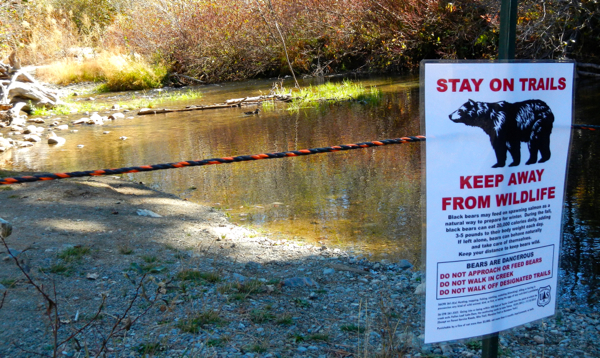
People in search of bears eating Kokanee at Taylor Creek are being warned to behave. Photos/Kathryn Reed

People in search of bears eating Kokanee at Taylor Creek are being warned to behave. Photos/Kathryn Reed

By Kathryn Reed

CAMP RICHARDSON – Fish, bears and people are such a potentially deadly situation that the U.S. Forest Service is taking pre-emptive measures to ensure there is no conflict at Taylor Creek.

This is the time of year when the Kokanee salmon spawn at Lake Tahoe – though they are a tad late this year.

Signs are up on a rope that prohibits people from walking all the way along the rocky shore of the creek. This is because last year the conflicts between people and wildlife were getting out of hand and the feds don’t want a repeat or worse.

“Last year there were a lot of really close calls,” Lindsay Gusses with the USFS told Lake Tahoe News. “Bears will be the losers.”

People were walking into the water. They got close to bears. It was all about getting the perfect selfie.

Gusses called it a “blatant disregard” for wildlife. People seemed to have zero concept of what a 200-pound bear is capable of. And if a bear were to go after a person, while the person might survive, that bear will be caught and killed all because a person acted irresponsibly.

The Forest Service has the ability to completely close off the site if people get too out of line. For now, the directive is to stay on designated trails. The agency has people regularly patrolling the area to ensure visitors (which includes locals) are educated about why they need to keep a safe distance and then to make sure they do so.

Kokanee are slow this year to spawn in Taylor Creek.

Kokanee are slow this year to spawn in Taylor Creek.

Still, there are plenty of viewing areas. On Friday the most salmon could be seen from the bridge along the Rainbow Trail.

Bears eating the Kokanee are a relatively new phenomena in Tahoe. It’s a learned behavior for them, according to Gusses. “They learned it because these fish are not native and bears are opportunistic.”

Plus, she added, it’s a lot of work to catch a live fish that only has 2 pounds of meat on it.

Estimates are that between 200 and 300 bears call the basin home. The Taylor Creek area has seen seven of them.

“If this were a known reliable food source, we’d have all 300 here,” Gusses said.

Two weeks ago water was released from Fallen Leaf Lake, thus ensuring there would be plenty of water for the fish to swim in. There is even more water this year than last because the summer rains filled Fallen Leaf, which in turn meant more could be released this fall.

The drought may be contributing to the late spawn. Kokanee like cold water for this migration. The shallow waters of Tahoe where they enter Taylor Creek are warm.

Other wildlife are ready for their arrival. Mallards are about — waiting to eat the eggs; mergansers want the live fish.

Last year salmon were seen in the Tahoe Keys. This year there are reports of them in the Upper Truckee River and Incline Creek. The fish return to where they were born, so it’s possible Taylor Creek will no longer be the only place they regularly spawn.

Even so, this South Shore waterway will always remain the primary place to spawn as long as the California Department of Fish and Wildlife keeps stocking the lake with Kokanee. Each year the state officials gather a half million Kokanee eggs from Taylor Creek, then raise them in Folsom, and return them to the creek in April.


LTCC tuition for some Nevadans to decrease

By Kathryn Reed

Tuition is going down at Lake Tahoe Community College for people who live on the Nevada side of the basin.

Known as the “good neighbor policy”, the legislation was signed by Gov. Jerry Brown this week. A few issues still need to be ironed out, but the hope is the new fees will be in place by winter quarter.

A similar law was signed by Nevada Gov. Brian Sandoval in which California basin students may attend Western Nevada College in Carson City at a discounted rate.

Until 2011, there had been a policy in place that allowed Nevada basin residents to attend LTCC at California rates plus a small fee. Nevada did away with that law. Much of it had to do with politics, which is also the reason the two states took so long to come to another agreement.

LTCC President Kindred Murillo has been fighting to get the legislation back in place ever since arriving four years ago. She has had to contend with politicians believing Tahoe is full of rich kids, not realizing so many work multiple jobs and don’t have the transportation to take higher education courses elsewhere.

“Another misconception out there is they think people just come to Lake Tahoe Community College to take PE classes,” Murillo told Lake Tahoe News. “When we ran the numbers of the students from Nevada they were truly students trying to get job skills, go to the fire academy, get bookkeeping skills or transfer to a four-year school. They were serious students.”

The new law is not as good as the old one. This one provides for a 45 percent discount to Nevada residents. The current California resident tuition is $31 per unit, or $1,395 for a full-time student per year. The current non-resident tuition is $170 per unit, or $7,650 for full time. That will be reduced to $93 per unit, or $4,185 to attend full time. That is a savings of $77 per unit, or $3,465 for full-time, year-round attendance.

The California Legislature had no appetite to go back to the original deal that would have made rates closer to what residents pay. State Sen. Ted Gaines, R-El Dorado, carried the legislation. Without the compromise of the higher tuition, it’s likely there would have been no deal.

“The Tahoe basin is a single economy that is divided by a political boundary that is of little meaning to the people in the area, who may live in one state and work in the other, and who eat, shop and use amenities in both states. I’m pleased the governor signed the bill,” Gaines told Lake Tahoe News. “It is a chance for California to improve the lives of the students and families of the Lake Tahoe Basin by making sure that all students get the best, most affordable education and work force training possible.”

Each year since the good neighbor policy went away LTCC lost between 65 and 85 full-time equivalent students. This equates to more than 200 students per year because not everyone takes a full load.

How many students will take advantage of the new policy remains to be seen. LTCC will track those who enroll from Nevada to gauge the effectiveness of the legislation.