South Lake Tahoe councilmember censured

By Kathryn Reed

On identical 4-1 votes Monday the South Lake Tahoe City Council ratified the city manager’s decision to ban Councilmember JoAnn Conner from interacting with staff and agreed to censure her. Conner was the dissenting vote on both measures.

It took nearly 3½ hours to reach those conclusions Oct. 19.

Some in the city say the issues involving Conner started immediately after she was elected three years ago this November. Members of this council and previous ones have reached out to her individually and collectively to express their displeasure with her words and actions.

“I have witnessed her conduct for many years,” Mayor Hal Cole said, intimating a pattern of negative behavior.

“I have personally seen Ms. Conner treat staff in a disrespectful manner. I have personally seen Ms. Conner treat citizens in a disrespectful manner during city council. I have personally seen Ms. Conner lose emotional control to the extent that I thought that she was not speaking in a logical or professional manner,” Sass said. “I believe members of this City Council, including myself, are hesitant and uncomfortable working with Ms. Conner. It’s my opinion that Ms. Conner poses a financial risk to our city as a result of potential litigation from city staff.”

Councilmember Wendy David said, “The hostile environment you have created and cited has not only damaged our city, the city you were elected to serve, but has created fear, real fear of you and your potential retaliation and behavior.”
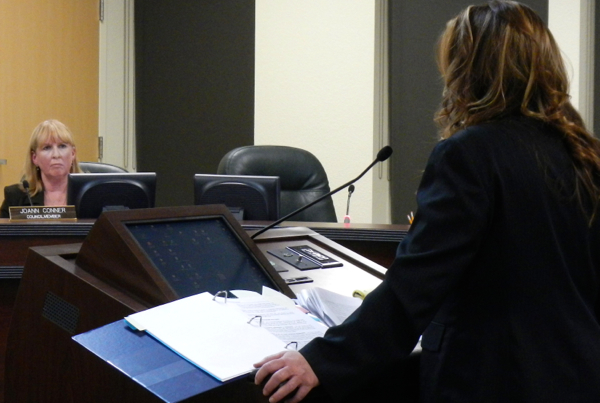
South Tahoe Councilmember JoAnn Conner listens has her attorney Jacqueline Mittelstadt makes a point Oct. 19. Photo/Kathryn Reed

South Tahoe Councilmember JoAnn Conner listens as her attorney Jacqueline Mittelstadt makes a point Oct. 19. Photo/Kathryn Reed

Lake Tahoe Community College President Kindred Murillo wrote a letter that referenced the hostility she incurred when giving a talk to the council. El Dorado County Supervisor Sue Novasel also wrote a letter. Neither she nor her assistant, Judi McCallum, will speak directly to Conner because of her language and demeanor.

City Manager Nancy Kerry said the only way Conner would speak of former Councilwoman Brooke Laine was to call her a c-u-n-t. F bombs, Kerry said, are standard from Conner.

It has gotten to the point that employees are scared of Conner, fearing for their jobs and that she will pull the funding for projects they are working on or ax money from their departments. This in turn impedes their ability to do their jobs.

Kerry early last month made the decision to ban Conner from talking to staff after at least six complaints were levied against the councilmember by staff to the city attorney.

Cole said in the weeks since that action was taken Conner’s behavior – mostly through social media – borders on harassment and retaliation. That is what led him to seek censure.

Censure is not punishment, according to City Attorney Tom Watson, but instead is a statement saying certain behavior is not being condoned.

What wasn’t agreed to between Watson and Jacqueline Mittelstadt, who represented Conner, is whether evidence needed to be presented to substantiate the censure and to what degree this was a judicial hearing. Watson said no evidence had to be given, that councilmembers need not answer questions and that it was not a judicial hearing in any sense. Mittelstadt disagreed.

When it comes to censure the city’s protocols say, “A decision to censure requires the adoption of a resolution making findings with regard to the specific charges, based on substantial evidence, and approved by the affirmative vote of at least three council members.”

What the attorneys vehemently disagreed about is whether that evidence had to be presented to Conner.

(Mittelstadt had been the city’s attorney, having quit in 2010 after a brief, contentious tenure.)

City Councilman Tom Davis in particular said Conner was violating protocols of conduct. Such a protocol is not posted on the city’s website.

“I find it ironic that in the very same hearing, the city councilmembers failed and refused to comply with the requirements of the very protocols they proceeded to censure another council member for allegedly violating,” Mittelstadt told Lake Tahoe News.

Seven letters were read into the record, with one supporting Conner and six favoring the city’s actions. Thirteen people spoke at the meeting – 11 for Conner, one for the city, and one person didn’t take a side. About 60 people attended the meeting.

Many who spoke said the hearing should not be done in public. Legally it had to be. Many expressed support of Conner, saying she was the only councilmember who helped them. Some said the actions are violations of Conner’s free speech rights.

At Monday’s meeting Conner did not say a word publicly, but instead consulted with her attorney who was allowed to sit next to her. This pushed City Attorney Watson to a lower level sitting area.

Kerry told Lake Tahoe News it is the city’s policy that Conner is entitled to have her attorney’s fees for the censure process be paid for by the taxpayers. Any further legal fees would be her burden. It remains to be seen if Conner will sue the city.

“I believe that the action of the council (Oct. 19) is not legally defensible,” Mittelstadt told Lake Tahoe News after the meeting. “I have to talk to Councilmember Conner as to what she wants to do.”

Mittelstadt started the afternoon by saying she was seeking to have the entire matter delayed and for both sides to sit down to reach an agreement. The council didn’t even vote on that proposal. Mittelstadt said she is still willing to get her client and city officials in a room to hash things out.
Experts: Climate change-wildfire link unsupported

By Paige St. John, Los Angeles Times

The ash of the Rocky Fire was still hot when Gov. Jerry Brown strode to a bank of television cameras beside a blackened ridge and, flanked by firefighters, delivered a battle cry against climate change.

The wilderness fire was “a real wake-up call” to reduce the carbon pollution “that is in many respects driving all of this,” he said.

Brown had political reasons for his declaration.

He had just challenged Republican presidential candidates to state their agendas on global warming. He was embroiled in a fight with the oil industry over legislation to slash gasoline use in California. And he is seeking to make a mark on international negotiations on climate change that culminate in Paris in December.

But scientists who study climate change and fire behavior say their work does not show a link between this year’s wildfires and global warming, or support Brown’s assertion that fires are now unpredictable and unprecedented. There is not enough evidence, they say.

Read the whole story


Lake Tahoe Hard Rock sues ex-management firm

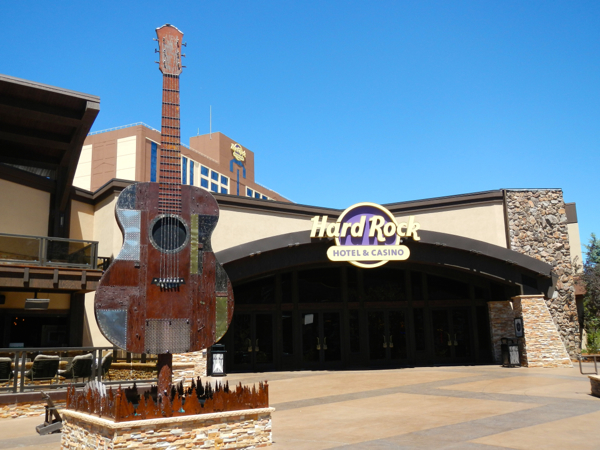
Lake Tahoe Hard Rock owners are suing the original management firm. Photo/LTN file

Lake Tahoe Hard Rock owners are seeking damages against the former management team. Photo/LTN file

By Kathryn Reed  

The Park brothers are going after the former management company of Lake Tahoe Hard Rock for damages, contending Warner Hospitality is responsible for cost overruns at the remodeled Stateline property and mismanagement.

“In particular, Warner has failed to manage the property properly, resulting in customer dissatisfaction, bad publicity, employee turnover, and revenue well below Warner’s projections,” a complaint filed Oct. 15 says. “Warner has acted with gross negligence and committed willful misconduct in connection with its management of the property.”

The complaint was filed in Washoe County District Court. Neva One is the company David and Jon Park formed to operate the Hard Rock. They had planned to spend $60 million to renovate what was the old Horizon hotel-casino, which open as the Hard Rock in late January.

The Park brothers last week fired Warner Hospitality and turned management over to two veteran gaming consultants. This came after SMC Contracting filed a lawsuit seeking millions of dollars in cost overruns that were not paid, the pool had to be closed because of a leak, and employees were either being fired or driven off because of what they said was Warner’s fault.

SMC and Neva One will be back in court Oct. 26 for a hearing. A settlement has not been reached, but talks are ongoing. Mike Springer, attorney for SMC, has not returned multiple calls. SMC claims it is owed nearly $19 million – about double the original contract.

SMC was hired to do the casino floor work.

The lawsuit goes on to say, “Warner failed to properly manage and oversee the completion of the hotel towers of the property, with floors still incomplete.”

The lawsuit says Warner was to oversee the design, construction and opening. Any expenses that were more than $10,000 beyond the original price or had a cumulative total in excess of $200,000 were to be approved by Neva One, according to the lawsuit. This reportedly didn’t happen, which is how SMC wound up not getting paid what it claims it is due.

“We are taking all actions that we consider appropriate to strengthen the property,” David Park said in a statement. “We believe the changes at the Hard Rock Hotel & Casino Lake Tahoe will help us be in a better position to resolve issues that came about during the renovation project. We are eager to move forward in a positive direction for the property, our valuable employees and the community.”


SLTPD officer and 2 others killed in auto wreck

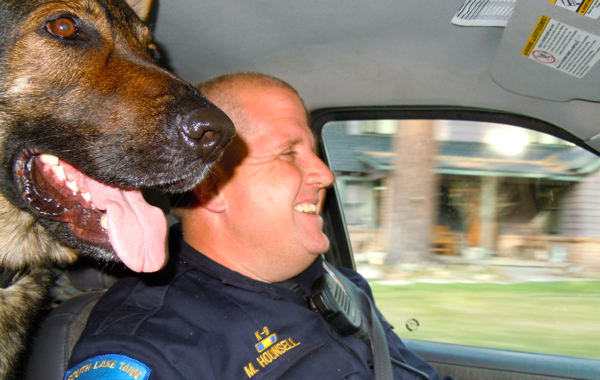
South Lake Tahoe Police  Officer Mark Hounsell and Argo in 2011. Photo/LTN file

South Lake Tahoe Police Officer Mark Hounsell and Argo in 2011. Photo/LTN file

By Kathryn Reed

An eight-year veteran with the South Lake Tahoe Police Department died Oct. 17 in a single-vehicle rollover accident near Fallon.

Officer Mark Hounsell, 42, was driving to their home in Minden when the Chevrolet Suburban for unknown reasons left the road and rolled several times. The accident occurred about 5pm, approximately 20 miles east of Fallon.

Also killed in the crash were Hounsell’s wife, Jeanne, 34, and their friend Laura Fisher, 33, of Washington, Ill. Seat belts were worn by all, according to the Nevada Highway Patrol.

In the vehicle were the Hounsells four children who are between the ages of 4 and 14. The injuries they sustained are not life threatening.

Hounsell was a K9 officer for part of his tenure with South Tahoe, most of his time was spent on patrol. Prior to being hired in May 2007 by SLTPD he had worked for the Douglas County Sheriff’s Department.

“One of the things I appreciated about Mark was the thoroughness of his work,” Police Chief Brian Uhler told Lake Tahoe News. “He loved what he was doing. It’s not uncommon for our patrol officers to do deeper work than normal. Mark took it to another level.”

When tourists were arriving in town to find their vacation rental they booked was bogus and they had no lodging, it was Hounsell who traced the origins of the criminals to foreign countries and then back to Colorado.

“You could sense from him that he really didn’t like people being victims of criminal acts and he would go the distance to find the suspects,” Uhler said.

Mark Hounsell’s parents, who are from Southern California, arrived in Northern Nevada on Sunday and met with Uhler. He said they conveyed to him how proud their son was to be working for SLTPD and how much he enjoyed his job.

They will be meeting with members of the department and LifePoint Church clergy on Monday to plan the services.

“Our police officers and unsworn staff all feel like they want to help in some way shape and form. It’s a difficult time because there is not a lot that can be done. There is a certain feeling of helplessness and a great sense of loss,” Uhler said.

Flags at the city’s police and fire stations are being flown at half staff.


Lessons learned from an aborted TRT hike

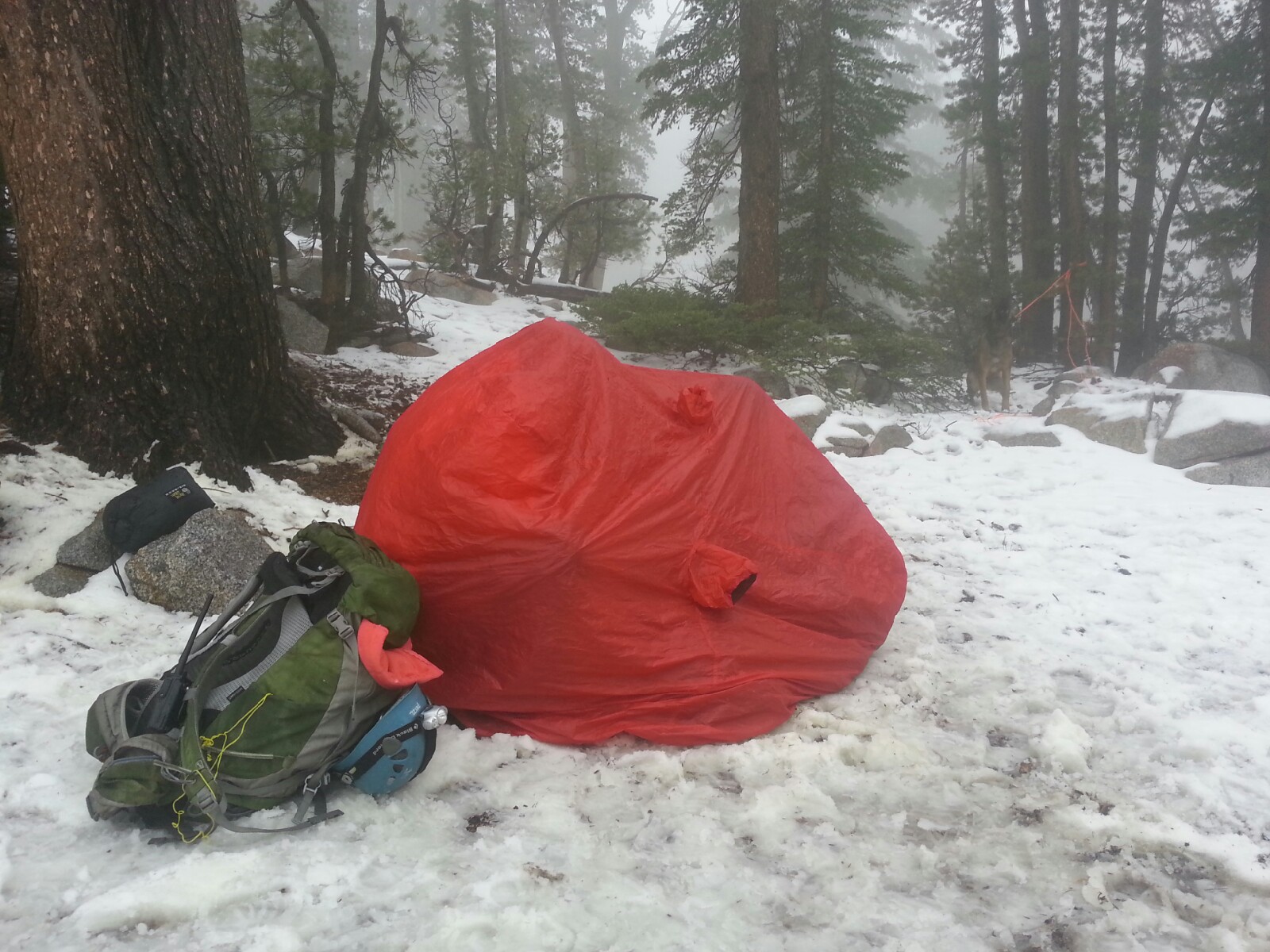
A bothy bag shelter is used to warm someone and get them in dry clothes.  Photo/Provided

A bothy bag shelter is used to warm someone and get them in dry clothes. Photo/Provided

By Michelle Foster

I learned three valuable lessons on my Tahoe Rim Trail through hike.

1. Always through-hike with a partner.

2. Field-test my gear before taking it on a multi-day hike.

3. Take the advice of seasoned explorers.

Letti and I were 30 miles into our planned 165-mile through-hike around Lake Tahoe when we found ourselves in a very dangerous situation.

On Oct. 2, we spotted a mountain lion five miles into our hike on the first day. Early in the morning on the second day, very close to our camp spot, we discovered fresh lion tracks. At this point we were 20 miles from our starting point. It may have been a different lion, but my hike became worrisome and I could not enjoy myself thinking about the lion attacking Letti. Likely, she was his target.

About 29 miles into the hike on the second day, I decided to end the hike the following day. My mind was consumed with the thought of the lion. I was no longer enjoying myself. A mile or so later at around 4pm, I found a great camp spot. It was 10 miles from town in one direction and seven miles the other. An open field close to a cliff with tall trees and flat ground, it was beautiful. The sun was shining. It was warm and windy.

I had cell phone reception at my chosen camp spot, so I called the hotel and changed my reservation. Originally, we were going to be hiking until the 10th. The next day, I planned to hike out to the Big Meadow trailhead seven miles away. From there I would get a ride back to my car. After setting up camp I checked the weather and discovered that thunderstorms and rain were in the forecast from 8pm to 6am. It was close to sunset, and the next possible camp spot was about two miles away. By the time I packed up camp and moved it would be dark.

Mistake No. 1, I decided to stay at my current camp at 9,400 feet.

By 7pm, I was comfy in the hammock and Letti was sleeping underneath.

Mistake No. 2, she started to shiver so I put my down jacket on her. I put her arms through the armholes and zipped it up around her. It fit her really well.

The storm arrived right on schedule. At 8pm the winds picked up and it started snowing, raining and hailing. Hard. At one point during the start of the storm Letti ran off and came back without my jacket. My only other jacket was a thin rain jacket.

One thing I was not aware of is that you need a blanket or sleeping pad to go between you and the hammock. My sleeping bag was not enough and I was cold (because of the wind whipping under). But, I was able to keep semi-warm.

Mistake No. 3 was using the hammock. My boyfriend, a very experienced outdoorsmen, advised against it. In fact, he recommended I bring a tent. I did not listen and decided to go with only the hammock. The hammock is supposed to go over you like a bivy, protecting you from the rain or snow. At about midnight I realized the snow had been getting in the hammock and I was completely submerged in water. By this time the storm had picked up significantly. The wind stung the exposed skin on my face and hands. The sky continued to pelt out an unwelcome mixture of snow and rain. I knew that being cold and wet was not good.

I rolled out of the hammock and found a spot in the snow to laydown. It was so cold. I was soaking wet. I could not stop shivering. I brought Letti in with me, moved around but nothing would keep me warm. I finally let Letti out of the bag because she started to shiver and she was freezing. She got out and started running around playing in the snow. I made the plan to keep moving inside the bag until the sun came up, at which point the storm was supposed to end. I would quickly pack our stuff and hike the seven plus miles out. Until then, I knew I had to keep moving. I moved around inside the bag, did push-ups and planks for the next five hours to keep warm.

The fourth and most important mistake I made was to not take my situation seriously, as the other three mistakes were occurring. I waited so long to do something that by the time I did, I was too weak to do anything about it. I should have taken action immediately. Especially after I got soaking wet at midnight in the middle of the storm.

At 5am on Oct. 4, I was exhausted and still unable to stop the shivering. Every time I tried to leave the shelter of the bag, I would convulse and shiver worse. I thought about hiking out and knew it was going to be difficult, possibly very dangerous. Another storm was supposed to roll through at 8am. It would take me four hours to hike out, possibly more in the snow. In the condition I was in, I did not think it was safe to hike out soaking wet and exhausted only to get caught in another storm with no shelter. I also knew I could not stay there. It was too cold, exposed to wind and I was beginning to feel very sleepy … my body was giving up. This scared the crap out of me. So I called for help.

I called 911, and spoke to two different gentlemen on the phone. They asked me about my situation and asked if I needed help. “Yes, please!” Thank goodness I had my Garmin GPS with me. I was able to give 911 my exact location. The GPS had been a handy tool as I was planning the hike. I marked every water source, camp spot and possible exit route, now it was helping to give the rescuers my location.

The sheriff’s office told me that the El Dorado Sheriff Search and Rescue would be calling me and to charge my phone if I could. Shortly after Jo, the El Dorado Sheriff Search and Rescue incident commander called me. She told me to get out of my wet bag and walk around and make a fire. I told her I could not make a fire because everything was wet, and I could not leave the shelter of the bag because of how cold I was. All I could do was sit in a huddled position and rock back and forth for heat. Jo told me to eat, drink some water and move inside the bag. She called me a couple of times to check on me and give me updates. It was really awesome knowing help was coming.

The search and rescue team arrived about five hours after first contact. Two women from the team immediately put me into a pop-up shelter and inside a warm, dry sleeping bag.

They helped me take off my wet clothes (I had a difficult time moving my fingers and hands) and put warm clothes on me. They then placed Nalgene bottles filled with hot water inside the sleeping bag. After I was warmed up, they gave me hot chocolate and a muffin. Those women were awesome. They asked if I could hike down, that they had special access to a route that was about an hour and a half away. Finally warm and knowing the trailhead was close I had the motivation I needed. I knew, I could hike out.

I left the pop-up shelter to find that the other half of the SAR team had packed up my stuff and were prepared to carry it out. The hike out was sloshy, cold, and mostly downhill. My body and feet were very sore, my hands were not cooperating, but I kept moving and talking to the team. Letti really enjoyed the hike out. There was a handsome Shepard search dog that she played with most of the hike out. She did not have to worry about her pack, because they carried it for her.

At the trailhead a sheriff’s deputy was waiting to take me to an ambulance.

The paramedics took my vitals and checked my feet. Everything was normal. They asked me if wanted to go to the doctor and I said no. All I wanted to do was get to my hotel, take a hot shower, eat an entire pizza, and pass out. Spending several hours at a hospital sounded horrible.

I thanked the SAR team, and I got to meet Jo. The search team said she is like the mother of the team. A tough-ass-woman who knows her stuff. She was a light in the darkness on the phone. A great incident commander.

From there, a deputy drove me to my car about a half an hour away. Upon arrival to the Spooner Summit parking lot, I was shocked to discover that my car had been broken into. Thieves busted out my back passenger window and took my purse and overnight bag with all my clean clothes and shower stuff.

The deputy could not file the report because he was from California and my car was parked in Nevada. While waiting for the Nevada police to arrive, the sheriff was kind enough to share his lunch with me. Refreshing Gatorade and the best pizza I have eaten in my life.

The Nevada policeman took my statement and told me that he wished I had contacted the police department before parking my car at Spooner Summit. He said that two or three car thefts happen in that area a week from people who are out of town and through-hiking on the Tahoe Rim Trail.

After filing the police report, I went to Wal-Mart to buy clean dry clothes, a toothbrush, and duct tape so that I could tape up the window. No places were open to fix the window, so I decided to drive back to Salt Lake City and have it fixed at my dealership.

That night, I slept deeply for over 12 hours in the hotel room. During the eight-hour drive home, I had a lot of time to think about what I had experienced. I cried, laughed, and I was overwhelming thankful to be alive.

I realized the most important thing I did right during my survival experience. Bringing Letti. A smart, athletic, 16 month-old Belgian Malinios, she knew staying in the wet sleeping bag was a bad idea. She fought to get out and run around to stay warm. I tried to force her to stay in the bag with me, but I realized she was getting too cold, which made me realize I could not just lay in the bag. I had to move inside the bag. I worried about her all night. I heard her circling around my bag growling and barking at the night. The thought of her condition and what she was doing kept me from falling asleep when my body wanted to give up. When she heard the SAR team coming her bark echoed through the mountains, alerting the team to my location. Letti saved my life.

I am forever grateful to the El Dorado Sheriff Search and Rescue team for rescuing me, from myself that day.

I am home now. Warm, safe and very happy to be alive. Letti is doing very good – her normal hyper-happy self. She is getting extra love, snacks and attention from me. She totally deserves it.

I plan to continue my hike around the Tahoe Rim next summer with a trusted hiking partner, field-tested gear, and an extra pair of clothing. But most important, I will be armed with the knowledge and experience needed to recognize when I am in a dangerous situation and to react immediately.


Tribal nations may become pot industry’s bankers

By Jennifer Kaplan, BloombergBusiness

Shaun Gindi brought a duffel bag stuffed with 1,000 twenty-dollar bills to open a checking account at his local Chase branch. He was successful. Until the branch closed the account a week later.

As the owner of two marijuana shops and a weed warehouse in Colorado, where the drug is legal, Gindi is a pariah to banks, which face expensive compliance hurdles and uncertain legal consequences because ganja still violates federal law. Of the more than7,600 banks and credit unions in the U.S., only 220 accept cannabis cash, according to the U.S. Treasury Department.

Anthony Rivera says he has a solution: an American Indian banking system.

Rivera, a Harvard Business School graduate who led the 1,940 members of the Acjachemen Nation in Southern California for nearly a decade, says native governments could legalize marijuana. His organization, CannaNative, is trying to link tribal leaders from the 566 sovereign American Indian nations with finance professionals and legal-marijuana businesses to use the expertise gained from decades of managing casinos. That way, he said, they can go where big institutions such as JPMorgan Chase & Co. and Wells Fargo & Co. fear to tread — banking the legal-pot industry’s estimated $3 billion in annual revenue.

Read the whole story


LTWC’s permanent home coming to life

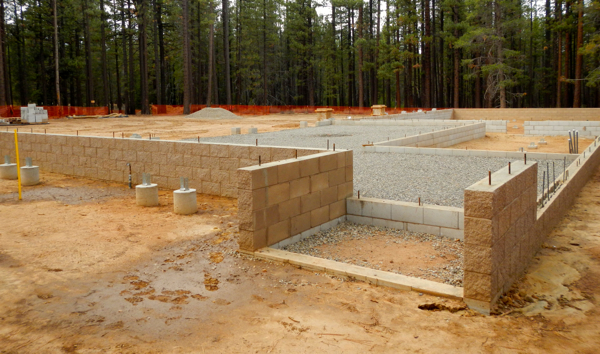
The first phase of Lake Tahoe Wildlife Care's new home is coming to life. Photos/LTN

The first phase of Lake Tahoe Wildlife Care’s new home is coming to life. Photos/LTN

By Kathryn Reed

Building cages for animals takes more than just putting up four walls. In some ways, the amount of infrastructure needed is the same as a house.

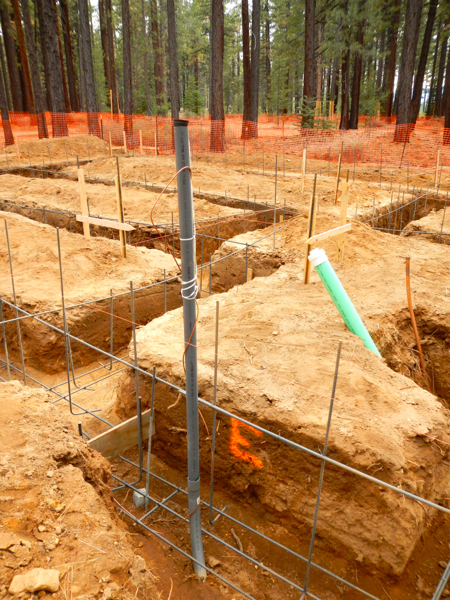
The sites for the 12 cages on the 27-acre home of what will be Lake Tahoe Wildlife Care are equipped with water, sewer and a ton of cables to provide webcam access to all the critters. Enough infrastructure is being put with the idea is will sustain the animal rehabilitation center as it grows.

Tom and Cheryl Millham, who started LTWC in 1978, are building their dream rehab facility on the corner of Al Tahoe Boulevard and Pioneer Trail.

Hal Cole, who is the general contractor for the project, called it “Cherry Hills on steroids” – a reference to the Millhams’ current location.

“We are designing each cage specifically for each animal,” Cole told Lake Tahoe News.

Predators can’t be next to prey, bears need a substantive enclosure, and birds need netting.

Underground utilities are in place at the animal cages.

Underground utilities are in place at the animal cages.

While the new LTWC will be in the center of South Lake Tahoe the site feels very much like it is in in the middle of the forest. As many trees as possible have been saved.

“Even when the building is done, unless you really look for it you won’t know it’s here,” Cole said as he walked the property.

The site did not have any utilities so all of that work has taken place in the last few months. The foundation for the caretaker’s unit is poured.

However, not enough money is in the coffers to continue work past the Oct. 15 grading deadline that Tahoe Regional Planning Agency mandates.

“We are happy to get the rehabilitation center done and move things away from our house and to the new location,” Tom Millham told Lake Tahoe News.

The property is owned by Marjorie Springmeyer. A lease with an option to buy was signed last year.

LTWC is on a fundraising campaign to secure the $3.5 million needed to complete the caretaker’s unit and cages. The goal is to have those facilities done by 2017.

Denise Upton, a longtime volunteer and current director of animal care, will be the initial caretaker. Her quarters will be about one-third of the nearly 10,000-square-foot building that is under way. Another third will be used for LTWC equipment, a generator, as well as for a mini animal hospital. Veterinarian Kevin Willits is slated to continue his work for the center. The remaining third of the structure will be upstairs housing for college interns.

The front of the building will be where people can drop off sick or injured animals. That will be the only public access.

The cages are being built on a loop road. Just like today the public can’t interact with the animals. This is because the whole goal is to keep the animals wild so they can return to their natural environment.

Down the road the plans are to build an education center that will have classrooms, gift shop and other amenities. That part of the project is a long ways off because of funding. Plus, it will require environmental review, which will cost more than $1 million and will take at least 18 months. This in part is because the property is not zoned for that type of facility.

Everyone working on the project is trying to keep costs to a minimum – including Cole, Jim Ferguson (excavator), Chuy Caro (masonry) and Ed Cook (trees).

—–

Notes:

·      More information about Lake Tahoe Wildlife Care may be found online. There is a button on the website that will accept donations.

·      LTWC has taken in more than 24,000 animals, returned 15,000-plus to the wild, and has trained more than 2,000 people to help care for these animals.

·      LTWC is California’s only rehab facility for bear cubs.


Skill-based games altering casinos’ strategies

By J.D. Morris, Las Vegas Sun

Arcade-style gambling machines with video game controllers attached to them.

Casino games that play like “Pac-Man” or a first-person shooter, in which a player’s performance can materially influence the outcome.

A hotel with space devoted to competitive video gaming, and a casino floor that highlights technology geared toward similar customers.

These are some of the ways the Nevada casino industry’s recent focus on arcade and video game-like technology is beginning to play out in practice.

Read the whole story


Many colleges fail to prepare students for work

By Jeffrey J. Selingo, New York Times

It’s the middle of October, and many college campuses nationwide are observing their traditional fall break with a few days off from classes. Even as the 21st Century economy demands more from college graduates and the price of a higher education skyrockets, today’s college students are spending less of their time on academic pursuits.

Various surveys of students show that they dedicate just a fraction of their time in college studying and going to classes. One study of UC undergraduates found that students spend 13 hours a week studying, some three times fewer hours than they devoted to socializing with friends, watching television, and exercising.

By the time students graduate from college, their brains are hard-wired to the cadence of the daily life laid out by the nine-month academic calendar. They tend to think about their work in terms of 50-minute classes and five courses during 15-week semesters, with plenty of lengthy breaks in between.

But the working world is unstructured, with competing priorities and decisions that need to be made on the fly. College is very task-based: take an exam, finish a paper, attend a club meeting, go to practice. The workplace is more of a mash-up of activities with no scheduled end.

Read the whole story


Conner: ‘There is absolutely no proof to anything I have been accused of’

xxxx

South Lake Tahoe City Councilwoman JoAnn Conner on Oct. 16 says she is the one being bullied, not the other way around. Photo/Jessie Marchesseau

By Jessie Marchesseau

The South Tahoe Chamber of Commerce met Friday evening to allow JoAnn Conner, former chamber president and South Lake Tahoe city councilwoman, to tell her side of the story.

Conner was banned last month from having interaction with city staff as a result of a list of allegations including verbal attacks on city employees and the city manager, being disrespectful to other councilmembers, and being hostile and demeaning to people during public meetings.

“There is absolutely no proof to anything I have been accused of,” she told the chamber group Oct. 16. “I would like to categorically state I have never, ever sworn, yelled at or threatened or done anything to intimidate a city employee including the city manager.”

However, Lake Tahoe News has been told proof will be forthcoming in the form of verbal testimony and emails from Conner during Monday’s special council meeting.

Conner said she is a passionate and straightforward person and realizes that there have been times when people felt she was too harsh. “And for that I apologize,” she said.

Conner went on to point out that none of her colleagues is without fault and they have all done things that were rude or inappropriate. She said she doesn’t know why they are focusing these accusations on her.

“I believe we have some issues with our employees, yes. But I don’t believe I am the cause of that. I think it is coming from another source, and have encouraged my fellow councilmembers to talk to our employees,” Conner continued.

She then addressed each of the seven allegations listed on the resolution which state that she has been:

1. On numerous occasions been disrespectful to councilmembers during public meetings;

Conner’s response: “I think that’s a matter of perspective. I think some of the other councilmembers have also been rude.”

2. Verbally attacked employees, including the city manager, resulting in a pattern of behavior that may constitute a potential hostile work environment;

Conner’s response: “Not true. Absolutely not true. No proof has been presented.”

3. Caused employees to seek advice and assistance from the city attorney and/or city manager arising out of confrontations or interactions with Councilmember Conner;

Conner’s response: “Where is the proof? When I asked the city attorney, ‘Where is the proof?’ the only instance he gave me was related to parking enforcement over two years ago .…”

4. Potentially subjected the city to litigation for the alleged behavior;

Conner’s response: “Not true.”

5. As a representative of the city and City Council, has acted in a manner that has caused the agency partners to decline to or be reluctant to work with Councilmember Conner;

Conner’s response: “Again, where is the proof of that?” She said she could think of one instance concerning the senior subcommittee when she had a bit of a disagreement with El Dorado County Supervisor Sue Novasel.

6. Been hostile and demeaning to persons who have provided testimony or opinions in public meetings;

Conner’s response: “I don’t think so, but that’s possible. I think that’s a matter of perspective. And certainly there are people who could testify that just about every council member up there has done the same thing at some time.”

7. Has acted in a manner during public meetings that has been alleged in an editorial in local media to be bullying, ridiculing and scolding, which impacts the respect the public has for the city and the City Council.

Conner’s response: “Seriously? ‘Alleged in a local publication.’ None of that was true. The he-said, she-said, somebody-said is ridiculous. The comment about my having a CCW [carry concealed weapon] and the employees feeling threatened because I bring a loaded gun to government property: Mr. (Kenny) Curtzwiler investigated that. It was very simple to prove I have never applied for, much less have I ever received a CCW. And I would like to know who has seen me carry a gun, because I have never carried a gun loaded or unloaded onto any government property.”

However, prior to it being published that Conner had a concealed weapon permit she told councilmembers, department heads and others she had one. Because there is no statewide registry for concealed weapon permits and the fact they expire it is not known if she was telling the truth when she previously boasted of having one or now when she denies having one.

Conner said when she requested information from City Attorney Tom Watson on specific instances of the alleged behavior, she was told employee complaints are confidential and he did not have exact dates or documentation of the behavior in question.

When attorney and former Councilman Bruce Grego asked Conner how she was supposed to defend herself against the allegations when the city won’t release the confidential information they are based on, Conner said she didn’t know. She went on to say she has been approached by several employees away from work who told her they don’t feel threatened by her. She claims she is the one being bullied, not the other way around.

Conner said she believes this all came to a head when she challenged City Manager Nancy Kerry on what Conner believed were erroneous charges on some temporary activity permits and also had a disagreement with Kerry concerning the lease for the senior center.

Councilman Tom Davis was also in attendance Friday as a member of the chamber, but declined to join the discussion beyond saying: “There’s two sides to every story, and you’re going to hear both sides on Monday. So that’s the time to come and listen, and whatever evidence there is will be presented to both sides.”

A special meeting concerning the possible censuring of Conner is scheduled for Oct. 19 at 3pm at Lake Tahoe Airport.