Mayor’s arrest brought SLT unwanted notoriety

Tahoe Daily Tribune headlines in June 1989 were all about Operation Deep Snow. Photo/LTN

Tahoe Daily Tribune headlines in June 1989 were all about Operation Deep Snow. Photo/LTN

Publisher’s note: This is one in a series of stories Lake Tahoe News will be running leading up to the 50th anniversary of South Lake Tahoe on Nov. 30.

slt 50th logoBy Kathryn Reed

June 11, 1989, started out like any other Sunday in the basin – sunny, blue sky, uneventful. Before it was over South Lake Tahoe was making headlines internationally.

Mayor Terry Trupp, 46, his 24-year-old wife Kim (who at one time was his foster daughter), and 17 others were arrested that weekend on a slew of drug and money laundering charges. Many were South Shore residents. Even more were arrested down the road as the case unfolded.

The display of weaponry, cash and drugs at the South Lake Tahoe police station was impressive.

Stacks of one-hundred and thousand dollar bills were confiscated. Automobiles, motorcycles, jewelry, bank accounts, real estate, and gun cases – all seized – all believed to have been obtained by drug money.

Money was laundered using offshore banks, real estate and local businesses.

It was retired El Dorado County sheriff’s Lt. Pete Van Arnum who put the handcuffs on Trupp. (He was working for South Lake Tahoe Police Department at the time.) Both Trupps were arrested at Lake Tahoe Airport where they had gone to pick up friends.

This is one of the biggest stories to happen in South Lake Tahoe in the last 50 years and is certainly the largest criminal act involving a member of the City Council.

Trupp was first elected in 1978 after serving several years as executive officer of the Council for Logic. That was the group opposed to the formation of the Tahoe Regional Planning Agency. He was re-elected in 1982 and 1986. In 1984, he made an unsuccessful run for the El Dorado County Board of Supervisors.

His last day as a member of the council was July 31, 1989. He had submitted his letter of resignation earlier in the month, on the same day his one-year stint as mayor ended. This negated the recall drive that had been initiated.

Bruce Grego was appointed to fill Trupp’s unexpired term.

Trupp initially faced 21 counts, including allegations of laundering $845,000 in drug profits and bringing in 220 pounds of cocaine to Tahoe. He was looking at spending the rest of his life in prison if convicted.

Terry Trupp was in his third term on the South Lake Tahoe City Council when he was arrested in June 1989. Photo/South Lake Tahoe

Terry Trupp was in his third term on the South Lake Tahoe City Council when he was arrested on June 11, 1989. Photo/South Lake Tahoe

In August 1990 he pleaded guilty to two counts – conspiracy to launder money and unlawful use of communications for drug deals. On Oct. 11, 1990, he was sentenced to nine years in federal prison.

An Associated Press story at the time said, “(Trupp) said he pleaded guilty because he could not prove it was the fear of death and not the money that motivated him. Trupp read a long, involved statement accusing federal agents of using patriotism, fear, death threats and sympathy for persecuted Jews in coercing him to sell cocaine and launder drug money in the Lake Tahoe resort.”

Trupp was released before he served his full sentence. He later remarried and worked in sales.

He died Aug. 20, 2008, of a staph infection. He was 65 and living in Southern California at the time.

Kim Trupp pleaded guilty to money laundering, which earned her a 21-month prison sentence. She could have faced 10 years behind bars and a $500,000 fine. She was Terry Trupp’s fourth wife. Trupp and his third wife became foster parents to Kim Trupp when she was 14.

In court documents Terry Trupp bragged of laundering money for 20 years.

People in town often wondered where he got his money. While he lived in a modest ranch-style house on Glenwood Way, he did have a Maserati. He had a bit of a pompadour, wore flashy gold chains and unbuttoned shirts. The couple were members of the local Church of Latter-day Saints.

On his 1987 and 1988 financial disclosure forms Trupp reported no income. The 1989 form lists more than $10,000 coming from consulting work for Heavenly Valley Resort Hotel, now the Tahoe Seasons Resort.

He was pro development and one of the leaders of the initial redevelopment efforts in South Lake Tahoe. Much of his campaign money came from the Stateline casinos, some of which he was doing consulting work for while on the council.

At the height of the investigation there were two dozen Drug Enforcement Administration agents and 30 Federal Bureau of Investigation agents on the case. South Lake El Dorado Narcotics Enforcement Team had formed the previous October.

The FBI-DEA investigation, which included U.S. Customs, U.S. Treasury and local law enforcement, was known as Operation Deep Snow. The name for the 20-month investigation came from all the cocaine that was exchanging hands.



Nevada’s wealthiest take private school money

By Trevon Milliard, Reno Gazette-Journal

The state’s offer to families was $5,000 per child.

The promise: Nevada’s poor families would be afforded a new choice – private school.

But only 7 percent of students applying for the money live in areas reporting low household income, while nearly a third of takers reside in the state’s richest ZIP codes where median household incomes exceed $75,000 at the least.

A vast majority of applicants – 80 percent – live in neighborhoods where median household incomes outpace the state median of $51,000, according to the Reno Gazette-Journal’s analysis of information released about the 3,000 students seeking public money for private school.


A little more than half of Nevada’s public school students are low income, according to the Nevada Department of Education, but only 20 percent of program applicants identify as low income, according to the State Treasurer’s Office overseeing the program.

Read the whole story


Southwest Gas rates may be going up

By Kyle Roerink, Las Vegas Sun

On Nov. 17, the state Public Utilities Commission will hear testimony on whether Nevadans will see heftier bills from Southwest Gas. The commission will rule on a request made by the company in June to raise rates by an aggregate of $29.4 million, which it said was necessary to compensate for decreased demand stemming from warmer-than-expected weather.

As a regulated monopoly, the company could ask the PUC to raise rates to collect revenues it planned to earn but didn’t receive. This year’s request followed a $7.4 million rate hike the PUC approved three years ago after reviewing the company’s investments, operations costs and expected sales based on historical weather patterns.

If approved as requested, the new rates would amount to a 6.3 percent increase in Northern Nevada and a 5.6 percent increase in Southern Nevada. Southwest also provides gas to the California side of the Lake Tahoe Basin.

Read the whole story


Billions in Medicaid funding at risk for Californians

By Anna Gorman, KQED-TV

California risks losing billions in health care dollars if the state and federal governments can’t agree on a plan to fund reforms of the Medicaid program, hospital officials and experts said.

Public hospitals throughout the state are counting on the $7.25 billion in state and federal funds to treat large numbers of low-income and uninsured patients. The plan, known as a Medicaid waiver, also would allow the state to continue improving the efficiency, safety and quality of its Medicaid program, called Medi-Cal.

About a third of all Californians are enrolled in Medi-Cal — 12.5 million people. The current waiver, which took effect in 2010, expires on Oct. 31, though the federal government can grant an extension while negotiations over the plan continue.

Read the whole story


CTC busy buying property, building trails

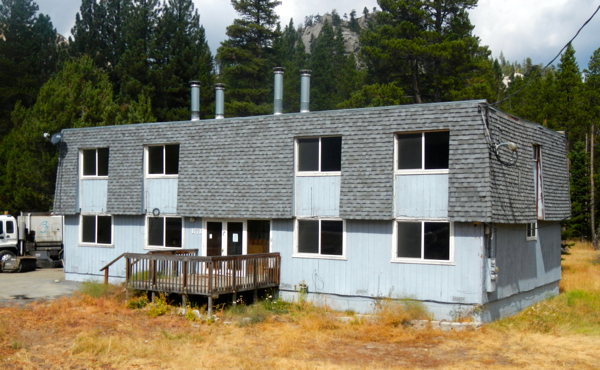
The California Tahoe Conservancy is buying this parcel with the idea the building will be demolished. Photo/LTN

The California Tahoe Conservancy is buying this parcel with the idea the building will be demolished. Photo/LTN

By Kathryn Reed

KINGS BEACH – Land acquisition, bike paths and public access projects dominated the most recent quarterly meeting of the California Tahoe Conservancy.

The old blue four-plex on the corner of Sawmill Road and Highway 50 in El Dorado County will be demolished in 2016 so the 1-acre parcel can be restored to a natural setting. It is deemed environmentally sensitive land.

The board agreed to spend $435,000 to make this happen. The bulk of the money is to buy the property. Escrow is expected to close at the end of the month. The development rights will be banked to be used in South Lake Tahoe or Meyers.

There was a question as to whether the sewer hook up had value. The answer was not today. It’s also not a parcel State Parks would be interested in because that agency wants contiguous property. They own the land across Sawmill Road.

No one is living in the structure, and it has been in foreclosure for about a year.

For about 30 years starting in the 1920s this is where Ethel’s Pie Shop was. It’s how the rock climbing area got its name.

*****

Proposed Lakeview Lookout in South Lake Tahoe. Rendering/Design Workshop

Proposed Lakeview Lookout in South Lake Tahoe. Rendering/Design Workshop

Funding is still being sought to transform the old Alta Mira site in South Lake Tahoe into something more than a wood-chipped parking lot. It has been renamed Lakeview Lookout.

Soroptimist International of South Lake Tahoe’s membership voted not to spend the quarter million dollars it has in the bank on this project. CTC is hoping the city of South Lake Tahoe and Tahoe Fund will be partners. The board may discuss funding in more detail in December or early next year.

A cantilevered walkway and deck, as well as slope stabilization are proposed. The idea is to make it a complementary bookend to Lakeview Commons.

*****

The initial phase of the long-anticipated Greenway Trail is done. Eventually it will link Meyers and Stateline.

“It felt so good this summer to get some pavement on the ground after working on this for so long,” CTC staff member Sue Rae Irelan told the board.

The first segment is 0.43 miles going from Herbert Avenue to Glenwood Way.

Last week the California Transportation Commission allocated $2 million to a consortium on the South Shore for trails. Part of this will be used to continue the Greenway through the Bijou Meadow, connecting to Al Tahoe Boulevard, and from Lake Tahoe Community College to Sierra Tract.

Most likely at the March board meeting there will be a land swap item on the agenda involving the CTC, the city and Lake Tahoe Community College. This will also involve a modification to the design plans for the path.

“We are trying to make a more direct connection to the Martin-Barbara intersection,” Irelan said.

*****

The Upper Truckee Marsh will be dog-free for three months starting May 1. Photo/LTN May 2010

The Upper Truckee Marsh’s final EIR/EIS should be out in December. Photo/LTN file

The final environmental documents for the Upper Truckee River and Marsh project should be before the board in December. Construction could begin in 2018. Environmental and recreation improvements on both sides of the river are planned.

*****

Talks are still under way for CTC to not have a role in Van Sickle Bi-state Park. CTC stepped in when California State Parks couldn’t put money into the upkeep of the South Shore park.

“Ultimately the goal is to have Nevada manage it on both sides,” Wright said. He added there is still work to be done involving both states to make this a reality.

*****

The Conservancy owns 3.5 acres or six “asset lands parcels” between Tahoe Valley Pharmacy and the Factory Stores at the Y.

“The city would like the back parcel to be part of the green belt,” Aimee Rutledge of the CTC told the board.

The Tahoe Valley Area Plan calls for a green belt in this area. Rutledge also said staff envisions the Factory Store owners wanting those parcels, but the owners told Lake Tahoe News they have enough on their plate.

When there is a buyer the board will take a vote on it.

Executive Director Patrick Wright explained that new legislation allows the board to know what the future use of the property will be before agreeing to sell it.

“This give us leverage to shape the future of this property,” Wright said.

This is a completely different process from past CTC parcels that went to the highest bidder. One of the parcels was the old drive-in on Glenwood Avenue that has since had what is called a single-family residence built on it even though it looks like a mini hotel. It was built specifically to be a vacation home rental.


U.S. students lose ground on academic tests

By Joy Resmovits, Los Angeles Times

For the first time in about a decade, steady academic progress has halted for fourth- and eighth-grade students nationally and locally, according to new standardized test results released Wednesday.

After years of small but steady increases in scores on the National Assessment of Educational Progress since its first administration nationally in 1990, the trend began to reverse this year.

The results were interpreted differently across the education spectrum. “The overall news from this round isn’t good,” said U.S. Education Secretary Arne Duncan. “Anyone who claims to have this all figured out is peddling a personal agenda.”

Duncan theorized that the changing trend is due to an “implementation dip” caused by chaos from curricular changes in schools as districts teach new academic standards.

Read the whole story


Fire districts losing tax votes point finger at state fee

By Jim Miller, Sacramento Bee

Frank Treanor doesn’t have exit polling to help explain why almost 38 percent of voters in the fire district he leads north of San Francisco voted against a November 2012 ballot measure to increase what property owners pay the district annually.

But Treanor, chief of the Rancho Adobe Fire Protection District, said he is sure of the reason: Most of the district falls within the vast swath of the state where property owners pay a state fire prevention fee, in addition to any local charges.


In the four years since lawmakers approved it, a state fire prevention fee on properties in about a third of the state’s rural areas had yielded more than $300 million through June for prevention-related activities.

The money has gone to administration and statewide prevention, such as defensible space inspections and vegetation clearing, amid concern by some local officials that non-profit fire safe councils haven’t received more money

Read the whole story


Reno sees future, and it isn’t casinos

By Jim Carlton, Wall Street Journal

RENO—For much of the past half century, Reno moved in lock step with its glamorous big sister, Las Vegas, their fortunes rising and falling with their mainstay industry, gambling.

But Reno is now betting on a different economic future, turning its back on casino tourism as an economic driver in favor of becoming a manufacturing hub for everything from drones to car batteries.

Since 2011, the “Biggest Little City in the World” has recruited about 100 companies to locate or expand here with more than 10,000 new jobs—many cajoled by a former West Point cadet who instilled military discipline into Reno’s economic-development office.

Reno landed the Tesla deal in no small part because of a $1.3 billion tax-break package signed by Nevada Gov. Brian Sandoval. Critics saw the tax break, the state’s largest ever and among the biggest such enticements nationally, as a giveaway of public funds.


Many cities across the U.S. are trying to do the same thing as Reno: diversify away from once-bedrock industries that have cratered or become too volatile. Houston, for example, has tried to branch out from energy production into technology and health care. For many Rust Belt cities, the makeover process has been a struggle, in part because they started too late, says Gary A. Hoover, chairman of the economics department at the University of Oklahoma.

There are signs Reno’s strategy is starting to pay off. Before Nevada’s top two metro areas went into recession in 2008, both had unemployment rates below 4 percent. While the jobless rate in both soared to 14 percent in 2011, Reno’s has fallen to 6.1 percent, as of August, vs. 7 percent for Las Vegas, according to Labor Department estimates.

Read the whole story


Voters seek to recall EDC supervisors

Novasell-RanalliBy Kathryn Reed

A group of residents disgruntled with how the El Dorado County Board of Supervisors is working is attempting to recall all five elected officials.

Today at their meeting in Placerville, Supervisors Sue Novasel and Michael Ranalli were served with the notice of intent for their recall. Supervisor Brian Veerkamp was not at the Oct. 27 meeting, but petitioners said he would be served upon his return.

The group is calling themselves El Dorado County Total Recall, and has said the intent is to recall every member of the board.

“Last year’s battles over a rural or urban future for El Dorado County pitted grassroots community groups against the huge financial backing of special interests. As a result, it is clear that citizens must rise up together from all over the county to fight for better representation,” a press release from the group said. “This may be our last opportunity to save our most important asset, the rural character of El Dorado County.”

County resident Kevin McAllister, who is quoted in the release, is part of the State of Jefferson movement that would like various counties to secede from California.

The actual notice says, “Whereas the voters of El Dorado County are a people of fairness, but when money or influences take precedence over the wishes of its citizens, we the people have a right to remove any or all of the elected officials.

“We the voters are seeking relief from the tyranny of our elected officials. They have failed to effectively and efficiently operate county government.”

Dan Kelly, spokesman for the recall group, did not return a phone call.

“This isn’t about anything specific. They don’t like our processes and our processes are working,” Novasel told Lake Tahoe News.

She believes some of the complaints people have relate to things before she was elected a year ago.

Novasel said she has been meeting with people, listening to concerns, but said it’s impossible to do what everyone wants because there are always multiple sides to an issue.

At least 20 verified signatures were required for the recall process to have gotten to this point. They must be from people in the supervisors’ respective districts.

Signing Novasel’s notice of intent were:

JoAnn Conner (South Lake Tahoe City Council member), Kenny Curtzwiler (defeated supervisorial candidate), Judy Clot (Tahoe Paradise Resort Improvement District member, and Recreation JPA member), Pam Curtzwiler, Marshall Curtzwiler, Jennifer Quashnick, Moya Sanders, Diane Verwoest, Ermel Herrmann, Matthew Adams, Tyler Baldwin, Luke Adams, Julie Ann Cavanaugh, Dov Shafer, John Oney, Mary Oney, Wayne McBride, John Adamski, Francesca Dionne Duchamp, Monica Givens-Day, Vincent Tanzi, Constance Hinton, Sue Abrams, Andrea Marion, and Dave Marion.

Novasel and Ranalli have seven days to respond to the petition in 200 words or less. The same will go for the other supervisors if and when they are served. (Ranalli did not return a phone call.) Those responses will go on the official petition. However, they are not required to respond.

The proponents then have 10 days to get other documents to the county Elections Department. The county works with the proponents to ensure a legal petition with both sides’ arguments is crafted. The proponents then have 120 days to seek the required number of signatures.

For Novasel, that is approximately 3,545 signatures, and for Ranalli it is 4,597. The figures are based on a percentage of registered voters.

Assuming the correct number of certified signatures is obtained, the recall election is then set for between 88 and 125 days after certification. The cost of the election comes out of the county’s general fund. The Elections Department could not provide what that figure might be. The next regularly scheduled election is the June primary, which if the recall could be on that ballot, would make the process less expensive.

“There was an attempt to recall a supervisor some years back, but it failed. It failed to get the requisite amount of signatures,” Linda Webster with the county Elections Department told Lake Tahoe News.

As for the supervisors, business goes on as usual.

“All I can do is concentrate on the job I am doing,” Novasel said.


Outdoors industry muscles into politics

By Benjamin Spillman, Reno Gazette-Journal

The backcountry can be a great place to escape – except when it comes to politics.

That’s especially true in western swing states such as Nevada and Colorado where political experts and special interest groups are already trying to galvanize allies and marginalize enemies for the 2016 campaign cycle.

And when it comes to winning votes from outdoors enthusiasts public lands become the political battlefield.

Look no further than a recent push from the Outdoor Industry Association to highlight swing state voters’ affinity for keeping public land in Nevada and Colorado in the hands of the federal government.

Read the whole story