Ski industry hopeful riders return to slopes

By Kathryn Reed

TRUCKEE – A sense of enthusiasm is in the air when people start talking skiing in the Sierra. At least for this season.

Mother Nature is cooperating with ski executives’ desire to have plenty of white stuff available pre-Thanksgiving. Natural snow combined with freezing overnight temps that are ideal for snowmaking are allowing many resorts to open this week – with all three of Vail Resorts’ Tahoe properties opening Saturday.

“There’s so much optimism for the season,” Mike Reitzell, president of the California Ski Industry Association, told Lake Tahoe News.

Reitzell on Tuesday completed a 36-day tour of 23 California resorts. It was a 3,500-mile journey that ended that day at Shasta Ski Resort.

The morning of Nov. 10 was spent talking to the Truckee Donner Chamber of Commerce and hearing from North Shore industry folks.

Reitzell is new to the job, having taken over for Bob Roberts earlier this year. Reitzell’s roots are with the legal side of the ski industry. He worked for Duane Morris LLP’s Truckee office. The firm specializes in sports and recreation law.

He acknowledges membership in the association has dropped in recent years. It’s something he is paying attention to. The association is made up of a mix of downhill and cross country resorts. The board is considering expanding membership to other ski related entities like visitors authorities, though they would not be voting members.

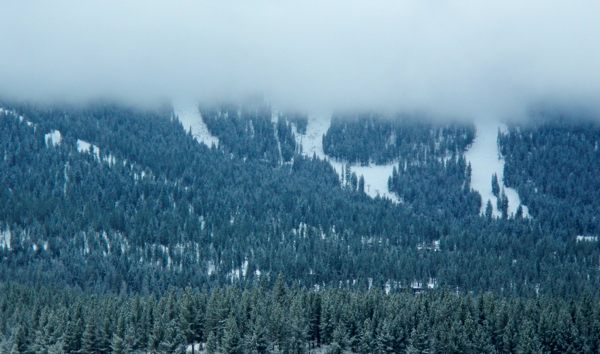
Northstar on Nov. 10 is shrouded in clouds, though its slopes are covered with snow. Photo/Kathryn Reed

Northstar on Nov. 10 is shrouded in clouds, while its slopes are covered with snow. Photo/Kathryn Reed

While this season is starting out well, the industry – especially in California-Nevada — has taken a beating because of the lack of snow. For the last four-drought years snowfall is 75 percent of average. Most resorts last year were never able to open all of their terrain. Many lifts stopped running well before their normal mid-April closing.

Lack of snow and terrain has in turn led to a decline in skier visits the last four years. Stats from the California Ski Industry Association show 7.7 million skier visits in 2010-11, 5.9 million in 2011-12, 5.8 million in 2012-13, 5.4 million in 2013-14, and 4.6 million in 2014-15. That is a 40 percent drop.

“Smaller resorts have had a difficult time, but they are all still here,” Reitzell said. “They recognize the need for a fiscally sound business.”

He said there is a resiliency among resort operators, noting they’ve weathered droughts and other economic downturns besides the current situation.

Still, the lack of visitors has many resorts turning to other activities besides skiing and snowboarding – like ropes courses, music, and indoor fun.

One of the more than 100 people at the Tuesday meeting asked what could be done to attract millennials and families.

For Reitzell, he said it’s about packaging lessons and equipment at a good price point. It’s also just about getting them to the mountains. Playing in the snow is a start, then perhaps they will want to graduate to the slopes.

Greg Dallas, CEO of Sugar Bowl-Royal Gorge, isn’t convinced the Tahoe market as a destination is overpriced for families. He pointed to how Disneyland is $120 a day and families are still going there.

He and Reitzell said how the smaller, feeder resorts can attract the newbies, get them to fall in love with the sport and create lifelong riders.

For Beth Howard, vice president and general manager of Northstar, what keeps people returning is the brand promise – from snow surface to culinary excellence to traditions.

“There’s a tremendous variety offered by all resorts in California,” Reitzell said. “Whatever experience people want they can find it in California.”


Scientists gain understanding of untapped reservoirs

By Amy Miller, KTVU-TV

According to a widely held belief, you can’t squeeze water from a rock. But researchers from UC Berkeley who are trying to better understand where water is stored in nature are challenging that old adage.

After nearly 10 years of studying a steep, 20-square-mile area near the South Fork Eel River in coastal Mendocino County, the scientists have shown that for trees and other plants, deep and highly fractured rock formations beneath the Earth’s surface are a much larger water reservoir than was previously known.

The work to understand the role that “rock water” plays in the hydrologic cycle began in 2006 when researchers from UC Berkeley embarked on a multi-year study sponsored by the Keck Foundation called the Hydrowatch project. It was designed to precisely monitor and measure the pathways of water in Mendocino County’s Angelo Coast Range Reserve as it cycles from the groundwater table to the tops of trees and into the atmosphere.

“We were really interested in learning the fate of precipitation in the land surface,” explains Todd Dawson, professor of Integrative Biology at UC Berkeley. “So really trying to figure out when precipitation arrives at the site, where does it get into the rock, where does it get into the stream, how does is recharge the ground water, how much of it is used by the vegetation, and ultimately, how much of it ends up in the streams and going back out to the Pacific Ocean.”

Read the whole story


Gaming association, FBI ask the public to report illegal gambling

By J.D. Morris, Las Vegas Sun

The American Gaming Association is asking the public for help with one of its top priorities at the moment: fighting against illegal gambling.

The Washington, D.C.-based casino industry lobbying group said Tuesday that it’s cooperating with the FBI in asking the public to use the Internet Crime Complaint Center to report illegal gambling activities. The complaint center, also referred to as the IC3, allows individuals to submit information to the FBI about suspected criminal activity fueled by the Internet.

Those who fill out forms do not need to be victims of such crimes — the IC3 says it accepts reports from third parties, too.

Read the whole story


Officials: Public needs to be engaged because threat of catastrophic fires keeps growing


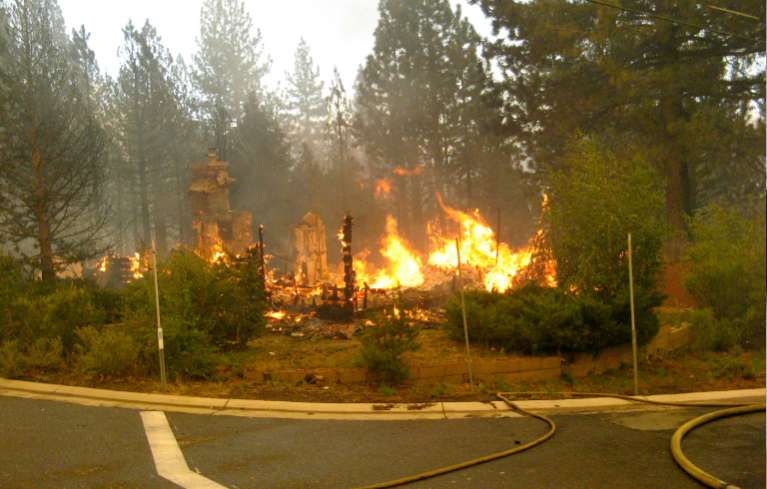
2007 was the worst fire season in the Lake Tahoe Basin when 254 houses on the South Shore were destroyed. Photo/Lake Valley Fire

The Angora Fire destroyed 254 houses on the South Shore in 2007. Photo/Lake Valley Fire

By Linda Fine Conaboy

RENO – It may seem nonsensical to be thinking about wildland fire now that snow has fallen and skiers are gearing up for the season. But putting 2015’s fire year to bed and preparing to confront 2016 head-on with a new action plan is what the Nevada Network of Fire Adapted Communities aims to do. And to their way of thinking, the time is now, not when fire is again an ugly threat.

The University of Nevada Cooperative Extension’s Living with Fire Program hosted its second annual conference this week at the Atlantis hotel-casino in Reno.

“Our forests are not museums just sitting out there,” Elwood Miller, the event coordinator, said. “They are changing. We must learn to live with fire, not continually suppress it. It’s a part of our natural world, like wind, rain and sun. Fire is an enormous issue, particularly in the West.”

In 2015, Miller said, 9.5 million acres burned with costs chewing through more than half of the U.S. Forest Service annual budget, costing upward of $4 billion and going higher.

“We cannot afford this. Last year was a perfect storm of threat, devastation and destruction,” Miller said. “Collaboration is the foundation of the national wildfire cohesive strategy, with a sustainable partnership containing a common goal, equal footing among the stakeholders and a sense of mutual obligation.”

According to each of the speakers, fire is a natural element; however, it is beginning to exhibit behaviors not seen before.

“We have unbounded development—an invasion of people, which is not compatible with fire,” Miller said.

The Super Scooper is a new tool in the U.S. Forest Service's tool of suppression. Photo/LTN file

The Super Scooper is a new tool in the U.S. Forest Service’s box of suppression. Photo/LTN file

The collective wisdom of each of Monday’s speakers allowed that fires occur naturally about every century and the burn is a good thing for the forests. But now, Miller said, fires are hotter, bigger and faster than ever before and firefighters are being asked to risk their lives to fight them.

“We should let fire play more of a role, but we also need to keep people safe,” he said.

Miller mentioned the Native American view of fire in the wild—a fire will let you know when it’s ready to be fought. Consequently, there is little loss of life on Indian land, he said.

Many recent Western wildfires were discussed, including the devastating 2012 Waldo Canyon Fire in Colorado. Miller said in this disaster the recipe for death and destruction was in place: high temperatures, high winds and low humidity.

The fire covered more than 18,000 acres, caused the evacuation of 32,000 people, destroyed 346 homes and resulted in insurance claims of more than $450 million.

The largest fire in Washington state’s history and described in detail by Carlene Anders, executive director of the Carlton Complex Long Term Recovery Group, occurred in July 2014.

In an emotional talk, Anders said the fire moved in a massive tidal wave, first burning sagebrush, then bitter brush and finally trees. To add to the misery a fierce rainstorm began, not enough to douse the fire, but not letting up until considerable destruction occurred from the downpour.

“The impact of the fire is immense,” Anders said. “Now we’re facing going on two years of cascading effects. People still have emotional issues, we lost our tourist base, and wildlife has been decimated. Nearly 750,000 acres burned. We’re now having to do surveys to re-establish property lines.

“You will never be made whole again after a fire,” she said. But her sense of humor showed itself when she laughed and said, “Amazingly, not one marijuana crop was lost.”

Along with the fact that fire is a natural element and suppression is not always the best medicine, speakers concluded that not everything can be saved by the fire department. Most agreed that the reality is people must learn to protect themselves.

How can individuals keep fire from knocking on our doors? By creating defensible space around their properties and removing debris from forest floors.

Mike Brown

Mike Brown

Mike Brown, North Lake Tahoe Fire Protection District’s chief, said everybody has a fire problem, cities as well forest communities; however, some of those city folk don’t agree.

“Think about the Caughlin Fire and the Washoe Drive Dire [both in Washoe County],” he said. “In the Caughlin Fire, embers were blowing around the city, setting fire to people’s junipers. We all need to be responsible to take care of our property. Fuel beds [like junipers] are susceptible to embers.

“Citizens must realize they have a responsibility to prevent fires. People need to assist us so we can assist them. They must be engaged with their firefighters, get to know them. We all need to be educated.”

He commented on the 2007 Angora Fire on the outskirts of South Lake Tahoe, which he was a part of. There were 254 homes destroyed, $11.7 million in direct firefighting costs and $1 billion in lost tourist trade. It took nine days to knock down the fire—some people have rebuilt, but not everyone.

Firefighters will do everything possible to fight a fire, Brown said, including triage work. We make decisions on what we can defend, we train and we know our objectives.

“Safety and suppression is our No. 1 issue. But we don’t have enough suppression personnel to put someone in front of everyone’s home. Fire doesn’t discriminate. We decide what’s savable and what’s defendable,” Brown said. “Suppression costs are surging and insurance companies are starting to decline coverage in some areas.”

He described the hidden logistics involved in fighting the recent massive and lengthy fires that have happened in the West —things like food, toilets, laundry, security, medical personnel, helicopters, securing local water for suppression and housing among myriad details.

Brown said this is why everyone needs to work together to establish fire-adaptive communities.

The free conference drew people from all venues committed to establishing fire-adapted communities. Attendees included community leaders, homeowners, governmental officials, landscape professionals and others representing volunteer firefighting groups as well as fire professionals.

When asked what she would take away from her day at the conference, Julie Habara from Reno said she attended because she’s an interested homeowner and thought this would be a good way to get fire information for both she and her neighbors.

“The sessions expanded my expectations. I think every resident should have this knowledge; it’s good for the community at large. I think the awareness of what I need for emergency preparedness, like cleaning up my yard, defensible space, maintaining my property in excellent condition and having emergency contact information is vital,” Habara said.

A fire-adapted community is one located in a fire-prone area that requires little assistance from firefighters during a wildfire. These residents know the dangers of living in a potentially hazardous area and understand that the responsibility for living there is theirs. Additionally, they have educated themselves and learned the skills needed to survive wildfire. They know that they must evacuate early and effectively and how to survive if trapped.

Like every state, Nevada has specific rules and regulations pertaining to insurance, all covered succinctly by Rajat Jain, chief insurance examiner in the property and casualty section for the Nevada Division of Insurance.

State Forester Bob Roper said that fire-adapted communities represent a culture change, something that takes time to achieve. It doesn’t happen overnight, he said, but “we try to get everyone who’s a stakeholder to understand their roles.”

According to Roper, government involvement is not the answer; the public is the No. 1 ingredient in fire strategy.

The steps to make a community fire safe are:

·      Remove the huge fuel loads that have been allowed to accumulate in the forests

·      Create defensible space

·      To improve smoke management determine the proper time to do prescribed burns

·      Ensure communities become fire adaptive so that structures can survive fire.

“Fires don’t respect jurisdictional lines. We can’t let those barriers inhibit success,” Roper said.

He added there needs to be better fire-response times and to make sure that the closest resource is the one that responds to a fire.

Alicia Reban, executive director of the Nevada Land Trust said her agency was established to preserve the open spaces in Nevada for people and wildlife. The group has three goals: land restoration and stewardship, education, and acquisition. To that end she says there’s a big need for fire-adaptive communities.

“We want to bring all the stakeholders together and not simply apply Band-Aids after a fire,” she said.

—–

Notes:

·      For more information on this program or to join the Fire Adapted Communities Network, go online or call 775.784.4848.


Vet haunted by guilt, smell of blood and gunpowder

By Rick Martinez

It has been 45 years since I returned to the U.S. from Vietnam. I was only 19, but the year I spent there made me feel like I had already lived 10 lifetimes. My family said, “Welcome Home,” but I have never fully come home.

Why do I still carry so much pain from that war? I have been told more than 100 times: “Put it behind you and move on with your life.” But Vietnam hangs onto my innermost thoughts like a newborn to its mother’s warmth.

The friends I left behind wouldn’t want me to be in this bad state of mind. They would want me to cherish life. Sometimes I think: Why didn’t I die with them? They are the lucky ones. They are at peace now. I wonder if I will ever know what it is like to be truly at peace.

*****

The clinical name for what I’m struggling with is post-traumatic stress disorder (PTSD), an anxiety disorder where the “fight-or-flight” responses triggered by a terrifying event can’t be turned off.

PTSD reminds me of an evil thief who tries to steal everything from you—your life, your family, and your mind. It won’t let you get close to people. It eats you alive from the inside out. PTSD has no mercy and its only goal is to devour your mind, body, and spirit. It’s a beast that never sleeps.

The first 13 years after I returned from the war were tough. My first wife left me after we lost our second child to miscarriage; I think the miscarriages might have been related to my exposure to Agent Orange. I remarried four years later. My second wife and I had two beautiful children together, but she left me when they were 4 and 6. I wanted love and yet, I pushed it away. It was hard for me to show my emotions. My heart couldn’t take losing anymore, so I built a wall around my feelings.

I could go on and on about the things that went wrong after I came back from Vietnam, but that was nothing compared to what happened over Memorial Day in 1983. That is always a hard time for me, and in 1983—after years of just barely holding it together—I snapped. I was back in Vietnam. I could smell gunpowder and blood.

Every day when I wake up, the PTSD monster says, Just stay in bed. Don’t get up. I finally listened to the monster. I could not get out of bed. I became dead to the world. I shut down.

My schedule for nine months was: Wake up at 7:30am. Take a hot shower for my crippling arthritis. Make a bowl of ramen soup and eat it. I was back in bed by 9am, and I’d stay there until 7:30 the following morning, only to repeat the routine once again.

At the end of the ninth month, my brother knocked on my bedroom door. I had just finished my soup, and was back in bed and about to nod off. He insisted on taking me to the Veterans Affairs hospital in West Los Angeles. The next day, I was admitted to the VA hospital for severe PTSD.

*****

Growing up in the Antelope Valley north of LA, I wanted to be a priest. But at 17, I decided instead to serve my country. I joined the Marine Corps. In December 1968, I went to boot camp at the Marine Corps Recruit Depot in San Diego. The drill instructors really knew how to make men out of boys! Every day, we did hundreds of brutal squat thrusts, sit-ups, chin-ups, and pull-ups. There was lots of running, going through the obstacle course, and marching in formation.

The drill instructors called us “maggots” “pukes,” “scum bags,” “slimy worms.” And they always put motherf—– in front of everything. The verbal abuse was at full volume, from the time we woke up until we went to sleep.

Next I went through intense combat training at Camp Pendleton. That’s where they teach you tactical field maneuvers, weapons training, how to kill, how to survive, and—you guessed it—more running, physical training, marching in formation, and of course, verbal abuse.

They transformed us into “lean, mean fighting machines.” I became part of a polished, synchronized team. Your life depends on what they teach you in the classroom and out in the field. We were trained in a replica Vietnamese “village” with about six or seven palm huts, a fenced animal pen, a water well, an ox cart, and large woven baskets that contained rice and/or weapons. We were made aware of the areas of possible booby-traps and the fact that the enemy lurked on the perimeter of the “village.” They actually had us in Vietnam before we even left the States.

At the end of our training, we were told that we were prepared to enter the battlefield. That some of us might not come back—and that some of us might come back and wish we hadn’t.

*****

When we landed in Vietnam and the stewardess opened the door of the plane, I was blasted with the largest dose of high-humidity heat that I have ever experienced in my life.

By the time I hit the tarmac, I was drenched in sweat. I smelled a new smell, like nothing I had ever smelled before. It was a combination of campfires, diesel fuel, jet fuel, sweaty Marines, the stewardess’ perfume, a jungle smell, gunpowder, and burning rubber … Rubber? My boots? The concrete tarmac at that hour was about 130 degrees. Enough to literally fry an egg. I thought: This is going to be my home for the next 365 days?

*****

After I had finished my Marine Corp training, I thought I was prepared for the Vietnam War. Looking back on that experience now, nothing could have prepared me for the death and destruction of that insane war. I saw more death than I could have ever imagined.

I saw a young boy, about 12 years old, on a bike toss a grenade into a moving jeep, killing a young officer and his driver. It happened right in front of my truck, but I could not stop. I was transporting ammunition, and the attack could have been an ambush for my cargo.

I lost a friend who died in my arms. We were in a firefight, and I was praying for him to live. But then the flares went off overhead, and I saw blood coming out of his eyes, nose, and ears. I saw where his skull was cracked. I realized if he lived, he would be a vegetable … and I found myself praying for him to die.

Of all the painful things I had to deal with in therapy, watching my friend die is up there at the top of the list. The camaraderie in a combat zone is stronger than even blood ties.

Once, while on a search-and-destroy mission, we had unknowingly set up our camp right on top of a Viet Cong underground tunnel complex. The enemy kept popping up in the middle of the night shooting AK-47 rounds into our camp and bunkers. After meticulously searching the area for two days, we finally found the trap doors that led down into the tunnel complex.

Someone had to go in and take care of business and I was small enough to fit into the 2-foot-wide trap doors. I became a “tunnel rat,” with a flashlight in my left hand, and a .45 in my right. My goal was to search and destroy, and to clear the tunnel.

Those tunnel complexes were heavily booby-trapped and designed to take out intruders. For every 10 military dogs that got sent into the tunnels, an average of only two survived. It was a low survival rate for soldiers, also.

When I went in, my movements were very slow. My eyes were trying to adjust to the darkness; my ears seemed to be able to hear the sand move under my body. My hearing seemed to stretch out into the darkness. I could hear myself breathing and thought, I’m too loud. As I moved forward, feeling with my hands the sides, the top, and the floor, I thought, Stay calm, careful. Be ready for anything. God, please help me.

There were trip wires and little grass mats covered by sand to conceal bunches of sharp bamboo sticks that had been dipped in poison. But they didn’t get me—I made it out.

I felt hands patting me on the back as we knelt down to examine the treasures I had brought up—some old, worn maps; three Chicom grenades; a M1 carbine rifle. After that day, everyone (including the officers) called me “Snake.”

It was the third tunnel I entered later that would haunt me the most. It had enemy inside. The three Viet Cong decided to escape through another exit and perish at the hands of my fellow Marines instead of confronting me—why they chose to do this is a question I can never answer. I acknowledge it as Divine Intervention.

It is a miracle that I made it out of that insane war.

*****

When I was at the VA hospital in 1984, part of my treatment was exposure therapy where you relive a painful experience to get control over your feelings about the trauma. In “flooding,” you talk about a lot of bad memories at once. It’s called flooding for a reason: the tears.

Therapy triggered so many memories and opened up my mind like a river. The sight of dead Viet Cong soldiers, especially the children and elderly, kept coming back to me. The Viet Cong child soldiers (some as young as 12) and the grandma and grandpa soldiers made it really hard for me to put the Vietnam War behind me. How can you really justify war? It was a no-win war for them and for us. They fought for a cause that they thought was right, and so did we. They fought with courage and tenacity, just like us.

Talking about what happened in Vietnam took me right back there. The adrenaline would kick in, and I’d go into combat mode. I felt locked up with anxiety and all these emotions. Then, instead of sleeping around the clock, I hardly ever slept.

Slowly, I started to talk with other patients, the therapists, and nurses. I was discharged from the hospital after three months of treatment.

*****

But Vietnam remained at the surface. Once I was on the outside again, I was really afraid. Now all my issues weren’t buried and repressed. The flashbacks were just as intense as the experience itself. I was alone in a world that did not seem to care about or understand me as a Vietnam veteran.

I still had a hard time sleeping. I still felt extremely anxious in crowds. I had zero tolerance for listening to people talk—whatever they said seemed so unnecessary and unimportant. I completely shut myself off from my family, my (few) friends, and society. I was out of sync with everyone. Thoughts of suicide began to whirl about in my mind. I had no hope of ever living a productive life again.

On my way back to the States, I saw a jacket—I think it was in a shop at the Da Nang Airport. On the back of the jacket was a map of Vietnam and it said: “When I die, I am surely going to heaven because I served my time in hell.” I bought the jacket.

Vietnam was hell, but it turned out I had to fight in another war. In 1984, I headed into the war within.

Rick Martinez lives with his wife, Maria, in San Antonio. Together, they have 16 grandchildren. This essay is part one of The War I Never Stopped Fighting, a project of Zócalo Public Square.


Toxin in crab among impacts of warm sea that alarm scientists

By Peter Fimrite and Kurtis Alexander, San Francisco Chronicle

The poisoning of Dungeness crab off the California coast by a mysterious algae bloom may be bad news for the seafood industry, but to marine biologists and climate scientists, it is a frightening omen of future distress to a vibrant ecosystem.

Experts say the toxin in the algae, which likely flourished in this year’s record-high ocean temperatures, is one symptom of a wholesale shift in the physical and biological makeup of the Pacific Ocean — a transformation so abrupt and merciless that it is endangering species and forcing migrations before our eyes.

“We are talking about a whole ecosystem change — including a lot of changes besides just the blooms,” said Raphael Kudela, a professor of ocean sciences at UC Santa Cruz. “It’s really restructuring the way California looks.”

The poisonous algae, multiplying since April, is now estimated to be 40 miles wide, in some places reaching down as far as two football fields, marine biologists say. It is the biggest and most toxic bloom researchers have ever seen.

The primary culprit, the experts say, is consistently high ocean temperatures caused by climate aberrations that are being reinforced by a strengthening El Niño weather pattern in the tropics.

Read the whole story


6th-grader’s parents sue LTUSD, TVES

Crystal Aguilar is at the center of a lawsuit against Lake Tahoe Unified School District. Photo/Provided

Crystal Aguilar is at the center of a lawsuit against Lake Tahoe Unified School District. Photo/Provided

By Kathryn Reed

Lake Tahoe Unified School District faces a lawsuit stemming from an incident at Tahoe Valley Elementary School that nearly killed a student.

Todd and Marisela Aguilar on behalf of their daughter, Crystal, who is now a sixth-grader at South Tahoe Middle School, are suing the district, TVES and Grace Magnussen. Magnussen was a physical education and special education teacher at TVES at the time of the April incident. She has since left the district.

“For us we would like the school to take more responsibility with these types of children and their needs,” Todd Aguilar told Lake Tahoe News.

Crystal was born with a crushed aortic valve and three holes in her heart. Two were repaired within days of her birth. She has had health issues ever since as well as learning disabilities. Each year her parents explain to school officials what their daughter’s limitations are.

On April 15 Crystal was told to run laps with the other kids; this in turn caused her to have a heart attack, her father said.

It is what happened that day that has led to the lawsuit. A claim was filed with the district in May and it was rejected in June. A court date has been set for February.

“We are working on it together,” Superintendent Jim Tarwater said of the lawsuit. He could not discuss the district’s stance as is normal with any litigation.

Mike Doyle, who is on the school board, is also Crystal’s pediatrician.

The Aguilars contend the teacher should have known having Crystal run would have risked her health. It in turn meant more medical expenses for the family. The suit also contends Crystal faces permanent disability because of the incident, will have more expenses and that the family is losing income based on Todd Aguilar having to miss work because of his daughter’s needs.

“The best outcome for Crystal is it’s all about her health. We want to make sure she gets the proper care she needs and she can move on with her life,” Aguilar said.

The couple also hopes the lawsuit will ensure teachers are properly trained to handle the needs of children like Crystal.

Crystal has been having seizures lately, which according to her father, was not happening before the heart attack. A trip to UC Davis Medical Center in Sacramento is scheduled for this month to try to address this latest medical issue.


Pot farmers’ pesticides poisoning forest animals

By David Perlman, San Francisco Chronicle

Fishers, those rare little forest animals barely larger than a big house cat, are dying from rat poisons left behind by illegal marijuana growers in California who abandon their plantations when the law closes in.

Ecologist Mourad Gabriel should know: He lives in Blue Lake, a Humboldt County town not far from the area’s fast-moving hidden pot farmers. Nyxo, his pet Labrador retriever, died of a powerful rat poison last year while Gabriel was investigating the unusual deaths among fishers.

Fishers, related to the weasel family, live in forests along the West Coast from Oregon to Yosemite and the southern Sierra and are already proposed for federal protection as a threatened species. Once abundant, their populations have been declining for years as civilization closes in on their habitats.

But now Gabriel, along with colleagues at UC Davis and the Hoopa Valley Indian Reservation’s tribal forestry department, have found that a variety of poisons are killing some of the fishers, although their primary enemies are still predators.

Read the whole story


Climate change may push 100 mil. into poverty by 2030

By Associated Press

STOCKHOLM — Climate change could push more than 100 million people into extreme poverty by 2030 by disrupting agriculture and fueling the spread of malaria and other diseases, the World Bank said in a report Sunday.

Released just weeks ahead of a U.N. climate summit in Paris, the report highlighted how the impact of global warming is borne unevenly, with the world’s poor woefully unprepared to deal with climate shocks such as rising seas or severe droughts.

“They have fewer resources and receive less support from family, community, the financial system, and even social safety nets to prevent, cope and adapt,” the Washington-based World Bank said.

How to help poor countries — and poor communities within countries — deal with climate change is one of the crunch issues in talks on a global climate accord that’s supposed to be adopted next month in Paris.

Those who say that rich countries aren’t doing enough to help the poor said the report added emphasis to demands for billions of dollars in so-called climate finance to developing countries.

“The statistics in the World Bank report are suitably shocking and I hope they force world leaders to sit up and take notice,” said Mohamed Adow of Christian Aid. “The Paris deal needs to support the poor and vulnerable communities to cope with unavoidable climate crises better, and to be more resilient to a changed climate.”

Despite pledges to rein in emissions of carbon dioxide and other global warming gases, climate change isn’t likely to stop anytime soon. Carbon emissions are expected to rise for many years as China, India and other developing countries expand the use of fossil fuels to power their economies.

But efforts to protect the poor, such as generally improving access to health care and social safety nets, and targeted measures to upgrade flood defenses and deploy more heat-tolerant crops could prevent most of the negative consequences of climate change on poverty, the bank said.

“Absent such good development, climate change could result in an additional 100 million people living in extreme poverty by 2030,” the report said.

The report referred to studies showing climate change could result in global crop yield losses as large as 5 percent by 2030 and 30 percent by 2080. It also referenced studies showing warming temperatures could increase the number of people at risk for malaria by 150 million.


SLT-EDC eager to resolve land dispute

By Kathryn Reed

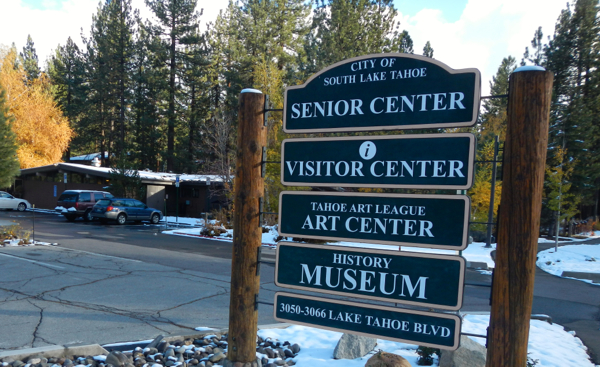
It looks like South Lake Tahoe may soon be the landowner where the senior center, museum, art building and visitors center sit in the middle of town.

“It’s a good idea to transfer it to the city and get out of the middle,” El Dorado County Supervisor Sue Novasel told Lake Tahoe News.

This month, just not tomorrow, Novasel expects the county electeds to vote on how best to have the city take over that land. Whether this involves the transfer of money or land, or changing property lines remains to be seen.

“We hope there is no money exchanged. We hope there is a lot line adjustment,” Mayor Hal Cole told Lake Tahoe News.

This conversation has gone on for decades, but not until this year has any real progress been made. Timing and new players at staff level and elected positions are part of the reason a resolution is apt to be found.

“We are not coming in with any predisposed biases about what to do with property. We are looking at how to make it work, not how to stop it. That seems to be the spirit of everyone at the table,” Novasel said.

The land where these entities do business may be transferred from El Dorado County to South Lake Tahoe. Photo/LTN

The land where these entities do business may be transferred from El Dorado County to South Lake Tahoe. Photo/LTN

The other impetus is the seniors. Their complaints are finally being acknowledged by the city and county.

A big issue is that the county owns the land that houses all of these entities, while the city is responsible for the maintenance. In many ways it’s like the organizations have two landlords who aren’t always in agreement.

The seniors want to make repairs and expand, but the city doesn’t want to say yes to a building it doesn’t own and the county has essentially been an absentee landlord. Lingering disagreements are whether issues are maintenance or capital improvements. The former the city would be liable for, the latter would be the county’s responsibility.

The City Attorney’s Office did not provide Lake Tahoe News with what the actual lease agreements are between the city and the seniors, Tahoe Art League, Lake Tahoe Visitors Authority and Lake Tahoe Historical Society.

All of the property is part of what is known as the 56 Acres, which includes the $65 million Lakeview Commons site.

The county owns a slice of land no more than 100 feet by 100 feet near the old Alta Mira building site that the city would like to acquire in order to get the bike path there built. That, too, is on the table for discussion.

Moving the county’s vector control is also being considered. It’s possible that department could be relocated to the industrial area when the city takes its fleet there.

The larger parcel of the 56 acres includes Campground by the Lake and undeveloped areas on that side of the highway.

“We expressed our desire to take that land and add it into our recreation master plan, possibly improve the campground and bring it up to standard like the rest rooms and possibly RV hookups to make it more desirable,” Councilman Austin Sass told Lake Tahoe News.

What to do with this bigger parcel, including the campground, is not expected to be resolved this year.

Once the Board of Supervisors votes on the senior center property et al, the City Council will take up the issue. The goal is to have votes cast this calendar year. The city, though, only has one meeting left – Dec. 7.