Nevada riding shotgun in self-driving car industry

Nevada wants to keep its lead in the driverless car  Photo/Steve Jurvetson

Nevada wants to be the leader in the driverless car industry.
Photo/Steve Jurvetson

By Daniel Rothberg, Las Vegas Sun

In 2011, at the behest of Google, Nevada became the first state to legalize autonomous vehicle road-testing.

Seeing the potential economic benefits, several states followed, including California, Michigan and Florida. At least 15 more now are considering legislation related to the cars.

With more states embracing autonomous cars and the hype surrounding next-stage vehicles increasing exponentially, Nevada wants to protect its lead on autonomous testing.

Read the whole story


CalPERS may lower investment expectations, costing taxpayers billions

By Melody Petersen, Los Angeles Times

Experts have warned for years that the state’s largest public pension plan has overestimated how much its investments will earn, leaving taxpayers to pay billions of dollars more than expected.

Now the board of the California Public Employees’ Retirement System is reconsidering. As soon as today, the fund’s board could approve a plan that would slowly reduce to 6.5 percent the current 7.5 percent it says it expects to earn on its investments.

For taxpayers, that seemingly small change is significant.

Read the whole story


TTD considering operating BlueGo in house

By Kathryn Reed

INCLINE VILLAGE – The Tahoe Transportation District board might take over BlueGo, the South Shore bus service, instead of relying on a third party.

When George Fink with TTD last week told the board going this route would give “the board more control”, board member Nancy McDermid, replied, “Been there, done that.” She represents Douglas County.

Adam Spear, attorney for the district, said the board is already liable today, but he would look into the nuances to see if there would be more exposure with direct operation of the system.

The last time this happened the system declared bankruptcy, board members were personally drawn into the ensuing litigation, as were the agencies they represented, and hundreds of thousands of dollars were spent on attorneys. The TTD board members were also the now defunct South Tahoe Area Transit Authority board, which is the entity that declared bankruptcy and was drawn into court by MV Transit, which operated the bus system.

TTD’s five-year contract with Keolis ends June 30, 2016. This firm has been responsible for operating BlueGo, including handling all labor and maintenance issues. TTD staff believes it could get more for its money by having operations and maintenance done in house.

“So much of the fleet is down. It’s been a challenge in the last year,” TTD Executive Director Carl Hasty told the board. “Accident rates tend to be more than they have been in the past.”

Fink said contractors often have short-term views on maintenance, which can shorten the lifespan of vehicles.

“It comes down to, do we want to take on employees,” Fink said.

TTD is interviewing firms that handle human resource issues. That is the one area TTD is deficient in.

Will Garner, who represents Placer County on the TTD board and runs the TART bus service on the North Shore, cautioned how much time is spent on HR issues. And he added that with a bus service it is seven days a week, nearly around the clock.

Andrew Strain, Heavenly Mountain Resort’s rep on the board, is concerned about how things deteriorated in five years to the point to want to abandon the current type of operation and said it’s not good if staff is worried where money is going.

The staff report from the Nov. 13 meeting says, “Another problem is the difficulty in determining how funding is being spent or focused in the contract. The contractor’s compensation is normally a fixed fee. There is a limited ability to track contractor spending on maintenance, training, and employee performance. That makes it difficult to assess what value the contractor is actually providing for the money it is receiving.”

No actual numbers were provided in the report or by staff at the meeting in regards to where money might be spent differently if TTD took over operations. The current TTD transit budget is $5,465,200.

“As we prepare for action it would be good to see a solid financial plan,” Strain said. “We want to make sure we go in with our eyes wide open. We need to have information before we make a decision.”

It was agreed staff will put together a workshop in December where third parties not involved in the outcome would give input. It will be on the South Shore so people who actually use the transit system would have an easier time to voice their opinion compared to last week’s meeting that was in Incline Village.


Drive a boat? You will need a license

By Tom Stienstra, San Francisco Chronicle

A new era is at hand for boating in California. Most call it the “Boater Driver’s License.” Its official name is the California Vessel Operator Card (CVOC).

The Division of Boating and Waterways sent out its annual two-year registration certificates this month to the state’s 820,000 registered boat owners. It included a flyer on how the CVOC will be implemented.

Anybody who takes the wheel of a powerboat will be required to pass a safety course and written test, somewhat similar to how a special license certification is required to drive a motorcycle or a commercial truck.

Those with non-motorized boats, such as kayaks, canoes, rafts or drift boats, are not required to go through the program. But if you’re on a friend’s boat and you’re asked to take the wheel for a moment, you then would need the boater’s card.

Read the whole story


Next librarian of Congress could remake copyright law

By Thomas Lee, San Francisco Chronicle

Say the word “librarian” to anyone born before 1980 and they’ll conjure up images of card catalogs, dimly lit study rooms and Encyclopedia Britannicas. Hardly the stuff of the 21st century.

In fact, thanks to the Internet, plenty of millennials have probably never set foot in a library or spoken to someone who works for one.

Yet the person who holds enormous power over both Silicon Valley and Hollywood happens to be a librarian. The Librarian of Congress may be an obscure office, but the person in the job not only oversees the U.S. Copyright Office but also decides what content — music, software, film, etc. — deserves copyright protection.

The position is currently vacant. James Billington, who served as Librarian of Congress for nearly three decades, said in June that he will retire in January, and President Obama has yet to name a permanent replacement. The vacancy has created enormous opportunity for firms ranging from YouTube and Hulu to Netflix and Amazon to not only influence Obama’s eventual choice but also to push through much-needed reforms to the outdated Digital Millennium Copyright Act.

Read the whole story


Use of pot extract a concern on South Shore

By Kathryn Reed

It’s not enough to just get high on pot. The latest trend on the South Shore is dabbing.

This is using the byproduct extracted from the marijuana plant. It is concentrated cannabis so it gives the user a stronger high. The end product is called wax because that is what the substance looks like. It’s also described as sap-like.

It’s in the schools and it’s what adults are doing.

“The majority is high school kids using these things. It can be smoked or made into edibles,” Douglas County sheriff’s Sgt. Pat Brooks, told Lake Tahoe News. He said it’s an issue with Whittell and Douglas high school students.

Whittell Principal Crespin Esquival said it’s not an issue on campus or something that is being talked about among students that staff is overhearing.

“They know I do K-9 sniffs randomly,” Esquival said. One was done in the last few weeks and no drugs were found on the Zephyr Cove campus. “I hope they are smart enough not to bring any of the crap to campus.”

Chad Houck, principal at South Tahoe High School, said the use of wax is not an issue during the school day.

“The way they consume their marijuana is not something we always end up seeing or hearing about,” Houck told Lake Tahoe News.

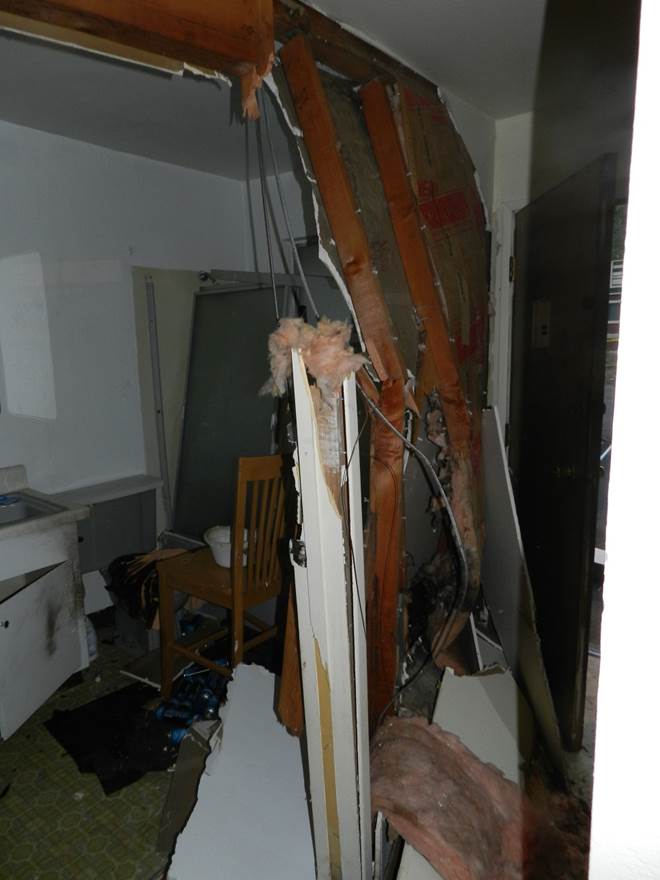
A South Shore appartment is damaged from a butane druge explosiogn. Photo/Provided

A South Shore apartment is damaged from a butane drug explosion. Photo/Provided

Twenty years ago the normal THC concentration of marijuana was between 3 and 8 percent. Today the pot bought at a collective is 15 to 20 percent concentration. Wax can range from 35 to 90 percent. That is one aspect that concerns law enforcement – the stronger potency.

People don’t always know what they are getting because a joint could be laced with wax. And what kids are smoking today isn’t what their parents were smoking, so the high is greater with less actual weed needing to be used. The problem is people aren’t reducing their consumption.

Wax can be smoked by itself or mixed with the plant, vaporized or converted to an edible.

The drug task force on the South Shore is more focused on adult users and sellers. Those investigators keep finding people making and using wax.

“It’s a growing concern within the community,” Russell Liles, detective with South Lake El Dorado Narcotics Task Force, told Lake Tahoe News.

He said marijuana use as a whole is getting worse locally.

“I’ve been told by multiple students that it is easier to obtain marijuana than it is to obtain alcohol in our community,” Liles said. “I think that is a reflection of the amount of marijuana grows in the basin here.”

It’s legal in South Lake Tahoe to grow marijuana indoors with a permit for medical reasons.

“The other issue is the majority of marijuana grows we eradicate. They are capable of producing multiple pounds of processed marijuana bud in a year’s time. We’re talking 20-plus pounds,” Liles said. “I don’t believe any one person needs 20 plus pounds of dried processed marijuana buds for their ailments.”

This marijuana grow on the South Shore was supposedly for one person. Photo/Provided

This marijuana grow on the South Shore was supposedly for one person. Photo/Provided

The growers tend to be men between the ages of 25 and 35. Liles characterizes them as unemployed and outdoorsy.

When it comes to wax the extraction process through butane is another potential problem because it could explode.

Butane is forced through the plant material. The THC  — the active ingredient in marijuana – then grabs the butane. The butane evaporates off and the wax is left.

“Within the last couple years we have seen more of the butane honey oil labs whenever we eradicate marijuana grows,” Liles said.

Butane weighs more than air. It will float around a room until it evaporates. But if it finds an ignition source first – kaboom! The explosion then causes a fire, of which there have been a few here in the last couple years.

“We’re definitely fighting an uphill battle,” Liles said.



Marriott to become worlds largest hotel company

By Craig Karmin and Ezequiel Minaya, Wall Street Journal

Marriott International Inc. said Monday that it has agreed to acquire Starwood Hotels & Resorts Worldwide Inc. in a deal worth $12.2 billion that will create the world’s largest hotel company with more than a million rooms globally.

Under the terms, Marriott will forward 0.92 share along with $2 in cash for each Starwood share, for a total of $11.9 billion in stock and $340 million in cash. The transaction has a value of $72.08 a Starwood share.

The merger creates a portfolio with more than 5,500 hotels with 1.1 million rooms world-wide, the companies said in a news release.

Marriott owns two properties in South Lake Tahoe.

Read the whole story


EDC schools superintendent resigns

By Kathryn Reed

PLACERVILLE – The El Dorado County board of education today unanimously accepted Superintendent Jeremy Meyers’ resignation.

Meyers had not been to work since his last driving under the influence arrest on Nov. 5.

He oversees education in a county that for the students and staff there is a zero tolerance policy for drugs, which includes alcohol.

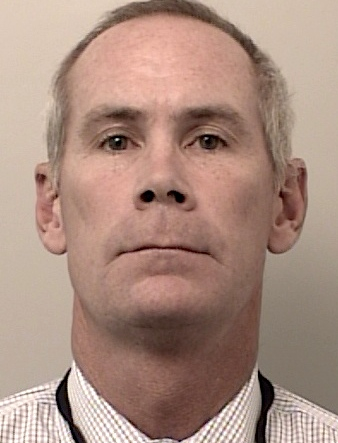
Jeremy Meyers when he was booked Aug. 22.

Jeremy Meyers when he was booked Aug. 22.

Meyers’ DUI arrest this month was the second in a five-month span. According to the California Highway Patrol his blood alcohol level was 0.19 percent. He was arrested in the middle of a workday after crashing his truck.

The first incident was June 5; also in the middle of a weekday. The 45-year-old pleaded no contest to misdemeanor charges that resulted in a sentence of five days on home arrest. He collected his nearly $200,000 during that time and still was until today.

Deputy Superintendents Ed Manansala and Robbie Montalbano issued this statement, “This resignation allows the county office of education, the staff and board, to move forward.”

Details about the separation agreement have not been released.

It is up to the board to replace Meyers. Because Meyers is an elected official the board could not just remove him.

This was the second meeting the board convened to discuss Meyers. No action was taken at the Nov. 7 meeting. Meyers did not attend either meeting.

Three of the about 30 people at the Nov. 16 meeting spoke before the board went into closed session; all wanting Meyers to be removed from office in some manner.

Harry Norris, who was on the board for 10 years, suggested the board make Meyers’ salary $1 a year if he does not leave voluntarily.

Steven and Jackie Neau who live on the West Slope said their needs to be consequences for Meyers’ actions.

“I think he should be asked to resign. If that doesn’t happen, I’m willing to start a recall,” Steven Neau told the board.

Meyers was appointed by the school board to the position effective July 1, 2013. He was taking over for Vicki Barber who retired. At the time Meyers was the deputy superintendent. In June 2014 he ran unopposed for a four-year term.


Parents upset BlueGo won’t stop at WHS

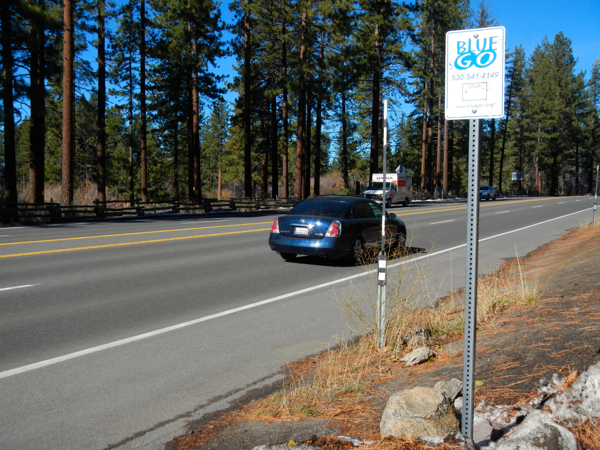
The nearest BlueGo stop to Whittell High is along Highway 50 near the senior center. Photo/LTN

The nearest BlueGo stop to Whittell High is on Highway 50 by the senior center. Photo/LTN

By Kathryn Reed

INCLINE VILLAGE – For the last five years BlueGo bus drivers have dropped off Whittell High School students at the school. That ended recently and the parents of these students are not happy.

“Complaints from commuters prompted staff to review the stop. It was determined the stop only generated ridership four days a week, less than 10 months a year, and that the ridership was often nonexistent,” Carl Hasty, Tahoe Transportation District executive director, wrote in the Nov. 13 staff report.

The four days a week and 10 months reflect how often WHS is in session.

Three parents showed up to the Friday board meeting at Sierra Nevada College in Incline Village asking for the district to keep trying to find a solution. They believe moving the stop to the senior center along Highway 50 is too dangerous. Plus, they don’t understand what the big deal is to take the students less than one mile to school, especially when the BlueGo bus is already crossing the highway to stop at the senior center.

TTD is not allowed to do specialized school bus transportation. An express route only services this section of Douglas County and the route is Highway 50 – not any offshoots.

The fact that WHS has been serviced in the past was a mistake, according to Hasty.

It is students who live in the Carson Valley who are using BlueGo as a means to get to school. The parents estimated about 11 students make the commute, though not all desire to ride BlueGo.

The parents don’t believe the senior center stop is safe. The bus sign is extremely close to the highway and had snow near it days after the storm last week. When people stand under the breezeway of the senior center bus drivers don’t see them.

“We would pay a monthly fee whether our children ride the bus or not,” parent Tara Burke told the board.

A school bus won’t transport the kids from the senior center to the school because it is Douglas County School District policy for those less than 1.5 miles away to have to walk.

DCSD does not charge any of its students to ride the bus.

What hasn’t been looked at is if the valley students could be dropped off by BlueGo at a designated school bus stop and ride from there – for free or a fee.

“I’m not opposed to working something out,” DCSD Superintendent Teri White told Lake Tahoe News. But at the same she said, “I’m not hearing from the school that it is an issue.”

Principal Crespin Esquivel has communicated with TTD, saying the senior center stop is not safe and asking for students to be brought to and from the Zephyr Cove school.

Parents also brought up that these students should be treated like any other member of the public and that there is no difference if they commute for school while other riders commute for work.

The fact that students are going between DCSD, Lake Tahoe Unified School District and Lake Tahoe Community College was also broached, pointing to the need to perhaps look at how all students are getting to and from and between the educational facilities.

The TTD board, staff and parents agreed to keep talking.


Calif. water cutbacks likely to be extended

By Dale Kasler and Phillip Reese, Sacramento Bee

Despite forecasts of a wet winter, Californians can expect another year of water conservation in 2016 under an executive order issued Friday by Gov. Jerry Brown.

Californian are currently under orders to reduce consumption by an average of 25 percent, as compared with 2013. Brown’s order would extend the cutbacks through next Oct. 31 “if drought conditions persist through January 2016.”

Many experts and state officials said it’s almost a certainty the conservation order will continue through next fall. While El Niño is expected to drench the state this winter, many forecasters believe it won’t create enough precipitation to repair water supply problems created by four years of drought.

Read the whole story