Growth — but not expansion — in U.S. Internet gambling market

By Wayne Parry, AP

ATLANTIC CITY, N.J. — Internet gambling is slowly growing — but not expanding — after 2 1/2 years of online betting in the United States.

Online gambling revenue is increasing in at least two of the three states that currently offer it — New Jersey and Delaware. The third, Nevada, doesn’t report Internet revenue separately.

But a hoped-for wave of expansion has not happened as many states sit on the sidelines and assess the costs and benefits of the nascent industry.

“Internet gambling revenue in Delaware, Nevada and New Jersey badly missed initial forecasts, which themselves were overly aggressive,” said Chris Krafcik, research director for Gambling Compliance, which tracks gambling legislation nationwide.

New Jersey Gov. Chris Christie’s administration, for example, had initially estimated Internet gambling would bring in $1 billion in its first year. It did about 12 percent of that.

“The negative PR that resulted, fair or not, really took the wind out of the expansionary sails,” Krafcik said.

San Francisco-based Gambling Compliance predicts either California or Pennsylvania will approve Internet gambling next year, followed by New York and Mississippi in subsequent years. In 2016, the group projects, nine states will consider legalizing it, though not necessarily act to approve it.

The industry still faces some nagging issues, as well as looming threats — including an effort in Congress to ban Internet gambling nationwide. The Restoration of America’s Wire Act has been introduced in both chambers this year, backed by billionaire casino mogul Sheldon Adelson, and could come up for a hearing next month.

New Jersey began offering Internet gambling on Nov. 25, 2013, and took in $122 million in its first full year. Over the first 10 months of this year, the Atlantic City casinos have already equaled that total, with their Internet gambling revenue up 17.6 percent from the same period last year.

Delaware won $1.4 million in fiscal year 2014; $1.8 million in 2015, and $500,000 so far this fiscal year, which runs from July through June.

Nevada stopped reporting Internet gambling revenue as a separate item at the end of 2014. Online poker, the only brand of online gambling Nevada offers, is just a drop in the bucket of the state’s $11 billion gambling market.

Online poker is the most popular form of Internet gambling, although the small number of states offering it has kept prize pools low. New Jersey has sought to partner with other states that might legalize it to offer larger, joint prize pools.

PokerStars, the world’s largest Internet poker site, will begin operating in New Jersey in the first half of 2016, and many industry executives expect it to grow the market, though how much remains to be seen. In March, Morgan Stanley cut its estimate of the potential U.S. Internet gambling market by nearly half, pegging it at $2.7 billion by 2020, down from an initial estimate of $5 billion.

At first, one of the main impediments to people getting online to gamble was funding their accounts. Many credit cards wary of running afoul of a law banning banks from funding illegal Internet bets were reluctant to process transactions, but that has changed. New Jersey says MasterCard is approving 70 percent of attempted Internet gambling transactions in the state, while Visa is at 62 percent. PayPal also recently agreed to participate.

From a legal and consumer protection standpoint, Internet gambling has proven to be reliable and transparent, said David Rebuck, New Jersey’s top gambling regulator. Technology to ensure a player is actually within the state’s borders have reduced false rejections — initially a problem — to a negligible issue. And it’s keeping most outsiders from gambling illegally: only two people were found to have successfully placed bets from outside New Jersey since 2013, Rebuck said. Officials confiscated the money in their accounts, totaling about $1,000.

In New Jersey, Internet gambling was seen as a lifeline to Atlantic City’s struggling casinos. Less than a year after it began, four of its 12 casinos went out of business. But for those that remain, Internet gambling often makes the difference between an up or a down month.

“The market was smaller than a lot of people predicted, but the market is growing pretty nicely now,” said Tom Ballance, president of the Borgata, Atlantic City’s top casino and its leading online winner.

Internet gambling has generated $6 million in earnings for the Borgata over the first three quarters of this year, Ballance said.

“In Atlantic City, $6 million in profit is not easy to come by,” he said. “We’ll take that anytime.”

Associated Press writers Michelle Rindels in Carson City and Randall Chase in Wilmington, Del., contributed to this story.
The stories of Placer County’s bridges

Placer County is retrofitting its bridges. Photo/Erik Bergen

Placer County is retrofitting its bridges. Photo/Erik Bergen

By Robert Miller 

For decades, cars, trucks, people, bikes and motorcycles have traveled the 117 bridges that are Placer County’s responsibility. From the iconic Foresthill Bridge standing 730 feet over the American River, to the simple, single-lane bridge over Yankee Slough on Dowd Road in rural western Placer County, they have a history.

While there are different reasons behind why the bridges were built, how they were built and their sometimes changing uses, they all have a common thread: engineers in the county’s Department of Public Works and Facilities keep a watchful eye on the structures and when warranted, add them to the list of bridges needing replacement or rehabilitation.

To ensure the county’s roadways are safe for all who use them, the county is continually prioritizing projects to replace or retrofit worn structures. With an average planned lifespan of about 100 years, many bridges are reaching, or have reached, the end of their planned service life. While that doesn’t mean they are unsafe or can’t continue to serve their purpose, it does mean that many of them are overdue for major overhauls – and at nearly the same time. In the last decade, 15 county bridges have been replaced and one was retrofitted. Projects to do similar work to another 14 are either underway or are in the planning stages.

Another commonality for the county’s bridges is how replacement and upgrade projects are funded. The 29 projects mentioned above have a combined cost of $220 million. Of that amount, 92 percent, or $202 million, is from state and federal funding. The county has parlayed about $18 million of local taxpayer money into $220 million worth of public works projects.

Jurisdictions typically use a 100-year bridge lifespan as the benchmark for bridge replacement and rehabilitation. Given the state’s aging infrastructure, for all bridges to meet the 100-year standard, the Federal Highway Administration estimates that about $1 billion a year is needed. The federal government’s annual allotment to California for bridge work is $300 million. While there is competition for funding, the county is judicious in applying for state and federal funding, focusing on those projects that are likely to secure funding.

Last year, the county completed the largest project in county history. Contractors retrofit and repainted the Foresthill Bridge to both improve the span’s integrity and increase its ability to withstand earthquakes and the elements.

The bridge was completed in 1973, after two years of construction. It is the highest bridge in California and the fourth highest in the nation.

Building the bridge was part of the Auburn Dam, a project that was started but never completed. Had the dam been completed, the bridge would have been the sole roadway to Foresthill and forestland beyond when the reservoir behind the dam inundated the canyons below. The three-year, $76-million retrofit and repainting project was done on a bridge that originally cost $13 million to build.

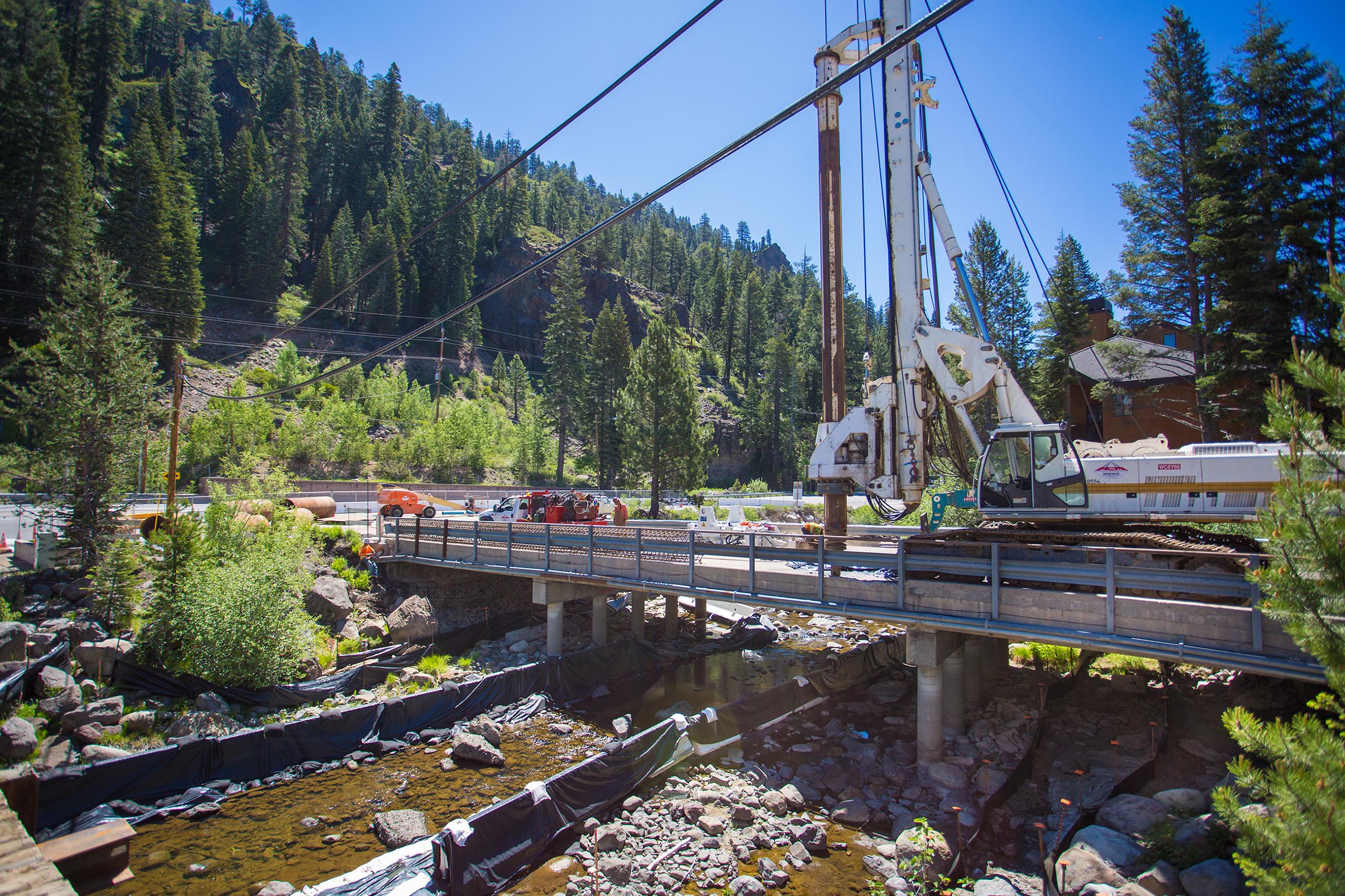
Alpine Meadows Bridge replacement. Photo/Erik Bergen

Alpine Meadows Bridge replacement. Photo/Erik Bergen

The retrofit project won numerous awards, including the prestigious 2014 Bridge Project of the Year award from the American Society of Civil Engineers, an award given to engineers by their peers.

Not all bridges in the county are as stunning as the Foresthill Bridge. But this bridge, like many throughout the county, was showing its age and wear.

Every bridge in the state is inspected at least once every two years by Caltrans.

Bridges in need of retrofitting or replacement can be categorized as structurally deficient or functionally obsolete. When bridges in the county fit into one or both categories they are moved up on the priority list.

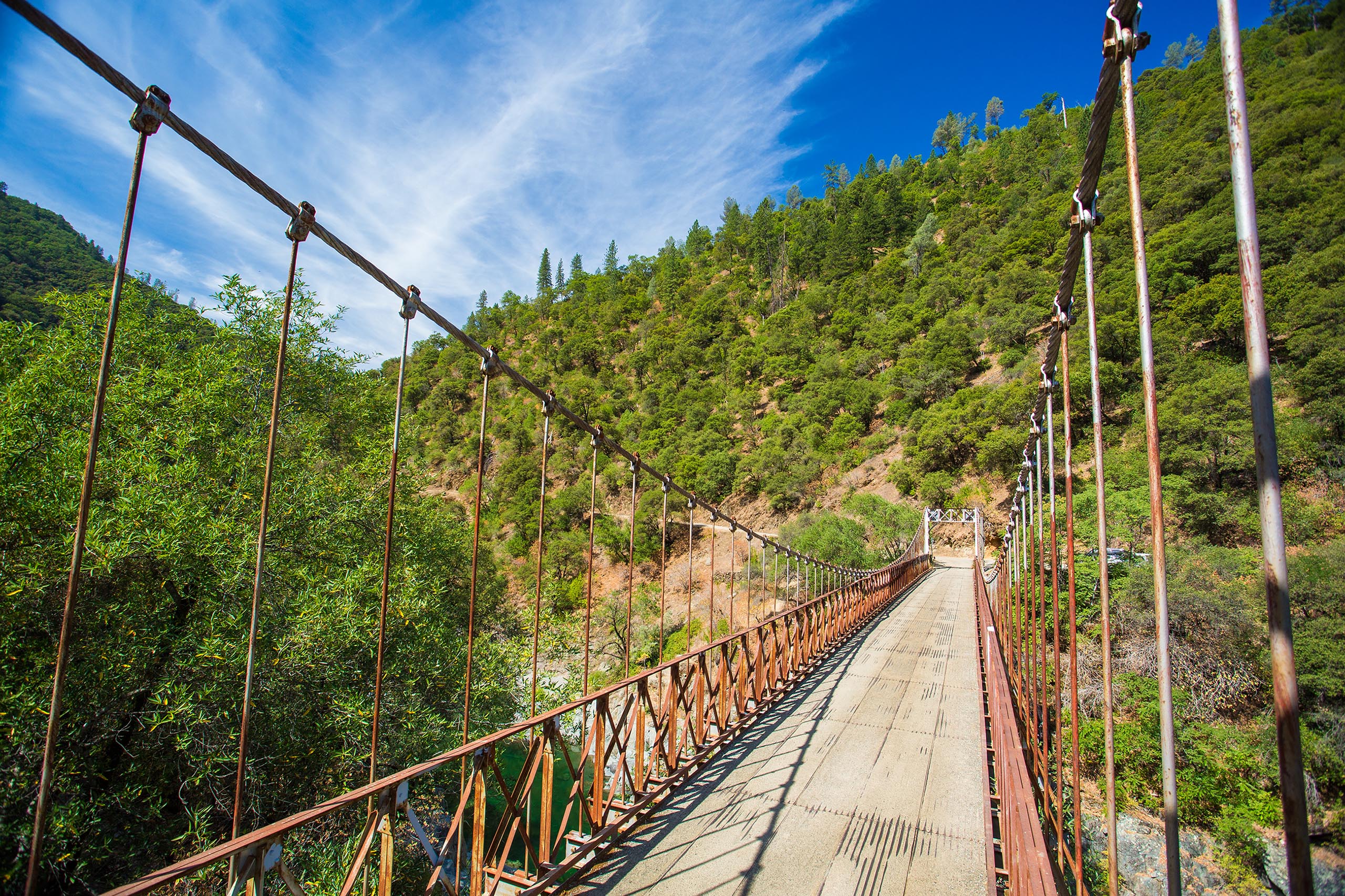
The single-lane suspension bridge at Yankee Jims sits a few feet above the North Fork of the American River on the twisty dirt road between Colfax and Foresthill.
Built in 1930, the suspension bridge was given low ratings by Caltrans after a careful analysis of all the bridge’s components.

Weight limit restrictions were then imposed. Placer County engineers, working with contract consulting engineers, used computer modeling to verify the load limitations and helped determine what future actions should be taken. The bridge, however, is safe.

Any bridge that county engineers feel is a hazard is closed to all traffic. A new bridge is now proposed to span the American River’s North Fork and will likely sit adjacent to the existing structure. County public works is still evaluating several designs and has not arrived at a final decision on what the new bridge will be and whether the existing bridge will remain, and for what uses.

Planning for bridge projects can take five years or more before construction begins. Not only do the engineering and design specifications have to be determined, but a project will also be evaluated for environmental considerations including cultural and biological issues. Building a new bridge can disturb a lot of soil. What may be buried in that soil is of concern for project engineers and it’s not uncommon for archeologists to be called in to evaluate uncovered artifacts. Most county bridges cross creeks or waterways that are home to endangered fish, frogs, snakes, birds and many other protected animals. County engineers lead the effort on each project to include measures that protect endangered species during construction. Additionally, utility lines are frequently attached to bridges. Moving these lines, whether they handle water, sewer, electrical or communications, can be extremely complicated.

The county board of supervisors recently approved an environmental monitoring plan for the Brewer Road Bridge replacement project. The bridge, a 73-year old structure that crosses the Pleasant Grove Creek waterway, will be replaced with a modern bridge that complies with current building standards. As part of the project, a county staff member will be assigned to the project to ensure that adherence to the monitoring plan is maintained. The plan calls for environmental protection measures for numerous creatures, including vernal pool fairy shrimp, steelhead, several reptiles, migratory birds and birds of prey.

Environmental documentation is a complex process. The county strives to be a good steward of the environment and every project will be scrutinized for any environmental impacts it causes. Although construction is not expected to begin until 2018, county supervisors recently approved initial environmental documentation for a project to replace a bridge on Gold Hill Road over Auburn Ravine. This is one of the first steps of many that the county will take before construction actually begins.

The existing Gold Hill Road Bridge is more than 85 years old and is at the end of its useful life. It is deteriorating structurally, and is too narrow for modern vehicles. In addition to environmental considerations, the county solicited public input for the project from nearby property owners and provided updates to a local advisory council. Using the input received, the design for the replacement will preserve the area’s rural character while providing safe access for residents, emergency vehicles, trucks and other users.

As population has changed in the county and technology has advanced, so too have the uses and requirements of roads and bridges. There are two aging bridges in western Placer County that exemplify these changes. One has already been replaced and replacement of the other is poised to begin.

The old steel truss bridge on Cook-Riolo Road in the western county was a single-lane structure built in the flood plain. Due to its age and the increased traffic in the area, Caltrans determined that the bridge is structurally deficient and functionally obsolete. The old bridge was susceptible to flooding, which rendered it impassible and created serious safety concerns. The newly completed bridge sits more than 10 feet above the old one, has multiple lanes and provides safe, protected areas for pedestrians and cyclists.

The Walerga Bridge replacement project, in western Placer County, is scheduled to begin in 2018. This project will build a significantly larger structure to accommodate both increased traffic and to replace an aging structure that periodically floods. The current two-lane bridge is about 125 feet in length. The new bridge will be more than 500 feet in length and approximately 14 feet higher, with barriers separating automobile traffic from pedestrians and cyclists.

The Bowman Road bridges in North Auburn are set to be reinforced in late 2015 with a heavy-duty polymer as part of rehabilitation and seismic retrofit.

A project to replace an aging bridge that is subject to harsh winter weather started this spring. The Alpine Meadows Bridge, an old structure over the Truckee River near Lake Tahoe, is the nexus of trails, pedestrian and bike paths, and a gateway into Lake Tahoe. The bridge spans a waterway that is listed as impaired by the Environmental Protection Agency. The replacement bridge will not only improve travel on the roadway, but will also have environmental benefits. Sediment is one of the pollutants that denigrate the Truckee River. The new bridge will have better drainage and catch basins that will capture silt and sediment, preventing its free flow into the river. Aesthetics will also be improved with a new design that will remove a pier that currently sits in the river, allowing for a more natural water flow.

Robert Miller works for Placer County’s Public Affairs Office.


Museum exhibit captures Tahoe in its totality

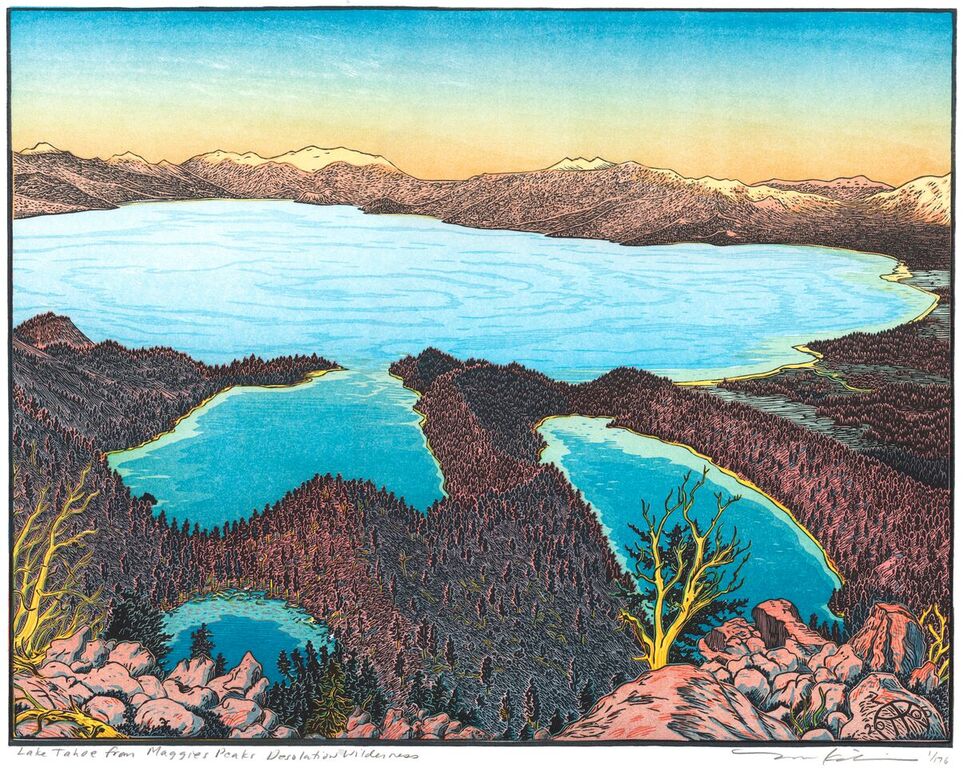
 "Lake Tahoe from Maggie’s Peak, Desolation Wilderness," 2006, Woodcut print © Tom Killion

“Lake Tahoe from Maggie’s Peak, Desolation Wilderness,” 2006, Woodcut print © Tom Killion

By Kim Wyatt

RENO – If you haven’t gone, go.

“Tahoe: A Visual History” at the Nevada Museum of Art in Reno is a stunning achievement. The first major exhibit of Lake Tahoe, Donner Pass, and the nearby Sierra is a remarkable collection of work by 175 painters, photographers, printmakers, cartographers, sculptors, architects, basket weavers and more, spanning two centuries at our favorite place. Five years in the making, with more than 400 objects amassed from public and private collections, this exhibit is not to be missed. And there is still time; it ends Jan. 10.

It’s fascinating to see everyday Tahoe scenes as they were envisioned by a who’s who of artists. Ten galleries showcase the works; there are also exhibits in the lobby and research library. I would recommend starting on the third floor in the Robert Z. Hawkins Gallery, where you will find Washoe pieces, and ending on the second floor at the Maya Lin installation. This gives a sense of narrative to the exhibit; we begin and end at the lakeshore, with our history unfolding in between. It’s a transformative experience.

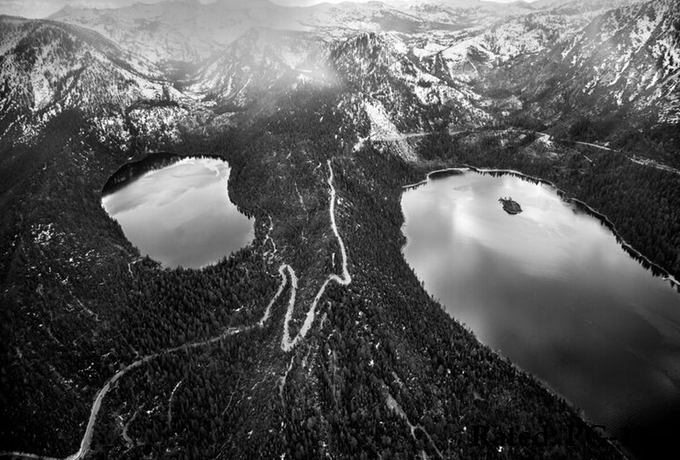
Michael Light, “Highway 89, Cascade and Emerald Lakes and Mount Tallac Beyond, Looking Southwest, South Lake Tahoe, CA, 2014,” Collection of the Nevada Museum of Art, The Altered Landscape, Carol Franc Buck Collection.

The Washoe exhibit begins with functional art: snowshoes, fishing nets, winnowing trays. But Louisa Keyser’s breathtaking degikup baskets are in the realm of fine art. Also known as Datsolalee, Keyser’s basketry was sought after for her innovation and skill. If you think you’re not into baskets, her artistry will likely change your mind.

Just around the corner, John C. Fremont and other early Western explorers kicked off Tahoe creative representation with the first surveys of the area. The resulting maps and sketches revealed to the world the features of Lake Tahoe and the surrounding Sierra. Map geeks will appreciate the detail of our first cartographers.

The precision of the maps is in marked contrast to the explosion of color in 19th century landscape paintings by Albert Bierstadt, Thomas Hill and others that anchor the “Golden Age” exhibit. Bierstadt, in particular, was among those to leave exactitude behind for intensity, lingering on clouds, light, and water.

As coach roads opened, artists began to widen their vistas. In the mid-1870s, trees begin to disappear from the works, or grow spotty—a reminder of the Comstock and its costs. By the time we get to Donner Pass, the presence of humans begins to dominate, with glimpses of dystopian landscapes. Idealism gives way to economics.

In “Surmounting the Summit: Donner Pass in the 19th Century,” the building of the transcontinental railroad is rendered in paintings and photographs that celebrate this engineering feat, with little of the blood and guts that went into the making of it.

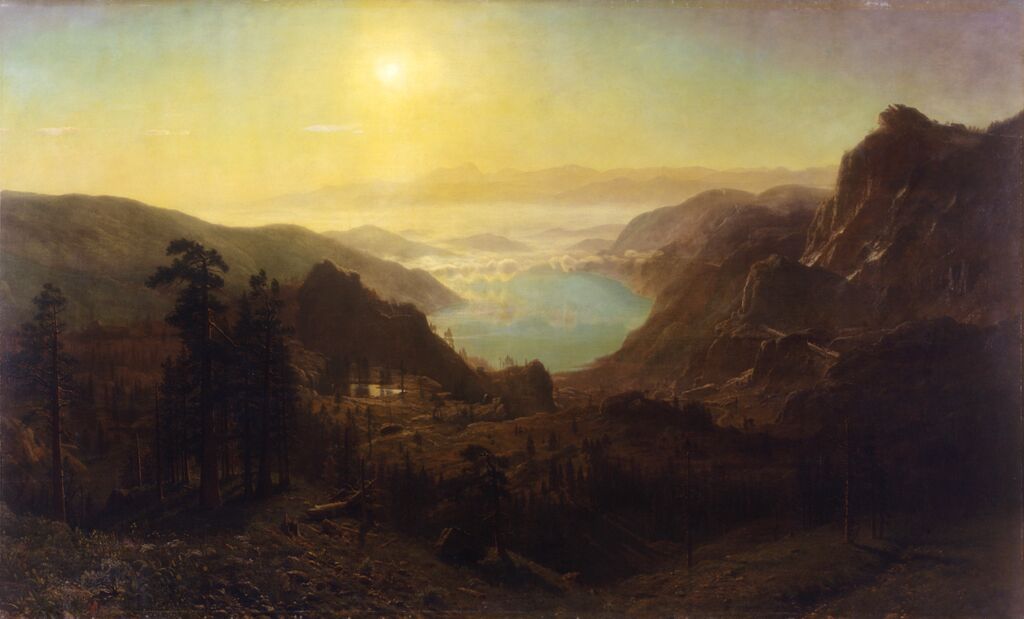
“Harsh Realities” is one of the more powerful exhibits. In this, artists take on the history of the railroad with Chinese workers at the forefront. I won’t spoil the surprise of “Mountain of Fortune,” but it’s art that shocks and illuminates. There is also a fascinating rebuttal here by artist Zhi Lin to Bierstadt’s “View of Donner Lake, California (1871-72),” commissioned by railroad titan Collis Huntington.

Nick van Woets’ “American Pine Bark” ushers us into Lake Tahoe as seen through the eyes of timber barons: a source of 300,000 board feet removed daily. Tahoe as resource versus a source of inspiration creates a jarring feeling. There are familiar photos of denuded hills around Glenbrook punctuated by a few surprises like a Maynard Dixon sketch.

The second floor begins with tourism, and “The Rise of the Resort.” Once reliable transportation had been achieved via the railroad and steamers, visitors flocked to the lake and needed lodging. There is Tahoe Tavern memorabilia and advertising ephemera; oil paintings are replaced by posters and photographs, which then give way to architecture, impressionism and eclectic depictions of the region. Here, I loved learning about artists new to me, like Anne Brigman, Ruth Bernard and Frances Gearhart.

Albert Bierstadt, "Donner Lake from the Summit, 1873," Oil on canvas, 72⅛ x 120 3⁄16 inches, Collection of The New-York Historical Society, New York.

Albert Bierstadt, “Donner Lake from the Summit, 1873,” Oil on canvas, 72⅛ x 120 3⁄16 inches, Collection of The New-York Historical Society, New York.

The gallery leading to “Water Woes” is dotted with bright contemporary work by Phyllis Shafer, Gregory Kondos and Tom Killian. (If you’re into block prints, this exhibit is a real treat. I’ll be back for more.)

You’ll end at three commissions by Maya Lin, sculptor of the Vietnam Veterans Memorial in Washington, D.C. It’s a good place to wrap up the tour, as these pieces expand one’s perspective of the Lake Tahoe Basin, and our place in it.

There really is something for everyone in this exhibit. I’d give two to three hours; the museum has a café if you want to space it out. And you can get all of your holiday shopping done in the fantastic museum gift shop, which carries the work of local artists. You can also purchase the exhibit’s companion book, a 488-page tome that features the art in the collection and narrative that ties it all together. It’s a beautiful book, and would make a great gift.

This exhibit documents not only art and history, but also the utility of the lake: the Washoe used it for food, the Comstock for wood, the railroad barons for passage. This ambitious collection may very well inspire us to remain stewards of the lake, our lessons made visible.

Go. You’ll be glad you did.

—–

Notes:

  • Tahoe: A Visual History runs through Jan. 10 at the Nevada Museum of Art, 160 West Liberty St., Reno.
  • Admission is $10 general, $8 student or senior, $1 children 6-12; members and children 5 and younger get in free.
  • Hours: Wednesday-Sunday 10am-6 pm; Thursday 10am-8 pm. Closed Mondays, Tuesdays and holidays.
  • In conjunction with the exhibit, the museum is offering classes, lectures, and special events on making pine needle baskets, printmaking, Tahoe cartography, the history of the Chinese in the building of the transcendental railroad and more. For more information, go online.

Kim Wyatt is the owner of the independent press Bona Fide Books.


Teachers using phones as a tool in classrooms

By Daniela Gerson, Los Angeles Times

Priscilla Farinas, an English teacher at Social Justice Humanitas Academy in San Fernando, faced her 31 students recently and made an announcement that seemingly violates official Los Angeles Unifiedpolicy.

“This is the one and only time I will have you take out your cellphones,” she said, instructing the students to share their definitions of “privilege” via text message as part of a lesson on “The Great Gatsby.”

Students immediately grabbed their mobile devices. Their texts populated a screen in the front of the classroom. Every student appeared focused on their schoolwork.

Farinas wanted to flip the script: Rather than reprimanding her students for using their phones, she wanted to put them to work as a learning tool. She is among a growing number of teachers who are instructing students to use their phones to conduct research, listen to music, calculate math problems or photograph assignments.

Read the whole story


El Nino watch — Pacific Ocean abnormally warm

By Brian K. Sullivan, BloombergBusiness

The Pacific Ocean is warm. Very warm.

Last week, the U.S. Climate Prediction Center announced temperatures reached 5.6 Fahrenheit above normal in a key section of the Pacific called Nino 3.4, touching off a Twitter typhoon among some El Nino watchers alarmed that they were so high. Monday, the agency said readings had edged up to 3.1 degrees above normal.

It’s probably too early to add this to the list of signs of the impending apocalypse. Instead, it’s likely just an indicator that the sea-surface component of El Nino is getting ripe, said Kevin Trenberth, senior scientist at the National Center for Atmospheric Research in Boulder, Colo.

The weekly readings “are less reliable” than their monthly counterparts, which tend to be a bit cooler, he said. And El Nino isn’t just sea-surface temperatures: It’s also atmospheric changes that upend global weather patterns.

Read the whole story


LTUSD working to help homeless students

By Kathryn Reed

Thanksgiving weekend so often is about gatherings of families in a warm home with an abundance of food.

That isn’t the case for 300 Lake Tahoe Unified School District students. They are homeless. Another 44 are in foster families.

The school board this month voted to expand the duties and hours of the foster-homeless student advocate. This person will now be full time and will work in the elementary schools, not just at South Tahoe Middle and High schools.

“The current staffing is insufficient to meet the needs of these students and further does not allow time to service the elementary schools where early intervention would be ideal,” the staff report from the Nov. 17 meeting reads. “Additionally, the number of homeless students typically increases by 20-30 throughout the school year as local seasonal employment is gained and lost.”

Through the state’s McKinney Vento program the district receives $34 for each student who is identified as homeless or in foster care. Homeless means living in a non-traditional residence like a hotel, car or multiple families in a dwelling designed for one family.

While the money from the state is not much, the district will tap community organizations to help supply the basics – from toiletries to clothes to food. The thinking is that by reaching students sooner they will more likely do well in school at an earlier age.

“A lot of those kids are resilient. They don’t want to stand out. They want to fit in. We try to give them that opportunity,” Superintendent Jim Tarwater told Lake Tahoe News. “By identifying them early we can continue up through middle school and high school. The hope is they are better prepared.”

The aide helps the child and his or her parent/guardian be acquainted with the social resources that are available. This includes getting vaccinations, dental checkups and other medical care.

The district is able to provide added tutoring and counseling when appropriate, as well as school supplies and backpacks.

When the basics are taken care of students are more likely to attend school as well as perform at a higher level.

While enrollment has been increasing, the percentage of students qualifying for free or reduced lunches remains at about 60 percent, or 2,370 students.


2015, 2016 likely to be hottest on record

By Tom Miles, Reuters

This year will be the hottest on record and 2016 could be even hotter due to the El Niño weather pattern, the World Meteorological Organization said on Wednesday, warning that inaction on climate change could see global average temperatures rise by 6 degrees Celsius or more.

WMO director-general Michel Jarraud said it was still possible for a global climate summit starting in Paris on Monday to agree steps to could keep the rise within 3.6 Fahrenheit)over pre-industrial times, a target set down in 2010 to try to prevent a dramatic increase in extreme weather.

“But the more we wait for action, the more difficult it will be,” he told a news conference.

Read the whole story


Money, clout on the line for Calif. teachers union

By Laurel Rosenhall, Calmatters

The California Teachers Association, one of Sacramento’s most powerful interests, is heading into an extraordinary year with decisions on the ballot, in the Capitol and in the courts holding the potential to impact its clout for many years to come.

Billions of dollars for schools will likely be at stake on the 2016 ballot as well as pivotal campaigns for state Legislature and a question about union pensions. Meanwhile, the Capitol is expecting a robust debate about how schools are evaluated and courts will hear two lawsuits challenging the teachers union.

“It’s a big year for education in California. To the extent we’re part of that, it’s a big year for us,” said union president Eric Heins.

CTA has become a force in Sacramento by pouring millions into influencing ballot measures and electing lawmakers, then millions more lobbying legislators after they take office. The union’s  formidable political operation — spending about $200 million on campaigns and lobbying in the last 15 years — is funded by roughly 300,000 classroom teachers who pay approximately $1,000 each in annual union dues.

Read the whole story


Opinion: Finding time to be thankful

Being thankful for my dog AJ and friend Joy for trusting me to be her second mom.

Being thankful for my dog AJ and my friend Joy for trusting me to be AJ’s second mom.

            “We must find time to stop and thank the people who make a difference in our lives.”

— John F. Kennedy

By Kathryn Reed

Thank you to every Lake Tahoe News writer and photographer, and contributor. Thank you to those who send news tips. Thank you to those who offer advice, counsel and support. Thank you to each reader, advertiser and paid subscriber.

More important, though, thank you to my family and friends – for everything, even when I don’t want to hear it.

“Thank you” and “sorry” seem to be three of the most difficult words to say. And, yet, not a day goes by that we all could and probably should utter them.

Too often we wait too long and the opportunity is no longer there. Sometimes thanks comes at the end of life, when we know time is of the essence.

How hard would it be to slow down a little, to pause, to give thanks. Sure, it’s easy to do it today – on Thanksgiving. But what about tomorrow? And why didn’t you do so yesterday?

It’s easy to dwell on what doesn’t go right, the negatives of our lives.

I have friends dealing with serious health issues; a friend’s dad went on hospice this month; for some this is the first holiday since a significant loss; money is an issue for many; for others today is a reminder of their aloneness.

I know it can be hard at times to find something to be thankful for. There are days when the computer is so close to being thrown out the window and I pack up the Jeep with the dog and just start driving. But running away would only change the location where I would have to deal with my problems. And oddly, it just takes looking at AJ at times like this for my thanks to begin. Joy knew what she was doing when four years ago this fall she asked me to take AJ if she were to die.

AJ is proof that something wonderful can come from such incredible sadness. I will be forever thankful to Joy for bringing this dog into my life.

Look around – there must be something you are thankful for. Perhaps you would like to share it with everyone as a comment. And perhaps, just maybe, we can all keep finding thanks each and every day going forward.


Tensions grow as Calif. groundwater law takes shape

By Ryan Sabalow, Sacramento Bee

HANFORD — Drive the farm roads of sparsely populated Kings County, and it’s hard to miss them: clusters of pipes, cylinders and electrical boxes jutting from the soil every few hundred yards or so, in almost every direction. These are the groundwater pumps that ensure water soaks the vast fields of tomatoes, corn, alfalfa, cherries, almonds and walnuts even when the ditches run dry.

They’ve helped make agriculture the single largest industry in Kings County, where crop values actually have grown by $753 million during California’s drought.

So maybe it shouldn’t have surprised County Supervisor Doug Verboon, who owns a small walnut farm, that he got a hostile reception at a recent gathering after he suggested the county impose restrictions on drilling new wells and selling groundwater to other counties.

The tensions in Kings County offer just a taste of what’s expected in cities and towns throughout California’s farm belt over the next few years as local officials work to enact the state’s first-ever groundwater regulations. They are under orders to begin actively managing underground aquifers that for generations have been treated as a private resource, with property owners empowered to dig wells and extract as much water as they wanted without particular regard for their neighbors or government agencies.

This year alone, farmers across the state lost nearly 9 million acre-feet of surface water from the state and federal water delivery networks, nearly half their usual supply.

Read the whole story