Snow putting heads in Lake Tahoe beds

By Tom Stienstra, San Francisco Chronicle

A white Christmas at Tahoe and across the High Sierra has set off a rush for holiday lodging and driven up prices across the board.

Even the 1-star hotels are getting in on it. For New Year’s weekend at South Lake Tahoe, a 2-star hotel on Hotels.com is going for $219 a night for a New Year’s Eve check-in. Motel 6 was sold out. For Christmas weekend, Motel 6 was selling rooms at $135 a night and had only five rooms left.

At the other end of the spectrum, the 5-star Ritz Carlton, Lake Tahoe, located near Northstar, had a no-view room for $1,169 per night. As of Sunday, only five rooms remained at that price for New Year’s weekend.

Read the whole story 


Gaming part of presidential campaign

By J.D. Morris, Las Vegas Sun

Casinos and gambling have been on the minds of presidential candidates at several key moments during the 2016 campaign.

Even when not debating at a big Las Vegas casino-resort, which Republican contenders will do Tuesday night, gambling references have worked their way into the campaign rhetoric multiple times. And there’s evidence that such moments matter, particularly to Nevada voters.

The American Gaming Association touted a poll Monday indicating that 80 percent of Nevada gaming employees were more likely to vote for a candidate who supports their industry. The results of the poll, based on 320 interviews, also suggested that most workers in the state gaming industry are closely following the race and plan to vote next year.

Workers favored Hillary Clinton and Donald Trump, who were seen as understanding the gaming industry better than any of the other candidates. The poll prompted the association’s president, Geoff Freeman, to call gaming employees “an electoral force to be reckoned with” in Nevada.

Read the whole story


SLT trail talks stall; eminent domain likely

By Kathryn Reed

By mid-January South Lake Tahoe is expected to initiate eminent domain proceedings in order to build the El Dorado Beach to Ski Run bike trail.

The city doesn’t want to take the property, but instead is seeking the right-of-way to build the multi-use path.

Based on some of the funding coming with strings per the federal government there is a time line for the money to be spent. If the project is not finished by June 2018, the city could lose about $2.5 million in state and federal funding. The city might also be on the hook for refunding nearly $1 million in grants that have been spent on design and planning if the trail were not to be built.

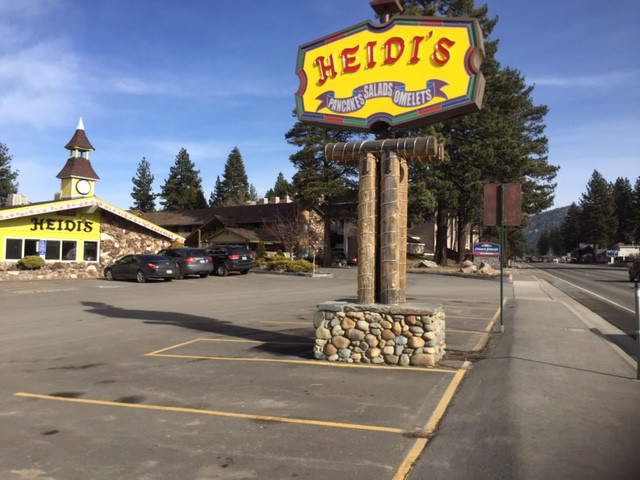
Heidi's in South Lake Tahoe believes losing a couple parking spaces and any change to the sign would hurt business. Photo/LTN

Heidi’s in South Lake Tahoe believes losing a couple parking spaces and any change to the sign would hurt business. Photo/LTN

The bidding process cannot begin until the acquisitions are completed per federal stipulations. The city wants bid documents to be ready this spring.

City staff repeatedly said the clock is ticking and time is of the essence.

While the City Council this month gave the affected properties 45 days to resolve the issue without going down this path, at least two of the properties don’t appear to be willing to negotiate. This comes after the city began the dialogue more than a year ago.

Mary McCall, who owns a tiny slice of the needed property, told the electeds last week she feels pushed and coerced. She is a descendant of the pioneer Johnson family and said her family has given enough already.

A wedding chapel sits on the land. The city needs 126-square-feet of right-of-way. It has a value of $7,500.

She is worried about relocating the sign, wonders why businesses on the other side of the street aren’t affected, and said cyclists can ride in the street.

Don Rosenthal, who operates Heidi’s restaurant, was speaking on behalf of the property owner. However, with a 40-year lease, Rosenthal has a huge stake in what occurs on this parcel at the Bijou Center.

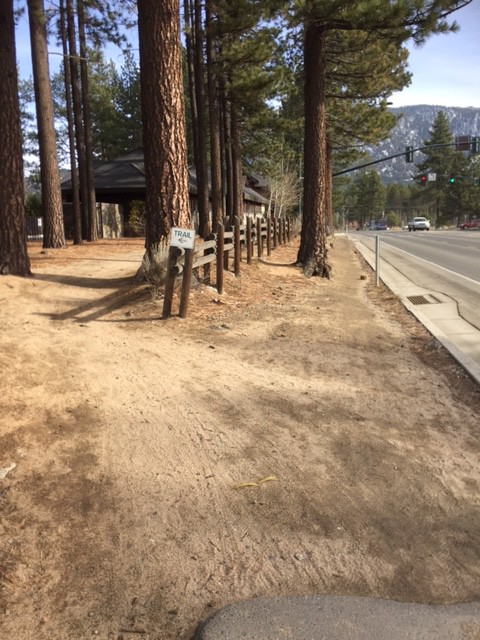
The current trail is dirt and tree roots in places. Photo/LTN

The current trail is dirt and tree roots in places. Photo/LTN

The city wants 966-square-feet of right-of-way; offering $15,000 for it. Safety, loss of parking and sign relocation are Rosenthal’s biggest worries.

The engineering consultant on the project said concessions have been made, such as moving the trail as close to Highway 50 as possible for these people.

McCall and Rosenthal told the council they would try to work things out. Outside the meeting room and out of earshot of the electeds they said the opposite.

The city also needs 1,300 square feet ($48,000) from Urbana Tahoe and 2,700 square feet ($10,250) from Tahoe Beach and Ski Club. The latter is not contentious, but requires eminent domain to satisfy the homeowners’ policy.

The city must offer fair market value, but cannot legally offer more. Property owners can take the city to court once eminent domain filings occur.


Tahoe USFS worker makes national impression

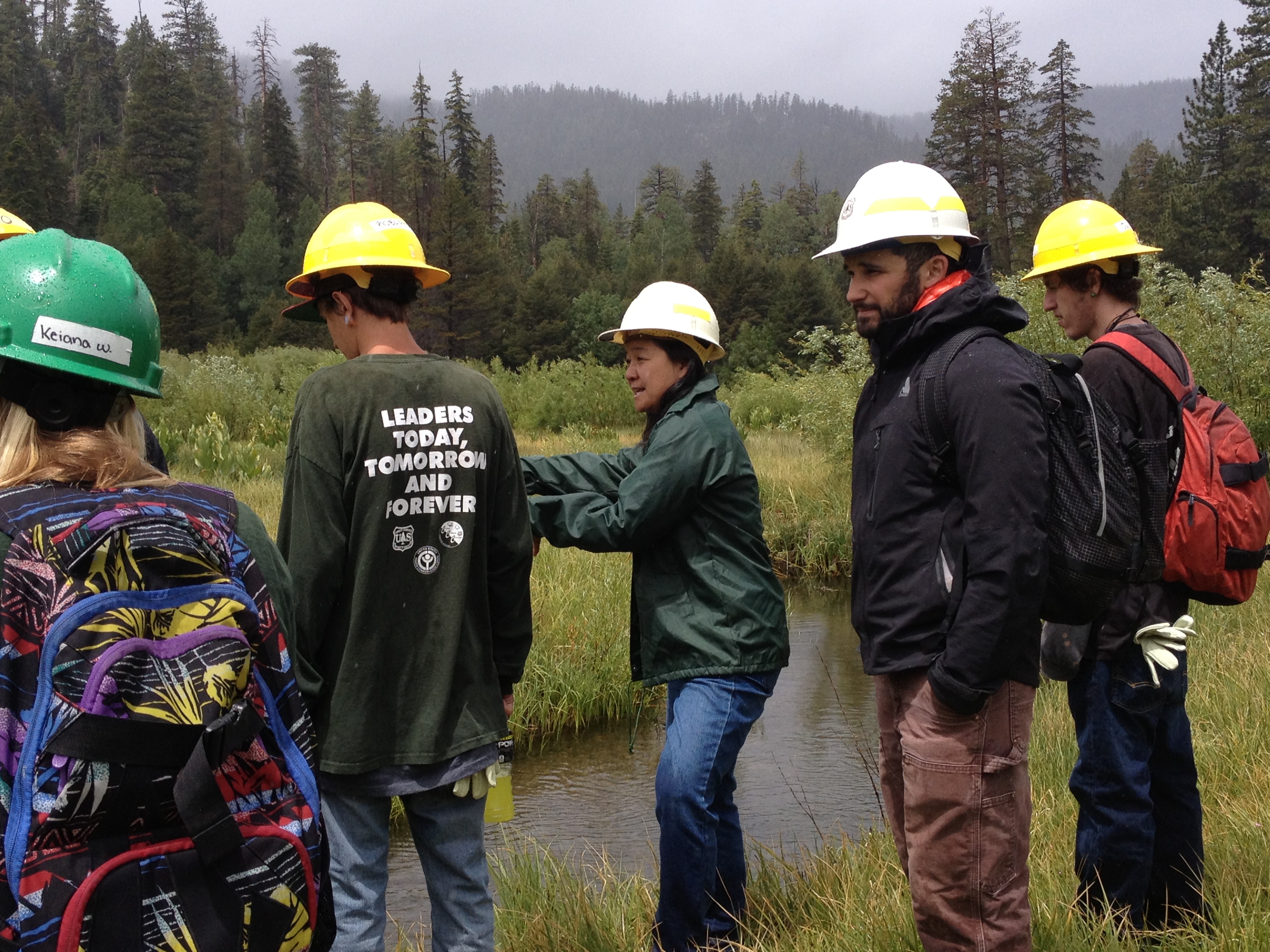
“On their first day of work on an eight-week summer work program and transformation in 2013, Joy introduces Generation Green crew members to the importance of data collection in this continued restoration watershed assessment project, combining community service, academic achievement, environmental stewardship, and career exploration.”

Joy Barney introduces Generation Green crew members to the importance of data collection in this continued restoration watershed assessment project. Photo/Provided

By John C. Heil III

Joy Barney has dedicated her life to connecting youth to the land. In the process she has touched many
lives.

The Lake Tahoe Basin Management Unit’s conservation education program specialist since 2007, Barney received regional and national recognition this fall with the Gifford Pinchot Pacific Southwest Region and the National Interpreter and Conservation Educator of the Year award. Named in honor of the first chief of the U.S. Forest Service, the annual award is a national honor given to employees for achievement in environmental interpretation and conservation education.

“The reason this is such a big accomplishment for Joy, is that she doesn’t even have interpretive services in her job description – she is a conservation education specialist,” said Timothy Williams, regional coordinator for the Interpretive Services Program. “When she delivers with the conservation education program, she excels at telling the story and interpreting why it is so important to connect youth with nature.”

Barney, 52, always had a keen interest in wildlife or being in nature from camping trips in the summer growing up. The San Jose native said that was where she felt the most whole. After receiving a bachelor’s of science degree in Wildlife and Fisheries Biology from UC Davis in 1985, Barney started her career with the Forest Service shortly thereafter as a forestry technician in silviculture. Even though she wasn’t technically in a conservation education position, she started programs such as the Little Children’s Forest in Groveland and Earth Day events on the Stanislaus National Forest.

She picked up her love of interpretation on the Pinecrest Ranger District with wildflower walks, guided hikes and leading campfire programs.

“She is very deserving of this award and I am thrilled to get to work with her on a regular basis,” said Beth Quandt, science outreach coordinator for the Lake Tahoe Unified School District. “She has been instrumental in bringing so many wonderful programs to the students of the Lake Tahoe Unified School District.”

At the LTBMU, Barney created a partnership group called South Tahoe Environmental Education Coalition . Under her leadership, these groups work together to provide high-quality, standards-based education programs for 2,500 children annually. Other programs she manages include Ski with a Ranger, Winter Trek and Kokanee Salmon Education, serving more than 2,000 other forest visitors.

In addition, Barney started a successful high school program – Generation Green of Lake Tahoe, providing volunteer and employment opportunities for diverse youth in the Lake Tahoe area. Due to the success of these programs, she expanded to the Eldorado National Forest.

“Joy’s tireless energy, enthusiasm and creativity contribute greatly to the success of the conservation education program,” said LTBMU Forest Supervisor Jeff Marsolais. “She excels in creating partnerships that foster meaningful connections for students and has done a tremendous job developing engaging science programs that build opportunities for future employment.”

In the process of all her work on the LTBMU, Barney has inspired others to do similar work.

“Joy has led me to my current passion and pursuit of my profession in conservation education,” said Megan Dee, conservation education assistant for the LTBMU. “I would never have continued in the Forest Service without her extraordinary leadership and mentorship, which is also the case for many of the students she has worked with.

“She is an inspiration to all who work with her –partners, educators, students, parents, employees, and more. Joy and I both have consistently reminded successful Generation Green students that we aren’t losing the students, but the world is gaining them. This is based on our high school model Generation Green post graduation and post-youth summer internship. It is not just a summer job to the students; it can be life transformational, and it is Joy who leads them to learning how to achieve, thus creating future land stewards and advantageous citizens of society.”

One of Barney’s mentors – Jim Oftedal, the regional outreach and recruitment and workforce diversity
program manager recalls Joy providing one of her students a bicycle to get to and from work. “She took
a big sister approach,” said Oftedal, who helped Barney start Generation Green on the LTBMU. “That student she helped is now a permanent employee with the Forest Service.

“Joy is a giver. The Generation Green program is more than a typical 40-hour work week. She really is a
special woman. I can’t say enough about her. She is a very humble person. She has a wonderful smile
and I am happy for her. She deserves this award.”

“If I was independently wealthy, I would still do this job,” said Barney.

John C. Heil III works for the U.S. Forest Service.


Spectrum of holiday movies capture the season

By Howie Nave

I admit it; I escape by watching movies and sometimes wish I were actually in the movie, in the time period that was taking place. I could see myself in glorious black and white just observing Jimmy Stewart as George Baily in that classic 1946 flick “It’s A Wonderful Life.” Given the state of the world movies are more than just escapism. They’re a time capsule of what the world was like before terrorism and other modern day mayhem, or when financial institutions didn’t have nearly the power they do now by bringing a nation down to its knees. Back then I guess we were naive by trusting our government or maybe politicians were more ethical?

I love this time of year, and second only to Halloween, there are more movies than ever (and continue to grow) paralleling the holiday spirit. Now that I think about it there’s been an increasing number of horror flicks finding their way into the holiday season. I mean, what could be better as a horror flick than involving kids expecting Santa when instead they get a serial killer? It’s all about family isn’t it? And that’s what makes the holidays so special.

Of course living in the High Sierra (with hopefully more snow to come) makes it even more enjoyable. There are some staples I have included here and of course snow is always one of the main characters in such classics as “A Christmas Story,” “It’s A Wonderful Life,” “Miracle on 34th Street” and “A Christmas Carol.” It’s getting more and more difficult to pick the real good ones as there are so many great Christmas flicks and that doesn’t even count the movies that aren’t all about Christmas but rather have Christmas as the backdrop for the story.

Movies such as  “Die Hard” 1 & 2, “Lethal Weapon” 1 & 2, and Paul Newman in one of my all time favorite movies, “Nobody’s Fool” instantly come to mind. Whatever your favorite, these 20 for me represent some of the best that will stand the test of time for generations to come. So kick back, get some eggnog (with rum and nutmeg of course) and enjoy these by yourself or with family and friends. Merry Everything everybody!

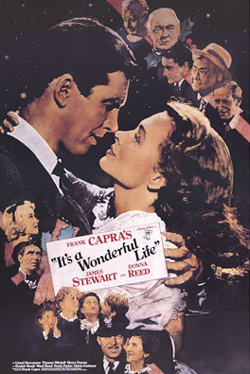
It's A Wonderful Life poster1) “IT’S A WONDERFUL LIFE,” G (1946)

Did you know that this holiday classic, released in 1946 would have been forgotten had it not been for television? Ironic too because I could watch this over and over again on television (and have). Oh, sure, there have been several remakes of this classic bot on the big screen and on TV but nothing comes close to the original. The studio even made a colorized version of the original black and white classic (big mistake and a stupid move) but the only way to appreciate this Frank Capra classic is in its original format. George Baily (played by Jimmy Stewart) gets a second shot at life being able to see what the world would have been like had he never been born. The backdrop of Bedford Falls reminded me of Lake Tahoe in a way being a small town where everyone knows who you are and you realize friends and neighbors really do matter when you think of what the world would be like if you weren’t around to enrich those lives you’ve touched. George doesn’t realize how much he is loved and considers taking his own life when his guardian angel, Clarence (played by Henry Travers) intervenes to save him from himself. If Clarence can prove that George truly has a wonderful life, then Clarence can earn his wings from upstairs. “It’s a Wonderful Life” still holds up today and reignites the hope and optimism that does exist and will make you feel that yes, your life does in fact matter. A nice, feel-good movie with a terrific cast that includes Donna Reed, Lionel Barrymore and Thomas Mitchell.

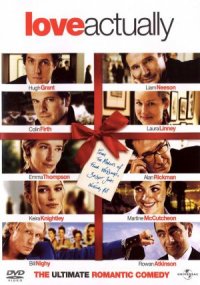
2)  “LOVE ACTUALLY,” R  (2003)Love Actually poster

Another enjoyable holiday movie (I’m betting will one day will be considered a classic) I will sometimes watch this even in the off-season just because I really enjoy an ensemble piece where all its principle characters share a common thread throughout the movie as Christmas counts down starting from five weeks out. At the very beginning of the movie Hugh Grant does a narration over a scene at Heathrow Airport referencing the attack of 9/11 and given recent terrorist attacks that have happened, “Love Actually” is even more powerful to watch.  At its core leaves us with a message of hope and forgiveness centered on family, friends and co-workers. England is the backdrop for the movie that includes a stellar cast consisting of Bill Nighy, Hugh Grant, Emma Thompson, Alan Richman, Keira Knightly, Liam Neeson and Colin Firth. Writer/director Richard Curtis (“Four Weddings and a Funeral,” “Bridget Jones Diary” and “Notting Hill”) has an excellent track record when it comes to ensemble pieces and this one is no exception. From its opening narration by Hugh Grant at Heathrow Airport to its conclusion “Love Actually” will stay with you long after the holidays and you’ll find yourself watching it again and again as it only gets better with each passing Christmas.

3) “MIRACLE ON 34TH STREET,” G (1947)

Can you believe there are still folks out there who’ve never seen the 1947, black and white original? A lot of people who saw the 1994 version starring Richard Attenborough and Elizabeth Perkins didn’t even know they were watching a remake! That’s criminal. The original black and white version still shines as one of the most heart-warming holiday classics of all time. With a cast that includes Maureen O’Hara, Edmund Gwenn and a very young Natalie Wood (in her very first feature) it’s a tough movie to beat. When a young child, Susan (Wood) wants to believe in Santa Claus but her successful working mother doesn’t it sets up the story beautifully. Santa’s existence is a matter for the courts to decide when a Macy’s Day parade Santa (Gwenn) fills in for a drunk one and we soon discover he is the real deal. Soon it’s up to young lawyer Fred Gailey (John Payne) to convince Susan that there indeed is a Santa Claus and has to find a way to prove that the spirit of Christmas can even change non-believers such as Susan’s mom, Doris (O’Hara”). What a great flick this is and if anyone ever had any doubts about the existence of Kris Kringle, they’ll be proven wrong. “Miracle on 34th Street” will not only convince you to believe but with a great cast and supporting cast that includes Thelma Ritter and Gene Lockhart how could you not believe in Santa Claus?

Bad Santa4) “BAD SANTA,” R (2003) 

As I write this plans are in the works for a “Bad Santa 2” with Billy Bob Thornton reprising his role as the anti-Santa in the anti-Christmas movie that was hysterical. Don’t know how the filmmakers will pull off a sequel especially since the passing of John Ritter and Bernie Mac who were so memorable in the original (although Mac’s character does die in the first one). “Bad Santa” I must forewarn you if you haven’t seen it yet this movie is not for the kiddies and for adults who have no sense of humor. “Bad Santa” is very R-rated, hilarious and not for the faint of heart. Maybe because I’m a comic (and part time cynic) but I never laughed out loud so hard and so long the very first time I saw this. Maybe because it flies in the face of anything one would expect over the holidays or that it is so rude and in-your-face whatever just made “Bad Santa” fun to watch. Believe it or not this flick has a soulful ending to it and makes even the most cynical, non-believer (Billy Bob Thornton) into a character of warmth. Again, let me warn you if you haven’t seen this it’s not for those who have never uttered a swear word. Thornton plays Willie, an alcoholic, bad-mouthing department store Santa Clause who, along with his foul-mouthed partner in crime dressed as an elf, Marcus (Tony Cox) rob department stores every Christmas time with great success. Director Terry Zwigoff (“Crumb,” “Ghost World”) really hits the mark with this sarcastic flick and will leave you howling with laughter throughout if you just give it a chance. The movie also stars first timer to the screen Brett Kelly as the snot-nosed, 8-year-old boy who everyone picks on and really believes that Willie is Santa. Cloris Leachman has a small part as the spry grandma and makes every moment of her screen time that you just find yourself bursting out in laughter. Laura Graham is also hysterical as the bartender Sue who has a thing for guys that dress up in Santa suits.

5) “NATIONAL LAMPOON’S CHRISTMAS VACATION,” PG-13 (1989)

Chevy Chase, star of the “National Lampoon Vacation” franchise, will probably be best remembered for this holiday spoof because it continues to be one of the most popular Christmas movies year after year. One cannot help think of this movie when hanging up the Christmas lights and finding that perfect Christmas tree. As head of the Griswold family Clark (Chase) personifies everything that inevitably goes wrong as the Christmas holiday counts down to the big day. Beverly D’Angelo is the patient, loving wife to Clark who loves him regardless of his stressed-out antics when the unexpected in-laws show up. By the way Randy Quaid will forever be typecast as Cousin Eddie, you know that right? “Christmas Vacation” has all of the holiday family traditions from finding that elusive perfect Christmas tree, how to spend the Christmas bonus from work and the always hilarious, time-consuming task of creating the perfect Christmas decorated house with enough Christmas lights to light up the entire neighborhood. Speaking of the Christmas bonus check the movie also stars Brian Doyle-Murray as Clark’s Scrooge-like boss. Directed by Jeremiah S. Chechik “Christmas Vacation” is still a family favorite and seems to only gain in popularity with each passing year as it becomes introduced to a whole new generation.

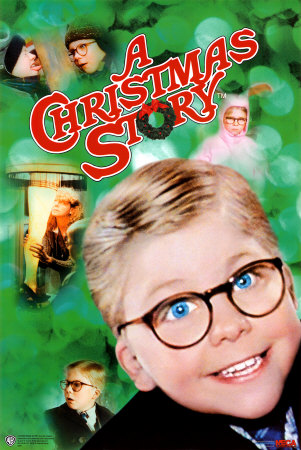
6) “A CHRISTMAS STORY,” G (1983) A Christmas-Story poster

One of my all-time favorite Christmas movies based on the recollections of humorist Jean Shepherd,  “A Christmas Story” epitomizes your basic urban family from the 1940s with Peter Billingsley in the leading role as Ralphie. I couldn’t even tell you what his last movie was but I will tell you that this movie will forever be the one that he’ll be remembered for. Ralphie has only one mission in life: to be the proud owner of a Red Ryder air rifle BB gun. That’s all he wants for Christmas. Melinda Dillon plays Ralphie’s mom and after watching this timeless classic a bunch of times actually plays every mom I have encountered; she is that good. It’s a great family movie to watch told in a narrative format (voiced by Jean Shepherd himself). I remember the very first time I saw this movie I wanted to see if your tongue really would get stuck on a frozen flagpole. Don’t try it kids, it does! “A Christmas Story” is a must-see and who can forget that immortal line from the movie when Ralphie says he must have that BB gun? “You’ll shoot your eye out with that thing kid!”

A Charlie Brown Christmas poster7) “A CHARLIE BROWN CHRISTMAS,” G (1965) 

This holiday classic just celebrated its 50th anniversary and almost never made it to the small screen, but lucky for us it did and remains an animated classic to this day. “A Charlie Brown Christmas” became an instant hit when it first aired back in 1965 and introduced me not just to Charles Schultz’s famous cartoon strip but also turned me on to jazz via the great Vince Guaraldi who supplied the soundtrack and the sound that would forever immortalize Charlie Brown and his friends via Guaraldi’s music. I always wanted to be Schroeder after hearing him bang out those cool piano pieces. When Charlie Brown complains about the overwhelming materialism that he sees during the Christmas season, Lucy suggests that he become director of the school Christmas pageant. Charlie Brown accepts, but it proves to be a frustrating struggle. When an attempt to restore the proper spirit with a forlorn little fir Christmas tree fails, he needs Linus’ help to learn what the real meaning of Christmas is. It’s funny too that ever since this animated gem any sad looking Christmas tree to this day is referred to as a “Charlie Brown Christmas tree.”

8) “HOME ALONE” PG (1990)

Before the less than adequate sequels and Macaulay Culkin’s growing pains, “Home Alone” was one of the late director John Hughe’s best holiday efforts ever. Nobody at the time thought that this would become such a hit but apparently Hughes knew otherwise. Culkin plays the resourceful 8-year-old Kevin who wishes his family would just go away and leave him alone right before Christmas. Accidentally, they do, and he’s left to defend for himself against two dopey criminal types (Joe Pesci and Daniel Stern). Billed as “A Family Comedy Without The Family” this family film is funny and entertaining with a stand out performance by Catherine O’Hara as Kevin’s mother. Hughes may be gone, but his movies will always remain and this one is one of his best to be played again and again every Christmas and also to remind you that if you’re from a large family you can still have a voice.

9) “ELF” PG (2003)

I remember when “Elf” first came out I thought to myself, “OK, Will Ferrell seems to click in this character as Buddy, an over grown human elf but will it wind up being kind of stupid? It wasn’t bad and the “Anchorman” star was not only able to pull off the funny but also the spirit that is Christmas. I also enjoyed this movie because both kids and adults can enjoy it without being sappy and offers up a bit of the optimistic that brings out that kid in all of us. Buddy (Ferrell), through a mishap was raised at the North Pole in Santa’s toy factory. Director Jon Favreau (along with screenwriter David Berenbaum) balances the movie with just the right amount of funny and sentimentality. Buddy leaves the North Pole to seek out his biological father (played by James Caan) in New York. As a fish out of water Buddy can’t believe that there are actually people as tall as he is. He also discovers plenty of Santa Claus impostors everywhere in NYC. When Buddy finds out that the Santa is coming to Gimbels, he assumes it will be the real Santa (Edward Asner) and not just one of his helpers this time. “Elf” gets better watch time I see it and having Bob Newhart in a brief cameo makes it that much more enjoyable.

10) “HOW THE GRINCH STOLE CHRISTMAS,” G (1965) 

Based on the Dr. Seuss classic, this tale is still a delight to watch. Forget the fancy CGI graphics of today “Grinch” still has that charm as if the book were speaking (and singing) to me and still evokes fond memories from the very first time I saw it on TV. Directed by the legendary Chuck Jones from Warner Bros. fame and narrated by Boris Karloff, this 26-minute animated TV classic about a Christmas-hating Grinch who wants to make everyone as miserable on Christmas as he is still is one of the most original Christmas stories ever. The poor, small-hearted Scrooge learns the true meaning of Christmas through the loving Who’s in Whoville. And who can forget that poor dog of his that has to haul that enormous sleigh too wearing those antlers?!

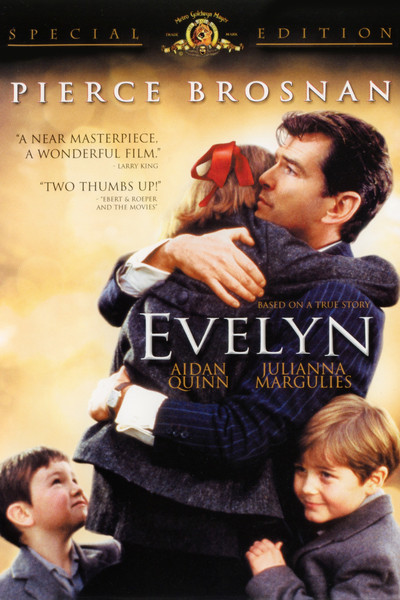
11) “EVELYN,” PG (2002) Evelyn poster

This is one you’ll have to really do some hunting for, but trust me it is very worth the effort. Starring (and produced by) actor Pierce Brosnan, this little holiday movie was like finding a pearl in a sea of muddy water. I only first heard about this movie while living in the Bay Area and the studio had a private screening hoping to get the word out. I became a believer immediately and putting the word out whenever I can especially at this time of year. “Evelyn” centers on a young Irish girl, Evelyn (Sophie Vavasseur) and is set in 1953 Dublin. Based on a true story, the film stars Pierce Brosnan as Desmond Doyle, a poor painter and interior decorator whose wife walks out on him during the holidays leaving him to fend for their three children Maurice, Dermot, and Evelyn. Back then the government mandated that children must be placed in the custody of the state and not that of the father even when their own mother abandons them. That law would soon change when lawyers Stephen Rea and Aidan Quinn (with Alan Bates in tow) takes on the establishment. Director Bruce Beresford utilizes the emotional side of the former 007 star and shows us his fatherly side with great results. Also impressive is that of American actress Julianna Margulies as Doyle’s love interest and pulls off a good Irish accent too. It’s a fantastic holiday flick and one to definitely watch with the entire family.

12) “WHITE CHRISTMAS,” G (1954)

One of the most time honored classic Christmas musicals, “White Christmas” featuring such stars as Bing Crosby, Danny Kaye, Vera-Ellen and Rosemary Clooney. Bing croons such Irving Berlin classics as “I’m Dreaming of a White Christmas,” Vera-Ellen taps up a storm, Kaye entertains with his usual goofy antics, and this movie is overall a lot of fun. “White Christmas” offers up a lot of comedy, a little bit of romance, and just enough holiday sentiment to go around.

13) “A CHRISTMAS CAROL,” G (1951)

Also known as the “Scrooge” movie, Alastair Sim plays the quintessential Ebenezer Scrooge. It almost appears that all other incarnations were based on Sim’s definition of the character after seeing his performance here. So good in fact that he was almost typecast. Other Scrooges were based on his adaptation, that much is certain. Based on the Dickens’ classic, this adaptation about a miser who doesn’t believe in Christmas until three ghosts come to take him on three voyages still sends chills through me. Vivid with what life was like in 19th-century London, the terrific performances of the cast, including Kathleen Harrison as Mrs. Dilber, make the story come to life. This version of  “A Christmas Carol” is the one to see.

 14) “JOYEUX NOEL,” PG-13 (2005)

Written and directed by Christian Carion (“The Girl From Paris”), this French movie was nominated for an Oscar under Best Foreign Film and recreates an incredible incident that took place on western front during the First World War. It was Christmas Eve 1914 the first year of the war. German, British, French and Belgian troops who had been slaughtering each other for months initiated a spontaneous and unsanctioned truce if you will. They put down their guns, sang songs with each other, played soccer, shared rations and posed for photos. They had joint religious services and helped each other bury their dead. Mixing fictional characters with historical fact, “Joyeux Noel” becomes an extraordinary film and shows what can happen instantaneously during the madness of war.

15) “MEET ME IN ST. LOUIS” G (1944)

This is a delightful musical film that tells the story of a turn-of-the-century family in suburban, mid-western St. Louis of 1903, who live in a stylish Edwardian home at 5135 Kensington Avenue. The city, and the well-to-do Smith family (with four beautiful daughters), is on the verge of hosting (and celebrating) the arrival of the spectacular 1904 World’s Fair. The movie first paired director Vincente Minnelli with Judy Garland and was the most popular and financially successful film produced by the legendary Arthur Freed and directed by its star’s future husband, newcomer Minnelli (who married 23 year-old Judy Garland a year later on June 15, 1945, it was Garland’s second marriage). This classic was Minnelli’s third film (after the all-black musical “Cabin in the Sky” (1943) and the music-comedy, “I Dood It” (1943) with Red Skelton and it was Minnelli’s first full-length film in color. After their marriage, Garland and Minnelli also worked together on “The Clock” (1945) and “The Pirate” (1948).

16) “THE HOLIDAY,” PG-13 (2006) 

It can be a fine line between an emotional holiday movie and your classic chick flick. Sometimes men even get to get to use that as an excuse to get choked up and say it’s because of the holidays.  Writer/director Nancy Meyers assembled a good-looking cast that includes Cameron Diaz and Kate Winslet as two women (Amanda and Iris, respectively) who find themselves at the end of failed relationships. The fact that it takes place just before Christmas amplifies the loneliness factor to the point where they both swap living locations after meeting online. Amanda lives in Los Angeles and Iris lives in Surrey, England, with things heating up after Iris’ brother, Graham (Jude Law) drops by Iris’ house and meets Amanda. At the other side of the pond Iris meets Miles (Jack Black) a film composer. Kudos to Black for being a very sensitive and calm guy this time around and he steals the picture.

17) “THE BISHOP’S WIFE,” G (1947) 

When a movie moves you to tears because of the incredible casting and excellent storyline you can’t help but ask yourself, “Why don’t they make movies like this nowadays?” Exactly. In what I believe to be one of his best roles ever, Cary Grant plays Dudley, the unexpected hero who is more than just angelic. His assignment is to make us as a species be more well, human. He is the answer to the prayers coming from Episcopal Bishop, Henry Brougham (played by a young David Niven) whose plans for an elaborate new cathedral has run into a stumbling block of sorts as is his own personal life. Loretta Young gives a very moving performance. Directed by Emil Newman “The Bishop’s Wife” will warm the hearts of even the toughest cynics out there especially with Christmas fast approaching.

18) “HOLIDAY INN,” G (1942)

Talk about your incredible chemistry. With music by Irving Berlin sung by (and starring) Bing Crosby and dancing by Fred Astaire all I can say is “Whoa!” The movie is actually based on an idea by Irving Berlin about a retired song-and-dance man, Jim Hardy (Bing Crosby), who retires from showbiz to become a gentleman farmer in New England only to get back into the business combining both worlds for special holidays. The film’s highlight is Fred Astaire’s bang-up performance of July 4 “Let’s Say It with Firecrackers.” “Holiday Inn” however will probably best be known for introducing the world to the first public performance of the song “White Christmas.” Crosby first sang that song on his NBC radio show “The Kraft Music Hall” on Christmas Day 1941. Moviegoers then saw Bing sing the holiday classic seven months later when the movie came out. The song went on to become one of the biggest selling songs in the history of music. This was the first of three films to feature Crosby singing “White Christmas.”

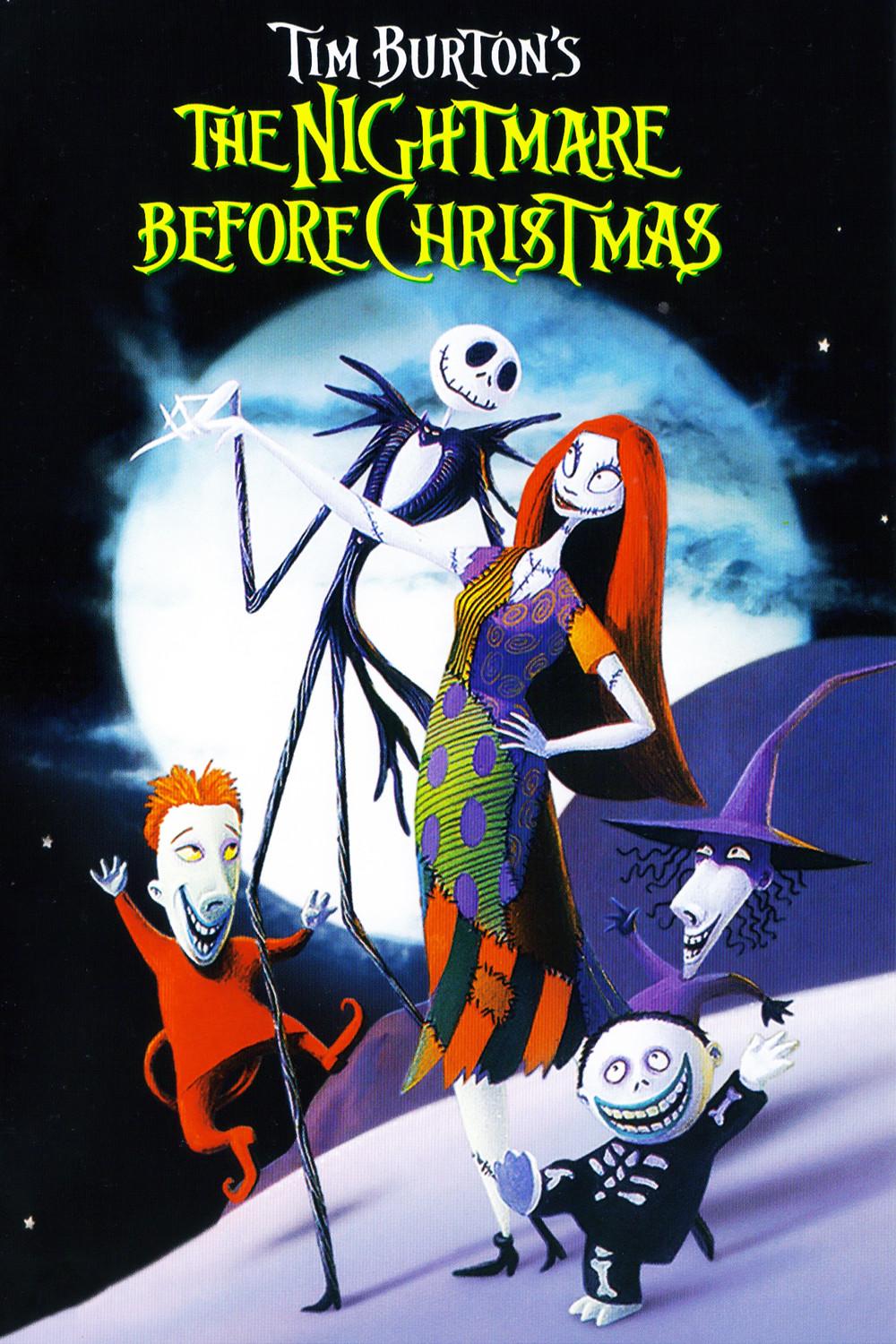
The Nightmare Before Christmas19)  “THE NIGHTMARE BEFORE CHRISTMAS,” PG  (1993)

Who would have ever imagined that Disney’s name would be attached to something that might scare the little ones, huh? OK, the music might scare you (not intentionally) but the stop-motion animation will mesmerize you (especially in an age where everything can be done so easily on computer). I think this might be the only stop-animated flick that I’ve seen both at Christmas and Halloween. Cross-marketing the holidays (and the seasons) might be a new trend. “The Nightmare Before Christmas” is the brainchild behind director Tim Burton, the man who gave us “Batman,” “Beetlejuice” and “Edward Scissorhands.” He actually used to work for Disney so maybe this was his revenge having to work in an environment that was sugary sweet for families knowing one day when he was famous would be given the license to make something truly off-the-wall and attach Disney’s name to it. Burton didn’t direct, this time the honor going to Henry Sellick. The cast of voices is an excellent choice that includes Danny Elfman (who also supplies the soundtrack), Chris Sarandon, Paul Reubens, Greg Proops  and Catherine O’Hara. With the help of screenwriter Caroline Thompson (“Edward Scissorhands,” “The Secret Garden”) “The Nightmare Before Christmas” is a balancing act between the darkness of Halloween and the hope and cheer of Christmas and that’s when everything goes awry. You can blame it on Jack Skellington, a ghoulish character who runs Halloweentown, a place devoted to creating a bigger, better and scarier Halloween each year. Also known as “The Pumpkin King,” Jack has ambition and wants more than just two holidays. After a chance visit to Christmastown, he decides to kidnap Santa Claus, take his own skeletal reindeer on a Christmas Eve ride and drop booby-trap toys down chimneys complete with little creepy things that crawl in the night devouring Christmas trees! If that doesn’t freak the little tots out I don’t know what will. It’s hard to believe but Jack is actually pretty nice for a ghoul. He’s just a misguided artist (aren’t they all?) that’s all.

20) “RUDOLPH, THE RED-NOSED REINDEER,” G (1964)

Another animated television special that rounds out my Top 20, this was one of the very first shot using the stop-motion animation technique (as Burton would utilize in his “Nightmare Before Christmas” years later) and gave singer Burl Ives his best year ever when it came to producing the now Christmas classics, “A Holly Jolly Christmas” and “Silver and Gold,” two songs he sang as the character Sam the Snowman in this holiday special. He narrates this holiday classic telling us the story about Rudolph who was in effect ousted from playing any reindeers games because of his bright red honker. Rudolph teams up with Hermey, an elf (voiced by Paul Soles) who wants to be a dentist, and Yukon Cornelius (voiced by Larry D. Mann) a prospector. The animated special became an overnight success launching the Burl Ives’ Christmas songs into regular radio rotation history after this aired.


Defining rural — mapping out the future of EDC

By Joann Eisenbrandt

PLACERVILLE — “What the hell are you doing? Why would you make El Dorado County like Los Angeles … Are you all crazy? What is your vision? More big-box stores, more dense housing, more people, more traffic? You are supposed to take care of the people who live in your county.”

Dave Hammond, Shingle Springs                                                                                            Comments submitted for the Dec. 15 El Dorado County Board of Supervisors meeting


Land use planning is often seen as a tedious, technical pursuit, relegated for the most part to obscure planning department offices far removed from most residents’ daily lives. That is, until it directly threatens the things they hold most dear.

On Dec. 15, the El Dorado County Board of Supervisors is slated to approve the Targeted General Plan Amendment/Zoning Ordinance Update (TGPA/ZOU). California law requires counties to develop a General Plan to codify goals and policies to guide how land is developed and to review and update that plan regularly as needed. The TGPA/ZOU is the county’s response. More than a decade in the making, it includes amendments to the county’s 2004 General Plan and an extensive update of the Zoning Ordinance that implements it.

El Dorado County encompasses 1,805 square miles divided into two distinct areas, the Lake Tahoe Basin and the West Slope. The TGPA/ZOU affects only the unincorporated areas of the county and not cities like South Lake Tahoe and Placerville or publicly-owned lands.

Dave Hammond isn’t the only county resident unhappy with the TGPA/ZOU and the process through which it was created.
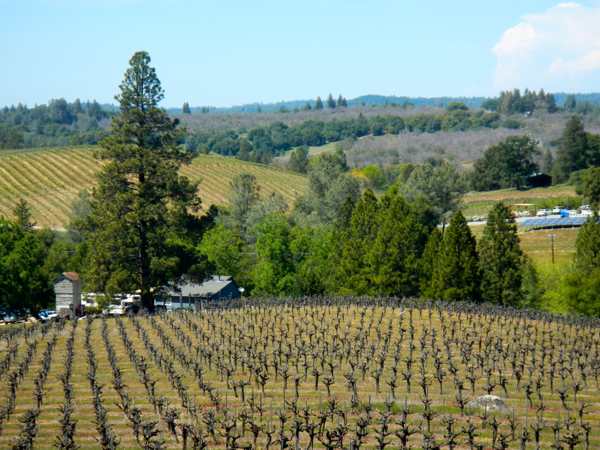
Many people don't want El Dorado County's rural nature threatened. Photo/LTN file

Many people don’t want El Dorado County’s rural nature threatened. Photo/LTN file

The 2004 General Plan states, “It is imperative to balance competing goals in approving the General Plan. The adopted General Plan encourages a balance between population growth, economic development, and the need to protect the environment ….” But as those who live at Lake Tahoe know all too well, the struggle to achieve this balance can be a protracted and emotional one. Even without TRPA, it’s no walk in the park.

The county’s West Slope has been no stranger to this struggle. Just how deep feelings run became apparent during three days of board meetings on the TGPA/ZOU on Nov.10, Nov. 12-13. Opponents of the TGPA/ZOU characterized it as a seriously-flawed, “developer driven” document that would create massive, unneeded and inappropriate rezoning of parcels for more intensive uses, lead to growth that cannot be supported by existing infrastructure or water resources, and create traffic gridlock especially along Highway 50. Most of all, they insisted, it will destroy the rural character of the county and create the Los Angeles that Dave Hammond fears.

County planning staff views it quite differently. Shawna Purvines, the county’s principal planner on the project and Long Range Planning’s main presenter at those meetings, characterizes it as a faithful representation of the views of past county planners and decision makers and the appropriate response to the state’s mandate to provide for growth in the county.

“I’ve heard the concern that the Zoning Ordinance is going to substantially change the character of the county,” Purvines told Lake Tahoe News,” and so I took that to heart and I started digging deeper. I went back to the Area Plans and the 1969 General Plan and to the 1949 Zoning Ordinance to be able to adequately respond …  these are not new policies, this is a new ordinance.”

After an initial two-year review, a General Plan is revisited every five years to compare its original assumptions with reality. The results of that five-year review in 2011 provided the impetus for the development of the TGPA/ZOU. It brings the Zoning Ordinance into conformity with the General Plan as required by state law, but does not, Purvines stressed, “overhaul” the 2004 General Plan, remove important development restrictions, create any new parcels or maximize the density potential of that plan. If the TGPA/ZOU were not implemented, she added, the environmental impacts would be unchanged from those identified in the 2004 General Plan’s environmental impact report (EIR).

An EIR is required by the California Environmental Quality Act (CEQA) for projects initiated by public agencies. It identifies significant environmental impacts the project could create, the mitigation measures to reduce them, and lists those impacts that cannot be mitigated to less-than-significant. If the lead agency, in this case the county, feels the merits of the project outweigh unmitigated impacts, they prepare a Statement of Overriding Considerations, declaring the overall benefits of the project make such potential negative impacts “acceptable.” The EIR prepared for the TGPA/ZOU is a “program EIR,” which means it focuses on general policies and zoning designations, not on site-specific development proposals.

It outlined the project’s objectives to create affordable housing for the moderate income earner, create jobs, stop sales tax leakage from the county and promote and protect agriculture by expanding opportunities there for recreation and rural commerce. It identified “unmitigated adverse environmental impacts” and a Statement of Overriding Considerations was prepared. Impacts include, among others:  damage to scenic resources including historic buildings along scenic routes; loss and fragmentation of wildlife habitat; creation of substantial incompatibilities between land uses; creation of substantial population growth; substantial depletion of groundwater supplies; and, conflict with level-of-service (LOS) traffic standards and travel demand measures.
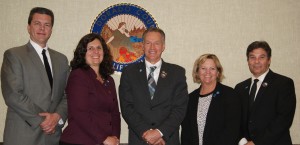
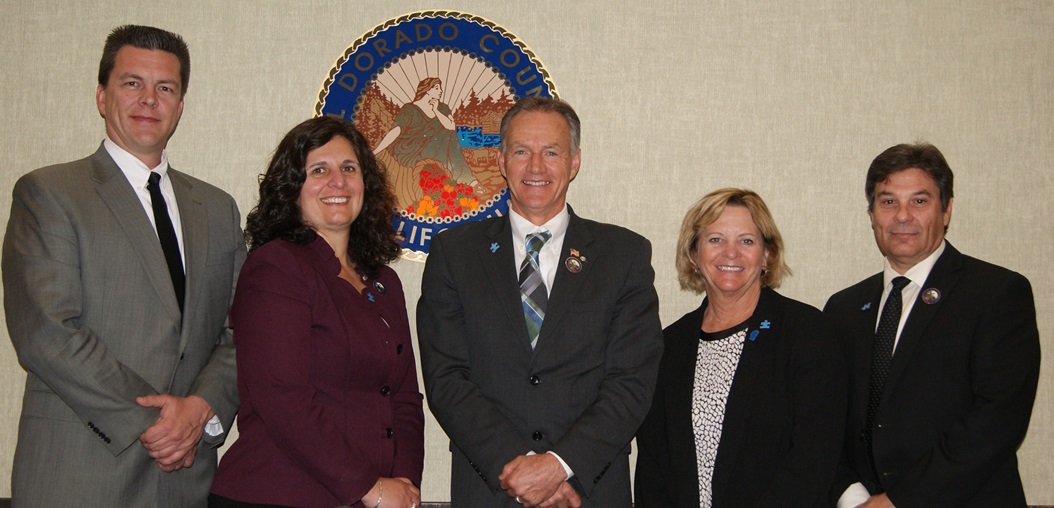
El Dorado County supervisors on Dec. 15 are expected to approve the General Plan documents. From left are, Ron Mikulaco, Shiva Frentzen, Brian Veerkamp, Sue Novasel and Michael Ranalli. Photo/Provided

El Dorado County supervisors on Dec. 15 are expected to approve the General Plan documents. The item will be discussed at 1pm in Placerville. From left are, Ron Mikulaco, Shiva Frentzen, Brian Veerkamp, Sue Novasel and Michael Ranalli. Photo/Provided

Rural Communities United (RCU), an unincorporated association originally formed to help pass the Measure Y initiative in 1998 to prohibit approval of residential developments that could lead to traffic congestion on Highway 50, finds these impacts unacceptable. Another community group, Shingle Springs Community Alliance, agrees. Individually and in concert, they have analyzed and commented upon the TGPA/ZOU throughout its formulation by the county.

Don Van Dyke outlined RCU’s concerns for Lake Tahoe News. “The biggest problem with this update is that it was represented as a very minimal update to the public. The reality is that it is a very major update especially to the building ordinance that will allow for increased density in both community and rural areas and doesn’t take into account our infrastructure like roadways and water to support all the development.”

In her comments to the board on Nov. 10, Monique Wilber, a former El Dorado County Senior Planner and an RCU member, insisted that the mitigation measures in the TGPA/ZOU are “infeasible,” and it relies on mitigations that “have proven ineffective in the past.” Many of the mitigations identified earlier in the 2004 General Plan, she added, have not been implemented at all.

County planning staff says the rezoning of 37,000 parcels, the removal of some zones and addition of new ones, and changes in the type and intensity of allowed uses on others was required to make the zoning maps consistent with the 2004 General Plan. Opponents contend it goes far beyond that. Sue Taylor, longtime land use planning activist, believes the project will, “destroy our rural lifestyle and the quality of life we have here.” Taylor believes the board has not done enough direct study of the project themselves. “They turned everything over to Long Range Planning,” she told Lake Tahoe News, “and have given Shawna Purvines our future.”

Supervisor Ron Mikulaco disputes Taylor’s claim. “I’ve read the documents in there … of course their concerns were taken into consideration. That’s why I put aside the time to go through all the materials.”

Howard Penn, unsuccessful candidate for county supervisor in 2014 and current executive director of the Planning and Conservation League, told LTN, “I don’t blame the county staff as others do. Ultimately, this is not the county staff’s fault. It’s the supervisors’. The direction comes directly from the supervisors and they are directly responsible for land use.” Penn believes the county is planning in a vacuum, and not looking at the impacts their decisions will make on surrounding counties, insisting that, “Land use planning and transportation planning are key issues for the future health of our entire state.”

Bill Center, local businessman and former El Dorado County supervisor, believes the county is repeating the mistakes it made that led to the creation of the Tahoe Regional Planning Agency (TRPA) at Lake Tahoe. “The completion of Tahoe Keys and the planned massive subdivision from Meyers to Echo Summit forced the first nationalization of land use planning in the country. It basically was caused by El Dorado County … by the county’s absolute refusal to recognize that rampant residential growth without any commercial development would kill the goose that laid the golden egg. Over and over, the West Slope has gone through the same kind of pressures, and unlike Keep Tahoe Blue, a simple statement of the environment we have focused on here is, ‘It’s Traffic Stupid’.”
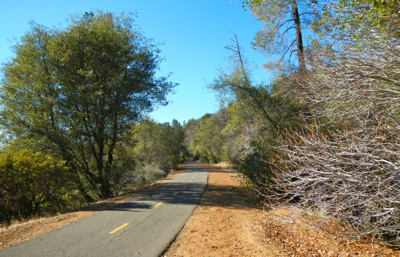
The El Dorado Trail is a reminder even in Placerville the county is rural. Photo/LTN file

The El Dorado Trail is a reminder even in Placerville the county is rural. Photo/LTN file

Center refers to proposed large residential subdivisions on the West Slope, some adjacent to the Highway 50 corridor, and the traffic impacts they will create. While these private developments are not directly addressed in the TGPA/ZOU, some contend the zoning changes it allows will streamline their approval.

Measure Y, the Control Traffic Congestion Initiative, prevented the approval of residential subdivisions that would create level of service (LOS) F on Highway 50. LOS F is the highest congestion level on the traffic measurement scale and essentially represents gridlock. Measure Y expired in 2008 and was reapproved, this time giving the board the discretion to selectively allow projects that create LOS F. According to Center, this was, “an opening they drove a Mack truck through.”

Another key issue is water. As the TGPA/ZOU points out, the majority of the groundwater supply in El Dorado County comes from “underground zones of hard crystalline or metamorphic rock within which there are fractures that provide natural storage for groundwater. The fractures do not form a connected system.” This makes it difficult to determine how much water will be available at a specific location. At the Nov. 10board meeting, Cheryl Langley, a Shingle Springs resident, insisted the county needs to develop a Ground Water Management Plan first as other counties have, and then base their development decisions on the results of those studies.

While the TGPA/ZOU includes the unincorporated areas of the county in the Lake Tahoe Basin, its potential impacts there are more limited. Although 14,500 of the 37,000 proposed parcel rezonings are for parcels in the Tahoe basin, most of these, county staff explained, are primarily name changes to make them consistent with TRPA’s Regional Plan designations since the current county zoning ordinance was adopted before the latest TRPA Regional Plan update. All projects in the Tahoe basin, including the TGPA/ZOU, must be consistent with the TRPA Regional Plan, its Code of Ordinances, Plan Area Statements and other regulations. When reviewing specific applications for land uses in the unincorporated areas at the lake, county planners must apply those TRPA standards. County development regulations may be more stringent than TRPA’s, but not less.

Under the TGPA/ZOU, the county will continue to work with TRPA and local entities in the completion of the Meyers Area Plan and to identify lands in the basin that can support affordable housing. Supervisor Sue Novasel, who was involved in the creation of the original Meyers Community Plan 25 years ago, explained that once the current Meyers Area Plan’s environmental documentation is completed it will need to be approved by the county and TRPA.

Asked why Tahoe residents need to be concerned about the impacts of the TGPA/ZOU on the West Slope, Novasel said, “I think some people forget that El Dorado County encompasses a large part of the Tahoe basin from Stateline to Tahoma and what happens on the West Slope as far as land use will have an impact on the Tahoe basin. The General Plan affects all of our departments and the health of the county in general. If we don’t have growth and the ability of the county to provide the services we need here, Tahoe will suffer.”

There have been years of talk about the TGPA/ZOU, but some say, not enough listening. “The most frustrating thing,” Don Van Dyke contends, “is that the county does not listen to residents. We need a change of culture at the county. We need the county to be working with residents and developers in projects that are good for everyone in the county.”

Many of the hundreds of pages of comments submitted by RCU and others, Van Dyke insists, were not answered at all or were inadequately responded to by the county in the project’s EIR.

“Over the past four or five years,” Van Dyke believes, “residents from mostly community regions who tried to become involved were routinely marginalized and bullied out of discussions with CEDAC.”

CEDAC is the Community and Economic Development Advisory Committee. It grew out of the 2004 General Plan’s desire to “establish a forum for discussion and make recommendations on pending environmental issues that affect the County’s economic vitality.”

Eva Robertson, an attorney and member of the CEDAC board was the only member opposed to certifying the EIR. In her comments to the board on Nov. 10 she said, “Certifying a deficient EIR leaves the county open to a viable legal challenge. My understanding is that the county has been successfully sued for CEQA violations more than once already.”

The 1996 General Plan was successfully sued and remained unimplemented until CEQA inadequacies were corrected to the court’s satisfaction in 2004.

Novasel stands behind the process. She told Lake Tahoe News, “We’ve had years and years of testimony and input from the public on this. What I’ve found is an effort to slow down the process just to slow down the process. I don’t know what happened with CEDAC but the board did not marginalize anyone in our meetings. We listened carefully and then made a decision. I don’t know how we could have done it any better.”

Some impacted property owners believe they didn’t even get the chance to comment because they failed to receive adequate notice about proposed zoning changes on their properties or adjacent ones. Some parcel owners did receive individual notices in the mail, others did not. Those that didn’t were part of the public notification process which included meeting notices, agendas and posting of project documents on the county website, articles and notices in the media and town hall meetings conducted by individual supervisors in their districts.

“The county has an ordinance that tells it how to implement CEQA,” Purvines explained. “The county defaults to the basic CEQA requirements (for notice). If there are more than 1,000 parcels we default to public notification. We believe we did more than the minimums but there is a difference of opinion on who should get a notice.”

Lori Parlin, founder of Shingle Springs Community Alliance, says the county put an inappropriate burden on residents to seek out information. “There were 200 meetings held, and I’ve been to a lot of them, but they did not provide any site-specific information to attendees. I didn’t know they were rezoning property next to me. My back fence is now going to be next to a parcel zoned regional commercial, which would allow for a WalMart or Costco. “

The TGPA/ZOU project was discussed at Supervisor Michael Ranalli’s Dec. 10 town hall meeting in Shingle Springs. In response to similar concerns raised again by Parlin and others, Ranalli said, “We took a pounding for trying to bring the General Plan up to date. There still may be things in there that are not optimum for certain areas. Staff will be asked to review this again in a year.”

Supervisor Shiva Frentzen had her own concerns over the public notification process. She was the lone vote against giving tentative approval to the major components of the TGPA/ZOU at the Nov. 13 board meeting saying, “My struggle is with fairness and doing what’s right.”

In an email to Lake Tahoe News, Frentzen explained, “My concerns with the ZOU are: Altering the rights of the property owners without directly notifying them; altering the neighborhoods without proper notification within a one mile radius; it affects our resources and infrastructure; it has unintended consequences; the economic impact of all these policies and updates are not analyzed.”

If the board approves the TGPA/ZOU on Dec. 15, Rural Communities United is prepared to stop talking and take action. RCU had requested an appeal hearing to go over their concerns, and again at the Nov. 10 board meeting asked the supervisors to postpone a decision and agree to re-examine the project in smaller, more manageable pieces. These were both rejected. RCU attorney Tom Infusino warned the board that if they approve the project, “You should have no doubt left in your mind your actions will be challenged in Superior Court.”

Brian Veerkamp, chairman of the Board of Supervisors, declined to respond to LTN’s questions on the TGPA/ZOU due to this threat of litigation.

After years of discussion, what happens next remains an unknown. Will there be a lawsuit, and if so, what impacts will it have on implementation of all or part of the TGPA/ZOU? How did things get to this point, and where should the finger of blame be pointed? There are no simple answers.

Once again, it’s that tricky balancing act between economy and environment. The fight over the TGPA/ZOU is more than all the individual details. It’s about how El Dorado County envisions itself, now and in the future, and who gets to determine the framework of that future. The 2004 General Plan lists as its objective, “To foster a rural quality of life.” The problem comes with finding agreement on exactly what that rural quality of life looks like. As Supervisor Ranalli put it at his Dec. 10 gathering, “I think rural depends on your point of view, but it’s worth defining. After all, some people who live in El Dorado Hills think they’re rural.”
El Dorado County DA, auditor face recall

pierson-harnBy Kathryn Reed

A group of residents is trying to recall El Dorado County District Attorney Vern Pierson and Auditor-Controller Joe Harn.

The county elections department on Dec. 14 expects to give the petitioners approval to move forward with the process.

To start the process 20 valid signatures from registered voters had to be obtained for each elected official. Some of the signees have a history with Pierson and Harn, like Cris Alarcon who was prosecuted by Pierson and Kelly Webb who Harn questioned if she were suitable for the IT job at the county that she no longer has.

Pierson and Harn easily won re-election in November 2014.

Now the groups have 160 days to obtain approximately 10,625 valid signatures. If those are secured, then an election – at the taxpayers’ expense – will be called.

These recalls are in addition the five Board of Supervisors who are being recalled. Signatures are being sought for them.

On the petition against Pierson it says in part: “We the voters are seeking relief from the tyranny of our elected officials who have engaged in malfeasant acts and corrupt practices, including, but not limited to: Abusing the power and resources of office to pursue criminal prosecutions and civil litigation against innocent persons and businesses for personal and political reasons, such as, generating career building publicity and punishing political enemies.”

Harn’s petition says in part: “We the voters are seeking relief from the tyranny of our elected officials who have engaged in malfeasant acts and corrupt practices, including, but not limited to: Failure to make authorized payments for reasons of personal and political motivation in violation of California State Penal Code Sections 424 and 425.”

Pierson told Lake Tahoe News, “This group of imbeciles is costing the taxpayers money for something that has no real likelihood of success. If it is successful, it will cost the taxpayers a fortune.”

Pierson and Harn had the opportunity to write a 200-word response to the petition. Those words have to be circulated with the full petition when seeking the 10,625 signatures.

The DA used most of his allotment to go after Alarcon: “After serving as chair of the county Charter Review Committee, Cris Alarcon was stopped by a sheriff’s deputy. Alarcon gave the deputy an Arizona license and claimed to be an Arizona resident. The plate tag on his car was stolen from his elderly neighbor. His wife admitted he did it to avoid license and registration. My office convicted him of multiple charges, including receiving stolen property, driving on a revoked license and false registration. Last year I was re-elected by a margin of 3 to 1. My opponent, a Placer County resident, claimed to live with Alarcon. Now this vengeful criminal seeks to waste thousands of your tax dollars on this bogus recall campaign. Don’t be conned by this criminal!”

Harn told Lake Tahoe News, “Being county auditor-controller is a lot like being an umpire. I do my best to call the balls and strikes fairly. I don’t vote on the budget. I don’t write county policies. I don’t write state law regarding county spending. I do have a duty to point out cases where the county attempts to spend money in violation of our policies or state law. Occasionally people get mad at the umpire. I am not surprised that there are 20 people who want me out of office.”


Mountain bikers want access to wilderness

By Vernon Felton, Outside

Since 1984, mountain bikes have been banned from all Wilderness areas. That, however, might change soon.

The Human-Powered Wildlands Travel Management Act of 2015, a potential piece of legislation seeking to reverse that prohibition, has begun its journey on Capitol Hill, and, although the draft has yet to gain an official sponsor, it’s already sparking controversy over who should and shouldn’t be allowed in America’s most pristine places.

Mountain biking was in its infancy, back in 1984, when the U.S. Forest Service revised its regulations, banning not only motorized transportation in Wilderness areas, but also “mechanical transport,” a move that has since made mountain bikers persona non grata on nearly 110 million acres of Wilderness.

Opponents of the ban point out that no studies of mountain biking’s environmental impact were conducted at the time and that several independent studies since then have shown that mountain bikers have about the same impact on trails as hikers and less than equestrians—a group that enjoys largely unfettered access to wilderness.

Read the whole story


Christmas tree sales on the rise in EDC

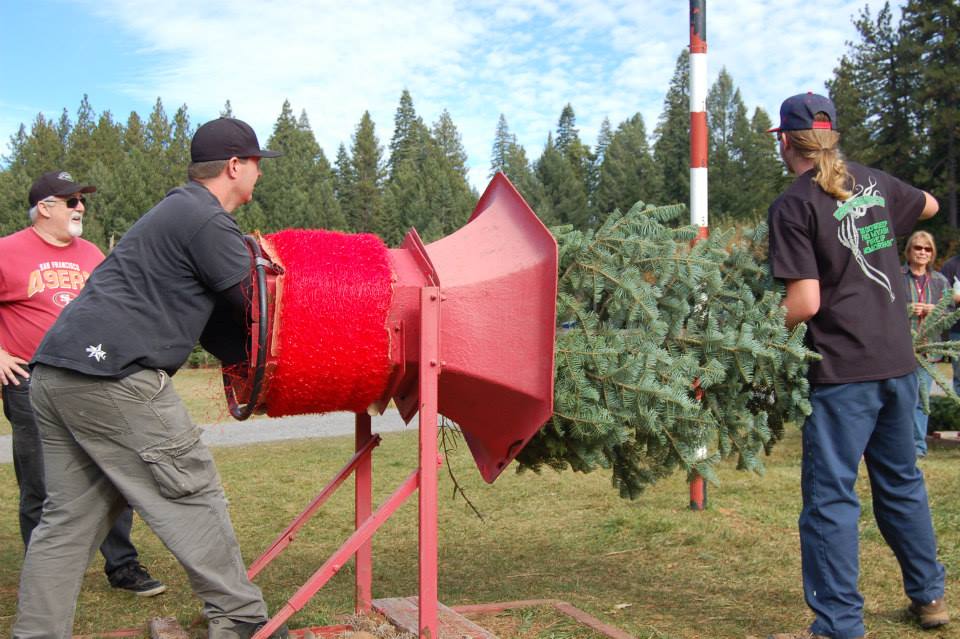
A tree gets wrapped at Harris Tree Farm in Pollock Pines. Photo/Harris Tree Farm

A tree gets wrapped at Harris Tree Farm in Pollock Pines. Photo/Harris Tree Farm

By Kathryn Reed

Christmas trees are big business in El Dorado County and the drought is not drying out the money train.

While the number of trees harvested in El Dorado County is going up, that is not true of the whole state. According to the National Christmas Tree Association, California harvested 383,940 trees in 2002, 119,855 in 2007 and 109,045 in 2012.

(Nevada did not record any trees for any of those years.)

In El Dorado County, the 36,100 trees sold in 2014 had a value of $2.166 million, while in 2013 the 35,808 trees sold were worth $2.148 million, according to the county’s 2014 Agriculture Crop & Livestock Report.

Dee Kobervig, president of the El Dorado County Christmas Tree Growers Association, said cutting down a tree at a farm is a growing business for her 32 members. (There’s about another 30 growers in the county who aren’t part of the organization.)

Photo/Harris Tree Farm Christmas tree tidbits: •Between 25 million and 30 million live Christmas trees are sold in the U.S. every year. •	There are nearly 350 million Christmas trees growing on farms in the U.S. •	For every harvested Christmas tree, one to three seedlings are planted the following spring. •	There are about 350,000 acres in production for growing Christmas trees in the U.S. •	There are close to 15,000 farms growing Christmas trees in the U.S. •	The top Christmas tree producing states are Oregon, North Carolina, Michigan, Pennsylvania, Wisconsin and Washington. •	The most common Christmas tree species are: balsam fir, Douglas fir, Fraser fir, noble fir, Scotch pine, Virginia pine and white pine. Source: USDA National Agricultural Statistics Service, National Christmas Tree Association

Photo/Harris Tree Farm
Christmas tree tidbits:
• Between 25 million and 30 million live Christmas trees are sold in the U.S. every year.
• There are nearly 350 million Christmas trees growing on farms in the U.S.
• For every harvested Christmas tree, one to three seedlings are planted the following spring.
• There are about 350,000 acres in production for growing Christmas trees in the U.S.
• There are close to 15,000 farms growing Christmas trees in the U.S.
• The top Christmas tree producing states are Oregon, North Carolina, Michigan, Pennsylvania, Wisconsin and Washington.
• The most common Christmas tree species are: balsam fir, Douglas fir, Fraser fir, noble fir, Scotch pine, Virginia pine and white pine.
Source: USDA National Agricultural Statistics Service, National Christmas Tree Association

“The demand is probably going to outweigh the amount of trees (in the county),” Kobervig told Lake Tahoe News. “A lot of people are getting rid of fake trees.”

Plus, people like to know where their tree came from and to be part of the process.

Those in the industry call it “farm to floor”, a take off from the “farm to fork” food movement.

Many of the smaller farms are already sold-out for this season.

The trees native to the area are red fir, Douglas fir, white fir, and cedar. But most of the farms grow other trees to accommodate consumers. These include noble, Colorado blue spruce, Swiss silver, Grant fir, and Fraser fir.

“The Nordman out of Norway is the No. 1 Christmas tree in Europe. It seems to be growing really well here,” Kobervig said.

The drought has had some impact on the farmers. Trees are not growing as fast without as much water as normal. Usually it’s the seedlings that require irrigation. Farmers have seen a higher mortality rate with the young trees. Spring rain is important to growth and that just hasn’t happened for the last few years.

“I will admit that some of my noble firs probably had more needle drop because of the heat,” Kobervig said. “Those are trees that normally grow in the Pacific Northwest.”

For Jane Harris of Harris Tree Farm she was watering her seedlings earlier than normal.

With trees taking between 10 and 15 years to reach a sellable size, losing a crop can be devastating.

“A few trees died, but at 4,000 foot elevation it is not as warm as some other farms,” Harris said of her Pollock Pines farm.

What helped this fall was having cold temperatures. This meant the needles were set, which is safer once the tree is cut – it won’t dry out as fast and be a fire hazard.

One thing tree farmers do to help sustain their business is employ “stump culture”.

Customers are asked to leave 12 to 18 inches of stump in the ground.

“That stump will grow a new Christmas tree, so when you cut a tree you are not really killing it,” Kobervig explained.

Plus, this method means less soil disturbance and trees growing faster than if it had started as a seedling.


Reno-to-Tahoe bike trail takes 2 million steps forward

By Benjamin Spillman, Reno Gazette-Journal

The dream of biking from Reno to the shores of Lake Tahoe just got about 2 million steps closer to reality.

That’s thanks to more than $2 million in funding from the Federal Highway Administration is being directed to complete a segment of the Tahoe-Pyramid Bikeway between Reno and Truckee.

The segment between Floriston and Boca is only about three miles long but it’s significant because once it’s complete cyclists will be able to ride from trails and paths in Reno, through Truckee and on to Tahoe City without using roads.

It also means they’ll be able to connect even more off-highway riding on U.S. Forest Service roads in the Truckee area and the Tahoe Rim Trail.

Read the whole story