Peregrine falcons on the rise in Tahoe

Publisher’s note: This article first appeared in Tahoe In Depth and is reprinted with permission.

By Will Richardson

It’s August at Lake Tahoe, the peak of shorebird migration, and the low water level means ample beach and mudflat habitat at the delta formed by the Upper Truckee River and Trout Creek.

Sandpipers and plovers of a dozen species are spread out along the beach, feverishly fueling up for the next leg of their southbound journey, when suddenly — panic. The birds alight, coalescing into a swirling aerial ball, fragmenting and reorganizing. The swarm stretches and splits into two groups as a peregrine falcon slices straight through the middle of the flock, plucking an indecisive straggler along the way. It’s a thrilling spectacle, but less common at Tahoe until recent years.

The peregrine’s name means “wandering falcon” and it has the most extensive natural range of any bird species on the planet. Prior to the Comstock era, it is likely that peregrine falcons were regular breeders in, and certainly would have been regular migrants though, the Lake Tahoe region. An 1877 report by the U.S. Geological Survey describes the species as “met with frequently in early fall.”

As recently as the early 1940s, peregrines were known to nest at Echo Summit and Cave Rock, but over the course of the next several decades, the species experienced precipitous population declines around the world due to the use of organochlorine insecticides like DDT, aldrin, and dieldrin.

A peregrine falcon eats a band-tailed pigeon near Sand Harbor. Photo/Will Richardson

A peregrine falcon eats a band-tailed pigeon near Sand Harbor. Photo/Will Richardson

The approximately 3,875 breeding pairs of peregrines in North America prior to the 1940s declined to 324 breeding pairs at their lowest point in 1975. DDT use was banned in the U.S., Canada, and most of Western Europe by the early 1970s, but it took many years to bring the species back from the brink.

One method used to promote rapid population growth and expansion was captive breeding and hacking. Nestling birds hatched from captive breeding programs (often involving falconry birds in the case of peregrine falcons) were reared in a wooden box to help protect them from predators and weather, and these boxes were placed at unoccupied but otherwise suitable nesting sites, typically a high cliff, a couple of weeks prior to fledging. Once the birds had been at the site for five to 10 days, the box was opened, giving these birds the freedom to move around the site, flap their wings, and build strength.

Biologists provided the birds food throughout the hacking process, but there was minimal contact and biologists often used hand puppets to simulate feeding behavior of adult birds. From 1985 through 1991, 18 juveniles were released at two hack sites in Tahoe, one at Luther Rock and one at Eagle Falls. All 18 birds successfully fledged and dispersed, and the program was considered a success, though where these birds ultimately dispersed to is anybody’s guess. Migrants and presumed transients would steadily increase during the 1990s and 2000s, but it was 22 years since the last hacking effort at Luther Rock before peregrines were confirmed to be breeding again at Lake Tahoe.

In 2007, peregrine falcons were observed in late summer near both South Maggies Peak and Angora Peak. Further investigations revealed that a rock-climbing biologist had observed a peregrine at Luther Rock in 2006. In 2008, the wildlife crew of the U.S. Forest Service Lake Tahoe Basin Management Unit began monitoring potential nesting sites based on a 1980 nesting survey, and the following year a nest was found at Luther Rock.

What’s more, the pair at that nest successfully fledged two young. By 2011, a second nest was discovered at Castle Rock. In 2014, a third nesting pair was confirmed at Cave Rock, and this summer a fourth nest was found at Eagle Lake. Thanks to heroic efforts on a shoestring budget, the wildlife crew at LTBMU has managed to confirm that each of these locations has remained active since they were first found, typical of the species, and a minimum of 20 juveniles has fledged at Lake Tahoe over the last seven years. This is truly an impressive rebound for the peregrine.

Birders and biologists rejoice at the return of the peregrine to Tahoe. Their great speed and hunting skill can be exhilarating to observe. As Forest Service biologist Shay Zanetti points out, “they add an exciting element to the basin ecology.” But perhaps more importantly, they belong here.

Now we need to make sure we can sustain all of these breeding predators, and foraging habitat may prove limiting. Peregrines prefer to hunt water birds and were once known as “Duck Hawks” in this country.

Prior to the construction of the first dam at Tahoe City in the 1860s, there was far more shorebird and wetland habitat distributed around the lake’s shoreline. Extensive beaches and mudflats were perhaps more consistently available from year to year. Now the best waterfowl and shorebird habitat has been reduced and concentrated into a few small pockets, especially when the lake is full.

Thus, we need to consider the peregrine falcon, perhaps nesting miles away on some craggy cliff side, when setting policy that can affect the bird population at a given location. That’s why it’s important for dog owners to keep their pets on a leash at the Upper Truckee Marsh or many of Tahoe’s beaches. But it also applies to forest management practices that might affect band-tailed pigeons, Steller’s jays, Northern flickers, or other birds the peregrine relies on for food. To support a healthy population of peregrine falcons at Lake Tahoe, we need healthy populations of the other bird species as well. Based on the recent trajectory of peregrine recovery at Tahoe, it appears things are looking up.

Will Richardson is co-founder and co-executive director and director of applied science at the Tahoe Institute for Natural Science.

SLT allocates $100,000 to fight Conner in court

By Kathryn Reed

South Lake Tahoe is committing $100,000 of taxpayer money to fight the lawsuit filed by Councilwoman JoAnn Conner. Conner is asking the court and her attorney for a payment plan because of her income level.

The City Council and City Manager Nancy Kerry – the five defendants – met in a special closed session on Dec. 21 to discuss how to proceed. The two reportable actions include the money coming out of the general fund to pay for the outside counsel and that up to $10,000 of that dollar figure will go to Kerry’s own attorney. Both votes were 4-0.

“There won’t be duplicative work. Mine will be working in consult in cooperation with them,” Kerry told Lake Tahoe News of her attorney Stacy Sheston of Best, Best and Krieger out of Sacramento.

Conner named Kerry separately in the filings.

It is normal for the individual parties in a lawsuit to have separate counsel who work together.

Conner is seeking to have the censure by the council overturned, as well the ban on her talking to staff be ruled invalid.

The city has insurance to handle most lawsuits. It doesn’t apply in this instance.

“Insurance does not defend in cases such as this, where there are no damages – financial – and the plaintiff is a member of the governing body. We did submit the cases, as we are required to do, but were advised there was no coverage available,” City Attorney Tom Watson told Lake Tahoe News.

That is why the council had to adjust the budget to take $100,000 out of the general fund. What services might be hurt from that expenditure remain to be seen. There is also no guarantee the litigation won’t cost more than the allotted $100,000.

Per city policy Conner’s attorney has the right to be reimbursed for the costs associated with the actual censure hearing. Attorney Jacqueline Mittelstadt, who is the former city attorney for South Lake Tahoe, submitted a bill for $4,802.01. She charged $400 per hour.

In contrast, the firm the city hired — Kronick, Moskovitz, Tiedemann & Girard – at most is charging $300 per hour.

On Friday, Conner was at the El Dorado County Courthouse in South Lake Tahoe asking to be allowed to pay court fees on a payment plan. She is also on a payment plan with Mittelstadt. Mittelstadt would not say what hourly rate she is charging Conner, only that she is paying “my normal hourly rate.”

“She is not receiving free legal advice. She is obligated to pay me for all of my service,” Mittelstadt told Lake Tahoe News. “Having a payment plan is very different than not having to pay for services provided.”

If Conner were to be charged a different rate than what Mittelstadt has charged the city, it could be construed as a gift, according to the Fair Political Practices Commission. The FPPC oversees campaign donations for candidates and gifts for politicians.

“Generally, a discount or rebate not made in the regular course of business is a gift,” Jay Wierenga with the FPPC told Lake Tahoe News.

The gift limit is $460 from a single source in a calendar year.

FPPC documents say, “A gift is any payment or other benefit provided to you that confers a personal benefit for which you do not provide payment or services of equal or greater value. A gift includes a rebate or discount in the price of anything of value unless the rebate or discount is made in the regular course of business to members of the public.”

Mittelstadt told Lake Tahoe News if she prevails, she would ask the court to have the city pay her legal fees.

Kerry said the city is not allowed to ask for its fees to be reimbursed. The City Attorney’s Office bills at $200 per hour.

Mittelstadt believes the two sides could work things out without the court being involved. Limited talks occurred before the lawsuit was filed. However, Conner doesn’t believe she has done anything wrong and the city believes it has taken the appropriate actions.

“There is nothing planned to meet outside of the legal process right now,” Mayor Wendy David told Lake Tahoe News.

The next court date is Jan. 4.


Bikepacking the backcountry

By Brad Branan, Sacramento Bee

Earlier this year, I was having a perfectly good time backpacking the Tahoe Rim Trail when I became unnerved by all the people passing me on mountain bikes. The reason for my frustration: They were clearly having more fun than me.

So I did what any self-respecting outdoor enthusiast would. I bought a full-suspension Marin mountain bike the next week.

My interest in backpacking didn’t wane, though, with the purchase of the bike. I began to see mountain biking as an extension of the same love for exploration driving my backpacking. So I asked myself: How could I take overnight trips into remote areas like I did backpacking, except on my mountain bike?

Enter bikepacking.

It’s backpacking crossed with mountain biking, except most or all of the gear is stowed in bike bags, not backpacks.

Read the whole story


Will global warming heat us beyond our physical limits?

By Cheryl Katz, National Geographic

If greenhouse gas emissions are not reduced, rising temperatures and humidity wrought by global warming could expose hundreds of millions of people worldwide to potentially lethal heat stress by 2060, a report suggests.

The greatest exposure will occur in populous, tropical regions such as India, Southeast Asia, the Middle East, and Africa. But even in the northeastern United States, as many as 30 million people might be exposed at least once a year to heat that could be lethal to children, the elderly, and the sick, according to the study.

It’s the first study to look at future heat stress on a global basis, says Ethan Coffel, a doctoral candidate in atmospheric sciences at Columbia University, who presented the results last week at the American Geophysical Union meeting in San Francisco. Coffel and his colleagues used climate models and population projections to estimate how many people could face dangerous heat in 2060—assuming that greenhouse gas emissions continue to rise sharply on a “business-as-usual” course.

The findings are based on forecasts of “wet bulb” temperatures, in which a wet cloth is wrapped around a thermometer bulb. Whereas standard thermometer readings measure air temperature, a wet bulb measures the temperature of a moist surface that has been cooled as much as possible by evaporation.

Read the whole story


Nevada food bank helping Tahoe’s working poor

By Linda Fine Conaboy

RENO – The Food Bank of Northern Nevada services an area of about 90,000 square miles. Included within their client base are communities on the eastern slope of the Sierra, which covers California locations such as Lake Tahoe, Susanville, Bridgeport, Bishop and many points in between. In Nevada, a food truck makes the rounds of Ely, Winnemucca, Gerlach, Elko as well as other small towns in Nevada once a month.

“It would be pretty drastic for us not to show up with our food truck,” Laura Hellen, one of two development officers at FBNN told Lake Tahoe News. “About two weeks ago, when we had a major snowstorm, our patrons wondered if we were coming. It would have to be something pretty drastic for us not to show up.”

Not surprisingly, the Food Bank is extremely busy this time of year.

Volunteers with the Northern Nevada Food Bank load boxes for recipients. Photo/Provided

Volunteers with the Food Bank of Northern Nevada load boxes for recipients. Photo/Provided

According to marketing director Jocelyn Lantrip, “This is when we raise a lot of money and a lot of food, but the truth is, we feed people year-round. If you talk to our partner agencies, they’ll tell you they are even busier in the summer because kids are out of school then.”

The client base includes more than children, although kids and seniors make up half of the 103,000 people who receive food each month. Additionally, the Food Bank supplies food to emergency food pantries, mobile pantries, commodity supplemental food programs and other senior programs.

“We feed kids after school, distribute fresh produce and also feed kids in the summer. We work with senior centers and operate another USDA program, which provides boxes of food to about 2,500 seniors monthly,” explained Hellen.

The USDA money is considered “pass through” money. “We raise money to hire cooks, but we’re reimbursed by the government for meals. This includes summer meals and after-school meals.”

It’s easy to see why record keeping is meticulous. “Counts are important. We must be very careful to note both the number of kids fed as well as the location. In Nevada, 53 percent of the children qualify for a free lunch,” Hellen said.

Lantrip told Lake Tahoe News that if a school qualifies for free lunch, then the entire neighborhood is eligible. “That relieves us of having paperwork on each child.”

Seniors can receive a box of food containing staples like beans, rice, oatmeal, cheese as well as canned fruits and vegetables. There is also a mobile pantry offering mostly fruits and veggies, which is available to all of the FBNN partner agencies depending upon their refrigeration capabilities.

The refrigeration unit at the Food Bank’s new headquarters east of Sparks is massive and can easily accommodate the fresh produce they provide—at least 50 percent of all their food consists of fresh fruit and vegetables.

“We happen to have moved next door to the Walmart distribution center,” Hellen said. “Consequently, we get about 2 million pounds of food from them, including lots of fresh produce. We tell other food banks to try to build next door to a Walmart,” she laughed. “Their employees even come here to donate time.”

While much of the produce is sourced from California, not all of it can be returned there. According to Lantrip, there is a list of fresh food that cannot be returned back across state lines to California distribution points.

“Food like some citrus and yams. We follow this list carefully. It’s an isolated thing based on state agriculture laws,” Lantrip said.

Many of the service boundaries within FBNN’s distribution locales are decided by Feeding America, their parent organization, populated not only by the Nevada facility, but also by 200 other food banks throughout the United States.

“We’ve had underserved counties and areas identified by them and now we’re meeting that need,” Lantrip said.

One of these partner agencies, which distributes food not only to Nevadans, but also to California residents, is Project MANA based in Incline Village.

Heidi Allstead, the executive director, told Lake Tahoe News that each year Project MANA serves 3,000 people more than 11,650 meals through their four mobile food distribution sites, including Tahoe City, Kings Beach and Truckee.

This group receives food not only from FBNN, but also Placer Food Bank and several local grocery stores, weekly.

“We assist the working poor,” Allstead said. “Most of the people we serve work seasonal jobs and many have multiple jobs, but still can’t make ends meet. This is mostly due to low wages and the high cost of living at Tahoe.”

She added that nearly 10 percent of the people living in her local service area are below the poverty line. According to statistics provided by the Placer Food Bank, 1 in 8 individuals in Placer, Nevada and El Dorado counties—43,000 people—struggle with hunger.

With two vehicles, one being a refrigerated truck and the other a refrigerated van, employees and volunteers deliver food and also rescue food from grocery stores and food drives. Besides weekly distribution to the local sites, they also make once-a-week rounds to home-bound people.

Project MANA’s offices and warehouse are in the Don W. Reynolds Community/Non-Profit Center in Incline Village, where, among other activities, they train volunteers, meet with the public and pack bags for the Food and Companionship Exchange program.


Report: Gray water risks need to be studied

By Matt Stevens, Los Angeles Times

As water utilities and their customers increasingly look to gray water and runoff from storms to supplement their supply amid drought, more guidelines and research are needed to ensure that the water is safe, researchers said in a report released Wednesday.

These sources “have substantial potential to contribute to local water supply needs,” according to the 326-page study, but “additional examination of risk is necessary” as use of stormwater and gray water becomes more widespread.

Gray water is untreated wastewater from washing machines, showers or bathroom sinks.

“This is water you have now that you can take advantage of,” said Richard Luthy, a Stanford professor and one of the report’s authors. But, he added, “there’s the opportunity there for exposure to pathogens. And that’s something that needs to be studied more carefully.”

Read the whole story


Casinos explore use of robotic dealers

By Daniela Wei, BloombergBusiness

She has an hourglass figure, an unflappable manner and a friendly face. Meet “Min,” the robot whose creators say could revolutionize card-dealing in the world’s casinos.

The svelte brunette is a prototype of a human-like electronic croupier, which Paradise Entertainment Ltd., a

Hong Kong-based gaming machine manufacturer and supplier, says could cut labor costs and open up new markets for casino operators. While her function is currently limited to dealing cards, planned enhancements could have her recognizing customers’ faces and speaking to them in multiple languages, Chairman Jay Chun said.

After making her debut at a gaming show in Macau last month, Min and her clones will initially be introduced in the U.S., where labor costs in casinos are proportionally higher than in Asia and where humans, but not machines, are prohibited in some states from working as croupiers. Paradise is talking to potential overseas buyers, Chun said, declining to say how much the robots will cost.

Read the whole story


Northstar gondola makes ride to slopes faster

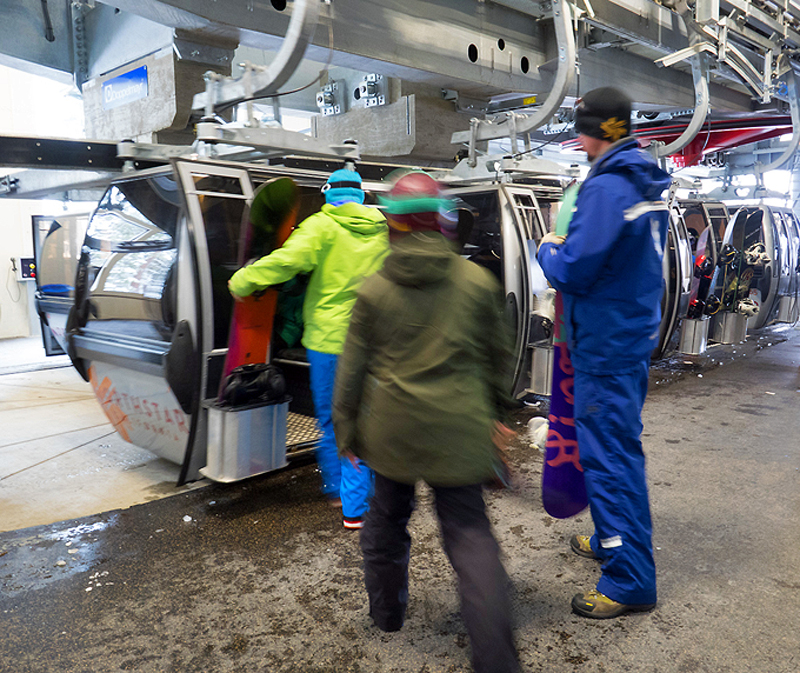
Skiers and riders board Northstar's gondola to get to mid-mountain. Photo/Carolyn E. Wright/Copyright

Skiers and riders board Northstar’s gondola to get to mid-mountain. Photo Copyright 2015 Carolyn E. Wright

By Kathryn Reed

TRUCKEE – Speed – it’s what most riders want. Waiting in lines and slow lifts don’t add to a memorable ski day, at least not in a positive way.

Comfort is another biggie.

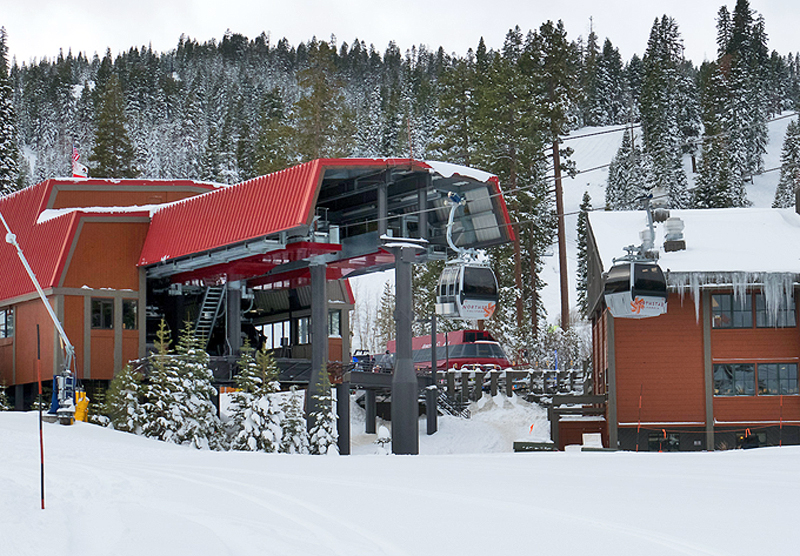
Northstar has been listening. While skiers and snowboarders might not notice the changes at first, the Big Springs Gondola has been overhauled in the last two years. The latest upgrade for this season is making the 30-year-old transport faster. In five minutes people are whisked from the village to mid-mountain.

The change allows for an increase of 10 percent more of the six-seater cars being able to get from the bottom to the top compared to years past.

During the summer engineers worked to make the whole apparatus quieter and smoother.

The gondola ends at mid-mountain.

It’s a quick ride for passengers on the gondola to get to mid-mountain. Photo Copyright 2015 Carolyn E. Wright

“The infrastructure was upgraded with the most recent technology available, keeping terminals from being too loud for guests waiting to onboard,” Cass Walker, the resort’s spokeswoman, told Lake Tahoe News.

In the previous offseason the doors and windows were replaced, as were the seats – which came with more cushioning. Most of the work was done in house.

The outside equipment holder now accommodates the fatter skis, with it being able to hold six pairs of skis and four snowboards.

Prior to the gondola’s opening in 1985 people had to rely on the Village Express Chairlift. The starting point is close to the gondola. But seldom does the lift run. It’s just not as efficient. Plus, it drops people off right on a run.

The gondola drops people off within walking distance to three main chairlifts that go farther up the mountain. Plus, this is mid-mountain, where there is a day lodge. And for those who are not skiing and just want a ride up the mountain, the gondola is the E ticket ride to get there.

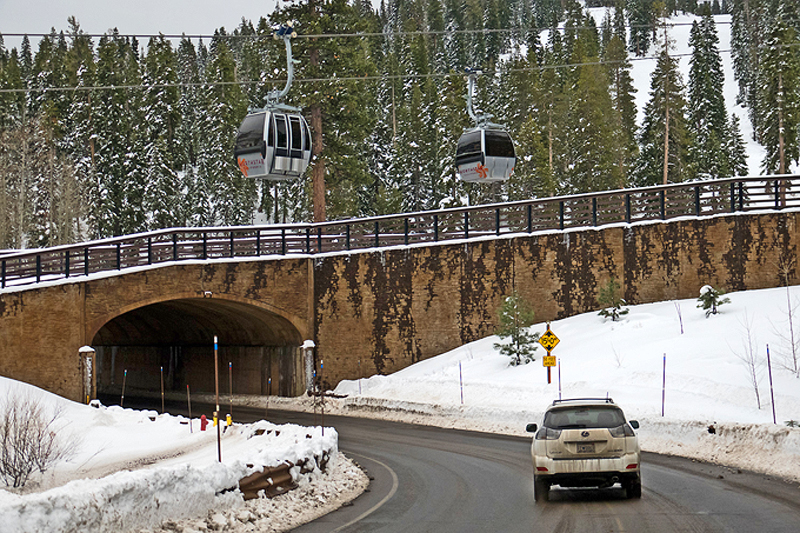
The gondola crosses the road leading to the Ritz-Carlton. Photo/Carolyn E. Wright/Copyright

The gondola crosses the road leading to the Ritz-Carlton. Photo Copyright 2015 Carolyn E. Wright

“The entire terminal has also been renovated – featuring lovely scenic and village shots and some great accolades. We will also be including new furnishings within the terminal,” Walker said.

Per company policy Walker would not release how much it cost to improve the gondola. All she would say is parent company Vail Resorts has infused $30 million into Northstar in the last five years since it acquired the property.

For now, this is the end of the planned upgrades to the gondola. This means it will be a while before Northstar has what Vail ski resort has – a heated eight-seater gondola.


2015 may set record for worst fire season

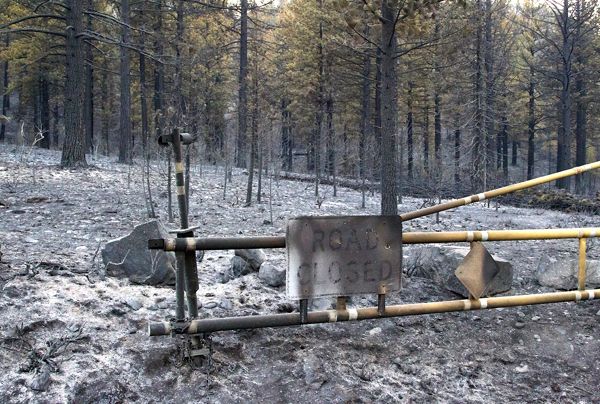
The Washington Fire in June threatened the town of Markleeville. Photo/Carolyn E. Wright/Copyright

The Washington Fire in June threatened the town of Markleeville. Photo Copyright 2015 Carolyn E. Wright

By Darryl Fears, Washington Post

The nation is closing in on its worst wildfire season in recorded history, with nearly 9.8 million acres already burned — the equivalent of Massachusetts, Connecticut, Rhode Island and part of New Hampshire going up in flames.

Two large fires and more than 160 smaller ones remain active, and more fires are expected to be reported before the month ends. Together, they’re likely to push the 2015 total past the record 9.87 million acres burned in 2006.

The extent of scorched earth reflects a warming trend that has made the United States considerably drier, scientists and fire expects say, with less mountain snowpack particularly in Alaska and the southwest.

Read the whole story


Calif. lawmakers ask if fantasy betting is skill or chance

By Juliet Williams, AP

SACRAMENTO — Purveyors of daily fantasy sports gaming made their pitch for minimal regulations for the fast-growing industry before a panel of California lawmakers on Wednesday, arguing that the online sports match ups are a harmless outlet for fans and purely based on skill, not chance.

“These are games of skill, skill that rewards knowledge of sports,” said Griffin Finan, an attorney for DraftKings, one of the nation’s two largest operators, along with FanDuel. Griffin said that unlike gambling, the games rely on entry fees rather than wagers, and customers are not pitted against the company in the competition.

Whether the games rely upon skill or chance is key to the next regulatory steps. If they are based upon skill, lawmakers can impose regulations — from requiring transparency in their operations, imposing licensing and fees or taxing their business. If they are determined to be games of chance, lawmakers cannot intervene, but it’s unclear if the leagues could continue operating.

Critics argue that the games in which participants “draft” players and win money based on the athletes’ performances in the real world are illegal online gambling that should either be shut down or heavily regulated.

Assemblyman Marc Levine, D-San Rafael, asked the representatives how they can say anyone in a jersey on the couch can win, if it’s a game based on skill. “How do you justify the marketing? Unless you are pretty sophisticated, you are going to lose your money,” Levine asked.

Peter Schoenke, president of RotoWire.com, which syndicates the fantasy content to online companies such as NFL.com, said players can improve as they learn more and play more. Winning requires “judgment-making skills similar to a coach or a general manager,” he said.

California lawmakers are the latest to wade into the issue, which sprang to public attention after an onslaught of advertising at the start of the NFL season last September. As many as 20 states are expected to consider regulations next year.

Nevada regulators declared the bets illegal gambling and ordered the sites out of the state unless they acquire gambling licenses. New York’s attorney general this week ordered DraftKings and FanDuel to stop operating, but the companies won a temporary reprieve allowing them to continue operating through January.

The companies have also become a major source of revenue for professional sports teams, setting up comfortable lounges for players inside arenas and helping marketers connect with millennial fans, who want “second-screen content,” said Peter Thuresson, vice president of the LA Clippers.

Assemblyman Adam Gray, D-Merced, who led Wednesday’s hearing, has proposed legislation that would require league operators to be licensed by the state Department of Justice.

Representatives said they are eager to work with lawmakers — to a point. Martha Coakley, the former attorney general of Massachusetts, testified on behalf of DraftKings. She said the company supports regulations to address “compulsive behavior,” prevent underage players and transparency about fees.

When asked in an interview if the companies should be required to pay taxes, she said the companies already pay business taxes in the states where they are based, and everyone who wins more than $600 receives a 1099 IRS tax form.

“So what would be the rationale to say, ‘We the state of California want, you know, a chunk of this?’ she said. “We are a business, we’re going to play by business rules, we do what other businesses do.”