‘It’s amazing what Calstar pilots, personnel do’

South Shore woman credits air ambulance with saving her life


By Laura Kaufman

Living in Christmas Valley, Billie Jo and Paul McAfee are used to a fairly self-sufficient life. The valley is 1,000 feet down, tucked into the mountains along Highway 89 on the South Shore. Paul McAfee, a former Marine and a heavy equipment mechanic for the city of South Lake Tahoe, is also a HAM radio operator. Billie Jo McAfee, a retired California Tahoe Conservancy secretary, says, “Due to the isolated area, we have been Calstar members for years.”

Billie Jo McAfee, 68, recalls the challenges when winter pass closures cut off the valley from surrounding communities. But a different, unusual emergency arose for her last winter—a fast-moving, mysterious flu-like illness—that put their Calstar membership into action.

“We are prepared for many things, but we were not prepared for this. It was so insidious, the way it snuck up on me. I realized that it was getting worse very quickly,” she says.
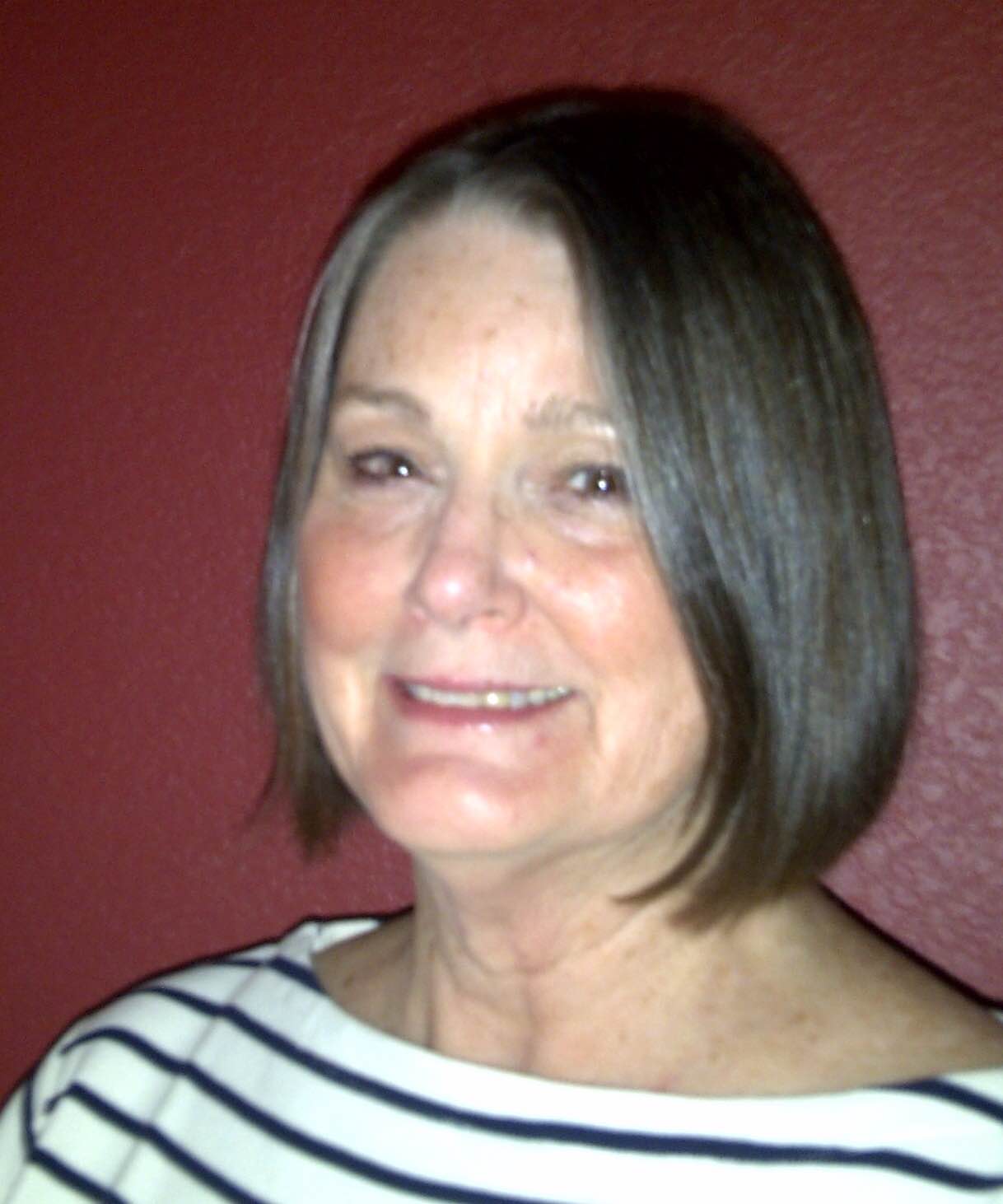
Billie Jo McAfee

Billie Jo McAfee

On Feb. 1, McAfee developed an unusual cough. Then, she started vomiting. Drinking lots of fluids, she suspected she had the flu, but wasn’t sure. Three days later, she met her husband at the door as he returned from work. “I think I’m in trouble,” she said. They went directly to the ER at Barton Memorial Hospital. On the way, she passed out in the car.

“When we got there, they asked me to spell my name, and I couldn’t,” she said. That is all she remembers.

McAfee was already in critical condition. Calstar was called to transfer her quickly to Renown Regional Medical Center in Reno. She vaguely remembers thinking that the helicopter looked like a tiny mosquito, and she didn’t think she would fit inside. But during the flight she recalls feeling comfortable and warm.

“I remember the scene in little funny flash clips,” she says. “I remember a soothing voice saying ‘in two minutes we will land, and here’s what will happen’.”

Flight nurse Mark Haase was on the transport that evening. He recalls Billie Jo’s situation as complex, compounded by multiple factors, including electrolyte imbalances and fever.

“She was gravely ill with overt cardiac complications that warranted rapid air ambulance,” he says. “I recall her demeanor to be rather brave and calm in light of the seriousness.”

On arrival, McAfee vaguely remembers having a port installed in her neck, being prepared for surgery, and then bright lights overhead. She was in the ICU for two days. She kept waking up to discover doctors all around her, but was not able to answer their questions. Her husband was always there. McAfee was put into quarantine, and on the fifth day, her doctor told her what had happened: severe sepsis.

“I had to look it up, as I had never heard of it. I was shocked to discover that this was one of the things people died from in World War I, when they had wounds and no antibiotics. It’s a bacterial infection, and it can get into your bloodstream and take over, wrecking your organs and your brain. I read that people often die within about four days,” she said.

According to the Sepsis Alliance, sepsis is the body’s toxic response to infection. The organization says, “every hour that sepsis is not treated increases the risk of death.”

“I truly believe that I would not be alive if not for the helicopter transport. At the time, I had no idea how sick I was. Sepsis gets to a point where you can’t reverse it, and time is of the essence,” McAfee says. “An ambulance would have taken an hour and a half, but Calstar got me there in about 20 minutes.”

In McAfee’s case, the source of the sepsis was a mystery. To her surprise, much later it was discovered to be caused by a seriously diseased gallbladder. Tests of that organ had originally come back normal—its condition possibly masked by all the medications and antibiotics she was on. However, as she continued healing, she was still aware that something was not quite right.
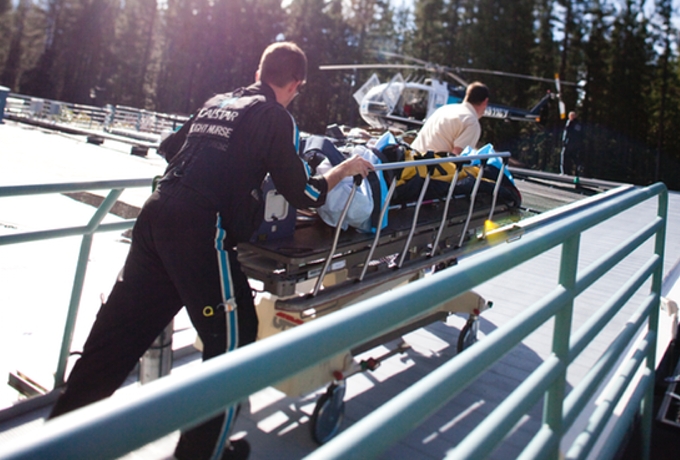
Billie Jo McAfee credits Calstar with saving her life. Photo/Provided

Billie Jo McAfee credits Calstar with saving her life. Photo/Provided

Recovery and recharging

After about two months, McAfee felt good enough to go for coffee or shopping with friends, but found she would have to spend the next two days in bed. “I’d tell myself, this is a reminder that you were very sick – and need to take things slow.”

Something still wasn’t allowing her to fully bounce back. After she underwent a highly specialized scan, it was indeed found that her gallbladder was in bad shape. When she had it removed, months later, McAfee recovered right away.

Recently, she stopped by the Calstar station at the South Lake Tahoe airport to say hello and to thank the staff for her nick-of-time transport last February.

“It’s amazing what Calstar pilots and personnel can do. In winter here, we have bad accidents or mishaps in the Kirkwood area, and they are crackerjack at getting in and helping people in need. I’ve told everyone in the valley that it’s a no-brainer: join as a member,” McAfee says.

“I just want to extend my thanks to Calstar. If they hadn’t gotten me to the trauma center in such an expeditious manner, I probably wouldn’t be here to deliver the message,” she adds.

Back in Christmas Valley, the McAfees are again readying for the winter. This time, they are looking forward to a happy, healthy, and much less eventful New Year.

Laura Kaufman works for Calstar.

—–

Notes:

·      Calstar memberships may be purchased online.


Gambling may help seniors stay sharp

By Will Ripley and James Griffiths, CNN

It might be a long way from the glitz and glamor of Las Vegas or Macau, but old people’s homes may quickly be becoming a new frontier for gaming in Japan.

In one senior day care center in Yokohama — appropriately named after the aforementioned U.S. gambling mecca — elderly people play mahjong and baccarat as the chimes and pings of slot machines and pachinko fill the room.

“We believe this casino stimulates the brain and helps to prevent or suppress the development of dementia,” said Kaoru Mori, Chairman of Japan Elderly Care Service, which runs the “Las Vegas” center.

It’s no secret that old people love to gamble. Grey hairs are a common sight everywhere from the casino floors of Vegas to the mahjong parlors of Hong Kong.

Read the whole story


Sierra, Northstar among resorts up for sale

By David Sharp, AP

PORTLAND, Maine — A real estate investment trust that’s selling more than a dozen ski resorts from Maine to California won’t meet its deadline of completing the transaction by year’s end.

CNL Lifestyle Properties, which is based in Orlando, Fla., has sold its senior housing portfolio, a dozen marinas, four attractions, and the Mount Washington Hotel and Bretton Woods ski area in New Hampshire.

But it continues to seek buyers for 15 additional ski resorts — including Northstar and Sierra-at-Tahoe, remaining attractions and marinas, and says it will update shareholders in the first quarter of the new year.

The real estate investment trust “continues to evaluate strategic options for the remainder of its ski and mountain properties as it seeks to provide liquidity to its shareholders,” CNL Financial Group senior managing director Steve Rice said in a statement.

REITs are an investment vehicle for a variety of properties including hotels, office buildings and malls. The trust owns the property and makes money from leases and rent.

CNL Lifestyle Properties is trying to sell ski resorts including Sunday River and Sugarloaf in Maine, Loon Mountain and Mount Sunapee in New Hampshire, Okemo Mountain in Vermont, Crested Butte in Colorado, and Brighton in Utah.

Skiers won’t see a big impact from the sale. Long-term leases will remain in place, so mountain operators will remain unchanged once the property changes owners.

“CNL has had the profile for sale for a while, Booth Creek Report Properties owns the management contract with them. I work for Booth Creek and nothing will change for Sierra when and if the REIT sells. Northstar is owned by CNL as well, and Vail holds the management contract,” John Rice, general manager of Sierra, told Lake Tahoe News. “Each ski property in their profile has continued to operate under their management contracts as they did prior to CNL purchasing the ownership. It is correct nothing will change with resorts like Sierra who are under long-term management contracts.”

CNL Lifestyle Properties was valued at as much as $3 billion in 2012 with ownership of more than 100 water parks, ski resorts, marinas and senior housing developments. But the value has dropped in the aftermath of a real estate downturn.

The drought in the West hasn’t helped. CNL told shareholders that its ski holdings last season were “negatively impacted by adverse conditions,” particularly in California, which saw its third straight season of record-breaking drought.

The improving weather out west — which has seen snow this month — may set investors and potential buyers at ease, said Michael Krongel from Mirus Resort Capital in Burlington, Mass., who’s been involved in buying, selling and developing ski resorts for 45 years.

But investors don’t tend to get overly worried about a short-term trend, said Michael Berry of the National Ski Areas Association. “The industry has a pretty strong financial performance history when looked at over a 10-year period,” he said.

If CNL sells the remaining ski resorts as a package, then it would be the largest single ski resort transaction in the history of the sport. But it appears that CNL is willing to entertain breaking them apart, since Bretton Woods was sold separately.

Lake Tahoe News contributed to this report.


Caltrans gears up for more Highway 50 work

By Kathryn Reed

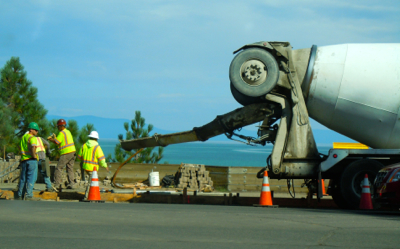
When Caltrans returns in 2017 to do the Y to Trout Creek project South Lake Tahoe officials do not want a repeat of what happened this summer.

“This project this summer caused so much disruption,” City Manager Nancy Kerry told Clark Peri.

Peri is the project manager for the Caltrans district that encompasses the basin. He got an earful earlier this month about how unresponsive the contractor as well as his office was when it came to trying to get crews to better manage the project in terms of traffic, safety and flow.

Southwest Gas was working on this section to put in its infrastructure ahead of the transportation department doing its work. They will be back in 2016 to do more work.

Peri said things will improve at least in 2017. In large part this will be because Caltrans will have oversight of the contractors doing the work.

But he said if there is no daytime work the next project will take four years to complete instead of the scheduled three.

 Work on Highway 50 in South Lake Tahoe will continue through at least 2019. Photo/LTN file

Work on Highway 50 in South Lake Tahoe will continue through at least 2019. Photo/LTN file

This next two-mile stretch of Highway 50 is designed to improve the road and water quality by repaving and adding drainage inlets.

Sidewalks will be 4 to 7½ feet wide, curb ramps will meet ADA requirements, the shoulder will be widened to a minimum of 6 feet to accommodate cyclists, and bus pullouts will be expanded.

What Councilman Tom Davis is frustrated about is that lighting is not part of the plans.

“Trout Creek to the Y is dark, especially in winter,” Davis lamented. “We need a complete, safe street.”

The funding source doesn’t allow for that amenity, Peri said. However, the city could pay for it.

Electrical conduits will be installed so lights could be added after the fact.

This will be a $56.7 million project.

It will be broken up into three phases, with each phase taking a season. They are the Y to Winnemucca Avenue, Winnemucca to Sierra Boulevard, and Sierra to Trout Creek. From there the project is further broken down into four segments, each of which will take four to six weeks to complete.


U.S. gives meat producers a pass on climate change emissions

By Nathan Halverson, Reveal

If the Paris climate pact is going to succeed at staving off climate change disaster, the 195 participating countries will need to achieve a difficult feat – trust.

Yet the U.S. government already is failing to implement its own rules on tracking emissions. It is not collecting emission reports from one of the country’s largest sources of greenhouse gases: meat production.

In its latest appropriations bill passed earlier this month, Congress renewed a provision that prevents the Environmental Protection Agency from requiring emission reports from livestock producers. The move came only days after U.S. officials stressed to other governments the importance of accurate reporting at the Paris climate negotiations.

The U.S. government collects the reports from 41 other sectors, making the meat industry the only major source of greenhouse gases in the country excluded from filing annual reports.

Livestock producers, which include meat and dairy farming, account for about 15 percent of greenhouse gas emissions around the world. That’s more than all the world’s exhaust-belching cars, buses, boats and trains combined.

The EPA has called the emission reports “essential in guiding the steps we take to address the problem of climate change.”

As a result of having inadequate information on livestock producers, the U.S. government is vastly underreporting its true greenhouse gas emissions, according to a growing consensus of American scientists.

In 2013, a team of researchers from Harvard University, Stanford University, the U.S. National Oceanic and Atmospheric Administration, Lawrence Berkeley National Laboratory and elsewhere worked together to collect air samples and analyze actual emissions near large livestock operations such as cattle feeding lots in California, Nebraska and Iowa. They found that greenhouse gas emissions from livestock were twice as bad as what the EPA estimated. Subsequent studies have found similar results.

The United States is underreporting its total greenhouse gas emissions to the United Nations by about 4 percent per year as a result of bad livestock data – nearly equivalent to the entire emissions of Spain, according to the 2013 study.

The EPA’s ban on collecting reports from the U.S. livestock industry, which is the second-largest in the world behind only China, goes back several years.

In 2008, Congress instructed the EPA to draft regulation requiring the country’s largest greenhouse gas emitters to file annual reports. The following year, the EPA finalized those regulations, requiring dozens of industries – including large-scale livestock producers – to report their emissions.

But the EPA never received a single report from meat producers. In 2010, when the first reports were to be collected, Congress attached a provision to the EPA’s budget. It prohibited the agency from spending money to collect emission reports on livestock producers – specifically the greenhouse gases emitted from some of the 335 million tons of manure produced each year.

Monitoring and curbing greenhouse gases from livestock is considered vital to stopping global warming, according to scientists.

A recent report published in the Environmental Law Reporter cited several studies showing that forecasted growth in worldwide agricultural emissions alone – unless curbed – will push global temperatures past the tipping point.

“Global demand for livestock products is projected to grow 70 percent, if not double, by 2050,” wrote Debra Donahue, law professor at the University of Wyoming College of Law. “Plainly, neither the United States nor the earth can continue on this track, yet this is precisely our course.”

Decomposing manure is one source of livestock emissions. Technology exists to capture the methane and turn it into electricity, although it is rarely used in the United States. The other major source of emissions are the cows themselves, which belch and fart methane. Scientists also have developed methods for reducing methane emissions from the cows, such as changing their diets. But there is little incentive for large-scale farms to adopt these practices in the U.S.

Under current regulation, there are even disincentives. If a livestock operator were to capture the methane, turning it into electricity or another form of energy, it would then fall under climate change regulations. By doing nothing and simply allowing the methane pollution to escape into the atmosphere, livestock operators do not have to deal with the EPA greenhouse gas rules.

Methane is 72 times more potent than carbon dioxide when it comes to trapping heat and increasing global temperatures. But it stays in the air for a far shorter period of time – it mostly disperses within 12 years.

Scientists say changing our food system will have a quicker impact on stopping climate change than altering our fossil fuel habits.

But politicians and even environmental groups are afraid to talk about it because they fear a backlash from the meat-loving public, according to a 2014 report by Chatham House, a London-based think tank. The report found governments such as the United States were doing little about the problem and that “recognition of the livestock sector as a significant contributor to climate change is markedly low.”

Sometimes, it’s even hostile. In 2013, the head of the EPA, Gina McCarthy, testified to the U.S. House Committee on Science, Space and Technology. Rep. Thomas Massie, R-Kent., wanted assurances that regulators would not monitor livestock.

Massie: There is one other issue that affects rural America that just has us scratching our heads. I hope it is an urban legend. Is anybody in the EPA really looking at regulating cow flatulence? 

McCarthy: Not that I am aware of.

Massie: (He then asks more broadly about methane emissions from cattle.) Can you assure us today that you are not investigating that?

McCarthy: I am not looking at that.

Massie: Nobody in the EPA is? 

McCarthy: Not that I am aware of.

U.S. politicians seem concerned about voter backlash if they appear critical of U.S. eating preferences. Americans eat more meat per capita than any other nation.

However, for meat producers, the cost to better monitor emissions appears to be insignificant, at least according to the country’s largest pork producer. WH Group, a Hong Kong-based company that owns about 1 in 4 American pigs, wrote an 1,100-page prospectus to investors that included a tidbit about how it has never filed a greenhouse gas report to the EPA because of the annual intervention by U.S. lawmakers.

Yet the company’s report said the cost to disclose emissions to the EPA likely would be negligible to the company’s bottom line.

It is not expected that such costs would have a material adverse effect on our hog production operations in the U.S.
Big companies like Smithfield Foods, which is owned by WH Group, could implement monitoring technology, and it would cover much of the emissions from U.S. livestock. The largest 2 percent of all livestock farms now produce more than 40 percent of all animals, according to the U.S. Department of Agriculture.

But for now, as a result of congressional action, the world is left guessing about American cow farts, even as U.S. officials demand accuracy from other nations. If the 194 other participants to the Paris climate pact think that stinks, who can blame them?


2015: A good year for the average human being

By Charles Kenny, Atlantic

From Paris to Syria through San Bernardino to Afghanistan, the world witnessed obscene and unsufferable tragedy in 2015. That was on top of the ongoing misery of hundreds of millions who are literally stunted by poverty, living lives shortened by preventable disease and malnutrition. But for all of that, 2015 also saw continued progress toward better quality of life for the considerable majority of the planet, alongside technological breakthroughs and political agreements that suggest the good news might continue next year and beyond.

Tragedy and misery are rarer than they were before 2015—and there is every reason to hope they will be even less prevalent in 2016.

To start with acts of violence in America, despite its epidemic of mass-shooting events, the country is still far safer than it was in the past. The latest FBI statistics, reported this September, suggested that the trend toward lower rates of violent crime in the United States that began in the early 1990s continued at least through 2014: There were nearly 3,000 fewer violent crimes that year than the year before and more than 600,000 fewer than in 1995—that’s a 35 percent decline over the period.

The latest data from the UN suggests that this is part of a global trend—to take one category of violent crime, homicide rates have dropped by an estimated 6 percent in the countries for which data was available between 2000 and 2012.

Read the whole story


Going to the beach Tahoe style — with skis

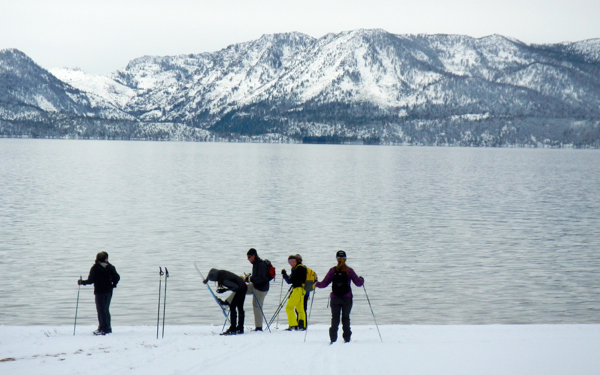
Lots of snow this year makes it to ski on Tahoe's beaches. Photos/Kathryn Reed

Lots of snow this year makes it easy to ski on Tahoe’s beaches. Photos/Kathryn Reed

By Kathryn Reed

ROUND HILL – Flat and scenic – the perfect combo for a cross country ski trek for those who are not super proficient at this sport.

While gliding is a large component of getting anywhere on these skis, many of us were having trouble on this particular Saturday. The snow at times was sticky, other times slick. We persevered. The beauty surrounding us was too beautiful to let our speed or lack thereof dampen the outing.

With the abundance of snow this year there is little reason to have to travel far to ski. The beaches in the basin offer miles of scenic bliss. Being next to the water allowed for views to the West Shore and of Mount Tallac.

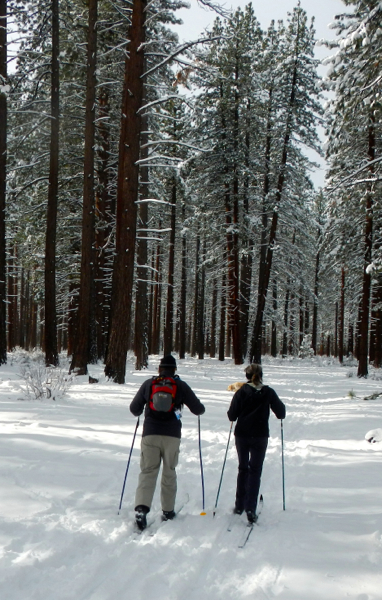
Starting out the trek is through the woods.

Starting out the trek is through the woods.

Going out the lake was tranquil; looking like it could have been a good day for a paddle, as well. Heading home, though, the water was rougher – making the choice to be on land the smart decision for that day.

Eleven people and three dogs earlier this month went from Nevada Beach, through Edgewood Tahoe Golf Course to Lakeside Beach and back – about four miles round trip.

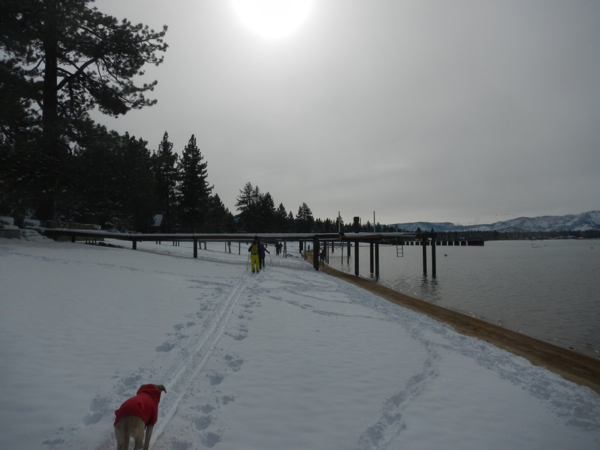
The lake is so low that at times we were gliding under piers. It certainly made it easier than contending with water or being close to private dwellings. Nevada and California have different rules about what is considered public property in regards to the water lines.

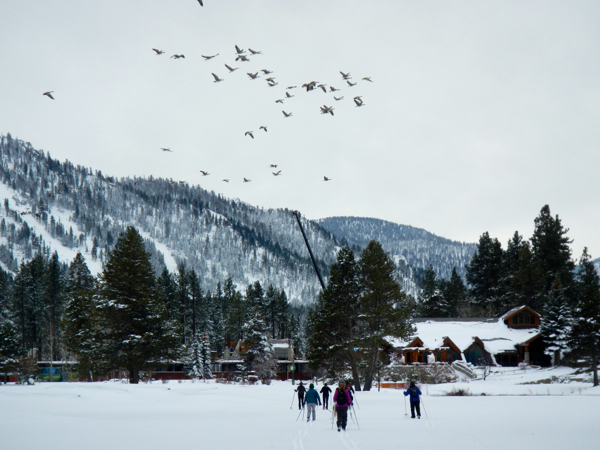
Edgewood Tahoe goes from golf course to cross country trail.

Edgewood Tahoe goes from golf course to cross country trail.

With snow, the clubhouse at Edgewood looks regal, yet inviting. Unfortunately it wasn’t open the day we scooted by.

In fact, nothing was open on this stretch of sand. With the number of people who were out at Lakeside, it would seem like a perfect place for a hot chocolate and food concessionaire. They have the facilities in the summer, so why not now?

No ducking required to ski under the docks.

No ducking required to ski under the docks.

—–

Getting there:

From South Lake Tahoe, go east on Highway 50. Drive past the casinos. Turn left on Elks Point Road. Turn left on Dorla Court. Park and ski toward the lake.


Aging rock climbing equipment a safety threat

By Steven K. Paulson, AP

DENVER — They have popular names like Dome Rock, Yosemite, Rocky Mountain National Park and Joshua Tree, and they all have one problem in common that seasoned rock climbers call a “ticking time-bomb” — aging climbing anchors.

The anchors, drilled and pounded into the sides of mountains, are rusting and starting to fail, and some climbers and parks are trying to replace them. Funds, however, are sparse.

Some of the anchors are made of iron and were installed in the 1960s. Others hide dangerous secrets — they are bolted in rocks that have loosened because of freezing and thawing, and there are bolts that look new on the outside, but have rotten cores.

Some bolts are so bad climbers can pull them out with their fingers.

Experienced climbers often keep logs of dangerous or failing equipment and share them with other climbers, but the information is often not available to other climbers.

Bernadette Regan, a seasoned climbing ranger at Joshua Tree National Park, about 140 miles east of Los Angeles, fell last year when a bolt broke off while she was rappelling down a popular route called “Solid Gold,” one of the park’s more popular routes.

Her life was saved because she didn’t trust the bolt and had a backup rope that kept her from plunging 150 feet to the ground.

“I was testing it, and jumped on a bolt and it broke,” she said. The bolt was replaced a week later.

Park officials held a “bolting blitz” last month that brought in master bolters from around the U.S. to do some concentrated re-bolting on ancient anchors. They replaced 62 bolts, some of them more than 30 years old.

Regan said experienced climbers are worried because the sport has drawn more interest in recent years.

She said interest soared this year after Kevin Jorgeson and Tommy Caldwell spent 19 days scaling the 3,000-foot sheer granite face of the Dawn Wall of El Capitan wall in Yosemite National Park, long considered one of the world’s most difficult climbs.

Chris Weidner, who is on the board of the Boulder Climbing Community in Colorado, said the anchors are “ticking time-bombs.”

He said it has taken years for the climbing community to band together to fix the problems because experienced climbers are a close-knit community and they don’t rely on old equipment to keep them safe.

He said thousands of climbing routes from the East Coast to the West Coast need to be fixed for new enthusiasts.

“It’s scary when you look at bolts that are corroded,” he said.

Weidner said one of his favorite routes in Rocky National Park, called “the Diamond” because of its massive diamond shape, requires climbers to climb nearly 1,000 feet vertically on ropes.

He said the mountain is dotted with rotting equipment left behind by other climbers.

He said most climbers can’t stop and spend hours drilling into granite to replace the bad equipment they find, and they climb other routes or use equipment that can be easily hammered or stuffed into a crag and removed as the climbers scale their way up.

Weidner said it will take a concerted effort to make the sport safer, and the group is asking for donations to buy the equipment.

“So far, deaths are few and far between,” said Brady Robinson, who now leads a campaign called the Access Fund dedicated to replacing the equipment.

He said every climber, no matter how experienced, falls once in a while and people are putting their lives on the line when they hook their ropes to the equipment.


Nevada resurrecting charcoal production

By JoAnn Kittrell

Early Nevada miners historically used charcoal as a fuel source to smelt less valuable ore to extract silver and gold.

Located near mining districts throughout the state, charcoal ovens were utilized to optimize the charcoal conversion process.

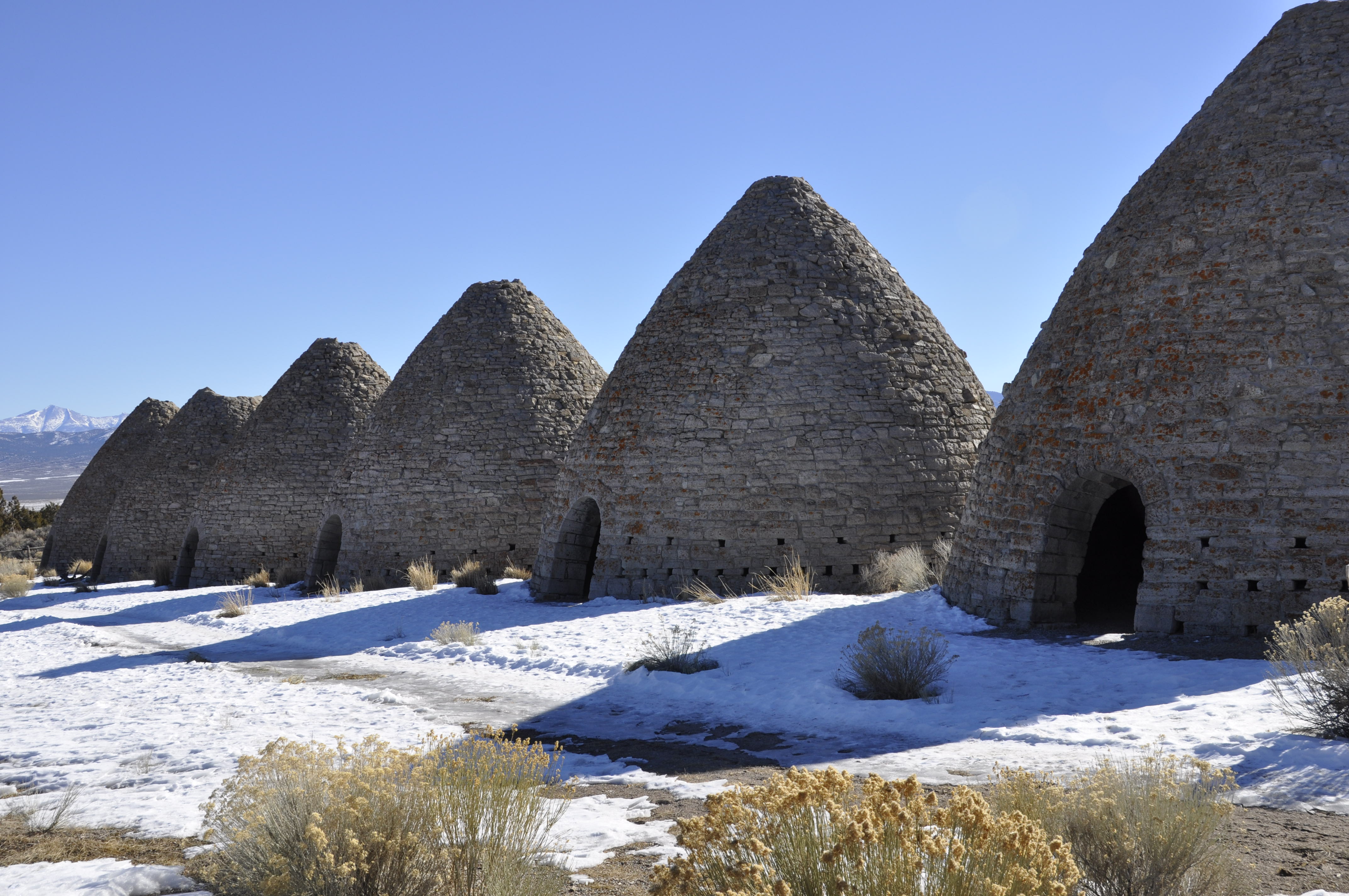
With the Ward charcoal ovens just south of Ely, 35 cords of wood were loaded in each oven and cooked more than 10 days to create 1,750 bushels of charcoal. The ovens allowed operators the ability to manipulate the flow of oxygen needed for conversion of wood to charcoal.

Charcoal is produced when organic matter is heated in low levels of oxygen. If too much air (oxygen) enters and the fire burns hot, the result is ash, so the careful manipulation of air flow is essential for the efficient production of charcoal. To control air flow at the Ward charcoal ovens (also called kilns), brick vents were opened and closed to adjust the amount of oxygen and the resultant heat of the fire.

Ward ovens are being used to make charcoal. Photo/Provided

Ward ovens are being used to make charcoal. Photo/Provided

At Ward, pinion-juniper (PJ) wood was used to make charcoal for the smelting process. PJ woodlands were plentiful and located near most state mining districts.

The Nevada Division of Forestry is now making charcoal, but for a very difference purpose.

NDF has helped to resurrect this historic production process in order to amend poor Nevada soils. When charcoal is used as a soil amendment, it is called biochar. Biochar has been shown to increase soil moisture and nutrient retention capacity, improve habitat for soil microbes and even reduce the effects of soil pollutants. When PJ wood is converted to long lasting biochar, much of the carbon otherwise lost by the cut and scatter methods is preserved in the soil. As such, biochar production reduces atmospheric levels of carbon dioxide, a significant contributor to climate change.

While state agency began experimenting on a small scale with biochar production in the western region with one working kiln about four years ago, it has recently and dramatically increased their ability to make biochar throughout the state. With funding from the Eastern Nevada Landscape Coalition and the USDA Forest Service, NDF now has 10 kilns dedicated to biochar production.

To help increase moisture on burned areas, replace expensive potting mix ingredients in the state’s tree nurseries and improve survival of restoration plant material and urban trees, NDF is now making biochar on an unprecedented scale. Each of the NDF kilns converts about 1,200 pounds of wood to about 600 pounds of biochar in a three-day operation. The first day, crews load and ignite the wood inside the kilns. Kilns burn for one to two hours and then most of the vents are closed and sealed with dirt. The cooking process takes about 24 hours. After 24 hours, all the vents are closed, the fire is extinguished and a cool down phase takes another 24 hours. Then, the fresh biochar is harvested and processed for use.

In November and December, Ely camp crews made about 70 yards of biochar for urban and rural use. Making biochar gives land managers working on PJ removal an option other than the usual cut and scatter.

JoAnn Kittrell works for the Nevada Department of Conservation & Natural Resources.


Sledding — uncontrollable fun in the snow

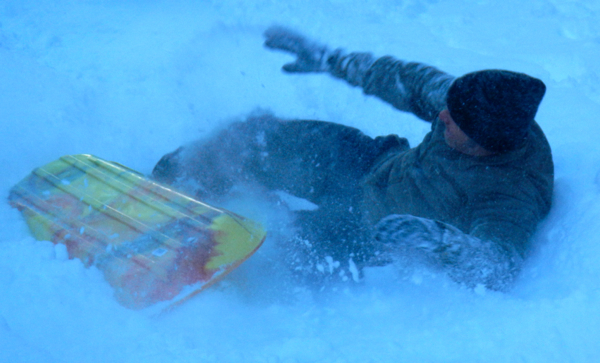
Scarlett Hart hangs on tight Dec. 25 as she sleds near South Tahoe High School. Photos/Kathryn Reed

Scarlett Hart hangs on tight Dec. 25 as she sleds near South Tahoe High School. Photos/Kathryn Reed

By Kathryn Reed

Sledding – it’s one of those winter activities that transcends generations, has little to do with athletic ability (though hiking uphill can be a workout), and brings out the inner child in those who let themselves careen down a slick surface with no brakes or any steering mechanism.

Laughter fills the woods of Tahoe this time of year with adults and kids finding inclines steep and tame, long and short, straight and with jumps – all in the pursuit of seeing how fast one can go downhill on a piece of plastic.

Stop trying to be in control and remember what it was like to be a carefree kid. That was the overwhelming sentiment of a group of adults (and one 9-year-old) who spent part of Christmas afternoon sledding behind South Tahoe High School where the old ski lift used to be. (One of the stanchions remains at the bottom of the hill.)

Some safety tips: •Sled in a snow park or allocated sledding area. Injuries are less common in designated sledding areas. We see more injuries when people sled in the woods near their house or in informal sledding areas where groups of people congregate.   •Sled in an open area, away from trees. The worst injuries I have seen come from collisions with trees resulting in head injuries, lacerations, broken bones, contusions, and abrasions.  •Avoid hard packed snow. Adults who end up going airborne often land harder. In hard packed snow conditions, it’s fairly common to see fractures in the vertebrae. •Sled in an area free from obstacles. If someone else is using the same path, wait for it to clear. Injuries are also sustained when people are hit by a sled coming from behind and they can’t get out of the way in time. Source: Lance Orr, director of Barton Memorial Hospital’s emergency department

Some safety tips:
• Sled in a snow park or allocated sledding area. Injuries are less common in designated sledding areas. We see more injuries when people sled in the woods near their house or in informal sledding areas where groups of people congregate.
• Sled in an open area, away from trees. The worst injuries I have seen come from collisions with trees resulting in head injuries, lacerations, broken bones, contusions, and abrasions.
• Avoid hard packed snow. Adults who end up going airborne often land harder. In hard packed snow conditions, it’s fairly common to see fractures in the vertebrae.
• Sled in an area free from obstacles. If someone else is using the same path, wait for it to clear. Injuries are also sustained when people are hit by a sled coming from behind and they can’t get out of the way in time.
Source: Lance Orr, director of Barton Memorial Hospital’s emergency department

So many winter activities – skiing, snowboarding, skating – are all about control. Sledding is the opposite. And once you give in, it’s a whole lot more fun – even if it means careening off the main path or an unintended gymnastic maneuver becomes part of the dismount.

One of the problems with people sledding wherever there is an incline is the parking.

“We will tow just as many local cars as we will out of town cars. Locals are just as bad,” California Highway Patrol Officer Ruth Loehr told Lake Tahoe News. “If any part of the vehicle is in the road, we are going to tow it.”

It’s especially bad near Emerald Bay. Lake Tahoe Airport and Echo Summit areas are also notorious for people either ignoring no parking signs or having part of the vehicle in the highway.

Parking tickets are $94.

Loehr says officers try to get people to move their vehicles, but after a while tickets and towing are the only way to solve the problem and make it safe for everyone.

And while sledding is fun, it can also result in a trip to the hospital.

“From my perspective in the emergency department, sledding can be one of the more dangerous outdoor activities. It is difficult to have good control of where a sled goes,” Lance Orr, physician and director of the emergency department at Barton Memorial Hospital, told Lake Tahoe News.

Locally, the number of injuries related to sledding have been holding steady through the years, though exact numbers were not available.

“Kids are more likely to sled than adults and, as a result, we see more kids injured than adults. Though adults land harder than kids, and can suffer more severe injuries,” Orr said.