Driver’s license may not be enough to fly

By Jad Mouawad, New York Times

Starting this month, a driver’s license may no longer be enough for airline passengers to clear security in some states, if the Department of Homeland Security has its way.

Federal officials said they would soon determine whether Transportation Security Administration agents would start enforcing a 10-year-old law that required states to comply with a set of federal standards when issuing driver’s licenses.

The issue is quickly intensifying, and the debate over identification and privacy has grown after the recent terrorist attacks in Paris and California.

But some states have bitterly opposed these requirements out of privacy concerns, and more than a dozen have passed laws barring their motor vehicle departments from complying with the law, according to the National Conference of State Legislatures. The new standards require more stringent proof of identity and will eventually allow users’ information to be shared more easily in a national database.

Privacy experts, civil liberty organizations and libertarian groups fear the law would create something like a national identification card.

Read the whole story


Conner seeks to have judge dismissed

By Kathryn Reed

Because JoAnn Conner believes the judge in her case against the city of South Lake Tahoe has already made up his mind, her attorney is trying to get the matter heard before another judge.

This means the hearing scheduled for today isn’t going to happen.

Conner, who is a first-term city council member, at the end of last year took legal action against the city and City Manager Nancy Kerry in regards to being censured by her colleagues and being banned from talking to staff.

JoAnn Conner

JoAnn Conner

“The law requires a judge not be biased and not to have predetermined the outcome of the case. If evidence arises where it appears to an ordinary person on the street that the judge has made a predetermination on an issue of the case or outcome of the case, it is essentially automatic disqualification because the litigants are entitled to a fair and unbiased judge,” Jacqueline Mittelstadt told Lake Tahoe News.

Mittelstadt, who used to be city’s attorney, is representing Conner.

At the Dec. 15 hearing, El Dorado County Superior Court Judge Steve Bailey said he would not deal with the censure issue because it is a political matter and not something for the court to decide. That is where Mittelstadt and Conner believe there is bias, and why they’ve asked Bailey to be replaced.

If Bailey is replaced, the matter will likely be heard on the West Slope.

If Conner were to prevail, she would likely have censure overturned – though the council could redo it. A censure is a hand slap with zero consequences when it comes to being able to do her job. She would also be given access back to the city offices as well as be able to directly communicate with staff via phone, email and in person.

Today, she can still have questions answered, but they must go through the city manager and/or city attorney.

The council has a card key to access the offices at the airport. However, it has been inconsistent through the years when it comes to which councils have had the access. It is up to the council to decide if they have the card keys.

Councilman Hal Cole on Dec. 30 turned his card in.

“If we need to see someone, we can make an appointment,” Cole told Lake Tahoe News.

Mayor Wendy David said, “I usually don’t need to even use it.”

Council members have a mailbox behind the locked doors. There is talk of moving those into a public area, though the boxes would be locked. This would alleviate the need to bother city employees to get the mail.

Multiple emails were sent to City Clerk Suzie Alessi asking about the history of the card keys and why councilmembers have access. She didn’t respond to the inquiries.

Mittelstadt maintains she and Conner are willing to work with the city to resolve the matter outside of the courtroom.

“After the litigation was filed, the Thursday before the City Council’s closed session, [City Attorney] Tom Watson called me. During that conversation, we discussed possible resolution with my providing a variety of suggested approaches. He said he would get back to me. He never did,” Mittelstadt said in an email. “After the first hearing on the matter, in light of the judge’s direction telling us that we should resolve the matter, I approached their outside counsel and referred to what the judge said. I indicated that we would be happy to discuss options to try to resolve the situation, and had tried to do so prior to his involvement. He said he was new to the matter but would consider it and get back to me. I have not heard from him either. Until the city is willing to come to the table and discuss resolution, we have no choice but to proceed with the litigation.”

Watson told Lake Tahoe News it was not accurate that no one from the city has responded to Mittelstadt. But he would not elaborate because he said it would be inappropriate to do so because he works for all five electeds.

“I have heard nothing from Jacqueline and as I said before we are proceeding within the court process of the suit,” David told Lake Tahoe News.


First South Shore baby of ’16 born on NY Day

Thxxxxxx

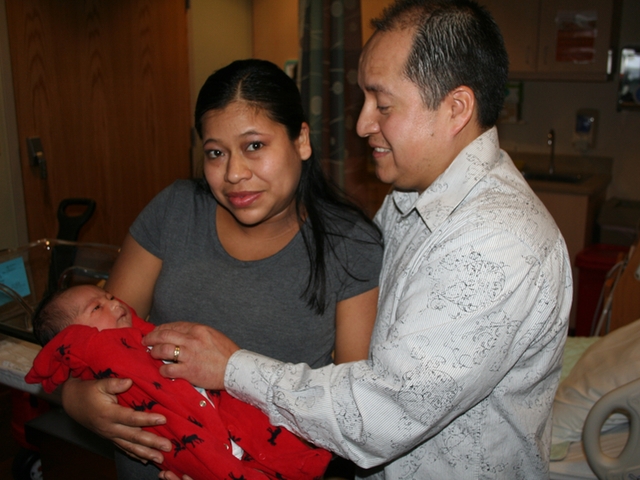
Margarita and Rogelio Castaneda with their newborn son, Jeremy. Photo/Provided

By Molly Hucklebridge Coolidge

When the clock struck midnight on New Year’s Day, Rogelio Castañeda and a very pregnant Margarita García gave a New Year’s toast with a glass of Champagne and a glass of apple cider, respectively. Three hours later, after a brief slumber, Margarita woke up in labor.

The couple headed to Barton Family Birthing Center and at 6:36pm on Jan. 1 Jeremy Nicolas Castañeda García was born. Jeremy weighed 7 pounds, 11 ounces and was 20.5-inches long. He was named after his maternal grandmother Geremia, who passed away when Margarita was young.

Jeremy is the couple’s first child and the first baby born at Barton in 2016. Rogelio Castañeda who works at the Chart House, has lived in South Lake Tahoe for 14 years and Margarita Castañeda has lived in South Lake Tahoe for seven years.  The South Lake Tahoe couple met seven years ago while she was working at what is now Fitness Evolution, and he was a member of the gym.

According to couple, Jeremy was born one week earlier than expected.

To honor the first baby born at Barton Memorial Hospital in 2016, the new parents were surprised with a wagon and toddler sled filled with gifts. This year, local businesses and organizations donated baby items and gift certificates totaling nearly $1,800.

Molly Hucklebridge Coolidge works for Barton Health.


Predicting ’16 gaming landscape an inexact science

By Howard Stutz, Las Vegas Review-Journal

Not many folks predicted that daily fantasy sports would dominate the headlines over the last half of 2015.

That was before DraftKings and FanDuel blasted television audiences with commercials that had more airtime than the actual football games.

Meanwhile, the business operators showed an arrogance not seen in nearly a decade, when offshore online gambling websites heavily advertised their products before the Unlawful Internet Gambling Enforcement Act of 2006 closed them out of the marketplace.

That’s the trouble with making predictions. It’s not an exact science.

Still, as we roll into 2016, I’ll take a stab at what the gaming landscape will look like in year dominated by the presidential campaign and other national news events.

Read the whole story


Snowshoe on top of the Sierra Mountains

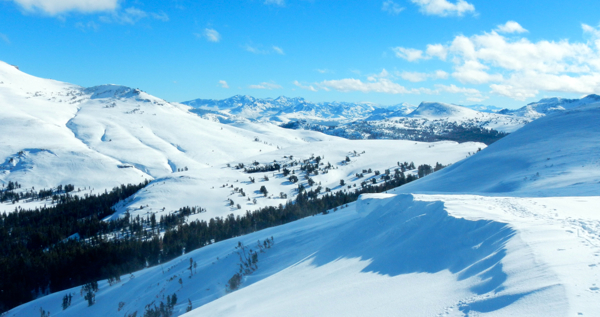
Snowy mountains for as far as the eye can see. Photo/Kathryn Reed

Snowy mountains for as far as the eye can see. Photo/Kathryn Reed

By Kathryn Reed

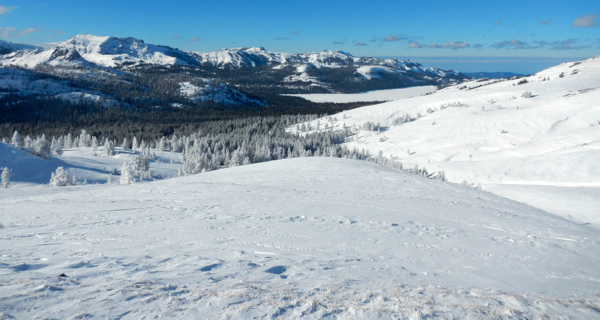
KIRKWOOD – Temperatures hovering closer to zero than above freezing couldn’t put a chill on the views that spilled forth.

For 360 degrees it was a winter wonderland. It was like being in the middle of the Sierra with mountains as far as the eye could see.

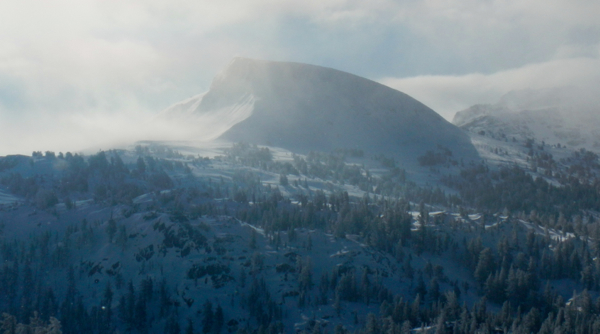
Elephants Back stands out across the other side of Highway 88.

Elephants Back stands out across the other side of Highway 88.

Distinguishable landmarks dotted the landscape – Elephants Back, the runs at Kirkwood, Little Round Top, Round Top, Hawkins Peak and others.

Meiss Meadow didn’t look much different than Caples Lake, which was covered in ice and snow.

The view to the sapphire colored Lake Tahoe may have been similar to what Gen. John Fremont saw when he first laid eyes on this alpine wonder.

Caples Lake in the distance is popular with ice fishermen this time of year. Photo/Kathryn Reed

Caples Lake in the distance is popular with ice fishermen this time of year. Photo/Kathryn Reed

What a glorious way to welcome 2016.

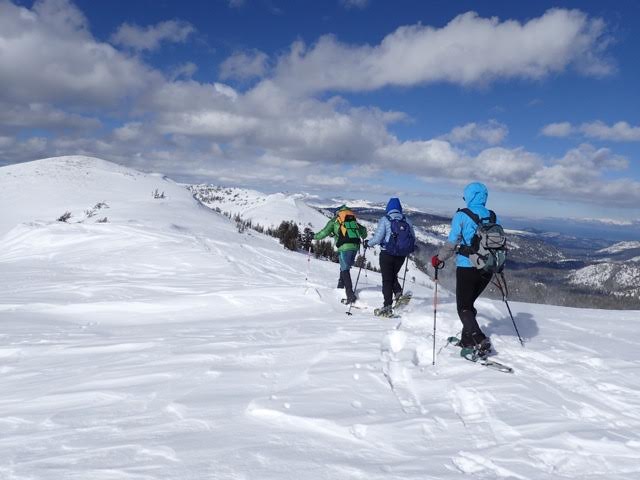
Five of us spent the morning of Jan. 1 on an incredible snowshoe in the Carson Pass-Kirkwood cross country ski area. Plenty of tracks could be seen, presumably mostly from backcountry skiers. For the most part we were breaking trail. We knew where we wanted to go, but there was no set path to get us there. That just added to the fun.

At the bug station in Meyers it was minus 7 degrees as we drove through. At the starting point it was 10 degrees and had warmed to 22 by the time we were done. What a thermometer would have read on the ridge with the wind howling to the point it seemed to take our breath away, well, it’s probably better we didn’t know.

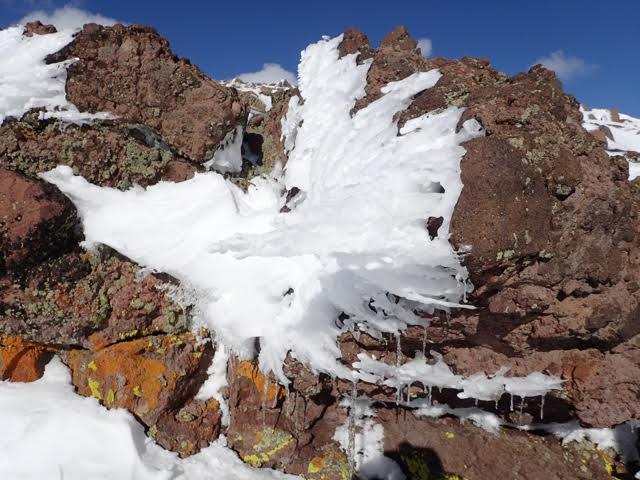
Ice formations on rocks along the ridgeline. Photo/Donna Rockwood

Ice formations on rocks along the ridgeline. Photo/Donna Rockwood

That wind whipped ice formations onto rocks in what looked like works of art, especially with the orange lichen nearby.

At times the snow was so hard our snowshoes made no indentation, while other times it was like floating on idyllic powder, and in other spots it was a crusty layer we punched through.

Craig, Carolyn and Kae make their way through what much of the way was a powdery oasis. Photo/Donna Rockwood

Craig, Carolyn and Kae make their way through what much of the way was a powdery oasis. Photo/Donna Rockwood

From the trailhead we headed nearly straight up and then to the left toward the ridge we knew we wanted to trek along. Had we continued, Little Round Top would have added at least another three miles to our journey. We opted to drop down into a bowl.

At the bottom we hooked up with the groomed trails of Kirkwood cross country before we made our way to the maintenance station where we had left a vehicle.

In all, we went 6.55 miles. We started at 8,573 feet and reached 9,444 feet. We gained 1,654 feet in elevation, and descended 2,267 feet.

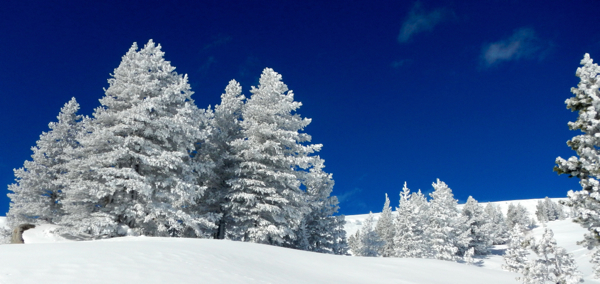
Frosty trees dot the landscape. Photo/Kathryn Reed

Frosty trees dot the landscape. Photo/Kathryn Reed

—–

Getting there:

From South Lake Tahoe take Highway 50 west through Meyers. Turn left onto Highway 89. At Pickett’s Junction, turn right onto Highway 88. Go past the parking area atop Carson Pass. We started at Meiss Trailhead, which is on the right. We left a car at the Caltrans maintenance station farther down Highway 88.


What 2016 will do to your checkbook

By Sarah Skidmore Sell, AP

Wondering how you will fare financially in 2016? Below are what experts think next year will hold for financial matters close to home: Raises, rent, gas, food and health.

Will you get a raise in 2016?

Maybe.

Wage growth has been perhaps the job market’s biggest weakness since the recession ended. Pay increases have been both slow and uneven, highly dependent on your field of employment. And for many, it has not been enough to keep pace with the cost of living.

In November, average hourly earnings climbed 2.3 percent from a year earlier, according to the government’s most recent report. But that is only about two-thirds the roughly 3.5 percent typically seen in a strong economy.

Many economists are optimistic Americans’ pay will start growing faster soon because hiring has been good and layoffs have been low. But that’s been the case for a while, and wages haven’t taken off yet.

Joseph LaVorgna, chief U.S. economist at Deutsche Bank, is not expecting major gains ahead. He notes that measures that include a broader mix of compensation beyond hourly wages show there’s even less growth in pay than it seems.

“I’m not convinced things are going to grow as much as I would like them to,” he said.

Will my rent go up?

Yes, most likely.

It’s been a tough few years for U.S. renters because demand has outpaced supply, causing prices to rise.

Rents increased 4.5 percent in October, 5.3 percent in September and 6.2 percent in August, according to real estate data firm Zillow. The median rental payment nationwide was $1,382 in October, roughly 30 percent of the median U.S. family income and high enough for the government to consider it financially burdensome. Over the past decade, that number of renters spending over this threshold on rent has jumped from 14.8 million to 21.3 million, or 49 percent of all renters.

There are more rent increases anticipated ahead.

“Rents are expected to rise in virtually all major cities in 2016,” said Hessam Nadji, senior executive vice president with commercial real estate services firm Marcus & Millichap.

Some small consolation: While rents will still rise, the pace of rent growth will slow modestly from the exceptional levels set in 2015 as new construction creates more housing competition, Nadji says.

Will gas prices stay low?

Yes, most likely.

Oil prices have plummeted over the last year, a result of high global supplies and weaker demand than expected. U.S. drivers are paying less than $2 a gallon on average for the first time since the Great Recession. Seasonal factors and volatile oil prices will push prices up and down throughout the year, but overall prices are expected to remain low compared with recent years.

The Energy Department forecasts an average of $2.37 a gallon next year, which would be the lowest annual average since 2009.

Tom Kloza, head of energy analysis at the Oil Price Information Service, said drivers should expect lower lows and higher highs at the pump in the year ahead, but he doesn’t expect the price of a gallon of gasoline to go over $3 at any time in 2016.

“Nationally we are looking at a year that is very similar to the year we are ending,” Kloza said.

What about food?

New year, same dish.

Food prices should rise at a rate near the historical average, according to the USDA’s forecasts.

The United States Department of Agriculture’s Economic Research Service anticipates the price for food will be up 2 to 3 percent for 2016, same as 2015 and in line with the 20-year historical average of 2.6 percent. That includes food people consume at home and out at restaurants.

Annemarie Kuhns, an economist at the ERS, said that certain food prices were off this year due to unusual events, such as the avian influenza that led to the death of millions of birds and sent egg prices up roughly 15 percent. Looking ahead, she and fellow economists anticipate these prices may level off in 2016 — assuming cooperation from Mother Nature.

Will my health insurance cost more?

Probably.

People buying their own coverage through the exchanges created by the Affordable Care Act should see premiums go up faster in 2016 than in previous years, said Cynthia Cox, associate director of health reform and private insurance at the Kaiser Family Foundation.

According to Kaiser research, if you do not shop around and let your plan passively renew, the premiums for the lowest silver level plan —the most popular on the exchange — will increase 15 percent on average next year. If you are willing to switch, premium increases are expected to be zero to 1 percent. This is because the exchange is set up to encourage shopping around.

These increases apply only to people who are receiving subsidies to help pay for the insurance. For those who do not, the increase is expected to be 6 percent.

Cox added that shoppers should also update any personal information — such as changes to your family size or income — which can impact what they pay.

“It’s very important to go back online and shop every year,” Cox said. “This is still an evolving market — there are new insurers coming in and other insurers leaving. The only way to find (the best price) is to go online or navigate through a broker.”

Employer-sponsored plans premiums increased about 4 percent this year. And while Kaiser does not forecast employer-sponsored plan price changes, it does not anticipate any unusual hikes in health care costs that tend to push up insurance prices. However, employees may end up paying more out of pocket for deductibles, copayments and other expenses they are responsible for, depending on their employer’s plan.

Fire safety rules citations lag during drought

By Don Thompson, AP

SACRAMENTO — Amid the most destructive wildfire season in more than a decade, California’s firefighting agency amped up its warnings to thousands of property owners who weren’t doing enough to protect their homes by clearing brush and other flammable materials.

But it rarely put any muscle behind the threats: Violators were fined just 4 percent of the time, down from 10 percent when the drought was declared four years ago, according to CalFire statistics requested by Associated Press.

State law requires property owners in wildfire-prone areas to clear combustible materials near buildings and allows citations starting at $100 for those who fail to do so. A third offense brings a misdemeanor charge and a $500 fine.

The latest statistics show the number and rate of citations issued in the year ending June 30 were lower than when California’s drought began. The rate of homeowners disobeying the law also increased during that period.

“There are people out there that won’t do it unless they are forced to,” said Mike Warren. A firefighter for 40 years, including seven in California as Sequoia National Park’s fire management officer, Warren wants more aggressive enforcement to protect firefighters. “Not getting the clearance done puts firefighters at risk.”

CalFire recorded about 29,000 violations last year, but imposed just 1,136 fines. Four years ago, there were 12,000 violations and just under 1,200 fines.

CalFire spokeswoman Janet Upton said inadequate protection was a significant factor in the loss of homes this fall in a wildfire that burned through in Amador and Calaveras counties in the Sierra Nevada foothills.

More violations were found there than in any other CalFire unit last year. While more than a third of inspections found poorly protected properties, CalFire issued citations there at less than half the statewide rate.

“The worst penalization of a homeowner who chooses not to comply is if their house burns down,” Upton said. “If you have been living in these areas and don’t think it can happen, you haven’t been paying attention.”

CalFire Director Ken Pimlott said the general approach is to educate homeowners rather than issue citations.

“We need that tool, because there are just those individuals, for whatever reason, (who) aren’t interested in complying,” he said. “I would rather have those individuals understand what we’re doing and now become the messenger for their community.”

He also defended policies that mean enforcement varies dramatically from county to county.

For instance, the Kern County Fire Department writes a citation for every violation it finds, by far the most of any county. By contrast, Los Angeles County writes no citations for property owners who fail to clear brush. After months of repeated warnings and inspections, Los Angeles County may eventually clear the brush and bill the property owner.

With the tougher punishment, homeowners in Kern County were 10 times more likely to comply with the rules than in Los Angeles County, statistics show.

Promoting compliance is “absolutely a priority,” Pimlott said. But, he said, resources and conditions vary widely across the state, and methods of enforcement should as well.

In a bid to increase enforcement, CalFire hired more than 50 inspectors last year to aid firefighters. Both spend part of their time doing the repeated property checks that are required before homeowners can be cited for ignoring multiple warnings, but the actual citations must be written by arson investigators because they have law enforcement powers.

Inspections increased last year, but not as much as was anticipated, Upton said. She said the program “didn’t pan out as well as expected” because firefighters were busy fighting drought-driven wildfires, arson investigators were seeking the causes, and inspectors were often helping homeowners with drought-related tree deaths and tree-killing bark beetles.

The department is considering adjustments to get better results, Pimlott said.

The inspectors were hired using $900,000 from a fee imposed on rural properties to help offset firefighting costs, drawing criticism from several state lawmakers who oppose what they call an illegal tax.

“It just angers me to see that money is being spent in an inefficient way,” said state Sen. Ted Gaines, R-El Dorado Hills, who represents a large swath of rural California. He said money spent on additional inspectors should instead go to programs helping homeowners comply with the law.

Assemblyman Frank Bigelow, R-O’Neals, who represents the area burned in the Sierra foothills fire, said the money should go to thinning forests and removing brush that contributes to the spread of wildfires.

Gaines, Bigelow and Assemblyman Don Wagner, R-Irvine, said CalFire should set the same standards for issuing citations statewide. If not, lawmakers should consider requiring equal enforcement, Gaines said.

“It’s one state with one challenge of wildfire statewide,” Gaines said. “Everybody ought to be treated in the same fashion.”


Dogs face danger in the backcountry

By Benjamin Spillman, Reno Gazette-Journal

For people who love dogs and the Sierra Nevada backcountry it’s tough to imagine a better day than what Don and Polly Triplat planned for one Sunday.

The Truckee couple, two friends and their dog, Scarlet, would spend the day skiing, relaxing and enjoying solitude and views of Lake Tahoe in the Third Creek area near Incline Village.

For the Triplats, both 45-years-old and avid backcountry skiers trained in avalanche safety and wilderness first aid, ski outings with Scarlet and their other dog, Brodie, were rewarding for the whole family.

“It is absolutely a blast to watch your dog slide down a hill in front of you,” said Don Triplat, who is also the executive director of the Sierra Avalanche Center, a non-profit partner with the U.S. Forest Service that provides education on avalanche safety and information on snow conditions in the backcountry.

Read the whole story


New Year’s Eve not an easy task for cops

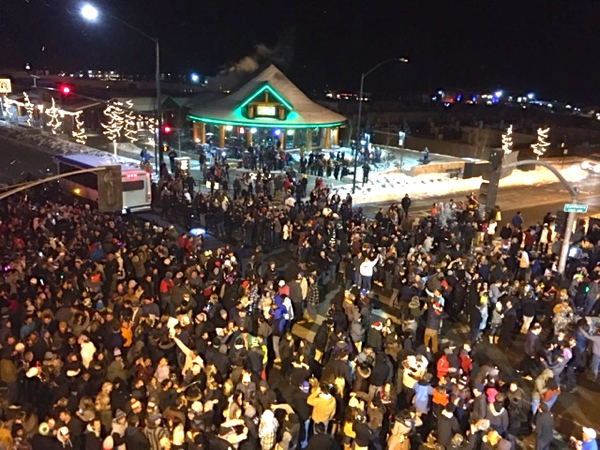
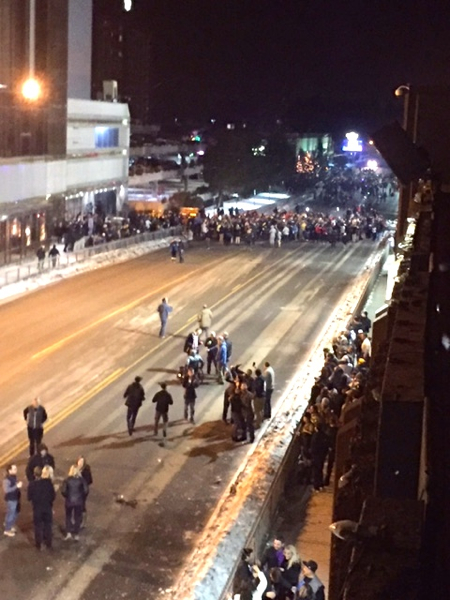
New Year's Eve rvelers take over Highway 50 near the state line. Photos/Kathryn Reed

New Year’s Eve revelers take over Highway 50 near the state line. Photos/Kathryn Reed

By Kathryn Reed

STATELINE – For those who came to the South Shore to party in the streets, the experience may have been a bit anticlimactic on New Year’s Eve.

It took coaxing from less than a handful of instigators to get the crowds that had been pouring out of the Stateline casinos into the sidewalks to actually celebrate in the middle of Highway 50. This was three minutes before midnight. Law enforcement officers were joking among themselves whether this was going to be the first year since 1976 that the highway wasn’t closed.

That didn’t come to be. But it was one of the shortest closures. The single-digit temperatures undoubtedly had people seeking shelter moments after ringing in the New Year. Plus, there weren’t that many people. The whole street wasn’t even full. A few people chanted “USA” and then a few counted down from 10 to the New Year.

Douglas County Sheriff Ron Pierini said only a handful of deputies were working on that first New Year’s Eve when the highway was closed by people – not an official act by deputies. The loop road as it is today didn’t exist. People were trying to overturn the cars that got stuck in the sea of humans.

“It really turned into crap,” is how Pierini described 1977.

Crowds are minimal in Stateline for New Year's Eve 2015.

Crowds are minimal in Stateline for New Year’s Eve 2015.

A year later the loop road was built. That allowed officers to deliberately shutdown Highway 50 and still have traffic flow.

“In 1978 there were 2,000 people and we thought that was a lot of people. And we closed the road,” Pierini told Lake Tahoe News from the command post on Dec. 31.

The post isn’t in the same place each year. The non-descript location includes a table with men in uniform. Radios are their lifeline to knowing what is going on outside.

Briefings started earlier in the day and were conducted on the hour as more manpower came on board. New Year’s Eve is one of those all-hands-on-deck events.

The approach to New Year’s Eve has evolved to where it is a coordinated effort between DCSO, South Lake Tahoe Police, El Dorado County Sheriff’s Office, California Highway Patrol, Nevada Highway Patrol, South Lake Tahoe Fire Department, Tahoe Douglas Fire Protection District, and Alcohol and Beverage Control.

“We prepare for the worst case scenario,” South Lake Tahoe Police Chief Brain Uhler told Lake Tahoe News. That includes mass casualties. “We want to be prepared for anything.”

He said it’s normal after a major incident anywhere in the world that the No. 1 problem was lack of communication. The guys in Tahoe aren’t going to let that be true here.

New this year is Lake Tahoe Hard Rock had music out front. A disc jockey was spinning tunes from the balcony as a small crowd danced and others stayed warm by the fire pits.

Officers knew with this being the first year for McP’s Pub to be open at its new, larger location it might become a gathering place for revelers. This year, though, the crowds didn’t materialize there.

Driving through Stateline before midnight Uhler noticed the berms on the Nevada side. Those chunks of snow would feel like being pelted by rocks if someone starts to throw them. This was one reason some of the officers were in riot gear – it’s all about being prepared for the unexpected.

Officers were out on foot patrol in groups. Others were in plain clothes mixing in with the masses.

“It’s good to have eyes and ears among the crowd,” Uhler said.

A coordinated tactical approach is taken to ensure the safety of celebrants, innocent bystanders and officers.

There’s a place for officers on each side of the state line to get warm, grab some coffee and food.

Officers stand guard before Highway 50 is reopened shortly after New Year's.

Officers stand guard before Highway 50 is reopened shortly after the New Year.

The rowdiness, even on warmer nights, has subsided through the years. A zero tolerance of glass on the street has helped. Casinos serve drinks in plastic containers. Setting up multiple locations to book people saves on manpower being taken away from ground zero.

“The last couple of years the crowds as the casino do their thing and then go back in. It’s an older group of people,” Uhler said. “They are not causing us near the trouble as the past.”

In the 1990s the crowds peaked at 80,000. Last year Pierini estimates it was closer to 30,000. If there were that many in town last night, most stayed inside the casinos. Only a few thousand braved the cold this year.

SnowGlobe is given a ton of credit with helping take people away from the casino corridor.

But SnowGlobe is still a major issue, especially for South Lake Tahoe officers. The three-day event at the community ball field at Lake Tahoe Community College culminates New Year’s Eve. This was the first year people crashed the music festival by knocking down temporary fencing. The main stage ended sooner than the two smaller ones – another first – to allow for a staggered exit. More buses and more security this year helped law enforcement not have to deal with as much.

As the concertgoers are bused back to the transit center most then walk to their hotels in the Stateline area. Law enforcement calls this the “zombie walk” because all aren’t in great shape.

But the night isn’t over for officers after the road closure and SnowGlobe are done with. People tend to keep partying. Officers keep dealing with issues long into the morning of New Year’s Day.


17,500 earthquakes in Nevada in 2015

Cracks developed from the magnitude 7.3 1915 Pleasant Valley earthquake in alluvial soil near Lovelock. Nevada’s, largest earthquake, it was centered in Pleasant Valley, south of Winnemucca, Nevada. Photograph by Carl Stoddard, courtesy of the University of Nevada, Reno.

Cracks developed from the magnitude 7.3 Pleasant Valley earthquake in 1915. It was Nevada’s largest earthquake; located south of Winnemucca. Photo/Carl Stoddard/courtesy of UNR

By Mike Wolterbeek

More than 17,500 earthquakes were recorded in 2015 by the UNR’s Nevada Seismological Laboratory. That includes the 231 recent quakes in south Reno and the magnitude 4.8 in Caliente that shook Las Vegas in January.

“While the Reno shaking is fresh in our minds, what’s really bumping the number up from the background rates is the energetic sequence in far northwestern Nevada, the Sheldon sequence,” Graham Kent, director of the Nevada Seismological Lab said.

Through 2015 there have been 4,511 earthquakes recorded in the remote Sheldon Wildlife Refuge near Vya, east of Cedarville, Calif. The earthquake activity that began there in July 2014 has produced 234 earthquakes greater than magnitude 3.0, and 24 earthquakes of magnitude 4.0 or larger, including the largest, a magnitude 4.8 on Sept. 14 and a magnitude 4.6 just before Christmas.

That leaves more than 13,000 other Nevada and eastern California earthquakes, including swarms as well as less prolonged mainshock-aftershock sequences in Caliente, Carson City and Virginia City. Outside of the persistent Sheldon sequence, Nevada was hit with 54 magnitude 3 or greater earthquakes or about one per week.

Overall, there have been 19 earthquakes of magnitude 4.0 and larger and the university’s seismological lab has reported 160 earthquakes between magnitude 3.0 and 3.9.

“The south Reno swarm that just happened produced about 30 earthquakes in two days and about 200 more in the days that followed,” Kent said. “For our entire network, we are averaging about 50 located earthquakes a day.”

They aren’t all part of identifiable swarms like Sheldon, South Reno or Virginia City.

“Many of the earthquake clusters in the Walker Lake area in 2015 were more typical sequences and not like Sheldon that has now continued for more than a year,” Ken Smith, associate director of the Nevada Seismological Lab said. “Just as the Caliente 4.8 that startled Las Vegas in May or the 4.8 at Scotty’s Castle at Death Valley in February with their fairly extensive aftershocks, in Nevada we wouldn’t be surprised to see a significant event anywhere.”

The Nevada Seismological Lab is a public service and research department in the university’s College of Science tasked by the state to operate a monitoring network and report earthquake information for activity throughout the state. The Seismology Lab’s data are provided to the USGS, other national data centers and shared with adjacent network operators in California, Utah, Washington and Oregon.

“All of our earthquake data are fed to the USGS,” Smith said. “We work with the Nevada Department of Emergency Management, county emergency managers, FEMA and even the California Office of Emergency Services. We have special reporting requirements for magnitude 3 and higher quakes. We had 179 earthquakes of magnitude 3.0 and larger in 2015, the most of any seismic network operation in the lower 48.”

The lab operates, maintains and monitors 185 real-time seismograph stations across Nevada and along the Sierra Nevada mountain range of eastern California. The seismological lab crew has been upgrading and expanding the network, including adding 15 broadband stations in southern Nevada this year and are looking for funding to match or exceed that expansion rate in 2016.

“We’re looking to the USGS, state of Nevada and others for support to bring seismograph coverage to more of the state,” Kent said. “What we’ve done for the Vegas area already has been critical for our response capabilities in southern Nevada Despite the number of earthquakes we track – compared to other western states – support for statewide earthquake monitoring in Nevada is far below that of similar western U.S. seismic networks. That said, we’ve added new analysts and reorganized our 24/7 monitoring team to keep up with the volume. But maintaining this level of effort isn’t really sustainable without additional funding.”

Though the third most seismically active state behind California and Alaska, Nevada has not had a magnitude 7.0 earthquake in 60 years.

Mike Wolterbeek works for UNR.