Caucus prep: Clinton, Sanders answer 6 Nev. questions

By Reno Gazette-Journal

The Reno Gazette-Journal reached out to all of the presidential candidates, Republican and Democrat, for their responses to six questions of special interest to Nevada voters.

Informed by reader feedback, we asked them about immigration, drought, renewable energy, marijuana, online gaming and federal lands management. Below are the email responses from Democratic hopefuls Bernie Sanders and Hillary Clinton, given in alphabetical order.

The Democratic caucus in Nevada is Feb. 20.

Read the whole story


Yosemite trademark dispute takes new turns

By Michael Doyle, McClatchy Washington Bureau

Yosemite National Park’s concessionaire executives met with National Park Service officials on Dec. 8, 2014. On that, at least, they agree.

What happened next, though, remains in dispute, like so much else involving renewal of the park’s lucrative concessions contract. Company executives say the park service “pressured” them to give up valuable intellectual property. Park service officials, in their latest court filing, deny it.

The conflicting recollections are becoming commonplace. From the courtroom to the California state Legislature, this multimillion-dollar conflict over Yosemite’s intellectual property is heating up like an ugly divorce to a long marriage.

Incited by the Yosemite names controversy, state Assemblyman Kenneth Cooley, D-Rancho Cordova, and Assemblyman Adam Gray, D-Merced, on Thursday introduced legislation restricting the trademarking of names associated with state parks, which Cooley said was “intended to send a message” about national parks as well.

Read the whole story


Truckee lends hand to South Shore on passing tax initiative dedicated for recreation

By Kathryn Reed

Commitment, dedication, a cadre of volunteers, a clear and convincing message, and money are some of the factors that can make a difference in a tax initiative getting the requisite number of voters to say yes.

Three key figures in Truckee’s 2014 passage of a quarter-cent sales tax hike spoke to a group of South Shore recreation advocates on Wednesday. Measure R is projected to generate $1.2 million a year, with all of that money dedicated to trails.

With South Lake Tahoe contemplating asking voters in November to raise taxes, the Feb. 17 discussion was an opportunity for those outside the political spectrum to learn what it takes to put on a successful campaign.

Tony Lashbrook, town manager, spoke volumes about the need to have a partner group to work with. In this case is it was the nonprofit Truckee Trails Foundation headed by Allison Pedley. Then it took someone to lead the campaign committee who could be trusted and get the job done. That fell to Paco Lindsay, who has lived in Truckee for decades and owns a bike shop there.

The nonprofit was formed out of the town doing a recreation plan. It is an eight-member volunteer board, with a part time executive director, and more than 1,000 members.

 Tony Lashbrook, Truckee town manager, Truckee Trails Foundation headed by Allison Pedley. Then it took someone to lead the campaign committee who could be trusted and get the job done. That fell to Paco Lindsay, who has lived in Truckee for decades and owns a bike shop there.

Tony Lashbrook, from left, Paco Lindsay and Allison Pedley talk Feb. 17 about how Truckee passed a tax for trails. Photo/LTN

The three outlined how it is necessary to get as many people engaged as possible – even the opposition. It means listening as well as educating. It included convincing business owners that they would not lose sales with higher taxes because a better trail network would mean more people coming to town. Ultimately the measure passed with 76 percent of the votes.

Advertising was targeted. Signs, mailers and other material were of a high caliber. On election day people were monitoring precincts and calls were made to those who had yet to vote.

“Communication is what it’s about,” Lindsay said.

A consultant was hired to help provide professional assistance. The campaign cost about $35,000. That money came from small and large donations from community members.

While Truckee has no certain way to track the return on investment with the increase of trails in the area, Lashbrook said the town has broken hotel tax records for the last four years and this was during three horribly dry winters.

With it costing about $1 million per mile of paved trail, the increase to the network will be a slow, methodical process. But it was pointed out that the income from the measure could be used as leverage to get grants.

A sizeable chunk of the cash is being used to plow some of the paths, which the three said they don’t ever see changing based on the use of the trails in winter.

The trio admitted the whole idea of paving trails and not just leaving them dirt has been controversial. The initial survey regarding the tax hike didn’t have a majority saying yes. While it was work to be successful, they were encouraging to the South Shore contingent that the end result justified the effort that went into it.

As for South Lake Tahoe, the Recreation Commission has created a subcommittee what will work with the City Council’s subcommittee to look at how a 2 percent increase in the transient occupancy tax that might generate $2 million a year could be spent – a new rec facility? sheet of ice? trails? something else?


Calif. lawmakers propose 15% pot sales tax

By Melody Gutierrez, San Francisco Chronicle

SACRAMENTO — California would levy a new 15 percent tax on medical marijuana sales to enforce new regulations and pay for state programs, rehabilitation and parks under a bill introduced last week.

The Marijuana Value Tax Act could bring the state more than $100 million in new revenue. The tax was anticipated after the state passed historic regulations last year that require state and local licenses for medical marijuana businesses under the new Bureau of Medical Marijuana Regulations.

California became the first state in the nation to allow for medicinal use of marijuana two decades ago. Until last year’s regulations were signed into law, the billion-dollar industry remained largely unregulated. The Board of Equalization said it anticipates medical marijuana sales to increase with the new laws. In 2014, the state took in $50 million in sales taxes from 1,623 dispensaries that registered with the Board of Equalization and filed taxes.

Read the whole story


Tahoe resorts bouncing back after years of drought

By Jim Carlton, Wall Street Journal

TAHOE CITY — At this time last year, so little snow had fallen around Lake Tahoe that a nearby golf course opened months earlier than usual, and ski resorts had to make their own powder on runs flanked by bare ground.

But this year, Lake Tahoe is once again a winter wonderland: resorts are enjoying the most snowfall since California’s drought began more than four years ago. That is creating a positive ripple effect throughout the picturesque region in the Sierra Nevada mountains, which has suffered economically due to the dry weather.

Squaw Valley/Alpine Meadows says it is on track to record more than a million visitors this season for the first time ever. Vail Resorts Inc. credits strong performance at its Heavenly, Northstar and Kirkwood destinations at Tahoe for helping lift the company’s overall U.S. ski visits 11.1 percent in the season through Jan. 11 compared with a year earlier.

“In the context of the past four years, it’s as good as it gets,” said Andy Wirth, president and chief executive officer of Squaw Valley Ski Holdings Inc., whose namesake resort has been buried this season in nearly 25 feet of snow––more than in all of the 2014-15 season.

Read the whole story


South Tahoe seeks to upgrade design standards

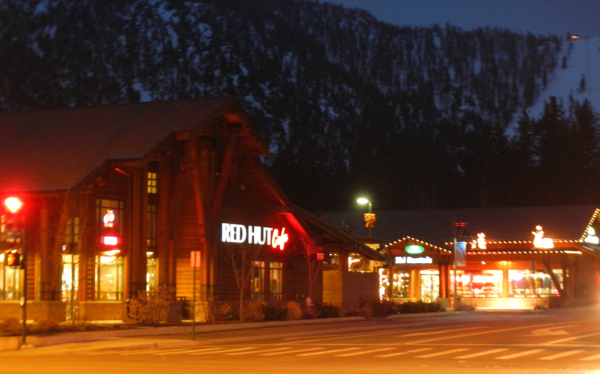
Red Hut on Ski Run Boulevard is an example of building design that works. Photo/LTN

Red Hut on Ski Run Boulevard is an example of building design that works. Photo/LTN

By Kathryn Reed

Roof lines, construction material, lighting, landscaping – even how the building is situated on the property – are all aspects of design guidelines being created for future development in South Lake Tahoe.

The goal is to establish a mountain feel, while still being contemporary.

Plenty of negative comments surfaced after BevMo and Auto Zone were built. People said they look like they could have been built anywhere. They met the minimum standards.

Those who have been involved in the design guideline process want more for this town than ordinary, average and homogenous.

Wednesday night marked the second of three informational gathering sessions. After the January meeting there was also an online survey to solicit input.

The final draft is expected to be released at a March 9 meeting. After that, the Planning Commission and City Council will be presented with the document for approval.

Repeatedly at the Feb. 17 meeting the Red Hut restaurant on Ski Run Boulevard was mentioned as a building that works on many levels – from how it is located on the lot to the roof to the materials used.

Stephanie Grigsby with Design Workshop went over some of the responses from the last meeting as well as from the 260 online surveys.

People don’t like it when there is little or no landscaping. Instead, the preference is for native vegetation, and plants that need little water. Using the plants as a buffer between the street and building is being touted. Signs that are clean with a concise message are more desirable than ones that stand on a pole or are cluttered. Boxy designs are passé. Don’t have parking be the visual focal point. Create a sense of connectivity to neighboring businesses and open space. Use natural materials. All of these ideas came from survey takers.

—–

Notes:

·      The next design workshop is March 9, 5-7pm at City Hall.

·      A second online survey is open until Feb. 26 at 5pm.


Conner’s request to change judges denied

JoAnn Conner with her attorney Jacqueline Mittlestadt fighting the censure hearing last fall. Photo/LTN file

South Lake Tahoe City Councilwoman JoAnn Conner with her attorney Jacqueline Mittlestadt fighting the censure hearing last fall. Photo/LTN file

By Kathryn Reed

South Lake Tahoe City Councilwoman JoAnn Conner’s challenge to have a judge dismissed from the case she has filed against the city has been denied.

“His statements were all prefaced with ‘I don’t know’ or ‘I don’t have the record in front of me’ and lastly ‘I’m not sure.’ The statements do not reflect a predisposition but rather an uncertainty and willingness to consider subsequently submitted evidence and consideration of the law,” Placer County Superior Court Judge Frances Kearney ruled.

She was tasked with deciding whether El Dorado County Superior Court Judge Steve Bailey would be biased. Kearney said no; and therefore Bailey will continue to hear the case.

Conner’s attorney, Jacqueline Mittelstadt, had requested Bailey be removed from hearing the case she has filed against the other four council members and against Conner’s employee, City Manager Nancy Kerry. The case involves whether the censure hearing from last fall followed proper procedure as well as claiming that when Kerry barred Conner from speaking directly to staff she limited her ability to do her job as an elected official.

One of Conner’s issues is that by having her card key taken away she no longer has easy access to her mail. That issue was remedied this week with the installation of mailboxes in the lobby of City Hall for all council members.

Mittelstadt’s main issue was when Bailey at a December hearing said, “I’m not prepared to go and set aside a political act of the City Council, whether it’s something that should have been done or should not have been done, that really is up to the City Council.”

She believes this showed bias on Bailey’s part by having made up his mind about the censure issue. The censure issue being challenged is procedural, not whether Conner should be censured or not.

Mittelstadt was unaware of the Placer County judge’s ruling until Lake Tahoe News called Feb. 17.

“We are happy to proceed in front of Judge Bailey. We will respect whatever decision he makes. It is my hope that in fact that even though he made that statement that he will evaluate the facts under the law and make a fair and unbiased decision once he has heard the evidence and reviewed the law,” Mittelstadt told Lake Tahoe News.

Nira Feeley, assistant city attorney who is filling in while her boss is out of town, did not return a phone call.

A case management conference has been set for March 15.


Pneumonia outbreak prompts bighorn sheep killing

By Benjamin Spillman, Reno Gazette-Journal

Sharpshooters firing shotguns from a helicopter killed 24 bighorn sheep on Sunday and Monday in an unprecedented attempt to contain an outbreak of pneumonia in the herd.

According to the Nevada Department of Wildlife it’s the first time wildlife managers in the state have taken such drastic measures to prevent the spread of pneumonia among bighorn sheep.

“This is truly an unfortunate measure,” said Nevada Department of Wildlife Director Tony Wasley in a written statement. “But as the extent of this disease event has become clearer to us, we have determined that it is the proper and responsible course of action.”

Read the whole story


Code violations surprise SLT rental owners

By Kathryn Reed

The South Lake Tahoe City Council on Tuesday got an earful from a handful of people who are taking issue with having to make changes to their property because they are using it as a vacation rental.

Residents are being hit with unexpected bills to bring their properties up to code.

“We are in strong favor of making things safe, but when our house is suddenly expected to meet all current building codes in the name of safety and we have been misadvised on multiple occasions for what will be over $7,000 in expenses if we have to remove this new construction and never have a hot tub again, we have a huge problem with it,” Sara Cummings said. She read the same letter Feb. 16 that she had sent to the council.

She has a house in the Bijou area that was built in the 1950s.

Building inspector Dave Walker admitted there are some lots with houses that don’t conform to today’s standards so it creates a conundrum. Some of these dwellings will be grandfathered in.

The discussion on Tuesday was just that – a discussion. The council agreed to have the subcommittee of Wendy David and Austin Sass work out some of the lingering issues. The topic will be brought back to the council prior to June when a more comprehensive report is expected.

Councilman Tom Davis recused himself from the discussion because of his affiliation with Tahoe Keys Resort.

The current vacation rental ordinance took effect last fall. It requires all new permittees to have their residence inspected, and for others to be inspected at the time of renewal.

Joshua Priou with Lake Tahoe Accommodations told the council the city has stepped over the line by insisting owners have a paved driveway, defensible space, drip pans on water heaters and handrails.

He was under the impression the code changes were only to deal with health and safety issues.

“Legally the building official under his license can’t ignore something that is not up to code or that is not permitted,” City Manager Nancy Kerry said.

The driveway issue is a Tahoe Regional Planning Agency rule. The bi-state regulatory agency believes parking on dirt somehow degrades lake clarity. To comply with the VHR ordinance owners must put down $3,200 as a promise to pave next summer. It will be refundable once the work is done.

Whether taking out a VHR permit should trigger putting in a paved driveway and other erosion control policies will be items for the subcommittee to wrestle with.

Defensible space is a state mandate, though the city has not enforced it with any regularity.

Priou said the issues people are facing range from a few hundred dollars worth of upgrades to thousands of bucks.

To date there have been 380 inspections, with 73 passing on the first try. Many of the violations are for having hot tubs installed without a permit and non-compliant electrical work.

In January 2015, there were 1,549 vacation rental permits in the city limits, that increased to 1,906 in October and as of last month the number was 1,874.

One thing to come out of the new rules is that complaints are not as robust. This could be because the city has made a concerted effort to be the one receiving the call and not just the property manager, which in turn would trigger penalties. Enough infractions could lead to the permit being nullified. The threat could have made a difference in how owners screen potential renters.

“My impression is the enforcement efforts during the last year have led to people feeling more satisfied that something is being done,” Police Chief Brian Uhler told Lake Tahoe News. “It seems like the number of those who complain about VHRs in their neighborhood is down. With summer approaching, we expect to continue pressure to strictly enforce VHR related laws.”

Since the new ordinance took effect Oct. 1, 23 people have been cited for renting without a permit, and 41 others were reprimanded for violating the code for things like noise, trash and parking.

In a related matter, the city had planned to do an economic study regarding vacation rentals. The deadline to bid on the project just passed with no one submitting a proposal. How to go forward is another item the subcommittee will be addressing.



California might be in the dam-building business

By Tara Lohan, Huffington Post

Historically speaking, when the going gets tough, California builds more dams. “If you look at the history of California since the 1930s, every time there has been a drought people have been interested in expanding surface storage,” said Jay R. Lund, a professor of civil and environmental engineering at UC Davis.

When it comes to water, things have been pretty tough in California for the past four years. So bad, in fact, that in 2014 California voters passed Proposition 1, a bond to funnel $7.5 billion to water projects, including $2.7 billion that would go to the California Water Commission to dole out specifically for storage-related projects.

During the 20th century “storage” was virtually synonymous with dams. The construction of big dams is what shaped the West, California especially. Dams gave us water and power and propelled development. We later learned they also gave us spoiled rivers, silted reservoirs and devastated fisheries. For decades, it was a trade-off we were willing to make.

Dams are undoubtedly an important part of our history. But what’s their place in our future?

Read the whole story