Study: Poorest areas missed out on recovery

By Nelson D. Schwartz, New York Times 

The gap between the richest and poorest American communities has widened since the Great Recession ended, and distressed areas are faring worse just as the recovery is gaining traction across much of the country.

These findings, outlined in a study released Thursday by the Economic Innovation Group, a new nonprofit research and advocacy organization, may help explain why the country’s economic and political situation has become so polarized in recent years. The results, broken down into areas as small as individual ZIP codes, provide one of the most detailed looks at the nation’s growing inequality.

From 2010 to 2013, for example, employment in the most prosperous neighborhoods in the United States jumped by more than a fifth, according to the group’s analysis of Census Bureau data. But in bottom-ranked neighborhoods, the number of jobs fell sharply: One in 10 businesses closed down.

Read the whole story


Work force issues worry South Shore chamber

B Gorman, CEO of the Lake Tahoe South Shore Chamber of Commerce, outlines the goals on Feb. 25. Photo/Provided

B Gorman, CEO of the Lake Tahoe South Shore Chamber of Commerce, outlines the goals on Feb. 25. Photo/Provided

By Kathryn Reed

Refining their mission to better be able to adapt to the changing work force, while fostering economic vitality are goals of the Lake Tahoe South Shore Chamber of Commerce.

At the annual membership breakfast on Feb. 25, CEO B Gorman outlined for the nearly 50 people gathered at Lake Tahoe Resort Hotel what has happened in the last year at the South Shore chamber as well what is planned going forward.

Gorman touched on how baby boomers were joiners – from high school, to college and as professionals. Millennials aren’t the same. To get them involved in the business community is going to require a new way of looking at things.

Communication and technology need to be constantly re-evaluated, especially when it comes to businesses reaching customers. More targeted messages instead of a single delivery is what’s needed, Gorman said.

Demographic changes will necessitate the need for “strategies of inclusion.”

A major difference with younger generations, Gorman said, is they are choosing the place to live and the job is second.

But she also noted a number of local employers have jobs that go unfilled for months. It’s about not having a work force with the necessary skills, according to Gorman.

What wasn’t addressed was whether the vacancies pay a high enough wage to live in the basin.

In mid-March the chamber is doing a two-day business walk where merchants will be asked a series of open-ended questions to gauge what they would like from employees. The goal is to project out 10 years what businesses will need.

That data will be given to the Tahoe Prosperity Center to incorporate into a study it is doing. Lake Tahoe Community College is part of the project. At the end of the day the college wants to be providing the education component so the future work force has the skills employers are seeking.

The hope is the data will be coalesced by early fall.

All of this ties into the chamber having re-established its goals into four main areas:

·      Advance leadership: Attract and retain effective business and community leaders. Leadership Lake Tahoe will be a key component of this.

·      Governance: Drive policy and governance to create an environment where Tahoe businesses thrive.

·      Economic vitality: Provide opportunities for sustainable and enhanced experiences for residents and visitors.

·      Community: Foster a prosperous community as a highly desirable place to live, work and play.

—–

Other items to note:

·      Sample the Sierra is moving to Sept. 17. A second restaurant week will be tied into the farm to fork event.

·      The annual tourism conference is April 26.

·      When asked what the chamber’s view is on taking the loop road to a vote, Gorman said, “I highly doubt we’ll see it on the ballot. I don’t think it will be necessary for the chamber to take a position.”

·      The chamber has more than 650 members; 81 are new in the last year; there is a retention rate of 88.6 percent.

·      A nationwide search is under way to replace Gorman. She will be leaving mid-year to start her own business.


Appeals court upholds limit on sharing of tips

By Sudhin Thanawala, AP

SAN FRANCISCO — Businesses cannot collect tips given to waiters, casino dealers or other service employees to share with support staff such as dishwashers even if the tipped employees are receiving minimum wage, a federal appeals court ruled Tuesday.

The 2-1 decision by the 9th U.S. Circuit Court of Appeals upheld a 2011 U.S. Labor Department rule.

The 9th Circuit said the rule was “reasonable” and consistent with Congress’ goal of ensuring tips stay with employees who receive them.

The court overturned district courts in Nevada and Oregon. The 9th Circuit ruling would largely apply to states that require workers to get the state minimum wage on top of any tips. Seven states fall into that category, according to the labor department’s Wage and Hour Division: Alaska, California, Minnesota, Montana, Nevada, Oregon and Washington.

It was not immediately clear what the impact would be on backend workers in those states.

The labor department has previously banned employers who use tips to fulfill their hourly minimum wage requirements from distributing those tips to employees who don’t regularly receive tips.

“The premise is the tip is never the employer’s,” said Reuel Schiller, a labor law professor at the University of California, Hastings in San Francisco. “The employer doesn’t have the power to take that from the waiter and give it to a dishwasher because it’s not the employer’s money.”

Supporters of the rule would say the employer should pay the dishwasher higher wages or charge customers to pay the dishwasher instead of having other staff subsidize the dishwasher’s pay, Schiller said.

The 9th Circuit considered two lawsuits in its ruling — one brought on behalf of plaintiffs including restaurant and lodging associations in Washington, Oregon and Alaska and the other by two casino dealers against Wynn Las Vegas.

The casino dealers said Wynn was taking their tips to share with other employees. The restaurant and lodging associations said the federal rule would prevent back-end staff from sharing in tips.

Paul DeCamp, an attorney for the restaurant and lodging associations, said there was a decent chance one of the plaintiffs would appeal.

“The real world impact of this sort of regulation that the Department of Labor has issued is important for people to understand,” DeCamp said. “The people who are hurt most by the 9th Circuit ruling are the people in the kitchen, the cooks, the dishwashers, the prep cooks and so on.”

Michael Weaver, a spokesman for Wynn Resorts, said Wynn was studying the ruling to decide its next steps.


Sandoval withdraws name from high court consideration

By Michelle Rindels, AP

Nevada Gov. Brian Sandoval said Thursday he is not interested in being considered for the U.S. Supreme Court at this time, and he has told the White House so.

The Republican governor issued a statement the day after the Washington Post reported the White House was considering him as a potential replacement for the late Justice Antonin Scalia.

Senate Republicans have said they will not consider a nominee from President Obama during an election year.

“Earlier today, I notified the White House that I do not wish to be considered at this time for possible nomination to the Supreme Court of the United States,” Sandoval wrote. “The notion of being considered for a seat on the highest court in the land is beyond humbling, and I am incredibly grateful to have been mentioned.”

He offered no reason for his decision but said he also expressed his position to senators Harry Reid, Dean Heller and Mitch McConnell.

The Senate’s vetting process for any nominee is expected to be viciously political, if hearings take place at all. Sandoval’s mention was thought to be a way around Republican senators’ resistance to considering an Obama nominee.

Republican Sen. Dean Heller of Nevada last week suggested the next justice could be a Nevadan. He said Thursday he hopes Sandoval’s name will come up again later.

“As a friend and former colleague of Governor Sandoval’s, I believe he is eminently qualified for this position,” Heller said. “But, I support his decision to withdraw his name from consideration for the Supreme Court vacancy. I hope the next president will consider him in the future.”

Sandoval, 52, is a former federal judge and popular second-term governor.


Battlefields a hallowed reminder of the past

Publisher’s note: This is one in a series of stories about the National Park Service, which is celebrating its 100th anniversary in 2016.

The single bloodiest day in U.S. history was the Battle of Antietam on Sept. 17, 1862.

The single bloodiest day in U.S. history was the Battle of Antietam on Sept. 17, 1862.

By Linda Fine Conaboy

Little did I know on that pleasant and tranquil day in the fall of 2003 I was headed for a moving and intense experience—an event more weighty than I had bargained for. That was the day my friends and I visited Antietam National Battlefield, the site of the bloodiest single day of the Civil War—some say the bloodiest day in all of American history.

At that time in my life, I knew little about the Civil War, had only vaguely heard of this battlefield called Antietam and really didn’t think it made much of a difference in my life.

As my friend drove, I quickly scanned the brochures we received from the man at the entry, and making a decision to drive instead of walk the route because of a time constriction, we headed off, our real anticipation being the Appalachian Trail where we were to hook up with other friends for a few days of hiking.

However, the brochures (which I still have) were absorbing. We learned that Antietam, in Sharpsburg, Md., on bright and sunny Sept. 17, 1862—maybe somewhat like the day we were there—provided the setting for the destruction of nearly 25,000 souls—they were either killed, wounded, captured or simply ended up missing.

Mostly young men and maybe a few women, died on the slopes of Sharpsburg ridge, an area consisting then of mainly farms, fruit trees and bridges.

As we drove, our anticipation of the place heightened. Out our car windows, we marveled at the farm buildings, still there after all these years—oh, that these structures could talk, think of the story they would tell. Surprisingly, one of these buildings is still privately owned and occupied.

Imagine, living in a building that was privy to so much death. I’ve always wondered if this has an effect on the current residents of that building. As a journalist, I would very much like to interview them and ask if their day-to-day lives are in any way tinged by the killing and all the spilled blood. Blood that has since vanished, but nevertheless is still there somewhere, maybe in some way fertilizing the healthy trees that mark this battlefield today.

Burnside's Bridge at Antietam National Battlefield in Maryland

Burnside’s Bridge at Antietam National Battlefield in Maryland.

A review of the history of this battle states that Gen. Robert E. Lee’s Confederate forces stretched across the angle formed by the junction of the Potomac River and Antietam Creek. Gen. George McClellan, the Union leader, intended to attack both of the Confederate flanks and then assault the middle of Lee’s line.

According to the brochure, “There was no cohesion, no unified command, no definite objective, and at the climax of the battle Gen. George McClellan, leader of the Union forces, was unwilling to commit his reserves in the center. Antietam was in fact, a soldier’s battle, waged by separate units with little direction from above.”

History tells us that this gory battle was fought for nothing and it was determined to be a draw.

Forgetting for a while that the Appalachian Trail awaited, we pulled the car over to the side of the road and stood on a bridge crossing Antietam Creek, a beautiful and simple bridge that still stands just the way it did in 1862.

We walked up the dirt road away from the bridge called Bloody Lane. Viewing brochure pictures of all those people sprawled on the ground on Bloody Lane with their arms and legs akimbo, thoughts of death hit me like a hammer. Here we were, traipsing along in the warm sunshine, on sacred ground.

On this trip with my friends, my first since my husband died a few months earlier, death here and death at home seemed to be stalking.

It seemed unworldly that we could be walking along a road that was the scene of so much human destruction—and as a parallel to the thoughts Antietam evoked, it was amazing to me that I could be walking along this road without my husband of so many years. The poignant feelings evoked by this surreal event somehow served to bring to climax all of those despondent emotions I had about the passing of Tom. In some unimaginable way, they put it all into perspective in one simple moment of clarity.

This is why Antietam will forever be a place of beauty to me as well as a place of ultimate sadness.

I have the same feelings when I visit Valley Forge National Park. The feelings that are evoked thinking about all of those young, courageous and innocent people who fell for their cause, sometimes to no avail, are heartbreaking.

The headquarters of George Washington at the Valley Forge encampment. Photo/RevolutionaryPA.com

The headquarters of George Washington at the Valley Forge encampment. Photo/RevolutionaryPA.com

In summer, the rolling hills and lowlands of Valley Forge are grassy and beautiful, but on Dec. 19, 1777, when the Continental Army staggered in, weary from long marches, the prospect of wintering there was bleak.

Housing consisted of roughly built, drafty wooden huts—replicas of which are now strewn about the grounds, reconstructed as nearly as possible, on their original sites. The huts served as home to the troops as they froze and starved their way through that vicious winter, waiting for marching instructions from their commander, Gen. George Washington, although marching in the snow would be a difficult proposition as few of them had shoes.

Washington, however, did not live in the drafty huts with the men. His home, formerly the Isaac Potts house, still standing today, appears to be much more storm worthy and capable of warding off the cold. In fact, a recent tour of the Potts home indicates there were real beds, with perhaps down comforters for warmth, fireplaces and utilitarian but useful furniture.

Historians estimate that somewhere between 10,000 and 12,000 men bivouacked at Valley Forge a post about 20 miles from Philadelphia, with about 2,500 of them dying from disease and exposure, not once fighting a battle during that winter, except the battle for survival.

Fortunately, or unfortunately, depending on your outlook, with winter setting in, the prospect of confronting the enemy greatly diminished and never came to fruition. Washington’s army left Valley Forge on June 19, 1778.

Just as the battlefield at Antietam evokes wonder and heartache at the heroism people endure, display and confront during war, Valley Forge is a monument to the human condition, available in living color to anyone willing and able to make the trip to experience it.

I think it takes visits like these, to our national parks and other sites of extreme and natural beauty (although some are not beautiful, but just as interesting), to add the grounding so necessary to living our everyday lives. I think we all come away better people for allowing ourselves to be drawn into the history of what these places preserve.

I recommend you immerse yourself in as many of the national parks, national monuments, wilderness areas, ghost towns—anywhere you can experience our past, unfettered by the bounds of everyday life. They’re available and some are not too far home; you owe it to yourself.


Nave: ‘Revenant’ best movie of 2015

By Howie Nave

It’s that time of year again folks, the Super Bowl of the motion picture industry known as the Academy Awards. This year promises to be what I think will be an exciting one in part because of its host: comedian Chris Rock. Talk about perfect timing, huh?

First the old farts who decide who gets nominated virtually overlooked every African-American contender, which sparked not only outcries from those in the acting community, but also wanted Chris Rock to boycott the Academy as well (for those who don’t know, Chris Rock is black).

Rock is not only one of my favorite comedians, but has also refused to work college campuses because of the students’ politically correct attitude which means I think he’s gonna go straight for the funny this Sunday in the most ruthless and hilarious way.

I hope the members of the Academy get slammed too because they always overlook sci-fi flicks even when they are the biggest box office generators. Can anyone say, “Star Wars: The Force Awakens” that is now the biggest box office hit of all time? And what about director J.J. Abrams’ reboot of “Star Trek” in 2009 propelling that movie into the top 5 box office earners? Did the Academy appreciate the millions it generated and millions of filmgoers who went to see that movie? No!

So, c’mon Chris Rock, channel all of that rage into a biting night of satire making this night one of the best Oscar nights ever.

That said it has been a pretty good year for movies with some exceptional performances.
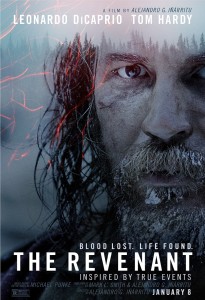
The RevenantLet’s start with the Best Picture category where we have: 

“Spotlight”

“The Revenant”

“The Big Short”

“The Martian”

“Mad Max: Fury Road”

“Bridge of Spies”

“Room”

“Brooklyn”

I loved “The Martian” (and Matt Damon’s performance) and Tom Hanks’ “Bridge of Spies.” Room” and “Brooklyn” don’t stand a chance leaving “Mad Max: Fury Road,” “The Big Short,” “Spotlight” and “The Revenant,” as the ones that count. I don’t know how “Mad Max” got in (still prefer the original), but the others? Wow. I was split between “The Big Short” and “The Revenant,” but the cinematography by Emmanuel Lubezki and acting by Leonardo DiCaprio for me sealed the deal so going with “The Revenant” for Best Picture. 

In the Best Actor category we have: 

Leonardo DiCaprio (“The Revenant”)

Michael Fassbender (“Steve Jobs”)

Eddie Redmayne (“The Danish Girl”)

Matt Damon (“The Martian”)

Bryan Cranston (“Trumbo”)

     OK, first off we have Eddie Redmayne who won the Oscar last year for “The Theory of Everything” who was exceptional, yes, but lightning won’t be striking twice this time. As I mentioned earlier, I loved Matt Damon in “The Martian,” but the Academy hating all things sci-fi (even if it is on the fringes of a good drama) will bypass him. Michael Fassbender was exceptional and usually the Academy likes to reward those who do biopics, but because Apple won’t give the Feds the application to break into that terrorist’s iPhone they’re gonna pass (sorry Magneto). Bryan Cranston plays the character of 1940s blacklisted screenwriter Dalton Trumbo and guess what? The Academy is going to blacklist him once again, which leaves Leonardo DiCaprio for his virtually doing the impossible being in every scene (almost like a one-man show) as 19th-century American frontiersman Hugh Glass, who is left for dead after being mauled by a bear during a winter expedition in “The Revenant.” So I’m going with Leonardo DiCaprio for Best Actor. 

Brie Larson from 'Room'The nominees in the Best Actress category are as follows:

Brie Larson (“Room”)

Saoirse Ronan (“Brooklyn”)

Cate Blanchett (“Carol”)

Jennifer Lawrence (“Joy”)

Charlotte Rampling (“45 Years”)

    I was so impressed with the versatility of Jennifer Lawrence that my first instinct was to go with her, but upon settling down some I realized there can be only one (to quote “The Highlander”) and that’s Brie Larson for “The Room.” I mean, c’mon she’s already won the trifecta of awards: the Golden Globe, SAG Award, and BAFTA for Best Actress. The movie made me feel so claustrophobic and Larson’s performance was so amazing you felt so liberated at the end of the movie I was literally cheering for her (and her son played brilliantly by 9 year old Jacob Tremblay). Larson’s stiffest competition is going to be Cate Blanchett, who’s already won Best Actress and Best Supporting Actress. However, the early buzz that Blanchett received around her Oscar-nominated performance in “Carol” has quickly faded in the fickle world of Hollywood and nobody can pronounce Saoirse Ronan’s name for her role in “Brooklyn” and nobody saw “45 Years,” so I’m going with Brie Larson for Best Actress. 
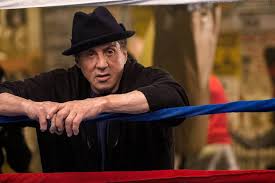
Sylvester StalloneThe Best Supporting Actor category includes:

Sylvester Stallone (“Creed”)

Mark Rylance (“Bridge of Spies”)

Tom Hardy (“The Revenant”)

Mark Ruffalo (“Spotlight”)

Christian Bale (“The Big Short”)

    Oh, how the Academy loves to reward those who’ve had a long running history and in a year or round numbers, this case 40 years. Yes, Sylvester Stallone deserves winning in this category for his movie, “Creed” not just because of his powerful performance and the sentimentality behind his beloved character (as that of Rocky Balboa) but also because the Academy did us all a disservice for overlooking the film’s director, Ryan Coogler and the movie’s incredibly acted lead character of the title name, Michael B. Jordan. Two spoilers in this category would be Mark Rylance and Christian Bale, but hands down I’m going with Sylvester Stallone as Best Supporting Actor. 
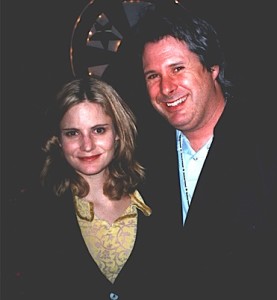
Actress Jennifer Jason Leigh and Howie Nave circa 1995. Photo/Provided

Actress Jennifer Jason Leigh and Howie Nave circa 1995. Photo/Provided

In the “anything goes” category the nominees for Best Supporting Actress include:

Rooney Mara (“Carol”)

Kate Winslet (“Steve Jobs”)

Alicia Vikander (“The Danish Girl”)

Jennifer Jason Leigh (“The Hateful Eight”)

Rachel McAdams (“Spotlight”)

   This category spotlights an incredible range of talent and is wide open (and deserving) for any of them. Kate Winslet received a Golden Globe for her performance in “Steve Jobs” as former Mac marketing executive Joanna Hoffman, but even with her surprise Globe win, this category is far from a done deal. Alicia Vikander and Rooney Mara turned in solid performances and the other two nominees, Jennifer Jason Leigh (“The Hateful Eight”) and Rachel McAdams (“Spotlight”), blended well in their perspective ensemble, movies though Leigh’s intense performance as Daisy Domergue, a female outlaw in the 19th century has many (including myself) believing she might be bring home Oscar. Boy, and if that weren’t enough, Leigh is also the voice of the title character in the Oscar-nominated stop-motion animated film, “Anomalisa” so, as much as a long-shot as it may be, I’m going for Jennifer Jason Leigh as Best Supporting Actress.

The Revenat director Alejandro González IñárrituIn the crowning jewel for Best Director we have the following:

Alejandro Gonzalez Inarritu (“The Revenant”)

Tom McCarthy (“Spotlight”)

Adam McKay (“The Big Short”)

George Miller (“Mad Max: Fury Road”)

Lenny Abrahamson (“Room”)

     All five directors have been to the Academy before, but leading the nominees is 70-year-old veteran George Miller. What still shocks me is the absence of director Ridley Scott for “The Martian.” Director Lenny Abrahamson did a fabulous job in his self-contained direction of  “Room,” as did Tom McCarthy. The spoiler could be Adam McKay for his very smartly acted “The Big Short,” but I’m going with a sweep here with Alejandro Gonzalez Inarritu for Best Director. 
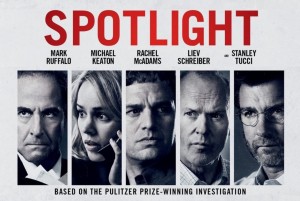
SpotlightFor Best Original Screenplay the nominees are:

Matt Charman, Joel and Ethan Coen (“Bridge of Spies”)

Pete Docter, Meg LeFauve, Josh Cooley (“Inside Out”)

Tom McCarthy and Josh Singer (“Spotlight”)

Alex Garland (“Ex Machina”)

 Jonathan Herman, Andrea Berloff, S. Leigh Savidge and Alan Wenkus (“Straight Outta Compton”)

I’m going with Tom McCarthy and Josh Singer for “Spotlight”.

For Best Adapted Screenplay the nominees are:

Emma Donoghue (“Room”)

Drew Goddard (“The Martian”)

Nick Hornby (“Brooklyn”)

Adam McKay and Charles Randolph (“The Big Short”)

Phyllis Nagy (“Carol”)

And the winner will be Adam McKay and Charles Randolph “The Big Short”.

In the Best Animated Feature department we have:

“Anomalisa”

“Boy and the World”

“Inside Out”

“When Marnie Was There”

“Shaun the Sheep”

Hands down the winner will be “Inside Out” for Best Animated Feature.

In the Best Documentary Feature category the nominees are:

“Amy” (Asif Kapadia)

“Cartel Land” (Matthew Heineman)

“The Look of Silence” (Joshua Oppenheimer)

“What Happened, Miss Simone?” (Liz Garbus)

“Winter on Fire: Ukraine’s Fight for Freedom” (Evgeny Afineevsky)

Need I even bother? Big win for “Amy”as Best Documentary.

For Best Cinematography the nominees are:

“Carol” (Ed Lachman)

“The Hateful Eight” (Robert Richardson)

“Mad Max: Fury Road” (John Seale)

“The Revenant” (Emmanuel Lubezki)

“Sicario” (Roger Deakins)

His work was absolutely brilliant in “The Revenant” so going with Emmanuel Lubezki for Best Cinematography.

For Best Film Editing the nominees are: 

“The Big Short”

“Mad Max: Fury Road”

“Spotlight”

“The Revenant”

“Star Wars: The Force Awakens”

And the winner is “The Big Short”.

For Best Original Score the nominees are: 

“Carol” (Carter Burwell)

“Sicario” (Jóhann Jóhannsson)

“The Hateful Eight” (Ennio Morricone)

“Bridge of Spies” (Thomas Newman)

“Star Wars: Episode VII—The Force Awakens” (John Williams)

I am picking Ennio Morricone for “The Hateful Eight”, but John Williams might be the spoiler for “Star Wars: Episode VII—The Force Awakens”.

And finally for Best Original Song the nominees are:

“Earned It” from “Fifty Shades of Grey”

“Manta Ray” from “Racing Extinction

“Simple Song #3” from “Youth”

“Til It Happens To You” from “The Hunting Ground”

“Writings on the Wall” from “Spectre”

I am going with the song, “Earned It” from “Fifty Shades of Grey”.

Howie Nave is host/emcee/manager of The Improv at Harveys. You can hear him Monday-Friday 6 to 10am on KRLT FM-93.9.




4.5% across-the-board raises in LTUSD

By Kathryn Reed

Every employee in Lake Tahoe Unified School District is getting a 4.5 percent raise, which is retroactive to July 1.

The teachers union on Feb. 23 ratified the contract with the district. The classified group is set to vote Feb. 25. The school board is expected to take action March 8. The confidential employees and administrators will be getting the same raise.

Both unions are working on one-year contracts.

For the prior school year everyone received a 6.5 percent increase, in 2013-14 it was 3.5 percent. Raises were nonexistent for about five years as the district, as an extension of the state, wallowed in the recession.

During that time LTUSD lost 25 classified, 20 certificated and nine administration positions.

“What we are proud of is keeping the class-size reduction and music. Kids should not suffer because of tough times,” Superintendent Jim Tarwater told Lake Tahoe News.

He said now is the time to reward people for their work.

An item the teachers have been negotiating for some time is the rules concerning when someone wants to transfer jobs or departments. That language is now more transparent, according Jodi Dayberry. Dayberry is president of the local teachers’ union.

Another concession by the district is to pay $1,000 more for employees’ health insurance. The cap is now at $10,232 a year.

“I think we have had very positive negotiations. This last round especially. We were working collaboratively with the district,” Dayberry told Lake Tahoe News.


Easy win for Trump in Nevada caucuses

By Steve Peoples and Nancy Benac, AP

Notching three in a row, Donald Trump decisively won Nevada’s Republican caucuses Tuesday as Marco Rubio bid to elbow out Ted Cruz for second place in an increasingly urgent effort to slam the brakes on the Trump juggernaut.

Trump now can claim victories in the West, the South and Northeast – a testament to his broad appeal among the mad-as-hell voters making their voices heard in the 2016 presidential race.

“We’re winning, winning, winning the country,” Trump declared. “Soon, the country is going to start winning, winning, winning.”

Ticking off a list of upcoming primary states where he’s leading in preference polls, Trump predicted he’ll soon be able to claim the GOP nomination. “It’s going to be an amazing two months,” he told a raucous crowd at a Las Vegas casino. “We might not even need the two months, folks, to be honest.”

Six in 10 caucus goers said they were angry with the way the government is working, and Trump got about half of those angry voters, according to preliminary results of an entrance poll.

With time running out, Nevada was a critical test for Rubio and Cruz, the two senators battling to emerge as the clear alternative to the GOP front-runner. Rubio was out to prove he can build on recent momentum, while Cruz was looking for a spark to help him recover from a particularly rocky stretch in his campaign.

Lagging far behind the two senators in the Nevada vote were Ohio Gov. John Kasich and retired neurosurgeon Ben Carson.

Rubio, already campaigning in Michigan as caucus results rolled in, sought to project confidence that he can consolidate the non-Trump voters who have been splintering among an assortment of GOP candidates, saying, “we have incredible room to grow.”

But after finishing third in Iowa, fifth in New Hampshire and second in South Carolina, Rubio needs a win soon to support the idea he can beat Trump.

Cruz, a fiery conservative popular among voters on the GOP’s right, finished a disappointing third in South Carolina after spending much of the past two weeks denying charges of dishonest campaign tactics and defending his integrity. Another disappointing finish in Nevada would raise new questions about his viability heading into a crucial batch of Super Tuesday states on March 1.

The election calendar suggests that if Trump’s rivals don’t slow him by mid-March, they may not ever. Trump swept all of South Carolina’s 50 delegates, giving him a total of 67 compared to Cruz and Rubio who have 11 and 10, respectively. There were 30 delegates at stake in Nevada, and a whopping 595 available one week later in the March 1 Super Tuesday bonanza.

The billionaire businessman, in his victory speech, dismissed the notion that if more GOP candidates drop out of the race, they’ll coalesce around an alternative.

“They keep forgetting that when people drop out, we’re going to get a lot of votes,” he said.

Nevada’s caucusing played out in schools, community centers and places of worship across the state – a process that’s been chaotic in the past.

Count Tracy Brigida, fed up after her husband was laid off from his mining job, among those caucusing for Trump.

“I want a businessman to run the biggest business in the world,” Brigida said as she caucused at a Las Vegas high school.

Jeremy Haight drove straight from his marketing job to caucus for Marco Rubio at the same high school.

“He’s the most level-headed. He hasn’t said anything stupid or crazy … which is really what I think the country needs,” Haight said.

It was Cruz for Megan Ortega, who declared: “He’s consistent, he’s bold and he’s a class act.”

Preliminary results of the entrance poll found that about 3 in 10 early caucus goers said the quality that mattered most to them in choosing a candidate was that he shares their values, slightly more than the quarter who said they want a candidate who can win in November. About a quarter said they want a candidate who can bring change. About 2 in 10 want one who “tells it like it is.”

The GOP field that included a dozen candidates a month ago has been reduced to five, with former Florida Gov. Jeb Bush the latest to drop out after a disappointing finish in South Carolina. Kasich and Carson could play spoilers as Trump, Cruz and Rubio, battle for delegates with an increasing sense of urgency.

Indeed, Republican establishment heavyweights have been flooding to Rubio in recent days, including Arkansas Gov. Asa Hutchinson, North Carolina Sen. Thom Tillis and Utah Sen. Orrin Hatch. South Florida’s three Cuban-American members of Congress announced their support for him in the hours before the Nevada contest.

Nevada marked the first Republican election in the West, the fourth of the campaign. And it’s not one that’s gotten much attention from the GOP candidates.

Through Tuesday, the Republican candidates and the super PACs supporting them had spent a combined $3.8 million on television and radio advertisements in Nevada – less than a tenth of the $39.3 million spent ahead of last weekend’s South Carolina primary, according to Kantar Media’s CMAG data.

The entrance poll survey was conducted for the Associated Press and the television networks by Edison Research as Republican voters arrived at 25 randomly selected caucus sites in Nevada.


Calif. pension fix leads to risk as market volatility soars

By Romy Varghese, BloombergBusiness

It’s hard for states to fix pensions – just look at New Jersey and Illinois. And even when legislators in California agreed two years ago on a way to keep the teachers’ retirement fund from going broke, it left the state’s finances more exposed to financial-market swings.

Under the plan, California, school districts and teachers will gradually increase their contributions to make the second-biggest U.S. public pension fully funded in 30 years. The catch: the state’s share depends on whether the fund hits its 7.5 percent annual investment target, meaning it could jump in bad years or plummet in good ones, according to the Legislative Analyst’s Office. Three decades from now, the difference between market winning and losing streaks could mean as much as $5 billion.

The uncertainty over the state’s future payments to the California State Teachers’ Retirement System, which oversees benefits for about 896,000 people, underscores the risks in betting on a continual surge in California, where the government’s fortunes have tracked the booms and busts of the equity market. For now, California’s still reaping a revenue windfall from the post-recession bull run that crested in the middle of last year.

Read the whole story


Only one of California’s pot legalization initiatives has the green that counts

By Phil Willon, Los Angeles Times

Devout cannabis advocates and social justice reformers believe this may finally be the year that California voters legalize all marijuana, and that optimism has led to a mashup of proposed statewide ballot measures — more than 20 filed so far.

They vary from a one-sentence constitutional amendment that simply declares California adults are free to “grow, own [and] purchase” marijuana to a 62-page treatise on how to best regulate and tax legal pot.

But just one has attracted the deep-pocketed donors and leading advocacy groups to emerge as the clear favorite to make the November ballot — the so-called Adult Use of Marijuana Act.

Read the whole story