
New regulations skirt qualifications to teach in Nev.

By Trevon Milliard, Reno Gazette-Journal

Nevada’s emergency change to teacher licensing simplifies hiring in a state short on public school teachers, but it also opens the door to those who don’t meet basic expectations.

An emergency regulation – approved a month ago by Gov. Brian Sandoval – allows the state to immediately license teachers who’ve never taught in a classroom or tested competent in their subject matters, both of which Nevada usually requires to be a licensed teacher.

The regulation lets Nevada ignore up to a dozen of its own requirements per teacher, including that applicants show mastery of “principles and methods of teaching” and basic reading, writing and math skills.

Read the whole story


Tahoe Paradise Park’s future being finalized

TPRID meeting-1

Tahoe Paradise Resort Improvement District’s board is creating a master plan for the park with the public’s help. Photo/Jessie Marchesseau

By Jessie Marchesseau

MEYERS – After years without anything even resembling one, Tahoe Paradise Resort Improvement District has put together a master plan for Tahoe Paradise Park. Well, at least a draft of one.

The plan sets forth a number of goals and objectives not only for the purpose of managing the park more effectively, but also making it possible to apply for grants. The board presented this draft to the public at a workshop on Thursday evening where board members were looking to get input, reactions and suggestions from the community.

Large yellow posters stating the seven main goals and specific objectives relating to each were plastered on the walls of the upstairs meeting room of the California Conservation Corps. building.

The main goals are as follows:

1.     Increase community involvement, activities, and programs

2.     Conserve, protect, and enhance the park’s natural and human-made features

3.     Enhance park maintenance and appearance

4.     Enhance park governance and management

5.     Enhance financial accountability and transparency

6.     Increase revenue

7.     Establish a project development and implementation plan.

Beneath the posters were tables covered with sheets of paper, one titled with each of the 60 objectives and room for comments to be written in below.

However, with only about a dozen people in attendance March 3, the number of people offering input was significantly less than board members had anticipated and by the end of the evening, many sheets remained blank. But even with the meager turnout, it did appear both sides of the issue were represented, though perhaps not the middle ground.

Mark and Jenny Goldstein who live about a block and a half from the park attended to share their sentiments against making any changes to the park. They are concerned that the surrounding infrastructure, specifically the roads near the park, is not in good enough condition to accommodate increased traffic in and out of the park.

They also cited lack of parking, which forces cars onto nearby streets, and noise issues as reasons to curb increased usage of Tahoe Paradise Park.

“We’re trying to keep people out of our neighborhood, not bring them in,” Jenny Goldstein told Lake Tahoe News.

Mark Goldstein concurred, explaining they chose to live in Meyers because of its small-town, quiet atmosphere. If they wanted to see a band or experience traffic, they would go into South Lake.

He wants the park to stay just as it is, and feels most of the changes the board is proposing are simply a waste of time and money. He thinks erosion control, forest thinning and making the bathrooms open to the public would be the best uses for park funds.

Not everyone at the meeting, however, shared this attitude for leaving the park as is. John Dalton, a Meyers resident who also grew up in Meyers, remembers playing at Tahoe Paradise Park as a child. He would like to see it returned to what it was back then.

“I think they’re on the right track, just trying to get people back in the park,” he told Lake Tahoe News. “I don’t see anything I oppose; I’m sure there’s more that could be added,” he said of the plan’s goals and objectives.

Nina McLeod also supported the draft plan with no objection and is already planning to volunteer her time helping with implementation. She is especially fond of the idea to encourage more kids to fish in the park, especially fly fish.

“To me, it’s all good. I think the community can really benefit by being able to get out there and get to the beach,” she said.

McLeod also pointed out that even though Lake Tahoe is very close, it can be crowded in South Lake and the beaches full of tourists. Tahoe Paradise Park is “our own place,” she said, a place for people in Meyers to enjoy a day at the lake and on the beach without the crowds.

None of these attendees had opinions to offer about any of the specific goals or objectives in the plan. Rather, they had overall feelings about the plan as a whole, either good or bad. Board member Peter Nelligan said the only item he’s specifically had people comment on is the objective to start allowing dogs in the park. While the majority seems to be in favor of dogs in the park, with clean-up baggies available, others are still adamantly against it.

Some of the other objectives include building a sand volleyball court, developing a community garden, creating a park website, ensuring facilities meet ADA standards, protecting the natural environment and reviewing the master plan on an annual basis.

Nelligan said the park has been “very isolated and underutilized” for years. He is hoping the implementation of this master plan will once again make “Meyers’ best-kept secret” a family-friendly place for the community to gather and enjoy the outdoors.

The board is anticipating approval of the master plan at the next TPRID meeting on March 31, but they still hope to gather and address more community feedback in the meantime. The plan may be viewed online. Comments and suggestions may be emailed to TahoeParadisePark@gmail.com.
Survivor of deadly Alpine Meadows avalanche recounts five-day ordeal

By Bran Branan, Sacramento Bee

MAMMOTH LAKES — Anna Allen survived the most deadly avalanche in U.S. ski history, fighting through frostbite and severe dehydration during the five days she was buried beneath heavy snow and debris at Alpine Meadows.

The March 31, 1982, avalanche took the lives of seven people, including Allen’s boyfriend and three of her colleagues at the Truckee-area ski resort. Allen attributes her survival to her faith in the search and rescue system, but understands that luck played a role. She was in a building when the great wave of snow slammed into it; the building was crushed but the debris helped create an air pocket that saved her.

In the more typical avalanche scenario – a victim encased in snow – Allen would not have survived. According to one widely cited Canadian study, people buried in an avalanche are unlikely to survive if not rescued within 20 minutes, because of the dangers posed by trauma and suffocation.

The return of significant snowfall to the Sierra this season, after four years of below-average precipitation, has brought skiers back to the mountains – and raised the risks for avalanches. Leaders of Sierra search and rescue teams say stories such as Allen’s have given them greater motivation to continue intensive recovery efforts for avalanche victims even when circumstances suggest they are dead.

Such determination was on display in late January, when crews from across the state braved storms and high avalanche risk for five days as they looked for 23-year-old Carson May, a Sugar Bowl ski instructor who went missing.

Read the whole story


Timely snowstorms help avert another disastrous year for California ski industry

By Hugo Martin, Los Angeles Times
 
Peter Smith is dreaming of a white Independence Day.

The longtime ski junkie from Claremont knows that the El Niño weather pattern has yet to put a significant dent in the state’s drought, but a series of storms over the last few months has him fantasizing about a monster ski season that can stretch deep into summer.

If big snow dumps continue through spring, Smith said, his ski club could schedule an extra trip to Mammoth Mountain for the Fourth of July weekend.

Thanks to well-timed storms blanketing California peaks this winter, ski resort operators in the state say lift ticket sales have increased as much as 50 percent compared with the last few years, a feat that they attribute to pent-up demand among snow fans who have had to suffer through a four-year drought.

The season could even stretch for two or three more months if Mother Nature cooperates.

Read the whole story


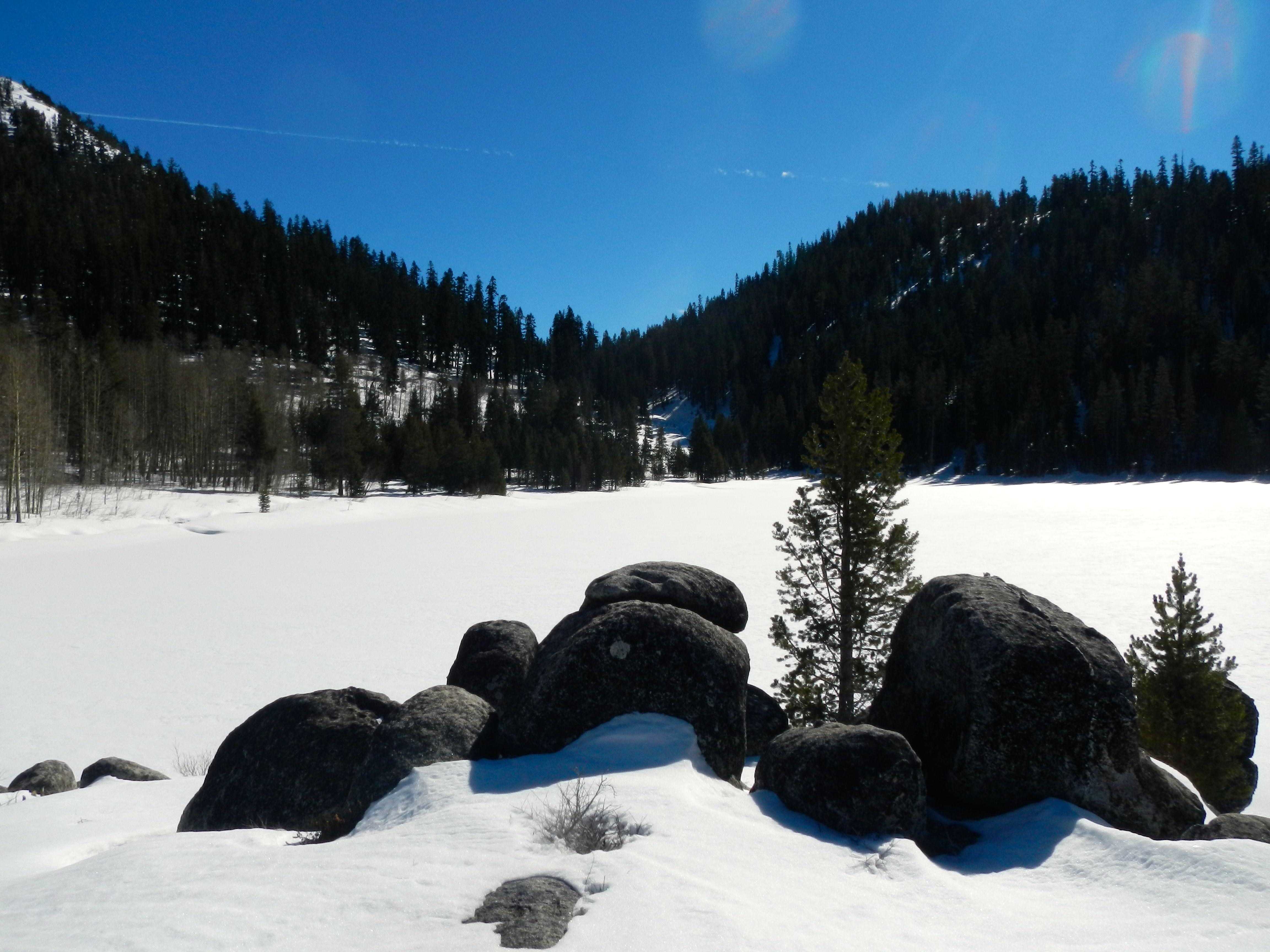
Marlette Lake a lengthy, worthwhile trek

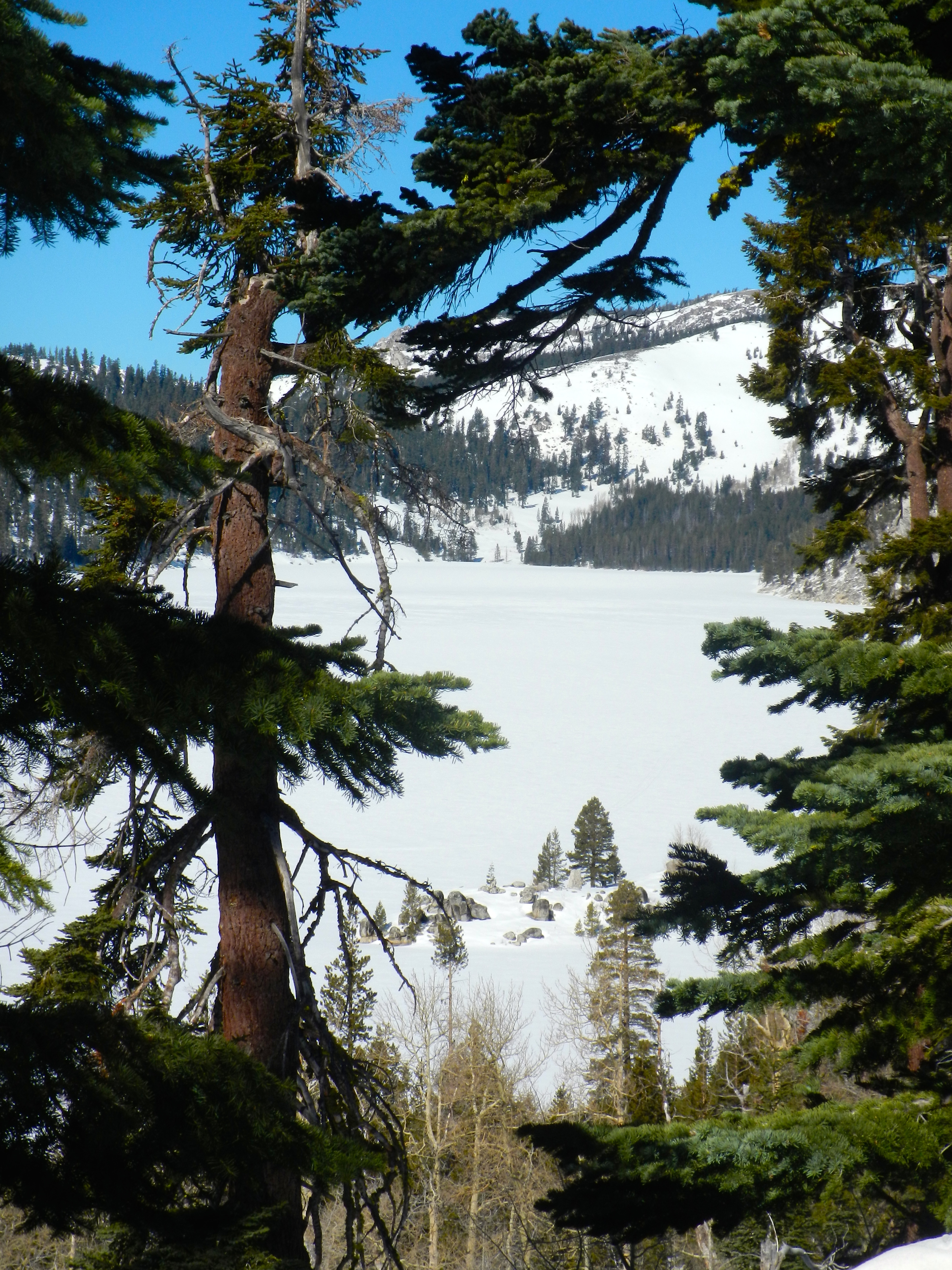
Marlette Lake is frozen this time of year. Photos/Kathryn Reed

Snow covers a frozen Marlette Lake. Photos/Kathryn Reed

By Kathryn Reed

SPOONER SUMMIT – Sitting on the rocks I wished I were in a chair that spun around so I didn’t have to get up to enjoy the 360-degree view of this slice of Sierra beauty.

On this particular Saturday in February we had Marlette Lake to ourselves. It was stunning, warm and relaxing – especially after hiking nearly 6 miles to get there.

While we started out with the notion we would be snowshoeing, the hardpack conditions were such that hiking boots were all we needed for most of the trek. It was nice to have the snowshoes for the final descent to the lake and then climbing out. Poles were also good to have.

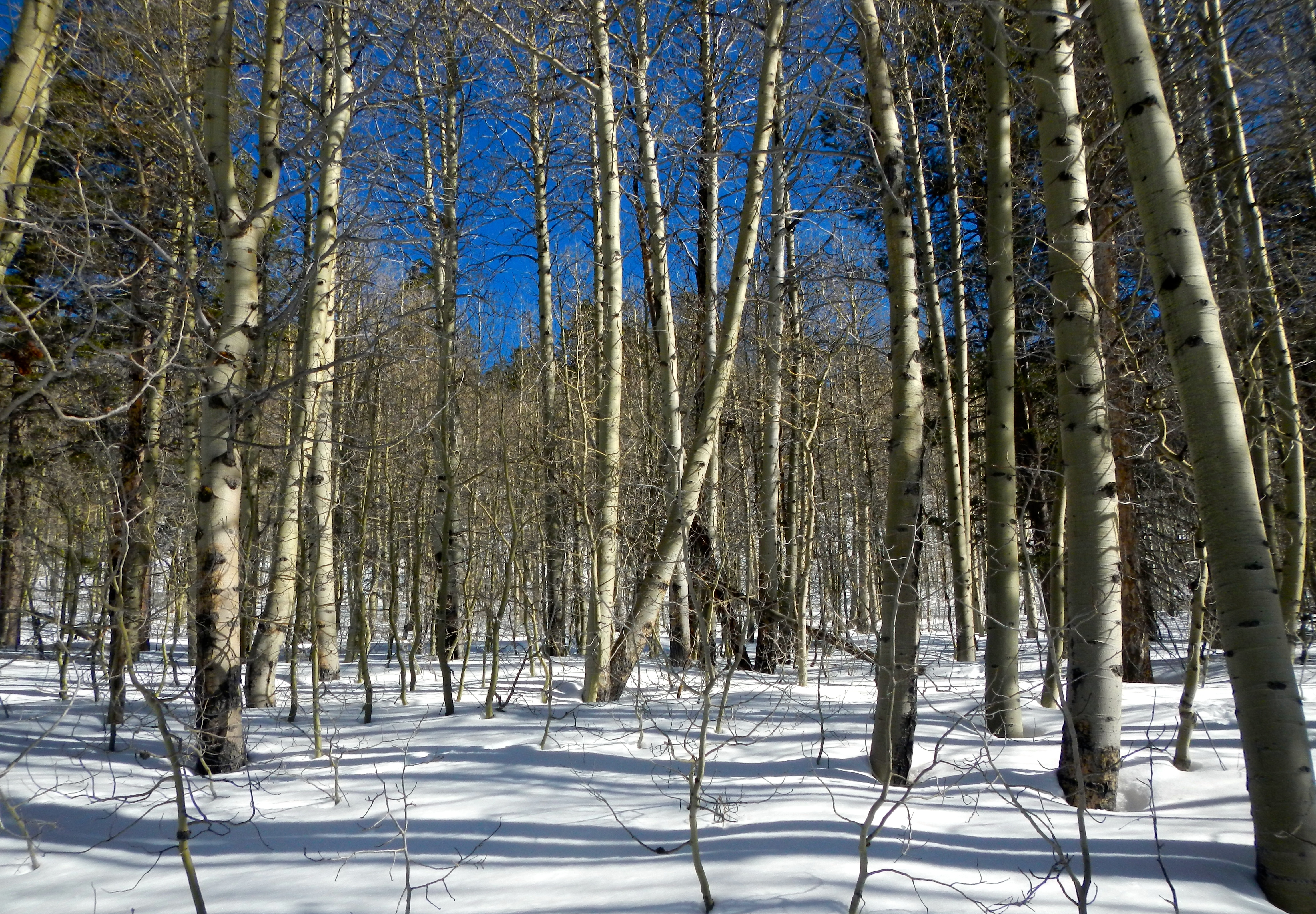
The abundance of aspen trees makes this a much different hike in the fall.

The abundance of aspen trees makes this a much different hike in the fall.

In winter, this trail is practically deserted – the complete opposite of summer and fall when hikers and mountain bikers are out.

With the return of cross country skiing out of Spooner Lake, part of the trail has been groomed for skiing. Snowmobilers had also laid down a path for us to walk on. Much of the trail is wide enough for at least two to walk side-by-side because this is North Canyon Road.

The bare aspens are like tall white, stick figures protruding from the snow.

Marlette’s history is rich – dating back to the days when silver was being mined in Nevada.

The dam forming the lake was built in 1873. The height of it has been increased several times. It is now at 45-feet high. The lake itself is 45-feet deep.

Marlette Lake's rock outcropping, which is ideal for a lunch stop, is just visible in the bottom of the photo.

Marlette Lake’s rock outcropping, which is ideal for a lunch stop, is visible in the bottom of the photo.

While fishing at Marlette did not open until 2006, brook trout were introduced in the 1800s, Lahontan cutthroat trout in 1964 and rainbow trout in 1984.

The rock island where we stopped for lunch has a sign talking about some of the history, including the chimney that still remains on Rocky Point. It is the last remnant of what was a cabin built by James Mather Leonard and Jessie Hobart Leonard in 1933. They owned Virginia City Water Company, which included Marlette Lake.

Before the couple built the cabin the other structures in the area were a caretaker’s cabin near the dam and a Nevada Fish and Game cabin.

The state bought the water system in 1963 from the Curtis Wright Corp., which had bought it from the Leonards. The Marlette Water System, which still provides water to Virginia City, Gold Hill, Silver City and part of Carson City, also includes Hobart Reservoir.

The caretaker’s cabin was supposed to be taken down in the late 1960s, but instead crews mistakenly took down the Leonard cabin. In 2005, the chimney was restored. In the informational sign was erected two years later on Jessie Leonard’s 91st birthday.

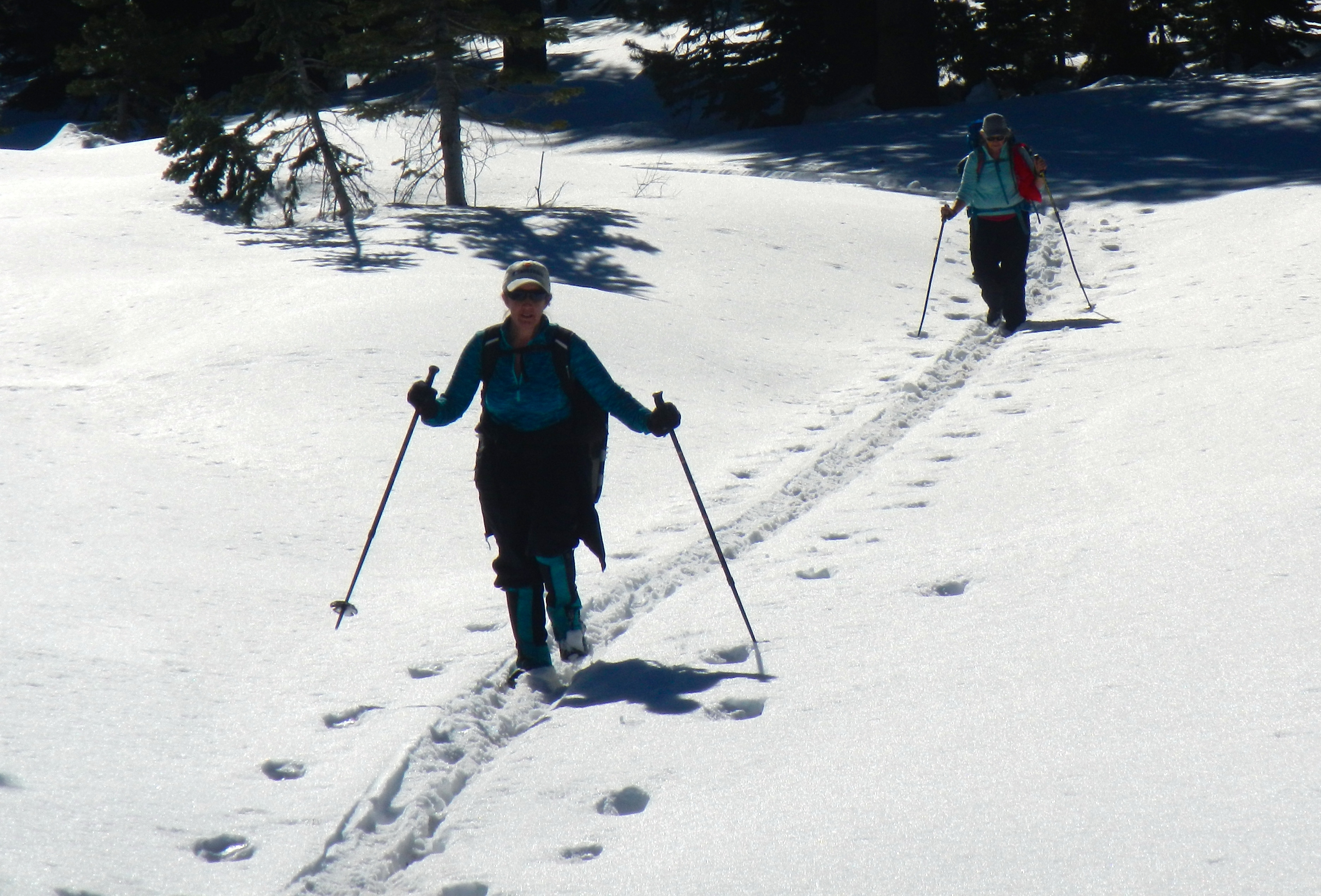
Sue and Brenda make their way to Marlette Lake.

Sue and Brenda make their way to Marlette Lake.

—–

Getting there:

From South Lake Tahoe take Highway 50 east. At the top of Spooner Summit, just beyond the Highway 28 junction, there is parking on the left. Trail starts there. You go past Spooner Lake – it will be on you left – and the North Canyon Trail will eventually be on the right.


Lawmakers want to improve CSU grad rate

By Jason Song, Los Angeles Times

Cal State University campuses are under pressure to boost their four-year graduation rates, which in most cases are far below the national average. A new state Legislature bill could make their task easier.

If the legislation is adopted, students who agree to take 15 units a semester and maintain a minimum grade-point average would get priority registration for popular classes, among other benefits.

The bill by state Sen. Steve Glazer, D-Orinda, a former Cal State trustee and strategist for Gov. Jerry Brown, is similar to pilot programs at four of the 23 Cal State schools. Participating students often get first shot at classes, additional academic advising and tuition waivers for any class that’s required to graduate but isn’t offered during the students’ first four years.

The proposed legislation would go a bit further by freezing tuition for students in the program.

Read the whole story


Calif. parks, wildlife areas would benefit in Obama’s budget

By Michael Doyle, McClatchy Washington Bureau

California gets its share, and then some, from the Obama administration’s $4 trillion budget proposal delivered Monday to a skeptical, Republican-controlled Congress.

There’s money for restoring the Sacramento-San Joaquin Delta, likely to survive congressional winnowing. Proposed upgrades at places like Yosemite National Park will probably find Capitol Hill favor, as well, along with funding for Central Valley flood control and dam improvements.

The budget, for instance, offers $3.5 million to complete the Army Corps of Engineers’ design and engineering studies for protecting the Sacramento area’s Natomas Basin. It provides tens of millions of dollars to upgrade Folsom Dam northeast of Sacramento and improve the safety of the earthen Isabella Dam in eastern Kern County. These projects enjoy bipartisan support.

Read the whole story


STHS to open individual classes to WHS kids

Classes in the Tahoe Arts and Design sector at STHS are expected to be popular with WHS students. Photo/Kathryn Reed

Classes in the Tahoe Arts and Design sector at STHS are expected to be popular with WHS students. Photo/Kathryn Reed

By Kathryn Reed

Starting this fall students at Whittell High School should be able to take individual classes at South Tahoe High School.

The school boards of the respective districts are slated to vote on the agreement at their March 8 meetings.

While inter-district transfers between the Nevada and California districts have been available for a price for years, the ability to take select classes would be new.

The impetus to offer this to WHS students came from the group that was assembled more than a year ago to deal with parental dissatisfaction with how things were going at the Stateline school. One of the issues was lack of electives. With Whittell being such a small school, only so many classes are available.

“We are targeting juniors and seniors looking to build their academic resumes,” Teri White, superintendent of Douglas County School District, told Lake Tahoe News. “In order for it to work out we have to free the student up for almost two periods because of driving there and back.”

This means the student needs flexibility in their day to make it work, and also why they may only want to take one class at STHS.

Students will be required to provide their own transportation.

The Douglas school board this year approved the calendar for next fall, which now aligns with Lake Tahoe Unified School District. This will help with students who want to take classes in both states.

Whittell students will only be admitted to a STHS class if there is room, so there is no threat to a STHS student being displaced.

WHS students have Fridays off, so depending on which South Tahoe class they take, it may mean going to school five days a week.

While LTUSD will make money off of the students, Superintendent Jim Tarwater said the reason to do this “is to take care of kids.”

“I want those kids to compete in whatever college they want to go to,” Tarwater told Lake Tahoe News.

It will cost $3.63 a day, or a little more than $300 per class. For students on the Nevada side who go to STHS full time it costs $5,224.

Neither superintendent would venture a guess as to how many students might take advantage of this opportunity that will take effect in the 2016-17 school year – assuming the two boards approve it – but guessed it wouldn’t be that many.


Turmoil in daily fantasy sports spreads

By J.D. Morris, Las Vegas Sun

The ongoing debate about whether and how the daily fantasy sports industry should embrace regulation doesn’t center entirely on major operators FanDuel and DraftKings. Turmoil related to smaller sites has added fuel to the fire, too.

FanDuel and DraftKings together control the vast majority of the daily fantasy market, and they were the subjects of a major industry scandal last fall when allegations of activity tantamount to insider trading ushered in a wave of public scrutiny. But two recent instances of small websites shutting down, leaving players without access to their funds, also have led some experts to call for strong regulation of the industry.

In January, the site FantasyUp said it was closing, telling users it did not have the funds necessary to process all of their withdrawals. That called into question whether customers who were owed money by the site would ever be able to recover their money.

Read the whole story


Reno getting its retail mojo back

By Jason Hildago, Reno Gazette-Journal

Just a few years removed from the worst recession in its history, Reno is starting to get its mojo back. This includes garnering interest from franchise and corporate retail stores that are eyeing communities expected to see big growth in the coming years.

New store openings in the last year in Reno-Sparks include a nice mix of retail establishments such as Nordstrom Rack and Lululemon as well as national food franchise Dunkin Donuts and regional chain Roberto’s Taco Shop.

After falling off the radar screen for many companies during the recession, companies that are giving the Reno area a look today are liking what they see, said Carl Gerhardt, a franchise consultant who works with FranNet and mentoring group Senior Core of Retired Executives (SCORE).

Read the whole story