EDC supervisors say no to extra road dollars

By Kathryn Reed

El Dorado County roads won’t be getting any extra money this summer based on a 3-2 vote last month.

The Board of Supervisors agenda item read: “Chief Administrative Office recommending the Board receive and file the Fiscal Year 2015/16 Mid-Year report and provide any direction related to the Fiscal Year 2016/17 budget.”

And while the board tried to give direction about roads, acting CAO Larry Combs said, “I would not recommend your board giving me that direction.” He said this after admitting to not having reviewed the budget and needing more than $50 million for the new sheriff’s building in Placerville.

(Combs works part time and lives in Auburn.)

Ultimately, the majority of the board agreed with him.

The minutes from Feb. 23 read: “A motion was made by Supervisor [Shiva] Frentzen, seconded by Supervisor [Ron] Mikulaco to direct staff to: 1) Provide the Board with a 5-year budget projection; and 2) Provide the Road Fund with 2 million dollars from the General Fund. Motion Failed. Yes: 2 – Mikulaco and Frentzen Noes: 3 – [Brian] Veerkamp, [Michael] Ranalli and [Sue] Novasel Received and Filed – No Formal Action Taken.”

Back in September, Combs got the board to agree to only use road fund money for streets starting with the 2016-17 budget and not supplement it with General Fund dollars as had been the practice of the last 15 years. He gave no reason why. This fiscal year $500,000 is coming from the General Fund for roads. Black Bart on the outskirts of South Lake Tahoe is one road slated for improvements.

Lack of road funding in favor of staff salaries is one of the reasons all five electeds are being recalled. While the discussion at the meeting sounded like most of the supervisors were in favor of increased road funding, that did not occur.

Novasel told her colleagues the roads are particularly bad in Tahoe this year with winter having returned. Pot holes are so large it’s like being on an obstacle course in some locations.

Novasel told Lake Tahoe News that while she supports funding for roads, that without a clear strategic plan and five-year budget forecast she doesn’t believe taking money out of the General Fund without knowing the consequences is the correct thing to do. She said she wanted to be able to look at the big picture and not piecemeal the budget together.

With that said, though, it is the electeds’ responsibility to set policy and give direction to the CAO – not the other way around. However, as a rule this board takes direction instead of gives it.

In the county’s midyear budget report it states that the road budget is starting off with $8.7 million less than expected, in large part because the state pass throughs were less than predicted. Road maintenance money in large part comes from the state in the form of gas tax sales. With vehicles being more efficient, that revenue source has been declining for years. Other state and local revenue streams make up the road maintenance fund.

Laura Schwartz with the chief administrator’s office said the budget is structurally balanced for the next three years – which legally it must be. Still, the county does not do long-term forecasting. The fiscal year starts July 1, though final numbers for that year are not solidified until October after the state has allocated its funding.

The county is projecting property taxes to grow by 4 percent per year. This last year it was just more than 5 percent.

Sales tax projections have been reduced to 2 percent growth to compensate for the reduction in what is collected from gas sales based on price of fuel going down.

Schwartz said, “There will be no new programs or staff without an outside funding source.” Even so, salaries and benefits are expected to increase 4 percent.

There will be a budget workshop in June. The document is usually released near Memorial Day.


Study: Nev. one of the worst states for women

By Caitlin Lilly, Las Vegas Review-Journal

If you’re a woman, a new ranking suggests you may not want to live in Nevada, as the Silver State ended up near last for how friendly it is to women.

To find the best states for women, WalletHub’s study compared all states and Washington, D.C., across 15 key factors “that speak to the needs and expectations of women in America.”

These factors were separated into two categories — women’s economic and social well-being and women’s health care and safety — and assigned a point value that were used to determine each states overall rank.

Read the whole story


Many state legislatures exempt themselves from record laws

By David A. Lieb, AP

JEFFERSON CITY, Mo. — State capitols are often referred to as “the people’s house,” but legislatures frequently put up no-trespassing signs by exempting themselves from public-records laws.

That tendency was apparent when the Associated Press sought emails and daily schedules of legislative leaders in all 50 states. The request was met with more denials than approvals.

Some lawmakers claimed “legislative immunity” from the public-records laws that apply to most state and local officials. Others said secrecy was essential to the deliberative process of making laws. And some feared that releasing the records could invade the privacy of citizens, creating a “chilling effect” on the right of people to petition their government.

Without access to such records, it’s harder for the public to know who is trying to influence their lawmakers on important policy decisions.

“The public has a right to know what their elected officials are doing, because it’s the people’s job to hold those folks politically accountable,” said Peter Scheer, executive director of the First Amendment Coalition, a San Rafael-based nonprofit that advocates for greater openness in government.

All legislatures allow people to watch and listen to their debates. But an AP review of open-government policies found that many state legislatures allow closed-door caucus meetings in which a majority of lawmakers discuss policy positions before public debates. Others have restrictions on taking photos and videos of legislative proceedings. In some places, lawmakers have no obligation to disclose personal financial information that could reveal conflicts of interest.

Legislators possess the power to change that but are sometimes reluctant to act.

A bill advancing this year in Massachusetts, for example, would strengthen the state’s public-records laws by limiting fees and setting new deadlines for state agencies and municipalities to comply. Yet it would continue to exempt lawmakers.

That mirrors the way things work in Washington, D.C. Congress exempted itself when it passed the national Freedom of Information Act 50 years ago. The president and his immediate staff also are exempt. By contrast, many governors are subject to state sunshine laws.

In many states, the public-records requirements passed by lawmakers present “a stunning contradiction,” said Charles Davis, dean of the College of Journalism and Mass Communication at the University of Georgia and a former executive director of the National Freedom of Information Coalition.

“I have just always found it astonishing that they would put those requirements on public officials throughout government and exempt themselves at the same time,” he said.

To gauge compliance with public-records laws, the AP sent requests to the top Democratic and Republican lawmakers in all states and most governors seeking copies of their daily schedules and emails from their government accounts for the week of Feb. 1 to Feb. 7. Of the more than 170 lawmakers who responded by mid-March, a majority denied the requests by claiming they were legally exempt. The governors were slower to respond but more often provided the information.

The legislative denials came from lawmakers of both parties, although slightly more from Republicans. In states where some lawmakers said “yes” and others “no,” it was more often the majority party lawmakers who denied the requests while a minority party leader complied.

In Missouri, Senate President Pro Tem Ron Richard was asked in front of dozens of reporters and editors whether he would release his government emails and daily calendars.

“All you have to do is ask for it, and I’ll give it to you. I don’t care,” Richard told those attending a statewide press association event in February.

Yet when the AP subsequently submitted an open-records request, Richard reversed course. A Senate administrator responded on his behalf with a letter saying that individual lawmakers aren’t subject to the Missouri Sunshine Law. Richard, who is in his first year as the Senate’s top lawmaker, explained that he learned his predecessors had determined they were exempt, and he didn’t want to break with precedent.

“I’m telling you I don’t hide anything in my emails. I just don’t do that,” said Richard, a Republican from Joplin.

Mississippi House Speaker Philip Gunn responded with a denial letter asserting his emails and calendars were his personal property, not subject to the Mississippi Public Records Act and protected “under the doctrine of legislative immunity” dating back hundreds of years to English common law.

Denial letters on behalf of Illinois’ top Democratic and Republican lawmakers said, among other things, that releasing the records could amount to a “clearly unwarranted invasion of personal privacy” for individuals who contacted lawmakers without expecting their names to appear in the news media.

An attorney for Kentucky’s legislature said secrecy was needed “to encourage effective and frank communications.”

“Arranging honors for our fallen heroes, seeking options for Kentuckians with substance abuse problems or counseling citizens regarding confidential problems are all in a day’s work for our members,” wrote Kentucky legislative general counsel Morgain Sprague. “These communications have always been protected by law.”

If lawmakers followed the same open-records rules that apply to others in government, the potential for some sensitive content being revealed would not be a reason for denying access to all of their emails. Rather, they could redact or withhold particular emails covered by various sunshine law exceptions while releasing the rest.

In several states, lawmakers who provided their records did withhold certain emails that they considered to be exempt from disclosure.

Texas Lt. Gov. Dan Patrick, who is the Republican head of the Senate, released 48 pages of emails but withheld the rest pending a request for a state attorney general’s opinion on whether confidential communications between elected officials and citizens are shielded from disclosure.

New Mexico lawmakers released hundreds of emails, mainly from constituents, but withheld three under an exemption for correspondence with certain legislative staff. They also released copies of their daily calendars showing breakfasts and dinners sponsored by industry and interest groups.

Lawmakers in Florida, which has one of the more expansive sunshine laws, freely released emails from people urging them to support or oppose particular bills. They also released calendars showing meetings with lobbyists for dentists, hospitals, teachers, the aerospace industry and others. The schedule for House Minority Leader Mark Pafford even included his morning exercise time and his flight itinerary for a trip to Washington, D.C.

“This is the people’s government. If somebody finds out I’m doing a workout or having a doctor’s appointment at a certain time, that’s OK,” said Pafford, a Democrat from West Palm Beach.

In Alaska, three of the top four lawmakers declined the AP’s request, explaining that their records can be kept confidential under the state constitution and “the deliberative process privilege.” But Senate President Kevin Meyer, a Republican from Anchorage, provided his calendar and let an AP reporter look at his email inbox as an aide scrolled through it.

Open-records advocates said such case-by-case allowances ultimately leave it to the whims of whoever is in power to decide what the public can see.

“The problem with that is that’s just an act of legislative mercy,” said Davis, of the University of Georgia, “and tomorrow they might have an absolutely identical document that they decide not to give you, because you have no legal right to it.”

Associated Press writers Adam Beam in Frankfort, Ky.; Becky Bohrer in Juneau, Alaska; Morgan Lee in Santa Fe, N.M.; William March in Tallahassee; John O’Connor in Springfield, Ill.; Emily Wagster Pettus in Jackson, Miss.; Bob Salsberg in Boston; and Will Weissert in Austin, Texas, contributed to this report.


Luxury lodge steps from Northstar skiing, biking

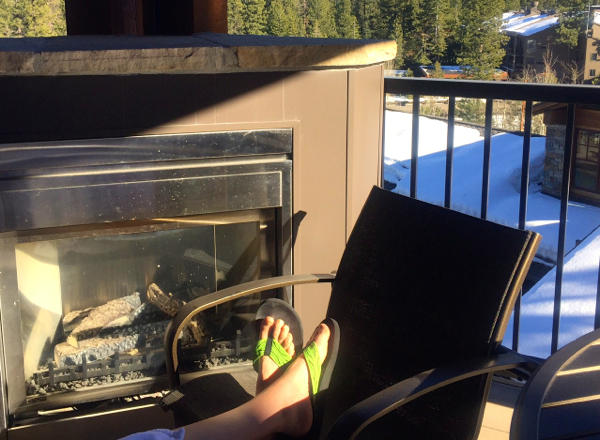
Relaxation is dominant feature of staying at the Northstar Lodge. Photo/Susan Wood

Relaxation is a dominant feature of staying at the Northstar Lodge. Photo/Susan Wood

By Susan Wood

TRUCKEE – And a one, and a two and now three buildings are going up at the new Northstar Lodge across from the ski resort’s village. This is a Welk Resorts timeshare property operated by the famous family.

Lawrence Welk had a penchant for fine things, and it shows in the latest 4-star mountain version of his resort cluster that started in Escondido and expanded into Palm Springs, Cabo San Lucas and Branson, Mo. – the country-western capital of the United States. Breckenridge, Colo., another Vail Resorts stronghold, is up next for the Welk group. It will launch in 18 months, then Poipu on the island of Kauai in 2019. The American musician and waltz king died in 1992. His grandson now runs the Welk properties, marking 50 years in business last year.

Each property has its own character. Branson is known as “a very big show town,” Northstar Lodge General Manager Michelle Morikawa told Lake Tahoe News on a recent visit. Escondido in San Diego County marks a historic journey that began as a trailer park. Palm Springs is elegant in appearance. Pictures of Cabo make one want to pack a swimsuit and grab an umbrella drink.

The Northstar Lodge, which started out in the first building as a Hyatt property, is structured as a timeshare property with mostly fractional owners and 11 whole owners who sublet their units. One can buy into a unit for 240,000 points equaling one week a year at a value of $30,000.

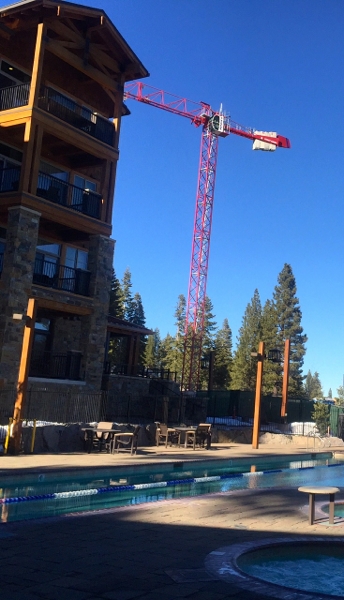
A third building on the property is almost complete; and it, too, will have pool views. Photo/Susan Wood

A third building on the property is almost complete; and it, too, will have pool views. Photo/Susan Wood

The Welks’ core values are all about family, so the principle translates into its business.

“Our primary selling point focuses on quality time with family. (Having this) forces you to take a vacation,” Morikawa said.

From the looks of the entire fourth floor of the second building dedicated as a sales preview center, prospective owners can dream big on how they plan to spend that quality time. There’s even a digital map of the world that indicates unit purchases at all Welk Resorts in real time. It’s mesmerizing to follow. The company boasts more than 50,000 owners.

Accents and touches make the property unique. With the first structure called the Washoe building labeled “mountain traditional” and the second called the Fremont considered “mountain contemporary,” they both offer something different and special. The third structure being built now will be called the Snowshoe building named after another famous Tahoe name — John “Snowshoe” Thompson, who delivered the mail from Placerville to Genoa carrying a 90-pound pack on 11-foot skinny skis with a balancing pole during the 1800s. The up-and-coming building now marked by a large crane one can watch from the swimming pool patio will have 32 units with 2-, 3- and 5-bedrooms with lock-offs.

Since this is the Tahoe-Truckee area, Morikawa reminded LTN that the LEED-certified property had to follow a master mountain association set of guidelines.

“We need to stay conducive to the setting,” she added. The property blends into the mountainside and remains limited on how much it may expand in footprint.

Nonetheless, what it has runs big in terms of things mountain visitors seek. Having its own on-site underground parking structure at a resort known for challenging parking issues would be reason alone to buy.

This attention to detail in satisfying owners is so important to Morikawa that she hired snowboard instructor Casey Dowling to fill the role as concierge extraordinaire in fulfilling owners’ and guests’ requests for activities. One such popular activity is “ride with Casey” where one can get up-close-and-personal guidance from this snowboarding expert.

And talk about convenient. Just ask Jacquelyn Derian and Zach Boebel. They were using her brother-in-law’s unit and were so comfortable that they graced the property carrying their snowboards in their robes.

“We like the amenities,” Derian Boebel said.

A full-size kitchen makes long stays comfortable with not having to eat out every night. Photo/Susan Wood

A full-size kitchen makes long stays comfortable with not having to eat out every night. Photo/Susan Wood

This nearly ski-in, ski-out property makes it easy to get up on the backside of Northstar for first turns with a ski and boot valet feet from accessing the 5-diamond Ritz-Carlton Lake Tahoe’s Highlands Gondola. Afterward, one may partake in the après ski feel by walking through the village and having a cocktail in the cushy seating next to the ice rink or cozying up to the fire at TC’s Pub with a brew and fiery chili.

Then again, the Northstar Lodge is comfy enough to find refuge for the night – holing up in a unit to watch the Super Bowl, watching a movie in a private theater complete with oversized chairs with cup holders, playing a game of billiards in the next-door recreation center, doing laps in the 25-meter pool, chilling in one of two hot tubs, consuming gooey s’mores by the fire pit on the Sierra Terrace or playing chess in the large community room in the Washoe building.

“People come up for winter, and not everybody skis,” Morikawa said.

For those who want to just relax in the unit, there are plenty of modern conveniences and considerations for the discerning tastes.

On the counter where it’s easy for at least four people to belly up to the large kitchen’s activities, a cocktail shaker, ice bucket and corkscrew await the owner. The tasteful cabinetry is stocked with all the modern conveniences. Stainless steel appliances create a welcoming look. There’s no reason to go out, unless there’s no desire to cook – especially with the rich sound of a Bose stereo system set up in the kitchen to keep the party going.

The units have a distinctively warm feel. All the fireplaces help with that. In the two-bedroom unit, a gas fireplace creates ambience and warmth in each room, along with another in the living room and yet a fourth on the patio.

The barn-wood adorning the walls plastered with upscale art make the place friendly. The fixtures are new. Welk Resorts set out its own brand of environmentally friendly toiletries labeled “Ecology.” Welk Resorts even conducted smell tests for the brand. Speaking of, the bathrooms are an experience all their own. Both bathrooms adjoining the bedrooms have oversized tubs and huge showers. And the soft bathrobes can keep one inside for the day.

The amenities don’t end there. If one wants to venture out, there’s a babysitting service for those with youngsters to look after.

Services expand into all seasons. Northstar is known for more than skiing. It has a world-class mountain bike park. With that in mind, the Lodge comes with bike storage.

When an owner runs out of ideas, Northstar Village has its own set of events. The minute a guest arrives, the front desk worker hands over a list of activities to launch the stay.

—–

Notes:

  • Northstar Lodge is located across from the Northstar Village at the base of the Northstar-at-Tahoe ski resort off Highway 267 in Truckee.
  • Telephone: 530.562.3900.


As Americans take up populism, Supreme Court embraces business

By Noam Scheiber, New York Times 

WASHINGTON — The Supreme Court vacancy created by the death of Justice Antonin Scalia highlights a growing rift between the country and the nation’s highest court on questions of economic power and support for big business.

And that gap, legal experts say, is unlikely to be significantly narrowed by the kind of justice President Barack Obama — or the next president, Democrat or Republican — is expected to nominate.

Americans have grown substantially more populist in their outlook over the past 15 years, according to some measures of public opinion, like whether they are satisfied with “the size and influence of major corporations” and whether the government should “redistribute wealth by heavy taxes on the rich.” Indeed, if the presidential primaries are any indication, there is perhaps no more potent force in U.S. politics today than economic populism.

At the same time, some argue that the Supreme Court under Chief Justice John G. Roberts Jr. has become perhaps the most business-friendly court in recent history. A 2013 study by Lee Epstein of Washington University in St. Louis, William M. Landes of the University of Chicago Law School and Judge Richard A. Posner of the 7th U.S. Circuit Court of Appeals in Chicago ranked justices according to their rulings in cases involving business. The findings, which Epstein and Landes updated through the 2014-15 term for this article, show that six of the 10 most business-friendly justices since 1946 sat on the Supreme Court at the time of Scalia’s death.

Read the whole story


Tensions rise over who gets Calif. water

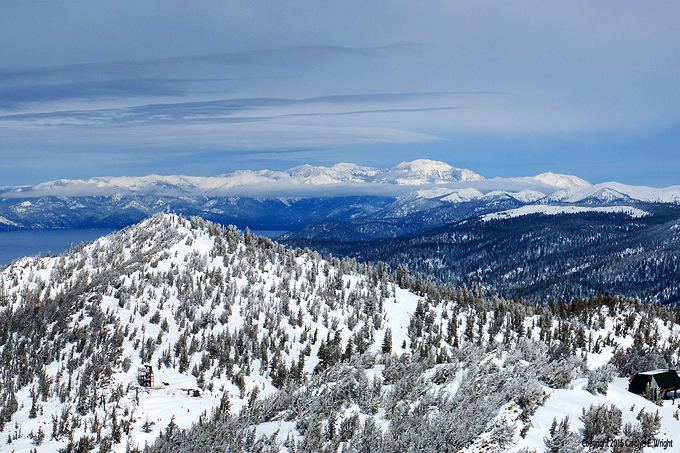
Snowmelt and rain water issues are beginning to boil into political controversy in California. Photo Copyright 2016 Carolyn E. Wright

Snowmelt and rain water issues are beginning to boil into political controversy in California. Photo Copyright 2016 Carolyn E. Wright

By Ryan Sabalow and Dale Kasler, Sacramento Bee

With prolonged and steady rain falling on Northern California for the first time in weeks, tensions are rising over how to manage the stormwater flows now streaming through the Sacramento-San Joaquin Delta.

Saying too much water is flowing out to sea, U.S. Sen. Dianne Feinstein on Friday called on operators of the federal and state water projects to pump more water south through the Delta to drought-stricken farms and cities in Central and Southern California.

Federal regulators painted a starkly different scenario, saying they are shipping as much water south as legally allowed under the environmental restrictions imposed by the Endangered Species Act. Fisheries officials cited recent surveys showing that smelt and the winter-run Chinook salmon are on the brink of extinction.

Read the whole story


State complaint filed against SLT councilwoman

By Kathryn Reed

A formal complaint has been filed with the Fair Political Practices Commission against South Lake Tahoe City Councilwoman JoAnn Conner.

The allegation stems from Conner’s participation in the city’s parade policy discussion at the last council meeting because her business is a beneficiary of that policy.

JoAnn Conner

JoAnn Conner

Conner at the March 1 meeting referenced a letter from the FPPC that said there was no conflict.

That letter dated Dec. 12, 2012, was sent to then City Attorney Patrick Enright from Jack Woodside, FPPC senior counsel. Enright had inquired about Conner’s potential conflict to produce a parade in the city while being on the council, as well if there would be a conflict with her obtaining the necessary permits from the city. The advice was that those things did not present a conflict.

The letter, though, goes on to say, “A conflict of interest may exist only if an official will make, participate in making, or influence a government decision. (Section 87100; Regulation 18700(b)(2).)”

Making a decision includes voting, which is what happened last meeting. Until that meeting it did not appear Conner violated the FPPC conflict of interest law.

Conner did not return a phone call.

Brooke Laine filed the complaint against Conner. The two at one time were on the council together.

“This is the most egregious violation of the law that I have seen in my 20 years of being involved in politics,” Laine told Lake Tahoe News.

Laine is adamant public policy is created for the betterment of the community, not for elected officials to profit by, whether that is financially or in some other way.

Conner earlier this month said her business does not profit from the parades, but that she puts them on for charities. However, in documentation Laine filed with the FPPC Conner multiple times on Facebook states how if she were not able to put on the Fourth of July parade, this would hurt her business.

Council members receive regular training in ethics and the Brown Act – California’s open meeting law, so it’s not like any member could say they were unaware of the law or potential conflicts.

“Her breach of all of those laws and her minimizing those laws is atrocious,” Laine said.

The FPPC letter went on to say, “In addition to the prohibition against making or participating in making a governmental decision, the conflict-of-interest provisions of the Act also prohibit a public official from influencing a governmental decision when the decision will have a reasonably foreseeable material financial effect on the official’s economic interests.”

It will be up to the FPPC’s enforcement division to review the complaint and make a finding. If the FPPC determines wrongdoing did occur, then disciplinary action would be handed down.

“Things range from an advisory letter, which says we don’t have sufficient evidence to prove a violation, but we advise you to be careful about this type of situation, here are the laws, facts, etc. The second next step up would be a warning letter, which is a finding of a violation but is not considered serious enough to warrant a fine. A warning letter is, however, considered a prior if there are future violations, and will be a factor in future penalties,” Jay Wierenga with the FPPC told Lake Tahoe News. “Then you get into the level of fines … usually ranging from a start in the low hundreds up to the $5,000 per (violation). Penalties are based on a number of factors, including complexity of the case, seriousness of the violation, harm to the public like was vital information withheld right before an election that could’ve affected the outcome.”


El Niño’s winter storms no cure-all for drought

By Michael Doyle, McClatchy Washington Bureau

The El Niño storms drenching California won’t suffice to solve the state’s drought and won’t permanently save the Central Valley’s vulnerable salmon, federal scientists are cautioning.

In an apolitical assessment that comes amid a highly political time, National Oceanic and Atmospheric Administration experts stress that this year’s El Niño bounty is both useful and limited. It might well be followed, moreover, by a swing back to a different kind of weather complication called La Niña.

“Not all water demands are going to be met, 100 percent, by the recovery we’re seeing relative to the last four years,” NOAA research meteorologist Martin Hoerling said Wednesday in a news briefing. “There are systemic issues with water supply that go beyond precipitation in any given year.”

In particular, Hoerling cited a “drawdown in groundwater in many places in the state that’s not sustainable” and must be addressed “as a long-term policy issue.”

Read the whole story


Reno airport posts 1st passenger growth in decade

By Jason Hildago, Reno Gazette-Journal

New flights and an improving economy helped the Reno-Tahoe International Airport post its first annual growth in passengers in a decade.

The Reno airport reported serving 3.43 million passengers in 2015, a 3.9 increase from the previous year.

The numbers include especially strong traffic during the holiday season. Reno-Tahoe International saw 286,432 passengers in December, an 8.6 percent increase from the same month in 2014. The airport also reported seven straight months of passenger growth.

Read the whole story


SLT figuring out how to spend surplus funds

By Kathryn Reed

Tourists are rediscovering South Lake Tahoe. While that might be evident by the number of vehicles on the roads, it is even more pronounced when looking at the city’s coffers.

When the City Council convenes March 15 the five electeds will be tasked with allocating the revenue surplus of $5.4 million – a 16 percent increase over this year’s fiscal budget.

The hotel tax for the first quarter of this fiscal year, which started Oct. 1, is 20 percent higher than what it was 2014. Even if revenues stay flat the rest of the 2015-16 year, it will generate $2.3 million more than the previous fiscal year, according to city documents.

Earlier this year the council gave staff direction regarding how to allocate the projected revenue surplus. Tuesday’s meeting is about approving the game plan.

“This is the single largest mid-year appropriation of funds that the city has made since the Great Recession,” City Manager Nancy Kerry told Lake Tahoe News.

She said it reflects the increase in tax revenues, which include hotel, sales and property taxes, as well as reducing expenses, most notably health care costs.

The bulk of the money — $1.5 million – is expected to be used to repave roads. About the same amount is being allocated to the community play fields, where a soccer field will be installed close to where the field at Lake Tahoe Community College is located.

Moving the public works yard from Rufus Allen Boulevard to the industrial area will cost $1 million.

The airport will get more than $600,000 worth of improvements, which include a new heating and air conditioning system, making it compliant with the Americans with Disability Act, as well as renovating the facility to make it more like a visitors’ center than its current vacant, open waste of space lobby-like area.

While the city and El Dorado County have not come to an agreement regarding ownership of the property where the senior center is located, the city plans to set aside $100,000 to upgrade that facility.

Kerry stressed that all of this money is one-time funds.

“With capital needs, community investment and operations, we are tackling all of these things a little at a time,” Kerry said.

—–

Notes:

·      The City Council meets March 15 at 9am at Lake Tahoe Airport.