TSA wait is longer at Reno airport

By Marcella Corona, Reno Gazette-Journal

Reno-Tahoe International Airport officials and travelers say they’re concerned over longer security lines – a recent nationwide phenomenon.

On average, it takes about 10 minutes to clear through the Transportation Security Administration checkpoint in Reno, spokesman Brian Kulpin said Tuesday. But lately, it’s taken longer, he said.

Travelers have complained about the TSA lines on social media, and an influx of travelers this month hasn’t helped.

Read the whole story


Collaborative effort under way to produce higher quality work force in Lake Tahoe

By Kathryn Reed

Some Lake Tahoe employers aren’t satisfied with the applicant pool, which is why a group of people has come together to address that problem.

The Lake Tahoe Adult Education Consortium was initiated by Lake Tahoe Community College and Lake Tahoe Unified School District a couple years ago, and has morphed into a broader working group of more than two dozen organizations with a mission to create the resources to build a work force that will cater to the needs of local employers.

One of the subcommittees is Hospitality, Tourism, Recreation and Retail – HTRR. Those are the four main employment areas on the South Shore.

“They are looking at what the training needs are of this industry sector and then will work to determine what combination of resources can best address those needs,” B Gorman, CEO of Lake Tahoe South Shore Chamber of Commerce, told Lake Tahoe News. “The concept is to leverage and refine existing resources to meet needs that are purportedly not currently being met.”

Lake Tahoe Community College has hired a director of adult education to coordinate the specialized curriculum. Classes won’t be the normal quarter-long classes. Many may not involve credits. Some could be taught at the workplace.

“We will do some work force English, a lot with customer service, soft skills like timeliness, work ethic, communication, team work, can they write a coherent sentence, can they speak well. Then we will do technical training,” Virginia Berry, LTCC dean of Career Tech Education, told Lake Tahoe News. “We hear from employers they will teach technical skills, but they need someone to show up on a powder day.”

Classes will be aimed at showing people the relationship between those soft skills and being able to move up the ladder. Berry called it “wage progression.” The training isn’t just intended to get the first job, but to give them the skills that could get the person promoted.

Michael Ward with HighBar Global Consulting has been facilitating the meetings with the larger group. He shared with members that in 2015 the hourly wages needed in South Lake Tahoe to sustain an individual or family are:

·      1 adult: $9.95

·      1 adult, 1 child: $20.73

·      1 adult, 2 kids: $24.34

·      1 adult, 3 kids: $30.98

·      2 adults: $15.10

·      2 adults, 1 kid: $18.81

·      2 adults, 2 kids: $20.17

·      2 adults, 3 kids: $24.99.

The goal is to have classes launched no later than this fall.

Managers will have a set of classes, too.

“I believe this will do more for the South Lake Tahoe area than anything the college has done in a long time – getting adult education up and running to train the adult work force,” LTCC President Kindred Murillo told Lake Tahoe News. “To me, it’s a game changer for South Lake Tahoe.”

The consortium initially was awarded a grant from the state to start the planning process. Another grant — $750,000 for each of the next three years – was secured from the state to implement the program. Alpine County received $75,000, which is being wrapped into the larger grant and is allowing those residents to participate.

Seventy-one groups in the state were awarded the funding that is to be spent on high school diplomas, English learners, basic skills, adult workforce needs, career technical education, pre-apprenticeship, or adults with disabilities.

“Lake Tahoe Community College is building adult education programs to support community and workforce development through education. Certificates and degrees designed for fast-tracked career advancement and job readiness are being developed in collaboration with local hospitality, tourism, recreation and retail employers as well as community service organizations,” Berry said. “These grant funded programs will offer free and low-cost courses to address the needs of a diverse population of adult learners with LTCC as the hub of programs being offered on campus and at offsite locations with regional partners.”

While there are various adult ed classes throughout the community, the college will now serve as the hub. This is intended to better get people to where they need to go and to develop the classes that are lacking. Non-credit classes mean undocumented residents will be able to take them.

The Restaurant Industry Group has been brought in to look at the college’s culinary arts program to see what can be changed so those obtaining their certificate have the skills to start work. There has been criticism too many culinary classes are geared toward the home cook and not the potential kitchen worker.

At South Tahoe High School the Get Focused, Stay Focused initiative was launched this school year. This is to get freshman to start thinking about a 10-year plan for their lives and how to get there. It has been met with a lukewarm response from parents and students.

Still, the goal is get people better prepared at an earlier age.

“Here on the South Shore when we did our member survey last autumn 27.5 percent of respondents stated that workforce was their No. 1 concern at their business. That said, I rarely speak to a business where this isn’t a part of the dialogue,” Gorman said.

Business walks on the South Shore occurred Tuesday and Wednesday, with the North Shore ones taking place next month. People are being asked what they need to be successful for the next decade.

That information will be used by this group, as well as incorporated into a larger action plan that the Tahoe Prosperity Center expects to release in the fall.


March Madness betting expected to hit $9.2 bil.

By J.D. Morris, Las Vegas Sun

Americans are expected to bet $9.2 billion on March Madness this year, according to an estimate released today by a Washington, D.C.-based lobbying and trade group for the casino industry.

The projection from the American Gaming Association includes wagering through office pools, legal Nevada sports books, offshore sites and illegal bookies.

It marks an uptick from last year, when the association said Americans would bet $9 billion on the annual college basketball tournament.

Read the whole story


Appeals court dismisses Dugard lawsuit alleging federal parole failure

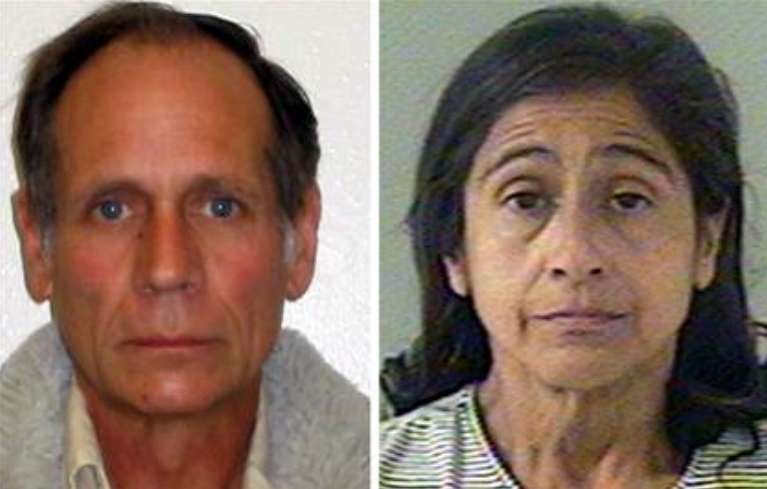
Phillip and Nancy Garrido are in prison for the abduction of Jaycee Lee Dugard.

Phillip and Nancy Garrido are in prison for the abduction of Jaycee Lee Dugard.

By Bay City News Service
 
A divided U.S. appeals court on Tuesday dismissed a lawsuit filed by kidnapping victim Jaycee Lee Dugard against the federal government for failing to supervise her captor when he was on parole from another kidnapping in the years before she was abducted.

A three-judge panel of the 9th U.S. Circuit Court of Appeals said by a 2-1 vote that Dugard could not sue over the alleged failure to supervise Phillip Garrido in the three years before she was kidnapped in 1991 because she was not a “specifically identifiable victim” at the time.

Dugard’s lawsuit claimed that if federal parole officials had supervised Garrido properly, they would have revoked his parole and sent him back to prison for numerous instances of drug use and other violations, thus making him unable to kidnap her.

Dugard, now 35, was kidnapped at age 11 by Phillip and Nancy Garrido on the morning of June 10, 1991, as she walked to a school bus stop outside her home in Meyers.

Read the whole story


Council tweaking fees throughout S. Tahoe

Rates at Bijou Golf Course are likely going up this summer. Photo/LTN file

Rates at Bijou Golf Course are likely going up this summer. Photo/LTN file

By Kathryn Reed

It can cost more to file an appeal with the city of South Lake Tahoe than what the original fee or fine was. The City Council wants to change that policy.

At Tuesday’s meeting the four (Councilman Hal Cole was out of town) directed staff to bring back a code amendment that would redefine how appeals are handled. This includes the possibility of having the appeal fee reduced or abolished if the applicant were to “win” their case. Appeal fees might also have more of a sliding scale based on what the original fee was.

Hilary Roverud, assistant director of Community Development, said a couple appeals a year is normal, but none has come forward since the price was raised last year to $3,000.

This was all part of a larger discussion March 15 about the master fee schedule. Annually the council reviews the fees. A vote on the fees will be at the next meeting.

Going forward the fees will be tied to a consumer price index, which is currently at 1.0318 percent.

“We recommend not changing the recreation fees at this time,” Mark Carlson, assistant city manager, told the council. He said this is because of the condition of the facilities and based on participation. If the rec center is overhauled, that would be the time to look at a different fee structure, he said.

However, it will cost more to play a round of golf at Bijou Golf Course. The fee for nine holes will be $18 instead of $15. Going down, though, is the price of a season pass for youth.

While staff proposed keeping the campground fees the same, Councilman Tom Davis successfully lobbied his colleagues to consider raising them for summer 2017. This will be discussed further when the whole schedule comes back for a vote.

His reasoning is that if it sells out each year, even with conditions less than ideal, the demand is such that people will pay a few more dollars per night. He wants that added revenue dedicated for campground improvements. It is estimated the needed upgrades just to the bathrooms would cost $1 million.

The city has been hesitant to make substantive improvements to Campground by the Lake because the land is owned by El Dorado County and negotiations are under way regarding that parcel’s future.

Davis left the room while the remaining three discussed airport hangar fees because he rents one.

The assistant city manager said the city is significantly below market when it comes to the cost to rent a hangar for non-aviation use. The goal is to get the price to 75 cents per square foot. The first increase will be to get the cost halfway there.

Carlson said the city is likely to need a couple more hangars for transient aircraft. If the added expense for people using them for storage doesn’t get them to leave, it’s possible the city will have to ask some people to move.

—–

    In other news:

·      Councilman Austin Sass is looking into having a debate or forum between proponents of the loop road and those who are against it, namely the people seeking to put it on the ballot.

·      Mid-year budget adjustments were approved.

·      Chad Donnelly, SnowGlobe producer, was granted $4,500 in reimbursement for the additional transit for this past year’s music festival. The council denied his request for $9,231.40 for garbage disposal. The vote was 3-1, with Councilwoman JoAnn Conner believing the city gives him enough already, especially with the three-day event generating more cash via additional ticket sales.


Panel: Climate fingerprints in wild weather is valid

By Seth Borenstein, AP

Climate science has progressed so much that experts can accurately detect global warming’s fingerprints on certain extreme weather events, such as a heat wave, according to a high-level scientific advisory panel.

For years scientists have given almost a rote response to the question of whether an instance of weird weather was from global warming, insisting that they can’t attribute any single event to climate change. But “the science has advanced to the point that this is no longer true as an unqualified blanket statement,” the National Academies of Sciences, Engineering and Medicine reported.

Starting in 2004, dozens of complex peer-reviewed studies found the odds of some extreme events – but by no means all – were goosed by man-made climate change. This new field of finding global warming fingerprints is scientifically valid, the academies said in a 163-page report released Friday. The private non-profit has advised the government on complex, science-oriented issues since the days of President Abraham Lincoln.

When it comes to heat waves, droughts, heavy rain and some other events, scientists who do rigorous research can say whether they was more likely or more severe because of man-made global warming, said academies report chairman David Titley, a Pennsylvania State University meteorology professor. And that matters.

“While we plan for climate, we live in weather,” Titley, a retired Navy admiral, said in an interview. “These extremes are making climate real when in fact they are attributable to climate change.”

Not all weird weather can be blamed with any degree of certainty on global warming, according to the report.

“For a certain class and type of event there is a human fingerprint,” said report co-author Marshall Shepherd, a University of Georgia meteorology professor. The report says there is “high confidence” in studies looking for climate change connections between extreme hot and cold temperatures, such as the Russian heat wave of 2010. There’s medium confidence in efforts trying to attribute droughts and extreme rainfall.

Hurricanes and other tropical cyclones, wildfires and severe thunderstorms are on the low end of the confidence range, the report found.

In some cases heat and lack of rain combine and the studies find a viable connection to global warming, such as in the recent four-year California drought and the drought that hit Syria and neighbors, Titley said.

“The fog of uncertainty that obscured the human role in individual events is finally lifting,” said Princeton University Professor Michael Oppenheimer. He wasn’t part of the study, but is on the board of Climate Central, which manages a large climate attribution project.

Good attribution studies are based on what Titley calls a “three-legged stool” of observational records of decades of past events, detailed understanding of the physics that cause the weird weather itself, and sophisticated computer models that simulate the chances of the extreme event if there were no man-made, heat-trapping gases warming the atmosphere.

“It’s just like an autopsy,” said Martin Hoerling, a National Oceanic Atmospheric and Administration research meteorologist who has conducted several attribution studies, finding a climate change connection in some events and not finding a link in others. “We’re following the data wherever it goes.”

Titley said attribution studies are “based in physical science and statistics that don’t value Republicans or Democrats. The ice just melts. This has nothing to do with politics.”

These studies don’t say an event was 100 percent caused by climate change. They usually say chances were increased by a certain fraction.

Katharine Hayhoe, a Texas Tech climate scientist who wasn’t part of the study, praised the work: It is “very important to clarify to people how no event is black or white: No individual weather event can be said to be ‘solely’ human nor ‘solely’ natural any more. They are somewhere on the sliding scale between.”

But other scientists don’t like the idea of looking at single events.

Climate change caused by man “has fingerprints in every weather event we experience today,” wrote Oklahoma University meteorology professor Jason Furtado, who wasn’t part of the study. “Disentangling the contribution of climate change with natural variability for a single event is not fruitful or currently possible in my opinion.”

Eventually, Titley hopes, the science of climate change fingerprint detecting will advance so that meteorologists can make testable forecasts of a certain number of extreme events in a season.


Reservoirs recover, putting Calif. water limits in question

By Ryan Sabalow, Mark Glover and Dale Kasler, Sacramento Bee

With California’s two largest reservoirs hitting historically average levels following a weekend of heavy storms, the state’s chief water regulator is cautiously optimistic that the drought may finally be relaxing its grip.

If the wet weather continues, she said, the urban conservation mandates that turned lawns brown and have Californians taking shorter showers may be eased in the weeks ahead.

“In May, we’ll be either lifting it or changing it significantly,” Felicia Marcus, chair of the State Water Resources Control Board, said Monday. “The more precipitation we get, the more snowpack we have, the better it is.”

Over the weekend, the state’s largest reservoir, Shasta Lake, surpassed its historic average for this time of year. The second largest, Lake Oroville, hit that mark Monday afternoon. It marks the first time since 2013 that the reservoirs have reached their historical averages for this time of year, said Doug Carlson, a spokesman for the Department of Water Resources.

Read the whole story


Inroads being made into Alzheimer’s, ALS

By Linda Fine Conaboy

RENO – To claim that ethnobotanist Paul Alan Cox has discovered a cure for ALS, sometimes called Lou Gehrig’s disease, Alzheimer’s and other neurodegenerative conditions would be a wild stretch of any imagination; but to say he and his team could be close is spot on.

It is estimated that every day an average of 15 people are diagnosed with ALS — more than 5,600 people per year. As many as 30,000 Americans may currently be affected by it. Annually, ALS is responsible for two deaths per 100,000 people.

Paul Alan Cox

Paul Alan Cox

Add to that the estimated 5.3 million Americans who have Alzheimer’s; this becomes a huge medical dilemma.

“ALS is a terrible disease,” Cox said during last week’s lecture at UNR’s College of Science 2016 lecture series. “Stephen Hawking can now only move his eyebrow. And no new drugs have been discovered to treat it since 1994.”

Alzheimer’s, he continued, is one of the top 10 causes of death. “There have been 455 clinical trials of Alzheimer’s drugs,” the doctor said. “They all failed. It’s time to start thinking outside the box.”

And that’s what he’s doing in his small lab, the Jackson Hole, Wyo.-based Institute for Ethnomedicine where he’s been working to discover new cures from plants and where he and his colleagues are studying the results gathered from people in remote Pacific Island villages that have high incidences of ALS and Alzheimer’s.

“We started looking at populations of people who have these diseases—up to 25 percent have died of ALS—it has killed a quarter of all the village adults,” Cox said.

What they discovered is that cycads, plants found in tropical and subtropical regions, produce neurotoxins called BMAAS, substances that are poisonous or destructive to human nerve tissue. These substances are found in the plants’ seeds. For years, people have eaten the seeds, usually in the form of flour dumplings, a food popular in the region.

The indigenous people also like to eat flying foxes, who also find the cycad seeds tasty, resulting in still another dose of lethal neurotoxins, hence, the overwhelming incidence of ALS and other diseases.

Cox also learned that in certain areas around Lake Michigan, these same neurotoxins flourish. Armed with their discoveries, Cox and crew began studying the results in earnest. There’s a sense of urgency to his studies, he said during his lecture. “People just don’t have time to wait.” He added, “I focus on patients, not profits.” He also said he targets cures and prevention rather than symptoms.

As he delved into his research, he decided perhaps there are areas in the world that are free of these neurodegenerative diseases. A remote area in Japan yielded such a place.

“The people here live very long lives. Nobody wears glasses and they have total recall even at 104-years-old. The median age is 86,” he said.

The key to the longevity turned out to be seaweed containing a substance called L-serine, a plant Cox called an environmental trigger.

Internet research shed more light on L-serine. In an interview, Cox said that laboratory experiments showed that the seaweed substance can block BMAA (the substance found in the Pacific Islanders) from entering body proteins thus preventing the tangles found in the brains of those with Alzheimer’s.

Based on the findings, the Food and Drug Administration granted permission for human clinical trials on L-serine in Alzheimer’s patients. With trials nearly complete, patients tolerated the oral doses well, although no conclusions have been reached.

During the lecture, Cox called the findings “breaking news” in ALS and Alzheimer’s. “We discovered that L-serine in animals produced an 85 percent reduction in Alzheimer’s. It is my hope that everybody can jump on this,” he said.

Over the years, Cox has received numerous awards, including prizes for his efforts to preserve Samoan rainforests. Of the people living in those forests, he said, “We must ensure equitable return to indigenous people. We guaranteed an equitable sharing of results to those countries losing their rain forests so quickly. We must form profitable partnerships for them so they will continue to cooperate with us.”


Justice Dept. warns local courts about unlawful fines, fees

By Matt Zapotosky, Washington Post

The Justice Department is asking local courts across the country to be wary of how they slap poor defendants with fines and fees to fill their jurisdictions’ coffers, warning that such practices often run afoul of the U.S. Constitution and have serious real-world consequences.

In a letter that was sent Monday morning to the chief judges and court administrators in all 50 states, Vanita Gupta, the head of the department’s Civil Rights Division, and Lisa Foster, director of the Office for Access to Justice, wrote that illegal enforcement of fines and fees had been receiving increased attention in recent years, and the Justice Department had a “strong interest” in making sure the rights of citizens were protected.

“Individuals may confront escalating debt; face repeated, unnecessary incarceration for nonpayment despite posing no danger to the community; lose their jobs; and become trapped in cycles of poverty that can be nearly impossible to escape,” Gupta and Foster wrote. “Furthermore, in addition to being unlawful, to the extent that these practices are geared not toward addressing public safety, but rather toward raising revenue, they can cast doubt on the impartiality of the tribunal and erode trust between local governments and their constituents.”

Read the whole story


Nev. GOP will back Trump if he is the nominee

By Megan Messerly, Las Vegas Sun

Across the country, Republican politicians have begun distancing themselves from their party’s presidential front-runner, Donald Trump, for fear of what a Trump nomination might mean for Republicans’ down-ballot chances. Not in Nevada.

Many of Nevada’s top politicians have pledged to stand behind the party should Trump be selected as the nominee. Gov. Brian Sandoval; Reps. Joe Heck, Cresent Hardy and Mark Amodei; and Sen. Dean Heller all have said they would support the GOP nominee, whomever that may be.

That’s not an endorsement: Hardy and Heller support Florida Sen. Marco Rubio, and Heck and Sandoval haven’t endorsed anyone, although Sandoval caucused for Rubio. But Nevada politicians appear hesitant to break with the pack. If the party chooses Trump, Trump for president they’ll be.

Read the whole story