Amid cycling boom, penalties for errant drivers remain light

By Scott McFetridge, AP

When Iowa’s largest city joined the boom in urban cycling, work crews painted more bike lanes, erected traffic signals especially for cyclists and installed rental bikes at self-service stands that catered to commuters and tourists alike.

In Des Moines and scores of other U.S. cities, the efforts drew bike riders onto busy streets that were once the sole province of cars and trucks. The changes also heightened the risk of serious collisions like the one that threw Ken Sherman from his bicycle with such force that his body tore off the vehicle’s side mirror.

Cyclists are frustrated that the growing support for two-wheeled transportation has only rarely led to tougher penalties for drivers who hit bikes, many of whom are never ticketed or receive only minor citations, even in accidents that permanently disable or kill cyclists. The motorist who hit Sherman was deemed to be at fault but was never charged with any wrongdoing.

“I was upset and outraged,” said Sherman, who suffered a punctured lung and broke his shoulder blade and collarbone. “I’ve wanted to get my arms around the laws we have and how they’re being enforced.”

After his 2009 crash, he joined a bicycling association and began lobbying the Iowa Legislature for changes.

Concerns about cycling safety have risen along with ridership. Bicycle commuting nationwide climbed 62 percent from 2000 to 2013, according to a census survey. In cities such as Chicago, San Francisco and Washington, it shot up by more than 300 percent.

Studies show that having more bicyclists on the road can actually improve overall safety by making motorists more aware of riders. But the increase in cycling has coincided with a 6.6 percent rise in injuries from car-bike crashes and a 1.5 percent increase in deaths between 2001 and 2013, according to the National Traffic Safety Administration. In 2013, 743 cyclists died in crashes with cars, and an estimated 48,000 cyclists were injured.

Nearly 40 states have laws requiring passing motorists to give bicycles at least 3 feet of space, and at least six offer special protections to cyclists and pedestrians. But few have backed up those laws with stiff fines for violators.

That means even though it’s illegal for passing motorists to get too close to bicyclists in most states, violators face only small penalties, such as California’s $35 fine, which can rise to $220 if the bicyclist is injured. The penalty is the same in Virginia. A first offense in Wisconsin can range from $20 to $200.

Minnesota last year became one of the few states to significantly stiffen the penalty for motorists who hit cyclists, with passage of a $3,000 fine, but prosecutors must prove the driver was acting carelessly when the cyclist was killed or seriously injured. For simply passing too close, the fine remains small.

Dorian Grilley, executive director of the Bicycle Alliance of Minnesota, said he’s heard of only one person being ticketed for the offense in the past 25 years.

A driver was cited for driving without insurance after he hit David Wuest in St. Paul, Minn., knocking him to the pavement and causing a brain injury that has left Wuest unable to work nearly two years after the April 2014 crash. An investigation determined that the motorist was at fault, but since he was not under the influence of drugs or alcohol, the driver only had a pay a small fine.

Wuest, of Minneapolis, said higher penalties could lead some motorists to be more careful around cyclists, but he thinks crashes will happen as long as bicycles travel so close to cars. He’s resumed riding but only on bike paths.

“I assume people don’t want to hit cyclists,” he said, “but it keeps happening.”

Dave Snyder, who leads the California Bicycle Coalition, said bicyclists are injured and killed so often that it seems normal. Although he said he’s appalled that motorists who hit cyclists usually don’t pay significant penalties, his group is more focused on creating separation between bikes and cars.

Gov. Jerry Brown has called for funding changes to roadways to protect cyclists, and Snyder said that could save far more lives than prosecuting motorists.

“Those cases of drivers not being charged are outrageous, but fixing that problem is not the most important problem,” he said.

Robin Stallings, executive director of the group Bike Texas, took a similar view, saying laws should be toughened and more motorists prosecuted for hitting bicycles, but that may never happen. It’s more likely, he said, that local and state governments will build protected lanes for cyclists so they’re less vulnerable.

Jeff Gray was severely injured and a friend killed on a sunny morning in 2014 when a van hit them on a rural road in western Iowa. The driver, who said he didn’t see the bikers, paid a $2,400 fine.

People need to be more aware of the number of cyclists injured and killed in such crash, Gray said.

“They don’t understand they’re racing past someone going 10 mph. They don’t understand it,” Gray said. “I don’t think people even think about it.”
Trees deal with climate change better than expected

By Tatiana Schlossberg, New York Times

The bend-don’t-break adaptability of trees extends to handling climate change, according to a new study that says forests may be able to deal with hotter temperatures and contribute less carbon dioxide to the atmosphere than scientists previously thought.

In addition to taking in carbon dioxide during photosynthesis, plants also release it through a process called respiration. Globally, plant respiration contributes six times as much carbon dioxide to the atmosphere as fossil fuel emissions, much of which is reabsorbed by plants, the oceans and other elements of nature. Until now, most scientists have thought that a warming planet would cause plants to release more carbon dioxide into the atmosphere, which in turn would cause more warming.

But in a study published Wednesday in Nature, scientists showed that plants were able to adapt their respiration to increases in temperature over long periods of time, releasing only 5 percent more carbon dioxide than they did under normal conditions.

Based on measurements of short-term temperature responses in this study and others, the scientists expected that the plants would increase their respiration by nearly five times that much.

Read the whole story


Mt. Shasta — small ski resort delivers big fun

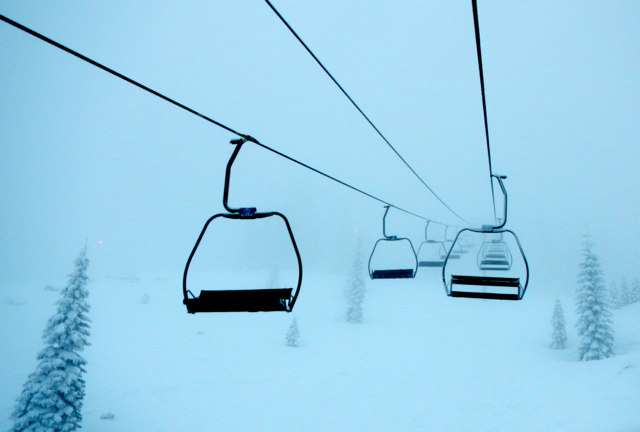
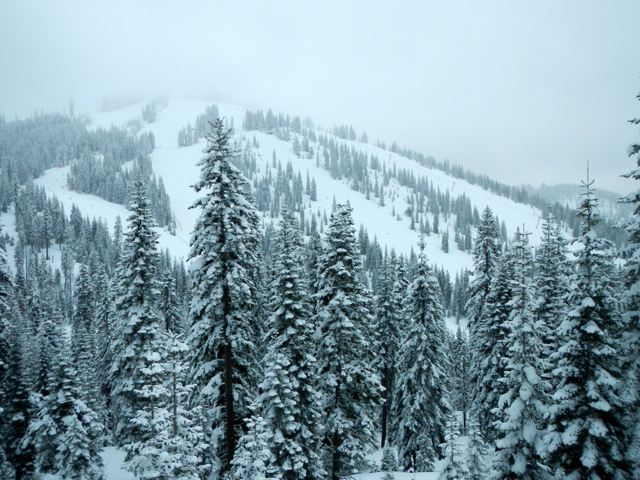
Mount Shasta Ski Park is California's newest resort, having opened in December 1985. Photo/Kathryn Reed

Mount Shasta Ski Park is California’s newest resort, having opened in December 1985. Photo/Kathryn Reed

By Kathryn Reed

MCCLOUD – Mount Shasta Ski Park received the best 30th birthday present it could – snow. So much white stuff has fallen this season that the original planned closing date of March 12 has been moved to April 17.

This North State resort has had a couple tough years. It was open for four days in 2013-14. And while the resort allowed 2013-14 pass holders to use their pass last season, by January 2015 the resort was closed because of lack of snow.

The resort has snowmaking, but there are variables that are beyond its control like drought, rain instead of snow and having a mountain that mostly faces south.

This season the privately-held ski resort has had three of its busiest days since it open in 1985.

Fifty-five percent of the terrain is intermediate. Photo/Kathryn Reed

Fifty-five percent of the terrain is intermediate. Photo/Kathryn Reed

This is the second ski resort on the mountain. The first was known as Mt. Shasta Ski Bowl and was located at the end of Everitt Memorial Highway. It was open from 1959-78. Avalanches were a constant problem. The last year it was open an avalanche took out the main chairlift.

Most of the skiers who come here are from the Redding area. The resort doesn’t even market to Bay Area riders.

“This mountain is one of the best family mountains in the state,” Michael Smith, report spokesman, told Lake Tahoe News. “Because of the mix of skiing we have it caters to families much better.”

Looking at the resort from the parking lot it’s reminiscent of Homewood Mountain Resort where it doesn’t appear there is much terrain. Once on the mountain that myth is dispelled. It is also a bit like Sierra-at-Tahoe in that there aren’t many lifts. Again, once on the mountain one realizes the lifts are strategically located.

Shasta’s three chairlifts service 32 trails, 425 acres, with 1,435 vertical feet.

Earlier this month the resort hosted 30 high school teams that were competing in the California Nevada Interscholastic Ski and Snowboard Federation Championships.

Conditions were such that the lights for night skiing were on because visibility was sketchy. With the white stuff coming down, a thin layer of powder covered what had been groomed runs. It was light and fun to make fresh tracks even in mid-morning.

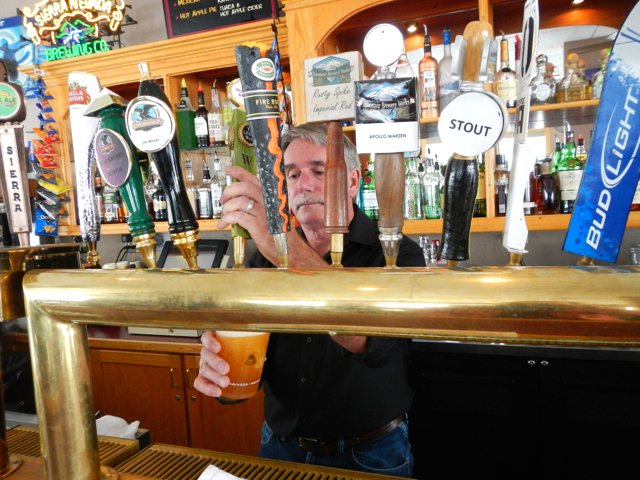
Mark the bartender pours one of the 13 beers that are on tap. Photo/Kathryn Reed

Mark the bartender pours one of the 13 beers that are on tap. Photo/Kathryn Reed

The lodge was full of people eating and drinking. The weather was too yucky to enjoy the deck, which was nearly doubled in size in 2013.

Thirteen beers are on tap – most from surrounding breweries. They are rotated, with the brewmaster sometimes on hand to share his expertise.

While there has been talk for 15 years of expanding the resort north into the Grey Butte area of the mountain, there is no publicized time line of when this might happen. Smith said with the resort not making money for three years, that type of capital investment isn’t in the works right now.

The price for skiers is reasonable — $39 for an adult mid-week ticket, $54 on Friday-Saturday-Sunday and holidays.


Calif. pension obligations nearly $64 billion

By Associated Press

California has nearly $64 billion in pension debt that eventually must be paid to current and former teachers and state workers — a figure more than $20 billion higher than previous estimates, state Controller Betty Yee reported Friday.

Yee disclosed the higher pension liability for the first time in California’s comprehensive annual financial report, using a new calculation aimed at more accurately reporting the government’s financial responsibilities. It reflects the state’s unfunded retirement debt as of June 30, 2015.

The “net pension liability” reflects the state’s unfunded retirement costs as of June 30, 2015. California had previously reported a different figure, the “unfunded actuarial liability,” which was $40 billion a year earlier.

Under requirements of the Governmental Accounting Standards Board, state and local governments nationwide are using the new calculation to report their unfunded pension debts. They also must now be included on the balance sheet alongside other government debts, such as bonds, claims, judgments and long-term leases.

As a result, California ended the year $175 billion in debt, up from $119 billion the prior year.

The new rules will increase transparency, Yee said in a statement, “which will in turn focus local and state governments on ensuring they adequately plan for these important long-term obligations.”

Yee said she expects other employment-related benefits, such as retiree health care costs, to be reported in future years, further driving up the deficit on California’s balance sheet.

The new reporting requirements allow state lawmakers and local government leaders to make more informed decisions about pension benefits, said state Sen. John Moorlach, R-Costa Mesa, a certified public accountant who has been publicly highlighting pension costs as they’re reported by local governments.

“I’m embarrassed that my profession failed to make this requirement 30 years ago,” Moorlach said. “Now most states are in pension-plan debt up to their eyeballs, and the problem is ubiquitous.”

The financial report said California collected $117 billion in revenue during the last fiscal year. That was up 12 percent from the previous year, mostly from a sharp uptick in personal income tax collections. The general fund had enough cash at the end of the fiscal year to pay for 20 days of operations, up from 16 a year earlier, the report said.


Tahoe area climber to attempt Everest without oxygen

Benjamin Spillman, Reno Gazette-Journal

Even when he’s recalling a failed attempt to ski the Himalayan peak Makalu, Adrian Ballinger is quick with a joke or a smile.

But the mountaineer’s next big expedition is no laughing matter.

Ballinger, 40, of Olympic Valley plans to summit Mt. Everest without using supplemental oxygen.

For Ballinger the attempt is the culmination of two decades as a mountaineer and guide, including six previous Everest summits with oxygen.

Read the whole story


Sexual hostility hiding within national parks, forests

By Kathryn Joyce, Huffington Post

On an early Friday morning in late June 2006, Cheyenne Szydlo, a 33-year-old Arizona wildlife biologist with fiery red hair, drove to the Grand Canyon’s South Rim to meet the river guide who would be taking her along the 280 miles of the Colorado River that coursed a mile below. She was excited. Everyone in her field wanted to work at the Grand Canyon, and after several years of unsuccessful applications, Szydlo had recently been offered a seasonal position in one of the National Park Service’s science divisions. She’d quit another job in order to accept, certain her chance wouldn’t come again.

The June expedition—a nine-day journey through the canyon on a 20-foot motorboat operated by a boatman named Dave Loeffler—would be her last chance that summer. When Szydlo asked a coworker what Loeffler was like, the reply was cryptic: “You’ll see.”


Travelers eat and sleep together, and, due to the lack of cover, must often bathe and go to the bathroom in full view, using portable metal ammo cans outfitted with toilet seats. Commercial river guides often say that no one can claim their privacy on the river, so fellow passengers should offer it instead. In Szydlo’s recounting of the trip, Loeffler didn’t adhere to this code.

We’re used to hearing stories of sexual harassment in the Army, the Navy, or within the police force; 25 years after the Tailhook scandal, when scores of Marine and Naval officers allegedly sexually assaulted some 83 women and seven men at a military convention, there’s a general cultural understanding of what women face in traditionally male-dominated public institutions. The agencies that protect America’s natural heritage enjoy a reputation for a certain benign progressivism—but some of them have their own troubling history of hostility toward women.

In 2012 in Texas, members of the Parks and Wildlife Department complained about a “legacy” of racial and gender intolerance; only 8 percent of the state’s 500 game wardens were women. In 2014, in California, female employees of the U.S. Forest Service filed a class-action lawsuit—the fourth in 35 years—over what they described as an egregious, long-standing culture of sexual harassment, disparity in hiring and promotion, and retaliation against those who complained. (That lawsuit is still pending.) And this January, the Department of the Interior’s Office of Inspector General announced that it had “found evidence of a long-term pattern of sexual harassment and hostile work environment” in the Grand Canyon’s River District, a part of the Park Service.

Read the whole story


S. Tahoe DUI checkpoint keeps drivers in line

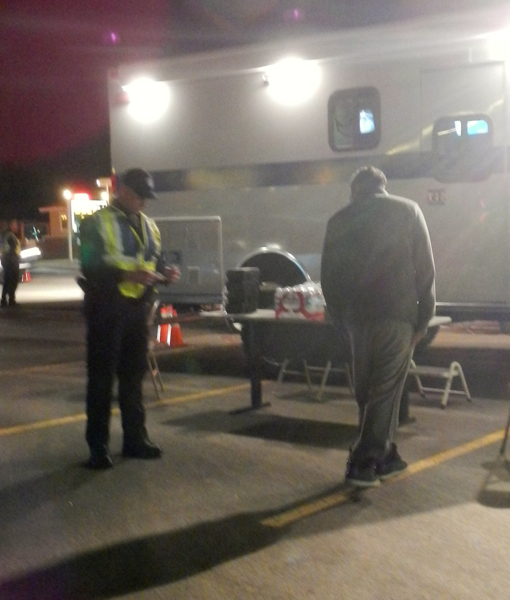
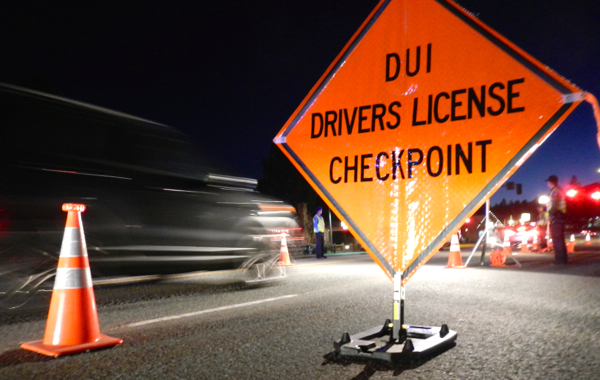
A DUI checkpoint March 17 in South Lake Tahoe snared people driving on a suspended  license. Photos/Kathryn Reed

A DUI checkpoint March 17 in South Lake Tahoe snared people driving on a suspended license. Photos/Kathryn Reed

By Kathryn Reed

Lights were swirling and signs were posted about what was going on up ahead. There was even an opportunity to bail and take another route. But no one ever said those breaking the law are the smartest individuals.

During the St. Patrick’s Day DUI checkpoint in South Lake Tahoe thousands of vehicles rolled by. No one was intoxicated and most had valid driver’s licenses.

Officers arrested three people on charges of driving on a suspended license.

“We can see drunk drivers before they are through the checkpoint,” South Lake Tahoe police Sgt. Travis Cabral told Lake Tahoe News as he watched the stream of vehicles inch by. “They get fixated on the lights and tend to swerve. They are trying to miss anything on the road.”

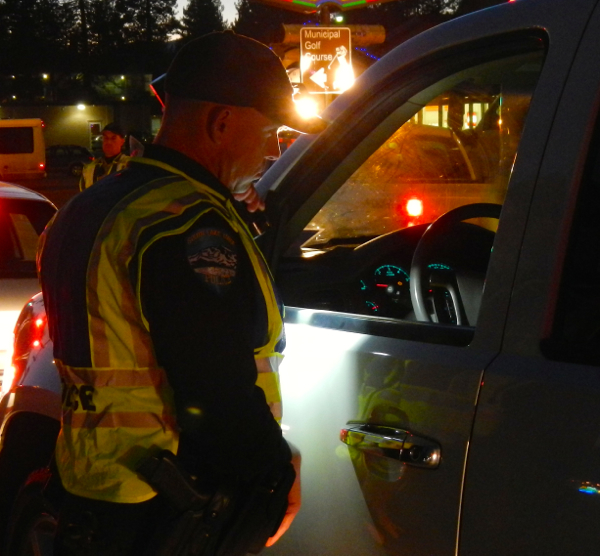
Officer Chris Mahoney  asks to see the driver's license.

Officer Chris Mahoney asks to see the driver’s license.

Twice a year local officers conduct a driving under the influence and driver’s license checkpoint – usually at Fourth of July and St. Patrick’s Day because they are big drinking days. The money to do these comes from the Office of Traffic Safety. The grant covers overtime and little things like the new lights that sit atop the safety cones. No longer are flares needed; which is better for the environment, plus batteries for the lights last longer and the lights can be programmed to flash in different patterns.

“It shows people they need to be safe. It’s a deterrent,” Cabral said of the purpose of the checkpoint.

Thursday’s checkpoint was near the Bijou Center from 7pm-2am.

The majority of people were friendly, even thanking the officers for being out there and telling them to be safe.

Officers in turn were giving residents and visitors a chance to see they aren’t such bad guys. And while the job at hand is serious, a detective joked with drivers to lighten the mood, asking if any bodies were in the vehicle.

One visitor from Florida asked what there is to do in town since they don’t ski. One talks about being here for March Madness and how his bets are paying off so far. Plenty of people from out of town drove through – from Mississippi, Oklahoma, Alabama, Hawaii, New York and Wisconsin.

Officer Chris Mahoney leads a man through a series of field sobriety tests.

Officer Chris Mahoney leads a man through a series of sobriety tests.

No one got special treatment. A Tahoe Transportation District bus driver was questioned, people in other work vehicles had licenses examined, all ages, genders and races were part of the checkpoint.

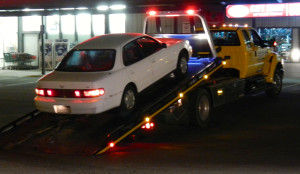
When people were detained their license was checked by the dispatchers in the mobile command post. Those with suspended licenses had their vehicles towed and now face even more charges than what led them to be in that state.

A local guy had beer on his breath and was told to pull into the parking lot. Officer Chris Mahoney pocketed the man’s keys, had him get out of the car and then started asking him a string of questions – medical issues, where he’s been, what he had to drink. Two 24-ounce Buds about 3:30pm and a cheeseburger and chicken soup at noon. He and a friend were on their way to get tacos.

He’s asked to follow a pen horizontally and vertically. His eyes don’t jerk – good news for him.

Then he has to walk heel to toe with his hands at his side, counting to nine. With his feet together, he is told to lift one straight ahead and count out loud until Mahoney says stop.

Sgt. Shannon Laney explained to LTN these tasks are all about testing the ability to multitask just like drivers do on the road – drive, change the radio station, talk to whoever is in the car, know what other drivers are doing. They are called “divided attention tests”.

While there is no pass or fail to these tests per se, the man does them as though he consumed no alcohol.

At the end he voluntarily agrees to a breath test. It’s not one that could be used as evidence – those are administered at booking. He blew a zero.

He and his friend were able to go have those tacos.

Not everyone drove home.

Not everyone drove home.

“The checkpoint was a success. The amount of people we were able to screen who were not intoxicated shows they are aware of what they are doing, they had watched their alcohol intake,” Cabral said.

He also pointed out how a number of cabs as well as Uber drivers came through; which demonstrated people had found a designated driver.

While the checkpoint did not lead to any DUI arrests, there were three DUI related accidents March 17 that led to two arrests. One person struck a vehicle near Ski Run Liquor, fled on foot and is still wanted. Another accident was on Pine Hill Road and the other by Raley’s at Stateline, which resulted in the drivers being arrested.


Beyond record hot, February was ‘strange’

By Seth Borenstein, AP

WASHINGTON — Earth got so hot last month that federal scientists struggled to find words, describing temperatures as “astronomical,” ”staggering” and “strange.” They warned that the climate may have moved into a new and hotter neighborhood.

This was not just another of the drumbeat of 10 straight broken monthly global heat records, triggered by a super El Nino and man-made global warming. February 2016 obliterated old marks by such a margin that it was the most above-normal month since meteorologists started keeping track in 1880, according to the National Oceanic and Atmospheric Administration.

The old record was set just last December and the last three months have been the most above-normal months on record, said NOAA climate scientist Jessica Blunden. And it’s not just NOAA. NASA, which uses different statistical techniques, as well as a University of Alabama Huntsville team and the private Remote Sensing System team, which measure using satellites, also said February 2016 had the biggest departure from normal on record.

NOAA said Earth averaged 56.08 degrees (13.38 degrees Celsius) in February, 2.18 degrees (1.21 degrees Celsius) above average, beating the old record for February set in 2015 by nearly six-tenths of a degree (one-third of a degree Celsius). These were figures that had federal scientists grasping for superlatives.

“The departures are what we would consider astronomical,” Blunden said. “It’s on land. It’s in the oceans. It’s in the upper atmosphere. It’s in the lower atmosphere. The Arctic had record low sea ice.”

“Everything everywhere is a record this month, except Antarctica,” Blunden said. “It’s insane.”

In the Arctic, where sea ice reached a record low for February, land temperatures averaged 8 degrees above normal (4.5 degrees Celsius), Blunden said. That’s after January, when Arctic land temperatures were 10.4 degrees above normal (5.8 degrees Celsius).

Worldwide, February 2016 was warmer than about 125 of the last 136 Marches.

It was also the warmest winter — December through February — on record, beating the previous year’s record by more than half a degree (0.29 degrees Celsius).

Georgia Tech climate scientist Kim Cobb said she normally doesn’t concern herself much with the new high temperature records that are broken regularly.

“However,” she added in an email,” when I look at the new February 2016 temperatures, I feel like I’m looking at something out of a sci-fi movie. In a way we are: it’s like someone plucked a value off a graph from 2030 and stuck it on a graph of present temperatures. It is a portent of things to come, and it is sobering that such temperature extremes are already on our doorstep.”

Scientists at NOAA’s National Centers for Environmental Information in Asheville, N.C., were astonished by the “staggering” numbers, said Deke Arndt, the centers’ global monitoring chief.

“Usually these are monthly reminders that things are changing,” Arndt said. “The last six months have been more than a reminder, it’s been like a punch in the nose.”

NASA’s chief climate scientist Gavin Schmidt usually discounts the importance of individual record hot months, but said this month was different, calling it “obviously strange.”

This was due to the long-term warming from heat-trapping gases and the powerful El Nino, so these types of records will continue for a few more months, but probably will not be a permanent situation, Schmidt said in an email.

But other were not so sure, including Arndt, who compared it to moving into a new hotter neighborhood.

“We are in a new era,” Arndt said. “We have started a new piece of modern history for this climate.”

Jason Furtado, a meteorology professor at the University of Oklahoma who wasn’t part of any of the government teams, simply wrote in an email: “Welcome to the new normal.”


Nevada economy draws a winning hand

By Jeff Daniels, CNBC

Nevada’s economy is on a roll, winning business from other states and attracting more jobs. It marks a significant turnaround from just after the nation’s financial crisis, when it looked like the party was finally over for Nevada after years of heady growth.

Fast forward to today: Nevada’s jobless rate is at the lowest level in about eight years. And experts say there’s more stability in the Las Vegas housing market heading into spring buying season.

“It feels healthier than it has been in a real long time,” said Bill Lerner, co-founder of Union Gaming Group, a Las Vegas-based boutique investment bank. “The roads are busier, the restaurants in the local markets and in and around the Strip are busier. There’s more development, both residential, office, commercial and retail.”

Read the whole story


Johnson Meadows in SLT to be preserved

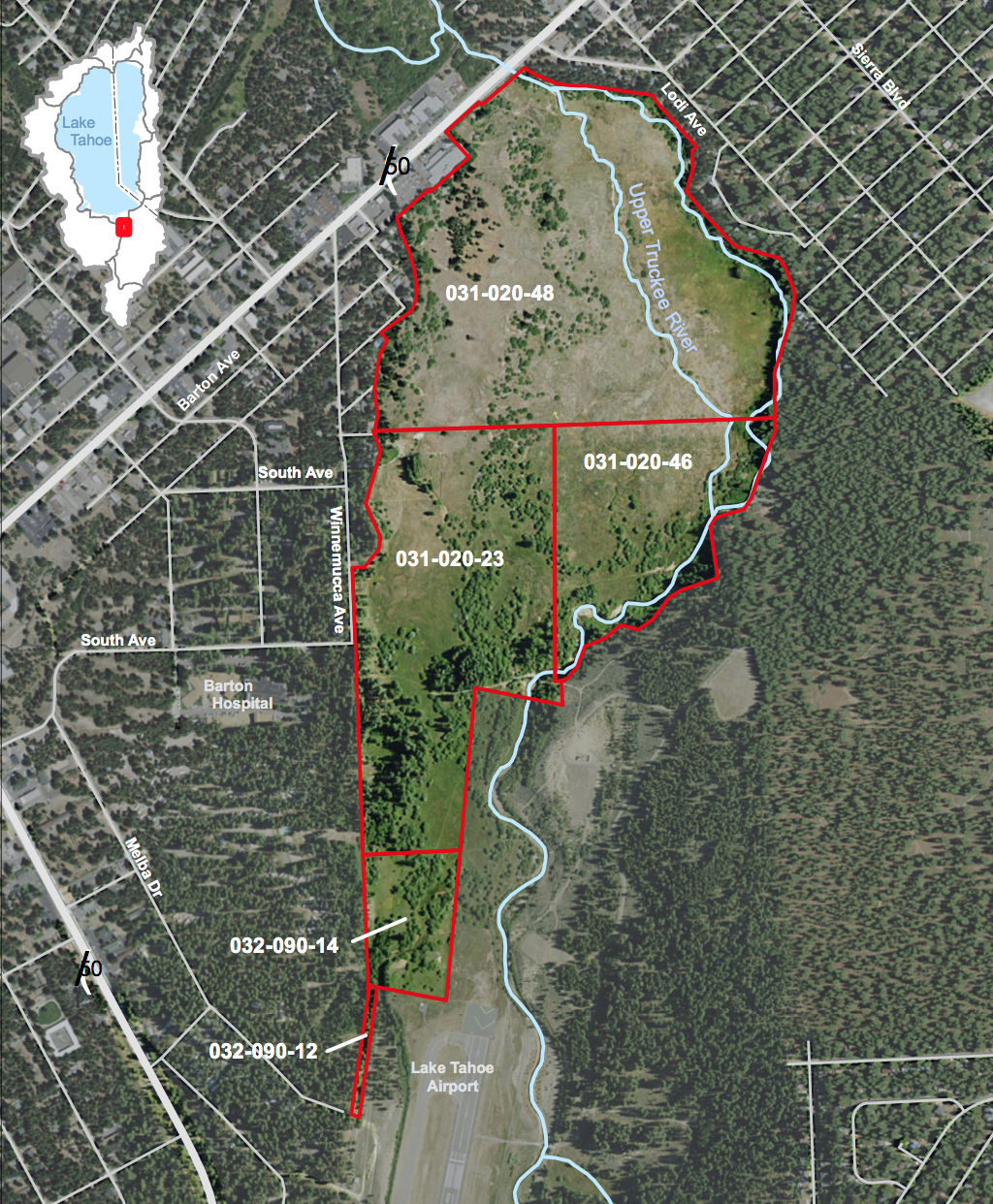
The Johnson Meadows parcel will soon be owned by the Tahoe Resource Conservation District.

The Johnson Meadows parcel in South Lake Tahoe will soon be owned by the Tahoe Resource Conservation District.

By Kathryn Reed

Most of the lower nine miles of the Upper Truckee River are about to come under public ownership.

On Thursday the California Tahoe Conservancy awarded a $4.234 million grant to Tahoe Resource Conservation District to help buy the nearly 209-acre plot known as Johnson Meadows. This equates to half of the selling price. The property is south of Highway 50 in South Lake Tahoe and near the Upper Truckee Marsh.

“Originally, the UTR meandered through the middle of the property’s meadow and overtopped its banks regularly, depositing fine material onto the floodplain almost every year. Some time prior to 1940, the UTR was moved to the east side of the meadow and flows to the meadow were controlled for irrigation purposes,” the staff report from the March 17 meeting reads.

The acquisition means more then 1,000 acres of the river’s floodplain is publicly owned. The Conservancy owns the marsh that borders the Johnson Meadows and Lake Tahoe, as well as the Sunset reach on the other side of the meadow.

The money for the purchase comes from Proposition 1 funds, the 2014 voter approved water bond.

The board awarded seven grants totaling $7,161,568.

Thirty applications valued at more than $30 million were submitted. Conservancy staff and an outside panel whittled the list down to the one that was approved.

The other approved projects include:

·      Lake Tahoe Invasive Plant Control Project, Tahoe Resource Conservation District, $700,000: To remove aquatic invasive plants from several marinas on the South Shore.

·      Meeks Meadow Restoration, Washoe Tribe, $228,530: To support planning related to restoring the ecological, hydrologic, and cultural functions of Meeks Meadow.

·      Lake Tahoe West Collaborative: A Multi-Jurisdictional Landscape Restoration Strategy, National Forest Foundation, $849,100: To develop an interagency plan to restore and protect forest health and key watersheds from Emerald Bay to Tahoe City.

·      Tahoe Basin Wildlife Protection and Water Quality Enhancement Project, Lake Valley and North Tahoe fire protection districts, $850,000: To develop a plan to streamline permitting of forest health projects surrounding Tahoe’s urban and residential communities.

·      Antone Meadows Dam Removal and Restoration, Burton Creek State Park, California Department of State Parks, $149,938: For planning activities to restore sections of Burton Creek and remove the Antone Meadows dam and related infrastructure.

·      Tahoe Storm Water Resource Plan, Tahoe Resource Conservation District, $150,000: To develop a comprehensive water quality plan to reduce and treat runoff that degrades the lake’s clarity.

Another $6.3 million has been set aside to possibly fund three projects that have yet to complete the CEQA environmental review. This includes $4 million for what is called the Bijou Park Creek Watershed and SEZ restoration project. South Lake Tahoe had asked for $4.67 million.

This is the proposal to raze the Knights Inn on Highway 50, combine the parcel with the one at the corner of Highway 50 and Ski Run Boulevard, then restore the creek flowing underground, reduce fine sediment by 8,000 pounds a year and then build something new there.

South Lake Tahoe City Councilman Tom Davis, who is the city’s rep on the CTC board, said, “If we don’t get that additional $670,000, we can’t do that project. This is a once in a lifetime shot for us.”

Three members of the city’s staff spoke during public comment, giving more specifics about the project. They, however, did not say the project would not go forward without full funding.

Resident Ed Moser spoke against that project, saying the CTC could better spend the money elsewhere.

The other two projects in limbo include a potential $1.3 million for Griff Creek corridor in Placer County and $1 million for stream environmental restoration in Meyers.

Assuming those three projects are awarded at the June or September meetings at the levels staff recommends, the CTC still has $488,432 to spend.