How immigrants are changing U.S. ski towns

By David Page, Powder

Wednesday is ski day at Mammoth Elementary School. Which, for parents of kids in the program, means an added level of complexity on Wednesday mornings. Not only do the kids have to be in the car by 7:35am, with lunches, homework, combed hair, brushed teeth, and snow boots on the correct feet, but they also have to have their skis, boots, poles, goggles, helmets, gloves, long underwear, jacket, ski pass, sunscreen, snacks, bib, etc. One missing item could mean a kid gets stuck in the lodge all afternoon with a teacher. Or that a parent has to cut out early from work to go pick the child up.


On one such morning last winter, just as the first bell rang, Oscar Ayala (not his real name), dropped his kids at the school. In the near distance, above the paint-speckled ladder on the roof of his third-hand Isuzu Rodeo, Mammoth Mountain Ski Area stood against a blue California sky. They had their heads down, steeled for what lay ahead: four long hours of school—for “dual-immersion” kids like Oscar’s (and mine), education comes half in Spanish and half in English—followed by a short bus ride to the mountain and an afternoon on the slopes. Alison was in second grade; her brother, Oscar Jr., in fifth. Oscar Jr. was born in the U.S.; his sister in Mexico. He has a U.S. passport; she doesn’t. Neither was particularly excited about skiing, at least not early on a Wednesday morning heading into school.

Oscar is one of a growing number of immigrants finding a home in a ski town. He made his way north from Sinaloa, Mexico, in 2001. He had a degree in industrial engineering and went to Tijuana to try to get a job. Angela, his fiancée, had gone to Mammoth, invited by distant cousins on her mother’s side who needed help taking care of their kids while they worked. On the phone, she described to Oscar a place that sounded like paradise: jobs, clean mountain air, trees, a decent school, friendly neighbors, and a general lack of kidnapping, extortion, drug cartels, murder, bad water, extreme poverty, and mean-spirited immigration authorities. There weren’t any jobs in Tijuana—in industrial engineering or anything else. So Mammoth became the dream.

His Mammoth Mountain name tag bore the same name as his fake Social Security card and green card (neither his own name nor the one I’ve given him), for which he paid $150. The money withheld on his paycheck for Social Security, unemployment insurance, workman’s comp, and Medicaid would never be seen again. Not that he was complaining; that’s just how it was. “We have zero permission to stay here,” he says. “We’re the same as those who cross through the desert. The laws are starting to change, but we’re still here with the fear that at any moment for any reason they can send us back.”

Read the whole story


Reno becoming a significant freight hub

By John Harrell, USA Today

RENO — It’s 5:30am at Reno-Tahoe International Airport. A ramp agent shepherds a line of nondescript boxes up a conveyor belt into the belly of a Southwest Airlines Boeing 737 that’s scheduled for a 5:55am departure to Las Vegas.

Once that flight arrives to Vegas, those packages could be bound for almost any of the other points on Southwest’s route map. Nashville, perhaps, on Southwest Flight 1310. Or maybe Hartford, Conn., after a stop in Tampa along the way on Flight 589.

Wherever the boxes might end up, they began their journey in Reno amid what’s being called a “surge” in air-cargo operations here, says Matt Buckley, Southwest’s vice president of Cargo and Charters. “Over the past four years, we’ve tripled our volume” here, he adds.


2015 was a good year for cargo operations at the airport, “the best year for Reno ever” in terms of cargo carriage, says Hasaan Azam, Reno-Tahoe airport’s manager of Air Service Development.

Read the whole story


Daffodil Hill — a vibrant springtime tradition

A variety of daffodils stand tall on the first day of spring. Photo/Kathryn Reed

A variety of daffodils stand tall on the first day of spring. Photo/Kathryn Reed

By Kathryn Reed

VOLCANO – Life and death all in a matter of weeks. Mother Nature can be cruel that way.

While the blooms of Daffodil Hill had clearly passed their peak on the first full day of spring, by March 21 the iconic outpost in Amador County was closed for the season.

It has been a tough few years for the McLaughlin family. Between drought and inopportune rains, the flowers have struggled to last for long. They are a seasonal bulb that can decorate a landscape for several weeks, assuming the weather cooperates. In good years Daffodil Hill is open from mid-March to mid-April, seven days a week.

Paths wonder between the fields of daffodils. Photo/Kathryn Reed

Paths wonder between the fields of daffodils. Photo/Kathryn Reed

This 540-acre ranch has been in the same family since 1887. Seven of those acres are full of daffodils. Each fall family members and friends plant more bulbs, with 11 varieties put in the ground in 2015: Arkle, Barrett Browning, Bravoure, Delibes, Flaconet, Green Eyed, Ice Follies, King Alfred, Love Call, Ringtone and Yellow River.

According to the American Daffodil Society, “Depending on which botanist you talk to, there are between 40 and 200 different daffodil species, subspecies or varieties of species and over 25,000 registered cultivars (named hybrids) divided among the 13 divisions of the official classification system.”

Different species are planted each fall. Photo/Kathryn Reed

Different species are planted each fall. Photo/Kathryn Reed

One thing that makes Daffodil Hill so special is that the family – now in its sixth generation – does all this work for the public to enjoy for free. There is no cost to walk the grounds, marvel at all the species. It doesn’t even cost to park. Donations and the sale of souvenirs pay for the 8,000 to 16,000 bulbs that are planted each year.

Kim Grady, a fifth generation family member, said it was her grandparents’ and parents’ desire to have this little hill be open for all to see – to never charge. Donations dictate how many bulbs are planted each fall. Family members pay attention to what has bloomed well and spots that need filling in to help determine which varietals to buy.

Old farm equipment and some of the original buildings are scattered about. Photo/Kathryn Reed

Old farm equipment and some of the original buildings are scattered about. Photo/Kathryn Reed

Daffodils were already on the property when Arthur and Lizzie McLaughlin bought the land from Dutchman Pete Denzer. They continued to operate it as a way station for people traveling over the Carson Pass. When she died in 1935 family members planted daffodils in her memory. Each year the tradition continued.

Now it is also a tradition for many to make the trek to Daffodil Hill. Some days 4,000 people will walk the grounds to see these yellow, white and orange flowers.

Plan to visit Daffodil Hill in 2017. Photo/Kathryn Reed

Plan to visit Daffodil Hill in 2017. Photo/Kathryn Reed

—–

Notes:

·       Telephone: 209.296.7048.

·       Address: 18310 Rams Horn Grade, Volcano.


Calif. minimum wage deal avoids ballot box battle

By John Myers and Liam Dillon, Los Angeles Times

Lawmakers and labor unions have struck a tentative deal to raise the statewide minimum wage to $10.50 an hour next year and then gradually to $15, averting a costly political campaign this fall and possibly putting California at the forefront of a national movement.

The deal was confirmed Saturday afternoon by sources close to the negotiations who would speak only on condition of anonymity until Gov. Jerry Brown makes a formal announcement as early as Monday.

The minimum wage compromise ends a long debate between the Democratic governor and some of the state’s most powerful labor unions. For Brown, it’s political pragmatism; numerous statewide polls have suggested voters would approve a minimum wage proposal — perhaps even a more sweeping version — if given the chance.

Read the whole story


Water being released from Calif. reservoirs

By Matt Stevens, Los Angeles Times

The El Niño-fueled storms that have swept through Northern California in recent weeks have swelled some of the state’s largest reservoirs to encouraging levels even as the state’s drought persists.

One of the biggest beneficiaries has been Lake Shasta, a keystone reservoir of the Central Valley project, which serves California growers.

To make room in Shasta for water from last weekend’s storms, the Federal Bureau of Reclamation ramped up releases from 5,000 cubic feet per second to 20,000 cubic feet per second on March 18. It was the first time since 2011 that the bureau released water into the upper Sacramento River at such a rapid rate, said spokesman Shane Hunt.


Read the whole story


Strategy of planning: Who speaks for El Dorado County?

“We are really tired of having to sue our own county to get you to do the right thing.”

                                — Sue Taylor, Save Our County, public comment at the Feb. 23, 2016, El Dorado County Board of Supervisors meeting

By Joann Eisenbrandt

PLACERVILLE – El Dorado County is not the only place where the final solution for solving disagreements, large and small, is the filing of a lawsuit. But when the opposing parties in those lawsuits are elected officials and the citizens they represent, a different dynamic is created.

The El Dorado County Board of Supervisors is the ultimate decision-making body for the county. Groups in the county not happy with its recent decisions on the development of county land have entered into litigation to alter or reverse those decisions.

How the Strategic Plan fits in

At its March 21, meeting, the board gave final approval to a five-year Strategic Plan which is intended to serve as a roadmap to guide the board in its future decision-making. This plan took two years to complete, and it sets goals and implementation measures to meet those goals in five areas: Public Safety, Healthy Communities, Infrastructure, Economic Development and Good Governance.

As part of the development of the Strategic Plan, the board conducted a Citizen Engagement Survey. The survey, with more than 2,200 respondents, had its own goals which included gathering demographic information from county residents, learning what their preferences and concerns were and finding out where and how well they were actively engaging with the government that represents them.

Right now, some of that citizen/government engagement is taking place in a courtroom.

The survey not only asked about residents’ priorities and their views and knowledge of county services, but also asked survey respondents to rate the Board of Supervisors and county staff on a list of important qualities and values directly related to Good Governance.

In the process, the survey, prepared by consultant Kiely Group, noted some key discoveries. Among them were:

·       Respondents are concerned with preserving the rural nature of El Dorado County.

·       Citizens are not aware of what all El Dorado County government does. A public education/communication program could be a key strategy moving forward.

·       Citizens also request more transparency and honesty from El Dorado County staff and elected officials. There is particular concern about the relationship of developers and the county.

While survey respondents expressed a strong desire to keep the county rural, they also put measured growth and economic development high on their list. How to balance the two is where the disagreements arise—how much and what types of residential and commercial development are needed to create a strong economic base without destroying the county’s rural character. The survey concluded that, “The people appear to be accepting of some growth as long as it is done in alignment with the resources and values of the county.”

The Strategic Plan defines the goal of Good Governance as: Achieving the best possible process for making and implementing decisions; characterized by honesty, integrity, accountability, transparency, responsiveness, equitability, inclusion, effectiveness, efficiency and following the rule of law.”

At the March 21, board meeting, Don Semon, county Child Support Services department head and co-chairperson of the Good Governance goal-setting team, brought up the issue of the “trust index” for elected officials. The Citizen Engagement Survey asked respondents to grade the county’s elected officials on “good governance” qualities, and gave them generally low marks across the board.

Vocal minority or silent majority

Some community groups like Save Our County and Rural Communities United believe the county is growing at the expense of its rural heritage, that residents’ input is not listened to and that the board puts developers’ interests first in their decision-making. Feeling their voice has not been heard in the planning review process, they view lawsuits as their last line of defense.

But what percentage of county residents do those speaking out against board decisions and eventually filing lawsuits actually represent?

“I’m not sure there is a good answer to why all the lawsuits are happening,” District Five Supervisor Sue Novasel told Lake Tahoe News. “I really feel the board and the county in general is doing what the citizens asked them to come up with in the General Plan and that the majority of the county has agreed that this is where they want to go.” Novasel added, “There is a minority that don’t want growth and have negativism toward what the county is trying to do to provide economic growth while preserving our rural communities.”

District One Supervisor Ron Mikulaco insists, “It’s usually a small, loud, vocal group. It’s hard to get feedback from John Doe citizen … how do we get the true pulse … it’s not the ‘attaboys,’ it’s the ‘oh nos,’ we hear … we get a lot of consistent complaints from the same place.”

District Three Supervisor Brian Veerkamp agrees, telling Lake Tahoe News, “There is a very small group of people who say they represent many people in the county, but they don’t. They are upset with the decisions we have made … in my 3½ years on the board, we haven’t approved one subdivision and we are working diligently to update the General Plan as we are required by law to do. I am attempting to respect the rural nature of the county. My family has been here since 1852.”

The reason no new subdivisions have yet been built, opposition groups say, is precisely because of their vocal outcries.

The board has accepted the Citizen Engagement Survey results as valid and has used them in refining the framework of the Strategic Plan. From that, it is clear there are genuine concerns with the decision making of the county’s elected officials and that the need to balance preserving the rural lifestyle with economic development is a priority for respondents. But the survey also showed a lack of engagement by residents with the county, a lack of awareness of all it provides and how county decisions affect their lives. District Two Supervisor Shiva Frentzen noted at an earlier Strategic Plan meeting that, “95 percent of the people I talk to don’t even know what district they live in.”

If these small, vocal groups don’t speak for the majority of El Dorado County residents, then how do we know what “John Doe citizen,” really wants? Supervisor Novasel answered, “We know that from our elections. They have certified what the General Plan should be.”

Getting information out

But does the “silent majority” know where to find information they need about issues being decided by the Board of Supervisors, and is this information available in time for them to have meaningful input? District Four Supervisor Michael Ranalli pointed out at the March 21 board meeting that very few residents even know that Legistar exists. Legistar is the system on the county’s website that contains all the information on meetings, agenda items and their attached documents, minutes and videos for board and Planning Commission meetings and for other county boards and commissions. He pointed out that there is also an extensive email notification service available on the county’s webpage where residents can get email updates on issues and upcoming meetings, but not many are aware of that either.

The board discussed the suggestion made in the Citizen Engagement Survey that the county should employ a public information office. Responses were mixed. Novasel told Lake Tahoe News, “We need somebody who has the time to get information out to our community. The city (of South Lake Tahoe) has a good PIO and two-way communication. You can ask questions about the information provided. The county has the software, but nobody dedicated to doing that work. When we have big-ticket items come up, some people feel they only find out when they get a notice. We need to engage people sooner. As we found out from the survey, people don’t understand what those items are.”

Ranalli noted that some might see a PIO as a “spin doctor,” but added this isn’t the intent. “We need to be more proactive and look six months out, long before a NOP (notice of preparation for a project) gets prepared … this can’t just be a duty-assigned position. We have to have an individual with the skills to help us get information out, especially if it is technical information.”

“I’m not that warm to the idea of a PIO,” Mikulaco told Lake Tahoe News. “If you’re doing a good job, you don’t need to put that out there. We have a good, ethical board of people. We publicly talk about these things. There are no back room deals. We go out there and do the people’s work. We tried it (using a PIO) before, and it didn’t work.”

Interim CAO Larry Combs told the board, “I don’t want people to get their hopes up. I’ve worked in counties with PIOs. I feel the public already has great access, but still people will feel they don’t get information. Even with a PIO this will happen.”

The land use planning puzzle: Why should people care?

Finding additional avenues of information for residents about what the county is doing is important. But it won’t accomplish anything unless they see the value of becoming more involved. Why should county residents even care about the planning decisions the board is making, especially if the projects are not near where they live?

The short answer is that land use planning decisions—what residential and commercial and agricultural uses are allowed and where—ultimately determine the physical, economic and social character of El Dorado County. As Sue Taylor of Save Our County put it, “Land use planning is dull until you hear the bulldozer at your own front gate.”

Unfortunately, planning can be complex and technical—based on pages and pages of goals, policies and regulations laid out in the county’s General Plan and Zoning Ordinance. This is not light reading. For proposed projects, there are different types of environmental documents that need to be prepared to identify potential impacts to the environment, to public services like water and roads, to residents and businesses located adjacent to the proposed project. The California Environmental Quality Act (CEQA) lays out the guidelines for examining these impacts and how they can be mitigated.

Basically, the less likely a planning project is to create serious impacts, the less complex the process to approve it. Some requests are approved by the Planning Department at staff level and others require full environmental impact reports (EIRs). An EIR is required when a project will create significant environmental impacts, some of which can be fully mitigated and some of which cannot.

It’s like assembling a giant jigsaw puzzle. Land use planning decisions cut and shape the puzzle pieces and then put them together to make the completed puzzle that is El Dorado County. The goal is for the puzzle to create one harmonious image. In El Dorado County, an important part of the puzzle-making process is the high priority put by residents on keeping the county rural. The problem comes that not everyone defines rural in the same way. The Citizen Engagement Survey included results from a focus group specifically tasked with defining rural. It defined “rurality” as characterized by: country roads, natural setting, low density, privacy, commercial and residential agriculture. Still, a resident in El Dorado Hills might find their lifestyle rural when compared to the Bay Area from which they came and a rancher outside Coloma might see the same Highway 50 corridor as urban.

The planning process in action: Georgetown Dollar General project

The proposed construction of a Dollar General store on Main Street in downtown Georgetown, while a private project on private land, still illustrates how conflicts between rural lifestyle and economic development can play out in the planning process. It has not reached lawsuit status, but may be well on its way there.

Dollar General, a national chain of reduced-price, mixed merchandise box stores, wants to construct a 9,100-square-foot store in downtown Georgetown fronting on Main Street. Georgetown is a small, rural historic former mining community located between Placerville and Auburn in District Four. The project was submitted to County Planning staff for a design review. They reviewed the application and prepared a mitigated negative declaration, saying in effect that the larger, more intense environmental review required by a full EIR was not necessary and that what impacts had been found could be mitigated into “insignificance.”

This staff-level approval was appealed by Georgetown resident Dennis Smith to the Planning Commission, which is made up of members from each of the five supervisorial districts, appointed by that district’s supervisor. At its second meeting on the appeal, on Feb. 25, the Planning Commission denied it by a vote of 4-1, with Commissioner James Williams of District Four voting no. This Planning Commission decision was then appealed by Georgetown resident Dave Souza and the Georgetown Preservation League to the Board of Supervisors. The hearing on that appeal is set for the April 5.

Conflicting viewpoints

The appeal focuses on two allegations: what is termed a “conflict of interest” on the part of District 5 Planning Commissioner Brian Shinault because he helped the project applicant refine part of their building design, but then did not recuse himself from voting on the appeal. Shinault, who lives in South Lake Tahoe, is an architect. Second is the failure of the mitigated negative declaration to fully address environmental impacts including the adequacy of the septic system, the filling in of a wetlands, potential stormwater and drainage issues, and traffic and public safety. Not specifically mentioned in the appeal is the feeling by many that even though the property is zoned commercial-design community, the location of such a large box store in the middle of historic Georgetown is inappropriate.

The Dollar General project is located within the Georgetown Rural Center. New buildings in historic communities such as Georgetown should, “generally conform to the types of architecture prevalent in the gold mining areas of California during the period of 1850 to 1910.” The board has adopted El Dorado County Historic Design Guidelines (HDG) that outline what this conformity means in terms of look, height, style, lighting, and building materials. “The project, as designed and conditioned,” the Dec. 10, 2015, planning department staff report concluded, “has been determined to substantially conform to the HDG and would be compatible with the surrounding residential, community park, and commercial uses within the Georgetown Main Street commercial area.”

Not everyone agrees.

Dave Souza, who filed the latest appeal, told the commissioners, “(Property owner Denton) Beam has the right to sell his land, but to have that (Dollar General) on those three parcels is a gigantic hernia to Main Street.”

In a conversation with Lake Tahoe News, Souza said, “I want a full EIR. Most people in Georgetown are against it. I told the Planning Commission that Denton has every right to sell this property, but we don’t want a Dollar General in downtown Georgetown. (El Dorado County Chamber CEO) Laurel (Brent-Bumb) said it will bring jobs to Georgetown. No, it won’t.”

Commissioners were told by project proponents on Feb. 25 that there would be eight to 10 jobs created, but the representative declined to say how many jobs were full time.

Not everyone agrees with the completeness of the environmental review either. Ed Hawkins of Georgetown told the Planning Commission at its Feb. 25 meeting that he had written to them in December 2015 about the stormwater drainage system he believes is inadequate. “(County planning) staff,” he told the Commissioners, “has an annoying habit of trying to get to yes by using a mitigated negative declaration. This site calls out for a full EIR.”

Hawkins expanded on his concerns when he told Lake Tahoe News, “I believe this is an environmentally sensitive area. You are putting a large project in the middle of a historic district. The county needs to consider the impact of this project on the historic downtown, and it isn’t … the county has decided that our history and Georgetown is not worth preserving.”

Dennis Smith, a retired U.S. Forest Service mineral specialist, pointed to concerns at the February Planning Commission meeting regarding an open mine shaft on the property filled with water, the possibility of aquatic species in the wetlands being affected, and concerns with traffic and lack of adequate crosswalks. He told the commission, “I request you deny this project until at least an EIR is done to address these concerns.”

Smith and his wife, Barbara, later told Lake Tahoe News, “We are not against development. This is a historically designated area. We want to retain the history of the area on Main Street, but it’s commercial property and there needs to be something on Main Street that is viable. We also have commercial land and if someone said we couldn’t do what we wanted to do, we wouldn’t like it. It’s more that they need to meet all the environmental issues like traffic.”

District Four Planning Commissioner James Williams was the lone vote on Feb. 25 opposing denial of the appeal. Williams explained to Lake Tahoe News why he voted that way. “This was the wrong place (for the project) from Day 1. The applicant chose a very challenged property and it needs more study and due diligence.” Williams went on, “I asked about how many jobs and they refused to answer that for us. We absolutely need jobs here, but we need living-wage jobs. We don’t need minimum wage part-time jobs. A lot of people have the perception that instead of helping the people and protecting the community, (the county) is just saying yes to projects; that staff is just there to help the applicant get their project through instead of helping the community.”

With regard to the possibility that this project might lead to a lawsuit, Williams noted, “Developers have come to staff for many years and threatened lawsuits and lawyers started overthinking things worrying about these lawsuits and a pattern potentially develops where (the county) is sued by developers. So now, instead, they are being sued by citizens.”

Supervisor Ranalli has followed the Dollar General project for some time since it is in his district. He told Lake Tahoe News, “This is a very challenging issue for me because I am conflicted on so many levels. As a policymaker duty bound to follow the law, I don’t want to position the county for a lawsuit. If Dollar General appeals, then taxpayer dollars go to that fight. If the public is unsatisfied, they could potentially sue and we’re also talking about thousands of dollars. I have heard from Georgetown residents who are both for and against the project. The community is divided.”

As to the rural lifestyle versus economic development question, the supervisor explained, “I don’t believe when people say they want to be rural that they also want to be poor.”

Ranalli noted that unlike in other communities, there is no longer an active Design Review Committee for Georgetown. Members of these supervisor-appointed committees only act in an advisory capacity, but he believes they facilitate a better exchange of information between communities and the county.

For stores proposed for other small town locations, Dollar General does not usually modify its original design. In the case of Georgetown, however, Dollar General has revised their architectural plans “at least six times” Ranalli noted, attempting to make it blend in better. One of the concerns addressed in the appeal is that Commissioner Shinault helped Dollar General with a redesign of building “elevations.” At the Feb. 25, commission meeting, Shinault noted, “After the last meeting they approached me and they sent me the elevations and I talked to them on the phone, helping them make it not look like one large building. We went through three or four elevations and colors and this is what they came up with and I think it meets the intent of what we are trying to do. I need to be upfront that, yes, I did help them.”

Lake Tahoe News reached out to Commissioner Shinault for comments on several occasions but received no response.

Outside agency requirements

Totally independent from the county planning approval process, but related to some of the same environmental issues are permits that need to be approved by other agencies. The county referenced these in its Initial Study, but it is the responsibility of the project proponent to finalize these requirements with the appropriate agencies. One is a Storm Water Prevention Plan through the Central Valley Regional Water Quality Control Board and a certification from them that the project will uphold state water quality standards. Another is a requirement by the U.S. Army Corps of Engineers (ACOE) for a permit under the federal Clean Water Act Section 404 regarding the discharge of fill or dredge materials into “the waters of the United States,” over which they have jurisdiction. The Dollar General project would fill in wetlands on the subject property. These wetlands drain into Empire Creek, which then drains into the American River.

Lake Tahoe News learned that a private citizen had contacted the EPA’s National Tips Database regarding the Dollar General project and contacted EPA to see what, if any, impact that would have on the ongoing county approval process. The EPA administers the federal Clean Water Act.  Michele Huitric of the Office of Public Affairs for the Environmental Protection Agency, Region 9, confirmed the citizen’s report in an email to Lake Tahoe News. The EPA then contacted the Army Corps of Engineers to, “find out more about the Clean Water Act Section 404 permit request.” The ACOE invited EPA to visit the site, “subject to the property owner’s consent.” The property owner declined.

Subsequent to this, the (ACOE) did receive permission from the property owner for a site visit. Peck Ha, project manager for the U.S. Army Corps of Engineers, Regulatory Division, South Branch, told Lake Tahoe News that they received the permit request from the project proponent around six months ago and it is currently being reviewed. The AOCE team visited the property on March 21, and Ha was in Georgetown again on March 24. When asked if this would in any way impact the timeline for the ongoing county review process, he stressed that, “The Army Corps in this process is independent and non-biased. We are not for or against the development. We process the permit based on the regulations and guidelines.”  These two processes will continue on their individual timelines. Ha could not estimate how long the ACOE process will take or whether additional site visits will be required. For the project to go forward, this permit is required.

What’s next?

If the board denies the Dollar General appeal on April 5, the next potential step would be the filing of a lawsuit. As the Dollar General project shows, land use planning can be a slow and complex process. Unfortunately, there isn’t a bright yellow “Land Use Planning for Dummies” manual out there for concerned citizens to refer to. The Strategic Plan process has highlighted the need for better communication and transparency between county government and its residents and nowhere is it more important than when decisions that could alter the character of the county are involved. One mechanism, the creation of a public information officer, will be considered by the Board during upcoming budget hearings.

El Dorado County is obviously growing, but views on whether it is growing in a way that preserves its historic heritage while enhancing economic viability differ widely. The Strategic Plan process is intended to provide an overall framework for county decision-making over the next five years, but whether it is actually implemented won’t be known right away. Asked by Lake Tahoe News why it won’t join other such efforts as dusty volumes on a shelf, Supervisor Veerkamp responded,  “The most important elements are the objectives and an action plan. Those action plans have timelines and accountability reports tied to them. We as the board put the timelines on staff to report back on their action plans and accomplish the goals. That follow-up and feedback and reporting are what was missing from prior strategic plans.”





Tahoe land deal opens new trail opportunities

By Benjamin Spillman, Reno Gazette-Journal

One little land gift is about to become a very big deal for biking and hiking near Incline Village.

That’s because software billionaire David Duffield’s 18-acre gift to the Nevada Land Trust clears the way to develop a connection between Mt. Rose Highway and Tunnel Creek Road – and many miles of premium single track to the south.

It also creates new opportunities to preserve the Comstock-era bull wheel that once powered the log flume that gave Incline Village its name.

Read the whole story


Barton embraces CDC’s opioid regulations

By Kathryn Reed

Barton Health officials endorse the guidelines passed this month by the Centers for Disease Control and Prevention related to prescribing opioid painkillers such as OxyContin and Percocet.

The recommendations focus on the use of opioids for pain that has lasted longer than three months. It does not address those using these drugs for cancer or end-of-life care.

The federal initiative targets primary care physicians because in the United States they are the ones who write almost half of the scripts for opioid painkillers.

The South Shore-based health care system was ahead of the curve. In May 2014, Barton spearheaded a movement to bring a new perspective to prescribing opiates. Local emergency physicians committed to:

·         Working closely with community physicians to coordinate care of patients with chronic pain.

·         Identifying people with chronic pain and refer them to additional support from their primary care provider and/or a chronic pain specialist.

·         Identifying high risk behavior and use that information in our prescribing practice.

Many states already have guidelines for such drugs.

“All hospitals and pharmacies in California and Nevada have policies to regulate prescribing and filling prescriptions of opioids. Barton Health has guidelines for dose based on an individual patient’s pain level or condition, effective pain management strategies, and ways to enhance our patients’ comfort and function,” Rhonda Sneeringer, chief medical officer for Barton Health, told Lake Tahoe News. “We take a collaborative, interdisciplinary approach to pain management and work with the providers, patient, and – when appropriate – the patient’s family to find a functional, positive quality of life for each patient that may or may not include opioids.”

Because opiates may lead to complications, including death, Barton uses non-addictive treatments as well. These include other drugs, acupuncture, aromatherapy, physical therapy, relaxation therapy, and yoga.

“We have also been working hard to address underlying issues that may be causing additional pain, such as substance abuse, mental health issues, stress, or a chronic disease,” Lance Orr, medical director for Barton’s Emergency Services, told Lake Tahoe News.

The stated need for the guidelines is because of the high rate of addiction. The CDC said opioid prescriptions reached 259 million in 2012.

Sneeringer added, “Our goal is to help people get back to optimal health measured by function and quality of life, which includes managing level of pain, but not focused solely on becoming pain-free.”

Barton plans to hire a pain management specialist to work directly with patients.

Sen. Dianne Feinstein, D-Calif., in a statement, said, “The guidelines released by CDC are an important first step in combating the overuse of opioid painkillers, which is one of the root causes of the heroin epidemic in this country. The agency noted that no other medication regularly used to treat nonfatal conditions kills patients as frequently as opioids.

“In too many cases, opioids have become the default response for pain, even when alternatives are available. The guidelines will help doctors determine whether to start or continue opioids for treatment of chronic pain, as well as proper dosing and follow-up. They will also encourage greater use of evidence-based treatment.”

Feinstein was one of eight senators who in November urged the CDC to finalize strong guidelines to address overprescribing.


Winter casts magical spell on national parks

Publisher’s note: This is one in a series of stories about the National Park Service, which is celebrating its 100th anniversary in 2016.

Sometimes it's better to find Plan B when a bison is on  trail. Photo/National Park Service

Sometimes it’s better to find Plan B when a bison is on the trail. Photo/National Park Service

By Susan Wood

YELLOWSTONE NATIONAL PARK – For me, the real stand down involving the national parks occurred long before Yosemite’s former concessionaire Delaware North decided to play hardball with iconic park names they trademarked.

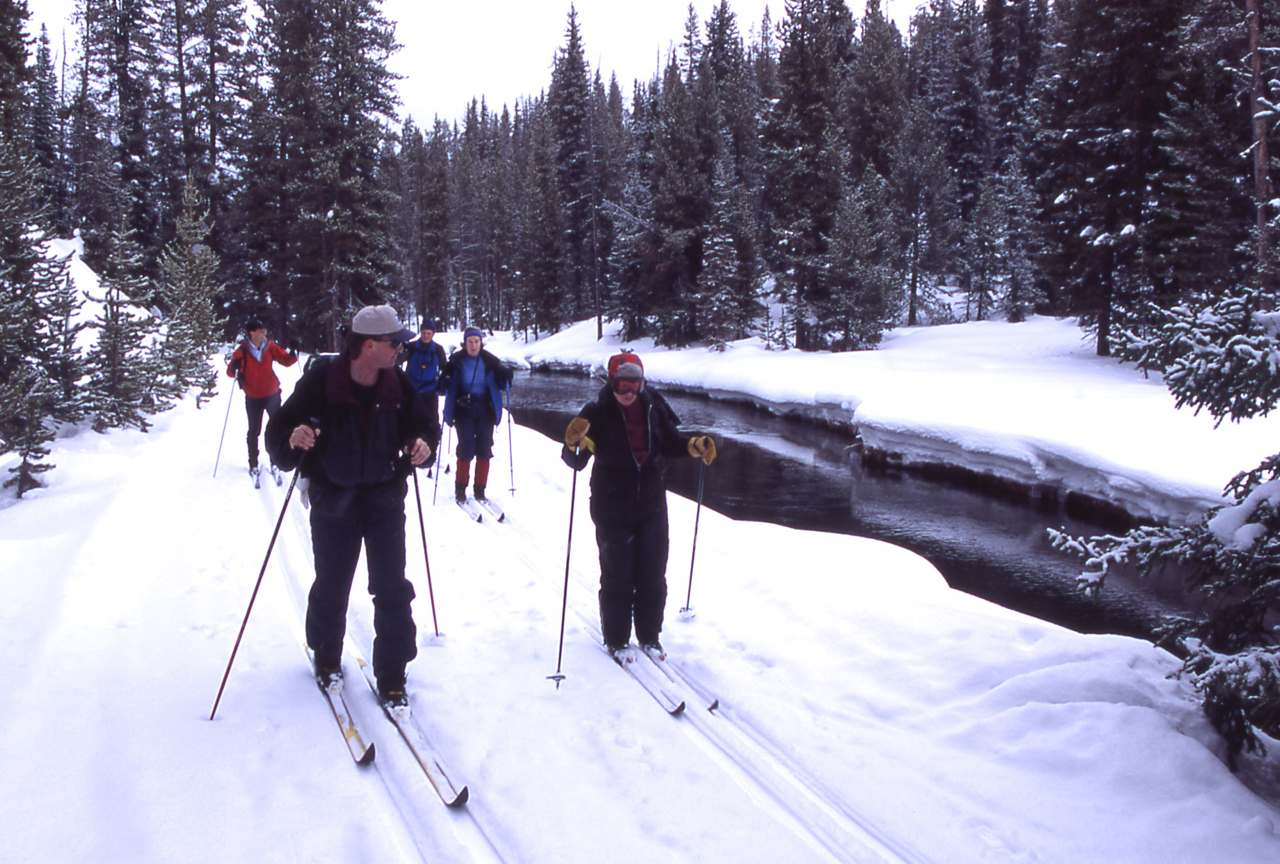
It was a face-to-face encounter almost 20 years ago with three bison standing at the other side of the bridge on my cross country ski journey to Fairy Falls in the 2.5 million-acre Yellowstone National Park.

Reflecting back, it was a memorable time. For years, Yellowstone has been ground zero for controversial land-use issues.  These include the reintroduction of wolves and its effect on nearby ranchers; the balance between recreation and environment regarding pollution from snowmobiles; the management of fire prompted by one of the nation’s worst blazes in 1988; the study of geothermal activity in the land of more than 9,000 geysers; and the protection of a large free-ranging herd of bison from slaughter.

Considering Yellowstone represents a “survival of the fittest” hotbed, I was not about to challenge a 1,400-pound animal that can run 35 mph.

Cross country skiing in most national parks is special experience, especially so in Yellowstone. Photo/National Park Service

Cross country skiing in most national parks is a special experience, especially so in Yellowstone. Photo/National Park Service

I took a snow shuttle there (part of the beauty in visiting in winter), so there was no vehicle to save me. If I insisted on continuing on the trail, my only other option if it charged would have been jumping into the icy cold Firehole River on long skis. I made the wise move and changed course to Lone Star Geyser from the Old Faithful Snow Lodge, my home base.

I was astounded by the solitude. Although the geyser erupted prior to my approach (it goes off every three hours), I stood in awe. The large mound resembled something out of “Close Encounters of the Third Kind.”

Yellowstone’s charm lies in its massive, scenic landscape and wildlife encounters – from the serene to the raw reality of nature. It’s accentuated in winter. That’s why the Park Service manages a fleet of snow coaches with top hatches to spring up for photo ops. The commuter van on treads appears like something out of the military, grinding through some of the most challenging terrain in the park.

It’s the vehicle of choice for visitors and wildlife enthusiasts entering the park from the town of West Yellowstone, deemed the snowmobile capital of the United States. I passed on a snowmobile rental given the sub-zero degree temperatures Yellowstone is known for. Park Service employees have a saying of Yellowstone’s seasons – winter, winter, winter, summer.

Regardless of the cold, I knew I was in for a special treat upon my first day. It’s not every day one can catch a wolf gnawing on a dead elk. But that’s the cycle of life at Yellowstone. Hours later, I came within 15 feet of an elk while I was on a quick, introductory 5-mile ski along a cluster of geysers from the lodge near Old Faithful. I suppose I was off in my own little world, but it was plain to see that I didn’t notice him until I was in his zone. The recommended distance from an elk is 25 feet. I veered way out, so I could keep an eye on the animal without getting any closer. I wouldn’t have witnessed a spontaneous eruption from a dormant geyser if I hadn’t taken the alternate route.

Author Thomas Wolfe once characterized the park as “the one place where miracles not only happen; they happen all the time.” I believe it.

Yellowstone is the oldest national park in the United States; established in 1872.

On Day 2 of my cross country ski adventure, I captured the grace and elegance of white trumpeter swans on Yellowstone Lake, just south of the Continental Divide. Rick, our guide, was full of stories. Some I didn’t want to hear. He drove the snowcoach 30 miles that day, so he had plenty of opportunities to share things like the claw marks of a grizzly bear on a tree next to the trail. I felt mortal at the thought of a possible encounter.

The falls in the West Thumb region plunge with such force they freeze on the back splash, much like Multnomah Falls on the Columbia River Gorge east of Portland – but to a larger scale. As for grand, there is such a thing in the Wyoming Park. The Grand Canyon of the Yellowstone, as they call it, provides spectacular views of a gash in the Earth 1,000 feet deep and 4,000 feet wide.

The feast for my eyes reminded me of another cross country vacation two years prior.

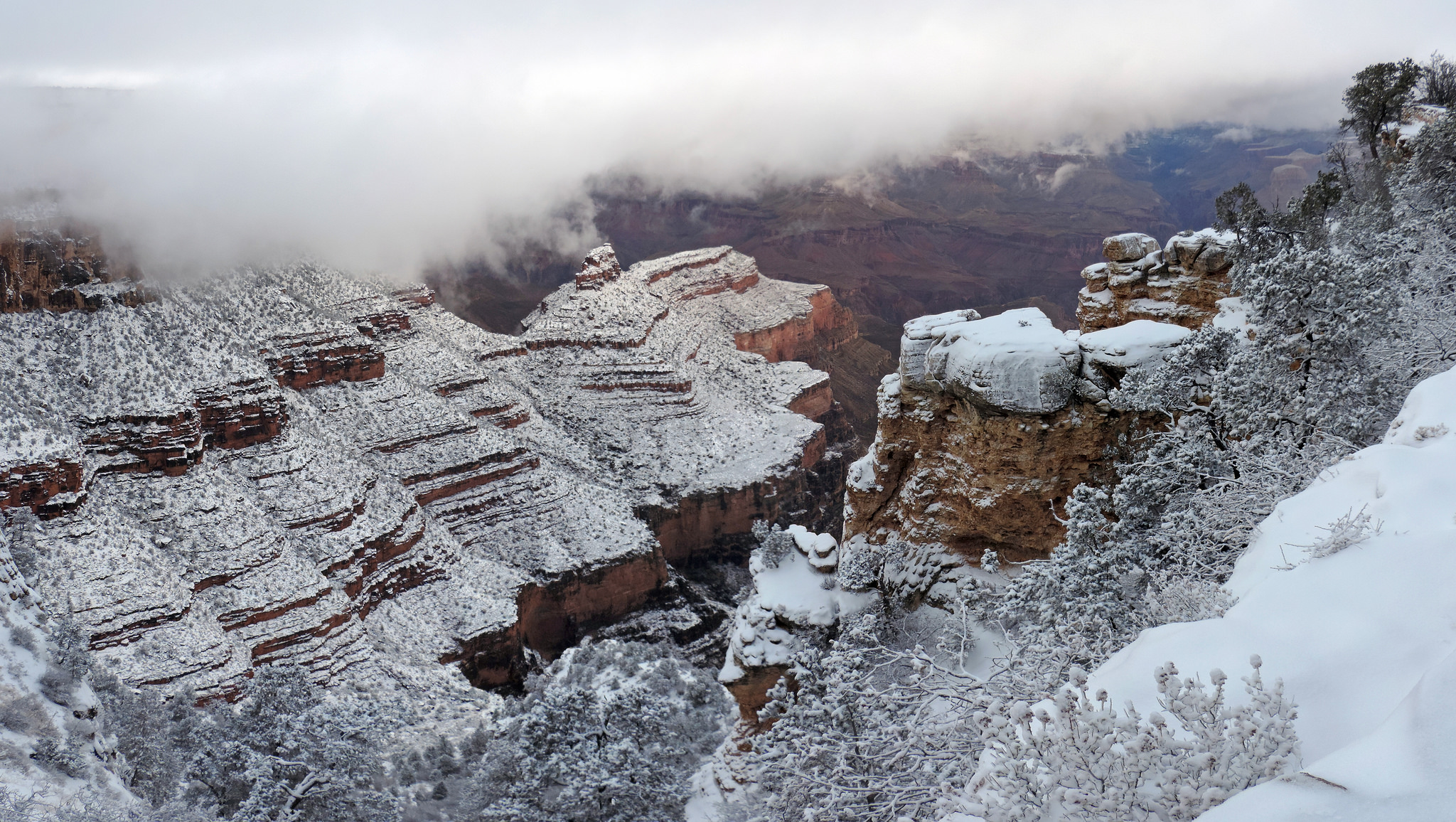
Crowds are not a problem during winter at the Grand Canyon. Photo/National Park Service

Crowds are not a problem during winter at the Grand Canyon. Photo/National Park Service

The other Grand Canyon experience

Arizona is known as a sweltering hot desert state. Many a movie scene and vacation photos have shown sunburns and shorts at the South Rim of one of the nation’s most popular national parks. It was established in 1919.

However, it’s a different world on the North Rim – and an even more unique one in winter. Amid the pinion pines and uncrowded terrain marks the Grand Canyon’s North Rim in the winter months. Like Yellowstone, visitors are brought in via snowcat to Kaibab Lodge, an old, rustic lodge complete with a large wood fireplace and the allure of musicians sitting around it. The cabins tucked in the woodsy setting of the Kaibab National Forest were even more rustic – like something out of a youth summer camp.

But what seemed like the minimalist approach in the sleeping quarters went rather upscale in the lodge’s “living room,” kitchen and trail provisions. The chef, who I heard honed his cooking skills in prison, but I didn’t care, whipped up quite a spread for the holidays that might almost rival one at the Ahwahnee Hotel (and I will still call it that).

I chose New Year’s to partake in this experience in 1995. Here I have the fondest memory of cross country skiing all day along the sweeping landscape of the North Kaibab Trail. No matter what side of the Canyon a visitor stands on, it’s difficult to get tired of the view – whether it’s from Cape Royal or Bright Angel Point. The snowcat took a group of us out to the rim where we skied the perimeter. From there, I opted to ski back and I’m glad for doing so. I got in a good 15 miles that day, burning off the calories from the best toasted peanut butter and honey sandwich I’ve ever had.

My timing on the long ski day was a bit tight. I crested the last ridge back to the lodge as I contemplated pulling out my head lamp when much to my delight my eyes rewarded me immensely. There the lodge stood in the distance, lit up with Christmas lights like part of a Thomas Kincaid painting. It was heart and body warming to see.

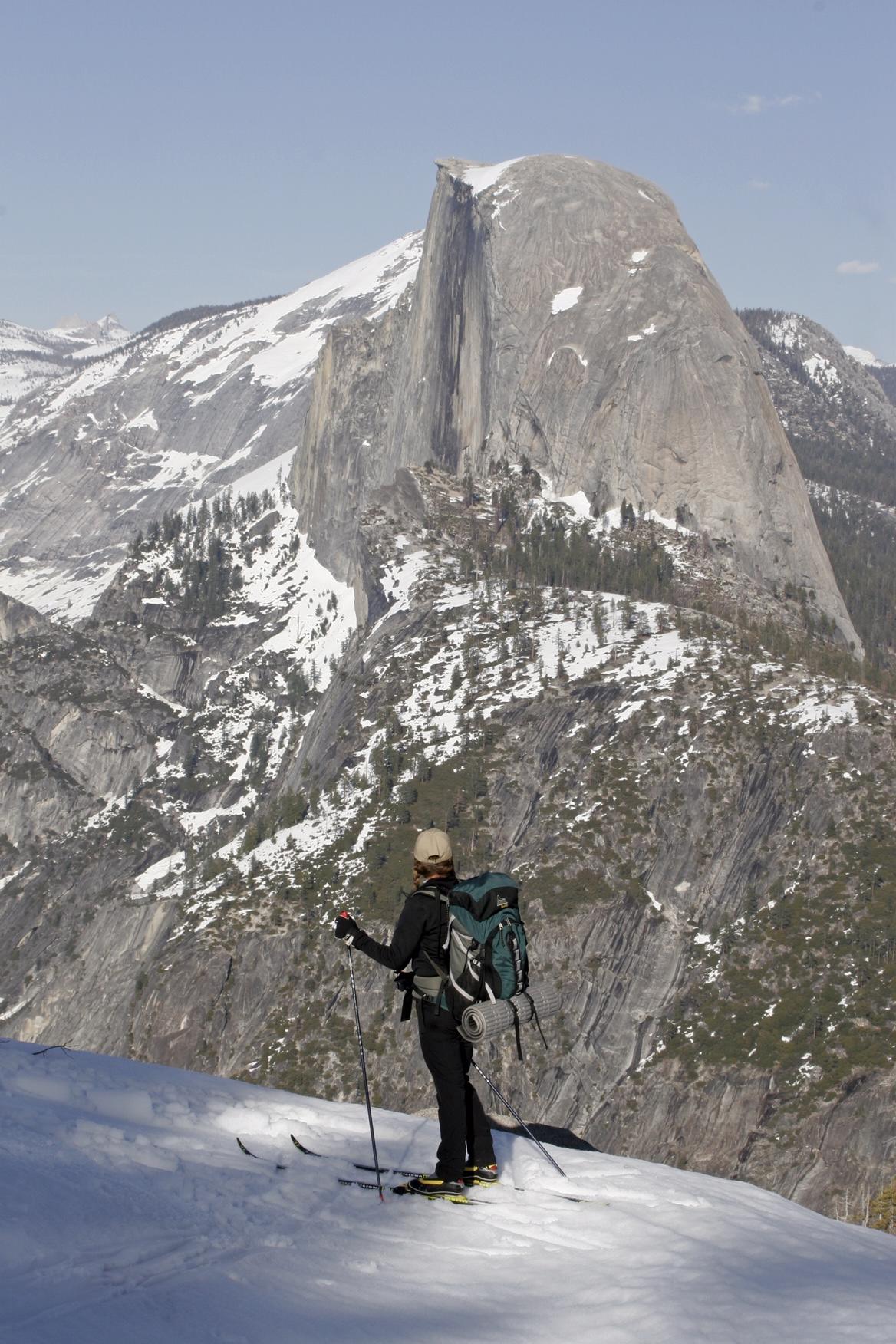
Views of Half Dome and other iconic Yosemite landmarks are even more delightful in the snow. Photo/National Park Service

Views of Half Dome and other iconic Yosemite landmarks are even more delightful in the snow. Photo/National Park Service

The Trans-Sierra trip of a lifetime

To backpack and snowcamp Yosemite is to follow in the footsteps of such a notable pioneer as John Muir, but with a few more provisions than a loaf of bread and cup for water. Muir, the iconic Sierra Nevada ecologist before there was such a thing, never grew weary of the granite-dominated, glacier formed national park established in 1890.

On this Sierra Club guided trip set in mid-April 1996 over my birthday, 12 days before Earth Day and Muir’s birthday I knew why Muir had such feelings. I threw a 40-pound pack on my back filled with my life for four days and set out on cross country skis from Lee Vining on the east slope of Yosemite while following Tioga Pass Road most of the way.

The first night was a treat. As an introduction to the wilderness, we stayed in the comfort of cabin quarters at Tioga Lodge. The staff even baked a cake for me. Given the preservative-laced stir-up meals on the agenda for the next two nights, I devoured that cake and the entree.

Snowcamping can be a test in patience and logistics.

It takes good prior planning and a Plan B for the unexpected. When your skis decide to stick to the snow because the terrain and temperature changes, it’s good to have wax. When you need to climb on crusty slopes, you’d better untangle your skins (a course layer applied to the bottoms of backcountry skis for gripping). When your metal tent anchors freeze deep in the snow overnight, you’d better learn to use long string as a simple trick. And the list goes on and on.

What tries you, though, rewards you with some of the most stunning views of this magnificent spectacle of a national park.

I had a precursor to magnificent views in skiing out and camping at Glacier Point in winter from Badger Pass on another trip and that was enough for me to feel the allure. Try a 180-degree view of Yosemite Valley with Half Dome dead ahead as the sun dipped below the horizon and cast ever-changing shadows on the famous rock monolith.

This Trans Sierra trip provided the type of untouched scenic beauty so pure it can take your breath away — coupled with midday sunny spring skiing conditions where sunscreen rules.

Rewards abound with the appreciation of the simple pleasures. Take the beautiful virgin snow collar that rims a river and its rocks. Take the unbelievable, rarely-seen back side of Half Dome as you descend from the northeast into Yosemite Valley. Take the classic looks on visitors’ faces when you walk with full ski gear into the Village without a snow patch to be found. Take the never-take-it-for-granted reward of getting the largest cheeseburger on the menu with French fries and a milkshake at the café because you probably lost 20 pounds reducing your food intake and burning it all off on that day. Take the end of the white-knuckled shuttle plane trip back to Lee Vining in which your seat involves a backpack and you scoff at the pilot handing you a seatbelt.

Then, take the thought of having a real bed for the first time in four days.

Now that my friend is living – living the Sierra Nevada in a winter dream.


SLT intent on not being in ambulance business

By Kathryn Reed

South Lake Tahoe has put El Dorado County and Lake Valley Fire Protection District on notice that it intends to get out of the ambulance service by April 15.

The multiyear contract between the three agencies allows for any entity to give a 30-day notice. The city did so on March 15.

The City Council took that unanimous action in closed session that Tuesday and the City Attorney’s Office subsequently wrote the letter. (Councilman Hal Cole was not at that meeting.) The city, assuming it does get out of the contract, will have to forfeit a $50,000 bond.

The city and Lake Valley in 2001 were first awarded the contract from the county. The fire agencies work together under the Cal-Tahoe Joint Powers Authority to provide ambulance service in their combined territories. Two members from each of their respective boards sit on the JPA.

At issue is the reimbursement the JPA gets from the county to operate the ambulance service. It’s been an issue for years. The city contends it is spending $700,000 a year in excess of what it is reimbursed.

Both fire agencies want 100 percent reimbursement and are frustrated that more than $2 million is sitting in a county controlled fund for the JPA. The money comes from the assessment property owners pay and ambulance fees that are collected via the JPA.

County officials contend there is no way that money can be released because of the contract that is in place. To do so could potentially result in a lawsuit from one of the bidders because it is a fixed priced contract.

“We have the fund balance for unanticipated expenses,” Creighton Avila, CAO spokesman, told Lake Tahoe News. “Also paid out of that are things like billing and contracts. There could be any number of emergencies out there. That is what the fund balance is there for.”

What no one at the city – elected or staff – could explain is why in 2015 the JPA agreed to extend the contract three years, so now it expires in 2019. At least one city councilmember would have had to say yes to it. Councilmembers Tom Davis and JoAnn Conner were the city’s reps at the time of the decision. Now the JPA has Davis and Mayor Wendy David as members. Davis did not return a phone call. At no time did the council as a whole give direction to JPA members Davis and Conner to extend the contract.

Lake Valley would gladly take over the ambulance service – which has been discussed in earnest since last summer.

“Yes, we want to take it over, but there is not enough revenue under the existing contract for staffing of all three ambulances,” Lake Valley Fire Chief Gareth Harris told Lake Tahoe News.

The next JPA meeting is set for April 11. It’s possible an emergency one will be scheduled before then.

In a statement, the county Chief Administrator’s Office said, “The county is expressly concerned about the threat to public health and safety of residents and visitors to the South Lake Tahoe region should the city of South Lake Tahoe terminate its ambulance service contract, with the Cal-Tahoe JPA, without making adequate provisions to ensure that its action will not put ambulance service in the South Lake Tahoe region at risk.”

South Lake Tahoe Fire Chief Jeff Meston told Lake Tahoe News, “There won’t be any interruption to ambulance service. That is not good for anyone and we won’t allow that to occur.”

The county sent the city a letter on Tuesday. As of Thursday no one at the city had seen said letter. The city has not provided LTN with its letter.

The county in its letter says the JPA board per the contract would have to agree to the termination by the city.

The letter says, “The Cal-Tahoe JPA board members and member agencies should consider all of the consequences, financial and otherwise, that could result if the Cal-Tahoe JPA agreed to allow a member agency to terminate one of the subcontracts without making adequate provisions to ensure that ambulance service is not put at risk.”

The letter goes on to say, “While the county remain open to discussing alternative proposals for operations after the expiration of the existing EMS agreement, please be on notice that the county intends to exercise and enforce its rights under the existing EMS agreement and to pursue any and all available remedies if there is an event of a default.”