
Anticipating best whitewater-rafting season since 2011

By Tom Stienstra, San Francisco Chronicle

On the South Fork American River last weekend, 75 rafters and kayakers launched the spring white-water season with an ecstatic 13-mile trip from Lotus to Folsom Reservoir.

“It was great, absolutely euphoric,” said Nate Rangel of Adventure Connection out of Lotus in the Sierra foothills. “We’re expecting the best whitewater season in years.”

The trip was like a celebration. The group selected the South Fork American because of its accessibility and that it is a watershed that will provide great whitewater all summer long this year in the Sierra foothills.

A mountain snowpack is the fuel for what is forecast as the best whitewater season since 2011 for California, according to early reports from automated snow sensors.

Read the whole story


Desolate snowshoe tests navigation skills

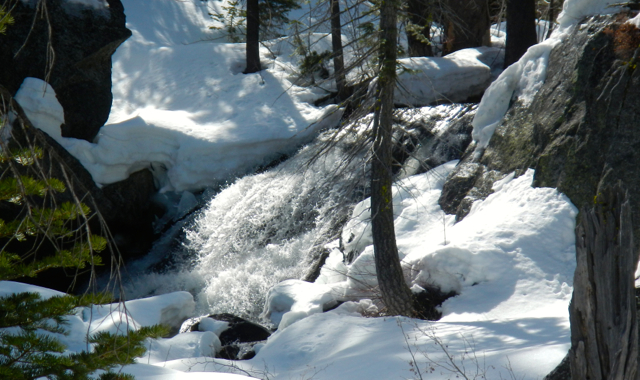
A waterfall along Meeks Creek in Desolation Wilderness. Photos/Kathryn Reed

A waterfall along Meeks Creek in Desolation Wilderness. Photos/Kathryn Reed

By Kathryn Reed

MEEKS BAY – While there has been more snow than recent years, it still hasn’t been normal in Lake Tahoe. A snowshoe in late February put the exclamation point on this statement.

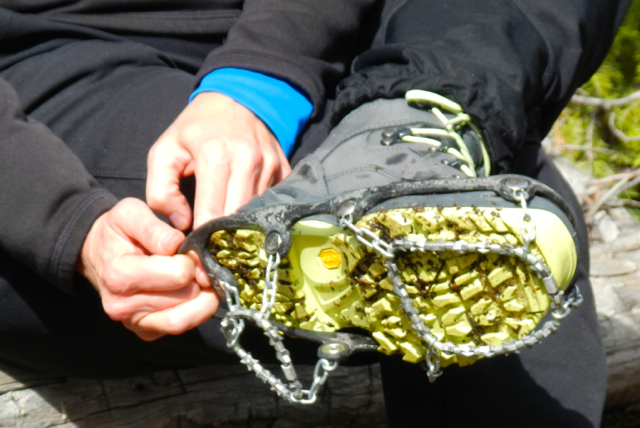
Rarely were the snowshoes even on; part of the time Yak-Tracks were worn and much of the time all that was needed were hiking boots.

Water was in abundance, especially at the start of the route. It was more reminiscent of late April or early May on the West Shore.

The intent of the five people and two dogs was to hike a portion of the Tahoe-Yosemite trail. And while that is exactly what we did, we never made it to a single lake. Finding the trail became cumbersome, so we turned around.

Yak Tracks help provide stability in slick conditions.

Yak Tracks help provide stability in slick conditions.

The accumulation of water on the trail was problematic at times – as was having to cross the creek. Once we hit a substantial amount of snow is when we started postholing. That’s when the ’shoes came on.

We tried to follow tracks laid by earlier adventurers, but eventually they ran out. Even with a GPS device, we were doing a bit of a zigzag that got tiresome.

When the trail is clear of snow it is a 12-mile round trip with Lake Genevieve, Crag Lake, Hidden Lake, Shadow Lake and Stony Ridge Lake as destinations.

We made it a five-mile adventure.

It didn’t matter that we didn’t make it to our destination of at least one lake. The scenery was stunning. Being in Desolation Wilderness is always a feast for the senses. It was also one of those rare times where it lived up to its name. Not many people venture out there this time of year, where as when it’s just dirt on the ground, it is a popular spot.

Another advantage of going this time of year was seeing a waterfall that I hadn’t seen in drier climate. This is along Meeks Creek, which eventually flows into Lake Tahoe.

Lake Tahoe makes an appearance on the way back to the vehicles.

Lake Tahoe makes an appearance on the way back to the vehicles.

—–

Getting there:

From South Lake Tahoe, take Highway 89 north to Meeks Bay. Just past the fire station that is on the right, there is parking on the left in the dirt. A small paved lot exists where the actual trailhead starts. Be sure to fill out the free Desolation Wilderness permit.


Study: Calif. moving toward more extreme weather

By Laurel Hamers, Mercury News

STANFORD — Stanford researchers who studied trends in the atmospheric circulation patterns that affect California’s rainfall have found that conditions linked to the hot, dry weather during our latest drought have become more frequent in recent decades, according to research published Friday.

That means that while this year’s El Niño-driven storms may have brought temporary relief to the Golden State’s parched soil and depleted reservoirs, Californians can expect more frequent droughts in the decades to come, according to the study published by Science Advances.

It’s a finding obscured by focusing solely on the state’s precipitation, which has remained mostly steady over time. That’s because even with an increased chance of drought, the weather patterns that trigger exceptionally wet weather are persisting. In short, California is trending toward more extreme weather, bringing new challenges for managing our water supply.

Read the whole story


Tahoe National Forest bats win out over miners

By Michael Doyle, Sacramento Bee

A gate meant to protect bats using a mine shaft in Tahoe National Forest also impedes the miners who have staked a claim on the site.

But now, capping a dispute that has spanned multiple courts and encompassed everything from the Fifth Amendment to federal bat-protection efforts, a judge has dismissed a $50 million lawsuit by two Northern California men who said the gate prevents them for accessing the mine.

“The installation of the bat gates has not deprived (the men) of the ability to develop their claims,” U.S. Court of Federal Claims Judge Elaine D. Kaplan concluded, adding the men “may still develop their valid mining claims any way they see fit provided they comply with applicable government regulations.”

California’s bats, this case made clear, have friends in high places.

Read the whole story


1 plan left for stalwart SLT worker — retirement

Judy Finn has been the go-to person for city planning issues for 16 years. Photo/Provided

Judy Finn has been the go-to person for city planning issues for 16 years. Photo/Provided

By Susan Wood

While it isn’t a one-woman unit, those who do business with South Lake Tahoe’s planning department have been relying on the same person for the past 16 years – Judy Finn.

The associate planner is retiring this month.

“I have to tell you, this is the worst news to come out of the city for a long time,” attorney Lew Feldman said. “Judy’s awesome, and she’ll be sorely missed. I couldn’t be more happy for her. She’s so deserving.”

Feldman is the king of representation for high-dollar, town-altering projects that have needed Finn’s gentle hand and rational guidance to get off the ground. Think of projects like the Marriott-anchored Heavenly Village.

The declaration from Lake Tahoe News of her looming retirement sent shivers down the spine of the Tahoe-area collective that relies on her to help them turn their ideas into brick-and-mortar reality.

Finn started as a temporary permit clerk in 1990. She left in 1991 because there was no full-time job. It was in 2000 that she started her current tenure. In 2001, she was promoted to senior permit technician and in 2006 she became an assistant planner. In 2009, she earned a certificate in land use and environmental planning program from UC Davis extension. She’s been in her current post for four years.
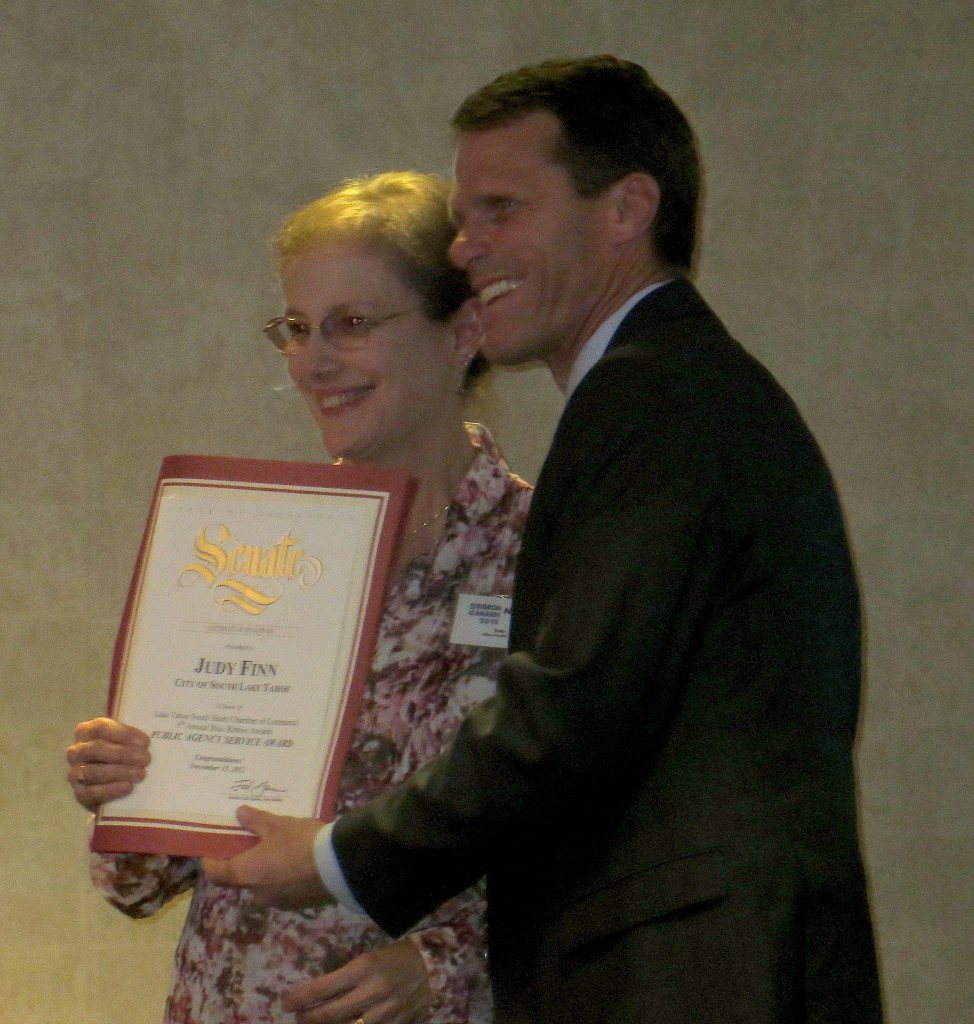
State Sen. Ted Gaines with Judy Finn the night she was awarded 2012 Tahoe Chamber Blue Ribbon Award for Public Service from Ted Gaines.

State Sen. Ted Gaines with Judy Finn the night she was awarded the 2012 Blue Ribbon Award for public service from Lake Tahoe South Shore Chamber of Commerce. Photo/Provided

“Judy has a warmth and kindness that separate her from many who interact with the public in that capacity. It’s not an easy position. She always goes above and beyond,” Feldman told Lake Tahoe News.

And then, the professional care goes beyond the work.

“We’ve absolutely been interested in one another’s well being outside the role of work,” Feldman said as if losing a friendly confidante at the counter.

Some implied the city planning department should brace itself because projects may be hitting the counter in the hopes Finn would work on them before she leaves. Another suggested placing Finn on speed-dial during retirement to get that institutional knowledge at crunch time.

Mick Clarke of Signs of Tahoe, who seemed in complete shock after hearing the news, said he was genuinely worried. Clarke’s thriving sign business has seen a lot of action at the city in its 36 years of existence.

“Of all the planning staff I’ve ever worked with, Judy is light years ahead of anyone. She understands. She really cares about local business people. I tell all my customers to make sure they talk to Judy,” Clarke told Lake Tahoe News.

City Councilman Tom Davis, who has known Finn for decades, sends difficult applicants to the planner. He recalled how TJ Maxx experienced challenges with sprinklers and water connection fees, but Finn worked through the process with grace.

The longtime politician pointed out in an age where government can get in the way Finn demonstrates a “can-do” attitude.

“I knew if I sent them to her, (problems) would get resolved. She’ll be missed,” Davis said, while joking he’s “not accepting her resignation.”

Nick Exline of Midkiff and Associates also shared an example of Finn’s empathetic work ethic.

Getting the Landing Resort hotel off the ground was “complicated,” needing a creative solution to keep 40 construction workers on the job while the city worked out how the high water table would affect the excavation depth relative to the final best management practices design.
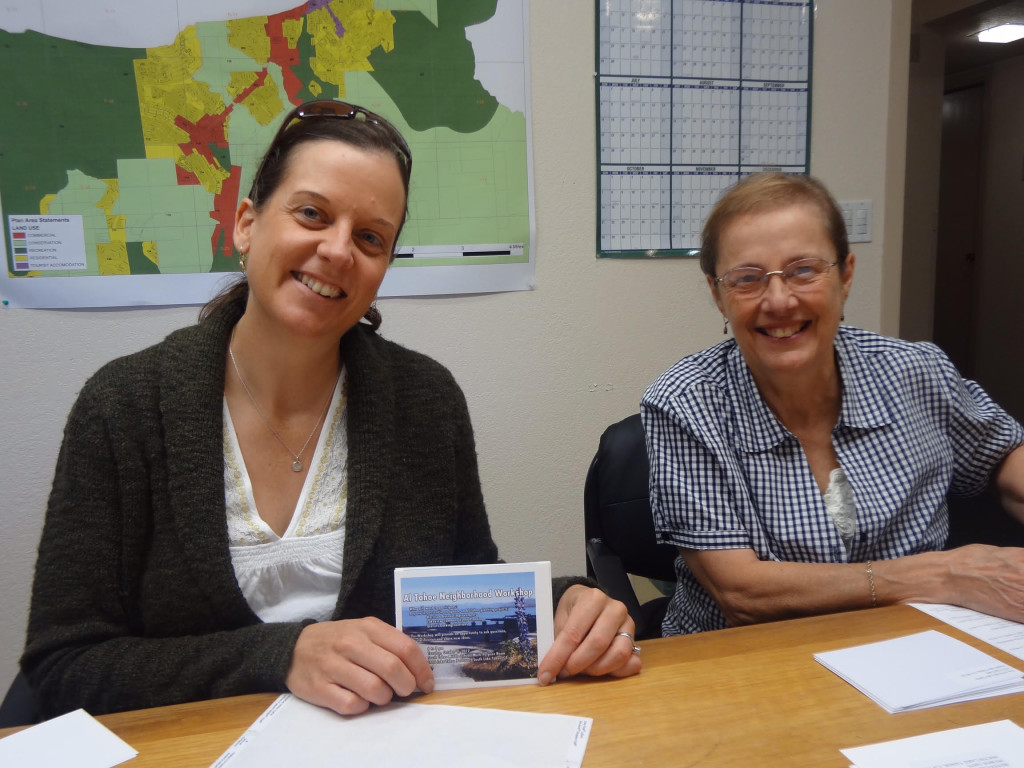
Hilary Roverud, left, knows it will be hard to replace Judy Finn. Photo/Provided

Hilary Roverud, left, knows it will be hard to replace Judy Finn. Photo/Provided

“Judy was very aware of issues, and she allowed us to keep working – all because she understood the difficulties of the site,” Exline said of the crew. “It’s a genuine customer service approach.”

The listening skills didn’t end there. Finn kept up on the latest happenings of Exline’s children and shared her own experiences about her grandchildren – one of the personal interests that will receive added attention in retirement.

The other area of attention will be her tomato starts in the yard. Finn’s boss, Hilary Roverud, said she will miss the fresh produce, but it will be Finn’s work ethic and gentle demeanor that will be hard to replace. The development services director, who refers to Finn as “a friend to everyone,” singled out Finn as having an “uncanny ability to handle situations with unhappy people and make them feel that their issues are important.”

Roverud mentioned how she’s appreciated the support from Finn “so many times.”

“These will be hard shoes to fill – to have someone with that kind of experience who knows the town really well. I don’t think you plop someone in the chair, and they become Judy Finn. It’s a tough job. Part of the job is regulation. It’s the regulation part that you have to tell people the law doesn’t allow you to do that. She has a talent for being able to work with people to calm them down. Her calming ability is very valuable,” Roverud said. “She’s good at finding solutions within the law.”

Roverud noted there were several instances in which Finn received compliments from customers and citizens.

Finn plans to stay in her hometown of 45 years.

“I definitely have mixed emotions. I enjoy my job. This is a very gracious community and often times I feel like I make a difference, and I still have contact with these people,” said Finn, while preparing to volunteer for St. Theresa’s annual St. Patrick’s Day dinner. Her service to the church will be another post-retirement priority, along with cooking, sewing, reading and gardening. Finn grows those “tricky” tomatoes as well as herbs and zucchini.

She’ll miss her work and colleagues.

What advice does she have for the person filling her shoes?

“My advice is just try not to be bureaucratic and on a power trip. Think of both sides. Think of what the applicants and business owners want. It’s such a short building season here, and people depend on these jobs. Of course at the end of the day, you still need to stand in front of the council and justify your actions. When people come into a government office and ask: ‘How can I do this,’ they’re nervous. You can’t always say yes, but you try to find a way to make it happen,” Finn said. “It’s really rewarding when they come back and say thank you. You don’t expect it.”

(Reporter’s note: Thanks Judy for making sense of convoluted planning complexities over the years. – Susan Wood)

Report: Nev. worst for ‘real unemployment’

By Mark Robison, Reno Gazette-Journal

Nevada ranks No. 1 in the United States for “labor underutilization” in 2015, with 13.9 percent of the population unemployed, underemployed or who wants to work but have given up.

Some call it the “real unemployment rate.”

That compares with an overall “U-6” unemployment rate last year in the United States of 10.4 percent, according to data released March 31 by the Bureau of Labor Statistics.

Read the whole story


Hispanic voters growing influence in the West

By Paige Blankenbuehler, High Country News

In the midst of the raucous and polarized presidential election, a quieter story has been at play as well: the growing political clout of Latino voters.

Nationwide, about 12 percent of the country’s eligible voting population is Hispanic — and the West is home to nearly 40 percent of those voters, far surpassing other regions. This November, Hispanic voters are projected to turn out in greater numbers than they did in 2012, with a nearly 10 percent increaseforecast by the National Association of Latino Elected Officials Educational Fund.

At the same time, the Latino voting bloc is in transition. Latino populations are getting younger, larger and more politically engaged. In the process, they promise to change Western presidential politics.

Now, not only are there more Hispanic younger voters, but an increasing percentage of them are born in the United States. That naturalized population is beginning to dominate the Latino population of voters (non-citizens can’t vote). Young Hispanics make up a larger proportion of the voting block than in other groups: 44 percent of Hispanic voters are between the ages of 18 and 35 this year, compared to 27 percent among white voters.


In Nevada, Hispanic groups are becoming more vocal on the immigration debate and about their opposition to Donald Trump, whose campaign has taken an anti-immigration stance. But their influence is complicated by the fact that the state has the largest percentage of undocumented immigrants in the country (nearly 8 percent; California comes second with just more than 6 percent), according to the Pew Research Center.

Read the whole story


Marinas on front line for lake clarity issues

By Kathryn Reed

CAMP RICHARDSON – Marina operators throughout the Lake Tahoe Basin are beginning to make a concerted, united approach to dealing with aquatic issues.

The Tahoe Marina Association is a relatively new group made up of the owners. Eleven of them gathered last week at Camp Richardson to hear a presentation from the League to Save Lake Tahoe about how marinas can keep Lake Tahoe blue. This in itself is not something that would have happened a handful of years ago based on the nonprofit’s old philosophy of thinking anything not native to the lake must be harmful — including boats and buoys.

The new thinking of working with those who are here has made for more amicable relationships – including with marinas.

Jesse Patterson, deputy director of the League, told them, “You know the good, the bad and ugly of the lake. That is why we want you involved.”

Last year four marinas participated in a training about aquatic invasive species, with more sessions planned for May. The Eyes on the Lake program is open to the general public, too. It’s all about identifying invasives and getting rid of them.

A representative from Obexer’s on the West Shore admitted it’s difficult to tell the difference between native and non-native plants.

A Sierra Boat Company employee said using the information gathered about AIS helped with their dredging application.

Stormwater flows into Lake Tahoe marinas carrying water that originated mostly off property. Photo/LTN

Stormwater flows into Lake Tahoe marinas carrying water that mostly originated off property. Photo/LTN

The idea is to focus more on invasive plants like Eurasian milfoil and curly leaf pondweed because these are often habitat for non-native fish. Eliminating the food source is easier.

Boats are a conduit for the invasives, with some marinas like Tahoe Keys being inundated with the unwanted plants.

Patterson said marinas are the perfect place for invasive plants to live because it’s still water where fine sediment comes in.

Another issue Patterson wants marinas to be cognizant of is stormwater runoff. Many marinas have pipes draining into the lake from their properties. But the water likely originated farther upland. Still, marinas are regulated and the amount of fine sediment deposited becomes their problem.

This fact was evident last July when a putrid smell was coming from Ski Run Marina. South Lake Tahoe officials were notified and it turned to be a malfunction with a weir. The city fixed the problem.

Through the League’s Pipe Keepers program marina staff can be trained to take samples during storms that are then analyzed for turbidity by the League’s people.

“Source reduction is our No. 1 goal,” Patterson said.


Heat causes Yosemite’s granite to crumble

By Sean Greene, Los Angeles Times

The domes and arches etched into Yosemite’s famed granite cliffs may seem frozen in time, but in reality they’re constantly moving.

The dramatic rock formations were formed as layers of rock peeled away from the mountainside, like an onion. The flakes remain attached at a few points but are completely hollow in the middle. If you were to pound on one with your fist, you’d hear an echo.

In Yosemite, these precarious attachments – geologists call them “exfoliations” – fall at a rate of one a week, on average. Most often, they collapse because water repeatedly freezes and thaws in the cracks, destabilizing the cliffs. Sometimes they fall apart during an earthquake.

Read the whole story


Calif. plan for private-sector workers moves forward

By James Rufus Koren, Los Angeles Times

California has taken a step closer to becoming the first state to make retirement savings accounts a near-universal benefit for workers with a plan that lawmakers hope will help ease an expected massive shortfall in retirement savings.

A state board Monday sent a set of recommendations to the Legislature calling for the creation of the California Secure Choice Retirement Plan — essentially a 401(k) plan operated by the state and open to private-sector workers whose employers don’t offer a retirement savings plan.

Employees of any company with at least five workers would be eligible to participate. That would cover an estimated 6.8 million workers, about a third of California’s labor force.

Read the whole story