1960’s era South Tahoe hotel getting face lift

Debbie and Bill Hirsch with fixings for breakfast at the 7 Seas Inn. Photo/LTN

Debbie and Bill Hirsch with fixings for breakfast at the 7 Seas Inn. Photo/LTN

By Kathryn Reed

This is the last day the 7 Seas Inn will be open as an outdated throwback to the 1960s era lodging establishments that South Lake Tahoe is known for. When it reopens May 1 it will be refurbished, modernized, with the management philosophy more like a boutique bed and breakfast.

Debbie and Bill Hirsch bought the motel last year for $1.2 million. This first phase of renovation will see an infusion of about $300,000 into the property on Manzanita Avenue near Stateline.

By the time they are done the goal is to have gone from a two star to a three star motel.

The rooms, which are no more than 200-square-feet, are cluttered with old furniture. While the mattresses and bedding were replaced at the get-go, now it’s time for the rest of the interior to be modernized.

Christian Oberhauser of Oberhauser Interiors came up with the rustic-modern theme. Wood will be common through out, from vertical slabs for the headboard to the vanity in the bathroom.

Floors will be vinyl designed to look like wood. This will prevent guests from scratching them with ski boots or sand.

Instead of pedestal sinks with no place to set items, the square sinks will be raised. While the plumbing will be visible, a bar will be installed there as a towel rack. A wood slab will be installed where toiletries may be placed.

The tired shower tile will disappear.

Electrical work will be extensive. Wires from the televisions will no longer be visible. Ample outlets to plug-in an array of gadgets will be installed. Light fixtures will also be replaced.

Works from a local photographer will adorn the walls.

“It won’t be like an old hotel anymore,” Oberhauser told Lake Tahoe News. “We’ll have more floor space so visually it expands the room so it creates a cleaner look.”

There are 12 king rooms, three doubles and one queen.

They already redid the manager’s quarters, which is where the Hirschs are living full time.

The reviews are already favorable since the couple took over, a testament to their desire to make the 7 Seas feel like a travelers lodge and not just an ordinary motel.

“People used to select a hotel based on location, price and brand. These days people are choosing based on location and reviews, and they are more flexible on the rate if the review supports it,” Bill Hirsch said.

Their breakfasts, which include pancakes and waffles in addition to fresh fruit and other items, has been well received. In the evening beer and wine are complimentary for guests, along with hors d’oeuvres.

The plan is to extend this area so it’s larger and a bit more cozy. The goal is to keep it open 24 hours as a place for people to chill.

The exterior won’t see much attention this month in terms of improvements, but plans are in the works  to make inviting outdoor seating areas. What used to be a tiny grass area for dogs to do their business will now be for people. Pets are no longer allowed.

The motel has a hot tub, too.

Guests have access to Lakeside Beach. The casinos and Heavenly Village are also within walking distance.


Panama Papers shine light on Nev. incorporation laws

By Jason Hidalgo, Reno Gazette-Journal

It’s as easy as ordering a Big Mac.

Thanks to laws designed to attract business, creating a company in Nevada is a quick and simple exercise for anyone able to pay the required fees.

Add a layer of anonymity that hides ownership for limited liability companies, or LLCs, and you have the secret sauce that helped Nevada earn the nickname “Delaware of the West,” a nod to the mid-Atlantic state known for incorporating and creating businesses.

Despite the attention, Nevada has  successfully shrugged off concerns about its system through the years. The massive release of leaked documents known as the “Panama Papers,” however, is casting a global spotlight on the Silver State.

Read the whole story


Lake Tahoe hits natural rim — finally

In March 2015 there was no water flowing from Lake Tahoe to the Truckee River. Photo/LTN file

In March 2015 no water flowed from Lake Tahoe to the Truckee River. Photo/LTN file

Publisher’s note: Lake Tahoe hit its rim on April 9.

By Benjamin Spillman, Reno Gazette-Journal

Lake Tahoe is finally expected to spill over its natural rim into the Truckee River sometime within the coming days.

When it happens it will be the first time in more than 300 days the lake topped its natural rim, which is at 6,223 feet in elevation.

It will also mark the end of the longest period below the rim since at least 1994, according to records posted by the Tahoe Regional Planning Agency.

Read the whole story


Tahoe trails guru taking on bigger role in USFS

Garrett Villanueva is co-owner of Sawyer Wooden Board Company. Photo/Susan Wood

Garrett Villanueva is co-owner of Sawyer Wooden Board Company. Photo/Susan Wood

By Susan Wood

It’s hard to imagine with his low-key style and everyday dad demeanor, but trails guru Garrett Villanueva is placing Lake Tahoe on the map – yet again.

Villanueva was promoted in December to trail and travel management leader for the U.S. Forest Service’s Pacific Southwest Regional office. The responsibilities encompass the entire state of California. Villanueva has already been diving in. He’s working on five environmental impact statements and three recreational components to Forest Service plans.

Some might buckle under the pressure. But this is just how the 46-year-old recreational enthusiast rolls.

He worked his way up with the Forest Service in the Lake Tahoe Basin Management Unit, arriving in South Lake Tahoe in 1998 from Arizona where he worked as a hydrologist for the Environmental Protection Agency.

“I never thought I’d work in government this long,” Villanueva said, while watching his 8-year-old son, Jace, hop over wooden platform jumps built by dad. The duo was having a father-son day that started with skiing out of Mott’s Canyon on Heavenly and ended with ice cream.

He snickered while reminiscing about the times in Arizona. He didn’t quite enjoy the job and couldn’t believe it half the time. He had to talk to property owners who wouldn’t think twice about pouring toxic chemicals into the ground about the importance of protecting the environment.

Some of these people were rough around the edges. He recalled going out on a field visit that turned into a little-too-close-for-comfort drug bust. He followed law enforcement at full speed on a back road. When they showed up at the house, their guns were drawn. Villanueva took shelter at his vehicle.

“They told me to keep my head down,” he said.

Since then, the agency decided to review its safety protocols.

Garrett Villanueva's garage is full of toys to use in Tahoe. Photo/Susan Wood

Garrett Villanueva’s garage is full of toys to use in Tahoe. Photo/Susan Wood

So, coming to South Lake Tahoe in 1998 may have represented a walk in the park. He started out as a temporary employee in a job that monitored whether the Lake Tahoe Basin Management Unit, an arm of the Forest Service here, was performing up to par since the first environmental summit that brought out President Bill Clinton.

Eight months later, he became a full time engineering technician. In 2002, he became a civil engineer – a position he kept through 2015.

“I have an affinity for seeing things in a three dimensional way,” he said of his long tenure with the Forest Service.

That well-rounded experience got him on board the Forest Service’s International Programs run out of Washington, D.C. He visited Israel and Brazil to go over land management practices designed to help spur tourism through trail building and sustainable environmental practices.

“People will travel for trails,” he told Lake Tahoe News, simplifying the missions. He contends building trails is an integral part of community health by using land for recreational purposes.

He’s had a lot of practice.

Villanueva was instrumental in designing the trails throughout the basin. Most notably, he cited the Cold Creek Trail out to High Meadows from Pioneer Trail as especially challenging but rewarding. It turned out the public was extremely persistent on having it along the river.

“It took more effort and cost a lot more, but it turned out more desirable,” he said.

And that made all the difference in the world.

The Corral Trail represents another locally driven project he was glad to work on. Then, there’s the Freel Trail, named after the dominant peak. The Camp Richardson Trail from years ago remains the most popular. And now, he’s very excited about the State-to-State project between California and Nevada as well as the Kingsbury “Stinger” from the Grade.

Villanueva also knows how to build bridges, figuratively and literally.

There’s the Ward Creek Bridge on the Tahoe Rim Trail.

Garrett Villanueva, left, with Mike Gabor and Jacob Quinn working on South Shore trail plans. Photo/LTN file

Garrett Villanueva, left, with Mike Gabor and Jacob Quinn work on South Shore trail plans. Photo/LTN file

So, how is Lake Tahoe doing in terms of being on the frontline of mountain bike trail building?

“Lake Tahoe is an example in large part of sustainable trail systems. It’s an amazing community and has a lot of cohesion,” he said.

This declaration speaks to why he said he in part wouldn’t have taken the job if it meant moving away. So now he does a lot of remote work in checking in with the regional office in Vallejo.

He’s enjoying life, but still thinks about what would be his dream job. He’s also an accomplished paddleboard builder, making about a half dozen high-end boards for various people. He was working in the shop in his garage on his latest board for Phil Moulton to put up at Cold Water Brewery.

“He’s very smart, easy to talk to. I think he’s successful at anything he works on, and he’s got a great work-life balance,” Moulton said of Villanueva. “Our kids play together, a small town you know.”

Villanueva’s roots are not only deep in Tahoe, they’re engrained in his talents to build things. His father started him young, insisting they build a shed one day. At age 8, he decided to take the lawn mower apart. His father just shook his head when he saw his young enterprising son holding a piston in his hand, wondering what to do next, Villanueva recalled.

Villanueva’s buddy and fellow mountain bike rider Ben Fish isn’t surprised how his friend has moved up in the Forest Service.

The duo worked together on the popular city-run Bijou Mountain Bike Park, among other projects. The latest will be the Trails Summit, sponsored by the Tahoe Area Mountain Bike Association. The summit will highlight Tahoe’s prominence in the mountain bike world and is set for May 6-8.

For starters, TAMBA’s resurgence from years of dwindling down to a few members to now a few hundred speaks volumes on the growing popularity of the sport and the persistence of those like Villanueva who dedicate their lives to supporting it with a trail system.

“It makes me proud to see him go and be almost like a spokesman of Tahoe,” said Fish, who’s known Villanueva socially for a decade.

It’s all in the family of riding and sharing experiences. Their sons are good friends.

“He’s pushed all the buttons. We had six or seven years with no mountain bike organization. He helped get TAMBA back together,” said Fish, while manning a TAMBA booth at the Lake Tahoe Business Expo.

“These projects would have never happened without him,” he told Lake Tahoe News.


King Fire arsonist going to prison for 20 years

Wayne Allen Huntsman is going to prison for 20 years for starting the destructive 2014 King Fire.

Wayne Allen Huntsman

Wayne Allen Huntsman

In El Dorado County Superior Court in Placerville on Friday he changed his plea to guilty. Judge Daniel Proud handed Huntsman, 38, the maximum sentence. He was also ordered to pay $60 million in restitution.

In addition to the more than 97,000 acres that burned that fall – mostly in the Eldorado National Forest — 12 houses and 68 outbuildings were destroyed at a loss of $6.5 million. The fire started near Pollock Pines and spread rapidly from there in a northeast direction.

One firefighter was hurt fighting the blaze that took 27 days to contain.

Smoke from the fire could be seen from the Lake Tahoe Basin that fall.

Huntsman took video of himself at the scene became evidence.

The Pollock Pines man was tearful April 8 as he admitted to the crimes he was charged with.

“I’m pleading guilty because I’m guilty,” Huntsman told the court.

This video from the El Dorado County District Attorney’s Office shows how the investigation unfolded.

— Lake Tahoe News staff report


Calif. economy expected to outpace that of U.S.

By Natalie Kitroeff, Los Angeles Times

California’s economy will grow faster this year than the national economy, and unemployment will drop to 5 percent in early 2017, according to a new report by the UCLA Anderson Forecast.

Personal income in California will increase more slowly than it has in recent years, when the state’s economy was bouncing back from the high unemployment of the recession.

In 2016, personal income in California will grow 3.6 percent, compared with 4.5 percent in 2015, the report said.

Read the whole story


Spotlight on mental health on the South Shore

Publisher’s note: Beginning today Lake Tahoe News will be delving into the topic of mental health in the Lake Tahoe Basin. This is the first of several stories that will be running through October.

By Jessie Marchesseau

Considering one in five adults experiences some sort of mental illness in any given year, it’s no surprise this subject hits close to home for so many.

Yet even with such high numbers, mental illness still carries a stigma. Doing away with this stigma is a key factor to ensure people receive the necessary treatment, explained Michael Ward, project facilitator for the Mental Health Cooperative on the South Shore. He said mental health needs to simply be considered a part of the health system as a whole, not a separate issue.

Mental-ILLNESS-LOGO“We’re not going to make real progress without helping our community to understand that it’s OK to talk about these problems,” said Rhonda Sneeringer, chief medical officer for Barton Health.

Barton hosted its third annual mental health forum on April 7 at Lake Tahoe Community College.

About 70 people attended, and nearly everyone seemed passionate about the topic. Many were industry professionals such as doctors and therapists; some were employees and volunteers for local health organizations. Representatives from area schools attended, as did the South Lake Tahoe chief of police and community members whose lives have been affected by friends or family with mental illness.

And over the last few years local entities have been joining forces to make that a reality.

Progress so far

Talking about and recognizing mental health issues are some things health service providers have been encouraging within the community, especially with the younger generations. The fact that 50 percent of chronic mental illness begins by age 14 and 75 percent by 24 are reasons to make sure kids and teens are informed, too. This is partly why local schools were prolific recipients of the Barton Foundation’s community health grants last year.

Kindle Craig, Barton Health’s director of Strategy and Development, took a moment to acknowledge the grant recipients which also included Live Violence Free, NAMI (National Alliance for Mental Illness), Sierra Child and Family Services, and the South Tahoe Drug Free Coalition, as well as funding for brochure racks displaying informational mental health brochures.

Craig explained to Lake Tahoe News there is a waiting list to receive mental health treatment in South Lake Tahoe for all ages. Wait time depends on the specific circumstances of each individual, and navigating the system to find the correct type of treatment can be difficult.

This makes South Lake Tahoe’s mental health needs seem dire. But as part of the larger picture, she said, in relation to the rest of California, South Lake’s situation is comparatively not bad. However, being in a rural community means that even one tragic mental health crisis, such as a suicide, can affect a large portion of the population.

These are some of the reasons Barton Health chose to lead the effort to improve the state of the local mental health system. But Craig stressed they are not doing it on their own; this is a collaborative effort between Barton, El Dorado County and other area health providers.

“We have a collective awareness of the issue, and we all have a collective buy-in,” Craig said.

She described it as all the entities extending their reach a little bit, and together they can fill in the gaps. This idea has proved effective, and the system has come a long way in recent years, thanks, in part, to annual forums like this one.

Last year’s forum was a full-day workshop out of which came the Mental Health Cooperative and a long list of goals for the following six months. Among those goals were a wellness service directory, securing new leadership for the local NAMI chapter, developing two new transition houses for those in need and opening a warming room for the homeless. Ward announced 95 percent of the dozens of goals on the list were completed within the specified timeframe.

After seeing how far the mental health arena has come, the focus turned to what will be coming up.

Barton Health annual forums about mental health are making a difference on the South Shore. Photo/Jessie Marchesseau

Barton Health’s annual mental health forums are making a difference on the South Shore. Photo/Jessie Marchesseau

The future

First on the radar for the upcoming year is Mental Health Awareness Month in May. Entities all over town will be hosting events, some attendees even created events on the spot. A calendar will be available online within the next couple weeks. Buttons depicting green ribbons were distributed to wear, and residents were encouraged to raise awareness via social media throughout the month of May using the hashtag #eachmindmatters.

As for the Mental Health Cooperative, its list of initiatives for the upcoming year is lengthy but revolves around three main topics: access, awareness and resources. One of the first orders of business, however, is a trip to Washington, D.C., where representatives will be seeking grant money from the national Health Resources and Services Administration with which to implement these initiatives.

Barton is also making efforts to provide more access to mental health services. It has increased the number of available social workers and counselors, and will be hiring a psychiatrist this summer.

Even though substantial progress is being made, there is a long way to go. It is still essential for individuals to do their part.

How we can help

Sabrina Owens, program manager of El Dorado County Mental Health in South Lake Tahoe, gave a short presentation to educate viewers on how to recognize and take proper action when it comes to mental health issues. She pointed out how symptoms can often be vague and overlap from one illness to another. Symptoms such as excessive sleeping, dropping grades in students and unusual behavior could be signs of a greater underlying problem.

Being able to diagnose the issue is not the goal, simply acknowledging an issue and encouraging the person to seek further evaluation is what is important. Time is of the essence in mental treatment, so she encouraged people to be diligent and not just let possible symptoms slide by.

The forum wrapped up with an interactive exercise where the room broke into groups, each with a specified “patient.” The groups then had the task of talking through the chain of events leading to recovery and identifying the issues that could arise along the way.

Obstacles including insurance, education, misdiagnosis, avoiding treatment and navigating the system were identified, among others. The exercise opened eyes and discussions about where the system can fall short, what could use more improvement, as well as how we can all help loved ones and others in our community get the treatment they deserve.

In the end, attendees from all walks of life left educated, inspired and motivated.

“We’re all just trying to create a vibrant, healthy community,” Ward said.


Nev. may be on verge of a lithium rush

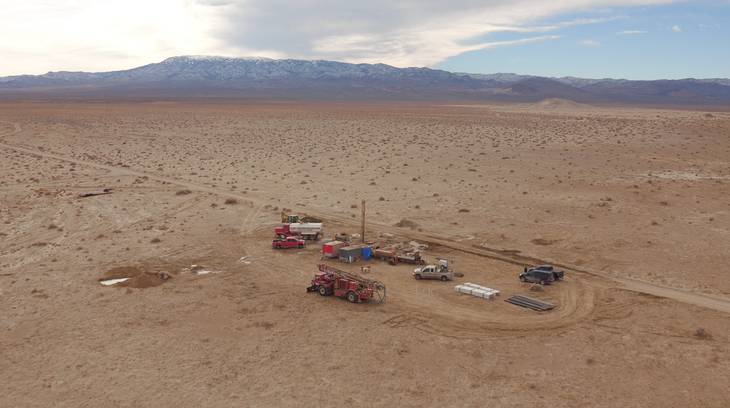
Canada-based Pure Energy Minerals is drilling near Tonopah to test the concentration of lithium in the area’s groundwater. The company is working to bring a new lithium extraction operation online in Nevada.

Canada-based Pure Energy Minerals drills to test lithium levels in the groundwater near Tonapah. Photo/Provided

By Daniel Rothberg, Las Vegas Sun

About five years ago, prospectors rushed to Nevada seeking a key component of the batteries that power the modern economy, one reliant on cellphones and laptops.

The rush made sense, at first. The state was home to the only active lithium extraction operation in North America. Unlike in other regions with known lithium deposits, like South America and Australia, Nevada’s deposits are easier to reach for executives at mining companies, most of which are headquartered in Canada. The state also has a stable regulatory process.

But when it comes to lithium, Nevada has been a double-edged sword. The quality of the lithium here is believed to be higher than in other areas, but the concentration of it is lower, making it more difficult to obtain large quantities through conventional extraction methods.

Read the whole story


EDC supes side with developer, not residents

This is a rendering of Dollar General that will face Main Street in Georgetown, though there is no entrance here.

This is a rendering of Dollar General that will face Main Street in Georgetown, though there is no entrance here.

“Like sex on an elevator, this project is wrong on so many levels.”

                                                                                                                         –Ron Sheckler, engineer

By Joann Eisenbrandt

PLACERVILLE – The El Dorado County Board of Supervisors chambers was filled April 5 with residents of Georgetown and surrounding communities who had come to show their disapproval of the project that would allow construction of a Dollar General store on Main Street in downtown Georgetown.

They left even more frustrated after the board voted 4-1 to allow the store to move in.

Who is Dollar General?

Dollar General is a national chain offering lower-priced general merchandise and groceries in thousands of stores throughout the country, many of them situated in small rural communities like Georgetown. Their proposal to construct a 9,100 square-foot store on three combined parcels on Main Street reached the final step in the county approval process Tuesday. It was originally approved at staff level by El Dorado County Development Services Director Roger Trout. That approval was appealed to the Planning Commission. When the Planning Commission denied the appeal, that decision was appealed to the Board of Supervisors.

Does it fit in historic Georgetown?

There are several distinct layers to this controversial project. First, as evidenced by the impassioned pleas of residents to the board this week, is the appropriateness of the project at the proposed location. Georgetown is a historic former mining community located in one of the county’s Rural Centers between Placerville and Auburn. Board-adopted Historic Design Guidelines say that new buildings in historic areas such as Georgetown should “generally conform to the types of architecture prevalent in the gold mining areas of California during the period of 1850 to 1910.”

County planning staff found that the Dollar General project did “substantially conform to the HDG and would be compatible with the surrounding residential, community, park, and commercial uses within the Georgetown Main Street commercial area.” Dollar General responded to citizen concerns about the building design, changing it a number of times.

For many in Georgetown, however, that wasn’t enough. Dave Souza, of the Georgetown Preservation Society, who filed the appeal of the Planning Commission’s approval of the project, expressed the view of many when he said, “Put it somewhere else, just not on Main Street.”

One area resident characterized the design changes this way: “It’s like putting lipstick on a pig.”

At 9,100 square feet, the building is almost twice the size of the largest building in the area, the Georgetown Post Office located directly behind the site. The remainder of Main Street is dotted with a mix of historic buildings and residences from the Gold Rush era.

May Harms of Garden Valley said emphatically, “We don’t want Dollar General housed in its fake Gold Rush building.”

Because of its size the building had to be configured with its public entrance on the side of the building, unlike other existing buildings that open directly onto Main Street. A loading dock, trash enclosure and truck turnaround area will face Main Street.

Janie Johnston expressed the concern that, “many residents might not realize that we will be looking at a loading area and a trash collection area.”

Speakers told the board this project would forever alter the historic Gold Rush ambience and character of Georgetown; those things that make it a special place to live and which draw tourists to come and visit. Kat Mendenhall, an active member of what’s known as the Divide community, acknowledged that Georgetown has struggled economically but felt Dollar General would not be a positive economic addition. She told the supervisors, “People don’t come here to see what is new. They come here to see what is old.”

A number of speakers referenced the generations-long residency of their families in the area. “It’s a matter of the heart. The project may be legal, but for all the commenters it’s like stabbing all their relatives in the heart,” Ken Deibert of Garden Valley told the board.

Another tearful commenter said, “It would break my heart if this went into our town.”

Economic impacts of the project

Sabrina Teller, an attorney from Remy, Moose, Manley who represents the project applicant Simon CRE, pointed to economic studies done by Dollar General that showed it will be an economic boost to the community, saying, “It won’t (negatively) affect the economy of the community.”  Seven to 10 full- and/or part-time jobs will be created.

Leon Alevantis, who owns the historic Schmeder House and American River Inn properties directly across Main Street from the proposed site, disagreed, saying these properties will be most affected.  His home and others in the area are currently being used as residences, but are actually zoned commercial.

“My property would have to be changed to commercial (use) because I could no longer use it as residential,” he said, adding, “This is probably the best looking Dollar General in the country, but the footprint is not consistent with the size of the surrounding historic buildings.”

The only speaker during the public comment portion of the meeting that spoke in favor of the project was El Dorado County Chamber CEO Laurel Brent-Bumb.

“Dollar General is trying to make the project fit into the surrounding area,” she told the board. “It provides new opportunities for the community – jobs and the availability of products.”

An audience member responded vocally to Brent-Bumb’s comments, “Do you own property in Georgetown?”

Environmental issues

In addition to the emotional “compatibility” issue, there is a second, more technical layer. Were the environmental impacts of this project adequately examined and were sufficient mitigation measures proposed for such impacts that would reduce them to “less than significant”? The California Environmental Quality Act (CEQA) lays out the requirements for studying the environmental impacts of projects. The more significant the potential impacts, the more complex environmental documentation that is required. The county prepared a mitigated negative declaration saying that environmental impacts were reviewed and all of them could be reduced to “less than significant” through a variety of mitigation measures.

If such impacts cannot be reduced to insignificance, then CEQA requires that a more intensive environmental impact report be prepared. At the beginning of the meeting, Trout addressed this question saying that that county staff believes all CEQA questions had been adequately addressed and that everything was “done appropriately.” He recommended that the board adopt the Mitigated Negative Declaration and mitigation measures, the mitigation monitoring program and deny the appeal. (The entire Dollar General project approval process is explained in more detail in put in link to former article here if you want.)

While CEQA does not address economic impacts of a project per se, it does address the environmental consequences if negative economic impacts of a project then lead to actual blight such as empty abandoned buildings.

Carolyn O’Conner told the supervisors, “It’s ludicrous for you to rubber stamp this blight in that beautiful area. It will bring down property values. It’s imperative to consider that we don’t want it. Take into consideration what we think should be done.”

Ron Sheckler, who filed an earlier complaint with the federal EPA Wetlands Division and a complaint with the U.S. Army Corps of Engineers, stated that the size of the wetlands was inaccurately described in the mitigated negative declaration, being larger than the size allowed for an automatic exemption. Wetlands on the property will be filled in as part of the project. They drain from the property into Empire Creek, which then drains into the American River. Sheckler, an engineer, who also contacted the California State Division of Mines and Geology, raised concerns about a mine ventilation shaft that opens just outside the property line, but which might lead to other mining tunnels underneath the property. He asked for a mine engineering study to be done to determine exactly what is underneath the property.

Ed Hawkins referenced the water than runs through the property which he says the county documents referred to as “storm water,” but which is actually part of Empire Creek. In addition to concerns over excessive runoff from the large roof and the additional impervious surface of the parking lot, Hawkins noted that under the project design, sewer effluent will be dripping into the soil just feet above the creek. He asked the board to come down on “the side of caution” and require a full EIR to analyze this and all the other potential environmental impacts.

The adequacy of the septic system was brought up at earlier meetings on the project and was raised again on April 5. Sue Taylor of Save Our County pointed to the fact that the project requires an advanced septic system. Taylor added that Greg Stanton, county Environmental Health Division director, had said the proposed system had not yet been approved and she thought that if the project is approved now, it will be a violation of General Plan requirements. Stanton told the board that effluent will be distributed by a drip irrigation field and, “will be disposed of properly and is a cleaner effluent.” The county will monitor the system once a year.

Ron Crone, former postmaster of the Georgetown Post Office, noted that when the post office was moved to its current site in the mid-1980s a full EIR was required. “They found that the wetlands were a possible red-legged frog habitat, which is a federally-protected endangered species.” The post office, he added, “Had to put in a mound waste system with no leach lines. I can’t understand how this (Dollar General) septic would comply.” The mine ventilation shaft was also addressed in the post office EIR. Crone believes it was “part of the Woodside Mine. I think some of the shafts go under Dollar General.”

The board reviews the process

Following the public comment session, the board asked questions of staff regarding the process that led up to this point. District 2 Supervisor Shiva Frentzen asked, “What standards are we using for approving this project?” Frentzen expressed her concerns over the possibility of extensive mining tunnels under the property. “We need to dig deeper into that issue,” she said, “An EIR would address those concerns.”

District 5 Supervisor Sue Novasel asked Roger Trout four questions: Does the project violate CEQA? Does the project violate the General Plan or the Zoning Ordinance? Have all the comments to the project been addressed? Did (Planning Commissioner Brian) Shinault have a conflict of interest?

Shinault, an architect, assisted the project proponent with the redesign of part of the building roofline, which the latest appeal termed a “conflict of interest.” Trout answered no to all four questions.

Novasel responded, “The emotional testimony is different than what the appeal is about. It is about the technical issues.”

Board chairman Supervisor Ron Mikulaco of District 1 asked Trout to go over the entire county approval and subsequent appeals process. Following Trout’s explanation, Mikulaco said, “This (project) was contemplated as part of the 2004 General Plan. (The site) is zoned commercial … this is a commercial project and I’ll look at it that way. I’m not a social engineer.” Mikulaco later added, “Right now there are three empty lots with nothing there. If we denied this, there’s going to be nothing there on one of the few commercial properties in the area. If you deny this, in 10 years you will still have nothing.”

Almost as one, the audience responded, “That’s fine with us.”

The last supervisor to speak was District 4 Supervisor Michael Ranalli. Georgetown is located in District 4. Ranalli asked project proponents a series of pointed questions he said “need to be asked and answered even if they are outside the scope of our decision.”  “Why is Dollar General proposing this site,” Ranalli asked Sabrina Teller. “How did we get to this point? What role did government play?”

Teller responded that she didn’t represent Dollar General, but represents “the buyer that will be the landlord for Dollar General. I am a CEQA attorney.” Teller did note, however, that Dollar General saw an “untapped economic niche and demand,” adding that Dollar General “is not a Dollar Tree. It’s not a trinket store. It’s a grocery store.”

Ranalli noted that the location was selected as early as 2012. Asked later by Lake Tahoe News if the process could have been stopped sooner before Dollar General became so “invested,” he responded, “Only if prior policymakers knew it was being contemplated. I was sworn in in January 2015, and Dollar General already had a contract for the property and had done all their environmental reports. Policymakers wouldn’t have known until an application was actually given to planning.” Ranalli asked Deputy County Counsel David Livingston about the option of a new location.

“Do we have the latitude to require them to move?” Livingston replied, “The short answer is no … if (the project) is consistent with the General Plan, it is not for you to play favorites on who uses the site.”

Asked if the applicant would consider doing a full EIR, Teller responded, “No, we won’t voluntarily do one. The documents show that nothing more than the mitigated negative declaration is required.”

The board decision

Supervisor Novasel commented that she was “comfortable with the design,” and moved approval of the project and denial of the appeal. District 3 Supervisor Brian Veerkamp seconded the motion. Supervisor Frentzen commented, “I don’t see a single person here to support this including the Divide chamber. We need to bring tax dollars, but this could also put smaller stores out of business and will totally change the environment of the small community. There are some areas where you need to honor the locals.”

Novasel’s motion passed 4-1 with Frentzen voting no.

After the meeting, many present expressed surprise that Ranalli had not “stood up for Georgetown” and joined Frentzen in voting no. Ranalli later told Lake Tahoe News, “I believe we are facing a lawsuit on either side. I swore to follow the law. In my research I found legal precedents that say a county can’t arbitrarily exclude a specific retail store. I could have hidden behind three other votes and copped out, but I didn’t. I am proud of them standing up for their community. I didn’t think (voting no) was the right thing to do based on the information they gave us. If I had guessed wrong, I would have obligated the citizens of the county to a lawsuit with a national firm. Most everybody said we don’t want it here, but based on the law that’s not a legal defense.”

Those not satisfied with the board’s decision have 30 days from the filing of a notice of determination to file a lawsuit based on the project’s specific failures to meet CEQA requirements.



Air pollution a silent killer — here and worldwide


Smoke from outside the Tahoe basin is often a source of air pollution. Photo/LTN file

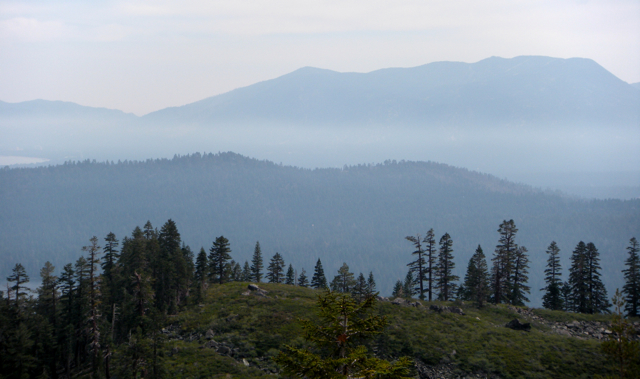
Smoke from fires outside the Tahoe basin is an uncontrollable source of air pollution. Photo/LTN file

By Linda Fine Conaboy

RENO – “What you can’t see can kill you” was part of the message delivered this week by an expert in air pollution.

“Our air quality depends on the time of year. During wildfires and winter inversions, it’s awful,” Heather Holmes, an assistant professor in the Departments of Physics and Atmospheric Sciences at UNR, said April 3 during a talk the Galena Creek Visitor Center.

Heather Holmes

Heather Holmes

In the West, forest fires are a prime source of air pollution. In Reno and in Salt Lake City where Holmes earned her master’s and doctorate degrees at the University of Utah, temperature inversions, especially in the winter, can wreak havoc as they have their way with the air people breathe.

However, she said Reno is a poster child compared to some cities in Asia—think Beijing and Shanghai.

Holmes became fascinated by indoor and urban air pollution led her to conduct studies with others along the Mexican border in the town of Nogales, as well as in Bangladesh.

In Mexico, the team of researchers studied the effects of cooking indoors on wood burning stoves.

“Basically, in Mexico, we did surveys asking people about their health and quantifying the air pollution levels indoors. We found that children in Nogales had increased rates of asthma,” Holmes said.

But because of little medical care, the undiagnosed asthma was chalked up to repeated, simple colds, she said.

Having that experience led her to Bangladesh, a country of nearly 170 million, where she combined forces with another professor doing water studies. They built an investigative team that was intent upon learning even more about the harmful effects indoor cooking has on humans, especially women, who in Bangladesh do most of the familial food preparation.

They found that these women suffered appalling health, almost as if they smoked cigarettes. It’s easy to see why considering their fuel sources include cow dung, trash loaded with chemicals, plastics, tires and whatever else they can find to burn.

More than 4 million Bangladeshis die each year from exposure to indoor air pollution, and using spirometers, instruments necessary to measure lung function, the team found that as the air quality got worse, lung function decreased.

Globally, Holmes said, the fact remains that the largest environmental risk factor is pollution.

The United States is not without its inherent pollutants, and now people are becoming aware of them. In Washoe County, pollutants that are measured at various sites within the county including at Lake Tahoe include:

·      Particulate matter such as dust, soot and unburned fuel suspended in the air. Sources can be wood stoves, industry, construction, street sand and open burning.

·      Sulfur dioxide, a gas that is invisible and has a nasty, sharp smell. Volcanoes and fossil fuel combustion produce sulfur dioxide, but according to Holmes, about 99 percent of the sulfur dioxide in air comes from human sources. It can worsen respiratory disease and can aggravate existing heart disease.

·      Nitrogen oxides, poisonous gases that can be sourced from fossil fuels and industrial equipment. They are harmful to the lungs.

·      Carbon monoxide, an odorless gas emitted from combustion. Sources include cars, wood stoves, open burning and industry. Can cause dizziness, headaches, nausea and in high doses, death.

·      Ozone. Can be caused by autos, power plants and industry. Ozone can be the source of irritated eyes, noses, respiratory systems and throats. Especially bad for people with chronic heart and lung disease.

·      Relative humidity, wind direction, wind speed and ambient temperature are also measured by Washoe County and help determine amounts of pollutants in the air.

Since wood stoves can be sources of pollution, Washoe and El Dorado counties have a wood stove exchange and rebate program.

Go online, type in a ZIP code to find out what is happening air quality-wise in that location. The National Oceanic & Atmospheric Administration site also have information. During fires websites for the counties in the Tahoe basin and surrounding region often have air quality information that lists health advisories.