World’s powers worried water is running out

By Nathan Halverson, Reveal

Secret conversations between American diplomats show how a growing water crisis in the Middle East destabilized the region, helping spark civil wars in Syria and Yemen, and how those water shortages are spreading to the United States.

Classified U.S. cables reviewed by Reveal from the Center for Investigative Reporting show a mounting concern by global political and business leaders that water shortages could spark unrest across the world, with dire consequences.

Many of the cables read like diary entries from an apocalyptic sci-fi novel.

“Water shortages have led desperate people to take desperate measures with equally desperate consequences,” according to a 2009 cable sent by U.S. Ambassador Stephen Seche in Yemen as water riots erupted across the country.

On Sept. 22 of that year, Seche sent a stark message to the U.S. State Department in Washington relaying the details of a conversation with Yemen’s minister of water, who “described Yemen’s water shortage as the ‘biggest threat to social stability in the near future.’ He noted that 70 percent of unofficial roadblocks stood up by angry citizens are due to water shortages, which are increasingly a cause of violent conflict.”

Seche soon cabled again, stating that 14 of the country’s 16 aquifers had run dry. At the time, Yemen wasn’t getting much news coverage, and there was little public mention that the country’s groundwater was running out.

These communications, along with similar cables sent from Syria, now seem eerily prescient, given the violent meltdowns in both countries that resulted in a flood of refugees to Europe.

Groundwater, which comes from deeply buried aquifers, supplies the bulk of freshwater in many regions, including Syria, Yemen and drought-plagued California. It is essential for agricultural production, especially in arid regions with little rainwater. When wells run dry, farmers are forced to fallow fields, and some people get hungry, thirsty and often very angry.

The classified diplomatic cables, made public years ago by Wikileaks, now are providing fresh perspective on how water shortages have helped push Syria and Yemen into civil war, and prompted the king of neighboring Saudi Arabia to direct his country’s food companies to scour the globe for farmland. Since then, concerns about the world’s freshwater supplies have only accelerated.

It’s not just government officials who are worried. In 2009, U.S. Embassy officers visited  Nestle’s headquarters in Switzerland, where company executives, who run the world’s largest food company and are dependent on freshwater to grow ingredients, provided a grim outlook of the coming years. An embassy official cabled Washington with the subject line, “Tour D’Horizon with Nestle: Forget the Global Financial Crisis, the World Is Running Out of Fresh Water.”

“Nestle thinks one-third of the world’s population will be affected by fresh water scarcity by 2025, with the situation only becoming more dire thereafter and potentially catastrophic by 2050,” according to a March 24, 2009, cable. “Problems will be severest in the Middle East, northern India, northern China, and the western United States.”

At the time of that meeting, government officials from Syria and Yemen already had started warning U.S. officials that their countries were slipping into chaos as a result of water scarcity.

By September 2009, Yemen’s water minister told the U.S. ambassador that the water riots in his country were a “sign of the future” and predicted “that conflict between urban and rural areas over water will lead to violence,” according to the cables.

Less than two years later, rural tribesmen fought their way into Yemen’s capital, Sanaa, and seized two buildings: the headquarters of the ruling General People’s Congress and the main offices of the water utility. The president was forced to resign, and a new government was formed. Butwater issues continued to amplify long-simmering tensions between various religious groups and tribesmen, which eventually led to a full-fledged civil war.

Reveal reviewed a cache of water-related documents that included Yemen, Nestle and Saudi Arabia among the diplomatic documents made public by Wikileaks in 2010. Thomas Friedman, a columnist for The New York Times, found similar classified U.S. cables sent from Syria. Those cables also describe how water scarcity destabilized the country and helped spark a war that has sent more than 1 million refugees fleeing into Europe, a connection Friedman has continued to report.

The water-fueled conflicts in the Middle East paint a dark picture of a future that many governments now worry could spread around the world as freshwater supplies become increasingly scarce. The CIA, the State Department and similar agencies in other countries are monitoring the situation.

In the past, global grain shortages have led to rapidly increasing food prices, which analysts have attributed to sparking the Arab Spring revolution in several countries, and in 2008 pushed about 150 million people into poverty, according to the World Bank.

Water scarcity increasingly is driven by three major factors: Global warming is forecast to create more severe droughts around the world. Meat consumption, which requires significantly more water than a vegetarian or low-meat diet, is spiking as a growing middle class in countries such as China and India can afford to eat more pork, chicken and beef. And the world’s population continues to grow, with an expected 2 billion more stomachs to feed by 2050.

The most troubling signs of the looming threat first appeared in the Middle East, where wells started running dry nearly 15 years ago. Having drained down their own water supplies, food companies from Saudi Arabia and elsewhere began searching overseas.

In Saudi Arabia, the push to scour the globe for water came from the top. King Abdullah decreed that grains such as wheat and hay would need to be imported to conserve what was left of the country’s groundwater. All wheat production in Saudi Arabia will cease this year, and other water-intensive crops such as hay are being phased out, too, the king ruled.

A classified U.S. cable from Saudi Arabia in 2008 shows that King Abdullah directed Saudi food companies to search overseas for farmland with access to freshwater and promised to subsidize their operations. The head of the U.S. Embassy in Riyadh concluded that the king’s goal was “maintaining political stability in the Kingdom.”

U.S. intelligence sources are quick to caution that while water shortages played a significant factor in the dissolution of Syria and Yemen, the civil wars ultimately occurred as a result of weak governance, high unemployment, religious differences and the wars in Iraq and Afghanistan, in addition to water shortages.

For instance, the state of California has endured a record drought without suffering an armed coup to overthrow Gov. Jerry Brown.

But for less stable governments, severe water shortages are increasingly expected to cause political instability, according to the U.S. intelligence community.

In a 2014 speech, U.S. Director of National Intelligence James Clapper said food and water scarcity are contributing to the “most diverse array of threats and challenges as I’ve seen in my 50-plus years in the intel business.

“As time goes on, we’ll be confronting issues I call ‘basics’ resources – food, water, energy, and disease – more and more as an intelligence community,” he said.

These problems are not just happening overseas, but already are leading to heated political issues in the United States. In the western part of the country, which Nestle forecast will suffer severe long-term shortages, tensions are heating up as Middle Eastern companies arrive to tap dwindling water supplies in California and Arizona.

Almarai, which is Saudi Arabia’s largest dairy company and has publicly said it’s following the king’s directive, began pumping up billions of gallons of water in the Arizona desert in 2014 to grow hay that it exports back to the Middle East. Analysts refer to this as exporting “virtual water.” It is more cost effective to use the Arizona water to irrigate land in America and ship the hay to Saudi Arabia rather than filling a fleet of oil tankers with the water.

Arizonans living near Almarai’s hay operation say their groundwater is dropping fast as the Saudis and other foreign companies increase production. They are now worried their domestic wells might suffer the same fate as those in Syria and Yemen.

In January, more than 300 people packed into a community center in rural La Paz County to listen to the head of the state’s water department discuss how long their desert aquifer would last.

Five sheriff’s deputies stood guard at the event to ensure the meeting remained civil – the Arizona Department of Water Resources had requested extra law enforcement, according to county Supervisor Holly Irwin.

“Water can be a very angry issue,” she said. “With people’s wells drying up, it becomes very personal.”

Thomas Buschatzke, Arizona’s water director, defended the Saudi farm, saying it provides jobs and increases tax revenue. He added that “Arizona is part of the global economy; our agricultural industry generates billions of dollars annually to our state’s economy.”

But state officials admit they don’t know how long the area’s water will last, given the increased water pumping, and announced plans to study it.

“It’s gotten very emotional,” Irwin said. “When you see them drilling all over the place, I need to protect the little people.”

After the meeting, the state approved another two new wells for the Saudi company, each capable of pumping more than a billion gallons of water a year.

Back in Yemen in 2009, U.S. Ambassador Seche described how as aquifers were drained, and groundwater levels dropped lower, rich landowners drilled deeper and deeper wells. But everyday citizens did not have the money to dig deeper, and as their wells ran dry, they were forced to leave their land and livelihoods behind.

“The effects of water scarcity will leave the rich and powerful largely unaffected,” Seche wrote in the classified 2009 cable. “These examples illustrate how the rich always have a creative way of getting water, which not only is unavailable to the poor, but also cuts into the unreplenishable resources.”


Conner seeks equal treatment from SLT staff

By Kathryn Reed

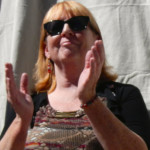
An El Dorado County Superior Court judge inadvertently limited South Lake Tahoe Councilwoman JoAnn Conner’s interaction with city staff.

Judge Steve Bailey on April 12 said email is the only way Conner, when acting as a citizen and not an elected official, may contact any employee at the city. Prior to then she was allowed to call, even see some of them in person.

JoAnn Conner

JoAnn Conner

Jacqueline Mittelstadt, Conner’s attorney, requested the ex parte hearing. Such a hearing must be heard within 24 hours and is usually done so in more life and death situations, or something dire.

For Conner, the urgency revolved around an event she is putting on at the city’s rec center. Her contention was the city has been making it difficult for her to do her regular job.

Bailey agreed Conner should not be hindered from making a living. His answer was for Conner to be allowed to contact department heads by email as well as the city attorney and city manager.

While the expansion to department heads is new since City Manager Nancy Kerry issued an edict last fall banning Conner from interacting with anyone but herself or the city attorney, the irony is Kerry is by default the head of the recreation department. This is the sector of the city Conner regularly engages because it’s where she stages events.

Bailey cited how limiting Conner’s ability to make a living would be relegating her to a second-class citizen and that he found it “troubling” the city would dictate with whom residents could speak.

In an odd discourse, Bailey dropped the names Duane Wallace and Dave Borges, two well-known South Lake Tahoe residents, asking what if they were denied the ability to do their jobs because the city dictated who they could interact with.

(Bailey hosted a political fundraiser earlier this month for a judicial candidate at which Wallace, Borges, Conner and Mittelstadt were in attendance.)

What was missing from Tuesday’s hearing was any evidence supporting or refuting Conner’s claims. This is normal in this type of procedure, but it left Bill Chisum, outside counsel for the city, with little room to make an argument.

Documents were submitted by the city that did not appear to have been relevant at this juncture.

In Kerry’s declaration to the court she outlined how it’s true Conner is treated differently – she has her emails and requests responded to in a matter of hours instead of days, which is more customary.

The defense counsel wrote, “It is difficult to understand petitioner’s complaints when she fails to take simple acts like picking up the application packet.”

An evidentiary hearing is scheduled for late May. At that time the city’s request to have Mittelstadt dismissed because of a conflict of interest will also be heard.

The whole legal brouhaha started last year with the other four council members censuring Conner as well as the city manager’s ruling to limit Conner’s access to staff. These decisions came about because city staff felt harassed by Conner; and others – including her council colleagues – were tired of verbal abuse.

The judge on Tuesday told Conner not to harass anyone, not to destroy city property, no stalking and more than a half dozen other no-no’s when it came to her behavior.


La Niña prediction bad news for Calif.

By Eric Holthaus, Slate

With a monstrous and record-setting El Niño on the wane, the implications of its disastrous worldwide consequences are starting to settle in. But there’s new evidence that, on its heels, a potentially strong La Niña could emerge later this year—bringing with it a renewed stretch of extreme weather.

Last week, the National Multi-Model Ensemble, a blend of the most reliable seasonal forecasts available, showed the clearest signal yet that tropical Pacific waters will cool rapidly over the next six months, likely ushering in La Niña conditions.

La Niñas are typically bad news for California, and this coming winter shouldn’t be any different: All seven components of the NMME are pointing toward a below-normal start to this winter’s rainy season there, and continued pressure from global warming will ensure that storing snow will be especially challenging this year too.

Read the whole story


Pot smelling like big business in California

By Ian Lovett, New York Times

After decades of thriving in legally hazy backyards and basements, California’s most notorious crop, marijuana, is emerging from the underground into a decidedly capitalist era.

Under a new state law, marijuana businesses will be allowed to turn a profit — which has been forbidden since 1996, when California became the first state to legalize medical cannabis — and limits on the number of plants farmers can grow will be eliminated.

The opening of the marijuana industry here to corporate dollars has caused a mad scramble, with out-of-state investors, cannabis retailers and financially strapped municipalities all racing to grab a piece of what is effectively a new industry in California: legalized, large-scale marijuana farming.

Read the whole story


STHS teacher elected to state union board

By Kathryn Reed

The classroom will never be far from Mike Patterson no matter the physical distance. That is because as a member of the California Teachers Association board he intends to put students at the forefront.

Patterson, who started teaching auto shop at South Tahoe High School in 1988, begins a three-year tenure on the CTA board June 26.

Mike Patterson

Mike Patterson

“I’m going to be the first career tech education teacher on the CTA board in a very long time,” Patterson told Lake Tahoe News. “I’m a firm believer that for the last 20 years in the state of California we have been dismantling the career tech programs. It is a huge disservice to the students of California, and the economy and the businesses in California because we are not training students for good paying careers.”

He had high praise for STHS, where so much emphasis is placed on CTE. But this is an anomaly.

Patterson intends to work with the governor and lawmakers to make career tech ed a priority throughout the state.

It was on Sunday that Patterson found out the state board position was his. That was the last day people could apply for the position. He was the only one to do so, which is not uncommon.

CTA has 17 districts, with Patterson’s including at least part of 23 of the 58 California counties going from Tuolumne to the Oregon border, all east of the coast. Each district has about 14,000 members.

Technically he will remain an employee of Lake Tahoe Unified School District. CTA reimburses the district the cost of his salary and benefits. This could be for nine years if he were to be elected to two more terms, which would be the maximum allowed. He is the first LTUSD employee to be on the state CTA board.

Patterson’s route to this statewide position has been an evolution, having started in 1991 when he was elected vice president of the local teachers union. That same year he became president of the chapter.

“I’ve always been a strong believer that school districts are better when there are strong advocates looking out for teachers, students and the community. That was the driving force for getting involved in 1991,” Patterson said.  “I’ve always been interested in our political process. In the early ’90s I started a political action committee for our association to elect school board members over the years.”

What got him involved at the higher level about 17 years ago was frustration with the state council. There is one elected state council rep for about every 450 teachers. The representative for South Tahoe Educators Association got reassigned and staff at the state level weren’t responsive enough. That led Patterson to getting on the council.

“About 700 of us get together and we argue and debate and vote and decide what policy CTA as a statewide organization wants to have,” Patterson said.

He served for nine years, went off a term and is now completing another six years on the council.

Seven years ago he was elected to CTA’s statewide political action committee, and has been the president the last four years.

The new job will involve even more travel. While there will be days Patterson will be able to work from his home in Meyers, much of his will be on the road. District offices are in Sacramento, Chico, Redding and Yuba City. CTA headquarters are in Burlingame.

“I will be out working with local chapters that need help. They could need help because they are having disagreements with the school board, or superintendent or not able to get a bargaining agreement, or it could be an internal issue where members aren’t seeing eye-to-eye,” Patterson said. “I don’t think there will be an average day.”


Helping the next generation understand extreme risk

By Tim Hauserman, Adventure Sports Journal

“We are sick of going to funerals,” said John Walsh, a lifelong Tahoe local and former ski racer, lamenting the steady stream of Tahoe based athletes and adventurers (including his nephew) who died in recent years while pushing the envelope in dangerous sports.

Action sports filmmaker Steven Siig adds, “You never want to make that phone call that a friend has died.” He knows, he has made the call.

Walsh and Siig are part of a group of Tahoe locals who, fed up with the pain of losing a steady stream of great athletes and friends, have formed the Go Bigger Coalition. The group is attempting to discredit the prevailing wisdom that flying through the air 200 feet on skis is a worthy goal no matter what the risks, and emphasize the importance of being alive at 70 and enjoying the simple beauty of skiing every day.

Read the whole story


Nev. establishes ties with NASA for drone business

By Sean Whaley, Las Vegas Review-Journal

STEAD — Nevada and NASA announced last week they are now partners in the drone business.

Gov. Brian Sandoval and Frank Aguilera, deputy director of the Aerospace Systems Program at the NASA Ames Research Center in California, along with other officials, unveiled the new $400,000 NUANCE lab at Reno-Stead Airport north of Reno.

The Nevada Unmanned, Autonomous, and NextGen Collaborative Environment Lab will enable NASA researchers and students with UNR to create drone simulations. The new project is expected to get under way by the end of the month.

Read the whole story


EDC eager to make improvements in Meyers

El Dorado County wants to make improvements in  Meyers. Photo/LTN

El Dorado County wants to make upgrades in Meyers. Photo/LTN

By Kathryn Reed

El Dorado County is on course to make improvements to Meyers in regards to aesthetics and how the highway functions.

While Caltrans is the ultimate decision maker on what goes on with Highway 50, the county has some say about what occurs. The county is using its $61,000 federal On Our Way Grant to figure out how best to make the Meyers corridor – from Highway 89 to Pioneer Trail — look and function better.

The county isn’t doing this alone. Instead of having a public meeting to gather ideas, officials are going to engage the public at various locations.

Safety in terms of access to the magnet elementary school and crossing the highway are the county’s main concerns. Officials also want to make the section into more of a complete streets concept, which includes landscaping.

“We’ve been working with Caltrans really closely with all of this. They seem to be open to concepts, at least what we are talking about,” Brendan Ferry, county transportation guru, told Lake Tahoe News.

The county is focusing on how it might be able to improve the intersection at either Apache Avenue or Pioneer Trail. Caltrans is already planning to build a roundabout at highways 50 and 89.

The problem at Apache is that this is where so many kids cross to get to the elementary school. It’s unsafe, with people often going faster than the 45 mph posted speed limit. Pioneer Trail and the highway intersection have multiple issues – from being a bottleneck on busy days, to not being functional for those on foot or two wheels.

While Meyers is working under a community plan from 1993, much of what is in it and what has been proposed for the update involves creating more of a main street feel through town, improved accessibility and logical connectivity.

“These concepts exist whether the area plan moves forward or not,” Ferry said. That is why it is not a conflict for the county to proceed with plans even though it is working to update the area plan.

The county wants to identify a project soon so it can apply for a grant this summer. The grant, which is due in June, would be funded by the feds and funneled through Caltrans. If El Dorado were to get full funding for a project, it’s possible work could begin in 2017.

“We are just really excited to try to help improve Meyers, especially from safety and access issues,” Ferry said.

—–

Notes:

People will be soliciting comments about the county’s plans for Meyers on April 22 from 11:30am-1:30pm at Century 21; 3-4pm at the magnet school; 4:15-6:15pm at Lira’s.

There will be a booth at the Earth Day festival at Bijou Community Park from 10am-3pm where more comments will be solicited.

For more info, contact Brendan Ferry at brendan.ferry@edcgov.us.


Threats cast shadow over global travel industry

By Justin Bachman, Bloomberg

Travel executives should be a happy lot. A growing Chinese middle class is eager to see the world. Oil prices are stunningly low, leaving consumers more income to spend. A global economy demands we be on the move.

But more immediate threats overshadow the industry.

“The combination of global terrorism and a refugee crisis is creating an unprecedented crisis,” David Scowsill, chief executive of the World Travel & Tourism Council, said in a speech opening the group’s annual summit Wednesday. The council represents the largest travel companies and advocates for greater partnerships with government.

Europe is struggling to balance security and immigration amid a refugee disaster born of the Syrian civil war.

Read the whole story


Forest sees rebirth after devastating King Fire

By Hudson Sangree, Sacramento Bee

The day after an arsonist pleaded guilty to setting the massive King Fire in September 2014, dozens of volunteers gathered Saturday near Stumpy Meadows Lake to help bring the forest back to life.

The volunteers ranged from children to senior citizens. They were members of the Girl Scouts and Boy Scouts, the Auburn Kiwanis Club and an off-road-vehicle club, among others. They planted hundreds of pine seedlings in the popular Black Oak Campground, which was singed by the King Fire.

With another fire season looming in drought-stricken California, the landscape decimated by the nearly 98,000-acre King Fire in El Dorado and Placer counties is slowly coming back to life. Wildflowers are blooming in the blackened earth, and the long, arduous task of replanting a vast swath of the Eldorado National Forest is just beginning.

“The recent fires are horrible events, but they present a great restoration opportunity,” Maria Mircheva, executive director of the nonprofit Sugar Pine Foundation, said last week. The foundation, based in South Lake Tahoe, helped coordinate the recent volunteer effort, as it has in other fire zones.

Read the whole story