Working to preserve the night sky

By Kate Siber, Outdoor

On May 24, 2015, at 3am., filmmaker Ben Canales sat on a ridge overlooking the gleaming lights of Telluride, Colo. One by one, blocks of streetlamps winked off far below. Canales had convinced many residents to turn off their lights as part of a special event during Mountainfilm, the annual outdoors-focused movie festival. He also persuaded the town’s maintenance department to flip the switches to all of the municipal lights.

“No town has ever turned the lights off,” he says. “By doing this, it makes a statement that we control our technology. It’s here to serve us. We’re not in servitude of it.”

About 80 people gathered downtown in the middle of the night to experience a sliver of what every generation before our grandparents knew intimately as a birthright: darkness. It was a milestone in the growing movement to preserve the night sky.

By any estimate, it’s a losing battle. According to a study in Science Advances released this month, 99 percent of the population of the United States lives under a night sky polluted by artificial lights in places like parking lots, gas stations, streets, and backyards.

Read the whole story


New faces on DC school board, commission

By Kathryn Reed      

Term limits guaranteed the lake would have new representation on the Douglas County School District board. Voters had the choice of three men; now it’s down to two in November.

CPA Keith Byer of Glenbrook and retired teacher Michael Kiger of Stateline were the top vote getters June 14, with businessman Nicholas Shepack of Zephyr Cove taking third.

Byer (46.67 percent) and Kiger (30.34 percent) learned of the results when Lake Tahoe News called Tuesday night. Byer, a Republican, was woken up as he is in Portugal on vacation and deferred comment until later. Kiger, a Democrat, said, “It’s all about our students and that is the most important thing.”

Kiger came to the district about 35 years, having retired from Whittell High School as a math teacher about 12 years ago.

“One of the things I would like to stand for is I would like to have more communication from the board to the people in the community and to the parents because it is their school district,” Kiger told Lake Tahoe News.

School board members cannot serve more than 12 years. Cindy Trigg had been representing the area for three terms.

Teri Jamin was also forced out because of term limits. In many ways she was like a second rep for the lake because she knew the area so well based on the number of years she worked for the city of South Lake Tahoe’s planning department.

Running for her seat were Linda Gilkerson and Larry Lippmann. Lippman lost to Jamin in 2012. “That race will actually be on the November ballot, because it more than one candidate but less than twice the number of open positions,” Douglas County Clerk-Treasurer Kathy Lewis told Lake Tahoe News.

It was eight years ago that Greg Lynn and Dave Nelson faced each other in the June primary for District 1 commission seat. Lynn prevailed in 2008. This time Nelson came out on top, with 56.1 percent of the vote. He lost by 354 votes eight years ago and won by about 800 this time.

Nelson told Lake Tahoe News the budget would be his primary concern when he takes office in January.

As for the debacle going on with the Stateline sewer district and the county, he said someone should have been watching the situation closer so the problems didn’t exist today.

District 3 Commissioner Doug Johnson did on seek re-election. Vying for his seat were Carson Valley residents Larry Walsh and Frank Godecke. Walsh prevailed with 58.41 percent.

Douglas County received 4,695 ballots by mail before election day. There are 26,138 registered voters. Turnout was 34.5 percent Tuesday in the county, whereas primary election turnout in Nevada is usually about 20 percent.

A law passed in 2015 says if a race has candidates from only one party, the primary winner will be on the general election ballot, but only needs one vote to win. Where there is a candidate from two or more parties, there will be runoff in November.

The law also says that in nonpartisan races a candidate who receives more than 50 percent wins outright with no need to proceed to the general election.

In all, there were 32 positions up in Douglas County on Tuesday. Many were for water and sewer districts, or seats in the valley.

In other races affecting Lake Tahoe:

·      Kathy Lewis—unopposed for clerk-treasurer, incumbent.

·      Barry Penzel – unopposed District 5 supervisor, incumbent.

·      Karen Chessell – unopposed District 1 school board, incumbent

·      Neal Freitas – unopposed District 4 school board, incumbent.


Virtual reality may threaten Nev. brothel industry

By Daniel Rothberg, Las Vegas Sun

Electronics have treated Sheri’s Ranch well. The cathouse in Pahrump, which claims to be the “unofficial brothel of CES,” reports a 70 percent increase in business when tech employees roll into Las Vegas for the massive trade show each January.

But that cozy relationship might not last. Some in the brothel industry — Sheri’s included — have expressed concerns that virtual-reality porn, which offers an immersive 3D experience, could pose a threat to business. On its blog in December, Sheri’s Ranch wrote that the VR devices displayed at CES “may be one of the biggest challenges to the future of the legal prostitution industry.”

“How might this technology affect Nevada’s brothel industry in the next five to 10 years?” spokesman Jeremy Lemur asked. “Since virtual prostitution wouldn’t be illegal or unsafe because the participants aren’t really having sex, will a Nevada brothel’s secure, legal setting and reputation for an STD-free environment become irrelevant in the future world of VR technology?”

Read the whole story


Intrigue besets management of Tahoe sewer district

By Evan Maxwell, Reno Gazette Journal

A sewer district on the shore of Lake Tahoe is either a secretive organization controlled by powerful corporate interests or a completely transparent public service agency that has efficiently toiled for six decades to keep the lake pristine and crystal clear.

Or something in between.

Douglas County Sewer Improvement District 1 collects and treats commercial and residential sewage from casinos, hotels, resorts and 600 residences on the Nevada side of the lake.

After years of exceedingly quiet but apparently efficient operation, DCSID became embroiled last month in a dispute with Douglas County government that has now mushroomed.

The dispute involves the proper disposal of millions of gallons of sewage every day, all of which must be exported outside the Tahoe Basin.

However, the dispute now also involves a certain amount of political intrigue, “rogue citizens,” ethics complaints, anonymous legal clients represented by prominent attorneys, some of the biggest corporate names in Northern Nevada, and three state agencies.

Read the whole story


Forest ranger — not a job for the weak, timid

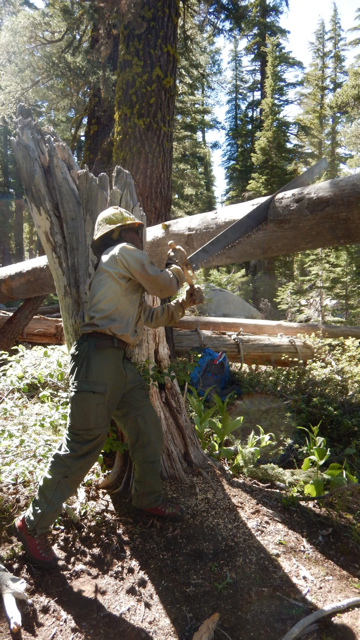
Seasonal forest rangers do a variety of work, including clearing the Pacific Crest Trail. Photo/Provided

Seasonal forest rangers do a variety of work, including clearing the Pacific Crest Trail. Photo/Provided

By Susan Wood

Being a seasonal ranger is no walk in the woods. It often involves hard physical labor.

U.S. Forest Service ranger is a coveted job, after all people apply by the thousands; a process that starts in January. The program runs from May to October.

While starting to inquire about the seasonal ranger program, longtime Lake Tahoe Basin Management Unit forester extraordinaire Don Lane asked this reporter, “Have you seen the movie ‘Walk in the Woods’?”

“Why, yes, I have,” adding the proverbial: “The book (by Bill Bryson) was better.”

What Lane was getting at is that perhaps his latest ranger recruits may want to see the film to get a glimpse of living in the wilderness and how some people behave.
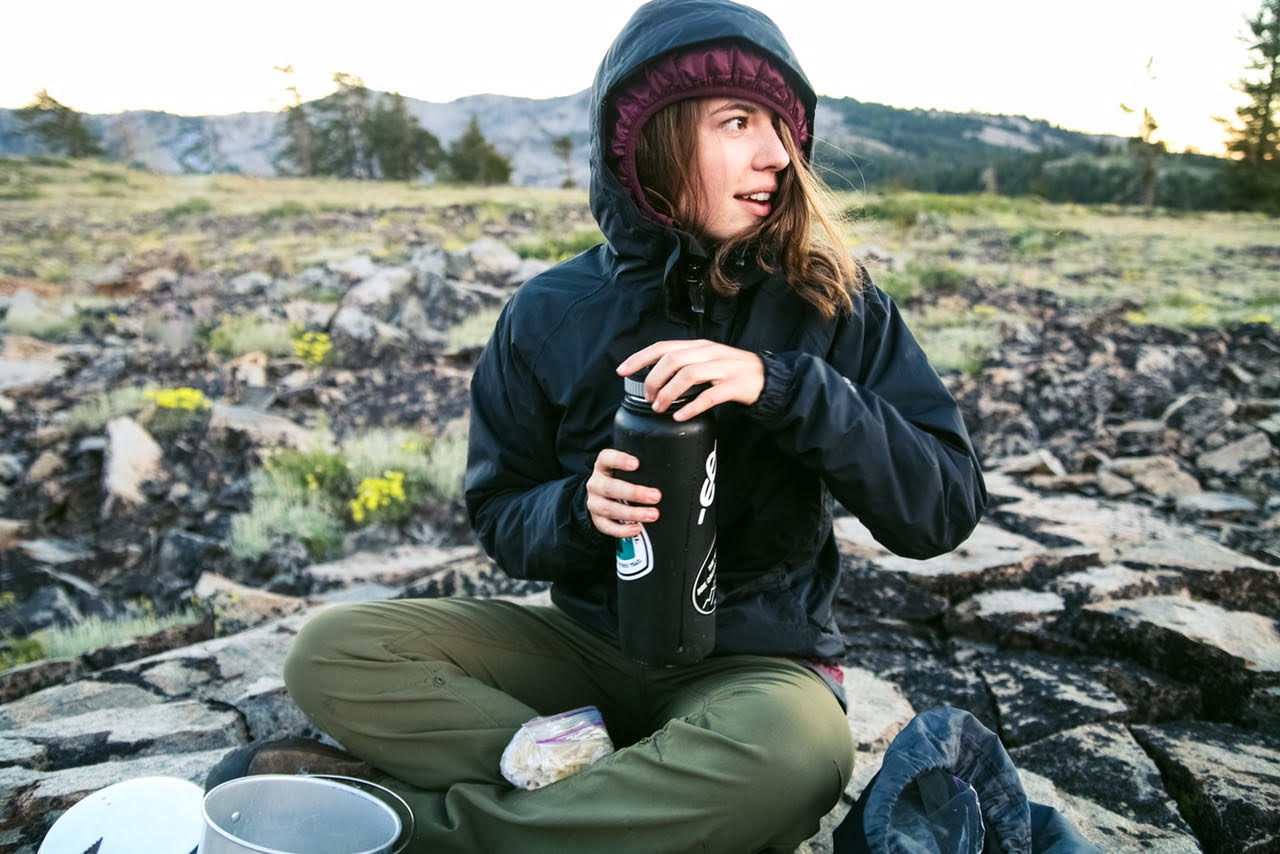
For ranger Miranda LeConte, interacting with people is her favorite part of the job. Photo/Provided

For ranger Miranda LeConte, interacting with people is her favorite part of the job. Photo/Provided

There are 18 rangers – two general foresters, nine Taylor Creek interpretive personnel and seven staffers in the wildland program. As the supervisory recreation forester, Lane takes the responsibility of nurturing the newbies seriously. There’s pride in that uniform, and it shows – even after 45 years with LTBMU.

“I have a responsibility to them. You have to inspire them, to motivate them and tell them the responsibilities. Once you put that badge on, people will react to it,” said the iconoclastic ranger to Lake Tahoe, who started with LTBMU before computers were installed. He recalled “the old days” when hiring recruits meant going through stacks of written applications – all diverse individuals with varied backgrounds and dreams.

What needed to be stressed is that the innate challenge to the seasonal work is staying committed. The schedule involves four 10-hour days a week.

With 5.7 million visitors descending on the jewel of the Sierra Nevada, the rangers are outnumbered in the Desolation Wilderness by one employee to 11,000 guests.
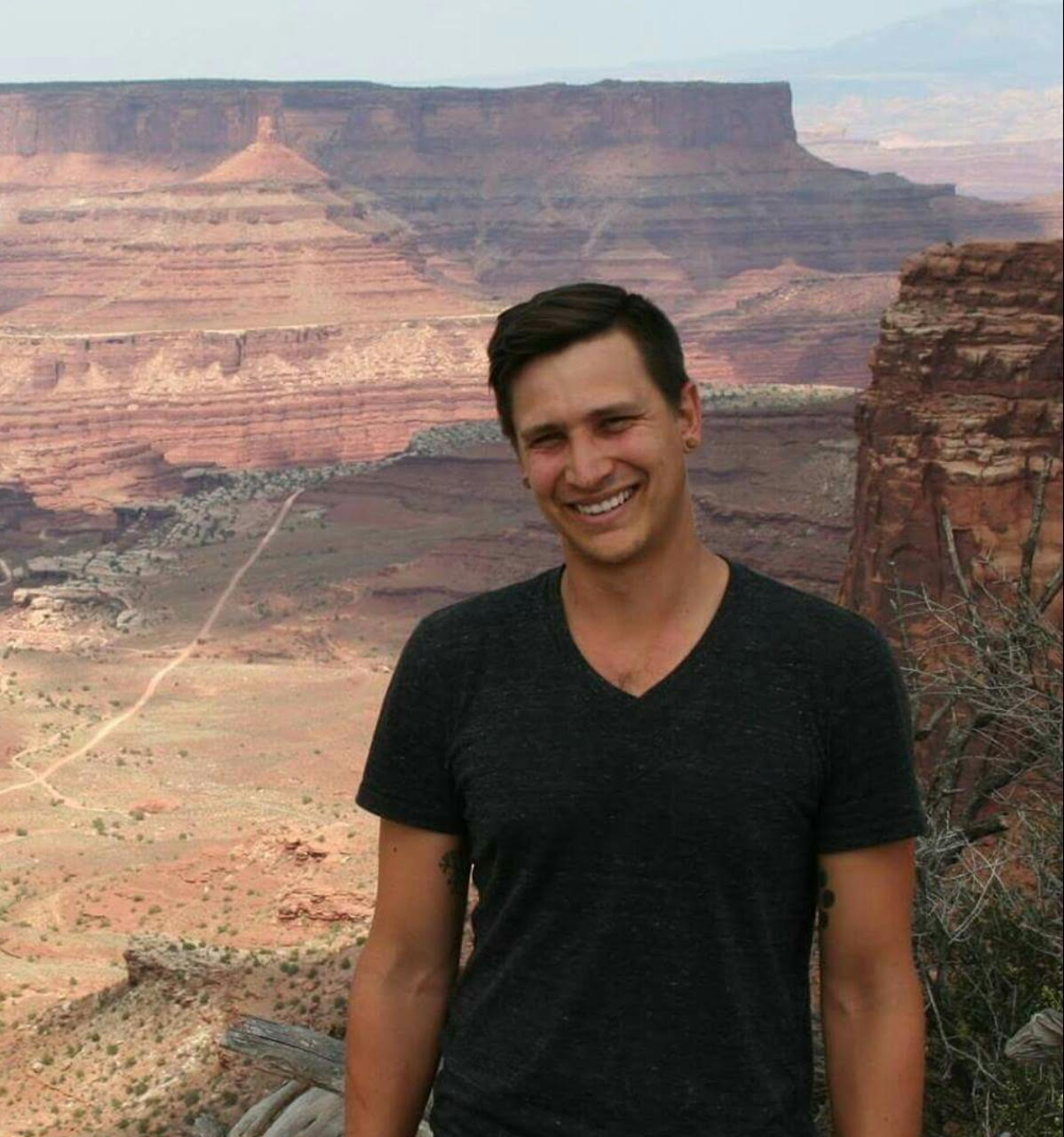
Brian Homberger, a native of Australia, is spending his summer as a ranger in Tahoe. Photo/Provided

Brian Homberger, a native of Australia, is spending his summer as a ranger in Tahoe. Photo/Provided

“It’s not what you do that’s necessary. It’s what you can contribute,” Lane told Lake Tahoe News. “This is a dedicated team of professionals. It’s a privilege to work with these rangers who want to live in the wilderness.”

The seasonal rangers have a multitude of duties, from trail or facility maintenance to working in interpretation at the Taylor Creek Visitors Center on the outskirts of Camp Richardson.

Lake Tahoe News was given the opportunity to speak with the four new seasonal rangers and their supervisor Chris Engelhardt, the wildland recreation area manager, on the day before National Trails Day about their moment of discovery when they decided to be a ranger.

“What I realized was wild with a big ‘W’ was not like any place on Earth. I was consumed. Once I learned about it, I took on the responsibility to take care of it,” Miranda LeConte said.
Chris Engelhardt, left, supervises the seasonal rangers in LTBMU. Photo/Provided

Chris Engelhardt, left, supervises the seasonal rangers in LTBMU. Photo/Provided

LeConte recalled working in 2013 at the Eldorado National Forest visitor center when she had the opportunity to take a day hike to a lake in the Desolation Wilderness.

“Once I put my feet in the water, it started for me,” she said.

From there, her calling resembled poetry in motion.

At age 23, the Camino resident studies environmental management in the winter. In summer, she’s a first time LTBMU ranger now going through an extensive training regimen. The training has recently involved going out in the woods and meeting up with people – her favorite part of the job.

“From those experiences, I can talk to the public and make contact, seeing why people choose to go into the wilderness,” she said.

This is Sam Yarbrough’s first season as a ranger. Photo/Provided

This is Sam Yarbrough’s first season as a ranger. Photo/Provided

There lies a delicate balance. An appreciation and respect may develop between backcountry enthusiasts, but at the same time, a challenge may arise if someone is wary of authority. Consequently, the job requires support of hikers and backpackers, but may also involve telling them they’re doing something wrong – whether consciously or unconsciously.

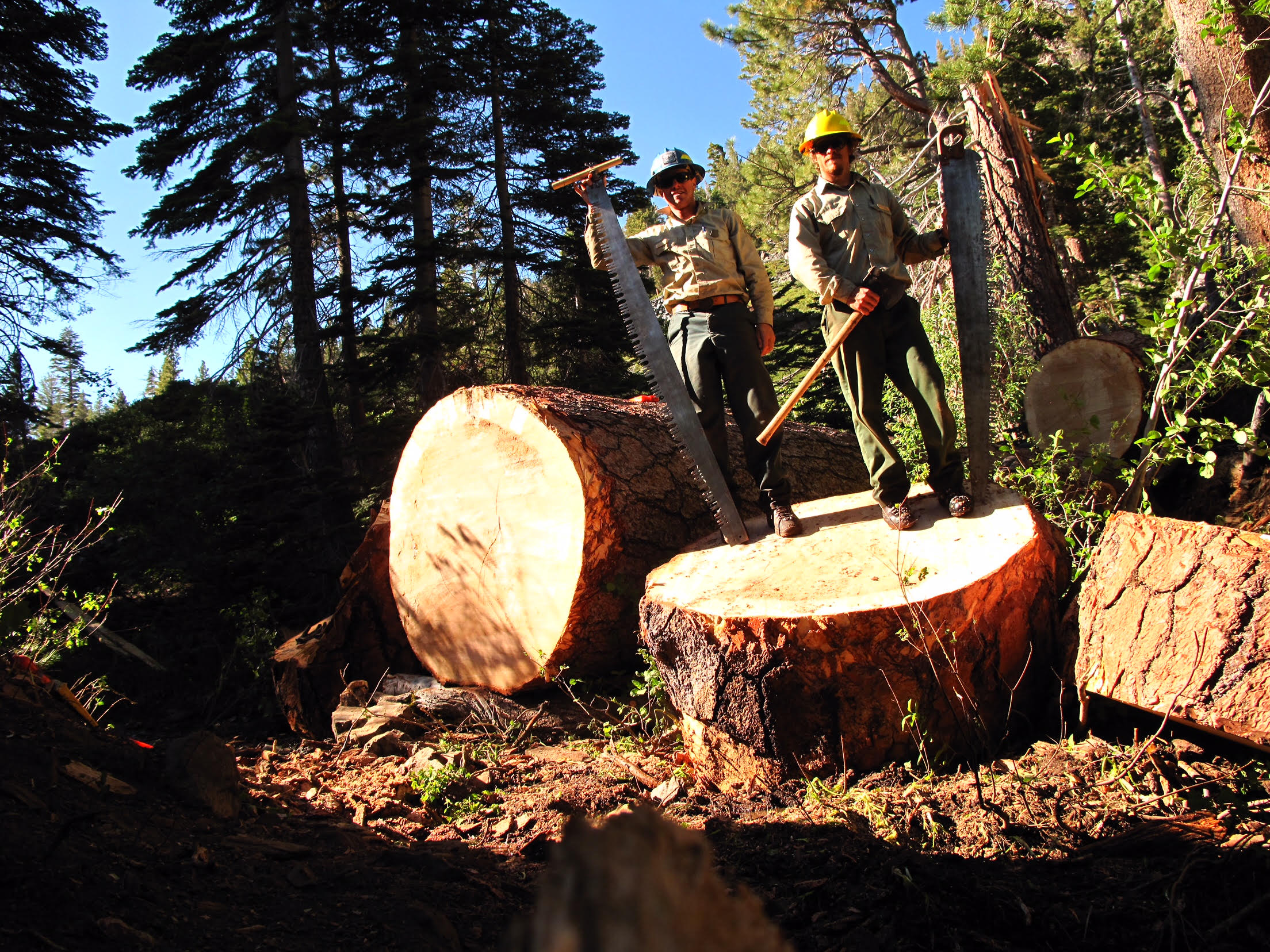
Inevitably, a kinship is created between the rangers. LeConte commended and thanked her buddy and fellow ranger Shannon Maguire for helping her use a crosscut saw to do trail maintenance.

“I never used one before. But Shannon taught me. She was good and stressed safety,” she said.

It’s not the first time Maguire has stepped up to the plate.

At age 35, it’s her eighth season as a returning seasonal ranger. In the winter, she works in ski patrol for Sierra-at-Tahoe. Last year, she was awarded employee of the year. She likes how her summer gig involves diversity of tasks.

“My favorite part is that it changes every year, and every day could be different,” she said. “One day you could be doing trail maintenance and another day campground cleanup.”

She also enjoys talking to people in the wilderness and maybe catching them early if they’re not prepared. These circumstances have occurred this year with the substantial snowpack. For instance, the Bay View Trail still has substantial snow and one of the streams to Velma Lakes is so high hikers can’t get across it.
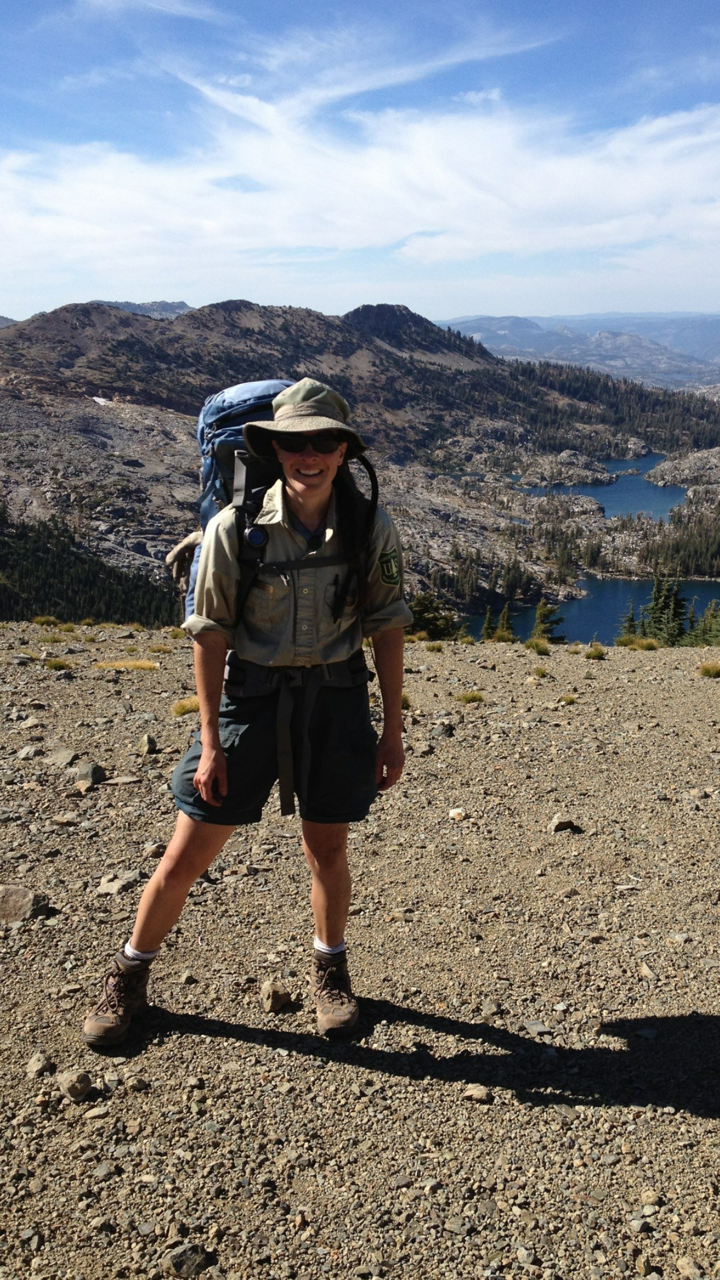
Shannon Maguire has specialized training to fight fires. Photo/Provided

Shannon Maguire has specialized training to fight fires. Photo/Provided

Maguire, who’s originally from Albuquerque, has gained quite a repertoire of skills in the mountains. She and Engelhardt hold “a red card,” which makes them fully trained in firefighting techniques – a valuable skill to possess in the ever-so challenging fire seasons in the Sierra Nevada Mountain Range.

All recruits are expected to be eyes and ears in reporting fires and carry a Forest Service radio as well as a map and compass to be able to figure out coordinates. Maguire and Engelhardt may completely suit up with fire gear that includes the heavy shelter kits.

It’s Sam Yarbrough’s first season as a seasonal ranger. At age 26, she attended college in Colorado and now hopes to live in the woods to develop an even greater appreciation of it. She hopes the people she encounters will too.

“I’m encouraged to inspire us to protect the regional wilderness, and I want to explore as much as I can,” she said.

As the fourth recruit, Brian Homberger came the farthest on his journey as a Lake Tahoe seasonal ranger. The 26-year-old hails from Melbourne, Australia, scoring a Tallac site cabin where seven people divvy up four rooms.

It’s all a part of the job for Homberger, who loves to get down and dirty with his field of study. He hopes to apply what he gains in this ranger experience with a degree in biology and discipline in restoration ecology. In the winter, he works in a native plant nursery.

What Homberger has experienced in plants, Engelhardt, 39, has picked up on in the wildlife – listing the grouse and small rubber boa constrictor as the most unique sightings he’s made in the Desolation Wilderness.

In tune to John Muir, Engelhardt considers all the rangers as naturalists – especially when it comes to the pristine nature of the Desolation.

He cited a water quality survey conducted there in 2011, and every lake showed no sign of giardia – a parasite associated with contaminated drinking water that causes intestinal infections.

No wonder all the rangers expressed the mission of harboring the greater good of their jobs.

“We become experts on wilderness values. We’re not just hiking the trails with shovels,” Engelhardt said.




Getting away from it all — with digital help

By Louis Hansen, Bay Area News Group

It might seem wrong to reach for the smartphone for anything more than a photo during a hike. But a number of apps make it easier to find the trails, sweeping vistas and brilliant meadows.

For some nature-lovers, an app is the alternative to pulling out the guidebook to plan a trip. Once you get inside the park boundaries, mobile phones can replace the accordion maps. After the hike or biking trip, apps can let you share and brag on social platforms geared to fellow intrepid outdoorsmen and women.

Outdoor guides say they’ve come to accept and even embrace the innovations.

The potential audience for outdoor apps is gauged in the millions. The National Park Service reports the park system counted 307 million visits last year, up 7 percent from 2000.

Read the whole story


Budget earmarks $4.4M for CalFire investigations unit

By Jon Ortiz, Sacramento Bee

Next year’s state budget will include $4.4 million to set up a personnel unit inside CalFire that will oversee internal investigations and employee discipline, according to details, as well as train managers and personnel staff to avoid future problems.

Scandals that have buffeted CalFire for two years prompted Gov. Jerry Brown to propose the Professional Standards Program over objections from the state firefighters’ union, CalFire Local 2881. Union leaders worried it would create an incentive to drum up charges or exaggerate minor infractions to justify the 14 positions attached to the program.

The budget represents a compromise.

Read the whole story


South Shore educators grapple with mental health issues throughout K-12 spectrum

Publisher’s note: This is one of several stories about mental health issues in the Lake Tahoe Basin that will be running through October.

By Terra Breeden

In Lake Tahoe Unified School District, 42 children were taken to Barton Memorial Hospital for suicidal tendencies this past school year.

The growing problem of mental health-related issues in children and teens has education officials on both sides of the state line scrambling to become de facto experts in a field that until a few years ago was not on anyone’s radar.

“In my experience there has been an increase in mental illness,” Nancy Cauley, principal of Zephyr Cove Elementary, told Lake Tahoe News. “There needs to be more time taken to examine what we need to do as a community to support these students.”

According to the National Alliance on Mental Illness (NAMI), 20 percent of children ages 13-18 live with a mental health condition. These conditions include mood disorders, depression, and anxiety disorders. Although the South Shore is a small community, the wave of mental health problems affecting youth is a big concern.

At South Tahoe High School, Nicole Bergner works as an intervention counselor and gives extra support to higher needs students.

“I see a lot of students with anxiety, depression and trauma-related fallout from family issues,” Bergner said.

Even with the increasing awareness, figuring out the cause of mental health problems in youngsters is tough. Cauley speculates that the recent economic recession may have affected children as much as adults.

“The economic downturn of 2008 had a huge impact on the emotional well-being of children,” Cauley said. “When a parent loses their house, job or income it affects the child. Stability is important and it plays a big part in a child’s emotional well-being and how they respond in the classroom.”

Teri White“Teachers and counselors do what they can to support students and families, but it’s hard in a rural community with limited resources and social workers.”Teri White, Douglas County School District superintendent


Nicole Zunino, the intervention counselor at South Tahoe Middle School, told Lake Tahoe News that social media is also a cause of mental health issues in youngsters. On social networking sites such as Facebook and Instagram, impressionable children are hit with a barrage of images and advertisements, coercing them to compare themselves to others and influencing their self-esteem.

The rise in school shootings nationwide has created fear on campuses and contributes to student mental health issues such as anxiety disorders, as well.

“I wonder why we are seeing so much anxiety and what comes to mind is that this generation is seeing school shootings regularly and we are living in this time of fear,” alternative education counselor for LTUSD Amy Jackson said.

Jackson told Lake Tahoe News that after her young son experienced a school shooting drill, which is now a commonly practiced training drill at schools, he was fearful, and later, wanted to talk about it.

The reasons for mental health issues are vast and they effect children differently depending on the child’s age.

“With younger children, there might be more issues with their family environment and with older children it tends to be more peer-related,” Terri White, superintendent of Douglas County School District, told Lake Tahoe News.

Lake Tahoe teachers and faculty are trying to identify the problems that arise at different ages. But in elementary schools, recognizing a mental health issue can be especially difficult.

“Elementary kids hide it pretty darn good,” Jackson said. “The little guys need counseling, but these mental issues can be hard to identify. You don’t see the symptoms until middle school or high school.”

Identifying a mental health problem is much easier when the child is an adolescent. However, by this age, the perils of anxiety or depression can be far greater.

“For us, the thing we see with adolescents is suicidal tendencies and trying to deal with their problems by turning to risky behavior,” White said.

Lake Tahoe education officials are doing whatever they can to combat mental health problems in schools. At STMS, faculty members conduct six prevention groups a week to help students cope with anxiety and depression. In the weekly meetings, students are taught to regulate their emotions instead of acting out. Relaxation techniques, deep breathing exercises and “I”-statements are utilized to assist children in dealing with their mental health issues.

“Teachers are the first line of defense,” Nicole Zunino, intervention counselor at STMS, said. “They are the eyes and ears of the school. We pick students with patterns of behavior and academics to place in these groups”

Ten common warning signs of mental health issues in teens •Being sad or withdrawn for more than two weeks •	Severe mood swings that cause problems in relationships •	Intense worries or fears that get in the way of daily activities •	Drastic change in behavior or sleep habits •	Repeated use of drugs or alcohol •	Extreme difficulty concentrating or staying still •	Seriously wanting to harm or kill oneself  •	Not eating, throwing up or using laxatives to lose weight •	Significant weight loss or weight gain •	Sudden overwhelming fear for no reason. Source: NAMI

10 warning signs of mental health issues in teens
• Being sad or withdrawn for more than two weeks
• Severe mood swings that cause problems in relationships
• Intense worries or fears that get in the way of daily activities
• Drastic change in behavior or sleep habits
• Repeated use of drugs or alcohol
• Extreme difficulty concentrating or staying still
• Seriously wanting to harm or kill oneself
• Not eating, throwing up or using laxatives to lose weight
• Significant weight loss or weight gain
• Sudden overwhelming fear for no reason.
                                         Source: NAMI

For children with mental health problems, it’s important for parents to be involved. Recognizing their child’s harmful behavior and providing support is the first step. LTUSD education officials work closely with students, but stress the importance of parental participation.

“We try to get parents involved because the outcome will be better,” Zunino said. “We also work really closely with agencies in town like Barton Health.

LTUSD students with known mental health problems are given personalized counseling and support from intervention counselors like Bergner and Zunino. LTUSD also provides specialized education programs to ignite their interest in school subjects and divert them away from harmful behavior.

“We are very good at customizing a student’s education,” Jim Tarwater, superintendent of LTUSD, said. “We have certain programs that will hook a kid and have stories where kids have had 180 degree turn-a-rounds.”

In Douglas County, schools have a hard time providing counseling for students with mental health issues. Currently, there are no mental health counselors on staff. There simply aren’t enough resources available for DCSD schools to provide on-campus counseling.

“If we have children who are struggling with mental health, we refer them out and connect them with outside agencies like the Tahoe Youth & Family Services,” White said. “But that can be difficult because of health insurance.”

White hopes to rectify the lack of support and provide more in-depth care to students with mental health problems. DCSD has applied for a social worker grant through the Department of Education and has plans to work with Project AWARE, which provides social workers to schools through a partnership with UNR and the Department of Education.

“Teachers and counselors do what they can to support students and families, but it’s hard in a rural community with limited resources and social workers,” White said.

At Zephyr Cove Elementary, Principal Cauley says that regardless of limited resources, children with mental health-related problems are given individualized support at the school.

“When we are made aware that a child needs mental health support we work with the parents and community to help that child,” Cauley said. “No matter what a child has, we always work with every possible team member to ensure that student is successful in school.”


La Niña next winter could worsen drought

By Aaron Orlowski, Orange County Register

Last month, state water officials eased conservation mandates in response to slightly above-average winter rain and snow in much of California, leading many to speculate that the state’s long-running drought has tapered off.

If only.

The El Niño winter that forecasters said could drench the state with rain and snow veered north instead, striking mostly the Pacific Northwest. The amount of rain and snow that hit Northern California was a tick above average and looked impressive mostly because it contrasted sharply with the extreme drought of the previous four years. Southern California was wetter than in previous years, but not by much.

Now, conditions are shifting, and El Niño’s counterpart, La Niña – a seasonal period marked by lower Pacific temperatures that shrivel rainfall in California – is expected to arrive around early fall and could prolong the dry times in California.

Read the whole story


Nevada regains almost all jobs lost in recession

By Sean Whaley, Las Vegas Review-Journal

CARSON CITY — Nevada has regained nearly all of the 175,000 jobs lost during the Great Recession and should fully recover later this year, a state economist told the Economic Forum on Thursday.

Bill Anderson, chief economist for the state Employment, Training and Rehabilitation Department, said Nevada added 140,000 jobs from 2010 to 2015. Also, 30,000 more jobs have been added in the first four months of this year, he said.

“We’re getting close to regaining all of those lost jobs,” Anderson said. “By the time we get out to the end of next year, we will have exceeded our prerecessionary high by close to 100,000 jobs.”

Anderson said all employment sectors except mining are showing job gains.

Read the whole story