Celebrities combine fun with serious golf

Steph Curry lines up his putt during the July 21 practice round. Photo/Kathryn Reed

Steph Curry lines up his putt during the July 21 practice round. Photo/Kathryn Reed

STATELINE – Steph Curry understands what it is like to be a fan. The basketball star is nutty about golf, being a fan of Jordan Spieth’s. His wife just shake’s her head when he spends six hours on the couch watching it on TV.

Where is he on a day off during the hoop season? On a golf course.

Curry, star of the Golden State Warriors basketball team, is back on the links for the 27th annual American Century Championship at Edgewood Tahoe. It was hard to miss him Thursday, as he had the biggest gallery. For the three days of the actual tournament, which begins today, Curry is likely to rival singer Justin Timberlake for the largest following.

Jack Wagner is ready to tee off. Photo/Kathryn Reed

Actor-singer Jack Wagner is ready to tee off. Photo/Kathryn Reed

On July 21, Curry was patient as the crowds swarmed and flung all sorts of paraphernalia at him to sign. Selfies were part of the requests, too. So was signing and throwing footballs on hole 17.

“I have much less confidence on the greens than I do on the court. Everybody asks like if putting is like shooting free throws. Like that six-footer for par or something like that,” Curry said. “It has a very similar kind of mindset. And it’s just you, the ball and the target.”

Fans were wearing a ton of gold and blue on Thursday.

But the No. 30 jersey wasn’t the only one in the crowd. J.D. Dostlik of Santa Cruz had a Jerome Bettis shirt on. He’s originally from Pittsburgh – where “the bus” made a name for himself on the gridiron. Dostlik was able to get a shirt signed for his friend Wendy Ocegueda of Chico.

Another woman told Bettis that without his play the Steelers would not have won the Super Bowl. He responded, “I’m not so sure about that.”

J.D. Dostlik secures a Jerome Bettis signature for a friend. Photo/Kathryn Reed

J.D. Dostlik secures a Jerome Bettis signature for a friend. Photo/Kathryn Reed

Other fans weren’t too sure about some facts. One woman was overheard telling her friends that former Redskins quarterback Joe Theismann is who the Heisman Trophy is named after.

Former ace of the Atlanta Braves, Greg Maddox, had his caddy taking pictures on his phone at the driving range in an attempt to see how he was swinging.

The Golf Channel has its popular glass break challenge set up near the driving range. It took Mark Mulder, last year’s ACC champion, two swings to shatter the glass.

Former football great Marcus Allen launches one down the fairway. Photo/Kathryn Reed

Former football great Marcus Allen launches one down the fairway. Photo/Kathryn Reed

Jack Wagner, a two-time winner of this tournament, hammed it up a bit for fans on hole 10. He started singing for a group of women, using a golf club as a mic. For those in the bleachers he made a point to come close enough to be photographed.

One thing all the players won’t have to contend with is former champions Billy Joe Tolliver, Rick Rhoden and Dan Quinn.

The 86 celebrities gunning for a piece of the $600,000 kitty will begin teeing off at 6:30 this morning. The winner will be crowned Sunday.
Calif. giant trees cloned to combat climate change

By Scott Smith, AP

CAMP NELSON — At the foot of a giant sequoia in California’s Sierra Nevada, two arborists stepped into harnesses then inched up ropes more than 20 stories into the dizzying canopy of a tree that survived thousands of years, enduring drought, wildfire and disease.

There, the arborists clipped off tips of young branches to be hand-delivered across the country, cloned in a lab and eventually planted in a forest in some other part of the world.

The two are part of a cadre of modern day Johnny Appleseeds who believe California’s giant sequoias and coastal redwoods are blessed with some of the heartiest genetics of any trees on Earth — and that propagating them will help reverse climate change, at least in a small way.

“It’s a biological miracle,” said tree climber Jim Clark, firmly back on the ground and holding a green sprig to his lips as if to kiss it. “This piece of tissue … can be rooted, and we have a miniature 3,000-year-old tree.”

The cloning expedition to Camp Nelson, a mountain community about 100 miles southeast of Fresno, was led by David Milarch, co-founder of Archangel Ancient Tree Archive.

The Michigan-based nurseryman preaches the urgency of restoring the Earth’s decimated forests. In two decades, he says his nonprofit group has cloned 170 types of trees and planted more than 300,000 of them in seven countries with willing landowners.

“It’s really a race against time,” Milarch said. “If we start right now, we can go after climate change and reverse it before it’s too late.”

Sequoias growing in the Sierra are among the biggest and oldest trees on Earth, some nearly 300 feet tall and up to 3,000 years old.

Relying on common sense that he says is being borne out by science, Milarch, 66, believes their size and robustness make them ideal for absorbing greenhouse gases that drive climate change on the planet. He likens them to people who drink and smoke all their lives, yet thrive well into their 90s.

One skeptic is Todd Dawson, a professor of integrated biology at UC Berkeley. He admires Archangel’s creative efforts but says it’s unclear whether the towering trees have superior genes or whether they were simply lucky not to meet the fate of a logger’s saw.

Chances are slim, he said, that cloning and planting a limited number of trees will cool the warming planet. He favors more sweeping approaches such as curbing the use of fossil fuels and protecting vast rainforests.

“That’s one of the things about global warming — it’s a global problem,” Dawson said. “You’re going to have to plant a lot of trees to combat global warming.”

A team of about a dozen expert tree climbers from across the country volunteered for the expedition in May to restock Archangel’s store of genetic samples. They risked their lives to climb to the ends of massive limbs, starting in the southern Sierra sequoia grove and winding up nearly 500 miles away in Northern California, where they carefully collected additional samples from coastal redwoods — a taller, thinner cousin of the giant sequoia.

Clark wrapped the clippings he gathered in damp newspaper, placed them inside ice-filled duffel bags and boarded an overnight flight to the Archangel’s lab across country in Copemish, a rural village in northwestern Michigan.

There, Clark and another propagation specialist snipped off some 2,000 shoots a few inches long and planted them in small containers of a peat-and-gel mixture.

Another 1,000 fingernail-sized bits of greenery were placed into jars containing a blend of seaweed-based gelatin and growth hormones.

The samples grow beneath purplish fluorescent lights under humidity and temperatures designed to encourage rooting. Cloning ancient trees is tricky business, lab workers say, and many samples don’t survive.

Later this year, Archangel’s team will come west to plant up to 1,000 sequoia and redwood saplings in a cool, damp region of Oregon where the trees will have the best chance to grow.

Bill Werner, a horticulture consultant based in Monterey, California, who has worked with Archangel, says that in the face of global warming, it’s easy to dismiss the efforts of a “renegade” group that relies heavily on donations and volunteer nurserymen and arborists.

“That’s not fair,” Werner said. “It may be a drop in the bucket, but at least somebody’s doing something.”


Summer on steroids with record temps

By Tom Randall, Bloomberg

Last month wasn’t just the hottest June on record—it continued the longest-ever streak of record-breaking months: 14.

The start of summer in the Northern Hemisphere gave us the hottest June since 1880, according to data released Tuesday by the National Oceanic and Atmospheric Administration. That follows the hottest May, April, March, February, January, December, November, October, September, August, and July. Before June 2016, June 2015 had the monthly record, as did May 2015.

Last year’s massive El Niño warming pattern in the Pacific Ocean is over, but unprecedented heat remains across the planet. The extremes of recent months are such that we’re only halfway into 2016 and there’s already a greater than 99 percent likelihood that this year will be the hottest on record, according to Gavin Schmidt, who directs NASA’s Goddard Institute for Space Studies. NASA and NOAA maintain independent records of the Earth’s temperatures, but they both agree that last month was a scorcher.

Read the whole story


KMS sold — affordable housing to replace school

By Kathryn Reed

More than 500 affordable housing units could begin to be built on the South Shore in 2017.

Patrick Taylor of Cave Rock is in escrow to buy the former Kingsbury Middle School and Wells Fargo Bank properties, both of which are in Stateline.

“Everyone who has lived here a long time knows there is a lack of affordable housing,” Taylor told Lake Tahoe News. “Our goal is to help the community grow in the right way and provide housing opportunities for the workforce that is affordable.”

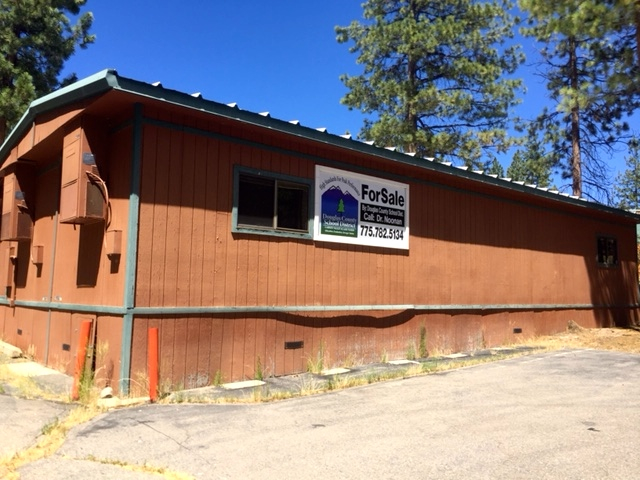
Where Kingsbury Middle School sits today affordable housing may rise. Photo/LTN

Where Kingsbury Middle School sits today affordable housing may rise. Photo/LTN

The school site has been sitting empty since students left at the end of the 2007-08 school year. The Douglas County School District board in January 2012 voted to put it on the market for $4 million. When there was first talk of consolidating the lake schools the superintendent at the time said the 22-plus acre site with 36,000-square-feet of space could fetch $9.5 million.

Taylor, through his company Lake Parkway, is buying it for $3.25 million. This includes paying half the utilities — $25,000 – for the next year. The board this month granted him a 12-month escrow so he could get everything together — including converting the land use designation, getting financing, and permits.

“A change from school use to housing is dependent on the Tahoe Douglas Area Plan being accepted and adopted by the Tahoe Regional Planning Agency. I hope to bring the plan, which has already been approved by our board, to TRPA in the next month,” Mimi Moss, director of Douglas County Community Development, told Lake Tahoe News.

Affordable housing is in such short supply that South Lake Tahoe might dedicate one-half cent of future sales tax collections to housing. The council in November will be asking voters to approve raising the tax, with a second question seeking input as to where to spend the new revenue. Housing will be one option.

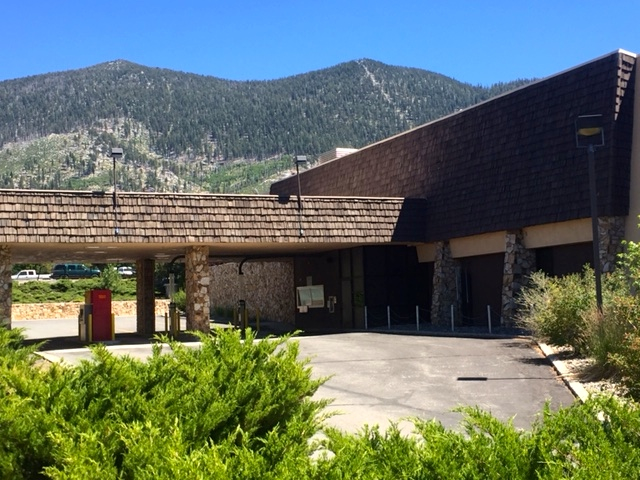
The Stateline Wells Fargo could become a mixed use commercial-residential development. Photo/LTN

The Stateline Wells Fargo could become a mixed use commercial-residential development. Photo/LTN

As this week’s council meeting the electeds also agreed to enter into a $71,500 contract with Michael Baker International to develop a socio-economic impact study regarding vacation home rentals. The electeds want the firm to make it a broader study and not be just about VHRs.

Councilman Tom Davis is hoping the report will actually define what affordable housing is beyond the legal definition.

“This is way bigger than affordable housing. It is all housing. People in all income groups are having trouble renting in South Lake Tahoe and the whole South Shore,” Councilman Austin Sass said.

Employers are having a difficult time hiring people in positions across the spectrum because of the limited and expensive housing stock. Heavenly now has work for people year-round, and Edgewood Lodge could employee 300. Those are just some of the new jobs, let alone the added workforce since the economy has turned around.

For Taylor, he expects the old bank location to be developed first; possibly in 2017. The number of units will range from 56 to 151 depending on if an outside partner is brought in.

He plans to keep the drive-through lanes because they are grandfathered in and no new ones can be added per a TRPA rule. The bottom level will be commercial.

“I’m in negotiations with In and Out Burger, but have not finalized anything,” Taylor said. He would like another lane for a coffee chain, and the other for a pharmacy.

He said nine-stories is allowed there, but he intends to build seven.

“If there are only 56 units, they will probably be all three bedroom, 3.5 baths so that way multiple tenants or generations of family can live there. It is designed for workforce housing,” Taylor said.

All will be deed restricted, with specific income requirements for people to be able to live at either development. These will be condos that people could buy or rent.

At the KMS property, Taylor intends to build a variety of floor plans that will include garages, though no more than three stories, with 412 units max. Construction won’t begin until 2018 at the soonest.

A traffic study will contribute to how much actually gets built. Taylor anticipates a light going in at Lake Village Drive that would stop drivers heading east on Highway 50 as people turn out of the development.

Another future impact to that intersection will be Sierra Colina, which will have 13 single-family residences and 34 duplexes on the neighboring18-acre site.

The buildings at KMS today will be demolished. It’s possible law enforcement will use it as a training facility where things could be destroyed before the official razing begins.


CalPERS posts worst year since 2009

By James Rufus Koren, Los Angeles Times

California’s largest public pension fund made a return of less than 1 percent in its most recent fiscal year, the fund’s worst performance since 2009.

The California Public Employees’ Retirement System said Monday that its rate of return for the year ended June 30 was just 0.61 percent. What’s more, Ted Eliopoulos, the pension fund’s chief investment officer, said the poor year has pushed CalPERS’ long-term returns below expected levels.

CalPERS assumes that, in the long-term, it will earn investment returns averaging 7.5 percent a year. If the fund fails to meet that goal, the state’s taxpayers could be forced to make up any shortfall in pension funding.

Read the whole story


Biomass plants make pitch for dead trees

By Marc Benjamin, Fresno Bee

Trees are dying in the Sierra at modern-day unprecedented rates, posing elevated fire danger and creating health, water and air quality concerns, but a possible solution to rid the forest of dead and dying trees is getting short shrift, officials say.

California’s biomass industry is set up regionally to turn agricultural waste into electricity while eliminating open burning. But many local biomass plants have closed or are closing soon because it costs less to produce electricity with solar and wind, which get subsidies that are not available to biomass.

There are plans to build smaller biomass plants in the Sierra to address tree mortality, but critics say they won’t accommodate dead tree disposal needs.

Environmentalists say biomass plants pollute the air.


Electricity generated by biomass is costlier than other options such as solar and wind, a concern to state and public utilities commission officials who are responsible to ratepayers, said Julee Malinowski Ball, executive director of the California Biomass Energy Alliance.

Read the whole story


Meeks Bay Marina closed; in trouble with state

By Kathryn Reed

The feds, state, a sovereign nation and a private business will meet again today in an attempt to find a resolution that would allow the Meeks Bay Marina to reopen.

It has been closed all season – and might not open in 2017 – because of stormwater violations.

Lahontan Regional Water Control Board in 2014 and 2015 issued citations to the U.S. Forest Service – the landowner; to the Washoe Tribe – which has a 20-year contract that expires in three years to run all of the operations; and to Action Water Sports owner Bob Hassett, as marina operator.

The four entities are engaged in confidential settlement negotiations that could take the rest of the year to resolve. Talks started about six weeks ago.

Eric Taxer, an engineer with the water board who did the inspections, said two years ago the parking lot was unpaved and remained so last year when he revisited the West Shore property. The feds and tribe knew long before Taxer showed up that a dirt lot was a major no-no.

“The response to the inspection and notice of violation was they did install some BMPs to temporarily control erosion. And they were going to submit a plan on how to address the entire site. That was going to be a multiyear plan,” Taxer told Lake Tahoe News.

But that plan never came to fruition.

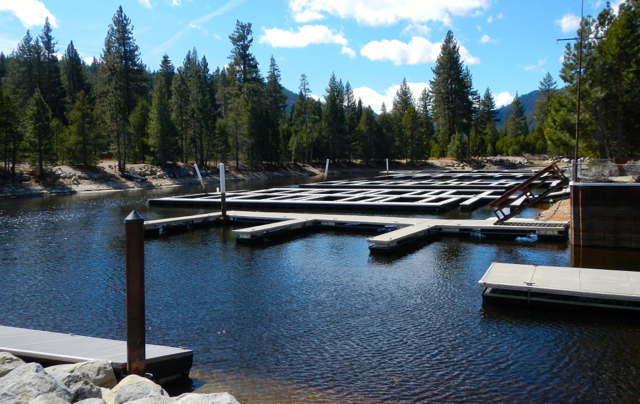
Meeks Bay has 120 slips, but no one can launch this season. Photo/LTN file

Meeks Bay has 120 slips, but no one can launch this season. Photo/LTN file

One of the fixes was to essentially dig a trench across the boat ramp. While it helps with BMPs, it makes it difficult for a boat to be launched.

“Around Memorial Day we came to the conclusion between the tribe and ourselves that there weren’t any quick fixes economically to keep us out of jeopardy with Lahontan,” Mike LeFevre, planning staff officer with Lake Tahoe Basin Management Unit, told Lake Tahoe News. “We didn’t want to invest a lot of money and have it fail, so the tribe with Forest Service support decided to close the resort this season.”

The lodging and dining facilities at Meeks Bay are open; only the marina is off-limits.

No one from the tribe responded to inquiries from Lake Tahoe News.

“We certainly don’t believe BMPs in the parking lot are our responsibility,” Hassett told Lake Tahoe News.

Even so, his company as operator of the marina has been cited by Lahontan.

Lahontan spent 2014 and 2015 inspecting all of the marinas on the California side of the basin. (As a California agency it has no jurisdiction in Nevada.) This was in preparation for the marina permit that was issued in June, which brought all of the operators onto the same level playing field. The annual permit fee charged by Lahontan is $1,282 per marina. Each marina has a Storm Water Pollution Prevention Plan.

The goal is to keep as much sediment as possible from reaching Lake Tahoe in order to preserve the clarity of the water. Various best management practices can help accomplish this goal. Marina operators are also supposed to test the water multiple times each year and keep detailed records.

Lahontan said it found nitrogen, phosphorus, turbidity and iron at levels higher in the lake than are allowed per the permit regulations. Meeks Bay was failing on multiple levels, according to Lahontan.

Taxer stressed that the state agency did not want to shut down the business, but had the main objective of keeping pollutants from the lake.

“It’s not a highly polluted situation, but there is runoff … clarity issues,” LeFevre with the Forest Service said. He said Highway 89 and Caltrans’ lack of treatment for water on its road complicates matters at the resort.

The goal of the negotiations is to determine what course of action will be taken to remedy the violations, determine who is responsible for the work and what penalties might be assessed to whom. The water board has the authority to impose an administrative civil liability of up to $10,000 for each day in which each violation of the Marina General Permit occurs.

Depending when and what the resolution is will dictate if the marina opens next summer.


Western water provisions would affect Calif.

By Michael Doyle, McClatchy News Service

California has a stake in a sprawling public lands package moving through the Senate, including controversial water provisions that don’t even name the state.

The package includes expanding one national historic site honoring famed conservationist John Muir and designating a new historic site at the former Tule Lake camp that housed Japanese-Americans during World War II. Both proposals easily won approval Wednesday from a Senate panel.

A Western water bill inevitably is proving far trickier, squeaking through the Senate Energy and Natural Resources Committee on a 12-10 vote and facing an uncertain future.

Read the whole story


Sun, moon trigger some San Andreas quakes

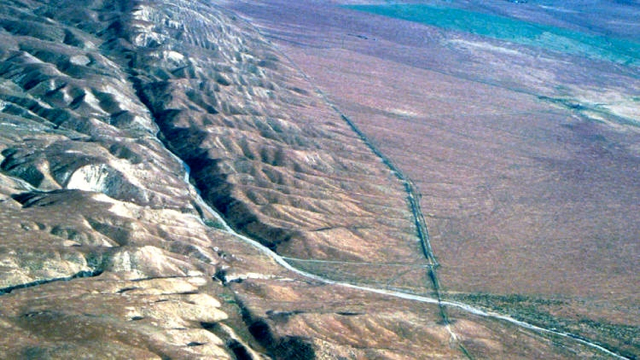
The San Andreas fault in California. Researchers have found that tidal forces play a role in the timing of small, deep earthquakes along the fault. Photo/U.S. Geological Survey

 Researchers believe tidal forces play a role in the timing of small, deep earthquakes along the San Andreas fault. Photo/U.S. Geological Survey

By Rosanna Xia, Los Angeles Times

The gravitational tug between the sun and moon is not just a dance of high and low tides: It can also trigger a special kind of earthquake on the San Andreas fault.

This phenomenon has fascinated scientists for years. Like sea levels, the surface of the Earth also goes up and down with the tides, flexing the crust and stressing the faults inside. Further study found that during certain phases of the tidal cycle, small tremors deep underground – known as low-frequency earthquakes – were more likely to occur.

“It’s kind of crazy, right? That the moon, when it’s pulling in the same direction that the fault is slipping, causes the fault to slip more – and faster,” said Nicholas van der Elst, a U.S. Geological Survey geophysicist and lead author of a new study on the subject published Monday in the Proceedings of the National Academy of Sciences. “What it shows is that the fault is super weak – much weaker than we would expect – given that there’s 20 miles of rock sitting on top of it.”

Read the whole story


Lawsuit could prevent loop road ballot question

By Kathryn Reed

A lawsuit has been filed to stop the loop road from ever going on the ballot.

Jason Collin, director of Home Health & Hospice for Barton Health and likely candidate for South Lake Tahoe City Council, filed the lawsuit last week. The city of South Lake Tahoe received notice late July 18; with council members then being notified.

Also named in the suit are Bill Crawford, Bruce Grego (also a presumptive council candidate), Laurel Ames and John Cefalu. Those four are the leaders of a movement to get an initiative on the Nov. 8 ballot regarding the loop road.

Today is the deadline for the council to decide whether to approve the ballot measure. The discussion will not begin until at least 2pm at Lake Tahoe Airport.

The council today will not be able to discuss the lawsuit because it is not on the agenda. A special meeting could be called, but that takes 24 hours’ notice at a minimum. Today the electeds have the choice to approve the language as is and adopt it as policy, request a financial study or place it on the ballot. Insiders say the latter is most likely to happen – despite the lawsuit.

It will then be up to a judge to decide if the question ever sees the light of day in November.

The four individuals and the city have 30 days from July 14 to respond to the suit.

Collin could not be reached late Monday, nor could City Attorney Tom Watson.

There had been speculation all along that the measure would face a legal change, though many figured it would not occur until after the vote had been taken.

At issue is whether any entity can prevent the council from doing its job.

The question loop road opponents want voters to decide is whether the council should be able to take action on the project without constituents first voting on a preferred alignment.

The loop road project would realign Highway 50 near the state line so it goes behind Harrah’s-MontBleu, starting at about Pioneer Trail. The current highway through the casino corridor would then become a city-Douglas County road.

Ultimately, the opponents want to derail the project.

It is Tahoe Transportation District that is spearheading the highway reconfiguration.

The suit calls the defendants’ initiative “flawed”, says it would “violate state law”, is “unconstitutionally vague” and that it would “strip the duly elected South Lake Tahoe City Council of its authority to take action, even administrative action, with respect to certain land use matters.”

There is also the question of whether the initiative by the four individuals violates the state Streets and Highways Code.

The suit goes on to say, “It would impermissibly hold hostage the city on all matters related to the loop road – binding the city’s hands until and unless the votes approve a General Plan amendment.”