Nutting files lawsuit against ex-EDC colleagues

By Kathryn Reed

Former El Dorado County Supervisor Ray Nutting is suing past colleagues and staff because he believes his constitutional rights were violated.

“The reason why I filed a claim is so they cannot do it ever, ever again to someone else,” Nutting told Lake Tahoe News. “If they did it to me, they can do it to other people. Someone has to stand up to them.”

Ray Nutting

Ray Nutting

Named in the lawsuit that was filed in U.S. District Court in Sacramento are: Ron Briggs and Norma Santiago, former supervisors; Ron Mikulaco and Brian Veerkamp, current supervisors; Pam Knorr, human resources director; and Ed Knapp, former county counsel.

The lawsuit says, “To date plaintiff still believes he is the duly elected county supervisor ousted from office, denied the enjoyment of his office without any due process.”

Nutting’s problems came to a head in 2014. That May he was convicted on six misdemeanor counts relating to obtaining illegal loans from a county employee. A Superior Court judge found Nutting’s misconduct in office warranted his removal. The Third District Court of Appeal then upheld that. The California Supreme Court that August denied Nutting’s request to stop the September special election and block his removal from office.

The lawsuit pertains to the Fifth, Eighth and Fourteenth amendments of the U.S. Constitution – mostly due process issues. Nutting contends his colleagues on the Board of Supervisors did not give him a hearing and that the judge never had the jurisdiction to remove him from office.

The suit says, “These unenumerated right to serve and hold office lodged with the United States Constitution can not be abrogated or abridged by a letter from a judge, or by an exparte hearing, motion of resolution, by the defendants acting as the El Dorado County Board of Supervisors. These arbitrary and capricious actions by defendants and each of them show the complete disregard for the Constitution and plaintiff’s rights.”

The court documents paint a picture of the 56-year-old not being treated fairly while in office, including being targeted by District Attorney Vern Pierson because they were “political enemies.”

In this civil suit Nutting wants the judge to consider punitive damages of $100,000 against each defendant.


Noncompete ruling favors Nev. casino worker

By Daniel Rothberg, Las Vegas Sun

In 2012, after several years working as an executive casino host for the Atlantis Casino Resort Spa in Reno and at Harrah’s before that, Sumona Islam took a job with the Grand Sierra Resort three miles away. One problem: Islam had signed a noncompete agreement preventing her from taking the job.

Not long after Islam defected to the Grand Sierra, Atlantis sued. Its lawyers alleged a violation of the agreement and said Islam had copied and altered the casino’s proprietary customer information. The case went to trial and was appealed to the Supreme Court of Nevada, which ruled last month that the noncompete was unreasonable, a ruling that could have broad implications for businesses in Nevada.

The court’s order in late July, which has flown largely under the radar, represents a “paradigm shift,” argued Howard Cole, a Lewis Roca Rothgerber Christie partner who has drafted several noncompetes.

In question before the court was whether Atlantis could enforce a noncompete agreement prohibiting Islam from employment at a gaming business within 150 miles of Atlantis for more than one year after working at the casino. In a narrow 4-3 ruling, the court found the clause “overbroad.” Favoring employee interests, the court majority refused to modify the contract and said the entire agreement was invalid.

Read the whole story


Heller: ‘Still a lot of work to be done’ on economy

By Jose Olivares, Reno Gazette-Journal

While things are looking up for Nevada’s economy, many Nevadans are still reeling from the effects of the recession and Congress must do more to help people get back on their feet, Sen. Dean Heller, R-Nev., said Tuesday.

Heller made the comments at the Nevada Museum of Art during a talk on Nevada’s economy.

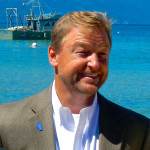
Dean Heller

Dean Heller

“Back in 2008 during the Great Recession, there was no other state that was hit harder than the state of Nevada,” Heller said. “Our economy was wrecked, unemployment was one of the highest in the country, our percentage of homes underwater was the highest in the country and businesses were closing.”

Heller said Congress could do things to help Nevadans, such as repealing specific provisions in the Affordable Care Act like the “Cadillac tax” on high-cost health insurance plans. He also said Interstate 11, which would connect the Phoenix area, Las Vegas and Northern Nevada, would dramatically help the state.

Read the whole story


Cole leaving SLT council after 20 years

One duty as mayor in 2011 was for Hal Cole to welcome Amgen cyclists to the start line. Photo Copyright 2016 Carolyn E. Wrightriders as the arrive at the starline Sunday May 15, 2011. Photo/Lisa J. Tolda

One duty as mayor in 2011 was for Hal Cole to welcome Amgen cyclists to the start line. Photo Copyright 2016 Lisa J. Tolda

By Kathryn Reed

Planning – it’s what got Hal Cole interested in local politics and it’s the reason he is getting out.

The South Lake Tahoe city councilman is not seeking another term. When he leaves at the end of the year he will have been on the council for five four-year terms that started in 1994. He was off the council between 2006-08.

Norm Woods is the longest serving member at 21 years – 1965-70 and 1976-92. By the time Tom Davis finishes his term in 2018 he will be tied with Cole at 20 years.

During his tenure Cole was mayor six times, each being a one-year term. (From 1965-68, mayors served six months.)

Hal Cole, right, speaks with Sen. Dean Heller, R-Nev., at the 2015 Lake Tahoe Environmental Summit. Photo/LTN

Hal Cole, right, speaks with Sen. Dean Heller, R-Nev., at the 2015 Lake Tahoe Environmental Summit. Photo/LTN

Near the end of each four-year term Cole would reassess if he wanted to stay. The passion for the job, the belief he was making a difference and the desire to keep learning kept him in the game. Now, he feels a bit like he’s paddling upstream. He’s tired – tired of trying to do what’s right and have roadblocks thrown at him; tired of the pettiness on the council; tired of change coming so slowly.

“After the (California Tahoe) Conservancy and TRPA went sideways, I said, ‘What is the use?’” Cole said in reference to the Knights Inn project. “These organizations are policy-based and not outcome-based. We played totally by the rules and they wanted us to change it at the eleventh-hour.”

He’s referencing the hotel project that could become a Whole Foods as the anchor. What the city and developer wanted was a project that would have had significant environmental gains and would have been a showcase for the basin. The agencies are accused of meddling and potentially derailing the project; and if it is a-go, it won’t be what it could have been. (Contracts still have not been signed.)

TAMBA's Ben Fish and Hal Cole at the Bijou Bike Park dedication. Photo/LTN

TAMBA’s Ben Fish and Hal Cole at the Bijou Bike Park dedication. Photo/LTN

The 67-year-old reflected back to previous councils where it seemed more like a team, with a vision even when there were disagreements. He liked the discussions, the respect they had for one another.

“This time with one councilmember suing us and putting things in the paper and on Facebook …  you go to the meeting and the tension, it is so thick. To the public we must look petty. I don’t think I want to be part of it anymore,” Cole told Lake Tahoe News. “I don’t want to sound bitter. I probably would have retired anyway. But the level of discourse isn’t as rewarding as it used to be.”

Still, Cole has a slew of accomplishments. Redevelopment is what he is most proud of – in particular Heavenly Village. That was a game changer for South Lake Tahoe. It took vision, it took more money than first budgeted, and it took courage.

While locals were slow to embrace the change and ever set foot there, that isn’t the case now. It’s a success in every sense – economically, visually, environmentally and socially.

Cole says the welcome sign by the airport is something that still brings a smile to his face. He’ll even stop when he sees tourists taking pictures and take it for them. It’s a project he started during his one year on the Planning Commission, which was then completed when he was on the council.

Hal Cole congratulates snowboarding Olympic gold medalist Jamie Anderson. Photo/Denise Haerr

Hal Cole congratulates snowboarding Olympic gold medalist Jamie Anderson. Photo/Denise Haerr

Being on council was like getting a second or third college degree, he said. Becoming immersed in finance, learning the science of the lake, the advances of technology – the council afforded him (as it does all members) the opportunity to delve into topics he might not otherwise have been exposed to.

As a builder, Cole had a natural affinity to be interested in planning matters. That is what led him to the Planning Commission, then the council and now retirement from politics.

“I wish I was on the City Council in 2007 when they let (developer) Randy Lane pull permits to pour the foundation when he didn’t have site control,” Cole said of the failed Chateau project that went into bankruptcy and ended up being known as The Hole. “It irks me to this day. He didn’t own the lots. It’s the biggest mistake this council ever made.”

He’s had a few of his own regretful votes. One was when Tony O’Rourke was city manager and he brought forth a spending mechanism for roads where the city borrowed $5 million. That, Cole said, was an ill conceived, expensive plan.

Now he’s advocating for the sales tax initiative that will be on the November ballot be spent on roads.

Hal Cole addresses the crowd at the city's 50th anniversary party. Photo/LTN

Hal Cole addresses the crowd at the city’s 50th anniversary party. Photo/LTN

And if he could, Cole would like a do-over with the paid parking fiasco. While he still supports the concept, he admits the city didn’t approach it correctly.

Other high points include approving City Manager Nancy Kerry’s plan to overhaul the health care system, saving the city millions of dollars, as well a refinancing bonds at various times.

Being mayor last year during the city’s 50th anniversary festivities is high on his list of good memories. It was a time to celebrate all of the accomplishments of the past five decades and dream about the future.

Cole’s future is a little uncertain. Once he has his Tuesdays free from council, no more Tahoe Regional Planning Agency board meeting or other city commitments, he is likely to be spending more time on the tennis court and enjoying life in South Lake Tahoe, the town he grew up in, and he’ll still be building houses.

—–

Note:

So far eight people have taken out papers to be on the City Council. The four who have qualified are Patrick Jarrett, Ted Long, JoAnn Conner and Robert Topel. With Cole not running, the filing deadline is now Aug. 17 at 5pm.


Nev. a leader in shielding wealth of 1 percent

By Patricia Cohen, New York Times 

Steven Oshins, a Las Vegas lawyer who specializes in estate planning, has never met the wealthy software entrepreneur Dan Kloiber, but he is nonetheless intensely interested in Kloiber’s contentious divorce.

“I have had a Google news alert on that for a couple years,” Oshins said as he discussed the case from his office in a squat pink complex about a 20-minute drive from the Las Vegas Strip. What animates Oshins is not the juicy marital feud, but the legal arcana governing a trust in Delaware where the Kloiber family parked assets worth hundreds of million of dollars, sheltered from estate taxes.

Oshins, with a gleeful grin spreading across his face, relished the thought of the no-longer-beloved wife of Dan Kloiber busting through the trust and exposing a potential chink in the formidable trust protection armor promised by Delaware — which just happens to fiercely compete with Nevada for the lucrative business of shielding assets owned by the superrich.

Although most out-of-town visitors are drawn to the city’s roulette wheels and slot machines, Oshins and a battalion of tax lawyers, accountants, advisers, trust administrators and bankers cater to an elite clientele that insists on a much more reliable way to build a fortune.

With their backing, Nevada has stoked an aggressive rivalry among a smattering of states to baby-sit the wealth of the nation’s top 1 percent, pressing public officials to pass laws, streamline regulations, lower fees and replace DMV-level service with concierge treatment.

Read the whole story


California plans to log its drought-killed trees

By Jane Braxton Little, High Country News

Looking north from Blue Canyon near Shaver Lake, copper-colored forests blanket mountain slopes that stretch ridge after ridge to the horizon. The patches of fading green that dappled these hillsides last fall have merged into an unbroken cover of rust-needled pines.  At dusk, when the winds die down, an eerie stillness gives way to the muffled sound of munching as beetles chomp through one tree after another, thousands after thousands.

This is the look — and the sound — of drought.

Four consecutive winters with little to no snowpack, followed by four dry summers, have devastated California’s southern Sierra Nevada. At least 66 million trees are already dead statewide, and millions more are expected to die as the drought persists into a fifth summer.

On the Sierra National Forest, up to 90 percent of the mid-elevation ponderosa pines are dead.  Weakened by drought, oaks are succumbing to sudden oak death along the central and northern coast, and the disease has moved into the

And the bark beetles that caused this desolation? They’re reproducing at triple the normal rate. Forest ecologists used to consider them a natural part of the forest dynamic — and they are. Stressed by drought and decades of air pollution in overcrowded stands, however, the natural chemicals trees pitch out in self-defense can’t keep up with the onslaught of bugs.  No one is calling what’s happening here natural anymore.

Read the whole story


LTWC expanding beyond rehabbing animals

Emma could become Lake Tahoe Wildlife Care's first animal that it keeps because with one wing it can be released into the wild. Photo/LTWC

Emma could become Lake Tahoe Wildlife Care’s first animal it keeps because with one wing it cannot be released into the wild. Photo/LTWC

By Kathryn Reed

Lake Tahoe Wildlife Care is in the process of getting its first permit to permanently care for an animal that cannot be released into the wild.

Emma – the bald eagle from Emerald Bay – came to the South Shore rehab facility last Halloween. She had a broken wrist and damage to her wing. Eventually the wing had to be amputated.

The center on the edge of South Lake Tahoe has been caring for animals since 1978. The goal is always to nurse the injured animal back to health so it can return to its natural environment. For the few that have not been able to fully mend they’ve been sent to wildlife facilities that could care for them for the long term.

LTWC when it moves into its new headquarters off Al Tahoe Boulevard intends to have an area where animals that can’t make it on their own will be housed. This will then become an educational component to the facility.

Emma is the beginning of that evolution of LTWC. For now she is still under veterinary care as she heals from surgery.

Ultimately it will be up the federal and state wildlife agencies to grant a permit to the nonprofit to care for animals beyond the rehabilitation and release stages.

LTWC founders Tom and Cheryl Millham hope to move to their new headquarters – and out of their backyard – in the near future. Money is the stumbling block. About $4 million is needed to be able to open the new site.

Incrementally they are building what is hoped to be a state-of-the-art rehabilitation and education facility.

Work on the 27-acre site started last year. At the end of June the entire underground infrastructure was completed. Foundation work should be done by Oct. 15, with framing of the 12 cages and main building starting next building season.

LTWC volunteer Alexi Haven explains to visitors what is going on inside the bear cage. Photo/LTWC

LTWC volunteer Alexi Haven explains to visitors what is going on inside the bear cage. Photo/LTWC

To keep the animals wild the public is kept away from them – except for the one-day annual open house.

Last weekend at the open house it was Emma who was the star – not the four bear cubs.

“Emma was the hit of the show,” Tom Millham told Lake Tahoe News.

“We started socializing her. People could take pictures of her,” Millham said of the eagle. “She will be our new ambassador for Lake Tahoe Wildlife Care.”

A team of six volunteers is working to get Emma acclimated to people. There is a set schedule for feeding, which only consists of fish. She can be fussy at times, but is coming around to her new life.

More than 900 people attended the open house. The record attendance was 1,200 in 2008 when Li’l Smokey was at LTWC.

LTWC will be adding to its bear cub collection today when another arrives from Southern California. This will be the 86th bear to come to LTWC in the time that it has existed.

To donate or for more info about LTWC, go online.


Stateline bear killed following home invasion

By Benjamin Spillman, Reno Gazette Journal

A Nevada Department of Wildlife biologist shot and killed a bear near Stateline about two weeks after it broke into an occupied home and made several other break-in attempts.

The bear, a 2-year-old female, too young to bear cubs, known as Blue 54, was shot on July 28 following an encounter in which she lashed out at a homeowner, department spokesman Chris Healy said.

It was the final human conflict for a bear that had escalated displays of dangerous behavior in the prior weeks, Healy said.

Read the whole story


Vail Resorts buys Whistler Blackcomb ski area

By Kathryn Reed

Vail Resorts has expanded its ski resort portfolio to include Whistler Blackcomb in Canada.

The Colorado-based company is buying the Vancouver resort for $1.1 billion.

Whistler, with 8,171 acres, is the largest ski resort in North America. Coming in a close second is the Vail owned Park City-Canyons merged resorts with 7,300 acres.

“Whistler Blackcomb is one of the most iconic mountain resorts in the world with an incredible history, passionate employees and a strong community. With our combined experience and expertise, together we will build upon the guest experience at Whistler Blackcomb while preserving the unique brand and character of the resort as an iconic Canadian destination for guests around the world. We are delighted to add such a renowned resort to Vail Resorts and look forward to expanding our relationships in the Sea-to-Sky community, British Columbia and Canada,” Rob Katz, chairman and chief executive officer of Vail Resorts, said in a statement.

Whistler was the site of the downhill ski events for the 2010 Winter Olympic Games based in Vancouver.

Vail, which owns Heavenly, Kirkwood and Northstar in the Tahoe area, has been on a mission to diversify and expand its ski resort holdings.

Vail Resorts on Aug. 8 announced its purchase of Whistler Blackcomb ski resort in Canada. Photo/LTN file

Vail Resorts on Aug. 8 announced its purchase of Whistler Blackcomb ski resort in Canada. Photo/LTN file

With this purchase, it means a local competitor just got pushed out of the Canadian market.

KSL Capital Partners, the owners of Squaw Valley and Alpine Meadows, bought nearly one-quarter of Whistler Blackcomb in 2012 for nearly $116 million from Intrawest.

Most of Whistler was owned by Whistler Blackcomb Holdings and Nippon Cable.

Dave Brownlie, Whistler Blackcomb’s chief executive officer, will remain at the resort as the chief operating officer for Vail.

“As the No. 1 ranked and most visited resort in North America, Whistler Blackcomb has enjoyed tremendous success by delivering an exceptional mountain experience for our passionate and loyal guests — both locally and from around the world.  That’s going to continue as we work with our new colleagues at Vail Resorts as well as our employees, local businesses, community and government stakeholders to make Whistler Blackcomb better than ever,” Brownlie said in a statement. Partnering with the geographically diversified Vail Resorts and extending its successful Epic Pass products to Whistler Blackcomb are customer-focused ways of securing the long-term future of our resort, our industry and our community.”


Spinal cord injury inspires fund-raising swim

Mark Bender wants those with spinal cord injuries to live full lives. Photo/Provided

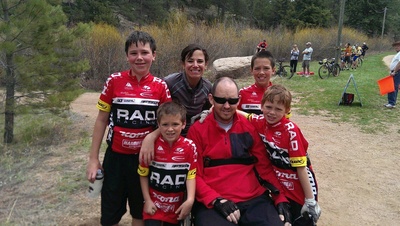
Mark Bender, with his family, wants those with spinal cord injuries to live full lives. Photo/Provided

By Kathryn Reed

“When we meet real tragedy in life, we can react in two ways — either by losing hope and falling into self-destructive habits, or by using the challenge to find our inner strength.” — Dalai Lama

Mark Bender chose to find his inner strength when his life was turned upside down three years ago. While body surfing in Hawaii a wave threw him to the ocean’s floor. He is now a quadriplegic.

Out of the tragedy he started a nonprofit called Finding HUP. The goal is to help others like him get back into “the mix” – as in doing some of the things they could do when they were able bodied.

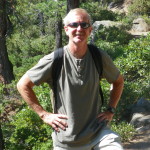
Ric Llewellyn

Ric Llewellyn

Part of the inspiration for the nonprofit came from hitting roadblocks with not finding equipment to do the things he wanted to do. He knew he couldn’t be alone.

Finding HUP’s name comes from the cycling world where the crowd yells “hup, hup” to cyclists passing by. Bender used to be a competitive cyclist. He has learned to use a hand bike.

Bender’s friend Ric Llewellyn, a former South Lake Tahoe resident and brother of longtime local Randy Llewellyn, is on a quest to raise money for Finding HUP.

“Finding HUP is about helping others, getting back into some sort of athletic endeavor,” Llewellyn told Lake Tahoe News.

Promoting adaptive athletics, proving scholarships, equipment and resources to go to camps for people who are paralyzed is what Finding HUP is about.

Llewellyn on Aug. 24 plans to swim from Emerald Bay to Nevada Beach as a fundraiser for the charity. This is 8½ miles.

“The rules for marathon swimming it that it has to be a minimum distance and you have to do it without a wetsuit,” Llewellyn explained. “I want it to be a legit marathon swim.”

The goal is to raise awareness about the foundation as well as money for it. Bringing attention to spinal cord injuries in general is also part of the plan.

—–

Notes:

·      To donate, go online.

·      More info about Washington-based Finding HUP is online.