DC commissioners slow to work on water issues

By Kathryn Reed

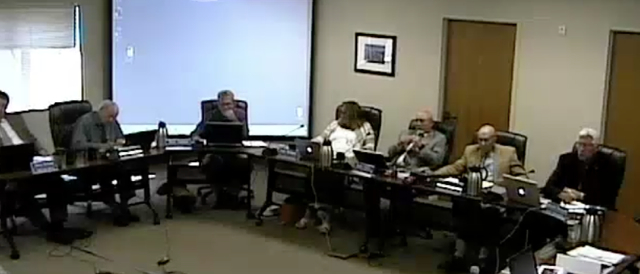
Douglas County commissioners, while they say they want water districts to consolidate, are gun shy to take a step in that direction even though staff this month asked them to do so.

At their meeting in Stateline the electeds were presented with the option to financially separate the Cave Rock and Uppaway Estates water systems for accounting, budgeting and rate setting purposes. The unanimous vote was to table that idea indefinitely.

Part of the hesitation was not wanting to throw a wrinkle into the lawsuit filed last spring by a water district at Lake Tahoe against the county. But that argument didn’t hold up after the district attorney weighed in.

“Whatever you do today will not hurt the lawsuit or our defense,” DA Doug Ritchie told the commissioners. “This is only a policy issue.”

Douglas County commissioners discuss water issues.

Douglas County commissioners discuss water issues.

The water systems in question are owned by Douglas County. However, through the years the county has paired some together for accounting reasons and others for operational purposes. It has resulted in an efficient, inequitable situation.

In 2010 the county embarked on a path to consolidate all of the water systems. Then it was decided to keep the lake and valley separate. Ultimately when it came time to vote a couple years ago on the lake consolidation the electeds back-pedaled and said no.

While the consensus this month was still a desire to consolidate the systems, how to do so was not broached.

Commissioners Greg Lynn and Barry Penzel said they would like to develop a time line for consolidation, but one was not discussed that day.

“As an overall policy goal the ideal solution in the end is a single utility,” Lynn said.

Carl Ruschmeyer, public works director, said, “The challenge anytime you consolidate is you are going to have some winners and some losers at some level.”

Commissioners went back and forth at the meeting trying to decide how to go forward.

“I don’t like the fact that we would be doing this with the lawsuit going on,” Commissioner Nancy McDermid said. “Anything the board does today or has done in the past is subject to the court’s opinion on that.”

Still, earlier at the meeting she said people need to understand to get to the long-term goal of consolidation, there may be short term pain – and that maybe doing what staff asked for would be a good idea.

The county is in the process of coming up with preliminary engineering reports on the water systems. These could help with decisions down the road pertaining to consolidation.


Obama visit coincides with crunch time for Tahoe funding

Invasive species, like the clams that were suffocated by mats at Emerald Bay, were not an issue 20 years ago. Photo/LTN file

Invasive species, like the clams that were suffocated by mats at Emerald Bay, were not an issue 20 years ago. Photo/LTN file

By Benjamin Spillman, Reno Gazette-Journal

A visit by President Bill Clinton in 1997 is credited with pushing Lake Tahoe onto the national stage.

That visit, part of the first Tahoe Summit, rallied disparate interests from California and Nevada around the idea of Lake Tahoe as a singular political issue that crossed state lines and federal agencies.

When President Obama visits today he’ll see progress on water clarity and political unity that can be traced back to the original summit.

And there’s a chance that 20 years from today people will look back at Obama’s visit as another turning point in the lake’s perception on the national political stage. That’s because it coincides with crunch-time for reauthorization of the Lake Tahoe Restoration Act. The reauthorization, which has been floating around Congress in some form since 2009, would authorize $415 million in federal spending at Lake Tahoe.

It also calls for future presidents to aggregate federal spending on Lake Tahoe into a single line item in the executive budget. The change would mean that during future budget-making processes the President would see Lake Tahoe as a singular cause, similar to Florida’s Everglades, the Great Lakes or Long Island Sound.

Read the whole story


Trump, Clinton place their bets in Nevada

Those who don't like Donald Trump were outside Harrah's last week, while supporters sold out a fund-raising event. Photo Copyright 2016 Carolyn E. Wright

Those who don’t like Donald Trump were outside Harrah’s last week, while supporters sold out a fund-raising event. Photo Copyright 2016 Carolyn E. Wright

By John Wildermuth, San Francisco Chronicle

RENO — Politically, Nevada is the anti-California.

The GOP runs both houses of the Legislature. Brian Sandoval, the state’s popular governor, is a Republican. Just like California, one party holds every state constitutional office, only in Nevada, it’s the GOP that ran the table.

And in Nevada, there’s also an actual presidential race.

In California, the RealClearPolitics average of polls has Democrat Hillary Clinton burying GOP nominee Donald Trump by 52 to 30 percentage points. But the former secretary of state holds just a three-point lead in Nevada, putting California’s eastern neighbor near the top of the fall battleground list.

The travel schedule of the two campaigns shows just how important Nevada and its six electoral votes are to the candidates, who need 270 nationwide to become president.

Read the whole story


Energy bills driving greener Nev. weed business

By Daniel Rothberg, Las Vegas Sun

Beneath a purple glow, in a warehouse sharing the street with two indistinguishable strip malls, Kevin Biernacki is growing around 100 pounds of medical marijuana. The purpose of this facility, owned by The Grove, is no different than other cultivation sites in Nevada. Yet, the roughly 480 industrial lamps suspended over clusters of cannabis set this place apart.

Those energy-efficient lights allowed The Grove to slash its power bill. The decision to use LED lamps might seem unsexy at first, simply a marginal deduction on a complicated balance sheet. But it’s not. It is the type of business decision many experts believe can offer huge benefits in a growing market.

That’s because indoor cultivation centers, which use lamps to mimic the sun and air conditioning to keep temperatures hospitable, suck up power. NV Energy has projected that some cannabis-growing operations could use up to 5 megawatts at one time, enough energy to power about 3,000 homes.

Read the whole story


Sustainable wine industry a work in progress

By Kathryn Reed

INCLINE VILLAGE – Economically, wine is huge for California – it’s a $58 billion industry, attracts 24 million tourists a year and employees 30,000 people.

But it’s not the most environmentally friendly crop. UC Davis wants to change that reality.

Jill Brigham, executive director of the Sustainable Wine and Food Processing Center at UCD, gave a talk last week at Sierra Nevada College about the science of wine and how to optimize the sustainability of winemaking.

“Just with winemaking it takes six volumes of water for every volume of wine that is produced. We want to reduce that to 1:1,” Brigham said. “Irrigation and growing of grapes takes a lot more, but it varies greatly.

“We want to teach our students to respect the earth and make wine in the most sustainable way.”

While there is a vineyard and full winery on campus, none of the wine produced is for consumption or sale. Yes, students get to taste it, but it’s all part of the learning process. Lots of spit buckets are on site with the goal of not much being swallowed. (The Legislature last year approved a bill allowing students younger than 21 to be in a class with wine tasting as long as spitting was the protocol.)

It was state lawmakers who in 1880 mandated UC regents create a viticulture program at UC Berkeley. A vineyard was planted at Davis in what became the university. The program went away during Prohibition, but was resurrected in 1935 at was then UC Davis.

While the winery building on campus is green – LEED platinum – the art of winemaking has a ways to go to be as efficient.

The university is in the process of creating wine that is sustainable. This will include multiple uses for water – recycling what comes off the roof and reusing what is used in the winemaking process. How the soil and end product reacts to the grey water is being studied.

Various root stocks are being studied to find ones that use less water. Davis has 300 varietals in its vineyards.

The university is partnering with General Electric on a reverse osmosis system to create potable water.

Water is huge in the wine industry, right down to needing to sanitize the bottles.

“A big part of the carbon footprint is the bottle,” Brigham said. “Hopefully, we will see better wines put in wine boxes. Glass bottles are also heavy and it impacts transportation.”

The college is also looking at capturing the carbon dioxide that is released during the fermentation process.

Solar panels are in place to generate energy, with the excess being stored in lithium batteries. The winery is creating more energy than it uses. Solar is powering the ice machine.

One area that uses a ton of energy is refrigeration. Studies are under way to see how that consumption can be reduced.

Even though the Sacramento Valley has weeks where the mercury hits triple digits, the winery has no air conditioning. The building is that well insulated. At night windows or ventilation ducts draw in the cool air to reduce the temp inside and it stays that way the entire next day.

The goal is any innovations the university creates would then eventually be used throughout the industry.


NASA scientist keeps eye on Calif. drought

By Frani Halperin, High Country News

Sitting in a place they call the “mall” in the center of NASA’s Jet Propulsion Laboratory campus in Pasadena it’s shady and relaxing. Scientists confab at tables with umbrellas, sipping coffee, laptops open to graphs and charts.

Jay Famiglietti, senior water scientist, is talking about NASA’s latest missions. The space agency isn’t just sending rockets to explore our galaxy—they’re launching satellites to look back at Earth.

Missions with names like “GRACE” are “amazing”—not just for their bird’s-eye view of our home planet but for what that perspective is telling us about our challenging water future.

“Sadly the picture that our work is painting is one that is very compelling and points to a very complicated water future where the availability of water will become more contentious and groundwater in many parts of the world is disappearing,” Framiglietti said.

Read the whole story


Concerns over Nev. water-restriction proposals

By Sandra Chereb, Las Vegas Review-Journal

CARSON CITY — A legislative subcommittee Friday declined to request a bill draft to mandate meters on all domestic wells in Nevada but agreed to seek authorization for the state engineer to restrict domestic well use when groundwater curtailments are ordered.

State Engineer Jason King stressed that curtailment has never been used in Nevada and the changes he is seeking are intended to protect well owners.

Nevada water law is grounded on the doctrine of “first in line, first in right,” meaning senior water right owners get their allotments first before junior right holders. Domestic well owners do not have a permitted water right. Instead, they have a right to “use” 2 acre-feet per year and are essentially last in line.

Read the whole story


Partnerships help form legacy of Tahoe summit

By Tom Lotshaw

Restoring Lake Tahoe’s environment is no small feat.

Tahoe is one of the world’s deepest, largest, and clearest mountain lakes, holding about 39 trillion gallons of famously blue water any given day—water that takes hundreds of years to flow through the lake and out the Truckee River.

And long before any environmental restoration started, Tahoe’s 500-square-mile watershed suffered decades of reckless logging, cattle grazing, and urban development in marshes, wetlands, and stream zones.

As the first Lake Tahoe Summit approached in July 1997, agencies were not satisfied with the pace of the lake’s restoration.

Realizing no one agency could succeed alone, agencies were working to create a coordinated program for the entire watershed, one with the size and scope needed to correct past environmental harms that continue to impact the health of the lake and its landscape.

Environmental Improvement Program at a Glance 729 miles of roads upgraded to reduce erosion and stormwater pollution 65,380 acres of treatments to clear forests of hazardous fuels 16,343 acres of wildlife habitat restored 2,770 feet of shoreline made public 152 miles of bike and pedestrian routes constructed 46,853 watercraft inspected for invasive species 23,502 watercraft decontaminated 41 acres of treatments for invasive weeds or clams

Environmental Improvement Program stats                                 • 729 miles of roads upgraded to reduce erosion and stormwater pollution • 65,380 acres of treatments to clear forests of hazardous fuels • 16,343 acres of wildlife habitat restored • 2,770 feet of shoreline made public • 152 miles of bike and pedestrian routes constructed • 46,853 watercraft inspected for invasive species • 23,502 watercraft decontaminated • 41 acres of treatments for invasive weeds or clams                                                            Source/Photo: Tahoe Regional Planning Agency

Former President Bill Clinton and Vice President Al Gore arrived at the Tahoe summit with that same goal in mind. “We have a shared responsibility to build on our commitment at all levels to be sure the lake and its environs are protected,” Clinton said.

At the summit, Clinton signed an executive order creating the Lake Tahoe Federal Interagency Partnership. The order helped unite federal, state, and local agencies and TRPA, as well as a wide range of their programs, into a new Lake Tahoe environmental improvement program.

Clinton pledged tens of millions of dollars in federal funding for the new effort, money matched by the states of California and Nevada, local governments, nonprofits, and the private sector.

So was the official launch of the EIP, a collaborative, basinwide program involving more than 50 partners working together to not only restore Lake Tahoe’s famed water clarity, but also improve its air quality, forest health, fish and wildlife habitat, and public recreation.

Several years of work went into forming the EIP before Clinton’s visit. Jim Baetge, then director of TRPA, and Carl Hasty, then a program manager at TRPA, laid the groundwork by spelling out preliminary cost shares and priorities for the local, state, and federal partnership, as well as a $900 million project list for the first 10 years.

“When you think about how we fix Lake Tahoe, it’s really a retrofit issue,” Baetge said. “We’ve got regulations to control new development, and that’s important. But we also need to have funding to correct the mistakes of the past.”

Baetge, Hasty, and others rallied support for the EIP framework and raced to prepare plans for the new program in time for Clinton’s visit.

“Everywhere I could at that summit I made a point of waving that document around,” Baetge said about early plans for the EIP. “I wanted everyone to recognize that there is a solution. To say, here it is, here is what it will do, and here is what it costs.”

The EIP has proven more successful than even Baetge or Hasty imagined. Twenty years later, federal, state, and local agencies and nonprofit and private sector partners have invested more than $1.9 billion and completed nearly 500 projects.

“This program is a model of how you can do environmental restoration throughout the country,” Baetge said.

By taking a broad, landscape-level approach to Tahoe’s restoration, often with multiple partners working together on multiple benefit projects across their normal jurisdictional boundaries, more has been accomplished than via a traditional silo approach.

Thousands of feet of stream channels have been restored around the basin, such as projects in the Ward Creek, Blackwood Creek, Third Creek, Incline Creek, and Upper Truckee River watersheds. These projects have fixed past damage from logging, cattle grazing, and urban development to improve fish and wildlife habitat and reduce erosion and the amount of clarity-robbing fine sediment washing into Tahoe.

EIP TimelineThousands of acres of marshes and wetlands have also been restored through the EIP. Tahoe’s natural water filters, these areas are critical in restoring and protecting the lake’s water quality and clarity. They also improve fish and wildlife habitat and, through projects like the Lower West Side Project, which includes the well-used Cove East area near the Tahoe Keys on the South Shore, provide popular recreation areas.

In the Lower West Side Project, the California Tahoe Conservancy restored part of the Upper Truckee Marsh that was filled in decades ago for planned but never built condominiums and a hotel. The agency is now working to expand on the project, looking for funding to restore another 500 acres of the Upper Truckee Marsh, once one of the largest marshes in the entire Sierra Nevada, and tie it in with other restoration work upstream.

Working as the Tahoe Fire and Fuels Team, local fire districts and land management agencies like the U.S. Forest Service, Nevada Division of Forestry, and California State Parks have cleared hazardous fuels from tens of thousands of acres of forest, improving forest health and habitat and reducing wildfire risk for Tahoe communities. The Tahoe Fire and Fuels Team has reduced hazardous fuels on more than half of the wildland urban interface around Tahoe neighborhoods, and is working to complete the rest over the next five to 10 years and expand projects into more remote forests around the basin.

Caltrans, Nevada Department of Transportation, and county transportation departments have upgraded hundreds of miles of roadways in the Tahoe Basin to reduce soil erosion and capture and treat polluted stormwater runoff before it washes into the lake.

Agencies have built new transit centers, visitor centers, even state parks. They have opened new stretches of lakeshore to the public, put in new beach facilities including Lakeview Commons in South Lake Tahoe and Commons Beach in Tahoe City, and built miles of new bike and pedestrian paths to link neighborhoods with shopping centers, schools, workplaces, and recreation areas. Last year, El Dorado County completed a stretch of bike path linking South Lake Tahoe and Meyers. And this summer, the Tahoe Transportation District broke ground on a path that will link Incline Village and Sand Harbor State Park.

The Heavenly Gondola is a significant example of the EIP’s public-private partnership model. The gondola, opened in 2000, provided a way to reach Heavenly Mountain Resort from the redeveloped shops and lodging in Heavenly Village. By eliminating the need to drive from the bed base to other mountain access points, the project helped reduce crosstown traffic by about 20 percent. Redevelopment has continued in the area, reducing impervious coverage and installing better stormwater systems. And the Heavenly Epic Discovery Project approved in 2015 is now expanding the mountain’s summer attractions, offering people new ways to access national forest lands and experience Lake Tahoe.

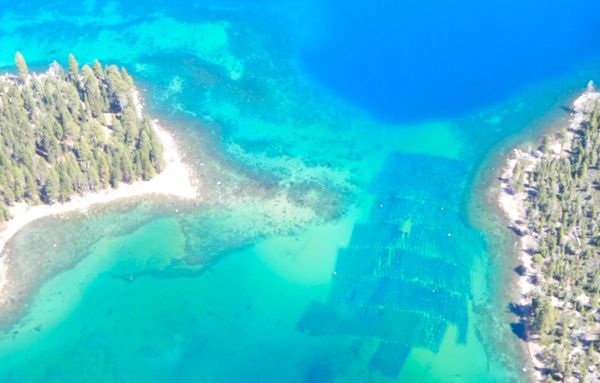
Another example of the EIP’s public-private partnership approach can be found in the aquatic invasive species program. A boat inspection program launched in 2008 through the EIP has successfully protected the lake from new aquatic invasive species. And researchers and agencies have pioneered new ways to fight invasive species already in the lake. Over several years in iconic Emerald Bay, barrier mats and divers were used to eradicate acres of invasive plants that were taking over the sandy shores and clear water and keeping people from swimming, boating, and enjoying the lake there.

After 20 years of projects completed by the partners working through the EIP, the long-running decline in Lake Tahoe’s water clarity has halted and started to reverse. Tributaries, marshes, and forests are healthier. Rare plants like Tahoe yellow cress are protected. Tahoe’s only native trout species, the Lahontan cutthroat trout, has been reintroduced in Fallen Leaf Lake and the headwaters of the Upper Truckee River. Communities and the transportation system are improving.

“We have a great goal to rally around, taking care of this special place,” Jeff Marsolais, forest supervisor for the Lake Tahoe Basin Management Unit, said about the EIP. “It’s the old adage about the sum being greater than its parts. The EIP is the framework to bring intention and purpose to the work we are doing, and allow all of us to accomplish more together than we ever could alone.”

“The EIP provides a common vision for all the public and private partners in the basin,” said Patrick Wright, executive director of the California Tahoe Conservancy. “For each major program—from stormwater to forest health to aquatic invasive species—the partners have developed a joint guiding document, a priority list of projects, and a set of performance measures to track progress.”

Keeping Tahoe blue is a collaborative effort. Photo/Kathryn Reed

Keeping Tahoe blue is a collaborative effort. Photo/Kathryn Reed

Lake Tahoe’s environmental problems and solutions have never been limited to any one political jurisdiction. And the EIP reflects the reality that Tahoe’s environment can never be restored without multiple agencies working together, coordinating, prioritizing, and investing in the right projects.

“Lake Tahoe is collaborating on a monumental scale,” said Kim Caringer, TRPA’s environmental improvement division manager. “This level of coordination is driving results on the ground.”

Lake Tahoe and its environment are responding positively to the basin-wide restoration approach launched through the EIP. With sound science guiding project investments, the EIP now ranks among the most comprehensive environmental restoration programs in the nation. The biggest challenge now, after 20 years, is to keep progress going. That means finding funding for additional projects and adapting to new challenges such as climate change and drought and the impacts they pose for the jewel of the Sierra—as well as the local economies that depend on its health.

“If we value Lake Tahoe as a national and international icon, we have to continue and protect the investment we have made,” Caringer said.

Tom Lotshaw is the public information officer for the Tahoe Regional Planning Agency. This article first appeared in Tahoe In Depth


Climate change threatens American pika in Nev.

By Brady McCombs, AP

Populations of a rabbit-like animal known as the American pika are vanishing in many mountainous areas of the West as climate change alters its habitat, according to findings released Thursday by the U.S. Geological Survey.

The range for the mountain-dwelling herbivore is decreasing in southern Utah, northeastern California and in the Great Basin that covers most of Nevada and parts of Utah, Oregon, Idaho and California, the federal agency concluded after studying the cuddly looking critter from 2012-15.

This study’s conclusion marks a more authoritative statement about the role of global warming on the animal compared to research released in 2003 that found climate change was at least partly contributing to the animal’s decline.

“The longer we go along, the evidence continues to suggest that climate is the single strongest factor,” said Erik Beever, a research ecologist with the U.S. Geological Survey and lead author.

A study shows the American pika is vanishing from areas of the Western United States. Photo/Shana S. Weber/USGS

A study shows the American pika is vanishing from areas of the Western United States. Photo/Shana S. Weber/USGS

The pika’s habitat on mountain slopes, known as talus, are hotter and drier in the summer and more harsh in the winter with less snowpack to serve as an insulator, Beever said.

The study bolsters the case for wildlife advocacy groups pushing for years to have the animal added to the endangered species list amid concerns about global warming.

The U.S. Fish and Wildlife Service rejected a request in 2010, saying not all populations were declining. A new request was made this April by a high school student in New York state.

A preliminary decision on that request is due out in early September, but the agency’s staff won’t take into account the new study because they are bound to only take into account information submitted with the petition, said Fish and Wildlife Service spokeswoman Serena Baker.

Noah Greenwald, the Center for Biological Diversity’s endangered species director, said the new research confirms that climate change is putting the animal at real risk. He said it should help with future petitions to have the animal declared endangered — something he says is necessary to ensure future generations are treated to seeing the critters during mountain hikes.

“It’s gotta be one of the cutest animals in North America. It’s like a cross between a bunny rabbit and prairie dog,” Greenwald said. “Part of what makes our world interesting is the diversity of animals and plants that you can see when you go to different species.”

President Obama mentioned the plight of the pika this summer when he spoke at Yosemite National Park about the damage climate change is inflicting on the nation’s national parks. He said the pika was being forced further upslope at Yosemite to escape the heat.

The study didn’t quantify how many total American pika still exist, but honed in on several areas where the small animal has historically roamed eating grass, weeds and wildflowers.

The animal is thriving in a few places, such as the Columbia River Gorge in Oregon and Grand Teton National Park in Wyoming, but overall is suffering, Beever said.

At Utah’s Zion National Park, they’re gone all together despite being seen as recently as 2011. In nearby Cedar Breaks National Monument, they’re no longer in three-fourths of their historical habitat, Beever said.

Pikas were not found in 11 of 29 sites where it once lived in northeastern California.

In the Great Basin, which stretches from Utah’s Wasatch Mountains in the east to the Sierra Nevada and Cascade Mountains in the west, the population is down about 44 percent compared to historical records.

“It’s not that they’ve just moved, they are gone all together,” Beever said.


Mammoth, Forest Service say let’s make a deal

By Michael Doyle, McClatchy News Service

A Sierra Nevada land swap that would add 1,317 acres to three national forests in exchange for about 30 acres serving the prominent Mammoth Mountain ski resort is nearer completion.

After maneuvering that dates at least to 2011, the Forest Service on Friday pushed ahead with the proposal involving the Stanislaus, Plumas and Inyo national forests. Supporters call it a win-win proposition.

The swap must still survive scrutiny, starting with a 45-day public comment period and a hearing Sept. 8 in Mammoth Lakes. Already, though some residents of nearby June Lake have raised concerns, the proposal has cleared political hurdles that exemplify how Washington works.

To navigate a deeply partisan Congress, the land-swap proponents got companion bills in the House of Representatives and the Senate introduced by the local congressman, Republican Rep. Paul Cook of Apple Valley, as well as by California Democratic Sen. Dianne Feinstein.


Read the whole story