Blueprint to combat opioid abuse in Nevada

By Pashtana Usufzy, Las Vegas Review-Journal

Gov. Brian Sandoval’s Prescription Drug Abuse Prevention Summit concluded Thursday with a laundry list of recommendations to reduce opioid abuse in Nevada, at least some of which are expected to be included in a legislative package the governor will send to the Legislature next year.

Suggestions from about 400 health care professionals, politicians and others attending the two-day summit included identifying physicians and others who overprescribe opioids, ensuring that patients who abuse drugs are connected with rehabilitation services and increasing access to the overdose-reversing drug naloxone.

The summit also revealed some hopeful news: The number of reported opiate-related overdose deaths declined statewide in 2015, though state officials say they don’t yet know why.

Read the whole story


Obama says Reid is 1 of Senate’s greatest leaders

Sen. Harry Reid, D-Nev., has been working on Lake Tahoe issues for decades. Photo Copyright 2016 Carolyn E. Wright

Sen. Harry Reid, D-Nev., has been working on Lake Tahoe issues for decades. Photo Copyright 2016 Carolyn E. Wright

By Scott Sonner, AP

STATELINE — Sentimental? No. Tough? Yes.

A credit to Nevada and his country? Absolutely.

That’s how President Obama describes Sen. Harry Reid as the Nevada Democrat’s 30-year career in Congress winds down.

“I’ll miss Harry, even though he’s not a sentimental guy,” Obama told a crowd of about 7,000 this week at the Lake Tahoe Summit at Harveys.

The president shared a story about Reid’s telephone habits familiar to most who’ve known the son of a hard-rock miner over the years.

“Anybody who’s ever gotten on the phone with Harry Reid, you’ll be making conversation, and once he’s kind of finished with the whole point of the conversation, you’ll still be talking and you realize he’s hung up,” Obama said to laughter.

“And he does that to the president of the United States,” he said. “It takes you, like, three of four of these conversations to realize he’s not mad at you, but he doesn’t have much patience for small talk. ”

Reid, who is retiring at the end of this year, is a “tough” character whom Obama believes will “go down as one of the best leaders the Senate ever had.”

“I could not have accomplished what I accomplished without him being at my side,” the president said. “So I want to say publicly, to the people of Nevada, to the people of Lake Tahoe, to the people of America: I could not be prouder to have worked alongside the Democratic leader of the Senate, Harry Reid. ”

Obama made his first ever visit to Tahoe for Wednesday’s summit at the request of Reid, who also persuaded President Bill Clinton to attend the first such summit in 1997.

Obama said Reid has been an environmental champion not only for Nevada, but the entire nation.

“Right after I took office, the very first act Harry’s Senate passed was one of the most important conservation efforts in a generation. We protected more than 2 million acres of wilderness and thousands of miles of trails and rivers. That was because of Harry Reid,” Obama said.

Reid was the driving force behind the creation of the only national park in Nevada, Great Basin National Park near Ely on the Nevada-Utah line, he said, as well as the protection of more than 700,000 acres in the Basin and Range National Monument Obama designated last summer.

But his environmental legacy may prove to be the efforts he put into bringing together dispirit interests to begin to reverse a dramatic loss of Lake Tahoe’s famed clarity.

“Two decades ago, the senator from Searchlight trained a national spotlight right here, on Lake Tahoe,” Obama said. “And as he prepares to ride off into the sunset … this 20th anniversary summit proves that the light Harry lit shines as bright as ever.”


Wallace: Leadership means listening

Publisher’s note: Lake Tahoe News asked candidates for South Lake Tahoe City Council, Lake Tahoe Community College, Lake Tahoe Unified School District, Douglas County School District, South Tahoe Public Utility District and Lake Valley Fire Protection District a series of questions. We are running the responses in the order received.
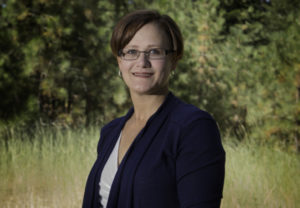
Tamara Wallace is running for one of two seats open on the South Lake Tahoe City Council.

Tamara Wallace is running for one of two seats open on the South Lake Tahoe City Council.

Name: Tamara LeAnn Wallace

Age: 46

Job/profession: Retired businesswoman/chamber exec

What boards, commissions, or other experience, including volunteering, do you have?:

2010-14                 South Lake Tahoe Planning Commission

2003                        South Lake Tahoe Lodging Board

2002-03                 Citizens’ Financial Advisory Committee (LTUSD)

1996-98                 President-elect, Charter Secretary Tulare Sunrise Rotary

1999-2008           Past-president, member, Lake Tahoe Kiwanis Club

2004                        Volunteer consultant, Leadership Lake Tahoe

2000-Current     Coach, South Tahoe Wrestling

2003-05                 Past-member, STHS Cheerleading-Parents Club

2007-Current     Teacher, Vacation Bible School, Tahoe Community Church

2016                        Volunteer, Vacation Bible School, Sierra Community Church

2004-05                 STAT (South Tahoe Athletic Teams)

1997-99                 Teacher, KAPOW (Kids and the Power of Work)

1994-96                 Volunteer, fundraiser, co-creator, Tulare Battered Women’s Shelter.

Why are you running for City Council?: This is a way that I have wanted to serve my community for many years. However, I have been ill for a long time, so was our oldest son. We also adopted a special needs child. I devoted my time to my family for the last few years because that was where I was most needed. From 2010 to 2014, I was able to serve on the Planning Commission. Through that I was further convinced that the City Council was where I wanted to be. Now that my health has been improving for over a year, our son’s illness is completely at bay and our adopted child is 5 years older, I am now ready to serve in this capacity. I believe that the council must serve, not rule our community. Further, I have been fortunate enough to have a few really incredible mentors in my life, one of whom recently passed. He taught me many things, including:  working with public-private partnerships, how to disagree without being disagreeable and that economic development in a community is a high tide that raises all ships.

Why should voters vote for you over another candidate?: My life’s experience has just led up to this point. I have been working and volunteering in a community setting for the last 27 years either through fate or design I have been able to work for and with people who believe in their communities. Those who have sought their entire lives to improve where they and their family live. This example has been invaluable to me. I believe that I have become one of those people. Four out of five of my children still live here (I’m still working on the fifth). Every one of them grew up trying to make a difference in their town. Citizens in this community, too many times, have had to go back and reverse what the council has done. I want to be a part of getting it right the first time.

What distinct experience or competency makes you uniquely qualified to lead effectively as an elected official?: I participated and graduated from a six-year program called the Institute for Organization Management (UCLA and USD). This was an in depth, immersive program that included executives from organizations such as the Trial Lawyers Association, the California Lumber Association as well as chamber of commerce executives, executives from every type of association and organization. We were taught budgeting, business law, media relations, building coalitions, strategic planning, business ethics, how to effectively use technology and effective listening, to name a few. As a result, I made a network of friends and colleagues all over the Western United States, as well as Washington, D.C., who are involved in forming public policy in their communities.

My specific plan for leadership is to listen. Listen to the voters, listen to the experts and listen to my heart. I’m experienced, but not infallible, there are many people who may know more than I do about any given subject. I plan to listen and follow my own moral compass. I intend to vote on the issues the same way each community member would vote if they were given the same information as I, and are trying to do the right thing for the right reasons. These are the guiding principles by which I live and intend to serve as an elected official. There will be hundreds of issues to discuss with the public, fellow council members and staff, so the process by which I arrive at decisions is how I would like to be judged. By using proven techniques of public policy decision making I hope to improve my skills and to become a part of a good decision making body.

Public agencies have been under scrutiny the last few years for lack of transparency and accountability. What will you do to ensure both?: I’ve taken classes and seminars on government ethics, including the FPPC rules and the Brown Act. If I and the council follow these guiding principles, it should ensure an open and honest meeting process. Something specific I would watch for is to make sure any closed session meetings would be noticed with the most specific language possible so the public can know what’s happening, as much as legally possible. One of the main reasons the Brown Act was written is to avoid what are commonly referred to as “daisy chain meetings.” Those are when council members discuss items in a linear fashion (one member to another, to another and so forth) without all being in the same room under a “noticed meeting.” That is still considered a meeting and the public is excluded. This is against the Brown Act guidelines.

Accountability can be measured through the wise use of the public’s dollars.

What stands out for you in the current budget that you support and that you would change?: My answer to both parts of this question is the same: road repairs and public safety. I support each of these and wish to increase the amounts each line item receives as much as humanly possible.

Do you support current legislation for $15 minimum wage? Please explain: That is a state/federal legislative issue and not one that the City Council will likely vote on. I believe that we need as many high paying jobs in our community as possible and the best way to get there is to attract businesses that pay well, in addition to reducing taxes and regulations that keep businesses from paying those higher wages. Every dollar taken by government is one less dollar paid to an employee. Businesses have only so much income. For instance, Australia has a $25 minimum wage, their prices are reflective. Part of the problem is the difference between “minimum wage” and “living wage.” A living wage is, by definition, what a person makes that can support them/their family. However, a minimum wage is just that: the minimum amount that a person is paid for certain types of entry level jobs.

Do you support Proposition 55? Please explain: Again, this is more of a state issue. Maybe I should run for state Senate or Assembly – ha,ha!

I support education. My daughter is a teacher, my husband is a substitute teacher and former school board member, and my son is school district employee working on his teaching credential. I believe in public education. The part of Prop. 55 that disallows any funds going to administration is good. The language that allows the local boards of education to have discretion is also good. However, I support small business and the limits ($250,000 single filers, $500,000 joint filers and $340,000 head of household) are right where most small businesses lay, or would like to. Please remember these are gross dollars, not net. As I stated above, the more taxes that a business has to pay results in less available to their employees and in their own communities.  It doesn’t have to be an either/or situation, by improving businesses they in turn pay more taxes on that increased volume which then benefits the government.

Describe three attributes for a successful council: Honesty, respect, teamwork. I believe this is self-explanatory.

What are your thoughts about public employee defined benefits?: I think that the PERS system is a good one. So I hope that the PERS administrators disengage in their fiscal shenanigans. So when benefits are promised to an employee that should be considered a solemn promise. I also like some of the “cafeteria-style” benefits programs that allow employees, public or otherwise, to choose where their retirement dollars are held.

Please explain your position regarding contracting out work normally done by staff: If a job can be done better and/or more efficiently and for less dollars, then I am all for contracting out some services. For instance, there are often jobs that are not ongoing. If a position is created within the city to accomplish that job, when the job is completed the city is beholden to an employee for the long term. So, it makes sense to evaluate short term position tasks. However, sometimes a current employee has a better understanding of a situation and can perform the job most efficiently. Sometimes an outside contractor is better able to do this. As a situation presents, it should be taken on a case by case basis. I’m for whatever saves the taxpayers the most money in the long run.

What is your 10-year vision for South Lake Tahoe?: I see a community that my granddaughters can grow up to raise their own families. I see a community that when our youth go away for school, they are economically able to come back. I want a community with decent housing that families can afford and one that is safe and has a well-staffed police force. I would like to have a community that has good paying jobs and good schools. I envision a community that has a built environment that is as beautiful as the natural environment. I see a community that is so beautiful that when people come to visit, they refuse to leave. I desire a community that is governed by people who make decisions for the right reasons, not for what’s politically expedient. This is the community that I hope to bring about and leave to my children and children’s children.

What one vote in the last four years that the current council made do you disagree with and why?: Charging for parking in neighborhoods and tourist areas. This was repealed via Measure P in 2014.

Citizens and businesses already pay for the use of the parking spaces and streets through their taxes. Why should they or their customers then pay to park in the spaces and on the streets they have helped purchase. It’s really that simple.

How many City Council meetings have you attended this year?: I have been to two or three meetings in the last year; however, I watch almost every one of the meetings on the public service channel. It was off the air for a while so I relied on either going to the meetings or talking to those who attended. Over the past 18 years, I have attended countless council meetings. In addition, as a planning commissioner, I attended council regularly. I also receive emails from the city clerk regarding ongoing issues at/in the city.

What do you know about the strategic plan, finances, debt, and goals of the city?: Quite a lot in the macro. I am currently trying to get more into the micro of these issues. For instance, with regards to finances, debt and budget, the city’s debt service is in the 22-25 percent range and if they bond the funds that may become available with the sales tax initiative it will increase to over 30 percent (these are ball park figures). In addition, the original redevelopment is still hanging over the city’s head. There is still significant transfer of property tax from other entities to help pay down this debt, the utility district’s portion is around $500,000. More debt should be taken on with great trepidation and seriousness, if taken on at all. I may be off by a little, but am studying diligently so as to be able to hit the ground running, if necessary.

I have read all the information that was made public with regards to the city’s goals and strategic plan as they were decided on. However, again I am studying these issues in more detail now that I am asking to be a member of the council.

Being on the council means working as a team. How will you work with the sitting members for the greater good of the community?: The community expects their council members to get along if possible. For years now there have been personal arguments that I have watched with disgust just like other citizens. One drama that I have seen is the fight over who will be mayor. The strong city manager style of government in our city is such that the council is the “what” and the city manager is the “how.” However, as small a city as we are somehow whoever is selected as mayor, who is there simply to chair the meetings, gets a big head. They then try to implement their singular agenda for the city. That causes friction among those who also wanted to be mayor. It also causes friction when the “mayor” gets too heavy handed with the other council members and especially the staff. I personally refused to chair the Planning Commission a couple of times because:  first of all, I was too new to that board and did not think I should lead until I understood all the issues. Secondly, I did not need the accolades. We are small fish in a small town. We should not think of ourselves as rulers, but rather as servants. The other reason councils argue is that they have honest disagreements over the right policy to follow. That is OK and I think healthy. That is why they have five council members and not just one. There is a way to disagree without being disagreeable. Listening without interrupting, asking questions instead of making accusations and not grandstanding in front of the public are common sense ways to avoid embarrassing arguments.

What should be the three main priorities for the council?: Long-term financial stewardship of the public’s money: Each council should try to leave the city and next council in better financial shape than they found it in. That would include not taxing the businesses and projects to the point that they decide to live/build elsewhere. That is especially important since we have another state next door that can compete for our businesses and families. I have refused to accept the City Council salary of just under $1,000 a month. Hopefully that will set a good fiscal example. We are not rich. But we have lived for many years within a budget. I do not put others down for accepting the salary. However I was one person who felt that after making the employees cut back that doubling the council’s own pay was not a nice statement that was made to the public and the employees.

The second would be leaving a legacy of infrastructure such as improved roads, buildings and public facilities that match the beauty of our natural environment.

Provide a safe community with decent housing prices for all who live here. In essence, we need to create a community that draws our children and their children back to a place they can afford that feels safe from crime and natural disasters such as the Angora Fire.

What have you done to make yourself ready to be a council member?: This question is a little like question No. 4 above regarding my experience on boards. I will refer you to all those boards and commissions listed in that answer. However, I will expand my answer in another way.  I haven’t just been interested in the City Council. I have attended school board meetings, scores of community forums, utility district meetings, county Board of Supervisor meetings, TRPA meetings, lodging board meetings, forums like the housing forum put on recently by TRYP, and many more local meetings. At the state level, I have attended meetings in both Nevada and California. I went to the same high school as former Nevada Gov. Kenny Guinn in the central San Joaquin Valley. We had mutual friends. As the main staff person for Leadership Tulare I set up meetings and tours of the California state Capitol where we met with our elected representatives and then later came back to work for or against bills that affected our businesses. At the federal level, I have flown to Washington, D.C., about a dozen times. The subjects of the trips varied from attending congressional hearings on MTBE in our Tahoe groundwater and Senate hearings and private meetings with Sens. Boxer, Reid and Feinstein regarding the Lake Tahoe Restoration Act as well as meetings with Congressman Gibbons who later became the governor of Nevada and Congressmen John Garamendi and John Doolittle on issues regarding the United States Forest Service. One of the most important efforts that I supported was to have our California state Sen. Tim Leslie, his aide Michael Applegarth and several local fire chiefs from around the lake put on a forum at LTCC with Sen. Feinstein and Congressman Doolittle about preventing wildfires. Unfortunately the bureaucratic wheels moved too slowly at Lahontan and TRPA so we were not yet ready to prevent the Angora Fire that happened prophetically just a short time after Sen. Feinstein loudly declared that the agencies had better get out of the way or they would be held responsible for a terrible conflagration! I was also invited and attended an international conference sponsored by Green Peace in Moscow, Irkutsk and Lake Baikal Russia on how to create a thriving business economy in an environmentally sensitive place. We traveled with Ed Gee from the USFS in our group. We also met with a group of bankers from Russia regarding how to fund business ventures without involving the government. We still have some contact with the people we met. I regularly receive emails from lobbying firms from both sides of the political spectrum in the U.S. capital on strategies mostly for the Western States and the very complex issues that are interwoven around water and land use. Finally my experience working with Economic Development and land use planning gave me a good understanding of how to create proper visually appealing yet profitable business districts. As a member of the Western Association of Chamber Execs that is made up of seven states including Hawaii. We learned how California’s economy was interwoven with many other countries, almost as if it was a separate country, because of our being one of the largest economies in the world at that time. Many of the trips started out with controversies. I saw how compromises and mutually beneficial agreements can be worked out without shouting and back stabbing. Some of the trips were when I was an invited observer and others were where I was a needed participant. For instance I worked as part of a group who wanted to build a “build to suit” industrial complex that revolved around using agricultural products (50 of which net approximately $5 billion in the aggregate in Tulare County alone) and milk since our area had more dairies and cows than the entire state of Wisconsin. I drew the short straw on the trip to Italy, France and the Netherlands, but was our emissary to Oregon and Washington to attract different users of Tulare Ag products. Our industrial park was highly coveted, in the sense that we used very savvy financing techniques to build it. It has become a prime location for manufacturing butter, creams, including a Haagen Dazs ice cream plant, food packaging materials and many more. All of the tenants brought in primary year round jobs. They also worked to support each other and the community. What we didn’t do was tax the new businesses and charge fees which would have caused them to look elsewhere.

What role should government have in housing for residents?: I must be honest and tell you that I believe, based upon my life experiences, that government has a tendency to mess up more things than they fix. It was TRPA, in reaction to the table games and the 1960 Olympic Games who have made our town a museum of the 1960s. By freezing building, the supply dropped and the demand increased causing a rise in prices. It was done mostly out of true concern for the environment but the science as to what was really causing water and air pollution at the lake was not accurate then. “There is science and there is political science.” As studies were done over the past 50 years there was often a finger on the scale tipping the study results toward not allowing homes and businesses to be built. In the mid-1970s about 200 homes were being built per year on the South Shore. When the CTRPA (the precursor to TRPA) hinted that they might soon stop all building, over 2,500 homes were thrown up in a very short amount of time with little regard for stream sediment or any other environmental degradation. So then the agency was able to say, “See, we told you there were too many houses being built, we’ve got to stop all building!” In the urge to find a way to stop the building the agency came up with items (now called commodities) that could be metered out to control building. These imaginary commodities were things such as sewer units, TAUs, square footage formulas and many other things. Decibel levels, while a real measurement, were used in such a way that their scientific studies found that commercial jet airplanes just happened to need to be at just a few decibels below what a commercial jet could possibly stay under. It took longer to get a permit to build a garage than it took to win World War II. Now, in my opinion, government needs to get out of the way. I believe that there can be a positive meeting of the minds among all the governments on the South Shore to lower or eliminate the fees for builders who will build homes that are dedicated for single family, owner occupied residences. That also meets all environmental thresholds. The project is the fix. None of us is smarter than all of us. That is certainly true in my case. But, if we can generate enough public pressure on TRPA, STPUD, Lahontan, the county supervisors, city building department and many more agencies then we will be able to lower costs. That will raise the supply which will allow our children and families to stay here in our beautiful city.

How can the city partner with the school district to improve high school graduation rates?: [Superintendent Jim] Tarwater and the board of education have gone a long way toward that goal by building trade school programs that teach students how to be mechanics, welders, accountants and dental technicians, to name a few. Not every student plans to go to a four-year college or university. In addition, our society and our community need the trades. One idea that I have heard is to reinstate the ski hill they have below the football field. Students who could ski during P.E. would most likely stay in school during the winter. Other students could learn how to become lift technicians/mechanics. In other words, making school fun for upper classmen as well as being useful for getting a job in this town. I also believe that Mt. Tallac High School and its amazing staff have done wonders with getting at risk students to complete their education. Kudos to them!

How can local government support and expand job creation and small local businesses?: As it is right now when a person wants to open a business here, some — not all, of the planners and counter people do not see themselves as advocates but rather almost like police officers. Time after time, I have been told by new business startups that they have been put through the wringer in order to get started. The fees are sky high and the agencies don’t foresee problems in order to help point them out so it takes them longer and costs them more. This is especially true for seasonal businesses, for instance an ice cream truck or bicycle shop. Fees should only be the amount that it costs the city to process the application. In some cases the fees are charged based on 10-12 hours of staff time, when the same work could be done in the private sector in as little as two or three hours. In addition, the city should provide a checklist of items that must be done and how to do them for new residents/ business people. Our agencies are scattered all over our town, in places that no one would ever expect them to be. We should have a list of available locations where businesses could possibly lease/buy and pitfalls to watch for. Simply put, the city should treat them like a relative that they always liked and who wants to start a business. No Catch-22 situations should be allowed. It has been ironic to see former planners from local agencies who decide to go into consulting or private business. Only then do they realize what the time delays and costs can do to a business that has signed a lease and is having to pay out money without any income. I am very familiar with how to make businesses feel welcome and how to assist them. It was my former job to assist and encourage economic development. It was a very enjoyable thing to be involved in and it is gratifying to go back and find the businesses I recruited still in operation.

If you believe in the one South Shore concept, what would you do to further make this a reality? If you don’t believe in blurring the state line, why don’t you?:  In many ways there is one South Shore. The birds, bees, deer, fish and bears do not know that there is a state line. Fires, earthquakes and storms don’t see the line either. However, with human beings there is a state line. The economy and the governments draw a distinct line. We do not have gaming on the California side of South Lake Tahoe. Our wedding license laws are different. Our business license fee in California is different than the gross margins tax in Nevada. Nevada doesn’t have a state income tax and California does. The Nevada side has more large corporations than the California side. Most of the school children are on the California side. The state Legislature meets every other year in Nevada and California’s almost never stops meeting. The drug laws are different. Probably most important is tax dollars generated on one side of the line and paid for by the citizens of same, should not be used to benefit the other side. We pay a lot of taxes in our society and the state/county/city we live in should/must benefit from the proceeds.

What are your views on:

a: Vacation home rentals: What I believe is the issue with VHRs is lack of enforcement. The VHR code on the books for many years was simply not being enforced. When that issue came to a head, the City Council chose to update the code with stronger penalties, higher fees, etc. Now it has become apparent that no enforcement was added, which was the main problem to begin with. What I believe the council should have done (and still can do), in addition to beefing up enforcement, is deal with the underlying issue – zoning! If we were to zone the different neighborhoods with maximum densities for VHRs, long-term rentals and owner-occupied homes, this would solve most of the problem. However, if there is not a strong enforcement arm to the new zoning rules, it will fail just as other pseudo solutions have. It has been found that our under-staffed and over worked police force is simply unable to provide enforcement for VHRs, I would suggest an outside security force that can respond in a timely manner to the non-violent issues and they could contact the police for issues with greater need for their services. (i.e., noise complaints would go to the security force/service, domestic violence and vandalism would be directed to the PD).

b: Loop road: My opinion on the loop road is this: I think we can accomplish many of the items that would be addressed by redirecting the highway, without spending $100 million-plus. We want a more bikeable, walkable area – lower the speed limit to 25 mph, which is a nationwide standard in business districts. As for traffic congestion, I don’t believe that the loop road will solve this issue in any of its incarnations. However, one community member wisely suggested synchronizing the traffic light system; I believe this would be a huge improvement to congestion. Based on the current option being discussed, I don’t see how moving a congested highway away from the business district and into a neighborhood with families is a good alternative. Not to mention, our community is in a housing crisis and although TTD has said that they wouldn’t break ground until housing is replaced, they have also said that they are also allowed to negotiate with the displaced families and individuals for rent subsidies, in lieu of replacement housing. This is a much easier option for them, not to mention a quicker one. What makes us think that they won’t push for the subsidies and forego all new housing just so they can break ground as soon as possible? They have already been accused of being less than honest in North Shore with regards to the housing element there. There is some speculation that their housing solution involves moving the displaced families/individuals into a remodeled Kingsbury Middle School. How can they think this would be a viable option? Imagine being the descendant of a family that built a cabin in the area affected. This cabin houses not just your family, but your history. Your only two options are to move across state line and live in a converted school, or take your subsidy and possibly find another home that simply does not have your history in each nook and cranny. Apart from this, I simply believe that the voters should be making this decision. The council needs to decide how to define “the city,” is it the staff, the council themselves or is it the citizens who live here? If they believe it is the citizens, then they should let them decide. Fifteen hundred voters signed to demand this issue be put on the ballot, why then would the city not let them have their say. I say again, council members are servants not rulers.

c: City streets: City streets need to be completely redone every 40 years, ideally much more quickly in snow country. When all is said and done with the money available and possible new funding sources, this is not even close to being feasible in the city’s current financial situation. The average mile of road costs $1 million to redo. We have about 400-plus miles of roads in the city. If we were to use the $100 million from the loop road (which will only build about one mile for that project), we would be a fourth of the way there ($1 million = 1 mile, $100 million = 100 miles, one-quarter of the city’s streets). It would certainly have a greater impact on the citizens. Even if the sales tax measure on the Nov. 8 ballot passes and the money is bonded (which would increase the city’s debt service to an estimated 30 percent), there would only be about $40 million to overlay the 400 miles of roads in the city. At this point we are on a collision course. This can has been kicked down the road for too many years, but I would be surprised if this continues, especially if I am lucky enough to be elected.

d: Relationships with other public agencies: There has appeared to be a problem in this area also. While I’m not privy to all behind the scenes negotiations, I have seen a couple of public disagreements with other agencies that have not worked out well. One breakup has been the joint powers authority (JPA) that was created to provide superior and consistent safety services. I’m not going to describe each side’s points on this breakup and public disagreement. Another dust up was when the city decided unilaterally that they could simply charge a franchise fee to the South Tahoe Public Utility District in the estimated amount of $500,000 per year. This was dropped quickly because it is not legal. The point is that getting along with others should be a goal of the organization from the top down. A wise man once told me, “By the time you have met the third jerk of the day, go look in the mirror.” I think there is needed improvement when it comes to inter-agency spats.

e: Recreation: Our locals are recreation nuts, especially the millennials. But all of we locals ski, hike, workout and play every sport we can and just as important, so do our guests. I’m assuming that you are asking about the recreation TOT tax on the ballot. The lodging association is a proponent probably for two reasons. One would be to not have the city gobble up TOT for a non-beneficial reason that doesn’t help the industry. The other would be that sports dollars can be huge. For instance our small South Tahoe Wrestling Club hosted a state tournament. Seven hundred wrestlers and their families came for three days. That tournament alone filled many motel rooms and restaurant seats. The proposed rec center will be built to host many other types of tournaments. My personal preference would be to have a private company be in charge. That being said, Lauren Thomaselli, the current Recreation Department head, is as good as anyone out there. But, she will eventually retire. It has been proven all over the country that private for-profit operators do a better job overall in operating ice skating arenas, and other recreation facilities. One last thought. We do have private gyms that would have to compete with a government subsidized center. Perhaps some of the things they do best should be left to them.

f. TRPA defined commodities: They are made up out of thin air and are an end justifies the means item. Of course we want to protect our lake. I have certainly been a major supporter of the Lake Tahoe Restoration Act. However, it is time we all were honest with each other. The TRPA and enterprising developers can use the sale of these commodities such as tourist accommodation units (TAUs) to make money.

g. Transient occupancy tax measure: I am a past secretary of the lodging board. The issue of TOT increases often came up. The state and national associations have verified studies that prove as the TOT costs went up, the number of guests went down. For instance the city of New York raised TOT to 18 percent. Tourism dropped so hard and fast that they had to rescind the tax. I point this out because there is obviously a point at which a city can overtax the guests. As an operator/manager of several small properties, I saw the sticker shock. It is not a bottomless well. As I said above, the lodging association does believe they will see a benefit from this tax because of the sports teams coming here with their families. I believe the tax will pass because the public likes taxes that another person will pay. That being said, I think that the threshold has been reached after this. If we continue to go back to this well, then we will start to see diminishing returns.

h. Sales tax measure: I sure wish that previous councils had done more to fix the roads in the past. They have joked that the utility district and other entities that do work in the city streets are the city’s road repair program. That is because when any other entity digs even in a fairly small portion of a road, the city has them repair as large of a section as possible. The public may think that Caltrans and the city are doing the work. Our city streets are in terrible disrepair. It is very disappointing that those who want funds for affordable/workforce housing and those who have lost their Volkswagen in a pothole are pitted against each other on this ballot. Both things are desperately needed.

i. What do you want the additional sales tax money to go to?: In a previous answer I pointed out that all the governments could lower their fees in order to stimulate lower priced homes for renters. That can’t be done for road repairs. So if I have to vote for a tax rather than raise income to the city by increasing sales for businesses. I would say put it to roads. I’m still looking for my Jeep in a pothole on Eloise Street.

Tell us something about yourself that people may not know: In keeping with my long wordy answers to your many questions, I think two things might be not known. My great-great-grandfather, Joseph Alexander Grassel, was a soldier in the German army just as things started heating up in the Third Reich. I’m told he was in the secret police (not to be mistaken for the SS). He and his fellow soldiers were asked to start persecuting the Jewish people starting with the more wealthy shop owners. He took a stand and refused to persecute those families. Joseph Grassel was soon arrested and put into a box car and sent away into the very same type of prison that he had refused to send the Jewish people to. The prison was one of the more famous death camps. It was called Dachau. Joseph died there. Some of his possessions were reported to have been kept. On Sept. 11, 2001, while visiting Washington. D.C., I decided that I was going to go to the Holocaust Museum’s archives in Alexandria, Va., to try to retrieve his things. But first we had a meeting with Congressman Doolittle. On the way to the Capitol building that morning we heard that a plane had flown into one of the twin towers. At that point we didn’t know what type of plane nor did we have any idea what kind of damage was caused. But our cab driver knew. He even suggested that it might be Osama Bin Laden. Just as we were shaking the congressman’s hand the second plane hit the second tower. The congressman believed we were at war and his aides immediately whisked him away. Weird World War II air raid type alarms were going off. The guards were standing, arms at the ready, in every hallway. Our group of four was scared down to our toes. We worked our way out of the building and found a retaining wall about 70 yards in front of the Capital. We could hear the slow whine of a jet engine. We got down behind the wall and waited for what we were sure was going to be the blast from the collision. Other tourists copied what we did. It became quiet. We stood up and then the plane hit the Pentagon where we had been the day before. We then walked about 15 blocks across D.C. to our hotel. We heard other blasts that car radios said were government targeted buildings blowing up. Later we learned that the blasts were from sonic booms from our Air Force jets flying at top speed to protect the city. It didn’t feel real. We drove by the Pentagon the next day to see that the plane had caught on fire again. It took some time to get word to our kids and parents that we were OK. We often thank God for those brave passengers of United 93 that went down in Pennsylvania. They fought the hijackers and saved our lives.

You have said that the majority of the council has tried to silence the minority. Please explain this and use specific examples: Actually, that is not what I said. I’m copying here exactly what I wrote.

“When a staff member is mistreated or abused by an elected person there are legal mechanisms is place to deal with it. They are very clearly defined for a reason because in the past the majority has tried to silence the minority. Before I am possibly misunderstood again, I don’t believe that is the case here.”

My point was that the majority silencing the minority is why the laws were put into place.



Snowmaking technology allows skiing in summer

By Allen Best, Live Science

In early July at Boreal Mountain Resort, temperatures reached 91 degrees, which is not uncharacteristically here. The real surprise was that the ski area near Lake Tahoe was making snow.

Boreal is the site of the first North American demonstration of a relatively new technology called Snowfactory. The process parallels that of an industrial ice maker — essentially, a large-scale version of the ice maker in the door of many household refrigerators.

An ice maker takes water chilled with a heat exchanger and sprays it onto a surface. The cubes are created by imposing the ice onto a grid. In a unit about the size of a trailer, such as the type pulled by 18-wheeler trucks, Snowfactory uses the same process to produce flat flakes that are collected on a panel and fed into a conveyor belt. The flakes are then blown through a pipe up to 600-feet long to the desired location on the ski slope.

Read the whole story


EDC supes disagree on Measure E implementation

By Joann Eisenbrandt

PLACERVILLE — El Dorado County Board of Supervisors on Aug. 30 voted 4-1 not to adopt a resolution to aid in the implementation of Measure E. Supervisor Shiva Frentzen dissented.

After a contentious and often bitter election process, Measure E was approved by voters on June 7 and became the law July 29. It then became the Board of Supervisors’ responsibility to implement Measure E as the voters intended. This task has proven to be challenging.

Measure E focuses on the relationship between development and traffic, most specifically the prevention of traffic gridlock on Highway 50 and other county roads caused by large residential development projects. It isn’t a new idea, but rather it reinstates some of the provisions of Measure Y, the Control Traffic Congestion Initiative passed by voters in 1998. Measure Y prohibited residential development projects of five or more units that would cause or worsen level of service (LOS) F on county roadways. It also required developers to pay fees to mitigate the impacts of their developments and prohibited the county from using tax revenues to mitigate these traffic impacts without voter approval.

In 2008, the Board of Supervisors put forward a revised Measure Y initiative that was again approved by voters. It allowed the board to override the prohibition against developments that created LOS F by a four-fifths vote of the board and allowed the use of tax revenues as payment for road improvements caused by new development as long as these road projects were in the county’s long-range capital improvement program.

Measure E, titled by proponents as Initiative to Reinstate Measure Y’s Original Intent – no more paper roads, reversed the changes to Measure Y made in 2008 and made other additions and deletions to related policies in the county’s 2004 General Plan.

The battle over Measure E did not end when it became law. On July 29, the day it was certified, it was challenged in court. A writ of mandate to stop implementation of Measure E was filed in El Dorado County Superior Court by the Alliance for Responsible Planning. Also known as EDCARP, the nonprofit focuses on land use issues and played a large role in the vocal, organized opposition to Measure E during the campaign.

Their writ alleges that Measure E is invalid because it is internally inconsistent and cannot be implemented in a way that is consistent with the policies and goals of the General Plan and of state law. It seeks a temporary restraining order and a permanent injunction to prevent El Dorado County and the Board of Supervisors from enforcing it.

While the writ works its way through the judicial process, the county has moved forward with determining how Measure E, which is now a part of the county’s General Plan, will interact with existing policies and how it will affect the approval of future development projects.

County planning staff and the county counsel’s office have met with Measure E’s proponents to discuss the process. Staff prepared a 96-page memo for the board, which was reviewed at the special board meeting on Measure E on Aug. 9.

The length of the memo made it clear that implementing Measure E would not be a simple process. It identified what it called “potential legal conflicts, ambiguities, and internal inconsistencies relative to Measure E’s language,” and proposed ways to identify the voters’ intent, resolve any conflicts and implement Measure E in a way that was consistent with existing policies, regulations and laws.

On Tuesday, staff presented the board with a draft resolution for adoption that it believed did just that.

Measure E could affect future development because one of its main goals is preventing traffic gridlock. Photo/LTN

Measure E could affect future development because one of its main goals is preventing traffic gridlock. Photo/LTN

Of all the changes made by Measure E, two have been the focus of the most discussion and dissent. The first is the change in how the impacts of increased traffic created as a result of development projects are mitigated. Measure E no longer allows discretionary projects to be built and money from the county’s TIM (traffic impact mitigation) fee program or other funding to simply go into the county’s long-range capital improvement plan (CIP) to pay for needed road improvements at some later date.

These are the “paper roads” that Measure E wanted to eliminate. Even though projects were approved and built, the actual road improvements needed to offset the increased traffic they generated were only there on paper in the CIP.

Instead, Measure E requires that, “All necessary road capacity improvements shall be fully completed to prevent cumulative traffic impacts from new development from reaching level of service F during peak hours upon any highways, arterial roads and their intersections during weekday, peak-hour periods in unincorporated areas of the county before any form of discretionary approval can be given to a project.”

Opponents of Measure E called this a “taking of property” and a “de facto moratorium on building” which will not only affect developers, but will also prevent small local projects that require county approval from being built.

There are two kinds of projects: ministerial and discretionary. Ministerial projects are those that meet all the planning requirements based on their location and zoning and only need to apply for and receive the appropriate permits, pay the required fees and proceed. Discretionary projects cannot be built by right as designed at the selected location because they need a zoning change or some type of General Plan amendment. Discretionary projects are reviewed by the county and then approved by planning staff, the Planning Commission or the Board of Supervisors.

Measure E only applies to discretionary projects, and only to those that worsen or create LOS F.

LOS is the other term that is important and the other place where implementing Measure E gets sticky.

Level of service is a scale that describes roadway traffic conditions with levels of congestion ranging from A to F. Level A represents unrestricted free-flowing traffic at normal speeds and Level F is gridlock. Caltrans and the county’s Department of Transportation measure traffic flow and make LOS determinations. The problem is that they often disagree. Which data is used is important because LOS F will trigger the infrastructure-building requirements of Measure E and LOS C or D or E will not.

Measure E requires that the county use Caltrans’ calculations to determine the LOS existing on Highway 50. At this week’s board meeting, Dave Defanti, assistant director of the Community Development Agency, gave a detailed analysis of how the county determines LOS and why staff believes its methodology and figures are correct.

During public comment Don Van Dyke spoke on behalf of the Measure E Committee and handed a printout of slides to the board explaining the proponents’ view that not just volume of cars, but also speed and density need to be included for LOS calculations to be correct.

Frentzen said that those actually using the roadway frequently experience the level of congestion as much worse than what the DOT calculations say the LOS is. She expressed concern that all this “fighting with Caltrans” is counterproductive.

“What if Caltrans wants to improve roads because they are LOS F and we say, no, they are really LOS C,” Frentzen said. “In the end the county will be losing.”

The calculation of LOS is a vital component of Measure E. Initiative proponent Sue Taylor told Lake Tahoe News, “It is the backbone of our initiative. We don’t want gridlock on our freeways.”

Former El Dorado County Supervisor Bill Center noted that this issue has gone on unresolved for years and expressed the hope that proponents and county DOT traffic engineers could meet to reach some common ground. He likened the differing viewpoints to the case of three blind men describing an elephant. The one who is holding the tail says it is like a rope. The one who is touching the leg says it is like a tree, and the one touching its side says it is like a wall. None of them is wrong; they are just not feeling what the other ones have felt so they can’t come to an agreement.

Deciding how to implement Measure E has turned out to be much like that. The resolution presented to the board on Aug. 30 was intended as a way to allow everyone to see the entire elephant.

Staff proposed an interpretation of the change made by Measure E to General Plan policy TC-Xa 3 mandating that all infrastructure must be built before a discretionary project creating LOS F could be approved. If applied literally, it would be the “de facto building moratorium” that opponents had pointed to since it would be almost impossible for any individual or group to be able or agree to fund all the required improvements even before their project was approved.

Staff interpreted this policy in conjunction with General Plan Policy TC-Xf, which says that at the time a tentative map for a single-family residential subdivision of five or more parcels is approved, the county will condition that project to construct all road improvements necessary to maintain or attain LOS standards. This would mean that developers whose projects would worsen or create LOS F would not have to build the improvements before approval, but that a condition of that approval would still be the construction of the needed infrastructure. Projects built in phases would be able to also construct roadways improvements in phases as they became mandated.

Taylor told Lake Tahoe News before the election that the initiative’s intent was not to prohibit all discretionary approvals. “We want to give the board a way to say no to projects that are not compatible where they are proposed to be located.”

The hearing room in Building C at the Government Center on Tuesday was standing-room only, packed with proponents and opponents of Measure E. The meeting, scheduled on the agenda for one hour, lasted more than three.

During the public comment session, former El Dorado County supervisor Jack Sweeney and Lexi Boeger of Boeger Winery both urged that the draft resolution not be adopted. As each of them spoke, a contingent of supporters in the room rose, silently holding up signs that said, “We stand with Jack” and “We stand with Lexi.”

Craig Sandberg and Norm Brown, both representatives of development interests, spoke in support of the resolution, as did Measure E proponent Taylor. Taylor told the supervisors that she was “on board with the resolution” as long as discussions to resolve the LOS traffic levels issue continue either informally or through formation of a committee. “People have filed a lawsuit against Measure E,” she told the board, “and it is the county’s job to defend this measure.”

County Planning Director Roger Trout explained how the draft resolution was much like what was done by the board in 1998 in interpreting Measure Y and applying it to development projects coming forward.

Supervisor Michael Ranalli, who missed the Aug. 9 meeting because of a family emergency, said he appreciated staff’s efforts but, “I have some serious issues with what we are doing here … what we have here is not an interpretation, but a rewrite.”

Ranalli said more discussion was needed on the impacts of Measure E on the county’s Housing Element and budget. Opponents of Measure E had raised concerns about how it would affect the county’s ability to meet state requirements with regard to the General Plan’s Housing Element. The state requires the county to accommodate a designated portion of regional affordable housing needs and must have enough buildable land available to fulfill those needs. Opponents said Measure E would render too many needed parcels unbuildable.

Referring to the county’s interpretation of Measure E in the staff memo and resolution, Ranalli added, “What was before the voters was a measure that said give the board tools to stop big projects. What we have before us does not stop big projects. It also said no paper roads, you cannot mitigate the impacts with fees, but now we have fees.”

He suggested that instead of adopting the Draft Resolution, it would be better to, “let the courts sort out what the voters voted for.”

Board Chairman Ron Mikulaco agreed, saying that not only were parts of Measure E “as clear as mud” and a challenge to interpret but the draft resolution that county staff had presented was also vague.

Frentzen disagreed. “This is a very simple problem. Let’s just implement it to make our county better. The voters have spoken. They have voted. If this goes to court, are we going to put all the projects on hold?  We need to move forward. Let’s avoid litigation from at least one side. We have the other side litigating us and they want us to go down this path.”

The other litigation that Frentzen referred to is that which would come if Measure E were left to stand on its own, without interpretation by the board. Developers whose projects were denied because they could not afford to build roadway improvements upfront would sue the county, saying that Measure E as written was a de facto moratorium on building and thereby illegal.

Chief Assistant County Counsel David Livingston noted that there is potentially conflicting language within the measure itself. It is, he said, the board’s duty to interpret those potentially-ambiguous provisions just like the board did earlier for Measure Y. What staff presented in their memo followed direction by the courts that voter-approved initiatives be interpreted and implemented in a way that is consistent with voters’ intent and in a way that insures their validity. The draft resolution up for approval by the board is consistent with this obligation under the law. What staff has recommended, he stated, would be consistent with the eventual outcome of any court proceedings brought to challenge the initiative.

County Counsel Michael Ciccozzi told the board, “Measure E is now part of our General Plan. It is this board’s charge to interpret its General Plan and the courts give great deference to the county’s interpretation of its own General Plan.”

The board had two choices. They could either approve the draft resolution presented by staff and the interpretations of Measure E it contained while continuing discussions on the Highway 50 traffic levels issue. Or, it could reject the resolution and allow Measure E to stand uninterpreted in its actual language. Each choice would have very different consequences.

Planning Director Trout noted that staff is already processing applications with Measure E and along the guidelines as outlined in the draft resolution. If the board takes a different path, he added, it might “experience heartburn” when these projects come forward since there may then be conflicts they are not expecting.

Supervisor Ranalli said that he was, “for moving the initiative forward in its current form and current language and standing on that.” He said he could not, “get past the clear intentions of the voters  … we are not on a path that supports what was in front of the voters.”

Ranalli moved that the board receive and file the Measure E implementation documents presented and continue the resolution off calendar. The report presented on the Caltrans highway traffic calculations would also be received and filed and a copy made available to the public on the county’s website. Staff was directed to return in mid-October with more information on some of Measure E’s potential impacts on the county’s Housing Element and budget and a list of potential inconsistencies. Staff was directed to conduct board workshops to address the traffic circulation issues. The voter-approved Measure E was to be moved forward as written and as it was before the voters. Supervisor Brian Veerkamp seconded the motion.

Frentzen stated that, “If we just push this forward, then we are not implementing Measure E.” She moved to adopt and authorize the chair to sign Resolution 149-2016 and direct staff to work on the inconsistencies of the traffic interpretation of the level of service on county roadways. The motion died for lack of a second. Ranalli’s motion passed 4-1, with Frentzen dissenting.

Trout again told the board that he had been implementing Measure E since July 29, “almost exactly as you have seen it in the resolution and the Aug. 9 staff report . If you want something different, I want you to come back with a resolution to that effect. It is such a dramatic impact to impose a de facto moratorium, I want it done under your approval, not mine.”

Asked after the meeting by Lake Tahoe News for her reaction to the board’s decision, Taylor said, “We had heard that the opposition to Measure E had lobbied the Board of Supervisors to not allow county counsel and staff to create policy in which they could implement Measure E. The thinking was that doing so would make the Measure more vulnerable in court. It looked like Supervisor Ranalli decided to take that direction by stating, “Let the judge decide.” This leaves county staff in a difficult position of determining the board’s wishes for each project on a case by case basis. Even developers that agreed with the staff’s recommendations in order to have clarity, felt that they were not afforded that with this motion.”


Byer: DCSD priorities — budgets, strategy, curriculum

Publisher’s note: Lake Tahoe News asked candidates for South Lake Tahoe City Council, Lake Tahoe Community College, Lake Tahoe Unified School District, Douglas County School District, South Tahoe Public Utility District and Lake Valley Fire Protection District a series of questions. We are running the responses in the order received.

Keith Byer is one of two candidates for Area 3 of the Douglas County School District.

Keith Byer is one of two candidates for Area 3 of the Douglas County School District.

Name: B Keith Byer

Age: 53

Job/profession: Certified public accountant (Texas)

What boards, commissions, or other experience, including volunteering, do you have?: Tahoe Douglas Rotary Club member and board of directors member, have routinely volunteered at various fundraisers at lake schools, Junior Achievement-Moscow board of directors, KidSave (charity focused on placement of older orphans) Moscow fundraising chair, Anglo-American School of Moscow School Board for eight years (member of board and member of finance committee).

Why do you want to be on the school board?: I believe parents need a strong voice on the school board and that I can build consensus from diverse viewpoints.

Why should voters vote for you over another candidate?: I am a parent of a recent graduate of Whittell and a current student of Whittell. I am currently active in support of the local schools. I have deep experience in budgeting and strategy development in both business and a school setting. I am a resident of Douglas County.

What distinct experience or competency makes you uniquely qualified to lead effectively as an elected official?: I have over 30 years of professional experience, with an emphasis in finance, working in diverse groups toward a common goal. I believe boards need to provide strong governance and bring a balance to the diverse stakeholders (students, parents, teachers, administration, and tax payers) points of view.

Public agencies have been under scrutiny the last few years for lack of transparency and accountability. What will you do to ensure both?: I believe Nevada has open meeting rules for a very valid reason and conversations and debate of key issues need to occur in this open forum. When issues are discussed and decided outside public meetings, distrust arises. Often organization leadership (CEO, superintendents, etc.) bring decisions before the board for ratification rather than discussion. Boards must understand both the pros and cons of a decision, which takes time and transparency.

What stands out for you in the current budget that you support and that you would change?: Douglas County has made and will continue to make investments in technology. I believe they should leverage that technology to hold costs where possible. They must also leverage the benefit of that technology by providing training to teachers and evaluating the teachers on technology integration. I also note that Kingsbury Middle School was recently sold after many years on the market. When KMS was closed, promises were made that monies raised from its sale would be invested back in the lake schools. I want to ensure that happens.

Describe three attributes for a successful board: Transparent governance with members who fully understand the issues upon which they vote. Giving voice of all stakeholders. Strategic vision driving actions and expenditures.

What are your thoughts about public employee defined benefits?: Most voters saw their employers move away from defined benefit programs toward defined contribution programs many years ago. I believe we must move that way as well. You cannot properly budget for defined benefit plans as the costs depend on future events such as increases in life expectancy, interest rates, and health care inflation. Defined benefit plans can be used to hide the true costs of employees. Taxpayers must know the costs they are incurring each year to avoid surprises that build up. We cannot leverage our future for the current. We have seen municipalities go bankrupt partly in response to unfunded defined benefit pension and health care plans. Such situations do not benefit anyone including the educators who rely on bankrupt plans.

Please explain your position on contracting out work normally done by staff: I do not have strong positions on this matter but I believe the board has a fiduciary responsibility to spend taxpayer money wisely. I am not averse to contracting work out, but believe you must have very strict service definitions to ensure the work is done correctly and that competitive bids are received.

What is your 10-year vision for the school district?: The school has a formal strategic planning process, which is now under way that obtains inputs from all stakeholders. I value this input and believe we should approach this process with an open mind and no preconceived notions. That said, my focus is preparing our kids for the work force of the future. This will require technology skills.

What one vote in the last four years that the current board made do you disagree with and why?:  The current board was under significant financial pressure due to a reduction in state funding and has not kept up with required maintenance. The taxpayers are now being asked to fund this maintenance backlog via a special bond proposition. This bond may be rejected by voters, which will intensify the pressure on future budgets. At the end of the day, we work for taxpayers and parents.

How many school board meetings have you attended this year?: 2

What do you know about the strategic plan, finances, debt, goals of the school district?: I have read the strategic plan, budget and other publicly available documents and have a basic understanding of their contents. There must be direct linkage between the strategic plan and the budget. You will only achieve what you are willing to pay for. Linking money and objectives create honesty and transparency.

Being on the school board means working as a team. How will you work with the next board for the greater good of the community?: I have a great deal of experience working with diverse groups of people and finding common ground to move forward. Strong schools build strong communities.

What should be the three main priorities for the board?: Budgets, strategy, curriculum

What do you know about Common Core? What is your opinion about it?: I believe Douglas County and the state of Nevada are completely capable of managing their own schools. I do not believe federal funding should be tied to Common Core and the decision to adopt Common Core should be left to states and school districts as well as the pedagogy chosen to teach their curriculum. I believe parents will demand challenging curriculum for their children if provided control of their schools.

I do believe in limited standardized testing to identify schools that have a large proportion of students unprepared for college or the work force. When these issues are detected, I believe we must look at root causes. Schools may be failing their mission; but, societal factors may be failing our schools. Limited standardized testing can bring focus where focus is needed.

I do not believe we should allow personal information about students outside a school district. Our kids have a right to privacy and as minors cannot waive that right.

What is your opinion about career and technical education at the high school level?: I believe this training is vital to our students, our local businesses, and our community. Many trades have shortages of labor and many tradesmen create small business. Lastly, trades expand our students’ opportunity to make their home here in Douglas County.

Do you support the expansion of charter schools? Why or why not?: No one can be trusted to act in the best interest of students more than parents. I support school choice be that public schools, home schooling, or charter schools. We should have enough charter schools to meet the demand for charter schools. I welcome arguments from those who believe charter schools harm public schools but need strong evidence to override parental choice.

The lake seems to be underrepresented. Do you believe this is true? Why or why not?: The allocation of board seats seems quite fair to me so I don’t think it’s an issue of underrepresentation. If elected, I will represent every student in Douglas County and expect the other board members to do the same. I do not believe there is inherent bias against the lake schools. I think we have an issue that lake school enrollment has dropped and school administration has reacted. Some of this enrollment drop is caused by the lack of affordable housing at the lake which may be partially remedied as the developer who recently bought KMS may build up to 400 units. But part of the enrollment drop is self-inflicted. The board failed to continue a program, without explanation, that encouraged South Lake Tahoe students who wanted a small school environment to attend Zephyr Cove and Whittell.

The fact that your parents choose to live at the lake should not affect where you go to college or what trade you practice: that should be determined by your ambition and abilities. I believe there needs to be a minimum curriculum available to every Douglas County student and that we should develop innovative ways to deliver that curriculum. This could be e-learning, expansion of the relationship with South Lake Tahoe, development of programs with LTCC and WNC, adding key teachers, and other solutions. Several lake school parents spent hours of their valuable time looking at solutions. After more than a year, they have not had a response from the board or the administration.

If you answered yes to the question above, what will you do to change the underrepresentation? If you answered no, what will you do to change the perception?: I believe the board and administration should spend more time talking and listening to lake parents. When you look at expenditure per student, we spend significantly more per lake student than valley student; but expenditures per student isn’t how you get into the best universities or trained as a welder. The cost per student is higher because of higher facilities and operating costs. Every student in Douglas County must have an education system that allows them the opportunity to reach their full potential. If we fixed curriculum, we’d fix most of the perception issue. I would ask the superintendent to write articles, as needed, in the lake schools newsletter discussing administrative and board decisions which have a direct effect on the lake schools (past examples of such would be teaching staff reductions and art program eliminations). I would also encourage her to spend a few days each month in an office at the lake engaging lake parents, listening to lake teachers, and interacting with lake students. If you’ve ever done this, you know just how special our schools are.

Tell us something about yourself that people may not know: Many, many, years and pounds ago, I ran a marathon in under 5 hours. I’ve flown over 2 million miles, been to over 70 countries, and lived in 4 countries on 3 different continents. I’ve been a repeat guest lecturer at the University of Texas in business applications and want to teach in high school or college after I retire. I’ve had articles published over 30 times and contributed to 4 books on doing business in various countries. My high school class was less than 30, similar to Whittell.

You have said you want more technology in schools. What kind of technology and how do propose to pay for it?: I believe that every student must have a base competency in technology. Mechanics, truck drivers, and lawyers all use iPads. The high school will be providing every student a Chrome Book that I believe is a sufficient platform but they must integrate the technology into the classroom. As to paying for it, I believe leveraging technology could save money in some areas such as textbooks, reproduction costs, etc.

Douglas County is blessed to have generous businesses and engaged service clubs. I would like to see the school seek relationships with businesses and service clubs in the area to garner support of select programs in the school. You can see the generosity of GE in the Douglas County Community Center and the generosity of Tahoe Douglas Rotary in Kahle Community Center. Attend any meeting of a local Rotary, Kiwanis, Optimist, Soroptimist, or Lions Club and you’ll see their money evidence their passion for education. I believe if the school could create a vision, we’d find the sponsorship. As only one narrow example, I believe if the school created a program to engage girls in STEM, we could find engineers in the local community to serve as mentors.


Study: Nev.-Calif. border susceptible to major quake

By Henry Brean, Las Vegas Review-Journal

Half a dozen seismic faults along the Nevada-California border — including two within 60 miles of Reno and one about 100 miles from Las Vegas — appear primed to unleash a moderate to major earthquake, according to a study.

A pair of scientists from Ludwig-Maximilians University in Munich examined the behavior of a system of active faults east of the Sierra Nevada range in California over more than 1,400 years.

They found that six of those faults, from California’s Death Valley National Park in the south to Nevada’s Pyramid Lake in the north, now carry an estimated stress load high enough to trigger an earthquake of magnitude 7.0 or greater.

Read the whole story


What’s swimming in Lake Tahoe’s depths?

By Kevin Oliver, KCRA-TV

It had never been done before. But, a Northern California man dedicated to finding Lake Tahoe’s deep-water secrets finally recorded video from the deepest points of the lake.

A particular image Chase Petley captured during one of his adventures has researchers scratching their heads.

Petley started his quest to bring back the first video from the depths of Lake Tahoe after driving by the lake and then searching online for underwater images.

When he found nothing, Petley went to work. He built a submersible casing that allows him to drop a GoPro camera a quarter-of-a mile deep to see what lies at the bottom of Lake Tahoe.

Read the whole story


Long: Wants to be a voice for new ideas

Publisher’s note: Lake Tahoe News asked candidates for South Lake Tahoe City Council, Lake Tahoe Community College, Lake Tahoe Unified School District, Douglas County School District, South Tahoe Public Utility District and Lake Valley Fire Protection District a series of questions. We are running the responses in the order received.

Ted Long

Ted Long is running for one of two seats open on the South Lake Tahoe City Council.

Name: Ted Long

Age: 78

Job/profession: Attorney, lecturer, professor of economics and law

What boards, commissions, or other experience, including volunteering, do you have?: Prior council member, planning commissioner, past president League of California Sacramento division, two time chairmen of LAFCO four-year member, LAFCO and elected to state board, city rep to LTVA, and member of the Eisenhower Foundation, cities and the urban crises panel. Over the past 50 years I have served on over 25 boards and commissions. On the local level I was a past treasurer of the Art League, served on Latino Affairs Committee. Sponsored local soccer season, worked with TRPA on affordable housing and served six years on the El Dorado County Food Bank board.

Why are you running for City Council?: To be a voice for the “little guy” to represent the citizens’ of the city and to provide a voice for new and different ideas.

Why should voters vote for you over another candidate?: My qualifications, the relationships I have created that will serve the city, my willingness to put in the extra time and the policies I support.

What distinct experience or competency makes you uniquely qualified to lead effectively as an elected official?: See answer 4. I have been an advocate for change and equality for over 50 years.

Public agencies have been under scrutiny the last few years for lack of transparency and accountability. What will you do to ensure both?: Public disclosure and holding public meetings I would like to see a third monthly meeting held to discuss issues and to bring various departments for the public to interact with.

What stands out for you in the current budget that you support and that you would change?: Priority needs to be infrastructure and reestablishing community police and fire departments. We need a review of the recreational facilities for repair and update.

Do you support current legislation for $15 minimum wage? Please explain: Yes, corporate profits are at an all-time high. The spirit of democracy demands that the wealth be fairly distributed. As we look at other countries we clearly see that employees can receive a livable wage and working conditions while companies grow. I recently completed a tour of German factories and saw fairness work.

Do you support Proposition 55? Please explain: Legislating personal behavior like this has never worked. Probation is the best example. There is already a robust trade in marijuana we need to regulate and tax, the funds committed to raising the standard of living for the poorest.

Describe three attributes for a successful council: Skill (qualifications), concern and availability. A willingness to use the platform to expand the city’s relationship with other cities, state and federal officials, like the work I did with the League of California cities.

What are your thoughts about public employee defined benefits?: Public employees deserve a good benefit program, at least on par with private programs. They must also face the problems and issues that confront all employers and have programs they can depend on.

Please explain your position regarding contracting out work normally done by staff: Only when extraordinary requirements would require it.

What is your 10-year vision for South Lake Tahoe?: Roads repaired, economy booming and several new low and work force housing projects under way. We need to develop our relationship with the high tech industries, this will bring real jobs to the area. I propose a committee be formed and visit the Silicon Valley to determine exactly what it will take to get those that can work anywhere do our town.

What one vote in the last four years that the current council made do you disagree with and why?: Mostly the internal bickering and the general attitude that I hear about in their willingness to listen to all views, more then a few have told me that they do not think the council listens. I am proposing a third, non-official meeting each month just to talk and interact on the issues of the day.

How many City Council meetings have you attended this year?: I believe four, I do watch on TV as well.

What do you know about the strategic plan, finances, debt, and goals of the city?: I understand the economic development issues, the refinance of debt and I am not sure what the effects and  alternatives are to the abandonment of redevelopment in the state.

Being on the council means working as a team. How will you work with the sitting members for the greater good of the community?: I am very clear that to get something done you need support of others, I will work to earn and deserve that support. I have demonstrated some ability in being selected as foreman of the grand jury, elected to the state board of LAFCO, two times selected as its chairman and my leadership role with the League of California Cities.

What should be the three main priorities for the council?: Roads, community spirit and affordable housing.

What have you done to make yourself ready to be a council member?: History of involvement, follow local issues.

What role should government have in housing for residents?: A livable home is as important as any other freedom we have. I believe that inadequate or non-existing housing is a key issue in the cause of many of the other problems we have. We provide public support if your home is damaged by natural disaster, why not if you can’t afford it?

How can the city partner with the school district to improve high school graduation rates?: To be available to assist, to be a role model. To find mutual areas of interest and to develop them. We must also expand our role with the college. For example if we are successful in making our city the best place for high tech work, then the college might look to courses that support that career.

How can local government support and expand job creation and small local businesses?: By supporting the business community, provide affordable housing and demonstrate and share community spirit. By reaching out, there are thousands that can work anywhere, why are they not here?

If you believe in the one South Shore concept, what would you do to further make this a reality? If you don’t believe in blurring the state line, why don’t you?: I think it is a realty, we need to work together, we have a lot more in common than that which could separate us, we must remember that with current technology the entire world is a smaller place.

What are your views on:

a: Vacation home rentals: I support private property rights and respect the needs of residence for safe and sane neighborhoods. This issue can be resolved.

b: Loop road: Not sure yet, on the surface I like the idea of a mall or walking space I also want all the residence protected with replacement housing.

c: City streets: High priority, needs work

d: Relationships with other public agencies: My involvement with many as a member and leader demonstrates my recognition of their importance and the need to work together. I consider the post as councilmember an important introduction into other organizations. This is where you build relationships and get support for your city.

e: Recreation: Number two job of the city.

f. TRPA defined commodities: I understand the reason behind them but feel that they slow potential growth and the solving of housing issues. I have seen major shifts in TRPA’s view and a willing to work together. Higher quality development means better environmental controls.

g. Transient occupancy tax measure: Support, as long as the funds are spend to address tourist needs and problems.

h. Sales tax measure: Not sure yet, my principal concern is the use of the money.

i. What do you want the additional sales tax money to go to?: If done, to housing and support a growing economy.

Tell us something about yourself that people may not know: I mean well and want to work for the greater good. I believe that open, honest discussion will lead to solutions. I believe that if something is not working you need to try something else, not just do it over and over.

How will you be a different council member compared to when you served before?: I believe that I have mellowed and have become more open. I certainly have learned a lot in the past years.


Obama affirms climate change impact at Tahoe

Thousands attend the Tahoe Summit to hear President Obama speak. Photo Copyright 2016 Carolyn E. Wright

Thousands attend the Tahoe Summit to hear President Obama speak. Photo Copyright 2016 Carolyn E. Wright

By Kathryn Reed

STATELINE – President Obama bridged the environmental and economic divide in a speech at Lake Tahoe on Wednesday that left no doubt that without addressing climate change, the land, water and social welfare of this basin and all areas will be left to wither in the wind.

Obama was speaking to thousands of people Aug. 31 at the 20th annual Lake Tahoe Environmental Summit at Harveys.

“Healthy and diverse lands and waters help up us build resiliency to climate change,” he said. “Economies like this one live or die by the health of our natural resources.”

President Obama gets a good view of Jobs Sister as he arrives via Marine One at Lake Tahoe Airport on Aug. 31. Photo/John Adamski

President Obama gets a good view of Jobs Sister on Marine One as he arrives at Lake Tahoe Airport. Photo/John Adamski

Obama was the keynote speaker at the summit hosted by Sen. Harry Reid, D-Nev. Joining them on stage were Gov. Jerry Brown, California Democratic Sens. Dianne Feinstein and Barbara Boxer, and Janice Schneider, assistant secretary for Land and Minerals Management of the U.S. Department of the Interior.

“The challenge of conservation and battling climate change are linked,” Obama said.

Taking a line from a Washoe elder, Obama said, “What happens to the land, happens to the people.”

President Obama in his first trip to Lake Tahoe tries to cement his environmental legacy. Photo Copyright 2016 Carolyn E. Wright

President Obama in his first trip to Lake Tahoe tries to cement his environmental legacy. Photo Copyright 2016 Carolyn E. Wright

Obama praised work being done in California by Brown to reduce carbon emissions, tackle climate change and increase reusable energy consumption.

Brown said today 25 percent of the state’s energy comes from renewables, while that is expected to double by 2030.

Boxer, who has been absent for most of the summits since the inaugural one, said, “Yes, we are here to celebrate the progress, but we have more work to do.”

With the warmest average surface temperature at Lake Tahoe recorded in 2015, the 2007 Angora Fire that destroyed 254 houses a reminder of what a wildfire can do, and California and Nevada being in a fifth year of drought, the need to protect the environment is evident. To do so takes money.

Sens. Harry Reid and Barbara Boxer have championed Lake Tahoe during their tenure; both are retiring. Photo Copyright 2016 Carolyn E. Wright

Sens. Harry Reid and Barbara Boxer have championed Lake Tahoe during their tenure; both are retiring. Photo Copyright 2016 Carolyn E. Wright

Since the first summit in 1997 that was launched by President Bill Clinton and Vice President Al Gore, nearly $2 billion has been spent in the basin on environmental projects. This has been a combination of federal, state, local and private money.

Even though the reauthorization of the Lake Tahoe Restoration Act is wending its way through Congress, there is no guarantee it will pass. It is now part of the larger Water Resources Development Act. The LTRA has gone a few cycles without seeing the light of day. It would allocate more than $400 million to the basin.

Still, there is other money flowing here.

Sharp shooters and Secret Service were the norm inside and outside Harveys. Photo Copyright 2016 Carolyn E. Wright

Sharpshooters and Secret Service were the norm inside and outside Harveys. Photo Copyright 2016 Carolyn E. Wright

Schneider spoke of how earlier Wednesday close to $30 million was awarded to eight projects. Most of that — $25 million – is headed to Tahoe and the surrounding area for restoration, including fuels management. The North Lake Tahoe Fire Protection District in Incline Village is getting money, so is the U.S. Forest Service, Tahoe Resource Conservation District and California Tahoe Conservancy.

Richard Solbrig, general manager of South Tahoe Public Utility District, told Lake Tahoe News that without the annual allocation of money in the federal budget to help with firefighting infrastructure, agencies like his and others in the basin would be in dire straights. While the funding requires the local districts to come up with a 50 percent match, it still lessens the local burden and gets projects done faster. Those federal dollars are paying for more than 100 fire hydrants to be put in the ground this year by South Tahoe PUD.

LTBMU Fire Chief Kit Bailey and Fallen Leaf Lake Fire Chief Gary Gerren at the summit. Photo/Kathryn Reed

LTBMU Fire Chief Kit Bailey and Fallen Leaf Lake Fire Chief Gary Gerren at the summit. Photo/Kathryn Reed

While Kit Bailey, fire chief for Lake Tahoe Basin Management Unit, is appreciative of any money that comes to help thin the forest, that’s not the agency’s only issue. The U.S. Forest Service, which owns about 80 percent of the land in the basin, also needs facilities.

“We need a new fire station on the West Shore partly because the engines keep getting bigger and the buildings are aging, and more and more are deteriorating,” Bailey told Lake Tahoe News.

The Meeks Bay station is a converted gas station from the 1940s that then became an ice cream shop before it was turned into a firehouse. And the hot shot crew housed in Meyers also needs a better facility.

But seldom at these summits is money allocated for what might be considered a basic necessity – like a suitable, modern building.

Sen. Dianne Feinstein and Gov. Jerry Brown follow President Obama off the stage at Harveys. Photo Copyright 2016 Carolyn E. Wright

Sen. Dianne Feinstein and Gov. Jerry Brown follow President Obama off the stage at Harveys. Photo Copyright 2016 Carolyn E. Wright

On Aug. 31 the Obama administration allocated the following funding:

·       $29.5 million dedicated for hazardous fuels reduction projects to improve forest health and protect life and property from the threat of catastrophic wildfires. The funding will be used on public and private lands to remove standing dead and dying hazard trees along roads, in campgrounds, at administrative and communication sites, and in the wildland urban interface.

·       The National Forest Foundation with the Forest Service and local partners announced it has raised more than $4 million for forest health, sustainable recreation and creek restoration projects throughout the Truckee River Watershed.

·       The Environmental Protection Agency is allocating more than $230,000 in grant funding for infrastructure to manage and reduce stormwater runoff in the region.

·       The U.S. Fish and Wildlife Service is spending $1 million for eight projects to prevent the spread of zebra and quagga mussels from nearby water bodies to Lake Tahoe.