Oct. is Calif.’s most dangerous month for wildfire

By Paul Rogers, San Jose Mercury News

Every October in California, leaves and temperatures fall, pumpkins dot the fields and college football season takes stride.

But despite the trappings of autumn, October is California’s most dangerous month for wildfires, posing a deadly mixture of heavy seasonal winds, unpredictable weather patterns and bone dry vegetation.

If history is a guide, the Loma Fire, which began burning through a remote corner of the Santa Cruz Mountains on Sept. 25, may not be the end of the Bay Area’s fire threats for the year. It may just be the beginning.

Five of the six most destructive wildfires in state history, ranked by the number of homes burned down, have occurred in October. Chief among them is the Oakland Hills Fire, which destroyed 2,843 homes and killed 25 people on a blustery day in 1991.

Read the whole story


One word to describe the last water year? Dry

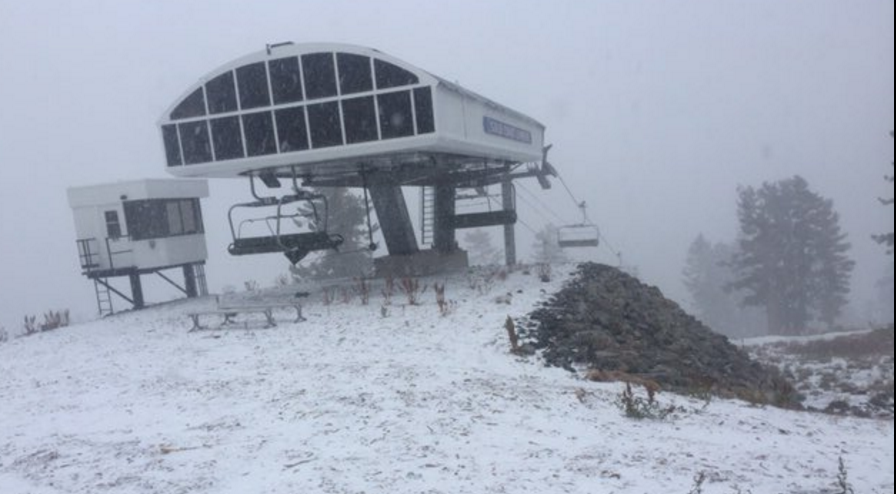
Even though most ski resorts in the Tahoe area have snow on Oct. 3 are sporting snow just like Squaw Valley, temps are supposed to be in the high 60s by the end of the week, with dry times returning. Photo/Provided

Even though most ski resorts in the Tahoe area have snow on Oct. 3 just like Squaw Valley, temps are supposed to be in the high 60s by the end of the week, with dry times returning. Photo/Provided

By Matt Stevens, Los Angeles Times

There were high hopes going into water year 2016.

To hear some forecasters and scientists tell it, El Niño was coming to save California. With a little luck and a lot of rain, the drought might finally recede in its fifth year — or at least loosen its grip on the state.

The weather phenomenon did show up, fueling some storms in Northern California. But it fell far short of the lofty expectations.

On Friday, water year 2016 ended with a whimper.

Read the whole story


Editorial: Vote no on SLT’s Measure U

Publisher’s note: The following endorsement is from Lake Tahoe News after a team of seven community members gathered to discuss the merits of Measure U.

South Lake Tahoe’s City Council and staff are adamant they’ve gotten their fiscal house in order and that is why they feel secure in going to the voters for a sales tax increase. But if the house were truly in order, then a basic thing like roads would not require a special tax.

On the Nov. 8 ballot is a measure to raise the sales tax in the city limits by one-half cent. This would bring the total to 8.5 percent. Projections are it would raise $2.5 million annually. There is no sunset for the tax, so it would go on indefinitely.

Raising the sales tax was already done once. It was increased by one-half percent after voters gave the go-ahead in November 2004. All of this “extra” revenue goes right to South Lake Tahoe, whereas the bulk goes to the state. The same thing would happen with this increase – it would go straight to the city.

Therein lies the problem for Lake Tahoe News. That pot of cash would go directly to the General Fund. When staff comes up with the budget each year, the sales tax money could be going toward anything. It would take a diligent council to ensure the money is allocated “appropriately.” Then it would take a hawk-eye public to oversee the council’s decision.

While there is a second component to Measure U that asks voters where the sales tax dollars should go, the city is under no obligation to actually spend the money as the voters wish. Other than possibly being voted out of office, there are no consequences to not listening to voters’ desires.

And because management has said it’s time to give staff a raise and there was no money in the fiscal year’s budget that started Oct. 1 for those increases or money allocated in future years, we are nervous that this new pot of money from Measure U could find its way into paychecks instead pavement.

We also cannot unequivocally say the three choices are worthy. They are roads, housing and facilities. The advisory measures (Q=housing, R=Roads, S=Facilities) are so poorly written. One has to wonder if this was done to confuse voters. They are not well thought out, precise or concrete. The ambiguity is alarming.

We have seen the city appropriate funds in a manner that leaves us skeptical. There was a time when transient occupancy tax dollars were to be dedicated for tourism promotion. The city gave the visitors bureau and chamber of commerce funds for that cause. Councils changed, trust between the entities evaporated and the checks stopped being written.

Then there were the councils that somehow unknowingly kept spending money to the tune of $7.2 million to build the Heavenly Village project. These dollars came from the General Fund and to this day are still being paid back.

Think about what $7.2 million 15 years ago would have bought in terms of road repair. Yes, the village and Cecil’s projects are great, and the vision to bring them to fruition is to be commended. But the surreptitious way in how they got funded should never fade from voters’ memory.

All of this underscores why we don’t universally trust the city’s staff or the electeds.

The other problem with a sales tax is that it is a regressive tax, meaning those at the lower end of the economic scale have a greater percentage of their income going to taxes than those in the upper echelon.

Even so, if the measure were to be written with the dollars going to a dedicated source (roads is our preference), we would be more amenable to it. We realize this would take a two-thirds vote, whereas the current measure only requires 50 percent, plus one to pass. This, though, would ensure the voters would be getting what they would be paying for – roads.


Nev. panel calls for guardianship system reforms

By Colton Lochhead, Las Vegas Review-Journal

A Nevada Supreme Court commission on Thursday called for sweeping reforms of the state’s guardianship system in hopes of better protecting the state’s growing elderly and infirm population.

The 236-page report comes as a culmination of 15 months’ worth of commission meetings dating back to June 2015 and includes dozens of recommendations for changes in guardianship law, policy and court rules.

Most notably, the report calls for all people under guardianship to have the right to an attorney, which is not currently granted in Nevada.

Read the whole story


The original Tahoe cowboy

In 1962, Bud Jones walked back into a burning cabin and locked the door, ending his life in Squaw Valley. Photo/Truckee Donner Historical Society

Bud Jones decided how he was going to leave Squaw Valley. Photo/Truckee Donner Historical Society

By Abby Stevens, Moonshine Ink 

No one can remember Bud Jones ever changing his clothes. His garb was Levi jeans and jean jacket, a cowboy shirt, big boots, and a black floppy hat with grease rings around the top. He usually kept a tin of Star Tobacco and a flask of whiskey close by, and reportedly sold his wife to a sheepherder for the price of a horse, forever claiming he got the better end of that bargain. Yet beneath his tough exterior lay an industrious entrepreneur and surrogate parent with a fierce dedication to a still wild Squaw Valley, when cows and horses outnumbered skiers.

In 1931, Bud — then a rancher from Folsom — arrived in Squaw Valley (to be named Olympic Valley when the valley was chosen as the site for the 1960 Olympics) with his cattle and horses and founded the Squaw Valley Stables. For the next 31 years Bud would run the Squaw Valley Stables, and a pack station, which supplied visitors to the valley with tools for backcountry fishing and hunting trips. He also supplied milk to residents in Tahoe City and along the Truckee River all summer long. He embodied the rough independence for which this high mountain area is known, an attitude that shakes up local debates — for example about how to manage the land, and how much you can tell people what to do — even today.

Locals who knew him well will never forget him. He resided in a small, shingled cabin that was “completely lopsided,” recalled Mazie Carnell, a longtime Tahoe and Sierra Valley resident who spent her summers with Bud in the ’30s and ’40s milking cows and driving horses. It was one of the only houses in the valley at the time, she said. It was located right next to the horse corral and had no running water. Bud leased the land the house and corral sat on from the Smiths and eventually the Poulsens.

Read the whole story


Overbudget river project showing promise

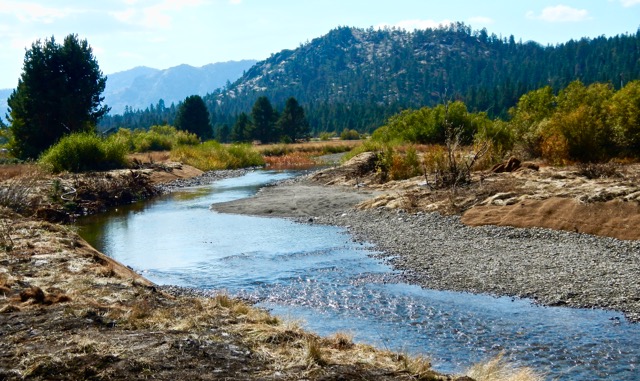
The U.S. Forest Service is pleased with the restoration of the Upper Truckee River. Photo/Kathryn Reed

The U.S. Forest Service is pleased with the restoration of the Upper Truckee River. Photo/Kathryn Reed

By Kathryn Reed

Rerouting the Upper Truckee River behind Lake Tahoe Airport is costing 50 percent more than planned and there is no way to know if less sediment will actually get carried into Lake Tahoe.

“It’s hard to make conclusions about the overall sediment reduction,” Theresa Cody, a hydrologist with the U.S. Forest Service, said while on a tour of the project site last week.

All along the USFS has said this is more of an ecosystem project than a water quality project. The California Tahoe Conservancy is a partner with the USFS.

In 2013, the feds said it would cost $4 million. The price tag is at $7 million now. The money is coming from the Southern Nevada Public Lands Management Act.

CTC Executive Director Patrick Wright was quick to say the added dollars aren’t because of cost overruns. Additional dollars were needed because it took longer than anticipated to reroute the 6,000-foot channel, then relocating the thousands of Western pearlshell mussels was not in the original budget, and a temporary construction bridge was erected and dismantled each season.

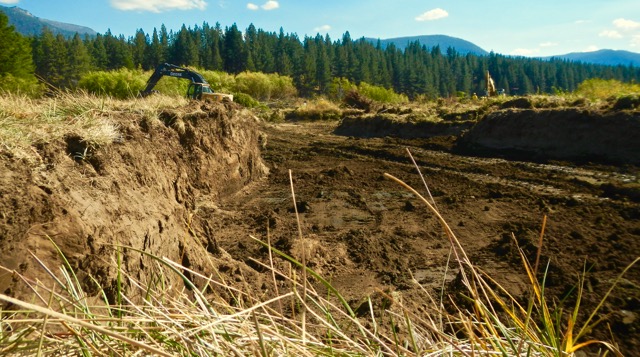
Dirt is excavated to subgrade, then the banks area revegetated, riffle gravels are added to bring the river's floor to the desired elevation. Photo/Kathryn Reed

Dirt is excavated to subgrade, before the banks area revegetated, and riffle gravels are added to bring the river’s floor to the desired elevation. Photo/Kathryn Reed

The 14,000 native mussels were relocated this season.

“There is no scientific evidence or theory that we are aware of to suggest that changes in mussel populations have a measurable impact one way or the other on fisheries or benthic macroinvertebrates,” Cody said.

They do, however, filter out plankton, algae and small organic matter.

The overall fish habitat is expected to increase, especially with the riffle depth going from 9 feet to 3½ feet.

It will take years before the Forest Service can say this is a successful project. Monitoring will be extensive to begin with and then scaled back.

“We need large floods to see how the channel behaves and how the floodplain behaves,” Cody said. It’s designed to overflow its banks, which will then help restore the meadow to a vibrant organism.

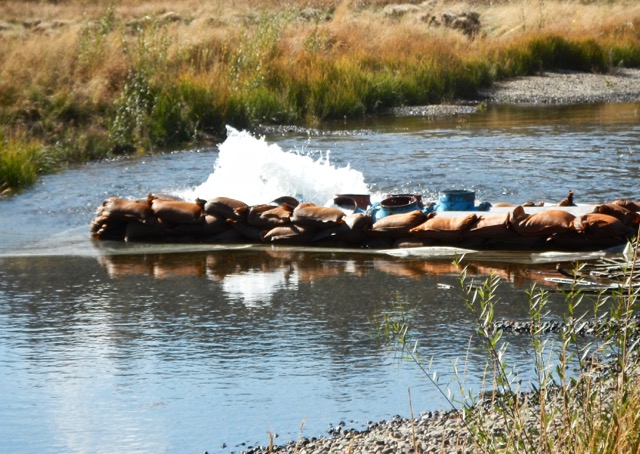
Water is being pumped into the new channel. Photo/Kathryn Reed

Water is being pumped into the new channel. Photo/Kathryn Reed

But already positive results are coming in along sections of the 1.2-mile river project. Vegetation is taking hold on the banks, including the willows that love a wet environment. And next year the sage is apt to be gone because the water table will have increased and that plant doesn’t like a ton of water.

“There is no question that the existing condition of this reach was in a degraded and vulnerable condition, as evidenced by channel incision, bank erosion, ground water elevation, and riparian vegetation condition,” Cody told Lake Tahoe News. “The effects of long-term climate change, including prolonged periods of drought, is causing increased stress to the flora and fauna in these degraded systems. As evidenced by monitoring data we have documented in our monitoring reports on similar projects, the restoration of aquatic and riparian habitat is expected to be evident very quickly once the project is completed. The ecosystem benefits of the project are expected to last for generations, will increase resiliency of UTR habitat to climate change impacts, and require virtually no maintenance.”

The old channel saw the water rushing at 700 to 1,000 cubic feet per second. The new channel is designed to have a flow of 375 cfs.

Normally the Forest Service would leave the old channel to pond and become more habitat. But the FAA said no way, it must be filled in with dirt. This is because the project was not allowed to create more areas for waterfowl to congregate; after all birds and planes don’t mix well.

This area is popular for hikers, dog walkers and mountain bikers. Before the snow really flies, all of the construction equipment will be gone and the fences will come down. Next spring non-motorized water enthusiasts may find a more challenging river because it will be narrower. The season may last longer, too, because the water will be deeper – assuming there is at least a normal snowfall.

“Within two years you will not be able to see this area was disturbed,” Cody said.


Advocating for legal sports betting nationwide

By Chris Kudialis, Las Vegas Sun

Legal betting nationwide on professional sports would help protect the integrity of American sports while cutting down substantially on black market wagering, former NBA Commissioner David Stern said this week.

Speaking at Las Vegas’ Global Gaming Expo, Stern echoed the words of his successor and current NBA Commissioner Adam Silver, who has advocated for nationwide legalization of betting since taking over the position in 2014.

“There’s a lot out there that’s being bet illegally,” Stern said during a 50-minute talk with American Gaming Association President Geoff Freeman in front of about 500 show attendees. “If we can fix this, it would be a big hit to organized crime.”

Anywhere from $100 billion to $300 billion is spent annually on illegal sports wagering, according to estimates from scholars and the American Gaming Association.

Read the whole story


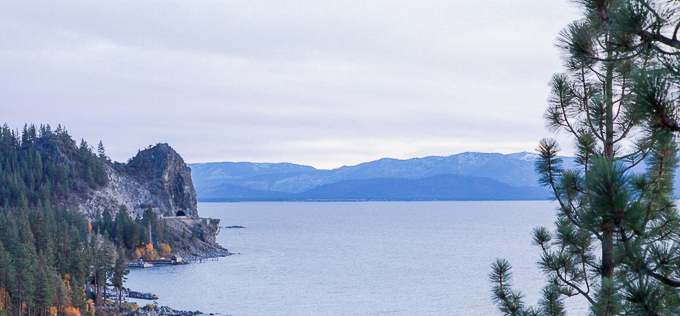
Lake Tahoe spills forth from atop Cave Rock

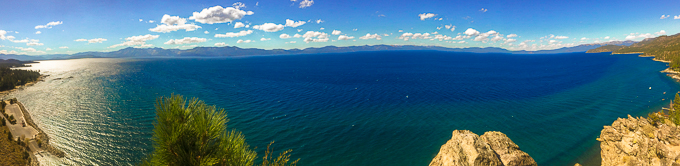
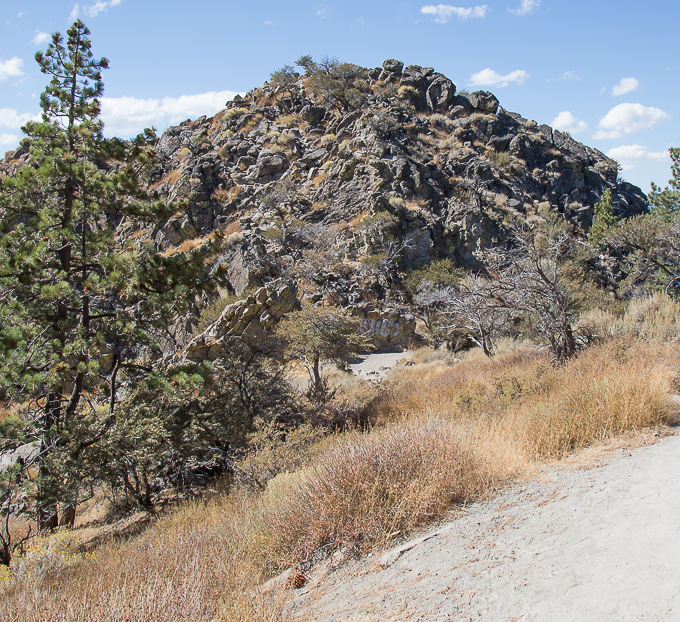
Stunning views are the reward for getting to the top of Cave Rock. Photo/Dale Roberts

Stunning views are the reward for getting to the top of Cave Rock. Photo/Dale Roberts

By Dale Roberts

CAVE ROCK – Whenever I have out of town guests I get a lot of enjoyment and take great pride as a host to show them the best that Tahoe has to offer. No visit to my home is complete until I have taken them to the best spot to admire the beauty of Lake Tahoe.

Cave Rock’s vista has always been somewhat under the radar for the best of Tahoe. As imposing as it is to drive through, most visitors and many residents are not aware of just how easy it is to summit.

This is the final rough approach to the summit. Photo/Dale Roberts

This is the final rough approach to the summit. Photo/Dale Roberts

I did not learn about it until about eight years ago, 35 years after moving to Tahoe. Since discovering the view from the top of Cave Rock it has become my perennial favorite. No other vista point around the lake offers a 270-degree unobstructed view of the Tahoe basin.

Cave Rock from the Logan Shoals vista. Photo/Dale Roberts

Cave Rock from the Logan Shoals vista. Photo/Dale Roberts

Quick, easy to get to, less than one mile round trip, with the majority of the trail being an old utility easement road with a gentle gradient. Only the last couple of hundred feet does it do a small climb, scrambling up a rock stairway to the summit.

From your car to the summit is approximately a 20-minute effort at a very relaxed pace. Perfect for that quick unique sunset vista.

Looking toward the North Shore from the top of Cave Rock. Photo/Dale Roberts

Looking toward the North Shore from the top of Cave Rock. Photo/Dale Roberts

—–

Getting there:

From the South Shore go east on Highway 50. Just as you round the last bend before the boat launch and Cave Rock is in front of you, make a right turn up Cave Rock Drive. Follow it up until it makes a sharp right hand hairpin turn. Do not turn but proceed straight and you will see where the cul-de-sac has been paved over with four marked parking spots. Look just past the fire hydrant and you will see the trail.


Realities of mental health challenge families

Publisher’s note: This is one of several stories about mental health issues in the Lake Tahoe Basin that will be running through October. The other stories may be accessed from the Home page under Special Projects, then click on Mental Health.

By Kathryn Reed

It never goes away. That’s the reality of living with mental health issues.

Amy Snelson is quick to admit she can’t do it alone. It takes the support of her husband, family, friends and NAMI (National Alliance on Mental Illness) to help her cope.

She has three sons; all of whom have mental health issues.

“Opening up has been good therapy,” Snelson told Lake Tahoe News. “The guilt is horrific. Had I known (the family history), I don’t know if I would have had children.” And with hindsight she wonders if she would have recognized the symptoms earlier.

Her sons are 23, 30 and 32. She lives in South Lake Tahoe with her husband, Gary, who is not the father of her kids. Snelson’s sons live in Southern California. Once a month for a week at a time she goes down there. They are at different levels when it comes to being able to function in society and needing to be institutionalized.

Snelson is actively involved in their lives, advocating for care and yet keeping a respectful distance. While being a parent can be a balancing act even when children are adults without extenuating circumstances, when health issues are involved, grey areas of intervention are even greater.

Then there is the law that can prevent parents from taking action. With one child she is his conservator, so she has more rights. But, still, it’s not always enough.

“Doctors don’t talk. There is never an open discussion and there is supposed to be,” Snelson said. “I’ve asked for a re-evaluation of medications and nothing is happening.”

Mental-ILLNESS-LOGOHer story is not unique. That’s the problem, and the sad reality.

Mental health in this country is not treated the same way as physical health. A stigma still surrounds matters of the brain. The uninformed believe people have control over mental health, or that it isn’t real, or think people are weak, even less than whole.

What can be worse is the treatment once families start to get help.

“It’s been a difficult journey because the mental health community is not cooperative,” Snelson said. “Once they get someone stabilized, they kick them out.”

Snelson has learned to be persistent, to keep pushing.

A family history of mental illness is common. So is having some traumatic event trigger an episode. That event can be anything from a car accident to being rejected by friends to violence.

Snelson’s oldest son has been diagnosed as with paranoia schizophrenia; this was 11 years ago. His biggest delusion is that he believes his food has been poisoned. He’s 6-feet-tall and weighs 121 pounds.

Her middle son tried to hang himself when he was in eighth grade. Of the three, he showed the earliest signs that something wasn’t quite right. He deals with severe depression, but believes he can overcome this on his own.

The youngest has schizophrenia affective disorder.

There isn’t a day that goes by that Snelson doesn’t think about her kids. And many days she simply breaks down. She admits the stress affects her marriage, that she didn’t expect to be buying her kids clothes and giving them gas money as this stage in their lives.

To help herself cope Snelson is involved in NAMI, which has a chapter on the South Shore. She also surrounds herself with positive people. She reads as much as she can; learning about her sons’ illnesses, how to cope and ideas for working within the system. She also sees a therapist.

“The biggest things today I need to work on is I feel embarrassed and I feel guilty for being embarrassed,” Snelson said. “How can a mother let her child wear dirty clothes or have body order?”

And, yet, they are adults and she can only do so much.

“My fear is what will happen when I’m dead in terms of their living situation,” Snelson said.


Nev. Supreme Court suspends school choice program

By Michelle Rindels, AP

The Nevada Supreme Court has ruled that the state’s voucher-style Education Savings Accounts — seen as the broadest school choice program in the country — have an unconstitutional funding mechanism and the program should remain blocked.

Justices issued a 4-2 ruling on Thursday striking down the program — which has been on hold since the winter and never disbursed funds to families as it intended — but upholding some of its key underpinnings.

Parties on both sides of the hotly debated issue claimed victory from the 35-page decision.

“Taxpayer money isn’t to be used to support the private education of a handful of kids,” said Rory Reid, son of Sen. Harry Reid president of the Rogers Foundation, which supported legal challenges against the program. “We’re proud to stand up for that proposition.”

Proponents framed the ruling as a victory, saying it agreed with some of their most fundamental arguments and adding that the program’s defects can be fixed by the Legislature.

“After (Thursday’s) ruling, there is only one step left to take in order to make the vision of educational choice a reality for thousands of Nevada families,” said Attorney General Adam Laxalt, a Republican who enlisted a star lawyer to help him defend the program. “Fortunately, the Supreme Court has made crystal clear that ESAs are constitutional and that the Legislature can fix this funding technicality and allow for the implementation of ESAs statewide.”

Lawmakers passed a Republican-backed bill on a party-line vote last year to create the program. It would allow parents to access more than $5,000 in funds allocated each year for their child’s public schooling and apply it toward private school tuition or other qualified education expenses.

The ruling says the program authorized last spring by the Nevada Legislature did not have its own dedicated funding source and is contradicting the Nevada Constitution by drawing on money allocated for public schools in the state’s Distributive School Account.

“I’m angry and I’m disappointed,” Republican state Sen. Scott Hammond, who sponsored the original bill, said in an interview shortly after the ruling came out. “Obviously it’s going to affect thousands of kids. I’m disappointed that they’ll have to wait until they figure this out.”

But justices affirmed some central arguments from the proponents. They agreed that public money transferred to accounts for parents’ discretion are no longer “public funds” that can’t be used for sectarian purposes, such as religious schools.

One of the two lawsuits against the program argued primarily on the grounds of separation or church and state, saying the program would unconstitutionally divert money to religious schools that proselytize or can discriminate against students or staff.

Justices also affirmed that the Legislature can use its power to encourage other methods of education, and that the Education Savings Account program doesn’t violate the Legislature’s duty to “provide for a uniform system of common schools.”

Republican Assembly Majority Leader Paul Anderson, who’s leading the effort to keep his party in control of the Assembly during an election cycle more favorable to Democrats, said his candidates will use the issue to motivate voters. Democrats have fought hard against the program on the grounds that it undermines an already strained public school system, but Republican control could more easily usher in a fix that could revive the program.

“It’s disappointing that more legislators don’t believe in school choice. It should not be a Republican-only issue,” Anderson said. But the funding problem “is much easier to overcome than had they ruled differently on the other points.”