Tahoe athletes take a stand on non-sport issues

Jeremy Jones of Truckee takes his cause to the White House. Photo/Protect Our Winters

Jeremy Jones of Truckee takes his cause to the White House. Photo/Protect Our Winters

By Dave Zook, Moonshine Ink 

Tahoe’s pro athletes. They hone their craft to a level attainable only by an incredibly few, and their abilities are merely one factor that got them there. How many skiers, for example, do we all know that have mind-bending prowess on snow, but are not in the professional ranks? Athletes are required to also be professionals in self-promotion, social media, networking, and more, and in the course they have become some of the most well-known and celebrated names in Tahoe.

Some athletes take their celebrity to the next level and become involved in the social, political, or environmental realm, adding up to a serious juggling act. These politically-oriented actions bring a new dynamic, and can usher in both criticism and praise. Locally, this discussion has become more relevant than ever in the shadow of the proposed Village at Squaw Valley Specific Plan, and begs the question: Where does the role of professional athletes lie in areas outside of their sports?

Truckee resident Jeremy Jones, arguably the most well-known big mountain snowboarder of all time, has lived this question firsthand. He moved into the political arena in 2007 by starting Protect Our Winters, a nonprofit with its core mission to fight climate change.

Read the whole story


Gaming industry targets older patrons

By John Rosengren, AARP Bulletin

Beauford Burton had enjoyed the occasional poker game in his youth, but in his 60s the slots hooked him. He and his wife, Sharon, started making the 2 1/2-hour drive every Friday from their home in Kings Mountain, N.C., to Harrah’s Cherokee Casino Resort, where they won occasionally but lost more frequently. In one year, he lost about $50,000, nearly the equivalent of his annual salary as a manager in a textile company.

They often stayed longer than they’d intended—many times the casino would offer them a free hotel room Saturday night. Burton can’t remember ever paying for a room. He had access to an exclusive bar with free drinks and food, preferred seating in the restaurants and suite upgrades in the hotel. Harrah’s once flew the couple to its casino in Laughlin, Nev., and covered all their expenses—except, of course, what they gambled.

In the end, Burton knew that all of the freebies weren’t really free, and that he had paid for them tenfold with his losses. “I have always known you don’t get something for nothing, but I fell for it,” he says. “It’s the good old devil at work.”

Over four years, the slots drained more than $100,000 from Burton’s 401(k). But he kept playing. He cashed in a life insurance policy, took out cash advances on his credit card and gambled away Social Security checks meant to pay utility bills. Finally, in 2008, the gambling habit took his home.

By then, he was playing in a panic, betting up to $15 to $20 a spin, chasing his losses and pursuing the one illusory jackpot that he hoped would save him. “As you start to lose, you think, This is a luck thing, my luck is going to change,” says Burton, now 73. “But the more you go, the more you lose. It ends up in desperation. I can see how people get so deep that it causes them to take their own lives, because it gets really, really bad.”

Of the 101 million visitors to America’s casinos in 2014 (the last year for which information was available), nearly half were age 50 or older, according to data from the gambling industry. In 2014, American casinos reported over $66 billion in gambling revenue, and much of that profit came from these older gamblers.

A 2011 study published in the Journal of Gambling Studies revealed that many older adults viewed the casino as a place where they can socialize and escape from loneliness or grief.

Read the whole story


State of mental health and facilities in Tahoe

Publisher’s note: This is one of several stories about mental health issues in the Lake Tahoe Basin that will be running through October. The other stories may be accessed from the Home page under Special Projects, then click on Mental Health.

By Linda Fine Conaboy

Living at beautiful Lake Tahoe and the lake’s surrounding areas, where some of the most dazzling scenery in the world is always accessible, should contribute to a stress-free existence not to mention a well-balanced, mentally fit and happy population, right?

Partially right. It appears that living in stunning surroundings does not necessarily guarantee a cure for what ails us. And to compound that, there is a great divide when it comes to serving people with mental illness as opposed to those who have a physical ailment such as a sore throat, although physical and mental health cannot truly be separated.

Medical care for folks with mental health needs within the Tahoe basin, it seems, has long been on the decline, at least in the area of study that included South Lake Tahoe, El Dorado, Douglas, Washoe and Placer counties. However, new and concerned people have recently relocated to the basin, recognized the situation and are doing their best to rectify it.

Caring people like Jeanne Nelson and her husband, Alan, who are Family to Family instructors for the El Dorado County branch of the National Alliance on Mental Illness or NAMI, the nation’s largest grassroots mental health organization dedicated to building better lives for the millions of Americans affected by mental illness, are two of the bright spots, doing their best to bring the situation to light.

The following is a list of some of the mental health resources available in and for residents of the Lake Tahoe Basin and Truckee: •Nevada County Crisis Line – 530.885.2300 •	Nevada County Suicide Prevention Lifeline – 530.885.2300 •	Nevada County Adult and Children Line – 530.582.7803 •	Placer County Adult Mental Health Services – 530.581.4054 •	Placer County Children’s Mental Health Services – 866.293.1940 •	Barton Community Health Center – 530.543.5623 •	Barton Psychiatry – 775.589.8946 •	Tahoe Safe Alliance domestic and sexual violence/child abuse Kings Beach – 530.546.7804 Truckee – 530.582.9117 Incline Village – 775.298.0010 •	North Tahoe Family Resource Center Kings Beach – 530.546.0952 •	Telehealth Adult Psychiatry – 530.543.5867 •	A Balanced Life – 530.544.1748 •	Carson Counseling and Supportive Services – 775.687.4195 •	El Dorado County Mental Health – 530.573.7970 •	El Dorado County Alcohol and Drug Program – 530.573.7959 •	Family Resource Center – 530.542.0740 •	Hope Lutheran Church – 530.541.1975 •	Live Violence Free – 530.544.2118 •	NAMI El Dorado County South Lake Tahoe – 650.740.5776 •	Sierra Child & Family Services – 530.541.2111 •	South Lake Tahoe Drug Free Coalition – 530.541.2445 •	St. Theresa Church – 530.544.3533 •	Tahoe Turning Point – 530.541.4594 •	Tahoe Youth & Family Services – 530.541.2445 •	Each Mind Matters at www.eachmindmatters.org •	Psychiatric Health Facility – 530.621.6210 •	Spanish Wellness Support Group – 530.542.4912 •	Narcotics Anonymous – 530.541.4100 •	Alcoholics Anonymous – 530.541.1243 •	Carson-Tahoe Behavioral Services 46-bed facility – 775.445.7350 24-hour crisis line – 775.445.7350 Senior Pathways (age 50-plus) – 775.445.8181 •	Willow Springs – Children’s and teen’s residential treatment center in Reno – 775.858.3303 •	West Hills in Reno 95-bed residential treatment center – 800.242.0478 •	Northern Nevada Adult Mental Health Treatment Center 70-plus beds – 775.688.2001 •	Tele-Care El Dorado County Psychiatric Health Facility in Placerville 16 beds – 530.621.6213 •	Sutter Hospital in Sacramento 69 beds – 916.386.3620 •	Sierra Vista Hospital in Sacramento 120 beds – 916.288.0300 •	Heritage Oaks Hospital in Auburn 125 beds – 916.489.3336 •	Dignity, in-patient mental health services in Woodland – 530.662.3961 24-hour crisis lines: •	El Dorado County Mental Health – 530.544.2219 •	Live Violence Free – 530.544.4444 •	Tahoe Youth & Family Services – 800.870.8937 •	National Alliance on Mental Illness (NAMI) – 800.950.6264 •	National Suicide Prevention Hotline – 800.273.8255

The following is a list of some of the mental health resources available in and for residents of the Lake Tahoe Basin and Truckee:
• Nevada County Crisis Line – 530.885.2300
• Nevada County Suicide Prevention Lifeline – 530.885.2300
• Nevada County Adult and Children Line – 530.582.7803
• Placer County Adult Mental Health Services – 530.581.4054
• Placer County Children’s Mental Health Services – 866.293.1940
• Barton Community Health Center – 530.543.5623
• Barton Psychiatry – 775.589.8946
• Tahoe Safe Alliance domestic and sexual violence/child abuse
Kings Beach – 530.546.7804
Truckee – 530.582.9117
Incline Village – 775.298.0010
• North Tahoe Family Resource Center Kings Beach – 530.546.0952
• Telehealth Adult Psychiatry – 530.543.5867
• A Balanced Life – 530.544.1748
• Carson Counseling and Supportive Services – 775.687.4195
• El Dorado County Mental Health – 530.573.7970
• El Dorado County Alcohol and Drug Program – 530.573.7959
• Family Resource Center – 530.542.0740
• Hope Lutheran Church – 530.541.1975
• Live Violence Free – 530.544.2118
• NAMI El Dorado County South Lake Tahoe – 650.740.5776
• Sierra Child & Family Services – 530.541.2111
• South Lake Tahoe Drug Free Coalition – 530.541.2445
• St. Theresa Church – 530.544.3533
• Tahoe Turning Point – 530.541.4594
• Tahoe Youth & Family Services – 530.541.2445
• Each Mind Matters at www.eachmindmatters.org
• Psychiatric Health Facility – 530.621.6210
• Spanish Wellness Support Group – 530.542.4912
• Narcotics Anonymous – 530.541.4100
• Alcoholics Anonymous – 530.541.1243
• Carson-Tahoe Behavioral Services 46-bed facility – 775.445.7350
24-hour crisis line – 775.445.7350
Senior Pathways (age 50-plus) – 775.445.8181
• Willow Springs – Children’s and teen’s residential treatment center in Reno – 775.858.3303
• West Hills in Reno 95-bed residential treatment center – 800.242.0478
• Northern Nevada Adult Mental Health Treatment Center 70-plus beds – 775.688.2001
• Tele-Care El Dorado County Psychiatric Health Facility in Placerville 16 beds – 530.621.6213
• Sutter Hospital in Sacramento 69 beds – 916.386.3620
• Sierra Vista Hospital in Sacramento 120 beds – 916.288.0300
• Heritage Oaks Hospital in Auburn 125 beds – 916.489.3336
• Dignity, in-patient mental health services in Woodland – 530.662.3961
24-hour crisis lines:
• El Dorado County Mental Health – 530.544.2219
• Live Violence Free – 530.544.4444
• Tahoe Youth & Family Services – 800.870.8937
• National Alliance on Mental Illness (NAMI) – 800.950.6264
• National Suicide Prevention Hotline – 800.273.8255

“Primary care physicians must incorporate mental health screening into their standard of care,” said Jeanne Nelson, adding that “families need to openly discuss mental health in the same manner as going to the dentist.

“Preventative care and sharing family histories of addiction and mental health issues are a must to help encourage early intervention. Stigma prevents people from seeking help; it also makes individuals feel they can get better on their own.”

Although providers exist, knowing how to navigate through the system can be daunting. Many people, Nelson said, drive long distances to Sacramento, Roseville or Reno for treatment, because in-patient services simply do not exist within the basin.

She added, this is what comes with living in a beautiful, rural area, a sentiment put forth by nearly everyone who talked to Lake Tahoe News about the state of mental health at Tahoe and environs.

Sgt. Michael Seligsohn, coordinating supervisor with the El Dorado County Sheriff’s Office Crisis Intervention Team lamented that we are definitely facing a mental health care crisis in California and nationwide. He also echoed Nelson’s statement that living in a rural area can have drawbacks.

The CIT is a group of deputies assigned to the patrol division who are specially trained to recognize and understand mental illness and brain disorders. They are familiar with the resources available to support individuals in need and they are also trained to understand the impact on families.

“Acute psych beds are few and far between,” Seligsohn told Lake Tahoe News. “Mental health clinics that are available have very restrictive policies about whom they may treat based on diagnosis and insurance. Those with multiple problems, such as a psychiatric diagnosis, drug or alcohol issues and/or traumatic brain injury, may fall through the cracks in the system as the issues that they have are not all treated by the same clinician or even in the same clinical setting.

“To a real degree, the geographic isolation of the Tahoe basin from major metropolitan areas exacerbates the problem. As an example,” he said, “the nearest in-patient psych facilities are in Placerville and Reno. One receiving treatment in either of these communities is a long way from home and support. Once separated from these facilities, follow-up with the treating psychiatrist may be difficult for some, and impossible for one of limited means.”

Seligsohn was upbeat as he described some of the services available at El Dorado County Mental Health including the Outpatient Clinic, and the Wellness Center and Intensive Case Management.

The same services exist on the West Slope of El Dorado County. In addition, in Placerville there’s the Telecare El Dorado Psychiatric Health Facility, a 24/7 community-based, locked intensive inpatient psychiatric treatment program for individuals 18 and older who experience an acute mental health crisis.

“A key factor,” Seligsohn said, “is to understand that while there are beds, they are few. As an example, if detained in South Lake Tahoe on a 5150 (involuntary psychiatric hold), you can be confined to a location in California. It is not unheard of for patients to sit for days or weeks in a non-psychiatric setting, not receiving acute psych care, while waiting for a bed. On many occasions, beds have been found in the San Francisco Bay Area or even further.”

Seligsohn said that surprisingly, he is not aware of a facility that can provide psychiatric as well as medical care (wound treatment for example), concurrently. He added that the El Dorado County Sheriff’s Office is committed to the idea that people ought not to be incarcerated for symptoms of mental illness.

Unfortunately, mental illness does not confine itself to only adults—it plays no favorites when it comes to age.

Cheyanne Lane is the supportive services Coordinator for Tahoe Youth & Family Services, which includes a drop-in center and a street outreach program providing services to runaway, homeless, street, couch surfing and high-risk youth up to age 24. This facility is in South Lake Tahoe at 1021 Fremont Ave.

In addition, clientele can be aged-out foster kids, those from dysfunctional homes (where the streets are actually safer), youth with mental health issues and/or substance abuse problems, LBGT youth, parenting youth and simply those who have fallen through the cracks, a term used as a catchall within the mental health community.

“We provide a full continuum of services that include emergency shelter, 24-hour crisis line, case management, individual and family counseling, food, clothing, showers, laundry and other survival items,” she told Lake Tahoe News.

Additionally, Lane said her organization aims to improve youngsters’ safety, well-being, self-sufficiency and permanent connections to caring adults while maximizing their potential to become productive citizens of the community.

“We conduct weekly outreach to our schools, street outreach to local youth hangouts, post flyers and we are on social media,” Lane said.

In Truckee, Tahoe Forest Hospital serves a wide population and annually updates a list of local behavioral and mental health providers. This directory can be found by accessing the hospital’s website, scrolling down to Quick Links then clicking on Mental Health Crisis Information.

In Placer and Nevada counties, Phebe Bell, the program manager for county Health and Human Services said part of her department’s activities revolve around providing mental health services to people on Medi-Cal.

“I think we are effectively serving the people who meet these criteria. We provide therapy, psychiatry and case management as needed to people who need our services. The challenge comes for people who don’t meet those criteria,” Bell said.

Bell agreed with Sgt. Seligsohn, saying in general, people in rural communities struggle with mental health issues in some specific ways. “There is more stigma in rural areas about mental illness and about asking for help,” she said. “Because our population base is small, we don’t have as wide an array of services as are available in urban areas.”

She added that like many resort communities, “We tend to have high levels of substance abuse, which can be closely connected to mental illness. I am not sure I would say we have a mental health crisis, but I do believe that we can do more as a community to support the mental health of all of our residents.”

Bell said that when Placer and Nevada counties survey the community about health issues that concern them, mental health always ranks at the top of the list. “I think we continue to have room to improve. From reducing stigma around mental illness to improving comprehensive services for everyone, we have plenty of work to do.”

Nelson said nationally there is a 50 percent deficit in psychiatrists, but at South Lake Tahoe, this problem is no longer a problem.

“The government recommends that a population of 32,000 have one psychiatrist,” she said. “The Lake Tahoe Basin has three, although there are none in Douglas County, but you can use Telepsychiatry if you’re chronic or severely disabled.” Telepsychiatry can be accessed at Barton Community Health Center. Barton’s main phone number is 530.541.3420.

Nelson commented that there is a striking difference in mental health services between Douglas County and the Lake Tahoe Basin. “Nevada has a long way to go in education, access and stigma,” she said.

As an example, Nelson pointed to the new and innovative kiosks to be found around South Lake Tahoe, crammed full of information about mental health. Each kiosk highlights local mental health services and educational materials printed in both English and Spanish.

They are at:

·      Barton Community Health Center Lobby – 2201 South Ave.

·      Barton Family Medicine lobby – 1090 Third St.

·      Barton Memorial Hospital’s Emergency Department – 2170 South Ave.

·      El Dorado County Probation and Sheriff’s offices — 360 Johnson Blvd.

·      Lake Tahoe Community College in the Commons Area – 1 College Way

·      South Lake Tahoe Library – 1000 Rufus Allen Road.

The burgeoning mental health situation at Lake Tahoe is in actuality one which many communities face. The area has dedicated people who are aware of the problem, who are trained in the field and who are determined to reign it in.

As Christopher Croft, the executive director of Tahoe Youth & Family Services puts it, “We’re seeing more and more of the area service providers and community members collaborate to address the issues … now, we’re all attempting to work together to figure out care programs for community members.”


Study: Megadrought nearly certain this century

By Deborah Sullivan Brennan, San Diego Union Tribune
 
The West is almost certain to experience a decades-long drought by the end of the century, if greenhouse emissions continue as usual, a new climate study concluded.

The chance that the Southwest will experience a megadrought – a dry period lasting 35 years or more – is between 70 and 99 percent by the end of the century, according to the study, published Wednesday in Science Advances, an online, open access academic journal.

“The kind of events that we were looking for, and the risk we were looking at, would be like extending the current California drought for another 30 years,” said Toby Ault, a climate scientist at Cornell University, who authored the paper with Justin Mankin, Benjamin Cook and Jason Smerdon of Columbia University.

Read the whole story


Hiking minorities good for makers of outdoorsy gear

By Hugo Martin, Los Angeles Times
 
Recalling the childhood fun she had at summer camp, Ciji McBride has decided to go back to the outdoors.

The 41-year-old African American beauty consultant from Baldwin Hills recently joined the Sierra Club, began taking day hikes in the Santa Monica Mountains and is planning a camping trip to Yosemite National Park next summer.

“As a kid, I always liked being in the outdoors, and as I approached my mid-30s and 40s, I said, ‘What are some of the things I like to do,’ ” she said. “You can go to bars and movies, and that’s all great, but we live in a state with great weather.”

McBride’s renewed interest in hiking and camping reflects the growing percentage of minorities spending time in the great outdoors, a significant shift for a demographic long underrepresented among campers and hikers in the U.S even as the nation’s population becomes more diverse. The development holds the promise of a potentially lucrative new market for state and national parks as well as makers of outdoorsy equipment and clothing.

Read the whole story


Sierra’s snow-skateboard course goes national

By Susan Wood

Athletes who make their living on boards appear to never be bored.

And television viewers may get a glimpse of why when they tune in this Sunday to ABC’s weekly “World of X Games” show at 1pm.

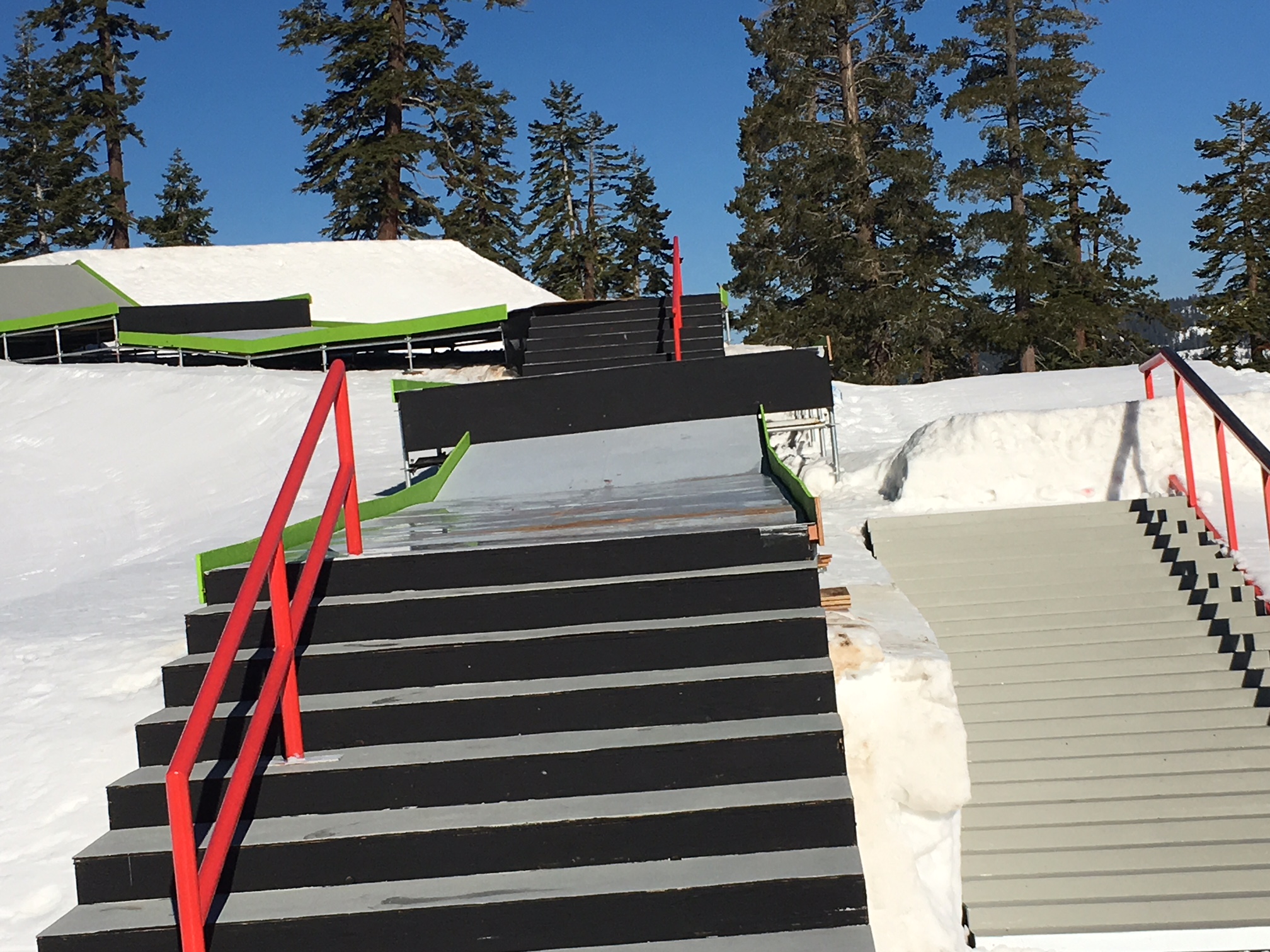
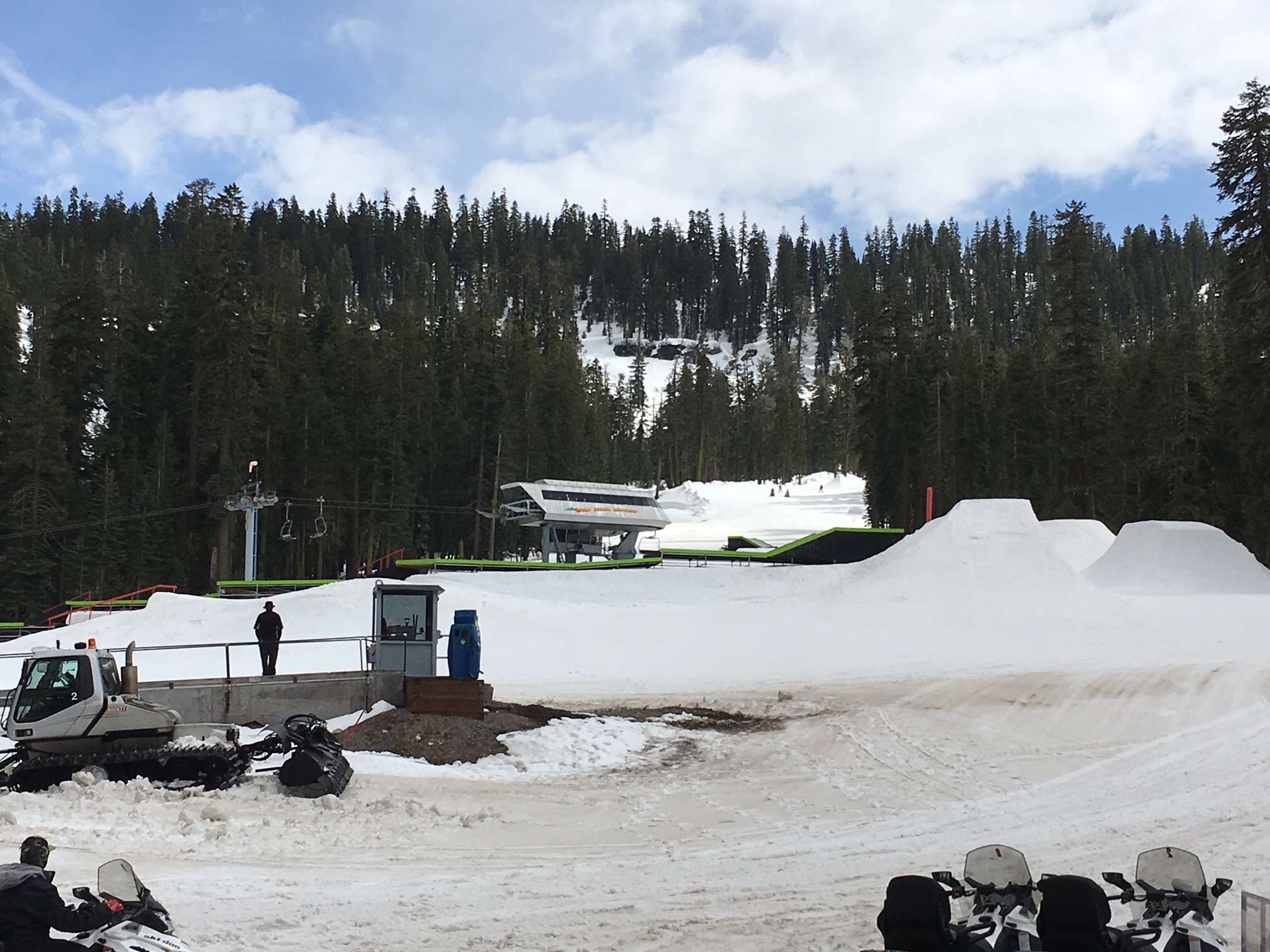
A 22-minute short film is embedded in the show highlighting a first-time double snowboard-skateboard course constructed at Sierra-at-Tahoe last May.

SuperSnake, as it’s aptly called, features competitive and professional skateboarders and snowboarders slithering down the board-and-snow, 1,000-foot-plus course on the Broadway run to the base of the Tahoe area ski resort.

Sierra-at-Tahoe briefly became a skateboard park after the resort closed last spring. Photo/John Rice

Sierra-at-Tahoe briefly became a skateboard park after the resort closed last spring. Photo/John Rice

The customized course took two weeks to build, with more than 2,500 man hours and 20 tons of snow. It has combined skate and snow park features, including jibs, hips, quarter pipes and volcanoes in a boarders’ paradise.

The brainchild of the adrenaline junkie’s drink Mountain Dew, the Sierra-at-Tahoe venture with Snow Park Technologies and CA RampWorks remained somewhat hush-hush since all this occurred after last year’s ski season.

“Coming off such a great season for snow, we had the ability to create the project and show off the resort. The build is a story unto itself. The TV show made for the ‘World of X Games’ will focus on the creativity of the project from vision to execution, as well as highlight the challenges of blending the two board sports,” Sierra-at-Tahoe General Manager John Rice told Lake Tahoe News.

The players had worked together before, so the trust was already there, Rice declared.

“The World of X Games’ special and the online show were spot on with our brand strategy for reaching the demographic,” he added.

Indeed. Lauren Machen of Fuse, who handles Mountain Dew marketing, dictated a 16-34 young male millennial as the target audience. There’s also the propensity to reach a slightly broader audience by simply having the show run on ABC.

Machen said competitors in these action sports “like to do new things,” otherwise, they feel “they can get stale.”

“We like to figure out ways to keep it fun and fearless,” she said. “This is the trend. Mountain Dew has instigated creativity in action sports for over 20 years.”

The soft drink company is preparing to put on the well-known Dew Tour at Breckenridge, Colo. in December – but other events featuring boarders will become more pronounced in the coming years.

For big-time starters, skateboarding and surfing were announced as new sports in the 2018 Summer Olympics in Tokyo. Machen predicts viewers will see more side-by-side events as elite athletes thrive on watching other moves from their fellow competitors.

About a dozen skateboarders and snowboarders took part in the inaugural project – including Olympic snowboarder and Dew rider Danny Davis of Truckee.

Skateboarders and snowboarders compete together at Sierra-at-Tahoe. Photo/John Rice

Snow is moved to create a one-of-a-kind snowboard and skateboard venue at Sierra. Photo/John Rice

“It’s really awesome to have skateboarders and snowboarders come together on one course,” said Davis, who was considered one of the top 10 riders of the year by Snowboarder magazine in 2008. “SuperSnake pushes the creativity and stylistic riding through the athletes’ visions and the course builders’ innovations and expertise. But most importantly, it’s always about progressing the sports and having fun.”

Davis is joined by professional Mountain Dew skateboarder Sean Malto and competitive snowboarders Jeremy Jones and Scotty Lago. Dew skate athletes Trevor Colden, Chris Colbourn, Jordan Maxham, Nick Tucker and Micky Papa are also in the mix.

The trailer shows a sense of camaraderie and appreciation for each other’s skills among the athletes.

Moreover, the sports do represent a good time for the fan base as well.

“SuperSnake’s concept showcases Mountain Dew’s ongoing support of creating original, fun and progressive opportunities for both our athletes and fans to enjoy,” Mountain Dew Senior Vice President of Marketing Greg Lyons said.


Climate cracks showing in Nev. pine nut harvest

By Henry Brean, Las Vegas Review-Journal

BAKER — Along a dirt road just north of Great Basin National Park, Dayer LeBaron plucks a cone from a pinyon tree and shakes its contents into his calloused hand.

The pine nuts almost shine in their varnished, dark-brown husks, but all he can see is their size. These are Nevada soft-shelled pine nuts; they’re supposed to be bigger than this.

“There’s definitely something going on,” says LeBaron, a commercial harvester from El Paso, Texas. “Being in these mountains for 40 years, I’ve seen it with my own eyes. I know something’s going on.”

But the work isn’t easy, and the yields aren’t what they used to be. All it takes is an insect invasion or a sudden change in the weather to turn a good year bad. LeBaron says he’s been seeing more of both lately, something he blames on climate change.

Read the whole story


More water in reservoirs, but drought persists

By Dale Kasler, Sacramento Bee

California’s major reservoirs are holding 69 percent more water than a year ago, the U.S. government announced Friday, but regulators warned that drought conditions continue to plague the state.

In its annual inventory of water in storage, the U.S. Bureau of Reclamation said the six key reservoirs owned by the federal government’s Central Valley Project held a combined 4.9 million acre-feet of water as of Oct. 1, the beginning of the “water year” that runs through next September.

That figure compared with 2.9 million acre-feet a year earlier.

However, the reservoirs were still at just 41 percent of capacity.

Read the whole story


Editorial: Collin, Laine for SLT City Council

Publisher’s note: The following endorsement is from Lake Tahoe News after a team of seven community members gathered to discuss who should be on the South Lake Tahoe City Council.

Even with 10 candidates running for South Lake Tahoe City Council, Lake Tahoe News was left wanting something more. Maybe there isn’t that ideal, perfect candidate out there.

The two, though, who eventually rose to the top were Jason Collin and Brooke Laine. With Collin, we get someone with new ideas who is a bit of a maverick in the world of recreation. After all, recreation is what the city and the entire South Shore is hanging its economic hat on. With Laine, we get experience and someone who can jump into the job without needing a learning curve.

Jason Collin

Jason Collin

Collin is charismatic, a community guy, a family man and someone who can be relied upon to think for himself. While we aren’t taking a stance on whether his lawsuit to stop Measure T was right or wrong, we admire that he was willing to put his neck on the line – especially while running for election. We aren’t convinced he paid for all of this on his own, but what matters is he stood up for his convictions and in a manner that was neither abusive nor confrontational in a detrimental way. At the end of the day that is the type of person we need on the council – forthright, opinionated, determined and able to stand up for his beliefs.

Brooke Laine

Brooke Laine

Laine’s enthusiasm for this town is unwavering. She was born here and has no plans to leave. On or off the council (she has served six years) she does what she believes is best for South Lake Tahoe. Our reluctance with Laine is that she represents a bit of the old guard. We need vision beyond one county; and we need the details for how to achieve those goals. She was involved in some of the redevelopment projects while on the council in the 1990s, which will serve the community well as it goes through a bit of a renaissance. However, just reading the council agenda is not enough to know what is going on in the city and elsewhere.

While we support the one South Shore concept, we hope Collin and Laine will remember they are being elected to represent South Lake Tahoe first and foremost, not the Nevada interests who support them.

Hal Cole’s departure from the council means there will be at least one new council person.

Four years ago Lake Tahoe News endorsed JoAnn Conner for council. We can’t do so this time around. In 2012, we were excited that she would be a voice for a segment of the community that wasn’t getting heard, that she would bring a perspective that was missing.

What we got instead is someone who is not able to work well with others – and that’s putting it mildly. When LTN asked her what she got out of the lawsuit she filed against the city that she didn’t have before the settlement she said the agreement answers that question. LTN has read the agreement and has written about it. All that changed is Conner can now email staff directly. This cost her more than $30,000 and the taxpayers $100,000. Her answer to how she justifies the city’s costs is that she was not a party to the decision for the city to defend itself.

Her total lack of remorsefulness is appalling.

Being on the City Council is not a game. It is not a popularity contest. It should neither be a way to curry favor from the public or other public agencies, nor be used to enhance one’s own business.

There are serious matters the city takes up each month. We need serious people who see the big picture. We need people who will work as a team. This doesn’t mean we advocate for 5-0 votes. Disagreements are fine. It’s how one goes about disagreeing that matters.

No matter what happens with the two tax initiatives, the council is going to have to be diligent in how it spends those dollars or creative in coming up with other revenue sources to accomplish its goals.

Finances, development deals, environmental issues, roads and tourism – those are just a handful of the issues that regularly come before the council. Collin and Laine have the ability to understand the complexities, the time needed to do the job, the ability to work with the other three council members and most of all the ability to make decisions for the greater good of South Lake Tahoe, the South Shore and the Lake Tahoe Basin.

—–

Why we said no to the others:

·      For candidates Patrick Jarett, Trey Riddle, John Shearer and Bob Topel we believe they would benefit from joining a city commission to further their knowledge base before running for council again.

·      It is an ethical decision not to endorse Danny McLaughlin. No one in the media, even someone working in ad sales, should ever be in an elected office.

·      Ted Long has proven himself untrustworthy in the past. He will say just the right thing to potentially get elected, but his record as a councilmember here and elsewhere are reasons enough to say no.

·      Tami Wallace, while she has experience on the Planning Commission, clearly doesn’t have a grasp of how the city really works. She touted experiences as a spouse of an elected official as her own in her answers to Lake Tahoe News’ questions. She wants to return to the fundamentals of when the city was born – to focus on police, fire and snow removal. We need someone with vision who is living in the 21st century, not the 20th.


Nevada caves illuminate past climate

By Daniel Rothberg, Las Vegas Sun

On a trip to Great Basin National Park, UNLV geoscience Professor Matt Lachniet says that rainfall many millennia ago formed lakes in the desolate basins lining this strip of rural highway. Between the towns of Pioche and Panaca, we stop at Cathedral Gorge, where a multimillion-year dance of erosion and tectonics forged a slender canyon fringed with clay-colored spires.

Closer to Great Basin, Lachniet’s grad student cuts left off an access road, down a 20-foot slope to an unspectacular oval-shaped depression in the land. This thirsty patch of earth was a lake 12,000 years ago, its ridges still marked by the force of ancient waves.

“This is like a van Gogh painting to me,” Lachniet says.

Water’s past forms the foundation of his research, including his climate studies inside Nevada caves. On a hot September day at his UNLV lab, he’d explained why, pointing to a table holding dozens of bisected stalagmites, the spikes that ascend against gravity from a cave’s floor. The delicate lines in the stone resemble tree rings. Cut a stalagmite in half, Lachniet said, and you find layers dating thousands of years, the echo of minerals left behind by water.

Read the whole story