Reno’s Jitloff finding balance in ski racing world
Tim Jitloff hanging out in his Jacuzzi, one of his sponsors, at home in Germany. Photo/USSA

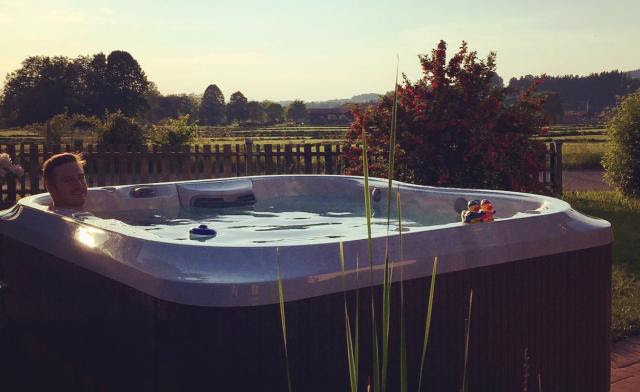
Tim Jitloff hanging out in his Jacuzzi, one of his sponsors, at home in Germany. Photo/USSA

By Megan Harrod, USSA

He speaks fluent German and lives in Bergen am Chiemsee, Germany. These two things alone make Tim “Jit” Jitloff of Reno unique among his teammates. Like the Europeans, Jitloff is a commuter in his job as a professional ski racer.

However, Tahoe was his playground as a child, and he was lucky enough to have local legends like Daron Rahlves and recently retired teammate Marco Sullivan to look up to on the mountain.

“I watched them growing up and they inspired me to become a ski racer,” Jitloff remembered. “Marco gets embarrassed when I say that because he thinks I’m joking, but he truly had an impact on me wanting to succeed.”

Oftentimes, it’s those childhood ski heroes that can make all the difference in an athlete’s career—exemplifying how the right mix of passion, determination, grit and perseverance can lead to places never imagined. Like, for instance, the biggest stage in the sports world: the Olympics.

Jitloff is one of those well-rounded athletes who understands the responsibility professional athletes have to exemplify for the next generation of little shredders. He works to show kids that things like humor, honor, kindness and respect are what make people great. While these are character traits that not every professional athlete possesses, hang with Jitloff for a day and you’ll notice it straight away. His gratitude and professionalism shine through.

There’s life off the mountain, too, and Jitloff—who plays guitar—is inspired by musicians from all walks of life, including Jimmy Page, Dave Gilmour and Bob Marley, but also businessmen like Elon Musk and Richard Branson.

“I like people who do things their own way and create,” said Jitloff. Makes sense, as Jitloff tends to take the offbeat path.

You’ve likely seen or heard buzz about a newer ski company on the market: Croc Sports, an Austrian-Finnish company started in 2015. And chances are you’ve heard that buzz because the Californian-born, Tahoe-raised Olympian and seven-time National Champion, Jitloff is the newest member of the Croc team. While in Norway in April for an on-snow training camp, Jitloff ski-tested with Croc Sports. With the switch and his healthy and strong physical condition, Jitloff—often fastest amongst his teammates in training sessions—hopes to translate this speed to race day and find his way back into the top 15 in the world in giant slalom, and onto the podium in 2017.

Jitloff must have a love affair with Italy, as his career-best results—two fifth-place Audi FIS Ski World Cup finishes —have taken place in Alta Badia and Sestriere, Italy. Last season, Jitloff placed seventh at Alta Badia—his best finish of the 2016 season. These results are something of which he’s proud.

“I’m a giant slalom skier, so I am proud of my strong results in Alta Badia the last three years,” he recalls. “Alta Badia, for me, has a special place in my soul because it defines the GS art. When I go there, it makes me better.”

But Jitloff is quick to note that skiing is not everything. Things like languages, music, culture and history help Jitloff to find balance in his often chaotic life on the White Circus. Seeing situations with a different perspective, remaining open-minded and calm help him to deal with the daily challenges of the life of a professional athlete.

Growing up in Truckee, he shred with his two older brothers and their friends at Alpine Meadows and felt like nothing was impossible. He credits his parents as his biggest supporters and says that they encouraged him to relentlessly pursue his dreams—never standing in the way and always allowing him to find his way. For Jitloff, Truckee was a fantastic little mountain town for kids to grow and learn about nature and the mountain lifestyle.

“It shaped me into who I would become and the time skiing around Tahoe was a cornerstone in my life,” Jitloff recalls.

This love for the mountains has translated to Jitloff’s new life in Bergen am Chiemsee, where he lives with his fiancé, Anja, whom he’ll marry next summer. There, he often mountain bikes and holds himself to high conditioning standards. For Jitloff, conditioning is key.

“Everyone has talent, but talent can only bring you so far. You have to be willing to work harder than everyone else and put yourself through a lot of pain to be able to reach the top,” he said. “My journey is a work in progress, but I enjoy the process and I think that’s what keeps me strong.”

It’s hard to reach an elite level in any sport without sacrifice, and alpine ski racing is definitely no exception to this rule. Between travel, on-snow training, racing and conditioning, ski racing is an incredibly full and grueling lifestyle. It is, in fact, your life. Your teammates and coaches become a second family—and, at times, more like a first family. Whether it’s leaving your loved ones at home for extended periods of time or missing key life events because you have a race on the other end of the world—that’s the life of a ski racer. You have to love it. Live it. Breathe it. And these athletes do. One sacrifice for Jitloff that sticks out in his memory was missing his high school graduation for a ski camp. At the time, he’d have rather been skiing, but was also bummed to be missing a major life moment. These days, Jitloff stresses the importance of balancing his personal life with his sporting life—a contributing factor to his decision to live in Europe.

Jitloff believes progressing through life with constant learning and growth is what really matters in the end. We asked him three questions on what he believes makes a champion.

Ski team: In your words, what makes a champion?

Jitloff: A champion is not just someone wins. A champion is someone who stands for something. Someone who has some substance. Who you are as a person—the real you—is what matters. You can win everything there is to win, but things like humor, honor, kindness and respect are what makes people great. I don’t put stock into what you win; I put stock into who you are and how you treat people. That, to me, is a champion.

Ski team: Do you remember the first time you felt like a champion?

Jitloff: I can honestly say that I don’t feel like a champion. I feel like a really lucky kid from Tahoe who got to grow up and follow his dreams. I have had amazing support on so many levels in my career. To be able to what I love is what makes me feel like a champion.

Ski team: What is the biggest piece of advice you have for aspiring kids who want to be sitting where you are today?

Jitloff: In the end, the journey is what matters. The end goal is not everything.

Jitloff kicks off the 2017 season at the World Cup opener giant slalom in Soelden on Oct. 23.



Curtain call for LTCC theater department

By Kathryn Reed

To be, or not to be, that is the question regarding Lake Tahoe Community College’s Theater Arts Department. Only it won’t be Hamlet answering the question.

Ultimately it will be up to the board of education to decide if the department is disbanded, which is the recommendation of staff.

Susan Boulanger

Susan Boulanger

On Oct. 18, Susan Boulanger, who has run the department since 2009, was told of the likely demise of her department.

She doesn’t know if she can fight it, or if she would even try. The rawness of the announcement was still so fresh just a day later.

“Enrollment is down and I don’t know what to do. It’s just fricking heartbreaking to me. I would have liked to have had a little more time to try some different things,” Boulanger told Lake Tahoe News. What those thing might have been she could not articulate.

“It’s not only my loss to not do the shows, but it’s heartbreaking for the people in the community who want to do theater. We are the only game in town,” Boulanger added.

That is the double-edged problem for LTCC. It was never just a college program. Many of the actors in the productions were from the community. Yet, most of the classes were students, not the community actors.

Even though the theater community on the South Shore is small, it is also fractionalized. Boulanger has her domain at the college, Liz Niven rules the roost at South Tahoe High School and then there is Valhalla – the summer community arts festival.

Boulanger has been divisive since she got here seven years ago and since then has not wanted to mend or build bridges. It’s to the point many STHS students don’t enroll in LTCC’s classes.

Niven, who also has a reputation for being stubborn, had a good working relationship with LTCC in the past. After all, she was an adjunct faculty member at the theater program before she got the job to run the high school’s department.

Boulanger has also been reluctant to work with Valhalla. Many question why the black box theater is dark in the summer, when so many people are in town. The only time it hasn’t been was in 2014 when “August: Osage County” was staged there by Valhalla.

What has sustained Boulanger these seven years is that she is well regarded as a director. In the fall and winter she puts on a play, with the spring performance being a musical. Before her tenure there was a time when the college staged four productions in an academic year. Boulanger has been praised for most of her shows, with some singling out “Death of a Salesman,” which was performed in the round.

The fall 2015 production of "Death of a Salesman" was highly praised. Photo/LTCC

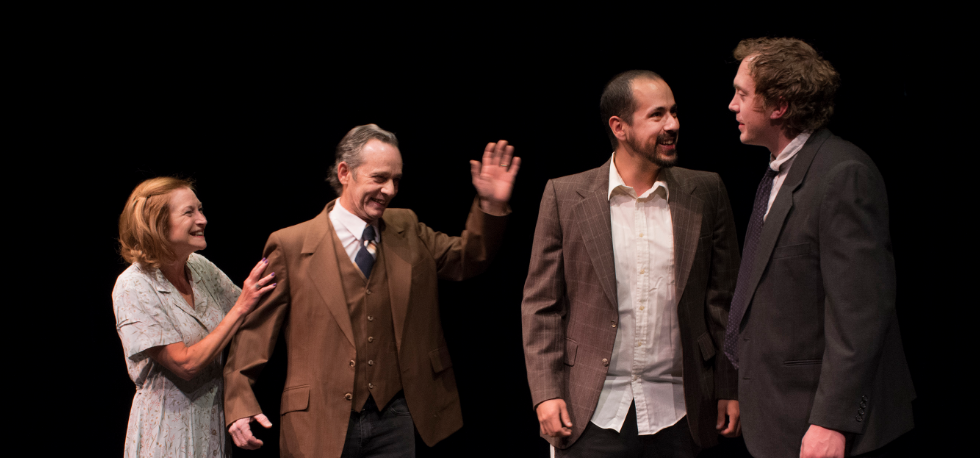
The fall 2015 production of “Death of a Salesman” was highly praised. Photo/LTCC

But she isn’t a collaborator, and that is what’s needed to keep theater alive on the South Shore. In most places the theater community is close-knit, they go to each other’s productions and cross promote. That doesn’t happen here.

No matter Boulanger’s personality, for the college administration, it all came down to numbers.

In 2011-12 the 188 students in theater arts equated to 25.26 full-time equivalent students. Those numbers for 2015-16 dropped to 82 enrollees or 14.61 FTES. That’s a decline of just more than 56 percent. Usually one degree per year was awarded, with 2011-12 hitting a record of three. To the college, that is unacceptable.

There were not enough students to sustain the lone faculty member. (Years ago the department had one full-time and two adjunct faculty members.)

Most small colleges don’t offer much in the way of theater classes. The only vibrant program is College of the Siskiyous, which is down the road from Ashland, Ore.

But the enrollment numbers at LTCC were going down even when Dave Hamilton ran the program before Boulanger took over.

Boulanger attributed the declining enrollment in part to the increase in tuition and the town not recovering from the recession.

The change in how the state stopped students from taking classes over and over again for credit did not impact the theater program like it did physical education and culinary arts.

This has been a department that has always had to fight for its existence. It just seems like now might be the final curtain call, at least in terms of a traditional college program.

Boulanger’s future with the college remains to be seen. Today, she’d like to keep teaching. There is a process for her to go through to make that happen. She also said she might like to be part of the next incarnation of theater at LTCC.

There is a process for ending the theater program. The Academic Senate will hear the case. This is set for Nov. 4, but could be moved up. Normally it’s not until two weeks later that those members would take a vote on the issue. This would be an advisory vote. In the end it’s the board of trustees who cast the final and deciding vote.

Staff is recommending the college put money into helping create a community theater that would be run by a nonprofit.

“We would like to see more productions like music or dance festivals. All kinds of things could be going on in that theater all the time,” LTCC President Kindred Murillo told Lake Tahoe News. “We believe the community theater model would bring all the people interested in theater to the college to do productions.”


La Niña may make an appearance this winter

By Dianne de Guzman, San Francisco Chronicle

Forecasts are already showing a possibility of La Niña in our future, with the Climate Prediction Center for the National Weather Service rating our chances at about 70 percent.

The system is predicted to be weak and short-lived, possibly arriving early next month. La Niña is not expected to make it through the winter, and forecasters gave it about a 55 percent chance of it lasting past December.

Read the whole story


Legalized pot raises DUI concerns

By Patrick McGreevy, Los Angeles Times

The defendant told an LAPD officer he had smoked pot five hours before he was pulled over on Melrose Avenue for driving erratically. A blood test found a significant level of the chemical THC in his system, and a drug recognition expert ruled he was too impaired to drive safely.

But a Los Angeles County Superior Court jury deadlocked on whether the young, off-duty valet had committed a crime by driving under the influence of marijuana, which he said he smokes for back pain and anxiety.

Similar outcomes are being seen all over California by law enforcement officials who say an initiative that would legalize recreational use of pot fails to properly address the issue of drugged driving.

Read the whole story


Study: SLT economy on positive trajectory

By Kathryn Reed

South Lake Tahoe isn’t the same city it was just a few years. And that’s a good thing.

Economic indicators point to a rebirth of sorts, but there is still plenty of room for improvement. That was the message delivered Oct. 18 by David and Jamie Orr to the City Council.

The Orrs, who own the Tahoe Mountain Lab, were part of the economic development task force the city convened in 2014. They were then hired to study the economic situation in the city.

“Leadership must be able to make bold investments in the future,” Jamie Orr said.

Partnerships will be key – whether it’s the city working closer with Lake Tahoe Community College or the private and public sectors collaborating more. It’s about being better connected – as in reliable cell and Internet service. Millennials take it for granted that they can reach whoever they want 24/7 and not at dial-up speeds.

Enticing businesses to move here is getting easier. To keep this up there needs to be a consistent message.

“We need to market our strengths. We need to tell authentic stories,” David Orr said.

South Lake Tahoe hasn’t always had a great reputation. At the height of the recession the boarded up, rundown buildings were more prevalent than thriving businesses. That has turned around. And it’s not just restaurants, questionable massage parlors and T-shirt shops opening.

Now more young professionals are calling the area home instead of just the transient liftie. They are helping define the types of businesses that are opening – like breweries, and Internet based firms.

While some people are doing well, Heidi Hill Drum with the Tahoe Prosperity Center, said per capita income in the city is just less than $25,000/year.

Small businesses are usually the backbone of most towns and South Lake Tahoe is no different. The Orrs pointed to their own business as an example of the burgeoning entrepreneurial spirit. Within their walls on Harrison Avenue are a multitude of workers – some more traditional, some just getting started, but all sharing a work space.

“Their presentation (Tuesday) made it perfectly clear, the city’s investment of $20,000 is an excellent return on the investment. The business incubator idea is blossoming at Tahoe Mountain Lab and looks to be an idea they have launched on their own; the relationships working with regional and national partners to bring attention to entrepreneurs to South Lake Tahoe is clearly been successful and resulted business start-ups coming to town – as well as helping South Lake Tahoe gain attention from other mountain communities promoting small entrepreneur businesses,” City Manager Nancy Kerry told Lake Tahoe News. “They’ve expanded business into the field of workforce education, an area needing attention in South Lake Tahoe and they are reaching local youth to inspire and encourage interest in creative entrepreneurship business. They’ve done a great job at developing regional partnerships.”

The cost of this study was much less than other expenditures the city has made in the name of economic development. More than a decade ago the city had two staff members whose job was to grow the economy. Basically they studied other people’s numbers and did nothing to spur growth, all at cost of about $250,000/year.

The Orrs noticed that access to capital is a real issue, especially for small entrepreneurs. A micro loan program might be the solution.

The couple looked at what is going on throughout the basin, as well as Truckee and Reno. Truckee is ahead of the South Shore when it comes to the arts, especially by creating shared spaces. Reno is bursting with businesses, which is apt to have a ripple effect in the basin as that area grows.

The council is expected delve further into the Orrs’ recommendations at the February strategic focus workshop.

“We will work with the 2016-18 City Council to shape the next two years of the city’s work plan, develop a clear set of priorities, goals and expectations and performance measures to ensure we stay focused on all that we can do to improve the business climate on the South Shore,” Kerry said.

And if ultimately the goal is to attract more people to the area, housing is going to become an even greater problem. Today it’s hard for the average worker to find a decent place to live. But the fact that 70 percent of the housing stock is not occupied by full-time residents is a 20-plus-year-old issue with no solution, especially when there is a limit to new construction.


Storms raise Lake Tahoe by 3 inches

In what seemed liked three days of uninterrupted rain in the basin amounted to 11 billion gallons of water dropping into Lake Tahoe.

All that moisture meant Lake Tahoe’s level increased by 3 inches, according to the National Weather Service in Reno. The lake is still 2 inches below its natural rim. This means in Tahoe City at the dam no water is flowing into the Truckee River.

Some canals in the Tahoe Keys in South Lake Tahoe that were almost dry now have measurable water.

The Friday-Sunday storm system was part of the remnants of Typhoon Songda.

The next chance of moisture is set for Oct. 24, with the Weather Service saying there is a “slight chance.” Until then, highs will be in the upper 60s, with overnight lows in the 30s.

— Lake Tahoe News staff report


Nev. gun laws inching closer to Calif.’s

By David Montero, Los Angeles Times

Joe Leal says he knows the good ones from the bad. He’s been doing this for decades. He trusts that his brown eyes — narrowed beneath a furrowed brow — won’t deceive him.

He looks down at the shiny silver handgun under a glass case. Next to it is an all-black one. Criminals don’t want guns like this, he explains. They’re expensive and only the serious enthusiast will lay down more than $2,000 for such a weapon. Even his lower-end guns fetch at least $600.

He’ll check their identification to make sure they’re a Nevada resident. If he gets a bad vibe, he’ll walk the customer over to a table where a federally licensed gun dealer can run a background check. That’s if he even decides to go that far. When he’s suspicious, the 82-year-old former U.S. Army lieutenant and long-time Nevada resident simply refuses to sell.

Leal is a private seller who might move 15 firearms a year. He calls it his “hobby jobby” and doesn’t believe he needs the government telling him when to run a background check — as is now being proposed on the November ballot. It’s not the Nevada way, he explains.

Read the whole story


Sports center will redefine medical care in Tahoe

The multi-million dollar health facility in South Lake Tahoe will be treat every day and elite athletes. Photo/Provided

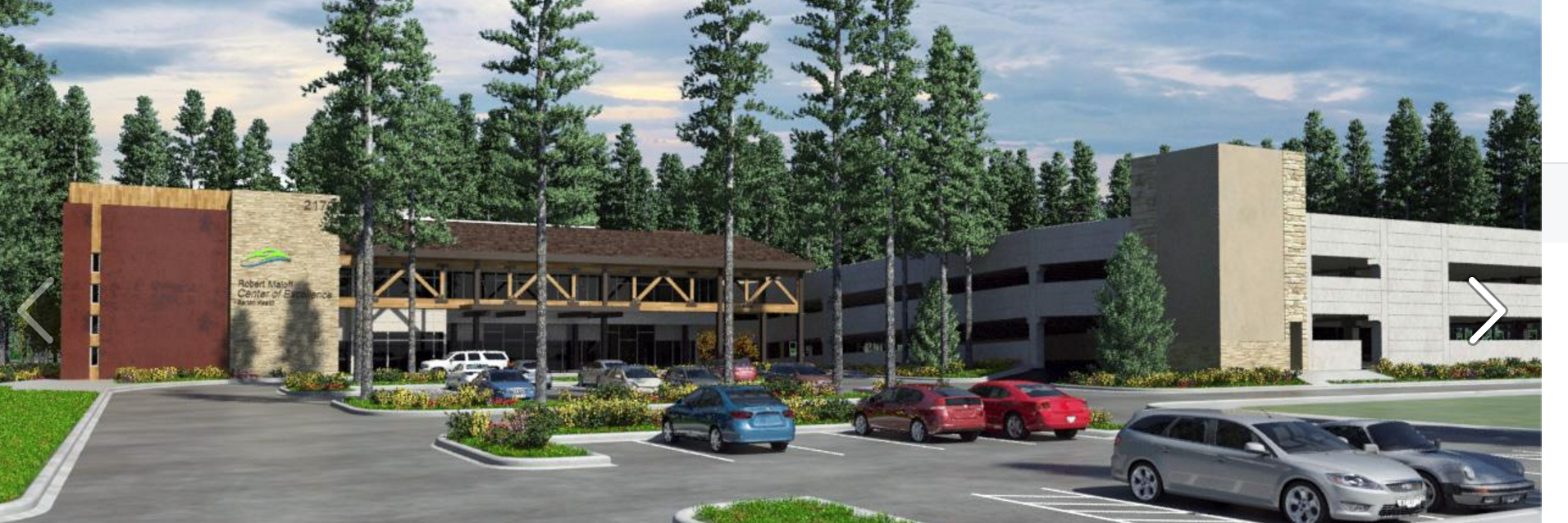
The multi-million dollar health facility in South Lake Tahoe will treat everyday and elite athletes. Photo/Provided

By Susan Wood

The Robert Maloff Center of Excellence is as much about Tahoe’s past as it is building a solid future for sports medicine on the South Shore.

“Since 2003, we started talking about this. It’s wellness, fitness and sports performance all in one – something we always needed to do, we just needed to know how to do it,” physical therapist and project coordinator Chris Proctor told Lake Tahoe News. He is also the administrative director of Barton Health’s Tahoe Center for Orthopedics.

Proctor has built a reputation by concocting creative means to work different areas of the body that athletes either need to strengthen or fix. They’re referred to as the “MacGyver-type” mechanisms thrown together for optimum performance. (This reporter witnessed a creative harness device in which the athlete had to pull Proctor, who stands well over 6 feet.)

Given its one-of-a-kind nature, the center will have leading edge equipment. Touch-screen activation will dominate the sometimes makeshift-style methods of working the muscular-skeletal system.

The Robert Maloff Center of Excellence will have space for elite athletes and include partnerships with the U.S. Ski and Snowboard Association. It will be the first to place orthopaedics, rehabilitation and sport performance training services under one roof.

Complementary medicine such as acupuncture, nutrition, meditation and yoga will also have roles in the treatment of the mind and body.

Barton Health is busy constructing the unique, 26,000-square-foot facility that is designed to prevent and treat sports-related injuries in this athletic community. It broke ground Aug. 23 on the east side of Barton Memorial Hospital; the foundation is laid and the footings are going in. It should be done in a year.

Lisa Maloff donated $10 million to the building of the facility in her husband’s name, a rewarding gesture she admitted.

“We all went to Barton,” the longtime resident told Lake Tahoe News.

She and her late husband, Robert, came to South Lake Tahoe in 1958 “when we didn’t have a hospital,” she said, chuckling.

“He always wanted to give to the hospital, so I did it in his honor,” Maloff said.

Lisa Maloff with Barton Health CEO Clint Purvance at the center's groundbreaking in August. Photo/Barton Health

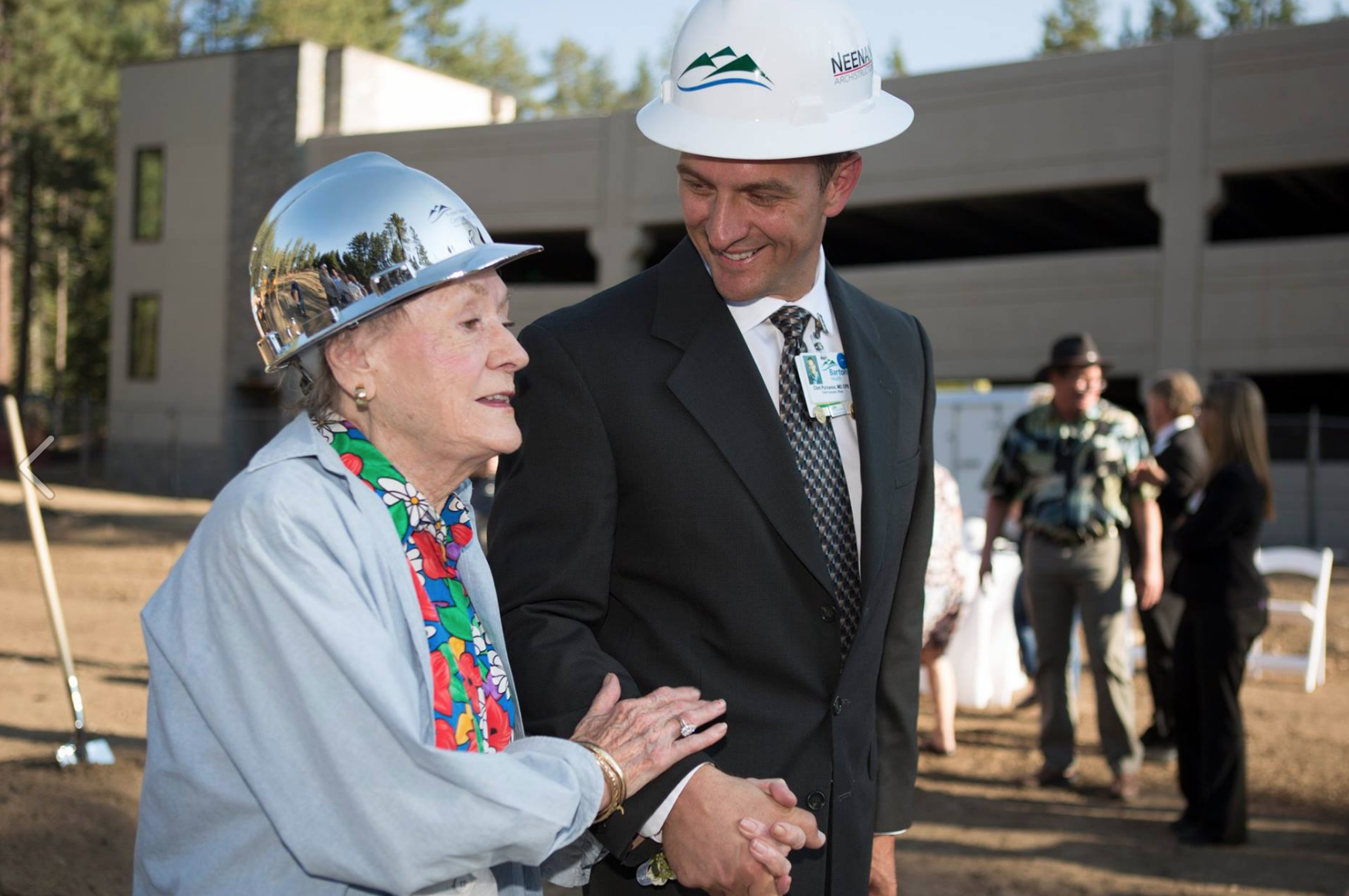
Lisa Maloff with Barton Health CEO Clint Purvance at the center’s groundbreaking in August. Photo/Barton Health

The future

In the grand scheme of things, this 12-month period is a short span in comparison to when the visionaries connected to the health care system dreamed up the $30 million-plus, two-story facility.

The center is designed to focus on wellness and be proactive with an amateur or professional athlete’s health. Memberships to the Center of Excellence will be available.

The second floor will be dedicated to classroom settings for sports performance education.

The health care system will evaluate in the coming months who of the 900 employees and 150 on the medical staff will work there.

Tahoe and orthopaedics

It is a well-known fact that if you have a skiing, biking or running injury – especially those involving delicate knees – you want to be in South Lake Tahoe. Some of the finest orthopaedists alive have graced these mountains.

Terry Orr, for one, has spent years as one of the U.S. Ski Team physicians.

“Part of it is what I envisioned – and it’s a whole lot better than that now,” Orr said of the center. As a renowned orthopaedist, Orr plans to move his practice into the center when it’s ready.

“When someone comes in, we’ll look at the whole body. We’ll see people from start to finish,” he said. The first order of business will be to look at the athletes’ goals and tailor a program to get them to where they want to be physically.

Why is this important?

“People who move up here, live here and visit here – a good proportion of them are here because they want to be active, and they want to stay active. We have world champion skiers at 80 years old,” he said.

On the flip side, there’s a whole other market, too.

“We’ve got a whole group of youth coming up who aspire to be in this active life. These kids are doing big tricks,” he said.

The idea is to strengthen their vital joints ahead of time – and not just during rehabilitation after the fact.

“If they’re stronger, they’re going to be safer,” he said.

At least one prominent South Shore Olympic athlete could relate to that theory.

Olympic gold medalist Jamie Anderson is revered for her death-defying feats of big air snowboarding. She supports a place in Tahoe that strengthens the body more than ever before.

And it’s personal as an athlete prone to injury. She broke her collarbone last December.

“I think it’s an awesome idea for Lake Tahoe. It’s going to bring a lot of good to the community – something we’ve needed for a long time,” Anderson told Lake Tahoe News. 

The Robert Maloff Center of Excellence will open in 2017. Rendering/Provided

The Robert Maloff Center of Excellence will open in 2017. Rendering/Provided

Tahoe’s medical history

As Barton heads to the future of treating athletes and enthusiasts, it embraces the foundation of its recreation-oriented past.

First of all, it had the early innovative thinking of knee specialist Richard Steadman, who worked alongside the late Paul Fry in their orthopaedist practice in South Lake Tahoe. (Fry donated funds for the Barton Maloff Center.)

Steadman, thought of as a champion for coordinated care, wanted to build a similar center in Tahoe in the 1980s. He was turned down at the time, but that didn’t stop his quest.

He donated his services at what became the first U.S. Olympic training center in Squaw Valley. He also started the nonprofit Steadman Sports Medicine Research Foundation here in 1988.

Steadman became a preeminent source for focusing on disorders of the knee, developing a treatment for injuries to the anterior cruciate ligament. It became known as the “healing response.”

The revolutionary ways to get athletes to heal have come a long way from when Steadman would put a hard cast on and have the patient stay still.

Movement is now key.

Steadman moved his expertise in 1980 to Vail to open a clinic bearing his name. There he expanded his level of research and sports clients. Some are famous – as in U.S. downhill skier Lindsey Vonn.

He wishes those involved with Barton’s Center of Excellence well and has no doubt the facility will thrive as his has over the years.

South Lake Tahoe’s has an even larger wellness component.

“They should have good success with the operation. I think the people who are continuing there are excellent people with the best of intentions,” Steadman told Lake Tahoe News, mentioning Orr by name.

Steadman insisted there are no hard feelings about wishing Barton would have supported this type of facility in the past. Things tend to work out the way they’re supposed to, he said.

“I’m not critical. I think the (Barton) people at that point were not thinking about this,” he said.

At age 79, Steadman has recently retired from his clinic, but not from being active. He hikes every day in most seasons and straps on the snowshoes in the winter.

“It used to be that as we advanced in age, people felt we were supposed to just sit down. From my era, we figured out that was not the right thing to do,” he said.

Steadman, who was also pleasantly surprised by his facility exceeding his expectations, fashioned his clinic’s rehabilitation after working to help the athlete “not just get back, but to get back to a higher level,” he added.

The same outcome is what stakeholders of the Barton center hope to achieve.


U.S. does a poor job predicting extreme weather

By Michael Behar, New York Times

At 11 o’clock on the night of Sept. 29, the National Hurricane Center in Miami posted an updated prediction for Hurricane Matthew. Using the latest data from a reconnaissance aircraft, the center’s computerized models led meteorologists there to conclude, in a post on the center’s website, that “only a slight strengthening is forecast during the next 12 to 24 hours.” Their prediction proved to be astonishingly amiss: The following day, Matthew exploded from a Category 1 into a Category 5 hurricane, with winds gusting to 160 miles per hour, strong enough to flatten even the sturdiest homes.

This was hardly the first time that United States government forecasters significantly underestimated a storm’s potential.

It’s a situation that deeply troubles Cliff Mass, a meteorologist and professor of atmospheric sciences at the University of Washington. Mass, who is 64, has become the most widely recognized critic of weather forecasting in the United States — and specifically the National Oceanic and Atmospheric Administration, which manages the National Weather Service and its underling agencies, including the National Centers for Environmental Prediction, where the nation’s weather models are run. Mass argues that these models are significantly flawed in comparison with commercial and European alternatives.

William Lapenta, who heads the centers, welcomes the criticism: “His job through his blog is quite honestly to provoke people to respond and hopefully take action,” he says. Indeed, Lapenta told me that the National Centers for Environmental Prediction, which directs the National Hurricane Center, might never have obtained additional funding from Congress to buy new supercomputers had Mass not drawn public attention to the center’s inadequacies in the aftermath of Hurricane Sandy.

Read the whole story


Politics could affect ability to attract international visitors

By Richard N. Velotta, Las Vegas Review-Journal

RENO — The winner of November’s presidential election could determine just how successful Nevada and the United States will be in attracting international visitors.

Will our policies be warm, welcoming and inviting, thus encouraging repeat visits and word-of-mouth endorsements? Or will they be closed, with administrators suspicious of those buying plane tickets to visit the American Southwest?

A panel of tourism experts fielded questions about that last week at the Nevada Governor’s Global Tourism Summit at Reno’s Grand Sierra Resort.

Lt. Gov. Mark Hutchison, who chairs the Nevada Commission on Tourism, moderated the panel, which made it clear that the outcome of the Nov. 8 election could have a far greater impact on Nevadans’ day-to-day lives and their jobs than they may have anticipated.

Read the whole story