No shortage of housing woes on North Shore, Truckee; solutions harder to identify


Placer County electeds hope an action plan comes out of the housing report. Photo/Linda Fine Conaboy

Placer County electeds hope an action plan comes out of the housing report. Photo/Linda Fine Conaboy

By Linda Fine Conaboy

KINGS BEACH – A study commissioned by the Placer County Board of Supervisors underscored what most people already know – housing is a problem.

Results from the Tahoe Truckee Housing Needs Assessment were presented to the board on Oct. 25.

Here are some of the statistics for the North Shore and Truckee areas:

·      80 percent of housing units are single-family homes

·      65 percent are vacant and used mostly for vacations

·      Nearly half were built before 1979

·      Median household income is $67,000, but median home pricing is $538,000 (2015 statistics)

·      The maximum affordable home price for a family of four in a low-income bracket is $235,000

·      76 percent of residents spend more than 30 percent of their income on housing (statistically, more than they can afford)

·      The wait list for affordable housing is six months to 2 years

·      To house the future workforce, 12,160 housing units will be needed

·      Nearly 60 percent of employees commute to work

·      Nearly 50 percent of residents commute outside the basin for work

·      Nearly 50 percent of the region’s residents sit between very low to moderate income levels.

It was in January 2015 that supervisors approved $76,000, Placer County’s share of the $172,000 project cost, to develop a housing needs assessment in conjunction with Nevada County, Truckee and the Tahoe Truckee Community Foundation. TTCF was charged with preparing and presenting the housing needs assessment, and Bay Area Economics was hired to complete the study, prepare findings and make recommendations.

Stacy Caldwell, TTCF chief executive officer said, “This is hard stuff. We’re not just talking about housing, we’re talking about people.”

She called the assessment a regional collaboration and a good opportunity to focus on next steps and solutions. Additionally, TTCF said on its website that the study represents all aspects of housing issues in the North Lake Tahoe region.

Caldwell said now that the facts have been gathered, the community is looking at how to move forward. She said there is widespread community momentum, hopefully eliminating the possibility that yet another study will be left to gather dust on a shelf in someone’s office.

“We need to move forward in a collaborative manner,” she said, stating that the Community Foundation has established a $10,000 housing fund to get the donation ball rolling.

She suggested to the board that permits that raise housing costs considerably could be deferred. “There’s a desire for people to use their property to circumvent these barriers.”

District 5 Supervisor Jennifer Montgomery said perhaps expensive fees could be waived or deferred. “But it’s a challenge because of all the fees,” she said. “It is also complicated by TRPA and their rules.

In an Oct. 21 Lake Tahoe News opinion piece, Joanne Marchetta, executive director of TRPA, expressed her concerns about the same topic, saying full-time rentals are scarce and often unaffordable.

In her piece, Marchetta said, “Affordable workplace housing is a complex, challenging issue here at Lake Tahoe and elsewhere. We are not alone in facing these issues and there’s a renewed spirit today at Tahoe to tackle the challenge.”

Additionally, Marchetta expressed a willingness to solve workforce problems. “There is no one silver bullet to solve these complex issues … but by strengthening our collective will to work together on this important issue and be creative, we can make needed change happen.”

For her part, Montgomery said, “I want to get all of the districts together to determine a solution. Let’s take all of our resources to get something done. This just can’t sit on a shelf.”

“There are untapped resources,” Caldwell said. “Like HUD financing. We have baseline information now and we need to gather our resources together.”

Supervisor Kirk Uhler wondered how the town of Mammoth solved its housing problems, intimating that Lake Tahoe is not the only resort area to have reached this crisis.

Uhler also likes the idea of encouraging longer term rentals rather than seasonal. “If there is an inventory of short-term housing, what is it?” he asked. “Maybe people might want to rent their vacation homes to seasonal workers.” He proposed that older homes be rehabilitated and he likes the idea of turning larger homes into multiple housing units as well as freeing up homes that sit vacant.

Montgomery said she would like to see the Contractor’s Board and the Board of Realtors get involved in the conversation, a statement that cued representatives from both the Realtors and contractors’ boards to step forward to pledge their groups’ support.

Several other organizations and private citizens told their stories about housing and promised support.

Montgomery capped the meeting, saying, “We need to move from words to action and no longer have circular conversations. I would like to see more money for this problem. This is not unique to Placer County, it is nationwide. But we don’t want to create large pockets of low-income areas. We, as a community, must come together to support the project—quickly—in the next few months.”


Storms bring flood risk to fire ravaged areas

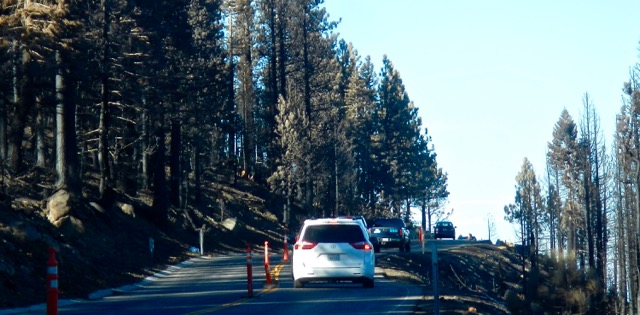
The Emerald Fire scorched trees on both sides of Highway 89. Photo/Kathryn Reed

The Emerald Fire scorched trees on both sides of Highway 89. Photo/Kathryn Reed

By Kathryn Reed

All the moisture that is in the forecast for the next week is a mixed blessing.

Five years of drought in California and western Nevada have left so many areas parched. The tinder dry brush has also contributed to horrendous fires throughout both states.

Now potential flooding is the major threat.

It is so worrisome to California officials that the state Department of Water Resources in conjunction with CalFire and the National Weather Service this week issued flash flooding warnings for not just this week, but the entire wet season.

“With an increased number of burn areas comes increased potential for flash flooding in those areas,” Bill Croyle, deputy director of Statewide Emergency Preparedness and Security for DWR, said at a press conference Oct. 24. “Flood preparedness is even more important this year due to widespread wildfires the state has experienced.”

Crews have been busy laying down tightly woven straw bales to prevent the burned hillside of the Emerald Fire along Highway 89 from washing down. The fire earlier this month burned nearly 200 acres on both sides of the highway, though mostly it was on the west side of the roadway.

DWR uses monitoring tools that synthesize multi-agency data to understand detailed, real-time ground conditions, helping to inform officials of developing areas of flood concern. The NWS is responsible for issuing flood watches and warnings. CalFire at different burn locations has taken measures to stabilize several slopes, including straw-mulching and installing early warning system rain gauges linked to local government emergency response systems to trigger evacuations.

As of Oct. 15, California had experienced 6,726 fires burning a total of 560,888 acres.

According to the National Weather Service in Reno, heavy precipitation is headed for Lake Tahoe on Thursday night. There will be a break Friday afternoon before the rain begins again Saturday afternoon and should last through Sunday.

Snow levels are expected to drop Saturday night to about 7,000 feet.


Study: Nevada worst state for mentally ill

By Lindsay Holmes, Huffington Post

Mental Health America recently released their comprehensive State of Mental Health Report, where it ranked how well each state handled mental health challenges, primarily through its citizens’ access to care and the percentage of people with unmet needs.

And the results are pretty dismal.

Nevada fell last on the list, partly due to a majority of adult residents with mental illness not receiving treatment and a large shortage of care providers.

The rankings were based on 15 different criteria, including the total number of adults and children with a mental illness, how many mental health care professionals were available and the number of adults who were uninsured. Researchers gathered data from 2011 to 2014, which was the most up-to-date information, to reach their conclusion.

Read the whole story


Avalanche prep key to surviving the elements

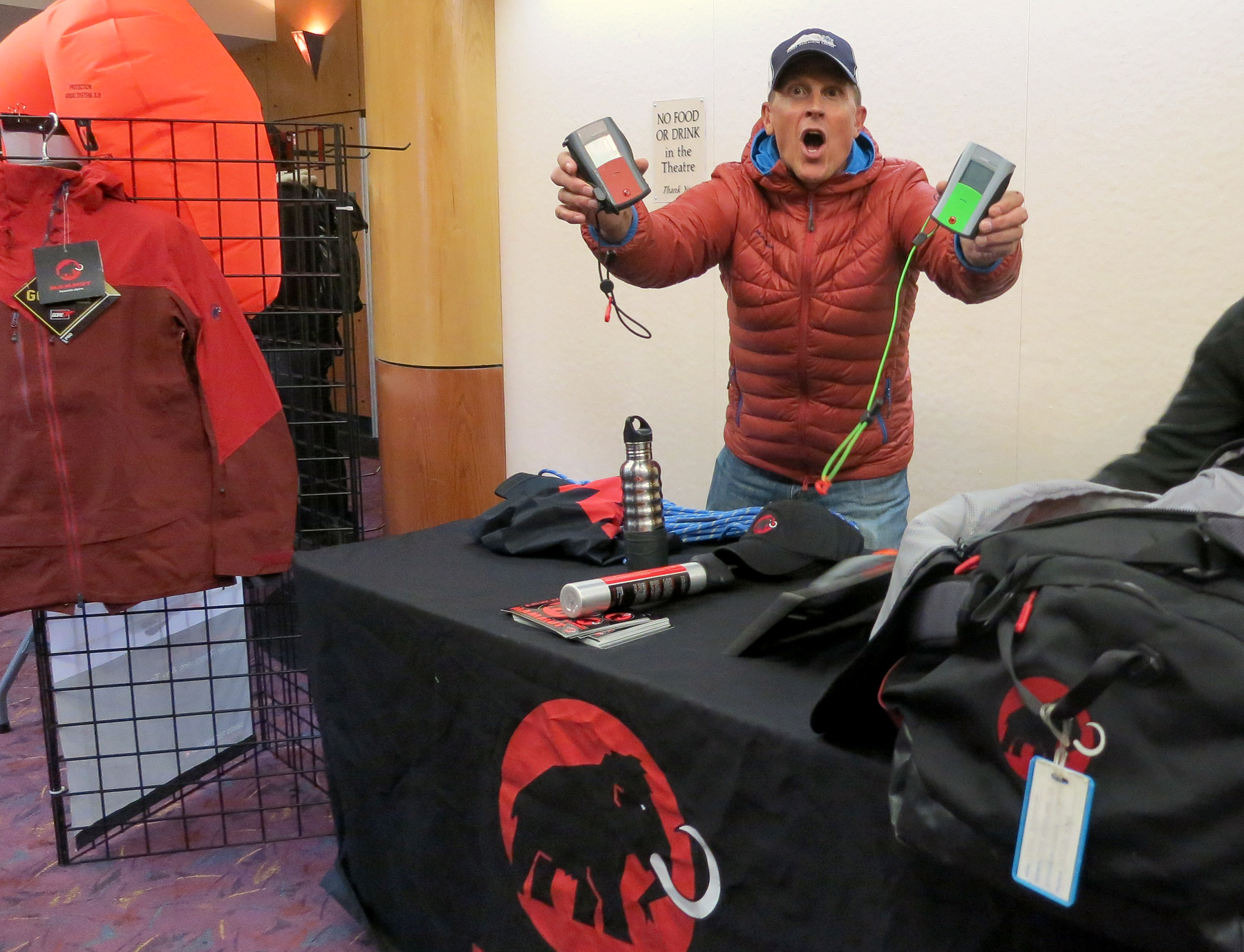
Sierra Avalanche President Todd Offenbacher shows off some avalanche beacons at the Mammut table. Photo/Jessie Marchesseau

Sierra Avalanche President Todd Offenbacher shows off  avalanche beacons on Oct. 15. Photo/Jessie Marchesseau

By Jessie Marchesseau

“You can know everything there is to know about snow, but if you don’t make good decisions, that doesn’t do you any good,” said Mike Ferrari, patrol director for Mt. Rose and board member of the American Avalanche Association.

Making good decisions was a predominant theme throughout the California Avalanche Workshop at Lake Tahoe Community College this month. Now in its third year, the annual workshop is a one-day event designed to educate snow industry professionals as well as backcountry enthusiasts about avalanche safety. It also serves as a networking opportunity for people who love snow.

Sierra Avalanche Center Director Todd Offenbacher called the CAW invaluable, and said it’s the best service available to the local snow and winter sports community.

Presentations from professional skiers opened and closed the day with South Shore local Hazel Birnbaum kicking off the event by sharing her personal experience being caught in an avalanche at last year’s Freeride World Tour competition in Fieberbrunn, Austria. Her story emphasized that just because you are at a resort, or someone else tells you an area is safe, doesn’t necessarily mean it is.

As the day progressed, Steve Reynaud from the Sierra Avalanche Center gave a recap of last year’s snow and avalanche season. Nate Greenberg, president of the Eastern Sierra Avalanche Center in Mammoth, shared his own backcountry experiences and hindsight lessons before offering a preview of an upcoming backcountry app designed to help users apply avalanche forecasts to make better decisions about ski terrain.

SAC forecasters Brandon Schwartz & Andy Anderson recapped the most significant lessons of the recent weeklong International Snow Science Workshop in Colorado. And Alex Taran, founder of the South American Beacon Project, talked about the need for more avalanche education in the mountains of South America.

Abe Greenspan of TahoeLab talked gear with skiers and snowboarders at the California Avalanche Workshop. Photo/Jessie Marchesseau

Abe Greenspan of TahoeLab talked gear with skiers and snowboarders at the California Avalanche Workshop. Photo/Jessie Marchesseau

To wrap up the afternoon, professional big mountain skier Cody Townsend introduced the crowd to the concept of the “normalization of deviance” and how it applies to snow safety. What it comes down to is this: when we do something dangerous without catastrophic results, the behavior begins to seem normal, even though the danger has not dissipated. This can lead to a habit of bad decision making or pushing limits too far. The end result is often disastrous. Luckily, Townsend recognized and corrected these habits in his own skiing before a disaster happened, and he encouraged listeners to do the same.

This was an eye-opening idea for Jason Champion, a mountain guide from Truckee, attending the workshop for the first time. Like many others, he felt the overall emphasis of the day was on good decision making while in the mountains. He was glad to hear the presenters voicing the importance of this and of communication within groups. In the end, Champion said he hopes it will result in fewer fatalities in the mountains.

But backcountry skiing almost always involves an inherent amount of risk. After his presentation, Townsend was asked how he balances good decision making with conquering new and difficult terrain, he responded: “It’s all about timing. There’s a time and a place for everything in the mountains, you just have to wait for it.”

The workshop featured eight speakers divided up into four sessions. Short breaks in between allowed attendees a chance to converse, make new contacts and check out tables featuring info, representatives and gear from Sierra Avalanche Center, TahoeLab boards, Mammut and the American Institute for Avalanche Research and Education.

Workshop organizer David Reichel, who is also the wilderness education coordinator at LTCC, said the personal connections people make in between presentations are equally as important as the information offered by the speakers. These are relationships attendees will follow up on later, when ski season is here, and they’re headed out into the backcountry.


Dugard campaigns against Calif.’s Prop. 57

Phillip and Nancy Garrido are in prison for the abduction of Jaycee Lee Dugard.

Phillip and Nancy Garrido are in prison for the abduction of Jaycee Lee Dugard.

By Jennifer McGraw, CBS-13

It’s a case that’s hard to forget, an 11-year-old Meyers girl was kidnapped and held hostage for 18 years, but now she is taking to Facebook to stop a proposition on the November ballots.

“The eligibility for parole for Philip Garrido after only 17 years is really a travesty,” said James Clinchard, then prosecutor in the Jaycee Lee Dugard case. “I can’t imagine how she would feel if the Garridos were eligible for parole at a date before 431 years.”

That’s how many years Garrido was sentenced to, but Clinchard said with Proposition 57 Garrido could get that hearing after just 17 years.

Read the whole story


Cubs-themed World Series could set wagering records

By Matt Youmans, Las Vegas Review-Journal

For star power and fascinating storylines, it’s tough to top the Chicago Cubs. A team of future superstars — starting with Kris Bryant and Anthony Rizzo — leading a popular franchise with more than a century of suffering in its past is more than enough to make this October unforgettable.

In case anyone has forgotten, the Cleveland Indians are a part of the story, too, and they add another element of intrigue.

When the numbers are totaled, this might be the most-wagered World Series in history.

Read the whole story


Working remotely at a ski resort now a reality

By Kathryn Reed

A powder day or work? The choice just got easier – at least for those who can work remotely.

Tahoe Mountain Lab and Heavenly Mountain Resort are partnering this winter to provide people a space to work on the mountain.

“I really have found myself on the mountain needing a place to work and not able to,” David Orr told Lake Tahoe News. Either the Internet connection wasn’t there or the quiet place to conduct business didn’t exist. Now both will.

Orr is one of the owners and founders of Tahoe Mountain Lab, a shared work space in the center of South Lake Tahoe. This satellite office will be known as Lakeview Mountain Lab because it is inside Lakeview Lodge at the top of Heavenly’s tram.

Today the space is used for weddings. By December, when the lab will open, there will be 16 desks in the 800-square-foot area. Time will be charged hourly, with rates not locked in stone – but likely will be between $10 and $20. Drop-ins are OK, but no promises there will be space.

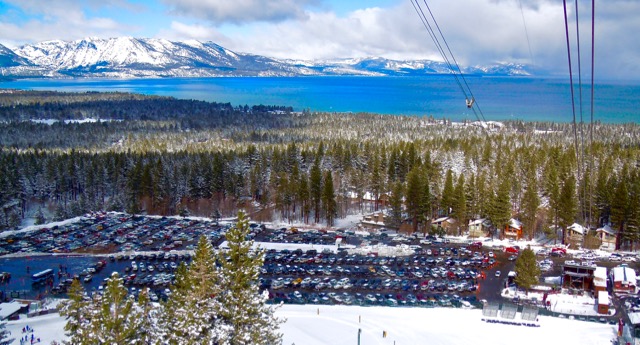
This is the view workers from Lakeview Mountain Lab will have. Photo/LTN file

This is the view workers from Lakeview Mountain Lab will have. Photo/LTN file

For those who know they’ll need to get a little work done in between making turns, lockers will be provided at the lab for computers and the like.

The lab will use software and hardware from Cobot to manage the workspace. As people’s time is about to expire, a message will pop up asking if they want to continue or end the session. Codes will be given out that allow prepaid workers access and no one else.

Orr doesn’t anticipate needing an employee to be on site. Heavenly will have staff available if someone needs something.

This is the first such work space at a ski resort in the United States.

“Office space is anyplace you want to be on the planet. Anywhere you can sit down and get a wireless connection is a virtual office space,” Coop Copper with Heavenly told Lake Tahoe News. “We think we are going to see pretty good traffic through there. This gives you that nice quiet space.”

Vail Resorts, parent company of Heavenly, will see how this workspace functions before deciding to expand it to other locations on the mountain or to other resorts.

It will be open the same hours the resort is.

Orr admits this is an experiment. He won’t make projections for how busy the on-mountain lab will be.

“We expect people on the mountain are with their families and want to get their work hammered out and get back on the mountain. We assume people want to do the bare minimum so they can feel comfortable about their work and take off,” Orr said.

That’s why it’s an hourly rate instead of something longer. Skiing is the No. 1 activity, the work thing is secondary at best in this situation. The difference though will be having that connectivity and quiet space that until now has been elusive at a ski resort.

The space can also be rented out by businesses if they want to do a workshop or the like on the mountain.

For info or to reserve a time slot for this season, go online.


Wine history lingers on palate at Tahoe pairing

A Chardonnay to commemorate Mike Grgich's shocking bottle from 40 years ago. Photo/Kathryn Reed

A Chardonnay to commemorate Mike Grgich’s shocking bottle from 40 years ago. Photo/Kathryn Reed

By Susan Wood

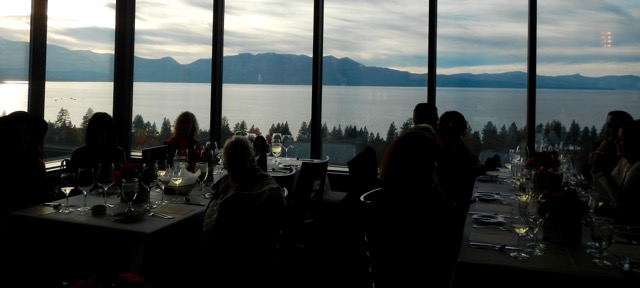
STATELINE – The Judgment of Paris met the approval of Tahoe at the Food and Wine Festival President’s Dinner hosted by Harveys.

The four-course dinner at the casino’s 19th floor restaurant aptly named 19 Kitchen Bar featured special guest Violet Grgich providing wine.

If the name sounds familiar to those of you in wine circles, it should. Grgich is the daughter of Miljenko “Mike” Grgich, a legend in Napa Valley for most specifically gaining an award for creating the best wine in the world during a 1976 blind tasting in Paris. The Chardonnay he crafted for Chateau Montelena stunned the world and placed the Napa Valley on the wine map forever.

Food and wine enthusiasts bask in the glow of a Lake Tahoe sunset while tasting history. Photo/Kathryn Reed

Food and wine enthusiasts bask in the glow of a Lake Tahoe sunset Oct. 22 while tasting history. Photo/Kathryn Reed

This year marks the 40th anniversary of the infamous encounter. Think the movie “Bottleshock.”

As diners were being seated Oct. 22, it took one man less than 15 minutes to tell the others at his table about the famous wine host. Later on in the evening, he impressed others with his declaration that Pinot is the hardest grape to grow.

Grgich’s daughter, who runs sales and marketing for the family winery, was stationed up front to greet the VIP guests with a Grgich Hills Commemorative Chardonnay she had bottled for her father to mark his 90th birthday three years ago. It sells for $93 a bottle. It is more reminiscent of what the winning 1973 Chardonnay tasted like.

Grgich explained how the Rutherford family winery founded in 1977 with Austin Hills of Hills Brothers Coffee started with Chardonnay (since her father is known as the “King of Chardonnay”) and Riesling before evolving into Petit Syrah and Cabernet.

Violet Grgich wine gives a history lesson to diners. Photo/Kathryn Reed

Violet Grgich gives a history lesson to diners. Photo/Kathryn Reed

What’s her favorite varietal?

“It depends on the day and the weather,” she told Lake Tahoe News.

Grgich displayed a personable, almost modest demeanor – further admitting she was surprised wine enthusiasts buy from her.

“I had no (sales) experience, but I just put the wine in front of people, and they buy it,” she said.

Her belief in the product and its roots shine through.

Grgich told LTN she’s “always aware” of living up to her father’s widespread reputation for representing a famous winery name.

A king crab and butternut squash bisque started the dining experience at Harveys. Photo/Kathryn Reed

A king crab and butternut squash bisque starts the dining experience at Harveys. Photo/Kathryn Reed

She studied music at Indiana University, playing harpsichord.

“Why would you want to be in music? It makes no money,” she recalled her father saying to her. The message to return to her roots must have stuck.

“Wine was one of those things that was a part of my life every day,” she said.

The winery executive told the diners wine was such an integral part of life for her family that children were placed in the grape vats “to keep them in check.”

The audience chuckled.

Grgich grew up accompanying her father, a Vintners Hall of Fame inductee, into the vineyards and cellar at a young age. He told her stories while he was in Croatia of wanting to escape Communism and bad water. It was discovered that if one made wine to consume instead of drinking water, it tasted better and made “the work day nicer,” Grgich told the captive audience.

Upon arriving in the Napa Valley in 1958, Mike Grgich met up with some powerful businessmen – most notably Robert Mondavi. Grgich created Mondavi’s first Cabernet in 1969, three years before joining the winery that made him famous – Chateau Montelena. The winery ended up No. 1 of 221 wines across the globe.

As diners feasted on a 180-degree view of Lake Tahoe and Chef Jason Behrendt’s culinary creations for the night amid music from a harpist, Grgich spun more stories about her father and the wine used to pair with each course.

The dinner was billed as new world meets old world.

The 2013 Grgich Hills Chardonnay was paired with a butternut squash bisque, with a butter-poached Alaskan red King Crab, Granny Smith Apple and shaved fennel in the center.

The Chardonnay was a fine complement to bisque melded with crab.

“Duck Two Ways” marked the second course. For those not necessarily wild about liver, the fig-sour cherry compote enhanced the 2011 Zinfandel.

Grgich wines paired perfectly with the chef's selections. Photo/Kathryn Reed

Grgich wines paired perfectly with the chef’s selections. Photo/Kathryn Reed

Grgich told the diners not to expect a bold Zin but reminded them this Zin was created in a European style – meant to be a lighter food complement.

“It’s not supposed to knock you off your feet. It just seduces you in a way,” she said.

The third course – the entrée – featured a venison loin, but according to a few diners, it may have been the accompanying parsnip puree that stole the spotlight. It tasted like eating vegetables straight out of the garden. The Brussel sprouts with bacon and wild mushroom slices also paired nicely with the 2007 Cabernet Sauvignon.

Thankfully, there was enough left in the glass to get a combination with the evening’s plate-licking dessert – a chocolate and hazelnut decadence cube with hazelnut ice cream.


Marketing push brings people to South Shore

By Kathryn Reed

More heads in beds is bringing in a substantial amount of money in order to promote the South Shore to even more people.

The South Lake Tahoe Tourism Improvement District’s budget is more than 20 percent higher than it was a year ago; $2.3 million v. $2.6 million. (In 2009 the budget was $1.8 million.)

Officials attribute the increase all to more room nights, not the price of rooms going up because the TID fee is a flat fee and not a percentage of the cost of a room night.

The TID gets its money by charging $3 per room on most hotels, with $4.50 a night assessed to time shares, condos and duplexes that operate as a tourist rental. This is just for properties in the city limits.

Ninety-five percent of what is collected goes to the Lake Tahoe Visitors Authority. Forty-eight percent of that percentage goes to marketing and 10 percent for special events.

Jerry Bindel, president of the TID, said the reason for the upswing is the increase in marketing. He spoke at last week’s City Council meeting. The city manages the collection of money, receiving a 1 percent administrative fee for doing so.

Carol Chaplin, who heads the LTVA, said events and international travelers are making a difference.

“The important thing with the international visitor is how long they stay and the money they spend,” she said.

Material is on the tourism bureau’s website in a variety of languages as a way to be instantly accessible to would-be travelers.

LTVA, which is integral to the annual celebrity golf tournament at Edgewood Tahoe, continues to see more residual benefits from the event. Chaplin said the American Century Championship has a $10 million economic impact on the community.

In 2015, an attendance record of more than 41,000 was set. It was broken this year with more than 47,000 attending the July tournament in Stateline.

The contract to have the tournament here goes through 2022.

LTVA is in talks with Amgen to bring the women’s cycling event back to the South Shore in May.

While the LTVA has often targeted Northern California and Los Angeles, San Diego is a new market. Results so far are positive, with the plan to continue to attract that Southern California population.

Different air routes out of Reno are helping to bring people here – like Jet Blue’s Long Beach and New York services, Alaska’s Orange County route, Allegiant increasing flights to Los Angeles, and Delta’s Atlanta flights.


Tahoe striving to be electric-vehicle friendly

Electric vehicle charging stations in the Tahoe-Truckee area. Map/TRPA

Electric vehicle charging stations in the Tahoe-Truckee area. Map/TRPA

By Carole Bernardi

INCLINE VILLAGE – Electric vehicle readiness is on its way to the Tahoe-Truckee region.

The Tahoe Regional Planning Agency, Truckee-Donner Public Utility District, an independent consultant team and a Plug-in Electric Vehicle Coordinating Council have all partnered to accelerate transportation electrification in the region.

Vehicle technologies in the United States and around the world are in a phase of rapid change. The last six years have seen the introduction of self-driving cars, mass production of electric vehicles, and new vehicle sharing. Electric vehicles are booming and this area has a chance to become the “electric highway in the sky.”

Millions visit the region and transportation has impacted air quality and become the second largest source of greenhouse gas emissions. To counteract the tendency to negatively impact the nature of our surroundings, regional planners are leading an effort to encourage the use of plug-in electric vehicles.

These vehicles have the potential to dramatically reduce petroleum consumption and greenhouse gas emissions, while increasing energy independence. There are two definitive types of plug-in electric vehicles: PHEV — plug-in hybrid electric vehicle and PEV — plug-in electric vehicle.

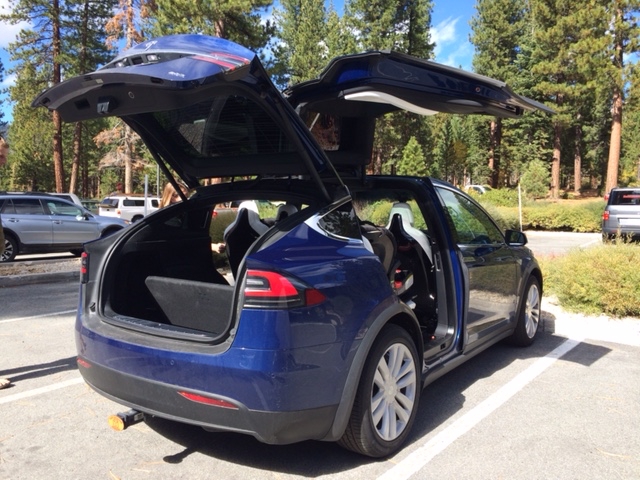
Tesla Model X. It is all wheel drive, has a 100kWh battery providing 289 miles of range, seating for 7, and "fast" (zero to 60 mph in 2.9 seconds). Photo/Carole Bernardi

The Tesla Model X is all-wheel drive, has a 100kWh battery providing 289 miles of range, seating for seven, and goes from 0 to 60 mph in 2.9 seconds. Photo/Carole Bernardi

The PEV is 100 percent powered by electricity stored in a rechargeable battery and electric motor. The PHEV includes an internal combustion engine and rechargeable battery which includes regenerative breaking (where the gas engine kicks in when the electric system becomes limited). The pros with PEVs are no fuel costs, low maintenance, cheaper to operate and zero emissions with an average range of 100 miles on electric only. The cons are limited range anxiety and longer time to charge. PHEV’s pros include a fuel option to rely on, but the cons are more emissions, more fuel dependency and more maintenance.

Vehicle manufacture options for these types of vehicles range from $24,000 to $94,000-plus with more utility vehicle models on the drawing board (due to high demand in varying regions). The growth appears to be steady with 45 percent of regional residents showing ownership of Tesla models alone.

There are incentives the public may not be aware of. Rebates, like the Federal Electric Vehicle Tax Credit which grants up to $7,500. There’s the CA-EV state rebate upward to $2,500 (for California). Time of usage (electricity) utility rebate (Washoe County issues “half price electricity” during the hours from 10pm-6am) and charging infrastructure tax credits up to 30 percent (usually implies a charging installation in resident).

Other natural incentives include: 1. Air quality (reduced greenhouse gas emissions), 2. Water quality (less gasoline pollution on roads seeping into the watershed), and 3. Noise (reduced roadway noise impact).

Let’s say you’ve been convinced an electric vehicle is the way to go. The second part of that equation is how and where to get charge?

 Charging "adapter" cord, used only when not hooked up to a Tesla free charging station. Photo/Carole Bernardi

The charging adapter cord is used only when not hooked up to a Tesla free charging station. Photo/Carole Bernardi

“In the Tahoe-Truckee region, most of the fast chargers are located in Truckee and are for Tesla’s only (16 stations). The only fast charger for other electric vehicles is located at Heavenly Village in South Lake Tahoe,” Steve Poncelet, Truckee-Donner Public Utility District’s spokesman, said.

A charging location can have multiple chargers, with three levels available. However, not all chargers are open to the public. Tahoe-Truckee has 71 percent open to the public. These might be contained to hotel guest use, as an example, and confirms the concern that access is an issue for the consumer.

These three levels of charging options are:

·     Level One: for a PEV it’s the slowest and the cheapest, up to 14 hours, and found mainly in residential situations (220-volt accessibility). For PHEVs it’s a charge for to 2-7 hours.

·     Level Two: for a PEV it offers 5-7 hours and for a PHEV 1-3 hours. These are usually found in commercial locations as well as residential (must be installed).

·     Level Three: for a PEV this is what’s called a direct current (Tesla charging stations) and takes 1 hour (fastest method). For PHEVs, it would average 20 minutes.

Why plan for this future transportation option when there are challenges here like limited electric SUV model options and cold weather where the estimated driving range is reduced by one-third?

“We surveyed the region and discovered that 70 percent of drivers are interested, but have never driven any type of electric vehicle. They’re basically undereducated or hesitant no matter their concern for the environment,” said Jennifer Cannon, associate planner with TRPA.

The biggest piece of the puzzle for the PEV Vehicle Readiness Project was answered when the TRPA/Truckee-Donner PUD/Independent Consultant team was awarded $200,000 from the California Energy Commission to accelerate the planning. As a part of this grant, a coordinating council was convened including utility companies, local government, experts, private sectors like ski resorts/hotels and local business associations. The council will provide recommendations, act as ambassadors and serve as a peer network offering education and outreach to the public.

Boosting and building this readiness plan with local policy will help accelerate development, increase access availability and viability for electric vehicles in the region. Municipalities are starting to install conduit into sidewalks in shopping districts and are requiring chargers for large parking lots and structures. Planned charging station installations will increase utilization by almost 90 percent and decrease what is known as “range anxiety” — a fear of being stranded due to lack of charging infrastructures. Free market competition is already in full swing with utility companies competing with aggressive independents like EVgo, whose plan is to build the largest PEV charging network in the country.

Like any plan there is a schedule. Starting now with existing condition assessment and surveys, leading into toolkits and recommendations regarding policy and incentive, including education and outreach, the goal for the project is to reach implementation by May.

Based on the U.S. Department of Energy calculations, estimated CO2 reduction in California is 76 percent and 59 percent in Nevada between all PEV and PHEV vehicles.

Technological advancements are expected to go beyond private vehicle use all the way to driverless automated vehicles. Tesla already offers this option and encourages it for highway use only. There is also the future electric boat transportation that would protect lakes. Regional progress is under way with the Tahoe Transportation Department pursuing the purchase of electric buses.