Political divide between Nev.’s urban, rural counties grows

By Ben Botkin, Las Vegas Review-Journal

Nevada’s political divide between rural and urban regions is wide.

Nevada voting trends in the 2016 election demonstrated the growing clout of Clark County, which has about 70 percent of the state’s population, and the need for future candidates to connect with voters in the state’s urban centers.

Though Donald Trump won the presidential election, Hillary Clinton carried the state, with the widest margin of victory in Southern Nevada. Clinton carried Nevada with slightly more than a 2-point lead: 47.89 percent to Trump’s 45.53 percent.

Clark County and, to a smaller degree, Washoe County, put Nevada’s six Electoral College votes in Clinton’s column.

Read the whole story


Ski film loaded with Tahoe talent, locations

Jonny Moseley, a 1998 Olympic gold medal freestyle skier and part time Squaw Valley, Calif., resident, narrates and is a featured athlete in the Warren Miller film, "Here, There and Everywhere," screening Nov. 19 at the Reno Ballroom. (Photo: Hank de Vre/Warren Miller Entertainment)

Olympian Jonny Moseley of Squaw Valley narrates and is featured athlete in the Warren Miller film “Here, There and Everywhere.” Photo/Hank de Vre/Warren Miller Entertainment

By Benjamin Spillman, Reno Gazette-Journal

Anyone who watches Warren Miller films knows what they’re going to get with each new edition.

There will be incredible scenery, amazing athletes and superb production values.

But what most viewers might not know is how much of it is thanks to people and places around Lake Tahoe.

The 67th installment, “Here, There and Everywhere,” is no different.

Read the whole story


Tourism study: South Shore excels at outdoor recreation, lacks quality dining experiences

By Kathryn Reed

STATELINE – Travelers are looking for a deeper connection to their destination than just a Kodak moment. It’s as if they want a relationship with the locale and not just a fling.

Being able to deliver what are in many ways intangibles is going to set the South Shore apart from other areas, according to a marketing expert.

In a yearlong survey of visitors (July 2015-July 2016) people were asked a variety of questions to gauge what brought them here, the experience they had, and the money they spent. Other pertinent information was gathered into a Visitor Profile Study by SMG Consulting of South Lake Tahoe for Lake Tahoe Visitors Authority.

Carl Ribaudo, principal of the marketing firm, on Nov. 10 highlighted some of the results for the LTVA board.

“I’ve been looking at different destinations to see the role that local culture plays. I asked a set of questions to find out what people thought they really wanted to get out of a place,” Ribaudo said.

The tangibles of Lake Tahoe included: recreation, gaming, natural environment, music and food. The subtler attributes people sought were: a friendly and welcoming community, a place where they were comfortable to be themselves and do what they liked, and being in a vibrant, energetic and interesting area.

According to the survey, 86 percent said the area “has a feel I like.”

However, only 65 percent said the area provided a unique experience. Still, 84 percent found the recreation experience they wanted.

A growing number of people are coming to Tahoe to participate in sports that don't cost money. Photo/LTN file

A growing number of people are coming to Tahoe to participate in sports that don’t cost money. Photo/LTN file

The area that needs most improvement is dining. This also generated the most discussion at Thursday’s meeting.

“We are focused on low-cost offering. We are not very risky in what we offer,” LTVA Executive Director Carol Chaplin said. “We are meat and potato places.”

Ribaudo noted that food more now than ever is a contributing factor in where people travel, and it’s not just foodies making this a priority. People are increasing the amount of money they allocate to dining when they travel.

“As a whole we are not seen as having what other destinations have in food and dining,” Ribaudo said.

Survey responses included:

·      Has the restaurant choices I like – 37 percent

·      Has quality restaurants – 37 percent.

What survey takers praised the South Shore for the most (95 percent) was the scenic beauty.

The survey revealed that 19 percent of the visitors are staying in a vacation rental. It used to be closer to 5 percent.

“My assessment is that the hotel-motel experience has fundamentally not changed on the South Shore. These numbers are only going to go up unless we change the housing stock,” Ribaudo said. “We aren’t giving them much choice with the existing lodging structure. It’s 1950’s stock.”

The last time SMG did a study like this for the South Shore tourism bureau was six years ago. The market has changed. Millennials are traveling, household income of travelers has increased, vacation home rentals are surging, and more people are spending time on free recreation like hiking, biking and kayaking.

“We are really becoming a much broader recreation area than we had been in the past,” Ribaudo said. While people are still coming to the ski resorts and renting boats in the summer, other sports are growing in popularity.

This shows that building biking-hiking trail networks – and promoting them – is paying off with getting people here for those endeavors.


Calif.’s drought divide – rainy north, dry south

By Associated Press

Among the changing red and yellow fall leaves of Yosemite National Park, nature artist Penny Otwell is marveling at the fullest rushing waterfalls and rivers she’s ever painted there in autumn. But down in the dry Southern California suburbs, David Cantuna laments the same dead and dying grass in his backyard.

California’s historic drought finally is easing in parts of the north, thanks to October rains that were three or more times the norm.

“I’ve been here 53 years and I’ve never seen it like this,” said Otwell, busy in recent weeks capturing on canvas Yosemite’s flooded meadows, brimming rivers and gushing waterfalls that more typically are dry this time of year.

The Merced River “is just bank to bank, which is unusual, and the waterfalls are just — after the rains, they were fabulous,” Otwell said as she headed to her studio.

But the five-year drought only is deepening in parts of Central and Southern California, including the 21 percent of the state that remains stuck in the deepest category of drought. In the Orange County city of Santa Ana, Cantuna, a 52-year-old machinist, doesn’t even think about turning on his backyard sprinklers anymore.

“The damage is already there,” Cantuna says of his forlorn front and back lawns. “There’s no reason to use my water right now because everything is dry.”

The drought divide leaves California’s water managers and experts striving to finesse conservation messages for two wildly differing situations in the state.

In Southern California, the results have been be wildly differing as well. This fall, the water district in one city, Costa Mesa, hung a banner on its building telling residents they could now water their lawns any day they chose, even as another city, Santa Barbara, banned lawn-watering.

“There’s always a balance in managing the drought message,” said Jay Lund, director of the Center for Watershed Sciences at UC Davis. “Play up the drought too much, and then they see it rain, they think…’Why are they just crying wolf?’”

All of California remains under a state-declared drought emergency. That follows what was the driest four-year span in history in the state. At peak, 100 percent of the state was in drought, and Gov. Jerry Brown ordered 25 percent conservation for cities and towns.

Many farms saw water allotments cut, leading to a rate of groundwater pumping that caused countless rural drinking-water wells to run dry and made the land sink more than 1 foot in parts of the Central Valley. The drought has further imperiled dozens of native fish and other species.

Last month brought a much wetter start to the state’s winter rainy season than usual, after near-normal rain and snowfall in 2015. Officials lifted mandatory statewide conservation earlier this year, but stressed they could clamp down again if the rainy season fails or water use shoots up.

This month the U.S. Drought Monitor’s weekly report said nearly one-fourth of the state was out of drought. That was California’s best showing in three years.

California has the biggest share of its 39 million people in the south, but gets most of its water from the north.


Changes likely for Douglas County sewer board

By Evan Maxwell, Reno Gazette-Journal

A legislative committee that oversees Lake Tahoe issues has endorsed a reorganization of the sewer district that serves Stateline casinos and more than 5,000 residential connections on the Nevada side of the lake.

In taking the action last week, the Joint Legislative Committee that oversees the Tahoe Regional Planning Agency also endorsed introduction next year of a law that could fundamentally alter the way local government is conducted in all but two of the state’s counties.

The six-member committee rejected a request by the board of Douglas County Sewer Improvement District 1 to reorganize the district in a way that would permit Stateline casino and resort owners to retain control. Since its organization in 1953, the three-member DCSID board has been composed entirely of executives from the major casinos and from Edgewood Tahoe Golf Course.

Read the whole story


Barton may be part of Tahoe ambulance team

By Kathryn Reed

El Dorado County is looking at redefining how medical care is provided to those who call 911 for an ambulance.

Paramedicine is a growing service throughout the United States, and is a model being looked at locally. Potentially nurses could be riding in an ambulance. They would have the ultimate say over whether someone goes to the hospital. But at the same time they could provide a higher level of care to the patient compared to what the paramedic or emergency medical technician who currently rides in the ambulance can do.

This is also designed to cut down on the “frequent fliers” using the ambulance to get to the hospital – often times for prescription meds.

The Affordable Care Act has created a conundrum – more people have medical insurance, but the reimbursements don’t cover the cost of doing business.

“Seventy percent of El Dorado County ambulance drives are Medi-Cal or Medicare. They don’t cover all of it. The feds pay a flat amount, which is far less than what an ambulance trip costs,” El Dorado CAO Don Ashton told Lake Tahoe News.
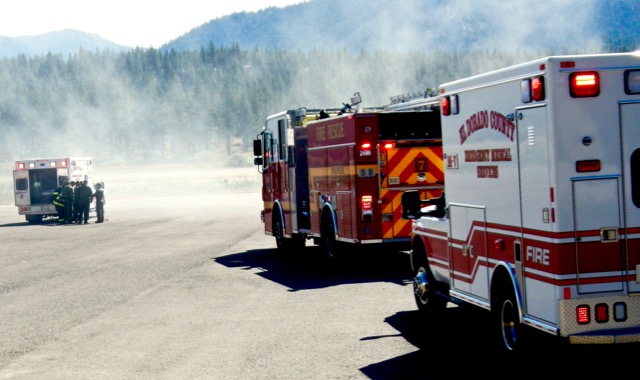
Ambulance service in El Dorado County is likely to change in the coming years. Photo/LTN file

Ambulance service in El Dorado County is likely to change in the coming years. Photo/LTN file

California law mandates counties provide ambulance service. El Dorado has joint power authorities on both sides of the Sierra to handle the respective service. The West Slope contract expires in 2018, the Tahoe one in 2019. It’s possible the West Slope contract could be extended one year to be aligned with the Cal-Tahoe JPA.

“We are trying to get a structure in place that is more sustainable in the long term,” Ashton said. “Once contracts expire, we have several options regarding ambulances.”

One idea is to privatize them. While that is on the table for the team to investigate, it is not the option Ashton favors. (It didn’t work well in Tahoe in the 1980s.) He envisions ambulance service in the county being more coordinated. This could help with inter-facility transfers and coverage. It’s possible the current JPA structures would no longer exist or they could be redefined or even combined into one.

Barton Memorial Hospital in South Lake Tahoe and Marshall Hospital in Placerville could be partners in the JPA. Both medical facilities have expressed interest. For this to happen state law would need to be changed. The county is working on that, with reps from the hospitals having written letters to state lawmakers in support of changing legislation to allow their entities to be included in the ambulance JPA model.

“Barton Health values care team coordination and supports endeavors where we can collaborate with other community partners to deliver consistently exceptional care,” Mindi Befu, spokeswoman for Barton Health, told Lake Tahoe News. “Barton Health is exploring options to have a representative on the JPA board of directors to provide a hospital perspective and assist with oversight in the delivery of emergency medical services. Barton does not plan to operate ambulance services; however, we will continue to work with El Dorado County, the city of South Lake Tahoe, and their partners and contractors to deliver comprehensive, high-quality patient care.”

She said this is not being looked at as a revenue stream. But their involvement has the potential to save everyone money.

Finances are driving the desire to come up with a new model for providing ambulance service. Call volumes are increasing, reimbursements are decreasing and overall expenses are more each year. A team is meeting about once a month to come up with a plan that provides care to residents in a timely, cost-efficient manner. The goal is to be able to roll out whatever the new plan is as soon as the JPA contracts expire.

Others who are part of the reconfiguration discussions said it is possible the hospitals could save money by being in the JPA if they provide the higher level of medical care in field. This is because that would be less expensive than having a patient arrive in the emergency room who doesn’t need to be there and then the government or private insurance company not fully reimbursing the facility for the care given.

Corey McLeod, doctor and director of emergency medical services for Barton, has been instrumental in working with the county as it rejiggers ambulance service.

The Tahoe JPA has already changed, with North Tahoe Fire Protection District joining it this fall. That department folded into Meeks Bay a couple years ago, so it’s boundaries are from the West Shore to Kings Beach. This is the department where Tim Alameda came from. He is the newly hired fire chief of Lake Valley Fire Protection District. The other JPA member is South Lake Tahoe Fire Department. Lake Valley and South Lake each have two members, with North Tahoe having one.

Having an uneven board for the past couple years has made progress for the Cal-Tahoe JPA difficult. Whatever the future configuration is, many who are involved want to keep an odd number on the board.

Having Barton involved is met with differing opinions from the local fire chiefs. Alameda, while he admits to still getting up to speed on things, sees Barton as a welcome addition.

South Tahoe Fire Chief Jeff Meston wasn’t so warm to the idea.

“It seems like it isn’t a good idea on the surface; it would perhaps give them too much control on how we do business with taxpayer funds, compared to how they do business. It just doesn’t seem like a prudent move to me,” Meston told Lake Tahoe News.

Forecast: La Nina is here; may last through winter

By Associated Press

Government weather forecasters say La Nina is here.

La Nina, the flip side of El Nino, is caused by the cooling of the central Pacific Ocean that affects weather patterns worldwide.

Mike Halpert of the National Oceanic and Atmospheric Administration said Thursday he expects La Nina conditions to be weak and short-lived.

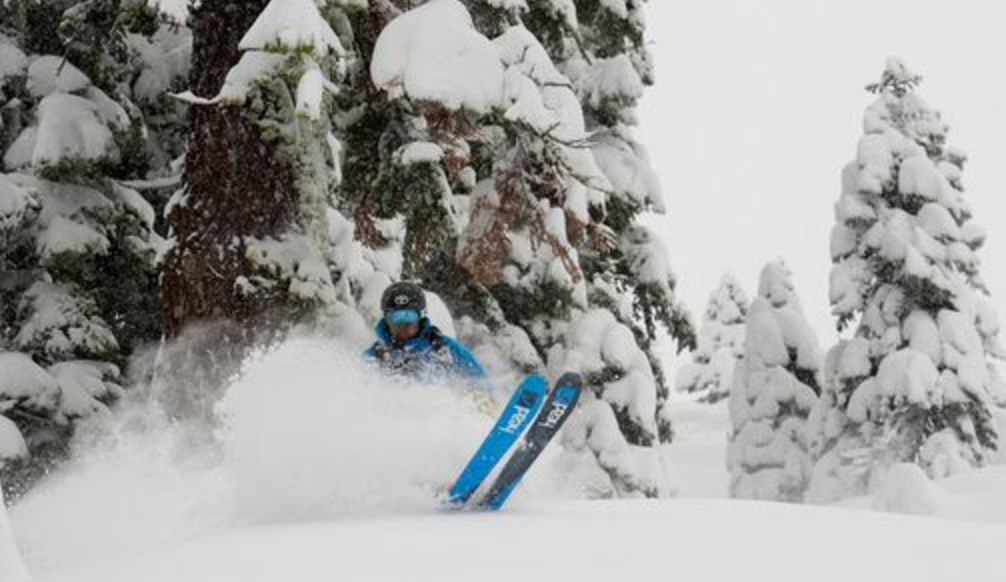
La Nina conditions often bring warmer weather, therefore more rain than snow, to the Sierra. Previous La Ninas have brought flooding to the Tahoe-Reno region.

In the United States, La Nina conditions usually means wetter winters in the northern Rockies, Pacific Northwest and Ohio Valley and warmer, drier conditions in the southern parts, including drought-stricken California.

NOAA says there’s a 55 percent chance La Nina will last through winter.


Study: Nev. pension costs cut into ed funding

By Amelia Pak-Harvey, Las Vegas Review-Journal

Jennifer Phillips has seen her salary from the Clark County School District decrease three times over the past few years.

That’s not because of a demotion. It’s because Phillips, an accounts payable employee, is paying a higher contribution to the Public Employee Retirement System, the pension fund for Nevada’s public employees.

A study argues that increasing pension costs are eating up education funding for students.

Nevada is one of only eight states that experienced both declining per-pupil expenditures and growing pension contributions, according to the study from the conservative Manhattan Institute think tank.

Read the whole story


Tahoe-Truckee expand economy beyond tourism

By Kathryn Reed

There is a movement under way in the Tahoe-Truckee area to build an economy independent of snow and gaming.

Benefits include higher wages in non-tourism industries and year-round jobs.

Two obstacles are the shallow talent pool and regulations. The lack of qualified workers can be solved by importing people from the Bay Area or elsewhere. Regulations – like the Tahoe Regional Planning Agency’s coverage and commodities rules – will take longer to change.

“This is an affordable place relative to a lot of other tech places,” Chris McNamara, owner of Outdoor Gear Lab in South Lake Tahoe, said.

McNamara was one of three speakers Nov. 9 talking about the region’s new economy. Rachel Arst McCullough with Tahoe Silicon Mountain in Truckee and Jamie Orr of Tahoe Mountain Lab in South Lake Tahoe were also on the panel. More than 30 people came to Lake Tahoe Community College to hear how business is different today compared to just a few years ago.

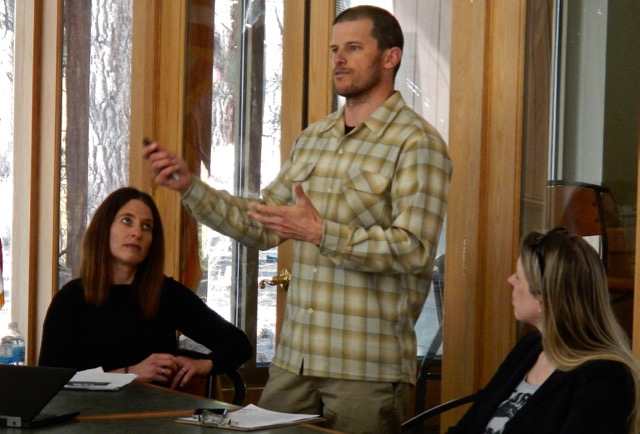
Rachel Arst McCullough, from left, Chris McNamara and Jamie Orr talk Nov. 9 about the region's changing economy. Photo/LTN

Rachel Arst McCullough, from left, Chris McNamara and Jamie Orr talk Nov. 9 about the region’s changing economy. Photo/LTN

People in the Bay Area are realizing their job is not dependent that they be there. They are exchanging long commutes for bike rides and hikes. It’s about living the Tahoe dream – immersing oneself in the natural environment, while still maintaining a career.

These “new” workers are also bringing a sense of community to the area.

“The new Tahoe economy is about breaking down silos. What do we want the community to look like as a whole?” Orr said.

She runs a shared workspace (which is completely full). Entrepreneurs, small businesses, nonprofits – they are working under one roof. Some resources are shared, while some enterprises have four walls unto themselves.

These people are then brainstorming among themselves to help each other. It’s a different type of networking – beyond the traditional service club or chamber mixer. And as such, they bring others into the fold. In some ways today’s work world is like the shared economies Airbnb and Uber have excelled at in their respective specialties only this is about independent contractors creating a niche for themselves.

By creating this new workforce it could help normalize the economy because these jobs aren’t dependent on tourists and therefore can provide stable employment. They aren’t going to hire and fire based on the weather.

One thing McCullough pointed out is “if you want year-round jobs, you need year-round housing.” Truckee, like the South Shore, has a shortage of long-term rentals.

One of the success stories in Truckee is the makers space where artists are working under one roof, much like how the businesspeople are operating at Tahoe Mountain Lab. Creating something similar is being talked about for the South Shore.


Opinion: Finding hope after Tuesday’s election

By Kathryn Reed

Why. It’s one of my favorite words. And it has served me well as a journalist; sometimes much to the frustration of those I’m interviewing.

After Tuesday’s presidential election many are left asking – Why did people vote for Trump? It’s time to listen to the answers because we weren’t listening during the campaign. We were too busy criticizing Donald Trump to understand that for millions he represented something we didn’t want to accept – that people are disenfranchised, they don’t want the status quo, they wanted someone who talks like they do, looks like they do and isn’t conventional.

I didn’t want Trump because he scares me. His words and actions scare me. To want to deport Muslims, build walls to stop immigrants, to disband gay marriage, to say sexually assaulting women is his privilege – well, it’s just mindboggling to me people can stand behind someone like that. His world views are opposite mine. His business ethics are opposite mine. I don’t know if there is anything about him I like or agree with.

I readily admit my dislike for this man stopped me from listening to those who supported him because I had already made my mind up who I was voting for – or was it voting against?

I didn’t want Hillary Clinton either. But she scared me less and I didn’t believe she would unravel our country. I also didn’t think she would make it great again or better than it is. I liked her experience and trusted she would do more good than harm.

I liked when Clinton on Wednesday said, “Our campaign was never about one person or even one election. It was about the country we love and building an America that is hopeful, inclusive and big hearted.”

I want to remain hopeful, have tried and will try harder to be inclusive, and will strive to be big hearted.

Clearly, the country is divided. But I’m of the belief that most of us want the same basic things, but we just have a different idea about how to get there. That’s my idealism kicking in. We aren’t always going to agree on everything – which is a good thing. If we did, it would be a pretty boring world.

I would like to think we can agree about some basics – that we should all be treated equal no matter gender, race, ethnicity, religious beliefs, or who our significant other is.

Most agree the health care system needs more reforms. Most agree our infrastructure is aging and needs to be rebuilt. Most agree people should be treated with respect. Most agree we want to leave the world a better place than we found it. Most agree we want the next generation to be better off than we are.

We have choices. What are yours going to be? Let’s be a country that learns to say yes, works together, and compromises.

Let’s start a conversation about how to get what we want instead of digging our heels in and saying we won’t work together. Congress – are you listening? American people – are you listening?

Eight years ago so many people said “that man is not my president” in regards to Barack Obama. Now the other side is saying the same thing – after chastising those who said the same thing eight years ago. You can’t have it both ways. That divide only grew in the last eight years. Are we going to let the chasm get even larger in the next four years?

Trump will be our president in January. The public has spoken. Protests won’t change that. And protesters, where were you before the election? Do something constructive for a change.

If you don’t like the Trumps and Clintons of the world, now is the time to start doing something about it. Now is the time to get engaged so in four years you are not enraged.

For those who are feeling a bit lost in the post-election malaise, grieving is a process. Take the time to do so. But do it fast – the country needs you to re-engage. The last stage is acceptance – of course you have to work through denial-isolation, anger, bargaining and depression to get there.

And to those who sat out and didn’t vote for a presidential candidate: shame on you. This is one of the greatest gifts we have in this country – the right to vote. As citizens we don’t have that many things we must do. But I adamantly believe one of our obligations is to be civically involved – at all levels.

As Clinton said today in her concession speech, “Our constitutional democracy demands our participation not just every four years, but all the time.”