Great grades result in free ski days at Sierra

By Susan Wood

OK kids — get perfect grades and your success could lead to being graded at the Winter Olympic Games one day.

And you’ll be in good company.

Gold medalist Maddie Bowman of Meyers, who told Lake Tahoe News she plans to compete in the Pyeongchang, South Korea, Olympics Games in 2018, started her skiing career at Sierra-at-Tahoe. She achieved a 4.0 grade point average and took full advantage of a program there that provides a free season pass for students of Lake Tahoe Unified School District. She used the program for seven years from middle school through high school.

The benefit started out in 1999 with the ski resort 12 miles west of Meyers giving away nine passes. Sierra now averages about 300 a year. A few years ago, the community-minded ski resort ended up with a record 377 doled out.

“I would attribute a lot of my career to my ski time at Sierra,” Bowman, 22, told Lake Tahoe News.

Maddie Bowman went from straight A student to Olympic gold medalist with Sierra-at-Tahoe's help. Photo/LTN file

Maddie Bowman went from straight A student to Olympic gold medalist with Sierra-at-Tahoe’s help. Photo/LTN file

The freestyle skier is known for her death-defying feats on skis in the superpipe. She won gold in the Winter X Games from 2013-16 and more of the metal at the 2014 Winter Olympics at Sochi in the halfpipe.

“I think the free pass did motivate me in school, and it was a nice reward,” Bowman said. “I struggled with English. I still do.”

After leaving South Tahoe High School, she’s attending her third year of college at Westminster University in Salt Lake City.

Although Bowman’s professional, competitive skiing career has taken her all over the world, her heart is anchored in Tahoe as reflected in numerous Facebook posts from all seasons.

But it’s Bowman sliding on the slopes that captured the hearts and minds of young and old – especially in Tahoe. The ski area hosted a huge party for Bowman and fellow Olympic “golden girls” Jamie Anderson and Hannah Teter.

Screen Shot 2016-10-26 at 3.03.55 PMjohn rice


“It’s hard to put the whole experience into words. The skiing is amazing. There is all sorts of terrain for everyone, and you can get pretty creative with it,” Bowman said of her home resort. “Sierra was a second home to me. It’s like a big family up there, and the people and mountain teach you a lot – not only about skiing, but about life. I was lucky to grow up there.”

And there you have a spilling of the heart partly because of the unique influence of general manager extraordinaire John Rice.

The straight A season pass program began as a personal gesture from Rice to his sons, Ian and Brendan, when they were attending Meyers Elementary School in the fourth and fifth grades, respectively.

“They came home with A’s and B’s, and I asked them what it would take for them to get all A’s,” Rice said, adding: “…something their father only did one semester in all of school.”

Smart kids. They countered with asking what they would get.

“I told them: ‘Anything you want’,” Rice recalled.

“Anything in the world?” the boys tested their dad.

The prize was agreed upon – BMX bikes. And the boys consequently pulled in straight A’s.

Of course, they didn’t want the slap-together, inexpensive Walmart variety, Rice noted.

“They wanted Specialized, single-crank, aluminum 360 handlebar, high-end $600 bikes,” he quipped.

“I was amazed at how the extra motivation made them try that much harder, and I shared with their teachers that if any kids in their class got all A’s, Sierra would give them a season pass,” Rice dictated.

The word spread like wildfire after that first year. Soon, every teacher in the school participated. Then, calls came in from Tahoe Valley, Bijou and Sierra House, to which Sierra-at-Tahoe offered the same deal.
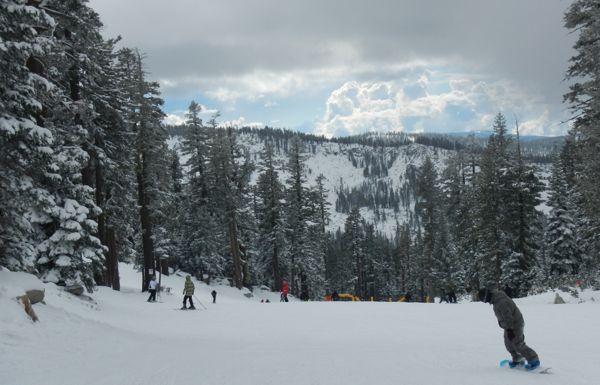
Sierra rewards about 300 students a year with free passes based on their grades. Photo/LTN file

Sierra rewards about 300 students a year with free passes based on their grades. Photo/LTN file

The program has been extended to private schools, home schools and others that fall under the education umbrella.

“The benefits of providing incentives for students was bigger than the (loss of ski pass) sales,” Rice said.

Through the years, the straight A program has even crossed the state line – with Zephyr Cove Elementary and Whittell High School joining in the quest.

The ski-pass program – which amounts to a value of up to about $300 — is so popular, Sierra-at-Tahoe was forced to draw boundaries as the requests expanded into Carson City, Reno and even to the San Francisco Bay Area.

“Sierra recognizes that not all students have the same resources to achieve the goal of straight A’s. In the past, we have given teachers day tickets for students who have made quantum leaps in their progress. Not all who earn free passes can afford to ski, but you better believe they come up and get their pass,” Rice continued. “The program has been successful beyond our dreams, and I have a stack of thank you cards and letters to prove it.”

A note of gratitude was offered from LTUSD, which embraces the program.

“The program encourages students to do their best work and shows them that hard work pays off,” district spokeswoman Shannon Chandler told LTN.

“A lot of our families are unable to afford (ski passes). Even if just one person in the family earns a ski pass from Sierra, it’s a huge help toward the purchase of passes for the whole family. The program also promotes parent involvement in their child’s academic career,” said Chandler, who added personally that she continues “to stay on” her children to strive for “that golden ticket.”

And while not every straight A student will have the successes on the mountain Bowman has had, time on the slopes will only make youngsters better skiers and boarders.

Note: Sierra-at-Tahoe opens today for the 2016-17 season.



Scientists to map aquatic species in western U.S.

By Keith Ridler, AP

It sounds like a big fish story: a plan to create a biodiversity map identifying thousands of aquatic species in every river and stream in the western U.S.

But scientists say they’re steadily reeling in that whopper and by next summer will have the first Aquatic Environmental DNA Atlas available for the public. 
 
Boise-based U.S. Forest Service fisheries biologist Dan Isaak is leading the project and says such a map could help with land management decisions and deciding where to spend limited money and resources.

“It’s kind of the Holy Grail for biologists to know what a true biodiversity map looks like,” he said. “To have that formatted digitally so you can do lots of science with it will be transformative in terms of the quality of information we’ll have to conserve species.”

Isaak said annual surveys could provide snapshots so scientists can see how biodiversity and ecosystems change over time. Because of the project’s immense scale, he said, sample collecting likely will require help from many entities, including citizen scientists.

The map eventually will include everything from insects to salmon to river otters. It’s possible because of a new technology that can identify stream inhabitants by analyzing water samples containing DNA. The technology also can be used to identify invasive species.

That technology is evolving, said Michael Schwartz, the Forest Service’s director of the National Genomics Center for Wildlife and Fish Conservation in Missoula, Montana. Currently, he said, scientists can detect only one species at a time in a stream sample. He said the goal is to identify multiple species in a single test from one sample. A rough estimate for when that might be possible is about a year, he said.

The trove of information has the potential to be so vast that questions not presently imagined might arise.

“Any time science undertakes large projects like this, the payouts can be in directions you don’t expect,” Schwartz said.

Ultimately, he said, the publicly available information could be used by someone with an iPad or other device who could go to a section of river and see what species it contains.

The Aquatic Environmental DNA Atlas for the western U.S. has its genesis in a smaller-scale project called the Bull Trout Environmental DNA Atlas involving five states — Idaho, Montana, Nevada, Oregon and Washington — where the federally protected fish is found. That effort, Isaak said, has discovered bull trout in areas where they were thought not to exist.

Isaak also has been working on something called the Cold Water Climate Shield to identify streams that could serve as a refuge for cold water species, such as bull trout, if global warming continues. That map uses millions of temperature recordings going back decades and has expanded to include most of the western U.S. Stream temperatures in lower elevations have risen several degrees over the past 30 years, Isaak said. The DNA Atlas has been confirming the kind of species present as predicted by the Cold Water Climate Shield, Schwartz said.

What scientists ultimately hope to do is combine all the information from stream temperatures, DNA Atlas sampling, topography and weather patterns to get more insights into species distribution patterns and even how entire ecosystems function. 

“The data sets can be bigger because computers are bigger,” Isaak said.

Even for Isaak, who is called a visionary by his colleagues, the leaps in technology that make his ideas possible can be mind-boggling.

“It’s just been an ongoing revelation,” he said, recalling 15 years ago using pencil and paper to make streamside observations. “It still seems like magic to me that you can go take a water sample and you have instruments powerful enough to discern what species are present.”


Placer County to allow indoor-outdoor pot grows

By Lake Tahoe News

Following the passage of Propositions 64, Placer County supervisors are trying to keep pace.

The state recreational marijuana initiative allows people to grow a limited amount of pot indoors.

Supervisors voted 4-0 to allow limited cultivation inside and outside in the unincorporated areas of the county — which includes Lake Tahoe. Supervisor Jennifer Montgomery was not at the Nov. 22 meeting.

The ordinance will go into effect 30 days after the second reading, which is scheduled for Dec. 6.

The county is taking a two-phased approach to recreational marijuana. The first is to focus on allowing limited personal cannabis cultivation and banning commercial cannabis activities.

However, the supervisors did not entirely rule out the future possibility of commercial cultivation for medical cannabis.

At Supervisor Jim Holmes’ suggestion the board supported creating a cannabis working group made up of county staff from all relevant departments, as well as representatives from Placer’s cities and the medical cannabis industry – for their consideration. 

Staff is coming up with the tools needed to enforce the ordinance. 

They will return to the board in the coming months with detailed requirements for outdoor cultivation. 
The cost of starting up and implementing the county’s enforcement program in its first year is included in the current budget. Annual costs in the future are expected to be $609,000, including staff, vehicles and equipment. 


Meyers nonprofit cultivates community synergy

By Kathryn Reed

While everybody might not know your name, you still feel comfortable among strangers.

This is Meyers.

It’s a community unto itself. It has that sense of place; where you belong to something bigger, but not something so big that you get lost.

Going to South Lake Tahoe is going to town. When people talk about doing so it’s almost like a burden. People who live in Meyers are prideful. They feel a little more connected to the outdoors. They are mountain people.

“We are unincorporated, so we have limited local governance. We are not doing any government stuff, but we are filling a civic pride void,” David Reichel told Lake Tahoe News.

Reichel is the vice president of the Meyers Community Foundation. Community is what this nonprofit is all about it.

While the concept of the foundation came about in 2011, it was in 2014 that the group of locals secured its nonprofit, 501(c)3 status. A seven-member all-volunteer board runs the foundation. Other members are Rene Brejc, Kim Wyatt, Brian Levy, Tara Offenbacher, Christian Waskiewicz and Tim Cain.

For the group’s sake, the boundaries of Meyer’s are loosely defined since other parts of unincorporated El Dorado County – like Christmas Valley and Tahoe Paradise – flow into this enclave.

Brejc, Wyatt and Josh Welch started what was the Meyers Business Group in 2011. It morphed into the community foundation. They along with others that year started what has become an annual tradition – the tree lighting at Divided Sky, with Santa arriving via CalStar helicopter and the Lake Valley fire engine all decorated in holiday lights.

The foundation now puts on this event, which this year will be Dec. 2 at 5pm. There is no cost – not even for the popcorn and hot cocoa.

Donations, though, are accepted.

The foundation’s fall event is the gear swap.

“This made sense and fit Meyers. A lot of people have outdoor toys,” Reichel said of the swap.

This is a money-maker for the foundation.

Another fund-raising event was launched this year – the OMG Fun Run in May. It was part serious running up Old Meyers Grade and part fun with people in costumes.

And while the events are all in Meyers and the money is staying there, people from everywhere are encouraged to participate.

The foundation wants to have a pot of money so it can help spur improvements throughout Meyers. People are encouraged to submit grant proposals year round. This year money was provided to help stock fish at Baron Lake at Tahoe Paradise Park and support a rock climbing project.

For more information about the Meyers Community Foundation or to donate to the cause, go online.


Less frenzied Black Friday as millennials stay in

By Rachel Abrams, New York Times

If you’re in the retail business in the United States, you probably really care about these two things: millennials and Black Friday.

But more and more, these two big drivers of the industry don’t mix inside stores — a dynamic that is reshaping one of the country’s biggest shopping days.

Young people of all kinds, a coveted group for retailers because of their free-spending ways, are increasingly turning to their computers and phones to do their holiday shopping, spreading out more widely the days they open their wallets. Crowds on Friday, the unofficial kickoff of the holiday shopping season, will tilt older than a few years ago, and also, it appears, more cautious with their money.

Read the whole story


Study shows vulnerability of quake on San Andreas fault

The San Andreas fault in California. Researchers have found that tidal forces play a role in the timing of small, deep earthquakes along the fault. Photo/U.S. Geological Survey

The San Andreas fault in California. Photo/U.S. Geological Survey

By Rong-Gong Lin II, Los Angeles Times

A sobering new report on California’s seismic vulnerabilities said that up to 3.5 million homes could be damaged if an 8.0 earthquake ruptured on the San Andreas fault.

The new estimate, from the data firm CoreLogic, is based on a theoretical rupture of the entire San Andreas fault, which passes through Los Angeles County and the San Francisco Bay Area and spans more than 800 miles, from the Pacific Ocean south of Eureka to Imperial County near the Mexican border.

Scientists now say it is possible — although not likely — that the northern and southern sections of the San Andreas fault can rupture simultaneously.

The cost of reconstruction could be greater than $289 billion.

Read the whole story


Surviving Thanksgiving: Fight, flight or drink

By Maura Judkis, Washington Post

Every year at Thanksgiving, we’re subjected to stories about how to cope with your drunk uncle, your bratty cousin, your grandma with an ax to grind. And every year, at least for those who come from your typical, slightly dysfunctional but lovably kooky family, the idea that we’d need an entire coping strategy to get through one meal seems a bit histrionic.

This year is different.

Hoooboy, do some of us need advice on how to get along with our families after a year like this one. Could we postpone Thanksgiving for another month or so, until we’ve all cooled down? No? OK then, let’s take a deep breath, set out the decorative gourds, and dive in.

Read the whole story


Enthusiastic snow lovers flock to Heavenly


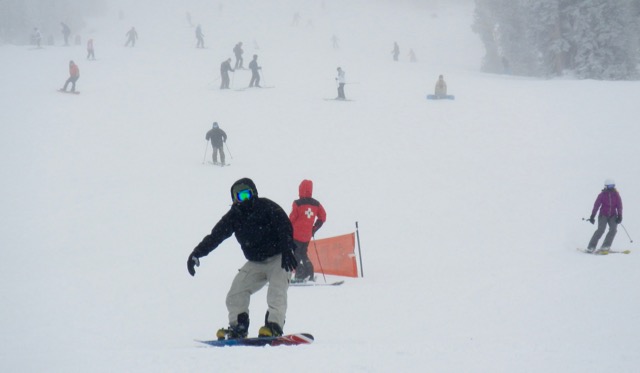
Snowboards and skiers enjoy good coverage on limited terrain at Heavenly on Nov. 23. Photo/Kathryn Reed

Snowboarders and skiers enjoy good coverage on limited terrain at Heavenly on Nov. 23. Photo/Kathryn Reed

By Kathryn Reed

It didn’t matter that only one run was open. Hundreds of people were taking lap after lap after lap at Heavenly Mountain Resort today.

It was opening day after all and people had pent up energy having not skied since April.

Not everyone, though, was on the mountain to ride.

Playing in the snow instead of skiing is more fun for some people. Photo/Kathryn Reed

Playing in the snow instead of skiing is more fun for some people. Photo/Kathryn Reed

“We were both off all week and we said let’s go somewhere we’ve never been. And here we are,” Heather Toxey of Birmingham, Ala., told Lake Tahoe News. “We paid 100 bucks to ride the Gondola up to see what it was all about.” And she had no regrets.

Toxey was all smiles talking about the snow, what she has seen in Tahoe – and now she plans to come back in the summer.

Neither she nor her husband, Derek, ski. They were perfectly content to hang out in the Tamarack Lodge.

The lodge was full. And like most holiday periods not everyone had ski or snowboard boots on. It was just about getting that vibe of being in a ski lodge. For some youngsters they were more interested in building snowmen and throwing snowballs outside of the lodge.

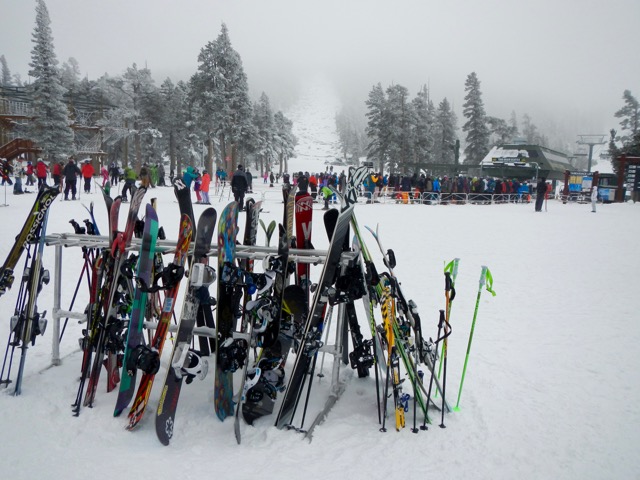
Hundreds of people turn out for the first day of the 2016-17 season. Photo/Kathryn Reed

Hundreds of people turn out for the first day of the 2016-17 season. Photo/Kathryn Reed

For the more serious they were getting off the gondola while others were still buying their ticket. Martin Hollay, who is in his mid-90s, was departing the gondola about 10:30am Wednesday. (The legendary skier from Hungary was instrumental in designing the cross country course on the West Shore for the 1960 Squaw Valley Olympics.) He is at Heavenly nearly every day.

On the other end of the age spectrum was a 2-year-old in the season pass line with mom who was holding the little one’s skis.

For Allan Zhang, 15, he got in a little late Tuesday night with his family so he was trying to catch some zzzzzzs at lunch in order to be ready to go back out for some afternoon runs.

He and his dad, Eric, drove up from San Jose for a couple days.

Allan Zhang of San Jose rests before heading out later Wednesday afternoon. Photo/Kathryn Reed

Allan Zhang of San Jose rests before heading out later Wednesday afternoon. Photo/Kathryn Reed

“For the first day it is very good. We want to start early and enjoy the entire season,” Eric Zhang said.

The only lift operating on Nov. 23 was Tamarack.

The roar of the snowmaking machines was loud. Visibility was limited in the morning. The weather was definitely better at lake level than on the mountain – but that wasn’t a bad thing because at times it was snowing. It is plenty cold to keep making snow.

Between the fake stuff and Mother Nature more lifts and runs will keep opening.

Just being able to snowboard on opening day was satisfying for Chris Conover. He moved to South Lake Tahoe four months ago from Fresno.

“I feel blessed we’ve gotten the weather we have. In Fresno we are out of water,” Conover said. “We should all be thankful; every day there is snow on the ground it’s a good day.”


U.S. home sales strongest in nearly a decade

By Josh Boak, AP

WASHINGTON — Americans bought homes in October at the fastest pace in nearly decade, helped out by low mortgage rates that have since started to climb following the presidential election of Donald Trump.

The National Association of Realtors said Tuesday that sales of existing homes rose 2 percent to a seasonally adjusted annual rate of 5.6 million. Sales reached their strongest pace since February 2007, a sign that the market is still healing from the collapsing prices and foreclosures that ignited the 2008 financial crisis.

A stable job market and historically cheap borrowing costs have spurred demand from homebuyers this year. But sales growth has been tempered somewhat by accelerating prices and a shortage of properties on the market. Sales gains could possibly slow in the coming months as rising mortgage rates are making home loans more expensive.

“Clearly, the market continues to underestimate just how much demand for homes is out there, even in the face of tight inventory and rising existing home prices that are now the highest on record,” said Svenja Gudell, chief economist at the real estate firm Zillow.

Falling mortgage rates helped boost sales for much of the year, but rates surged following this month’s presidential election. The increase means that yearly debt payments for a median-priced home would increase by more than $500 on average for people attempting to buy homes in November and December.

Investors expect the federal budget deficit to rise in a Trump administration, causing the yield on 10-year U.S. Treasury notes to reach roughly 2.3 percent.

The rising interest rates trickled into the housing market. The average 30-year, fixed-rate mortgage climbed to nearly 4 percent from less than 3.5 percent at the end of October. Few housing experts say that higher rates at this stage will fully disrupt sales, although it might cause some existing homeowners to stay in place rather than upgrade to new homes and costlier mortgages. The impact of higher rates could be offset if wages accelerate strongly during a Trump administration, giving Americans higher incomes.

Still, the supply crunch of the past year shows little sign of reversing itself.

Sales listings have fallen 4.3 percent over the past year to 2.02 million homes. The shortage has pushed up the median sales price of existing homes 6 percent from a year ago to $232,200.

The low mortgage rates aided buyers with solid credit, although tighter lending standards appears to have hurt potential sales.

An analysis released this week by the Urban Institute, a Washington-based think tank, found that there could have been an additional 1.1 million mortgages issued in 2015 if traditional lending practices had been in place that put less emphasis on stronger credit scores above 700.

The tighter credit standards have helped foster a housing market that prefers cash buyers and investors who may be more likely to rent homes to tenants than live in them.


STHS gets second chance by accreditation team

By Kathryn Reed

While a bit of apprehension fills the halls of South Tahoe High School because of next week’s visit from the accreditation team, optimism also abounds because there is the belief the original decree handed down last spring was based on faulty assessments.

Being an accredited high school is huge, especially when it comes to colleges looking at applicants.

South Tahoe High is accredited.

The issue is that instead of receiving a six-year accreditation, the school received a two-year probationary status. The district is appealing it based on three issues. In the letter to the certifying board Lake Tahoe Unified School District Superintendent Jim Tarwater and STHS Principal Chad Houck said the grounds for the appeal are:

·      We believe there are errors in carrying the prescribed procedures on the part of the evaluation team;

·      We believe there was demonstrable bias or prejudice on the part of one or more members of the evaluation team which may have materially affected the commission’s decision;

·      We believe the evidence before the commission prior to and on the date the decision which is being appealed was made, was materially in error and misrepresented; potentially a result of the first ground for appeal.

The entire appeal letter is one page with no supporting documentation for why the district believes the above statements.

“I think it’s most valuable that the public realize we have an amazing facility with an amazing staff,” Tarwater told Lake Tahoe News. “The fact the WASC process didn’t turn out the way we wanted was a kick in the gut. Many said it was not right and that is why we appealed. Regardless of the process we won’t stop trying to be awesome for kids.”

While it’s normal for the team to talk to the superintendent, they skipped Tarwater. That isn’t going to happen during the re-evaluation.

“When they come talk to me, I have the data,” Tarwater said.

On Nov. 30 a team of three from the Western Association of Schools and Colleges will be in town to reassess the high school. One person was part of the original team, two will be new. The original team had three teachers, two principals and a field rep from the state Department of Education. The new ruling will come out in January. The two likely outcomes are either the probationary status remains in place or a longer non-probationary accreditation is granted.

“They didn’t find anything we didn’t already know and weren’t already working on,” Houck told Lake Tahoe News.

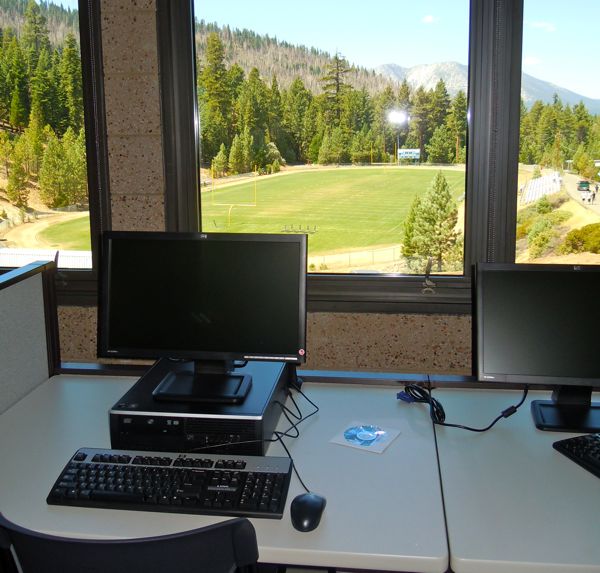
Some question whether sports are taking a greater priority at STHS than academics. Photo/Provided

Some question whether sports are taking a greater priority at STHS than academics. Photo/Provided

Looking within

“I take it a little personally because I know we do great things for the kids that were not reflected in the report,” one teacher told Lake Tahoe News. No teacher would let LTN publish his or her name.

LTUSD is very much a top down district with site administrators taking their cues from the district office. Houck, like all principals, is on a year-to-year contract.

A lack of communication exists between the district office and school sites. But there is also a chasm at the high school with some instructors believing Houck caters to his favorites.

“You have to develop a culture of trust where people feel comfortable saying there is a problem, otherwise you never address it,” one educator told Lake Tahoe News.

While the evaluation team looks at hard data, members also do a series of interviews. They try to get a feel for the atmosphere on the campus. They care about a lot more than athletics, which some people believe has been a growing priority at STHS to the detriment of academics.

A veteran of the process on both sides of the aisle – meaning as an evaluator and being evaluated, summed it by saying, “They are making sure you are being honest.”

While Tarwater defended the district’s incremental approach to Common Core, there are board members this year who have questioned the slowness – though not publicly. Tarwater told LTN that all teachers who are supposed to be trained in Common Core are trained.

Even though the district believes the outcome was unjustified, changes have taken place since last spring. Common Core is being implemented to a greater degree. Viking Goals are being discussed with students. Student outcomes are not just measured by the letter grade, but new metrics that have been initiated, according to Houck.

The new facilities received high marks by the accreditation team. Photo/LTN file

The new facilities received high marks by the accreditation team. Photo/LTN file

The evaluation process

Schools do a self-evaluation that is long and involved. Then a team of educators convened by WASC does a multi-day visit to basically grade the site on the self-evaluation. It’s normal for schools to point out deficiencies. What WASC looks for is having a plan in place to rectify the shortcomings.

That self-evaluation was done under Houck’s first year as principal of STHS. This is his third year.

Teachers and administrators from other districts make up a visiting WASC team.

Fred Van Leuzen, executive director of Western Association of Schools and Colleges which is based in the Bay Area, did not return multiple calls. Staff told LTN he is the only one who can talk to the media.

This means WASC can’t explain:

·      Why they didn’t meet with the superintendent.

·      Why they didn’t meet with the entire leadership team.

·      If the outcome was directly tied to school leadership.

·      How they ensure the district-to-district evaluation is equitable.

·      If past performance was considered when finalizing the assessment.

·      If they evaluated all the evidence provided by the school. Much of STHS’ data is digital and there isn’t any way to prove they looked at it and considered it in their evaluation.

·      If there is an evaluators’ evaluation or how they assess the credibility of the people who make up the evaluation team.

The seven accreditation principles are:

·      Accomplishment of school purpose, such as core beliefs, vision, mission, and schoolwide learner outcome.

·      High achievement of all students based on schoolwide learner outcomes/curricular standards.

·      Use of multiple ways to analyze data about student achievement.

·      Program evaluation in relation to schoolwide learner outcomes, standards and research-based Accrediting Commission of Schools-WASC criteria and indicators.

·      Alignment of findings to a schoolwide action plan.

·      Evaluation of ongoing improvement and impact on student learning.

·      Total involvement/collaboration of all leaders, board members, teachers, staff, students, parents, and others.

In the 30-page initial report to the district, the team had several concerns. Most centered on the district being slow to implement Common Core, and no real way to know students are learning what is being taught.

Highlights from the report include:

·      The self-study had one year of data on attendance rates, EL/LEP population, teacher, class sizes and dropout rates.

·      While the expected learner outcomes are measureable, the school is trying to determine how these goals will be monitored. When informally asked about the Viking Goals many students did not have knowledge of them.

·      The school provided very little data about students and student achievement in the self-study. The data that was provided had little analysis.

·      While the school has a Schoolwide Action Plan, there is no evidence on a long-range action plan regarding the school’s areas of need. The administration acknowledges that they need to develop and implement an accountability system for monitoring the schoolwide learner outcomes.

·      Staff appear to be involved in shared responsibility and actions; however, accountability for student learning is less clear.

·      The lack of collaboration time for teachers is viewed as an obstacle to success that is complicated by contract issues, including the use of prep minutes.

·      Teachers at STHS have taken advantage of a number of tools and resources in the adoption and implementation of [Common Core State Standards], however, there is much to be done in terms of a comprehensive approach toward the implementation of curriculum that requires a more contemporary pedagogical approach. … Discussions with the staff and school’s administration confirmed that great strides are currently under way but the process lacks consistency due to minimal support at the district level as well as a lack of allocation of funds to support an increase of common planning time for the teachers.

·      STHS does not have a formal process in place for the evaluation of courses by continually assessing the effectiveness of their course offerings and making adjustments as needed.

·      Common Core State Standards implementation is a stated weakness in the self-study report. Teachers have received little or no training about the CCSS and implementation is sporadic to nonexistent.

·      (Need to) provide courses that meet the needs of all student subgroups.