Outdoor industry to become serious political force

By Brad Rassler, Outside

Outdoor recreation is an economic colossus: its reach is massive, its wealth enormous, and its influence continues to grow as more boots hit the ground. You can see it in Joshua Tree’s crowded campgrounds or in Mount Tam’s trailhead parking lots; in the Appalachian Trail’s thru-hiking numbers or in REI’s record sales. 

In 2005, the Outdoor Industry Foundation commissioned the first of the economic studies to measure the industry’s heft. The initial report returned impressive statistics, but it was the follow-up study six years later that stirred the giant from its slumber: the outdoor recreation economy, all $646 billion of it, was nearly as much as Americans paid for pharmaceuticals and motor vehicle sales and parts, combined. 

Now, thanks to the passage of a bipartisan bill that sailed through the House and Senate last month, and was signed into law by President Obama on Dec. 8, the outdoor industry is primed for a gargantuan reveal. The Outdoor Recreation Jobs and Economic Impact Act of 2016, or REC Act, authorizes the Department of Commerce’s Bureau of Economic Analysis to assess outdoor recreation’s contribution to the nation’s gross domestic product, or GDP. 

Read the whole story


Feds give Tahoe $6.8 million to thin forests

By Kathryn Reed

Red dominates large segments of a map of Lake Tahoe. This signifies “wildfire ignition risk” zones.

These are areas most susceptible for a catastrophic wildfire because of the dense vegetation.

The California Tahoe Conservancy on Thursday accepted a $6.8 million grant to treat between 1,200 and 1,800 acres in the wildland urban interface. This the acreage that abuts where people are living and poses the greatest threat to communities.

The money comes from the Bureau of Land Management via the Southern Nevada Public Land Management Act.

While the CTC will be the overseer of the money, the land to be thinned includes multiple property owners, with the CTC lots accounting for 30 percent of the total.

“The next step is to work with the grant partners to start prioritization,” Milan Yeates with the CTC told the state board at its Dec. 8 meeting in South Lake Tahoe.

The work is expected to be done in the next six years. First, though, officials will decide for sure what gets treated. Preliminary mapping has already occurred.

“Prioritization of treatment areas will consider a range of topics including environmental review, terrain accessibility, slope and cost estimates,” the staff report says.

A concrete plan is necessary because this funding doesn’t cover the cost to treat all of the 3,000 acres that have been identified as needing to be thinned.

The plan is to treat the areas with the highest threat first. On the South Shore acreage near Stateline is being looked at. Some of this is where an arsonist set multiple fires this summer. (That person has never been caught and the investigation is ongoing.)

Almost all of Sugar Pine Point State Park is covered in red on the map Yeates showed – signifying its vulnerability. The Kings Beach-Highway 267 corridor is another problem area.

Patrick Wright, executive director of the CTC, pointed out in his report how a healthy, thinned forest can withstand a fire better than an overgrown, crowded stand of trees. This fall’s Emerald Fire along Highway 89 is an example of this because part of the burn had been treated.

Fire doesn’t burn as hot in a healthy forest, is less likely to crown, and in its wake leave trees still standing.


Forecast: Chilling La Nina should be here all winter

By Brian K. Sullivan, Bloomberg
 
A La Nina that threatens to push cold temperatures across the northern U.S. and extend drought conditions in the south will probably remain in the Pacific deep into the winter, fading away by spring, according to U.S. forecasters.
 
The weather phenomenon — defined by a cooling of the equatorial Pacific Ocean’s surface that touches off a change in atmosphere patterns — will probably bring colder and wetter conditions to the northern stretches of the U.S. and warmer, drier conditions to the south, the U.S. Climate Prediction Center said in a report Thursday.

The consensus from U.S. forecasters “favors the continuation of weak La Nina conditions through” February, the center’s report shows.

Read the whole story


Opinion: Farewell, fair Senate

Publisher’s note: This column is from the Dec. 8, 2016, New York Times.

By Harry Reid

In my time in the Senate, I’ve served with 281 senators. I’ve rarely given advice unless asked. But since I am leaving the Senate floor for the final time, I have a few things to say.

To Republicans, I say recognize the difference between campaigning and governing, and beware of knee-jerk opposition to the accomplishments of the Obama era.

Despite the fact that your nominee lost the popular vote by nearly three million votes, your leaders have announced their intention to repeal the Affordable Care Act early in the next Congress, with no replacement. This is a dramatic misreading of your mandate. It will lead you into a quagmire that will cause pain for millions of Americans and bedevil you for the next four years.


To Democrats, I say it has never been more important to stand up for the things we believe in. We are entering a new Gilded Age. Next year, a billionaire president who just settled a fraud suit for $25 million over his business exploits will be pushing tax cuts for the top 1 percent, supposedly in the name of populism.

Read the whole story


Ski Run working on being a destination for fun

By Kathryn Reed

Neighbors on Ski Run Boulevard have long endeavored to set themselves apart from other areas of South Lake Tahoe. It’s a community within a community.

Nice, wide, paved, plowed and lighted sidewalks are inviting to walk on. Even the street itself is wider than many – giving it that feel of a true boulevard. A mix of commercial interests are interspersed up and down the street.

Depending on the time of year banners or plants hang from the light posts. The vibe is friendly and welcoming.

The holiday stroll on Sunday will be the latest event to bring people outside that one street to the neighborhood.

“We feel like the energy is starting to change in South Lake Tahoe, and a lot of young people are interested in making change and being involved,” Teresa Bertrand, who owns BioSpirit Massage on Ski Run, told Lake Tahoe News.

Ski Run plans to have more events like this bike parade. Photo/LTN file

Ski Run plans to have more events like the bike parade a few years ago. Photo/LTN file

This energy spurred the idea for the stroll on Dec. 11. Wanting to gear it toward locals is why it’s on a Sunday. It will be from 3:30-5:30pm on both sides of the boulevard between Alder and Tamarack streets. Ski Run will remain open.

Carolers will be singing at various locations – with those in attendance welcome to participate. Santa has cleared his schedule in order to be at Chimayo restaurant between 4:15 and 5:30pm.

Plenty of hot chocolate will help ward off the cold temps – stop by Blue Angel, Chimayo or Nepheles.

Free face painting will take place at Blue Angel. Non-perishable donations for Bread & Broth are being accepted at The Alder Inn.

“We don’t really have neighborhood pockets up here outside of Highway 50 where it feels genuinely homey,” Jeff Cowen, owner of Blue Angel Café, told Lake Tahoe News. He added that events help introduce people to the street and reminds others what all the area has to offer.

Ski Run activities are overseen by two entities. The business improvement district is operated by those who live or have a business on the boulevard. An assessment pays for the beautification of the area. The Friends of Ski Run have a permit with the city to operate events like the holiday stroll.

The permit can be used by people outside of Ski Run, but those on the street have the first say of approving any activity before city officials weigh in. The non-snowy seasons are easiest for the events because of the amount of traffic the street gets with skiers going to Heavenly.

With those on the street being busy, they are now starting to make a concerted effort to get others to bring events to Ski Run. While there was a big slip-and-slide there this summer, because it was above Pioneer Trail, it did not fall under the umbrella of the Ski Run group. Nonetheless, the Tahoe Regional Young Professionals, who brought in the slide, got the blessing of the folks on Ski Run before proceedings.

It’s more of these outside the box events the Ski Run activists would like to attract. Traditional events are good, too, like the annual Friday farmers markets in the summer. 

The Ski Run folks would like to reduce the 35 mph speed limit to make it even more friendly; that 35 tends to mean people go 40 or 45 mph. Talks have been off and on with the city. Flashing signs might be a compromise to try to get people to slow down.

The group in 2010 launched “on the run” as a slogan; with events like Dogs on the Run incorporating that moniker. The enthusiasm waned a bit and now a resurgence is under way to make Ski Run Boulevard the place to be for locals and visitors.


Revenue projection leaves Sandoval with work to do

By Sean Whaley, Las Vegas Review-Journal

CARSON CITY – The size of the next state budget became clearer Tuesday when financial experts projected Nevada will collect $541 million more in tax revenue over the next two years than it did during the last budget cycle.

The Economic Forum projects the state will collect $7.9 billion in general fund tax revenue in fiscal 2017-18, a 7 percent increase over the current $7.3 billion budget approved in 2015. The projection will be used to pass a balanced budget, as required by state law.

While the projected revenue is greater, it is still $300 million to $600 million less than the total budget requests state departments submitted to Gov. Brian Sandoval in October.

Read the whole story


Caesars unit’s bankruptcy deal in jeopardy

By Tracy Rucinski, Reuters

The bank lenders of Caesars Entertainment Corp.’s operating unit said they might walk away from a plan to bring the casino unit out of its $18 billion bankruptcy, potentially sending a high-stakes reorganization plan into disarray.

The committee of bank lenders, which includes Blackstone Group LP’s GSO Capital Partners, has yet to resolve a dispute over the terms of their recovery, their lawyer Kristopher Hansen said at a hearing in U.S. Bankruptcy Court in Chicago on Tuesday.

Hansen said the lenders would inform the court on the status of a deal by Dec. 14, a month before a scheduled confirmation trial in Caesars Entertainment Operating Co Inc’s long-running bankruptcy case.

Caesars is the parent company of Harrah’s Lake Tahoe and Harveys.

Read the whole story


Placer supes green light area plan, TC Lodge

By Kathryn Reed

KINGS BEACH – Tahoe City is one step closer to getting its first new lodging for tourists in decades.

The Placer County Board of Supervisors voted 5-0 on Dec. 6 to approve the Tahoe Basin Area Plan and the Tahoe City Lodge.

Most of the discussion Tuesday centered on Tahoe City and the lodge in particular. This rankled some people because the area plan affects all areas of Placer County in the basin. About one-third of the lake is in the basin.

When the process started a couple years ago people voiced their concern about having the lodge project being studied under the auspices of the creation of an environment impact report for the area plan. Based on Tuesday’s testimony from staff, the electeds and public, it was obvious the lodge was driving the document’s approval.

Some wonder if the document would have been analyzed to a deeper level if the project that the powers that be wanted had not been part of the equation.

The vote Tuesday was consistent with what the North Tahoe Regional Advisory Council and Placer County Planning Commission said. Both of those bodies approved the area plan and lodge project in November. The Tahoe Regional Planning Agency Governing Board will take up the area plan and lodge on Jan. 25, which will be the last vote.

Much of the public agreed with the policymakers. About 50 people were at Tuesday’s meeting at the North Tahoe Event Center, with 23 of them testifying.  
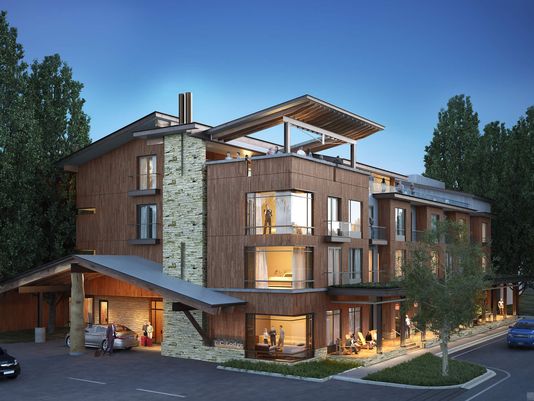
An artist's rendering of the proposed Tahoe City Lodge.

An artist’s rendering of the proposed Tahoe City Lodge.

Crystal Jacobsen, principal planner with the county, went over highlights of the plan and project, as well as changes since the draft and final environmental documents came out.

She acknowledged that traffic, whether its vehicle miles traveled or level of service, is dismal now. The lodge project impacts are deemed “significant and unavoidable.”

“When are we going to deal with these issues?” Jennifer Quashnick with Friends of the West Shore asked.

That’s a question that no governing body has been willing to answer no matter what project comes before them. Various entities keep approving development without an answer to deal with congestion affecting the immediate project on the table, let alone the bigger cumulative effect of growth in the basin and Truckee.

This in turn impacts greenhouse gas emissions.

Samir Tuma, the lodge developer, said one way he will be helping to reduce VMT is by giving bus passes to employees and providing a shower to those who bike to work. Plus, he mentioned how there is a bus stop right out front.

The lodge will include 78 condos and 40 traditional hotel rooms. The four-story structure that will front Highway 28 will have a rooftop restaurant.

Tuma said there will be an infusion of $43.4 million into the community during construction, with $8.6 million annually coming in via taxes, jobs and other revenue. It will be built at a LEED level, with green business practices implemented.

A representative from the League to Save Lake Tahoe said this is first time in 10 years the conservation group has backed a redevelopment project. The Tahoe City Downtown Association said this is the first project this group has supported.

A bonus to the community is that the Tahoe City Golf Course clubhouse will be rebuilt by Tuma to include a conference center on the second floor.

Supervisor Kirk Uhler was most interested in how the area plan will allow second units to help address the housing crunch in the area. He believes what is proposed is too restrictive and might not be economically feasible with the deed restriction. He said people can pay market rate, it’s just that the housing stock is limited.

The Placer County plan calls for these second units to only be used for residents and not as tourist units. They would be deed restricted for affordability for 55 years. Obstacles, though, include needing to have a development right and residential allocation to build one. Combined those can cost about $20,000.

The Placer plan would require the TRPA to make an exemption to current policy.

Two California laws take effect Jan. 1 to make it easier to convert illegal granny units into legal ones.

Several people who spoke applauded the efforts to make any inroads in creating affordable housing or at least implementing policy to make that a possibility.

Supervisor Jennifer Montgomery in large part agreed with Uhler.

She acknowledged not everyone got what they wanted. But she said the plan and lodge will be better for the environment, the economy and the social fabric.



LTCC hires president from within

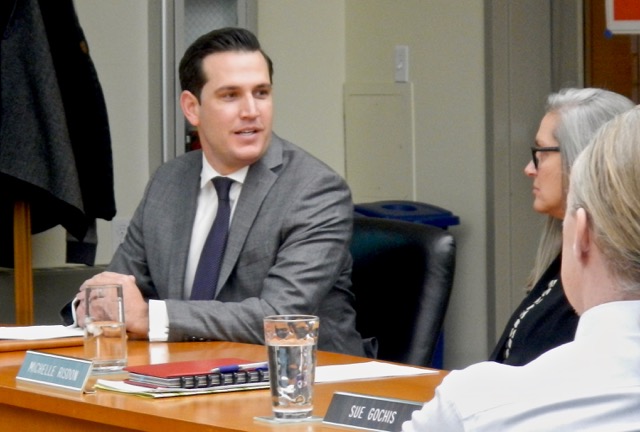
Jeff DeFranco in January will become Lake Tahoe Community College's fifth president. Photo/Kathryn Reed

Jeff DeFranco in January will become Lake Tahoe Community College’s fifth president. Photo/Kathryn Reed

By Kathryn Reed

Jeff DeFranco will become Lake Tahoe Community College’s fifth president effective Jan. 3.

He was greeted with applause and a standing ovation from the nearly 20 people at the board meeting after the announcement was made Tuesday night.        

The board of trustees on Dec. 6 unanimously approved the hire. DeFranco has been the vice president of Administrative Services at the South Lake Tahoe institution since summer 2012. His contract goes to June 30, 2019. He will be making $165,000 a year.

“I’m honored and humbled by this opportunity,” DeFranco said. He spent about five minutes talking about what this job will mean to him, his immediate plans, thanking the board, those in the audience and all who work at the college.

A special thanks went to outgoing President Kindred Murillo for taking a chance on him. Prior to coming to LTCC, DeFranco was the director of communications and facilities at Springfield Public Schools in Oregon. The two will be working together through January, at which time Murillo will leave to be president of a community college in Southern California. 

DeFranco, 39, also acknowledged the administrative team Murillo assembled, giving them all kudos for their effectiveness.

“Jeff is one of those people who will not fail,” Murillo told Lake Tahoe News. “He exceeded my expectations in every sense.”

It was while DeFranco was an undergraduate at CSU Chico that he figured out one day he wanted to be a college president. He was on the associated student body board and got a glimpse into the inner workings of higher education.

“I knew how much that experience changed me and I knew my ultimate goal was to be a college president one day,” DeFranco told Lake Tahoe News. “A number of steps led me to this.”

However, he also knew it wasn’t just any college presidency that he would want. His grandfather built a cabin in Meyers in the 1960s. Tahoe has been a part of his life since he was a boy.

But it wasn’t until 2010 that he discovered South Lake Tahoe had a community college – and that was a fluke. He went to get a permit that December to cut a Christmas tree. The U.S. Forest Service office is on College Way. That’s how he discovered LTCC. Less than two years later he was working at LTCC.

“I wanted this presidency,” DeFranco stressed.

One of most important jobs in his first year to will be to fill his current position.

“My goal is to bring in somebody who is better at the job than I am,” DeFranco said.

He is on a state board for people who have similar jobs as his so he has an insider’s knowledge about potential candidates working in California.

DeFranco at the meeting said some of things he will be working on when his job title changes include continuing student access and success, working on accreditation, ensuring the university center thrives, and facilitating the bond.


Education topics will tug hard on Nev. purse strings

By Amelia Pak-Harvey, Las Vegas Review-Journal

Combine educational issues with Nevada’s upcoming legislative session and you’ve got a scene straight from the movie “Jerry Maguire”: Show me the money.

When legislators convene in February, they’ll have a number of topics tugging at the state’s purse strings.

First, they’ve got to get an estimated $400 million deficit squared away.

Read the whole story