Casino industry gradually charging for parking

Stateline casinos -- for now -- are leaving their parking lots open to everyone. Photo/LTN

Stateline casinos — for now — are leaving their parking lots open to everyone. Photo/LTN

By Kathryn Reed

What happens in Vegas doesn’t always stay in Vegas.

When it comes to the casino industry Las Vegas is a trendsetter. And the latest trend is charging for parking at casinos.

“Paid parking is a topic we have recently been discussing at STAR. It’s not something that has a lot of understanding yet, but the point is over this last summer both Hard Rock and MontBleu began charging for parking periodically,” Mike Bradford with the South Tahoe Alliance of Resorts told Lake Tahoe News. “This action is something that historically was considered verboten. Now I think there is growing recognition there is probably a place for it.”

Among the five Stateline casinos there is vast acreage covered in asphalt as well as multistoried parking structures. Today, it’s usually free to park – even in valet, though tipping there is the norm. People not patronizing the casinos even park in those lots. Skiers are regularly at Harrah’s to avoid the high-priced city owned garage at Heavenly Village.

The overflow of concert-goers for the Harveys summer concerts is what led Hard Rock and MontBleu to charge people last summer.

“What ended up happening is customers were using our parking lot and going across the street so it was displacing our casino guests,” Marimille Dacia, MontBleu marketing director, told Lake Tahoe News. “We charged $20 cash and then gave $20 credit to (use in the casino), so if you used our facility, you got your money back.”

MontBleu charged during the outdoor concerts and the celebrity golf tournament. Dacia said at this time there is no plan to charge for parking on a regular basis.

No one from Hard Rock Lake Tahoe returned calls.

The MGM properties in Vegas were the first to charge; implementing the policy earlier this year. Last month, Caesars Entertainment, which owns Harrah’s and Harveys, announced it was going to institute paid parking at its Southern Nevada properties.

“Our priority is to ensure that our hotel guests, local residents and Total Rewards loyalty members have an improved parking experience,” Bob Morse, president of hospitality at Caesars Entertainment, said in a press release. “Guests who stay, game and shop at our resorts have said that parking spaces and valet services have become increasingly scarce, so we believe that implementing a paid parking program while also investing in LED parking guidance systems will help address these issues.”

For now, at least four of the Stateline casinos do not intend to charge for parking on a regular basis. But the powers that be are keeping an eye on their counterparts down south.

“It is private property. The open parking in back is intended for guests of our properties, so if we wanted to do something, it would be within our rights to do so,” John Packer, spokesman for Harrah’s-Harveys, told Lake Tahoe News.

Bradford, who operates the Lakeside Inn, said while his lot will remain free for now, the bigger discussion by STAR has been looking at the possibility of generating income from the lots for the greater good of the community.

“As we ultimately talk about how to fund local transit and how to make it work, parking is one of the pieces of that puzzle,” Bradford said. “There is no immediate direction to formalize that approach, but the evolution of forming that is possible.”


Dead forests create gold rush for tree cutters

By Thomas Curwen, Los Angeles Times
 
A low gargle echoes against granite cliffs and resounds in the wooded canyons.

Each pull of a starter handle and squeeze of a throttle is punctuated by the crack of splintering wood as another dead tree falls in a forest that’s changing all too rapidly.
 
Estimates by the U.S. Forest Service put the number of dead trees in California forests at 102 million, broad swaths that officials call a wildfire and public safety risk. Declaring a state of emergency last fall when the count stood at 40 million, Gov. Jerry Brown ordered state agencies to clear the hazards.

“There is a Gold Rush for those of us who are willing to bust ass,” says Niles Kant, who charges $1,700 a day for his services.

Read the whole story


More winter options for women to find their tribe

By Jill Sanford, Moonshine Ink

“I travel and ski with guys all year round, so it’s amazing when I get to experience the mountain with a posse of women. There’s this female energy and support that’s so powerful. I push myself more when I see other girls out there challenging themselves and shedding some of the self-doubt that comes with skiing with guys.”

Pro skier Michelle Parker isn’t alone in this sentiment. Women who are involved in winter sports are gravitating toward female-only organizations like the SAFE AS avalanche clinics, Tahoe Backcountry Women, and SheJumps; places where they can find the support and energy of female companionship.

“The general trend is for women to feel more comfortable speaking up in an all-women’s group,” said local sports psychologist Robb Gaffney. “There could be cases in which a woman feels more comfortable disclosing a difficult issue to a man or to a group of men, especially if the group is safe and non-judgmental, as opposed to sharing the same information with a woman who could be perceived as an intimidating figure. But yes, in general, there is likely safety through similarity, and same-gender groups offer that.”

Read the story


Greenbelt in South Lake becoming more defined

By Kathryn Reed

It’s like a trove of trails is hiding in broad daylight.

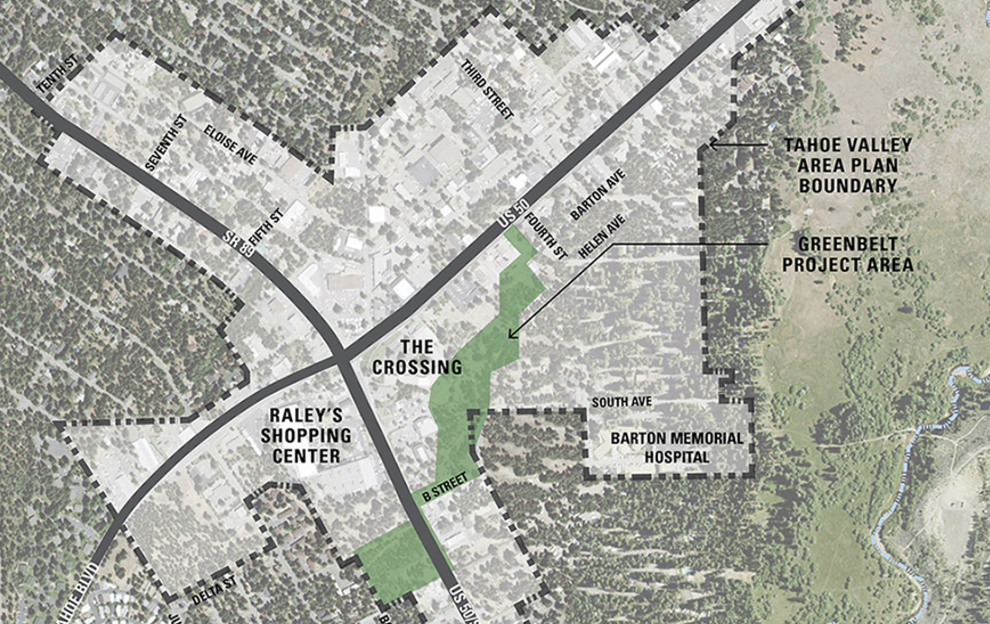
South Lake Tahoe wants to open up the area behind the commercial buildings on the southeast corner at the Y to turn it into a desirable walking-biking network.

Known as the Tahoe Valley Greenbelt, this swath of land will also be reworked so drainage is better.

It’s going to take cooperation with the California Tahoe Conservancy and private property owners to make the city’s vision become a reality.

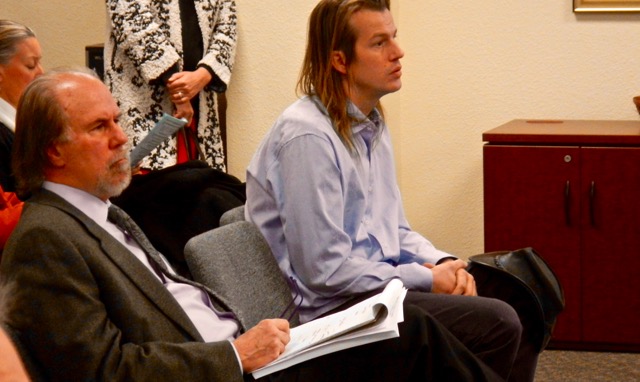
On Wednesday night about 20 people gathered at City Hall to discuss the greenbelt – to offer opinions about the proposed trails, signage, open spaces, stormwater elements, play concepts and other aspects of the project. For people who were not at the Dec. 14 meeting, a survey is online to give input. 

The city has money via the Southern Nevada Public Lands Management Act to produce the environmental review and 30 percent of the planning. The CEQA document should come out in the spring.

Construction dollars would then be sought. At the earliest, construction could start in 2018.

tv greenbelt

The area in green will be a scenic corridor in South Lake Tahoe.

Dilapidated paved trails already exist behind what was called the Factory Stores at the Y (now The Crossing) and McDonald’s. The plan is to upgrade what is there and create new trails – some class 1, some smaller and more interpretive in nature. They would tie into the neighborhood.

The potential to connect to Barton Health offices exists. And down the road a connector to the Greenway Bike Trail is possible when that gets built.

Plans laid out by the Design Workshop show a major connector coming out on B Street at Highway 50. Caltrans still needs to give its OK to have this be a highway crossing. Otherwise it would mean the nearest crosswalk is at the Y. For people heading west, they would be more apt to be on the wrong side of the street or jaywalk to get to the other side.

The paths won’t lead right through The Crossing because that could be dangerous to have people walk/ride into and through a parking lot. However, the trail will border the back of the center where outdoor seating for a restaurant is planned.

This area behind the commercial center has gradually been thinned by the city to open it up a bit. A creek runs in the area and a meadow of sort exists. The plan is to return some of land to more of its natural setting even though part of it will be paved for trails.

This is also where the bulk of the stormwater improvements will go. The extent of the work to treat runoff will depend on property owners. McDonald’s owns some land beyond its footprint because of how coverage used to be calculated. With the Tahoe Regional Planning Agency changing its coverage calculations, the restaurant could sell that “extra” land to the city or grant an easement to the city. If this occurs, a more robust stormwater plan could be built. That aspect could be smoothed out as the franchise owner comes forward with his plans to renovate the existing eatery.

The intent is to also have art and play structures along the greenbelt. Some renderings showed logs that children could scramble on instead of traditional playground equipment. Art could blend in with the natural environment.


Lawmakers want to abolish death penalty in Nev.

By Sean Whaley, Las Vegas Review-Journal

CARSON CITY — Two state legislative leaders have requested a bill be drafted to abolish the death penalty in Nevada.

Bill draft request No. 544 from Assemblyman James Ohrenschall, D-Las Vegas, would make life without the possibility of parole the maximum criminal penalty in Nevada. Sen. Tick Segerblom, D-Las Vegas, chairman of the Senate Judiciary Committee, signed on as a joint requester of the measure.

Ohrenschall had previously indicated he would propose an amendment to the state Constitution to abolish capital punishment, a process that would take five years and a favorable vote of the people to become law.

Read the whole story


Caltrans wants Hwy. 50 near Apple Hill to be safer

By Tony Bizjak, Sacramento Bee

State highway officials are laying the groundwork for a $50 million safety upgrade of Highway 50 east of Placerville, a continuation of decadeslong efforts to modernize one of the oldest mountain highways in the state.

The key element will be installation of two miles of concrete median divider to separate oncoming traffic in the winding and mountainous section between Placerville and the popular Apple Hill area.

Caltrans officials previously added safety features to Highway 50 west of Placerville and improved highway efficiency through the town, although there still are three traffic lights on the highway.

Read the whole story


SLT stacks evidence against recreational pot

By Kathryn Reed

A one-sided presentation was delivered to the South Lake Tahoe City Council on Tuesday about how bad marijuana is, with most speakers advocating for the city to have as little to do with recreational aspects of the drug as possible.

What they said:

·      Police Chief Brian Uhler: It will hurt the local tourism industry and not help the economy. He cited how the Lake Tahoe Visitors Authority is promoting recreation of a different kind. However, the LTVA has not taken a position on recreational marijuana and no evidence was provided whether selling it in town would be economically good or bad. He wants the city to ban the sale of recreational marijuana.

·      Barton pediatrician Rhonda Sneeringer: Presented statistics about how mothers who smoke during pregnancy and while breast feeding harm their children; worries about increased adolescent use. Believes in more education. Asked the council to not allow weed to be sold recreationally.

·      Barton director of emergency services Lance Orr: Wants to ensure medicinal and recreational marijuana are separate conversations. Presented stats from Colorado, a state that has allowed recreational pot for two years. Traffic fatalities linked to pot use have increased and visits to the emergency room are greater.

·      Hannah Greenstreet representing Lake Tahoe Unified School District: Worries even more students will use, stating the numbers are already on the rise. At South Tahoe Middle School in 2015-16 24 students were caught with marijuana, while this school there have been 25 incidents; at South Tahoe High School the numbers are 30 for 2015-16 and 23 this school year. Edibles and vaping pens are rampant now. Doesn’t want it sold here.

·      Kelsey Magoon with Drug Free Coalition: Believes marijuana is addictive, that ads will be seen by youth, and that the potency is more harmful today than years’ past. Against commercial sales in the city.

What the speakers shared was how bad marijuana is. But that isn’t the point because California voters already said yes to recreational weed – and it will be legal Jan. 1. In 2018, storefronts will be allowed. All of the negatives can happen even if pot is not sold here.

The major components missing from the Dec. 13 talk were why selling it in South Lake Tahoe would be bad or good. But that didn’t stop the council from agreeing to have the topic on a future agenda to take action. The electeds specifically asked for the language to be voted on to be what the police chief wants – to not allow the sale of recreational marijuana in the city limits.

California voters last month approved Proposition 64, the legalization of marijuana for recreational use. Statewide it passed with 57.1 percent of the vote. In El Dorado County the initiative barely failed with 50.07 percent saying no. However, 65.26 percent of the voters in South Lake Tahoe said yes to recreational marijuana. In district five of El Dorado County, which encompasses the entire South Shore west to parts of Pollock Pines, 62.4 percent approved the measure.

Some of those people might like a place to purchase the weed.

The initiative allows for cities and counties to decide if it would be sold in their jurisdictions. What they can’t ban is the use (except in/at public facilities), growing of plants (though there are limits) or transportation (quantities are regulated).

So, even if South Lake Tahoe won’t allow a business to sell pot, it can’t stop people from lighting up.


SLT tells medical marijuana shop it must close

Cody Bass, right, with his attorney Henry Wykowski listen Dec. 13 to the South Lake Tahoe City Council deliberate. Photo/Kathryn Reed

Cody Bass, right, with his attorney Henry Wykowski listen Dec. 13 to the South Lake Tahoe City Council deliberate. Photo/Kathryn Reed

By Kathryn Reed

“I’m not going to shut down. I will fight to the Supreme Court.”

That is what Cody Bass, founder and executive director of Tahoe Wellness Cooperative, told Lake Tahoe News after the South Lake Tahoe City Council today unanimously denied his appeal. Bass was appealing City Manager Nancy Kerry’s ruling that he failed to submit a completed application to renew his permit to operate a medical marijuana collective.

This in essence means TWC is supposed to be out of business as of Dec. 14. His collective is the only place to get medical marijuana on the South Shore.

Once the decision was made by the council on Tuesday afternoon, the packed house erupted in angry shouts that necessitated the police chief to usher them out of the room. TWC supporters were never allowed to speak on the record.

“I disagree with a lot of things that occurred today,” Henry Wykowski, Bass’ attorney, told Lake Tahoe News. “I’m quite surprised by the outcome today.”

Taking the city to court is the next likely action by Bass and his attorneys.

If Bass were to continue operating without a valid city permit, he could face a $1,000/day fine. (Bass has 29 employees who receive a livable wage and health benefits. Their future is unknown.)

While the council took the black and white route Dec. 13 in following the medical marijuana ordinance, Bass’ attorneys brought up several extenuating circumstances. City staff also added to a bit of the confusion by initiating the granting of various extensions to Bass to file his application.

The ordinance stipulates that dispensary operators must have the permission of the landlord. Bass obtained that signature in 2012 and 2014. He has not been able to secure that permission this time around.

Bass and the Olsons, who own the property, are now in litigation. Patty Olson has owned that commercial strip at the Bijou Center for years. Her son, Patrick, off and on has been given power of attorney. That has contributed to some of the issues – the Olsons don’t always have a united voice.

Neither of the Olsons nor their attorney Bruce Grego was at the Dec. 13 council meeting even though City Attorney Tom Watson asked Grego to attend.

The lease between the Olsons and Bass goes through December 2017. In it there is the wording that the business to be operated at the site by Bass is a dispensary.

Wykowski and James Anthony, the second attorney representing Bass, argued the lease itself was sufficient permission from the property owners.

Wykowski said the Olsons are being “malicious” by not signing the city required paperwork. This is because Bass has taken the landlords to court for breach of contract in regards to his desire to purchase the property. A trial has been set for February to resolve that issue. Who owns the property will be the outcome of that legal dispute.

On a side note, Bass had also wanted to buy the Olson family home that is in the neighborhood. However, Bob Hassett, who runs the nearby Timber Cove Marina and owns an apartment complex in that area, has entered escrow on the house.

Hassett’s involvement with the Olsons is relevant because he wants to buy the commercial area, but not have TWC as a tenant.


Local governments can’t collect taxes from online travel firms

By Maura Dolan and Hugo Martin, Los Angeles Times
 
In a loss for local governments, the California Supreme Court decided Monday that online travel companies such as Expedia Inc. are exempt from paying hotel occupancy taxes.

The ruling came in one of several lawsuits filed by California cities and counties against the online firms, including Hotwire Inc. and Priceline.com.
 
The local governments have been attempting to get the firms to pay hundreds of millions of dollars in back taxes.

Lawyers for the government argued the tax should be based on the total amount the companies collect from consumers, not the lower dollar figure the hotels receive. Cities and counties wanted the online sites to pay the difference.

Read the whole story


LTCC board to mull building student housing

By Kathryn Reed

When Lake Tahoe Community College students start classes in fall 2020 they might have the option of living on campus.

This afternoon the college board will hear a presentation by representatives of Brailsford & Dunlavey about the feasibility of having residential housing at LTCC.

The company investigated what type of housing students would like on campus, if they even wanted it and then delved into different scenarios to make it a reality.

While no decision will be made at the meeting today, which starts at 4:30pm, the board is expected to vote just after the first of the year about student housing.

“For the college to financially survive, being a destination college is the right concept. To be a destination college, housing is important,” LTCC President Kindred Murillo told Lake Tahoe News.

About five years ago 17 percent of the students enrolled at LTCC were not from Tahoe. That percentage has grown to 41 percent.

Those students need someplace to call home while they are studying here. As the rental market has continued to be squeezed in the last several years, their options have dwindled. A survey found nearly 66 percent of the students had a difficult time attaining housing.

While student housing might be below market rate, it will only be for students. Specific criteria would need to be figured out if the board agrees to go forward with the housing idea. Taking a certain number of units each quarter may be required, and putting a limit on the number of years allowed in the student housing could be another rule.

The consultants believe housing for about 100 students would be do-able.

The dorms are proposed to go near the phys ed building and would likely be two stories. Depending on how many it would accommodate, the structure could also go near the new university center. The smell from the South Tahoe Public Utility District is a concern behind the gym.

Students told the consultants they don’t need frills. What they want is something affordable, to be able to rent just for the academic year and to have study spaces. They aren’t looking for traditional apartments, but instead shared suites.

Food service is something else to be ironed out.

“We could reinstate food in the student center. I’ve seen some colleges provide food vouchers at the local businesses,” Murillo said. “That helps local businesses and helps students get a good meal.”

She said the most likely scenario is a developer will build the facility and a third party will operate it.

“We really have to look at the affordability for students. What would work cost-wise for them,” Murillo said.