Rosie Borges — 1929-2016

Rosie Borges

Rosie Borges

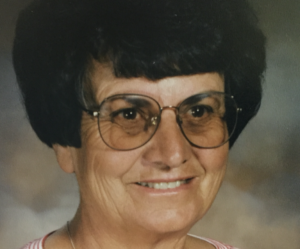
Rosie Borges, known by most in South Lake Tahoe as Mrs. Rosie, passed away in her sleep on Dec. 24, 2016. She was 87.

She was born Rosie Perreira Luis in Kings County, Cali., July 10, 1929. While growing up in Stratford, Calif., she had memories of hand milking cows with her seven siblings every morning and every afternoon. She left the farm, and gladly the milking chore, when her father, Franklin, passed in 1933.

Rosie graduated Lemoore High School in 1949 as the top female student of the year. She played lead trumpet in the marching band. At 5-feet-4-inches-tall, she was the female basketball player of the year.

In 1949, Rosie and Sam Borges were married in Las Vegas. Early in her marriage Rosie worked as a nurse in Lemoore, Calif. She continued her athletic prowess in city league fast pitch softball until she rushed home plate while six months pregnant with Don.

In 1955 the Borges family moved to San Jose. Sam sold tractors for Allis Chalmers and Rosie worked as a Crossing Guard for San Jose Unified School District. On weekends they competed in waterski speed racing. Rosie was a United States National Champion speed water skier in the early 1960s.

A family business of cutting cord wood allowed the growing family to save up to move to Tahoe. In about 1959 Sam designed and built a wood splitter that would process a standing tree to stacked cord in the truck in one hour. Using his boys as labor and Rosie as the splitter operator, the family averaged 200 cords of wood/year, split, delivered and stacked for $36.36/cord. 

A family business of cutting cord wood allowed the growing family to save up to move to Tahoe. In about 1959 Sam designed and built a wood splitter that would process a standing tree to stacked cord in the truck in one hour. Using his boys as labor and Rosie as the splitter operator, the family averaged 200 cords of wood/year, split, delivered and stacked for $36.36/cord.

The Borges family happily made the move to Lake Tahoe, the “All Year Playground” in 1965. Rosie operated Rosie’s Waterski School in the summer and worked with Sam and their sons at Borges Sleigh Rides in the winter.

“Miss Rosie” was the Crossing Guard for the Lake Tahoe Unified School District and the city of South Lake Tahoe. For 20 years, with a perfect record of no student injuries, she safely crossed students at the intersection of Lyons Avenue and Lake Tahoe Boulevard. She also attended South Tahoe High School Viking sports for 50 years.

After retiring, Rosie enjoyed many years of daily water aerobics exercises with the “Tahoe Keys Ladies.”

Sam and Rosie were both first generation Americans. They traveled to the Portugal mainland where Sam found his father and with niece Kathleen. They were able to locate and visit her family in the Azores Islands.

Rosie leaves four sons Dean, Don, David and Dwight, many grandchildren and great-grandchildren. She will be greatly missed by all who knew and loved her.

The celebration of life will be celebrated privately with family.

In lieu of flowers or gifts, please light a candle and celebrate the wonderful life and example Rosie left to her family and our community.

If you have a “Miss Rosie” story, please comment below.


South Shore braces for 3 days of partying

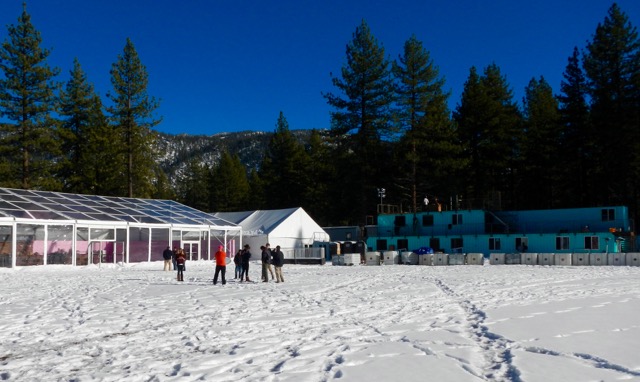
The view from the main SnowGlobe stage shows the VIP area to the right and a warming tent to the left that has thick plastic as windows to allow concert-goers to see what is going on outside. Photo/Kathryn Reed

The view from the main SnowGlobe stage shows the VIP (cargo container) area to the right and a bar to the left that has thick plastic as windows to allow concert-goers to see what is going on outside. Photo/Kathryn Reed

By Kathryn Reed

SnowGlobe might be the safest place to be for the next three nights – assuming you aren’t a criminal.

Controlled environments where there is fencing to contain people are safer than free-for-all venues like what is found in the Stateline casino corridor on New Year’s Eve. Still, law enforcement has strategies in place to make both areas safe.

“My biggest concern is terrorism,” South Lake Tahoe Police Chief Brian Uhler told Lake Tahoe News. He pointed to recent events in Europe as concerns and reasons to be on high alert.

It takes a concerted effort of all the local public safety agencies as well as hired security personnel to ensure locals and visitors are safe during these three days of festivities.

“I think the unified command between California and Nevada is very unusual,” South Lake Tahoe Fire Chief Jeff Meston told Lake Tahoe News. He said this degree of cooperation is unheard of anywhere else in the United State.

Crews on Dec. 28 set up the main stage of SnowGlobe. Photo/Kathryn Reed

Crews on Dec. 28 set up the main stage of SnowGlobe. Photo/Kathryn Reed

It’s necessary for the two states to work together because the proximity of a potential threat from revelry at Stateline on Jan. 31 and during the next three nights at SnowGlobe would have reverberations into the other state if there were a large-scale incident. And while each state does things a little differently when it comes to prevention and response, the jurisdictions have an understanding of how things would work in the event of an emergency.

For decades the South Shore has come together to ensure Stateline is safe. That used to be where the big party was until SnowGlobe came into being five years ago. Still, this is expected to a unique year for the casino corridor.

“This year will be final test for us; it will be a watershed for us,” Douglas County Undersheriff Paul Howell told Lake Tahoe News. “Are we truly seeing a decline in that uncontrollable street party? It is a Saturday night, we have snow and it’s a three-day weekend.”

The past few years have been uneventful on New Years’ Eve at Stateline; to the point last year people barely came into the street.

“Even if a large crowd shows up, we can control everything,” Howell said.

Emergency personnel are positioned at various locations that night – beyond their normal headquarters. This will ensure a faster response if need be. The agencies have representatives at a command post so everyone knows what is going on and no one is acting in a silo.

Officers stand guard before Highway 50 is reopened shortly after New Year's 2016. Photo/LTN file

Officers stand guard before Highway 50 is reopened shortly after New Year’s 2016. Photo/LTN file

The cooperation includes Tahoe Douglas Fire Protection District scouring the SnowGlobe venue every night for explosive devises.

Tonight begins the first of three nights for the outdoor music festival on the new play fields owned by South Lake Tahoe off Al Tahoe Boulevard. The venue is new. No longer is the festival on the field used by the Lake Tahoe Community College soccer team.

On Wednesday crews were still busy putting all the pieces together. The setup is different. The promoter actually worked with the city this year to get the necessary permits to turn cargo containers into the VIP area. Last year it was a bust because the fire and building departments put the hammer down and didn’t allow the structure to be built.

“After the big fire in Oakland, this showed why building codes matter, especially in temporary spaces,” City Manager Nancy Kerry told Lake Tahoe News. “They didn’t have a certified engineer (last year) who signed off on those plans.”

Chad Donnelly, who has been the promoter of the festival these six years, no longer speaks to Lake Tahoe News.


2017 brings new laws, changes for Nevada

By Cy Ryan, Las Vegas Sun

Changes to laws involving guns, marijuana and mopeds will greet Nevadans in 2017.

Here’s a rundown of some of the most talked-about issues affecting our community beginning Jan. 1.

Voters in November narrowly approved a ballot question to expand background checks for firearm purchases.

This new law is aimed at those who sell weapons online or at trade shows, making their private transactions subject to the same legal requirement as purchases involving licensed dealers, for which federal background checks are necessary.

Read the whole story


Teen suicide clusters a mandate to confront topic

By Jessica Calefat, CalMatters

In California and across the country, suicide is the second leading cause of death among teens—a grim reminder that many high school students’ primary barrier to adulthood is themselves.

More young people take their own lives than the number killed by cancer, heart disease, birth defects, stroke, flu, pneumonia and chronic lung disease combined. And under legislation set to take effect in January, school systems up and down the state will be forced to confront the taboo topic head-on.

Assembly Bill 2246, authored by Assemblyman Patrick O’Donnell, D-Long Beach, requires districts to adopt suicide prevention policies that target high-risk groups, such as students bereaved by a classmate’s death and LGBTQ youth. It was inspired by teen suicide clusters that have traumatized Palo Alto and San Diego in recent years.

A string of suicides this school year among boys who attend the same Central Valley high school in Clovis is the latest example underscoring the urgent need to tackle this problem. The new law asks districts to attack it from all sides by promoting students’ emotional well-being, intervening when they’re in crisis and responding appropriately when tragedy strikes.

“This is not a policy to write up and put on a shelf. It’s a lifesaving policy,” said Abbe Land, executive director of The Trevor Project, a nonprofit serving LGBTQ youth that sponsored the legislation. “One teacher reaching out at the right time because they were trained to see the warning signs can save a student’s life.”

After declining steadily in the 1980s and 90s, the prevalence of suicide in this country began to rise once again around the turn of the century, increasing 24 percent between 1999 and 2014, according to a report published earlier this year by the Centers for Disease Control.

That analysis also revealed that the suicide rate among tween girls ages 10 to 14 had tripled over 15 years, alarming researchers.

Surveys of California high school students have shown that one in five had seriously considered attempting suicide in the past year and that thoughts of suicide were most prevalent among female students and among students from multiracial, Native American and Pacific Islander backgrounds. Males, however, account for three out of every four deaths.

O’Donnell knows this is an “uncomfortable topic” but said he felt an obligation as chair of the Assembly Education Committee to take it on.

Earlier this year, the measure cleared the state Senate with unanimous support, but in the lower house, almost a dozen GOP members voted no, including Assembly Republican leader Chad Mayes, R-Yucca Valley.

Asked about the recent group of suicides at Clovis West High School, including two in the last few weeks, O’Donnell called the cluster “beyond tragic” and said it’s proof of the new law’s relevance.

“Not talking about this problem won’t make it go away,” said O’Donnell, who taught middle and high school before joining the Legislature. “These are our kids. This is a problem. This is a big deal. And we have a duty to act.”

Palo Alto Superintendent Glenn “Max” McGee had only been on the job a few months in 2014 when a series of student suicides swept through the leafy Silicon Valley enclave like a deadly storm. It was the second cluster to hit the district in fewer than five years, a statistical aberration, leaving McGee almost paralyzed with emotion.

“I felt such terrible sadness,” McGee said. “All I could think was, ‘What could have been done?’”

The district responded to this latest cluster—defined as a succession of deaths in close proximity to one another—by refining the prevention plan it had adopted after the first one and striking a better balance between the district’s storied academic rigor and students’ social and emotional wellbeing.

McGee finally started enforcing a 15 hour-per-week cap on homework that had been on the books for years and began promoting the value of sleep by moving the start of the school day back almost an hour to 8:25 a.m. The district also switched to block scheduling, opened wellness centers staffed by licensed therapists and taught students how to seek help for their friends.

Commuter trains that roll past his office on the hour remind McGee of the work’s importance.

“I still grimace when I hear the train whistle,” McGee said, referencing the preponderance of area students who killed themselves by stepping in front of an oncoming Caltrain.

Legislative analysts predict it will cost hundreds of thousands of dollars for districts to develop these plans but noted that costs would be defrayed if they adopt a model policy the California Department of Education is drafting now. Palo Alto has also made its prevention policy available to other districts for free.

“We know now that student wellness is a critical component to learning and that you can’t have one without the other,” McGee said. “We’re eager to share this work with any and everyone.”

Six other states have already adopted similar legislation, and research published earlier this year in The Lancet found that schools have an important role to play in reducing the number of teen suicide attempts. But another study published in a different journal found that schools’ role in tackling the vexing problem has limits.

A meta analysis of schools’ impact on teen suicide revealed that many treat self-harm as bad behavior, which discourages students who are depressed or suicidal from confiding in their teachers. It also found that bullying and stress over school performance can contribute to the problem.

Palo Alto’s prevention plan doesn’t target LGBTQ teens, homeless youth or students with disabilities, but it will need to once the new state law takes effect. Surveys cited by the CDC show LGBTQ youth are bullied more than their straight peers and that they’re more than twice as likely to have attempted suicide.

Last year, San Diego County endured a string of suicides by transgender youth. Max Disposti had worked with several of them at the LGBTQ resource center he runs in Oceanside and understands how much they struggled.

“For these kids, it’s not about doing well on exams, it’s about survival,” Disposti said. “They leave the house each morning knowing their body doesn’t match who they are and that they’ll need to explain themselves over and over again. It’s a heavy load.”

Taylor Alesana was one of them.

Some of the videos posted to the 16-year-old transgender girl’s YouTube channel were bubbly makeup tutorials with tips on foundation application and contouring. Others were painful revelations about the hateful bullying she endured after posting a bikini selfie on Snapchat and watching it go viral.

In a December 2014 video, she told her followers she no longer felt safe at school.

“Words kill. They do. I know people can say words are words, but words kill,” Alesana said. “It sucks that we live in a society where people use words like they’re nothing.”

Four months later, the Fallbrook teen was gone. She took her life on April 2.

Calmatters.org is a nonprofit news venture devoted to covering California state policy and politics.


Nevada tourism guru turning in work passport

By Susan Wood

There’s no fencin’ in Larry Friedman, who’s retiring today from TravelNevada.

The preeminent deputy director of the Silver State agency once known as the Nevada Commission on Tourism has traveled the world to promote the state.

Now the 62-year-old Douglas County resident plans to travel for himself with family and friends. A death in the family and his own major illness in the last year spurred him to call it quits.

But to those who know and love Friedman – nothing can keep this iconoclast down. He’ll continue to travel, this time for pure leisure.

“To be a father, grandfather and have my friends – I just thought I’d go out on a high note,” he told Lake Tahoe News. “I thought about it for a long time, and my friends encouraged me to do it.”

Friedman admitted the decision to leave was a dilemma for him because he loves his job.
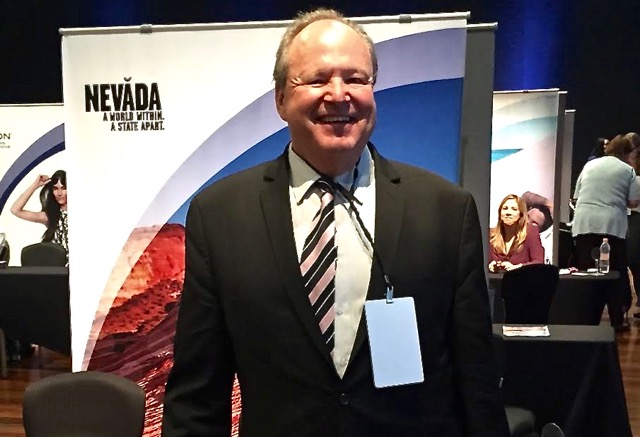
Larry Friedman has been the backbone of TravelNevada for more than two decades. Photo/Provided

Larry Friedman has been the backbone of TravelNevada for more than two decades. Photo/Provided

He got choked up talking about it – especially when mentioning Rural Roundup, a program he started that involves connecting the small rural communities of Nevada to the state agency’s tourism efforts around the world.  The agency has spearheaded trips and promotions connecting Nevada to China, India, South Korea, France, Australia, Mexico and Brazil.

Friedman refers to these events as economically and culturally rewarding, and he has felt a total welcoming from those in the far stretches of Nevada that are often conservative pockets of the state.

“My work with rural Nevada was exceptional and so rewarding. I never felt anything but love, a partnership and warmth from these people,” he said, while holding back tears. “Being gay or straight never made a difference. I can’t speak highly enough of these people. I wasn’t judged on my sexual orientation. I was judged on purpose.”

He’ll miss the people the most when he leaves his job.
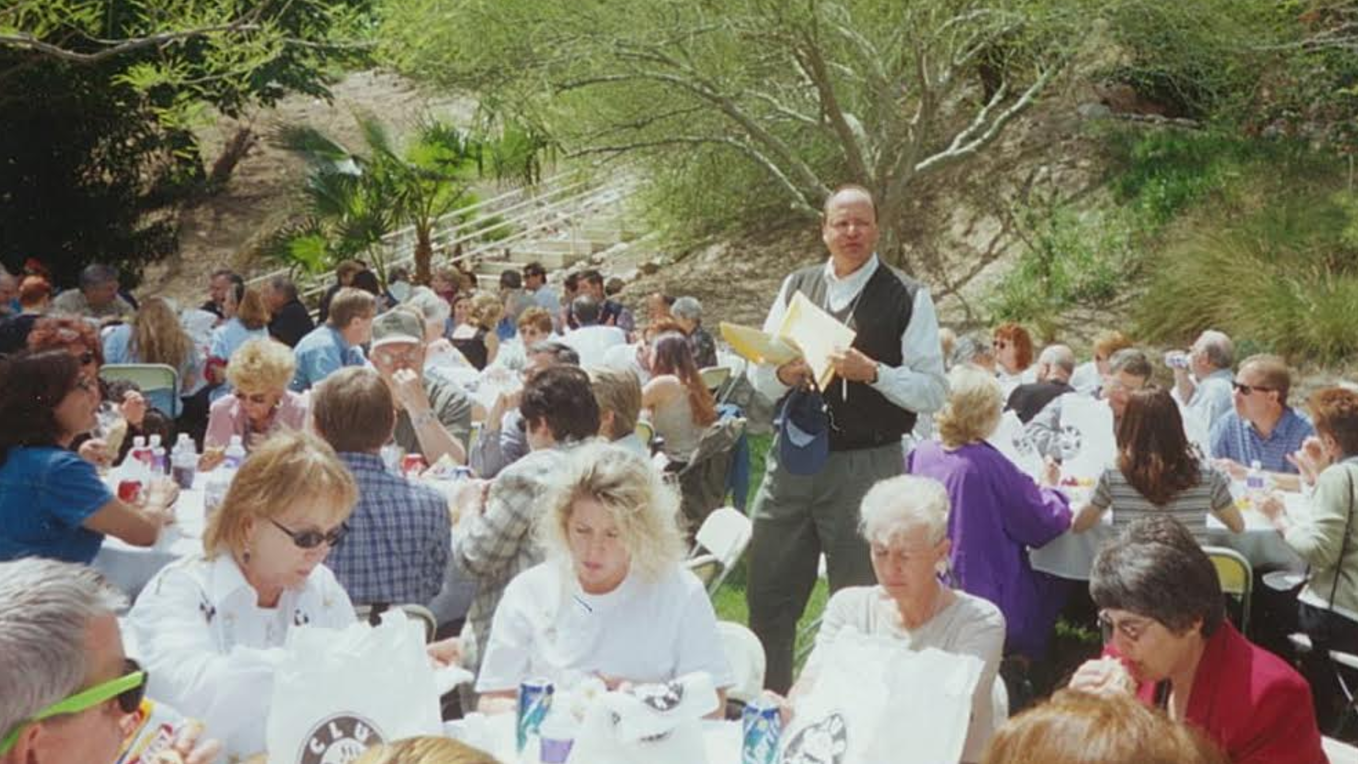
Larry Friedman was a master in the travel-tourism industry. Photo/Provided

Larry Friedman was a master in the travel-tourism industry. Photo/Provided

“I made some great friendships throughout the world,” he said.

Friedman also formed lifelong partnerships with agencies and companies connected to Nevada and Lake Tahoe, where he spent much of his career.

Upon leaving his childhood home in Marin County to be a foreign exchange student in Greece at age 17, he formed a close relationship with a family in Greece and has since returned for various weddings.

“The first person to repost my (TravelNevada) award is the son of my Greek brother,” he said of a man who’s like a brother to him.

The tourism agency just announced establishing the Larry J. Friedman Industry Partner of the Year Award to celebrate the tourism guru’s lifelong commitment to these special professional and personal partnerships in the name of the Nevada’s interests.

His career certainly left a mark on Lake Tahoe and its people. Friedman came to the South Shore to work as the director of sales for Lakeland Village for a short stint in the early years.

From there, he worked for three years on the Tahoe Queen paddle-wheeler boat as the marketing director. He also worked as an overnight disc jockey and program director for five years with KTHO. He recalled how longtime radio executive Ollie Hayden gave him his first job. Hayden died a few weeks ago, marking another poignant time for Friedman.

Friedman has been with TravelNevada (or NCOT) for 26 years.

What would he tell his replacement?

“I would tell them they’re very lucky – that the keys to success is to respect all of Nevada,” he said.

Carson Valley Chamber of Commerce Executive Director Bill Chernock agreed with a caveat.

“Oh, they’ll find someone for the job, but he will not be replaced,” Chernock told Lake Tahoe News. “There’s only one Larry Friedman. The state was lucky to have him.”
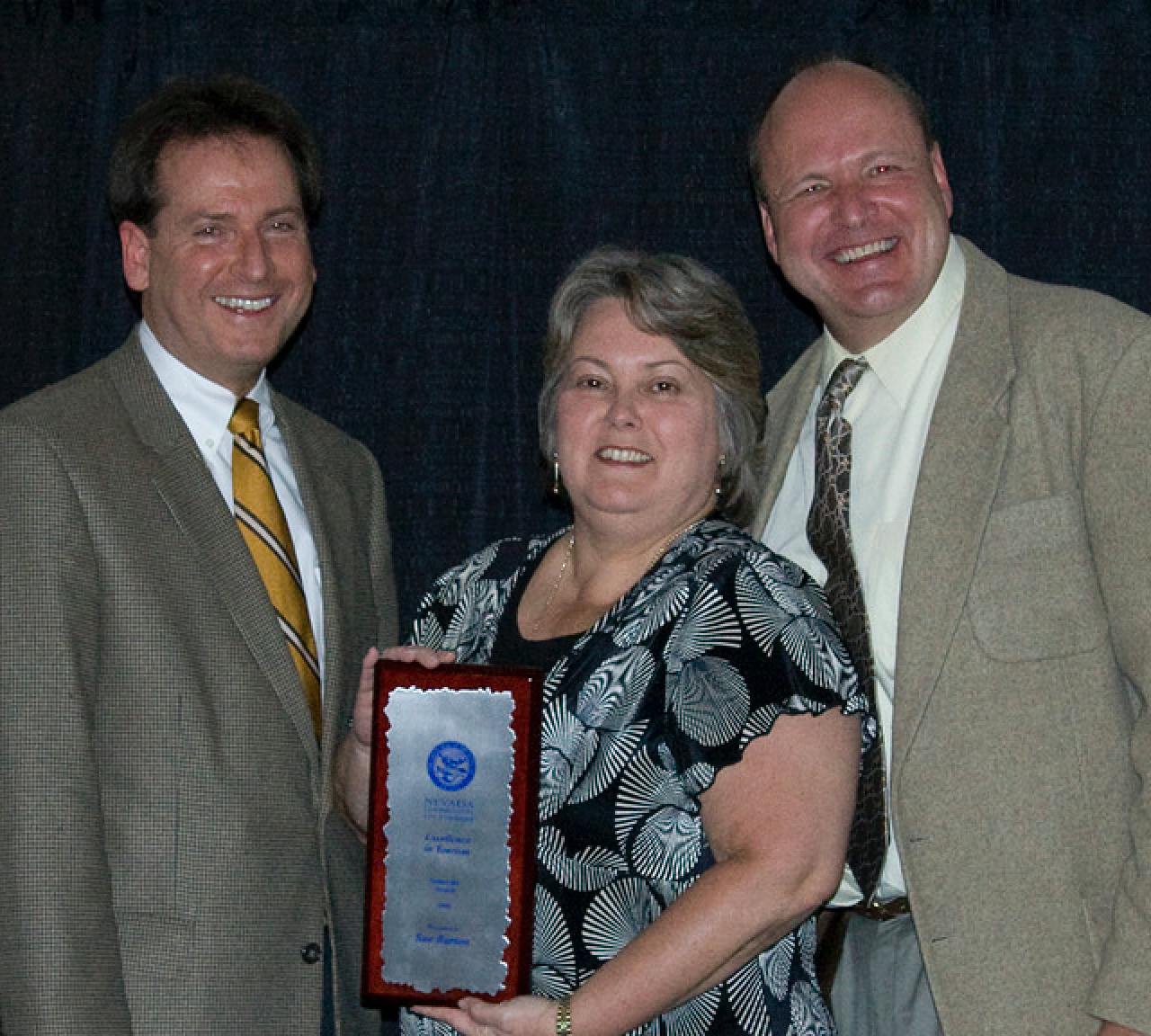
Brian Krolicki, Sue Barton and Larry Friedman

Brian Krolicki, Sue Barton and Larry Friedman

Chernock recalled a special Rural Roundup, which was always celebrated near Friedman’s birthday in April. For his 40th, a sheriff’s deputy rounded him up to claim someone might have broken into his hotel room. When Friedman was gone, other tourism officials putting on Rural Roundup snuck in friends and Friedman’s parents to stage a surprise birthday party for him.

Chernock pointed to Friedman’s infectious laugh as making him so lovable.

“When Larry laughs in Carson City, dogs in Fallon say: ‘Did you hear that?’” Chernock joked.

The longtime tourism official who traveled in similar circles with Friedman cited how Friedman got him his first job on the radio.

“That crummy 20-hour-a-week job at KTHO – literally everything (related) that’s happened to me in the last 32 years I attribute to that. For that, I thank him, and other days, I curse him,” Chernock added.

All was in good fun for the people in Friedman’s life.

Former Nevada Lt. Gov. Brian Krolicki also had memorable moments to share about Friedman.

Krolicki noted how Friedman “invented” Rural Roundup, and it grew into a major success.

“Lots of people looked forward to that,” he said. This was unless one wore a tie to the event.

“If a tie was on, it was cut off. I lost more than one tie,” Krolicki told Lake Tahoe News.
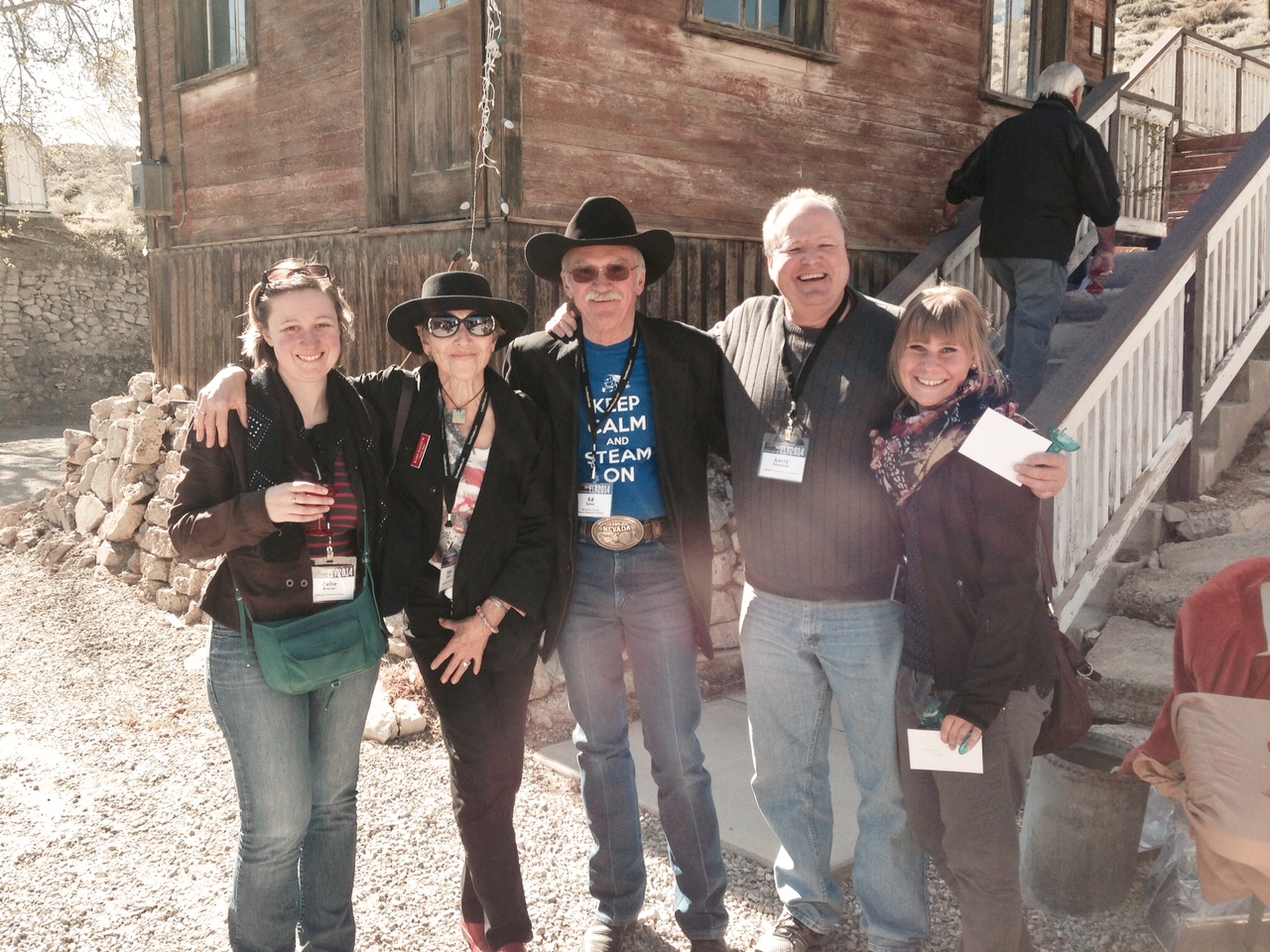
Rural Roundup is one of Larry Friedman's legacies. Photo/Provided

Rural Roundup is one of Larry Friedman’s legacies. Photo/Provided

When asked why he wore one knowing that standard, Krolicki responded with a chuckle: “I didn’t think he’d cut off the tie of the lieutenant governor. He proved me wrong.”

Krolicki further commended Friedman’s dedication and passion about Nevada tourism.

“He broke barriers between professional relationships and personal friendships. His roots go very deep. He opened markets in India, Korea and China. He handled an amazing network of collaborations,” said Krolicki, who served for many years on the Nevada Commission on Tourism board. “You knew Larry was in the room. He brought people together.”

That’s the precise impression Friedman painted for Chris Chrystal, who’s retired from the NCOT.

“You always knew when Larry was in the building,” said Chrystal, who worked with Friedman for 13 years. “Larry has been a great salesman for Nevada. He’s a vivacious person who knows how to communicate a product – in this case, Nevada. He’s got the expertise in talking to crowds. He’s at ease behind the mic or in a booth at a trade show. He excelled in bringing people to Nevada.”

For that, his contributions won’t go unnoticed to those who work closely with Friedman.

“From his time on the radio and with the Tahoe Queen to TravelNevada, he’s been so passionate about his work and travel, and it’s been so advantageous to us,” said Carol Chaplin, Lake Tahoe Visitors Authority executive director.

“Larry is part of a big hospitality family here. He’s fun to be around. We all love him. We’re going to miss him – but on to another venture,” she said.

Not only did Chaplin hang in the same tourism agency circles, the two of them also worked on board the Queen.

That’s where LTVA’s Senior Vice President of Administration and Operations Sue Barton got to know Friedman, a year after watching him carry the Olympic torch at Lake Tahoe on its way to the 1984 Summer Games in Los Angeles.

The friendship and collaboration came full circle when the torch returned to Tahoe in 2002 while on its way to Salt Lake City. Barton helped spearhead an evening event at the then Caesars Tahoe parking lot in which Friedman was the emcee.

“He brought the 1984 torch. That was a fun, full-circle experience there,” she said.

Barton has traveled extensively to promote Nevada with Friedman.

“His passion about Nevada and tourism is unmatched. It’s made him an incredible ambassador,” she said.

Friedman will be honored on his “industry partner” award at the Rural Roundup slated for April 26-28 in Elko.


2017 expected to start out with fresh snow

By Lake Tahoe News

Plan on New Year’s Day being a powder day.

A storm is brewing that should land in the Lake Tahoe Basin on New Year’s Eve.

“The position of the low is bouncing back and forth,” Tony Fuentes, meteorologist with the National Weather Service in Reno, told Lake Tahoe News.

Because of this the amount of snowfall is not being predicted as of today.

While it has been cold in the region, no records have been broken. Isolated pockets came close though. The record for Bridgeport is minus 21 degrees, and it got down to minus 20 in the last week.

Expect 2017 to start off with the cold returning, so enjoy this week as the highs in the basin sizzle in the 40s.

Lake Tahoe area ski resorts keep opening more terrain. The latest storm brought soft, fluffy powder to the slopes.

For those going into the back country, be sure to check with the Sierra Avalanche Center for conditions. 


Women lawmakers make Nev. a national leader


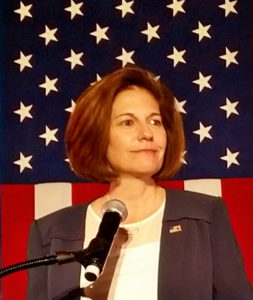
Catherine Cortez Masto won a hotly contested Senate race in Nevada. Photo Copyright 2016 Carolyn E. Wright

Catherine Cortez Masto in November won a hotly contested Senate race in Nevada. Photo Copyright 2016 Carolyn E. Wright

By Sean Whaley, Las Vegas Review-Journal

CARSON CITY — Women made impressive gains in capturing public offices in Nevada this year, and now represent 40 percent of the 63-member state Legislature heading into the 2017 session.

That ties Nevada with Colorado and Vermont as the states with the highest percentage of women legislators, according to Emerge Nevada, which encourages and trains Democratic women to run for office.


 Women also will soon make up 50 percent of Nevada’s six-member congressional delegation, following the historic election of Catherine Cortez Masto to the U.S. Senate and the victory by Jacky Rosen in the 3rd Congressional District in Las Vegas. They will join returning incumbent Dina Titus in Washington, D.C.

Read the whole story


Not all Tahoe bears will hibernate in winter

By Sarah Hockensmith and Will Richardson, Tahoe In Depth

Have you ever seen a bear print in the snow? How about a bear walking through your neighborhood during the winter season? At such times, many might ask themselves “shouldn’t this bear be asleep right now?” Others might be compelled to ponder “do bears really even hibernate in the Tahoe region?” The most curious among you may go on to ask “what exactly is hibernation, anyway?” These are great questions, and commonly asked, partly because hibernation is complicated.

Here in the Sierra Nevada, we experience the complete four-season cycle during the calendar year, including winter. Animals that breed in the Tahoe region have adapted three main strategies to cope with these seasonal changes. The first strategy is migration, where animals come to Tahoe during the summer months to take advantage of abundant resources, the mild climate, and long periods of daylight hours.

During the winter, these animals, which include deer, many birds and bats, and even insects, must retreat to lower latitudes and lower elevations.

Staying through the winter

A second strategy is where animals have evolved to stay put in Tahoe and stay active, somehow managing to balance their energy output, withstanding the freezing temperatures, and maintaining the ability to find enough food in a snow-covered landscape. This strategy is for the hardiest creatures, but it works for a surprisingly large diversity of animals.

The last strategy that animals have adopted to get through seasonal periods of difficulty, and the strategy that is perhaps least intuitive, is the process in which an animal simply goes to sleep for a period of time to wait for better conditions. By reducing their metabolism and body temperature, animals are able to greatly reduce the “expense” side of their energy budget and make it through such periods. This tactic is commonly known as hibernation in the broad sense.

Among the scientists that study such things, the term “hibernation” has been applied somewhat strictly, reserved only for certain types of hibernation, and that has led to considerable confusion over the years. The experts hold competing ideas about hibernation strategies and patterns among bears and other animals, but some of the debate falls on very fine distinctions and technical definitions.

If food — including human garbage — is readily available, bears in the Tahoe area may forego hibernation. Photo/Will Richardson

If food — including human garbage — is readily available, bears in the Tahoe area may forego hibernation. Photo/Will Richardson

Types of hibernation

There are many terms that refer to different, often very precise, types of hibernation. For example, brumation is a type of hibernation among reptiles, but different metabolic processes are involved. Unlike mammals, reptiles are cold-blooded and cannot control their body temperature; thus, brumation allows reptiles to handle temperature extremes.

Aestivation is a type of hibernation utilized in the summer to protect an animal (e.g. insects and amphibians) from long hot or dry periods. The term “torpor” often refers to a type of short-term hibernation where a reduction of body temperature and metabolic rate occurs during an inactive part of a daily cycle. We can often get frost in mid-summer, so consider the dramatic metabolic swing a tiny hummingbird must undergo not to burn through their meager reserves getting through such a night.

For the average person, it is unnecessary to get hung up on the finer distinctions of these technical definitions, and there is much debate among the experts anyhow, so we at the Tahoe Institute for Natural Science prefer to focus on the broader concepts and implications of seasonal dormancy.

For some animals, seasonal dormancy is a “facultative response” — only occurring if the conditions demand it for survival. Some of our short-distance migrants are similar in this regard. In other species, hibernation has been locked in as an obligate part of the annual cycle, regardless of weather and resource availability.

Programmed to sleep

A local example on the obligate side of the dormancy spectrum is the Belding’s ground squirrel (Spermophilus beldingi), which experience a long hibernation period for eight to nine months. Even if there are ample grasses and warm temperatures to find food in the late summer and early fall, these squirrels go to sleep as soon as they have enough body fat to survive the winter, often in late August.

Winter a hardship for most animals

This brings us back to the initial question, “Do bears hibernate in the Tahoe region?” Again, winter in the Tahoe region is a time of hardship for most animals, including bears. Food is scarce and hard to find, temperatures are dipping below freezing for long periods of time, and snow is covering the ground, making travel and foraging energy intensive.

The American black bear (Ursus americanus), inhabits an enormous range across the North American continent and has evolved as a facultative hibernator. In Florida, you can find male black bears active year-round, but if you were to study populations in the coldest parts of Alaska, you would find that these bears are sleeping for up to sevent months out of each year.

Studies from the southern Sierra Nevada and elsewhere have demonstrated that onset of bear hibernation and denning behavior is driven by two factors. The first factor is whether the bear is pregnant. A pregnant female must den up for a period of time regardless of weather, and typically these family groups will remain in the den longer than individual bears given the same conditions.

The second factor determining when (or if) a bear decides to hibernate has to do with food availability. A large and readily accessible pine seed crop may keep bears active and feeding. Unfortunately, this applies to garbage as well as natural food sources, and if either are available throughout the winter, you are likely to find black bears awake and active.

Getting a wake-up call

Unlike deep hibernators, bears occasionally wake up and shift positions inside the den, helping to prevent sores and better conserve heat. During their dormancy they lower their body temperatures 8 to 12 degrees Fahrenheit, break down fat reserves for energy, and recycle wastes to eliminate the need for urination, defecation, or drinking water. Amazingly, they wake with almost no appreciable muscle atrophy and are capable of fine motor skills almost immediately.

Clearly, hibernation is a complicated subject. It has proven to be a successful strategy of saving energy during hard times and is utilized by many animals of the Sierra Nevada. “Do bears hibernate in the Tahoe region?” The answer is “yes and no, sort of. It depends.” When, if, and for how long an animal hibernates depends on whether that species is an obligate or facultative hibernator, may depend on the sex of that individual animal and how that relates to energy demands, and often depends on weather conditions and food availability from year to year.

Sarah Hockensmith is the outreach manager and Will Richardson is the co-founder and director of science and outreach for the Tahoe Institute of Natural Science. This article first appeared in Tahoe In Depth.


Calif. energy needs could boost Nev.

By Daniel Rothberg, Las Vegas Sun

As part of a final push for clean energy in the remaining weeks of the Obama administration, the Department of the Interior approved a 728-mile power line Dec. 13 that will move wind energy from Wyoming to Southern Nevada. That wind power, which the federal agency says is enough to supply 1.8 million homes, could then be sold to Western states, especially California.

California is a key market for many clean-energy projects — even beyond its borders — because of its high renewables portfolio standard. Last year, Gov. Jerry Brown signed a law requiring power providers to acquire 50 percent of their energy from renewable sources by 2030.

“California needs a lot of renewable energy and cost-effective renewable energy,” said Kara Choquette, a spokesperson for the wind-energy transmission project, known as TransWest Express. She explained that delivery of thousands of megawatts from a wind farm in Southern Wyoming to existing energy infrastructure in Nevada will optimally position sales of electricity to a variety of Western customers, similar to the Hoover Dam. Even if TransWest Express does not deliver its power to Nevada households, the state could benefit from an economic standpoint. The $3 billion project, crossing 140 miles of Nevada land in Lincoln and Clark counties, is projected to bring 250 construction jobs and generate $24 million in tax revenue.

Read the whole story


Calif. hopes $3B trial improves health of neediest

By Anna Gorman, KQED-TV

Riverside County plans to connect former inmates with health clinics and social services. Orange County hopes to get homeless residents into housing — and help them stay there. Placer County is opening a respite center where homeless patients can go after they leave the hospital.

Those are just some of the pilot projects in a $3 billion experimental effort officials hope will improve the health of California’s most vulnerable populations. The effort is a recognition that improving people’s health will take more than just getting them insured.

The state has approved plans in 18 counties intended to reduce unnecessary emergency room visits and hospital stays among these groups.

Read the whole story